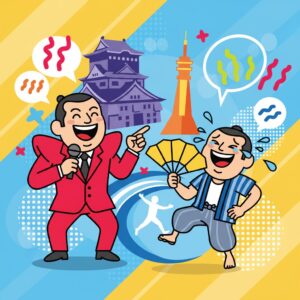
The first time you hear it, you might stop in your tracks. Two shopkeepers, maybe a fishmonger and the woman who sells pickles, call out to each other across the bustling chaos of a Kuromon Market aisle. One yells, with a grin that creases the corners of his eyes, “Mokarimakka?” The other laughs, waving a hand dismissively, “Bochi bochi denna!” You’re still new to Osaka, still tuning your ear to the Kansai dialect’s melodic, rapid-fire cadence. You pull out your phone and look it up. “Mokarimakka?” — Are you making a profit? Are you making money? Your brow furrows. Is that all people talk about here? Money? Is this the standard greeting? A public audit of each other’s financial success?
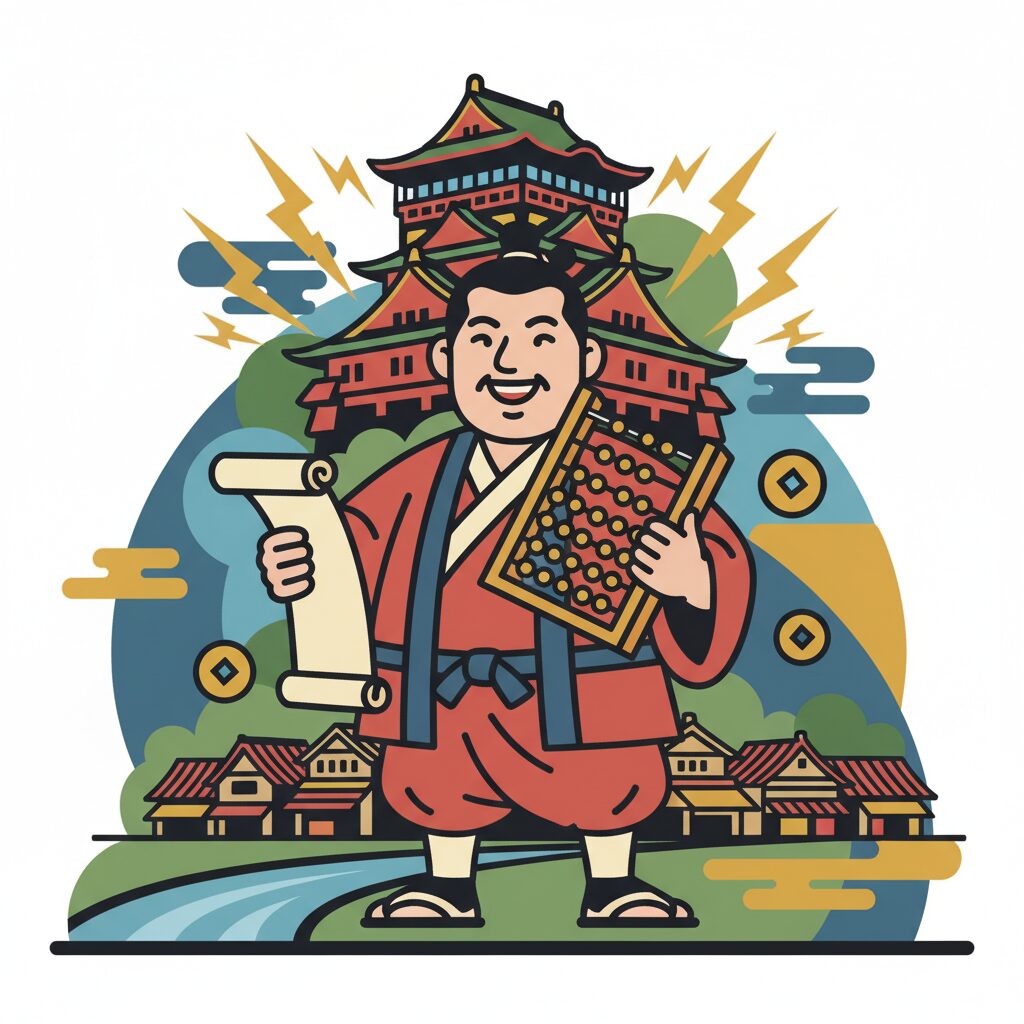
This single exchange is a doorway. It’s an entry point into the very heart of what makes Osaka tick, what makes its people move and think and talk the way they do. It’s a city built not by samurai and aristocrats, but by merchants, traders, and artisans. Its identity is forged in the fires of commerce, its language peppered with the pragmatism of the marketplace. This is the spirit of the ‘Akindo,’ the merchant, and it permeates everything, from how your boss speaks to you in a meeting to how the old lady at the fruit stand gives you an extra orange for free. To live in Osaka, to truly understand its rhythm and its soul, you must first understand that business here isn’t just business. It’s a way of life, a form of communication, and the bedrock of the community.
Tokyo may be the polished, formal capital of rules and appearances, a place where conversation moves in subtle, indirect currents. Osaka is the bustling, no-nonsense port city where the currents are swift, direct, and transparent. The question of “Mokarimakka?” isn’t an invasive inquiry into your bank account. It’s the ultimate expression of the Akindo spirit, a greeting that means, “How are you doing in this shared struggle of life and work? Are you surviving? Are you thriving? I see you, and I’m right here with you.” It’s a question of solidarity disguised as a question of commerce. Welcome to Osaka, where the most important transactions are the human ones. This article is your ledger, your guide to decoding the real meaning behind the words and gestures of this incredible city, helping you navigate the vibrant, practical, and deeply human world of Osaka’s daily life.
To truly navigate this city of merchants, you’ll need to understand its transportation arteries, so consider reading our guide on how to navigate Osaka’s major train lines.
The Unspoken Language of Commerce
Decoding the Exchange: “Mokarimakka?” and “Bochi Bochi Denna”
Let’s explore the marketplace greeting more closely. “Mokarimakka?” is the opening line in a conversational script known by every Osakan. At its core, it is a question rooted in empathy. Osaka, historically called the ‘nation’s kitchen’ (天下の台所, tenka no daidokoro), was where rice and goods from across Japan were collected and traded, intertwining everyone’s livelihoods. A poor harvest in one region meant rising prices for an Osaka shopkeeper, which then impacted the family buying rice from him. In a real sense, a neighbor’s business health was connected to your own. This question is therefore a remnant of that interdependent reality—a verbal shorthand for gauging the community’s economic well-being.
The brilliance of this exchange lies in the expected reply: “Bochi bochi denna.” It roughly means “So-so” or “Can’t complain,” and holds great social significance. Saying, “Business is booming! I’m making a fortune!” would come across as boastful and disconnected, breaking communal ties and sowing envy. Conversely, admitting, “Business is terrible; I’m on the brink of ruin!” would cast a gloomy shadow, burdening the asker with worry. “Bochi bochi” strikes the ideal balance—humble, slightly self-deprecating, and universally relatable. It implies, “I’m managing, just like you. We’re all in this together, doing our best.” It nurtures a shared sense of experience rather than competition. This simple phrase is a powerful social tool that strengthens community bonds with every use.
For outsiders, this may seem perplexing. In many Western cultures, asking directly about one’s income is taboo. But in Osaka, the phrase loses its literal meaning and serves as a kind of password. When you say it or hear it, you affirm your participation in the city’s core ethos: that life is work, work is community, and everyone depends on one another to keep things moving. It is the sound of the city’s heartbeat.
The Philosophy Behind the Deal
The Akindo spirit goes beyond greetings; it embodies a deeply practical philosophy. Osakans are known for being rational, or ‘gōriteki’ (合理的). This is not a detached, calculating rationality, but a pragmatic one focused on achieving optimal results with minimal fuss. Time, effort, and money are valuable resources not to be squandered. This philosophy shapes a communication style that may feel blunt to newcomers, especially those used to the typically indirect Japanese manner prevalent in Tokyo.
In Tokyo business meetings, there is often a lengthy, delicate interplay of pleasantries and ‘nemawashi’ (the informal groundwork process to build consensus before formal proposals). The real intent is often obscured by layers of politeness. In contrast, Osaka meetings are more straightforward. An Osaka professional is likelier to cut to the chase: “So, what’s the bottom line? What’s your best offer? Can we make this work?” This straightforwardness isn’t rude; it demonstrates respect. It acknowledges that everyone is busy and that the highest courtesy is to avoid wasting time. Achieving a mutually beneficial solution efficiently takes precedence over process.
This practical mindset extends to the love of a good deal. The concept of ‘nedan kōshō’ (price negotiation) is deeply engrained in Osaka’s culture. While haggling is inappropriate at upscale department stores, in bustling ‘shōtengai’ (shopping arcades), the electronics district of Nipponbashi, or the cookware haven of Doguyasuji, friendly negotiation is often expected. It’s not about lowballing or cheating; it’s an engagement, a conversation about value. The seller aims to close a sale, while the buyer wants a fair price. Negotiation is the art of finding that sweet spot—a dance where both parties leave satisfied. The seller profits, the buyer gains a memory and sense of achievement, transforming a simple transaction into a meaningful human interaction.
Closely tied to this is the beloved culture of ‘omake’ (a complimentary gift with purchase). An ‘omake’ is the seller’s way of saying, “Thank you for your business. Please come again.” This could be an extra potato from the greengrocer, a small keychain from a souvenir shop, or a sample of a new item. Though small, its impact is significant. It cements the customer relationship, turning a one-time buyer into a ‘jōren-san’ (a regular). The Akindo spirit recognizes that the value of a long-term relationship far surpasses the minor cost of a free gift. It’s an investment in future goodwill and business.
The Akindo Mindset in Everyday Life
Living in a World of Direct Honesty
The merchant’s demand for clarity and efficiency has shaped the entire communication style of the city. Osakans are known for being straightforward, expressive, and emotionally sincere. They tend to speak their mind, for better or worse. If you’re from a culture that values subtlety and reading between the lines, this can come as quite a shock. You might interpret their bluntness as rude or even aggressive. But that’s rarely the intention. The intention is clarity.
Imagine you’re trying on a jacket and ask the shopkeeper for her opinion. In Tokyo, she might respond gently and encouragingly, “It looks very nice on you.” In Osaka, you’re more likely to hear, “Hmm, the color is good, but the shoulders are a bit tight. Try this one instead; it fits your frame better and, honestly, it’s a better deal.” The Osaka shopkeeper isn’t trying to be critical; she’s aiming to be genuinely helpful. She wants you to leave her store with a product you’ll truly be happy with, because a satisfied customer is a loyal one. She’s applying the Akindo’s rational, results-oriented mindset to customer service. Wasting your time and money on something unsuitable benefits no one.
This directness touches every aspect of life. Your neighbor might tell you, unbidden, that you’re hanging your laundry improperly and show you a more efficient method. A stranger on the street may point out that your bag is unzipped. This isn’t nosiness; it’s a form of communal care. It stems from ‘sewazuki,’ a personality trait that reflects a fondness for looking out for others. It’s a practical, hands-on kindness. In the Akindo’s world, solving a problem takes precedence over sparing feelings based on incomplete information. In this context, honesty is a form of service.
The Currency of Relationships
For the true Osaka Akindo, ultimate profit isn’t counted in yen; it’s measured in human connections. Strong relationships are the bedrock of both good business and a good life. This is why the ‘jōren-san’ culture holds such sway here. Becoming a regular at a local café, restaurant, or butcher shop feels like being welcomed into a family. They’ll learn your name, remember your usual order, and ask about your day. They’ll reserve the best cut of meat for you or let you know when your favorite seasonal vegetables are in. This goes beyond excellent customer service; it’s community building in action.
In Tokyo, you might appreciate a restaurant for its impeccable service, Michelin stars, or minimalist atmosphere. Anonymity and discreet professionalism are often valued. In Osaka, you love a restaurant because the owner—a gruff but kind man—always remembers you like extra ginger with your udon and cracks a joke that makes you laugh every time you visit. The food matters, of course, but it’s the connection that makes the place special. This is why word-of-mouth recommendations hold tremendous power in Osaka. A suggestion from a trusted friend or neighbor outweighs any online review because it reflects a relationship.
This emphasis on human capital means Osakans tend to be open and curious. They are less reserved than their Kanto counterparts and often eager to start a conversation with a stranger on the train or in a bar. For foreigners, this openness can make Osaka feel especially welcoming. While you might feel like an anonymous face in the crowd in Tokyo, in Osaka, you’re more likely to be drawn into the flow. People will ask where you’re from, what brings you to Osaka, and how you like the takoyaki. They’re genuinely interested. Every interaction is a chance to forge a new connection, and in the Akindo’s city, connections are the most valuable currency of all.
Laughter as a Business Tool
It’s no coincidence that Osaka is known as Japan’s comedy capital. The city is home to Manzai (a form of stand-up comedy) and headquarters of Yoshimoto Kogyo, the entertainment giant that has shaped Japanese comedy for over a century. Humor is not just entertainment in Osaka; it’s an essential communication tool and a core part of the Akindo spirit.
A good laugh can break the ice in a tense negotiation. A witty comment can create instant rapport with a new customer. A self-deprecating joke can ease an awkward moment. Humor acts as the social lubricant that keeps Osaka’s commerce and community smoothly running. The famous ‘boke’ (funny fool) and ‘tsukkomi’ (straight man) dynamic isn’t confined to the stage; it appears in daily conversations among friends, coworkers, and even shopkeepers and their customers. It’s a conversational rhythm, a call-and-response that encourages participation and shared enjoyment.
This blend of humor and daily life makes the city feel more relaxed and less formal. It signals that people don’t take themselves too seriously, even when they are serious about their work. It’s another facet of the Akindo’s pragmatism. Why be rigid and formal when a good joke can achieve the same outcome—a signed contract, a completed sale, a new friendship—more quickly and pleasantly? Laughter builds trust, and trust is the foundation of any strong relationship, whether in business or in life. When an Osaka businessperson makes you laugh, they’re not just being friendly; they’re using one of the most effective and time-tested tools to build a connection with you.
Navigating the Osaka Workplace: Samurai vs. Merchants
The Office Floor: A Different Rhythm
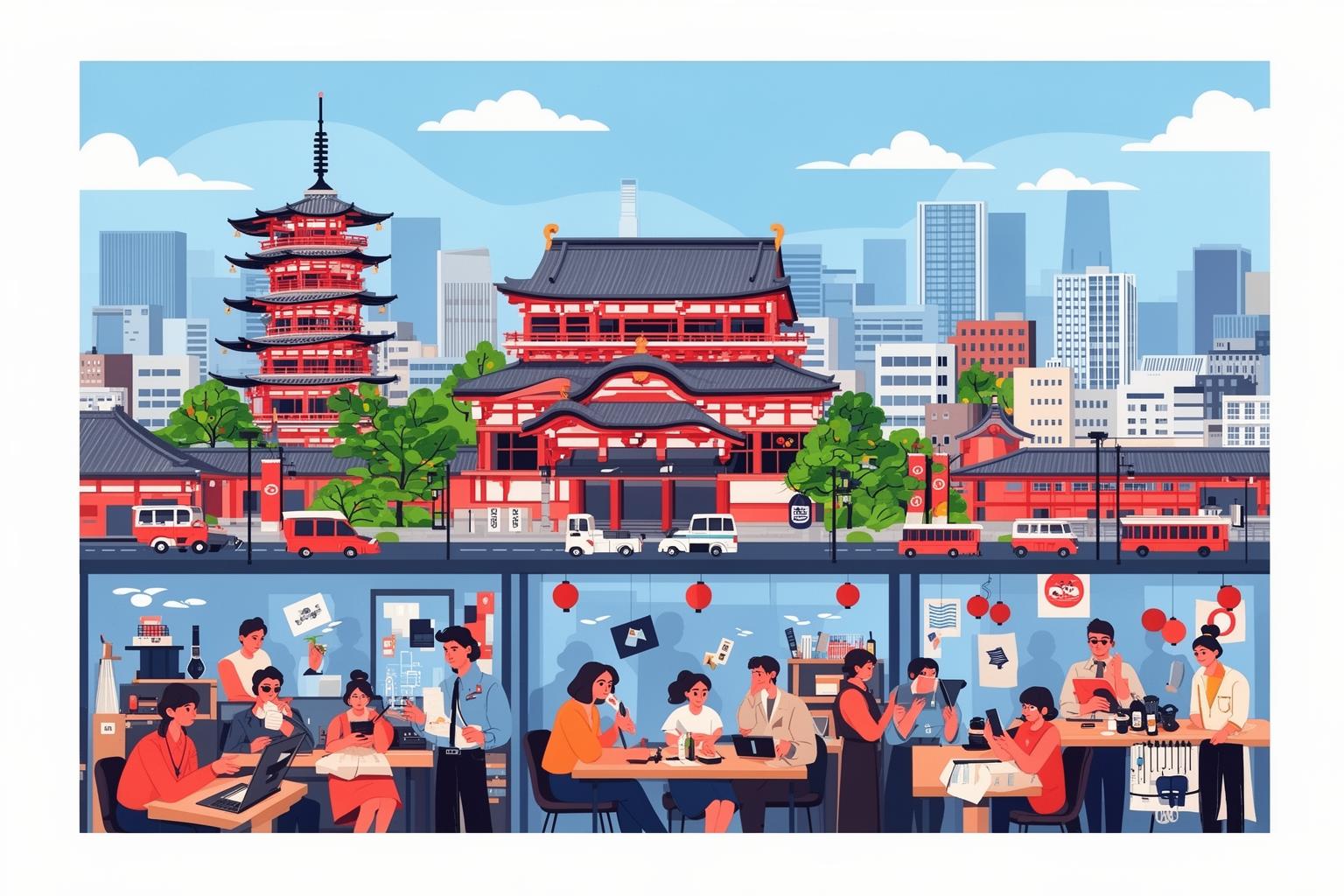
Step into an office in Osaka, and you might notice a distinct atmosphere compared to a similar workplace in Tokyo. While both are undoubtedly professional and hardworking, their underlying philosophies can differ greatly, reflecting the historic contrast between the samurai-bureaucrat culture of Edo (old Tokyo) and the merchant culture of Osaka.
In a typical Tokyo office, there is often a strong focus on hierarchy, process, and formality. Group harmony is essential, and decisions are usually made through the careful, deliberate practice of ‘nemawashi’ to ensure everyone is aligned before taking a formal step. Following proper procedures is often as important as the outcome itself. The legacy of the samurai, with its strict codes of conduct and loyalty to the clan (or company), still looms large.
In Osaka, the Akindo spirit creates a more pragmatic and results-driven environment. While hierarchy exists, it tends to be more flexible. The key questions are not “Did we follow the rules?” but rather “Did we close the deal? Did we satisfy the client? Did we make a profit?” There is greater tolerance for bending rules if it leads to better, more efficient results. An idea from a junior employee might be seriously considered not because of their rank but based on its merit. Is it logical? Will it work? Will it be profitable? This ‘gōriteki’ approach makes meetings more direct and debates livelier. People are encouraged to voice their opinions, even if they challenge the status quo, as long as their arguments are well-reasoned.
For a foreign professional, this can be both freeing and demanding. The reduced emphasis on rigid formality can make the workplace feel more accessible and make your contributions more immediately recognized. However, the fast pace can be relentless, and the direct feedback might be surprising if you’re unprepared. The key is to realize that criticism is rarely personal; it’s aimed at improving the final outcome. It’s the Akindo mindset applied to teamwork: everyone’s focus is on delivering the best possible product or closing the best possible deal, and anything that hinders that efficiency is scrutinized.
A Tale of Two Cities: Contrasting Business Mentalities
To truly understand the difference, it’s helpful to think in archetypes. The Tokyo business world often embraces the ‘samurai’ ethos: loyalty, duty, perseverance, and strict adherence to form. The company’s brand and reputation are paramount. Long-term strategy and maintaining prestige can sometimes outweigh short-term profits. This model boasts a beauty and strength founded on stability, institutional trust, and meticulous planning.
In contrast, the Osaka business world embodies the ‘Akindo’ ethos: flexibility, innovation, negotiation, and a sharp eye for opportunity. Relationships with clients and the quality of deals take precedence. Osakans are natural entrepreneurs, always seeking new angles or more efficient methods. They care less about brand prestige than ‘kosupa’ (cost performance). They pride themselves on offering high-quality products at reasonable prices and expect the same from suppliers. It’s a culture of savvy, street-smart operators who trust their instincts and personal connections.
An analogy might be two different ways to build a bridge. The Tokyo approach involves years of planning, consensus-building among stakeholders, adherence to time-honored construction methods, and creating a grand, beautiful structure that symbolizes the company’s legacy. The Osaka approach focuses on the quickest, most cost-effective way to get people and goods across. The resulting bridge is sturdy, functional, completed on time and within budget. It might not be as aesthetically impressive, but it serves its purpose perfectly, and merchants would already be using it while the other bridge remains in planning.
Neither approach is inherently better; they are simply cultural products shaped by centuries of history. Recognizing this fundamental difference is essential for anyone aiming to do business or work in Japan. What is considered proper and respectful in Tokyo may be viewed as slow and inefficient in Osaka, while what is efficient and straightforward in Osaka might seem brash and unrefined in Tokyo.
Avoiding Common Misunderstandings
The Myth of the Money-Obsessed Osakan
The biggest misconception foreigners have about Osaka arises directly from the greeting ‘Mokarimakka?’. It’s easy to assume that Osakans are materialistic or solely focused on money, but this is a serious misunderstanding of the culture. The emphasis is not on accumulating personal wealth, but on the flow of money as the lifeblood of the community. A strong economy means a flourishing city, content families, and lively neighborhoods. The focus is on value, not price. It’s about being a smart shopper and a savvy entrepreneur, a source of pride and a skill to admire. When an Osakan discovers a great deal, they don’t just feel happy for themselves; they feel driven to share that news with friends and neighbors. “I found a place selling fantastic cabbage for only 100 yen! You have to check it out!” This is a form of community service. It’s about uplifting everyone by sharing practical knowledge. The aim is collective prosperity, not just personal benefit.
Directness Isn’t Anger, Formality Isn’t Always Respect
Another significant challenge is interpreting the direct style of communication. It’s essential to distinguish the message from the tone. An Osaka business owner might bluntly point out a flaw in your proposal, which could be taken as a personal attack in another culture. But listen carefully. Is their voice raised in anger, or simply stating a fact? Is their expression contemptuous, or focused on solving a problem? Most times, it’s the latter. They are just choosing the most efficient way to reach a better solution. To avoid offending, they might immediately follow a blunt comment with a joke. Learning to appreciate this pattern—direct feedback followed by light humor—is crucial for effective communication in Osaka.
On the other hand, being overly formal can sometimes have the opposite effect. While politeness is always valued, an excessively stiff, distant manner can come across as cold or untrustworthy. It creates a barrier. Osakans build trust through warmth, shared laughter, and mutual understanding. They want to connect with the real person behind the interaction. Don’t hesitate to be a bit more open, share a personal story, or laugh at their jokes. Reading the situation is important, but in many situations in Osaka, adopting a more relaxed and genuine approach will form stronger, more authentic relationships than maintaining rigid formalities.
To live and thrive in Osaka is to learn its unique rhythm, set by the steady, practical, and deeply human heartbeat of the Akindo spirit. It’s a city that reveals its workings openly. Its motives are transparent, its communication straightforward, and its people welcoming. The spirit of the merchant is not just a historical note; it is the living, breathing operating system of the city. It’s in the way a grandmother at the shōtengai insists on giving you an extra apple, in the direct yet constructive feedback from your boss, in the loud laughter filling an izakaya, and in the simple, meaningful greeting echoing through the streets: “Mokarimakka?” — a question that asks not only about your profit but about your role in the vibrant, interconnected business of life. Understanding this spirit is the key to unlocking not just the markets and offices, but the very soul of the city.