Welcome to Osaka, a city that moves to its own beat. It’s a symphony of sizzling takoyaki, vibrant neon signs, and the warm, boisterous laughter of its people. To truly understand this city, you can’t just walk its streets; you have to dive into its veins. And in Osaka, the city’s lifeblood flows through the vast, intricate, and impossibly efficient network of the Osaka Metro. It’s more than just a subway system; it’s a subterranean river carrying the dreams, dramas, and daily routines of millions. For anyone living here, from the first-day arrival to the seasoned resident, mastering the Metro is the first step to feeling like you truly belong. It’s the key that unlocks every neighborhood, from the glittering towers of Umeda to the ancient temples in Tennoji and the salty air of the bay. But is it the absolute best way to travel? That’s a question with a rhythm of its own, full of roaring express advantages and a few late-night, last-train disadvantages. Let’s get on board, hold tight, and explore the sprawling world beneath Osaka’s streets.
To truly immerse yourself in the city’s daily rhythm, consider how mastering the Metro is essential for anyone planning an extended stay in Osaka on a working holiday.
The Pulse of the City: Understanding the Metro Vibe

Before we discuss routes and tickets, let’s talk about the feeling. Descending the stairs into an Osaka Metro station is a sensory experience. The air shifts, becoming cooler during the humid summer and offering shelter from the winter wind. There’s a low hum of machinery, interrupted by the cheerful jingles—the hassha merodī—that announce a train’s departure, each line featuring its own unique, charming melody. It’s a sound that blends into the city’s soundtrack, a comforting audio signal that your journey is beginning. The platforms present a scene of organized chaos. People line up in neat queues, heads bent over smartphones, manga, or lost in their own thoughts. Then, the train glides in with a gentle hiss of air brakes, its doors perfectly aligning with the painted lines on the platform. The crowd streams inside, a practiced and polite dance of bodies making room. The atmosphere inside the carriage varies depending on the line and time of day. Morning rush hour on the Midosuji Line is a quiet, compressed world of business suits and university students, while a midday ride on the Nagahori Tsurumi-ryokuchi Line might be filled with families heading to a park, their light, happy chatter contrasting with the rhythmic clatter of the wheels on the track. You see Osaka’s fashion on display, from the impeccable vintage styles of Nakazakicho to the high-fashion shoppers of Shinsaibashi. It’s a rolling microcosm of the city above, a place of transit that paradoxically serves as one of the best spots for people-watching and sensing the city’s true rhythm.
The Main Arteries: A Tour of the Major Lines
The Osaka Metro network resembles a color-coded spiderweb, and grasping its main lines is essential. Each line has its distinct character, its unique role, and reveals a different aspect of Osaka’s essence. Consider them not merely as routes, but as curated journeys through the city’s spirit.
Midosuji Line (The Red Superstar)
If the Osaka Metro is the body, the Midosuji Line is its spine. Painted in a vibrant, confident red, this is the line you’ll come to recognize and love (and occasionally curse during rush hour). It serves as the city’s primary north-south artery, linking nearly every major hub imaginable. Undoubtedly, it is the most important and busiest line in the system. Traveling its full length offers a cross-section of life in Osaka.
- Shin-Osaka (M13): Your gateway to the rest of Japan, where the Shinkansen (bullet train) arrives. The station itself is a bustling hub filled with omiyage (souvenir) shops and restaurants—a perfect spot to pick up an ekiben (station bento box) before embarking on a long trip. The Metro connection here is seamless, marking your first step into the city proper.
- Umeda (M16): More than just a station, it’s an underground city. Umeda is Osaka’s northern downtown, a dazzling hub of department stores (Hankyu, Hanshin, Daimaru), striking office towers like the Umeda Sky Building, and an endless maze of underground shopping arcades. The Midosuji Line platform here is perpetually packed, a flow of people heading to work, shopping, or a night out. Getting lost here is a rite of passage—and a wonderful experience.
- Yodoyabashi (M17): The atmosphere changes here. This is Osaka’s traditional business and financial district. The architecture above ground is stately, featuring the elegant Osaka City Hall and the Bank of Japan on Nakanoshima island. It feels more serious and composed than Umeda—an ideal stop for a riverside stroll or a visit to the Museum of Oriental Ceramics.
- Shinsaibashi (M19): The heart of Osaka’s retail and fashion scene. The station opens directly into the famous Shinsaibashi-suji shopping arcade, a covered street stretching for blocks and packed with everything from global brands to local boutiques. It’s a sensory delight, always buzzing with energy and the thrill of finding the perfect outfit or keepsake. Just west of the station lies Amerikamura, the youth culture hub, filled with vintage shops, quirky cafes, and street art.
- Namba (M20): If Umeda is the polished northern center, Namba is the lively and chaotic southern soul. This sprawling station connects you to the dazzling Dotonbori, known for its giant neon Glico Running Man sign, endless street food stalls, and theaters. It also serves as the gateway to Kuromon Market, Den Den Town (electronics and anime), and Namba Parks shopping mall. Namba is loud, bright, and unapologetically Osaka.
- Tennoji (M23): Where history meets modernity. The station serves the ancient Shitennoji Temple, one of Japan’s oldest, and the verdant Tennoji Park, home to a zoo and the Osaka City Museum of Fine Arts. Towering above is Abeno Harukas, Japan’s tallest skyscraper, offering breathtaking panoramic views from its observatory. Tennoji perfectly encapsulates Osaka: a city that honors its past while continuously advancing toward the future.
Tanimachi Line (The Purple Path of History)
The longest line in the system, the Tanimachi Line is a passage through time. Its purple shade suits a route that links you to some of Osaka’s most significant historical and cultural sites. Generally less crowded than the Midosuji Line, it provides a more relaxed and reflective journey.
- Tenjinbashisuji 6-chome (T18): A destination in its own right. This station drops you at the northern end of Tenjinbashisuji Shopping Street, Japan’s longest shotengai (covered shopping arcade), spanning over 2.6 kilometers. It showcases old-school Osaka with local grocers, kimono shops, and affordable eateries. The station also houses the excellent Osaka Museum of Housing and Living, where you can stroll through a recreated Edo-period townscape.
- Minami-morimachi (T21): The stop for Osaka Tenmangu Shrine, a beautiful and important shrine dedicated to Sugawara no Michizane, the deity of scholarship. It is the focal point of the massive Tenjin Matsuri, one of Japan’s greatest festivals held every July. The area is charming and well worth exploring on foot.
- Tanimachi 4-chome (T23): The main access point to the magnificent Osaka Castle. After a short walk, you’ll see the imposing stone walls and the grand main tower rising above the trees. The station also offers easy access to the Osaka Museum of History, which provides fantastic views of the castle from its upper floors and a deep dive into the city’s past.
- Shitennoji-mae Yuhigaoka (T26): As the name implies, this station leads you to Shitennoji, a sprawling temple complex founded in the 6th century by Prince Shotoku. It’s a peaceful, profoundly spiritual site—a tranquil escape from the city’s hustle. The surrounding neighborhood exudes a quiet, old-world charm.
Chuo Line (The Green Connector to the Bay)
Marked in green, the Chuo Line is your direct link from the city center to the open, refreshing spaces of the Osaka Bay Area. The train emerges from tunnels to run on elevated tracks near the coast, offering glimpses of the port and sea.
- Morinomiya (C19): Another excellent stop for Osaka Castle, offering access to the park’s eastern side. It’s a great starting point for jogging or picnicking in the vast castle grounds.
- Osakako (C11): Meaning “Osaka Port,” this station is your gateway to a fun-filled day. It’s a short walk to the world-renowned Osaka Aquarium Kaiyukan, one of the largest and most impressive aquariums worldwide. Nearby is the Tempozan Ferris Wheel, offering stunning bay and city views, alongside the Tempozan Marketplace for shopping and dining.
- Cosmosquare (C10): The line’s terminus, located on a man-made island. It primarily serves convention centers like Intex Osaka but also offers a futuristic, spacious calm that sharply contrasts with central Osaka’s density.
Other Notable Lines
- Sakai-suji Line (Brown): Running parallel to the Tanimachi Line for part of its route, it connects Kitahama’s business district with Nipponbashi’s otaku paradise (via Ebisucho station) and the working-class charm of Shinsekai (via Dobutsuen-mae station). Through-services to the Hankyu Railway provide a direct link to northern Osaka suburbs and even Kyoto without transferring at Umeda.
- Yotsubashi Line (Blue): A true lifesaver for locals, running just one block west of the Midosuji Line and mirroring its north-south route from Nishi-Umeda to Namba and beyond. It’s almost always less crowded, making it the savvy commuter’s choice during peak hours.
- Nagahori Tsurumi-ryokuchi Line (Light Green): A distinctive east-west line known for its smaller, linear-motor-powered trains that handle steeper slopes and sharper curves. It connects Kyocera Dome (for concerts and baseball), the trendy boutiques of the Horie district (via Yotsubashi or Nishiohashi stations), and the beautiful Tsurumi Ryokuchi Park, site of the 1990 International Garden and Greenery Exposition.
The Great Debate: Advantages vs. Disadvantages
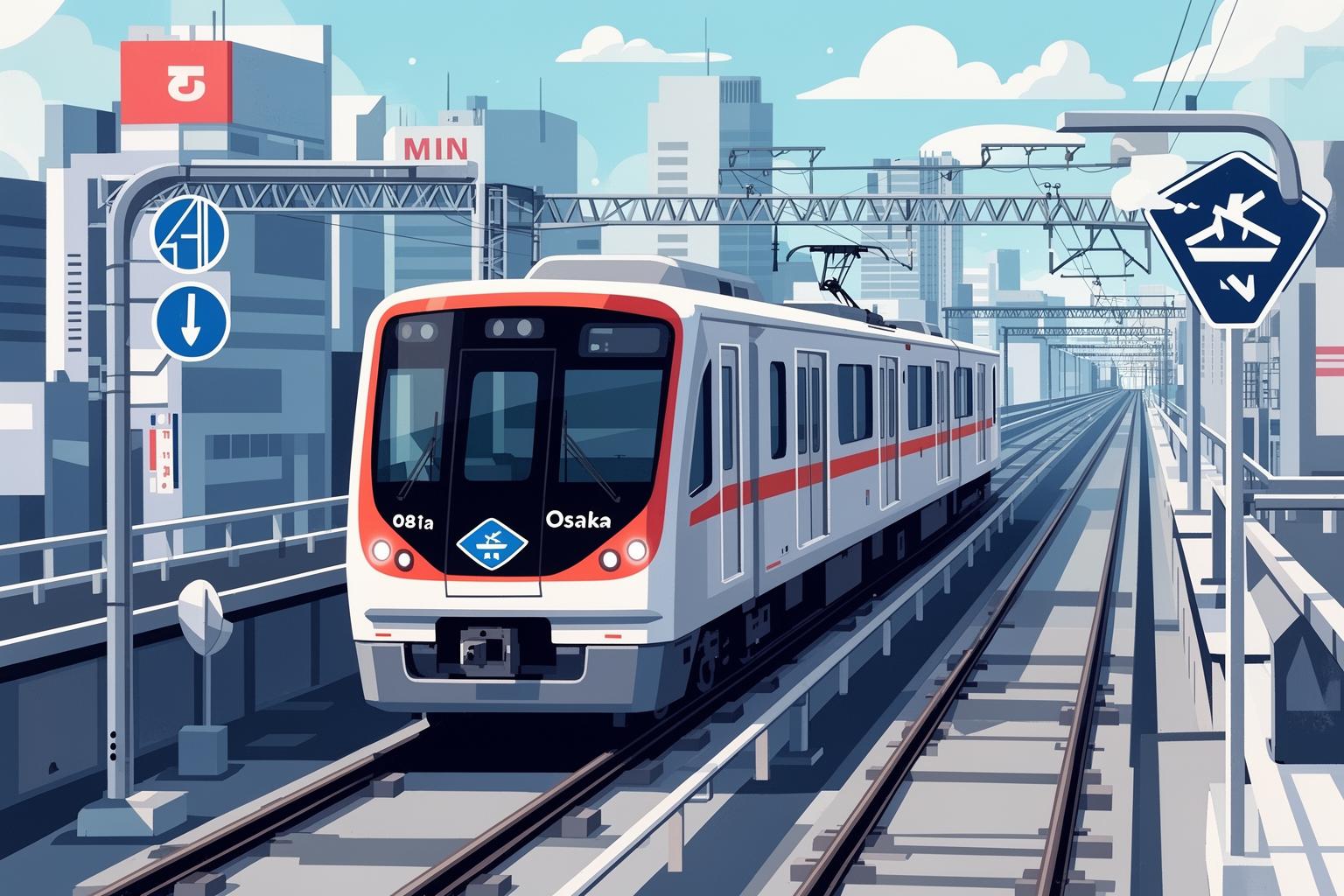
With this incredible network at your disposal, is Osaka Metro truly the undisputed champion of transportation in Osaka? For the most part, yes. However, like any relationship, it comes with its complexities. It’s a beautiful system, but it isn’t without its flaws.
The Highlights: Why You’ll Appreciate the Metro
- Clockwork Precision: This is Japan, after all. The trains run with exceptional punctuality. Timetables aren’t mere suggestions; they’re sacred. A train arriving even 60 seconds late is so rare it warrants a formal apology. This dependability allows you to plan your day with military-like accuracy. You can confidently agree to meet a friend at a certain time, knowing the Metro will deliver you exactly on schedule.
- Extensive Coverage: Within central Osaka City, the Metro reigns supreme. Stations are strategically located, and the network’s density means you’re almost never more than a 10-15 minute walk from a station. For sightseeing, dining, and general city exploration, it takes you where you need to be about 95% of the time.
- A Shelter from the Weather: Osaka’s climate can be extreme. Summers are sweltering and humid, winters can be sharply cold, and the rainy season in June often brings heavy downpours. The Metro offers a climate-controlled refuge. Going underground provides instant comfort, making your travel pleasant regardless of the weather outside.
- Cost-Effective Travel with Passes: Although single tickets may feel expensive for short trips, travel passes offer tremendous value. The Osaka Enjoy Eco Card (¥820 on weekdays, ¥620 on weekends/holidays) grants unlimited rides on the Metro and city buses for a day, plus discounts at various attractions. The Osaka Amazing Pass is ideal for tourists, combining unlimited transportation with free admission to numerous top spots like Osaka Castle and the Umeda Sky Building. For locals, pairing an ICOCA card with a commuter pass (teikiken) makes daily travel highly affordable.
- Safety and Cleanliness: The stations and train cars are meticulously maintained. No graffiti, no litter—it’s a point of civic pride. Moreover, the system is very safe. Leaving a bag behind will likely lead to it being handed in to lost and found. The presence of station staff and the orderly environment make it comfortable for everyone, including solo travelers and families.
The Downsides: Where the Metro Has Shortcomings
- The Cinderella Curse: The Last Train: This might be the biggest surprise for anyone used to 24-hour transit. Like most Japanese trains, the Osaka Metro shuts down overnight. Last trains usually depart from terminal stations between 11:30 PM and 12:30 AM. If you’re out late dining, drinking, or at karaoke, you’ll need to keep an eye on the time. Miss the final train and you’re facing an expensive taxi ride home. This scheduling fundamentally shapes the city’s nightlife, prompting a mass departure from entertainment areas around midnight.
- The Mazes of Umeda and Namba: While generally convenient, the main hubs can be confusing even for locals. Umeda Station is not a single station but a complex of interconnected stations for the Metro, JR, Hankyu, and Hanshin lines, linked by a vast multi-level underground city. Navigating from the Midosuji Line to the JR Osaka Loop Line can feel like a daunting quest. Local Tip: Don’t just look for “Umeda Station.” Follow signs for the specific line you need (e.g., red for Midosuji, blue for Yotsubashi) and note the correct exit number for your destination. Take your time, consult maps, and don’t hesitate to ask station staff for assistance.
- The Crush: Rush Hour Reality: Between 7:30-9:00 AM and 5:30-7:00 PM on weekdays, major lines like the Midosuji Line become extremely crowded. You’ll be packed so tightly you can’t move your arms—a silent, orderly squeeze that can be intense and uncomfortable if you’re not used to it. If your schedule allows, traveling just 30 minutes outside these peak hours will make your journey significantly more pleasant.
- The Transit Puzzle: It’s Not the Only Option: The Metro excels in central Osaka, but it doesn’t cover everything. To reach Universal Studios Japan (USJ), you’ll need the JR Yumesaki Line. For trips to Kobe or Kyoto, the JR, Hankyu, or Hanshin lines are best. Nara is served by the Kintetsu line, and for Koyasan or Kansai International Airport (KIX), the Nankai line is preferred. Newcomers must understand that Osaka’s transit is a complex network of competing private and public companies. The Metro is the heart, but the other lines are the vital arteries connecting to the wider Kansai region. Transfers often require exiting one company’s gates and entering another’s, and these aren’t always located in the same building.
Getting the Most Out of Your Ride: Pro Tips and Etiquette
To navigate the Metro like a local, it’s useful to understand the unspoken rules and handy tips.
Mastering the System
- Get an IC Card, Seriously: Avoid fumbling with cash at ticket machines by obtaining an ICOCA card (Kansai’s local version) or using a mobile IC card like Suica or PASMO on your smartphone. Simply tap it on the reader when entering and exiting, with the fare automatically deducted. It’s smooth and accepted on almost all trains and buses nationwide.
- Learn the Code: Each station has a letter-number code — the letter indicates the line (M for Midosuji, T for Tanimachi), and the number identifies the station. For example, Namba on the Midosuji line is M20. This system is a real lifesaver as it’s language-neutral and makes tracking your journey and remaining stops straightforward.
- Women-Only Cars: On weekday morning rush hours, some lines (like the Midosuji) have women-only cars to create a safer, more comfortable space. These cars are clearly marked on the platform and train doors, usually with pink signs, and the restriction generally applies until 9:00 AM.
Onboard Etiquette
- Silence is Golden: Although not a library, trains are typically quiet. Avoid loud conversations and never speak on your phone. If you must take a call, keep it brief and speak softly.
- The Priority Seat: Priority seats (often a different color) are reserved for the elderly, pregnant people, those with disabilities, and those with young children. Only use these seats if you belong to one of these groups. Even in regular seats, it’s polite to offer your place to someone who might need it more.
- Backpack Awareness: When crowded, it’s courteous to remove your backpack and hold it at your feet or wear it on your front to avoid bumping into others behind you.
- Eat and Drink Sparingly: While a quick sip of water is acceptable, avoid eating messy or strong-smelling food. Keep it clean and considerate for your fellow passengers.
A Final Thought on the Tracks

So, is the Osaka Metro the best way to get around? When it comes to exploring the vibrant, sprawling, and endlessly captivating city of Osaka, the answer is a definite yes. It’s fast, reliable, clean, and offers a cultural experience in its own right. While it has its quirks—such as early closing times and the confusing layout of major stations—these are small trade-offs for the freedom it offers.
The Metro is more than just steel and electricity; it’s the city’s lifeline. Every ride is a chance to discover a new neighborhood, find a hidden cafe near a quiet station, or soak up the vibrant energy of bustling downtown crowds. It’s a system that encourages curiosity. So grab a day pass, choose a line you’ve never tried before, and see where it leads you. Let the rhythmic clatter of the train be the soundtrack to your Osaka adventure. You might find that the journey beneath the city is just as thrilling as your destination.