Hola, my fellow adventurers! Sofia here. Let me paint you a picture of a typical Osaka evening. The sun has dipped below the horizon, painting the sky in shades of dusky rose and deep indigo. The neon signs of Dotonbori and Shinsaibashi begin their electric symphony, a vibrant, chaotic hum that defines this city. Your feet ache from a day of exploring, from walking the endless arcades of Tenjinbashisuji to marveling at the sheer scale of Osaka Castle. You’re filled with takoyaki and goodwill, but a specific kind of weariness has set in, a city chill that seeps into your bones. It’s in these moments that you might start looking for a different kind of glow, not from a flashy sign, but a softer, warmer light emanating from a quiet side street. This, my friends, is the beckoning call of the local Sento, Osaka’s neighborhood public bathhouse.
Forget everything you think you know about bathing. This isn’t just about getting clean. The Sento is the city’s communal living room, a sanctuary of steam and tile where the day’s worries dissolve into the hot water. It’s where grandmothers trade gossip while scrubbing their backs, where local shop owners relax after a long day, and where you, the curious foreigner living in this amazing city, can find a moment of pure, unadulterated peace and connection. It’s a ritual, a tradition, and a cornerstone of community life that offers one of the most authentic glimpses into the heart of everyday Osaka. This isn’t a performance for tourists; this is life, lived in its most simple and sincere form. To truly understand Osaka, to feel its rhythm and the warmth of its people, you must step through the noren curtain, shed your inhibitions, and take the plunge. It’s a step into a world that’s both wonderfully traditional and vitally present, a key to unlocking a deeper layer of life in Japan.
To discover another layer of the city’s unique rhythm, consider exploring Osaka’s underground soul.
The Rhythm of the Neighborhood Bathhouse
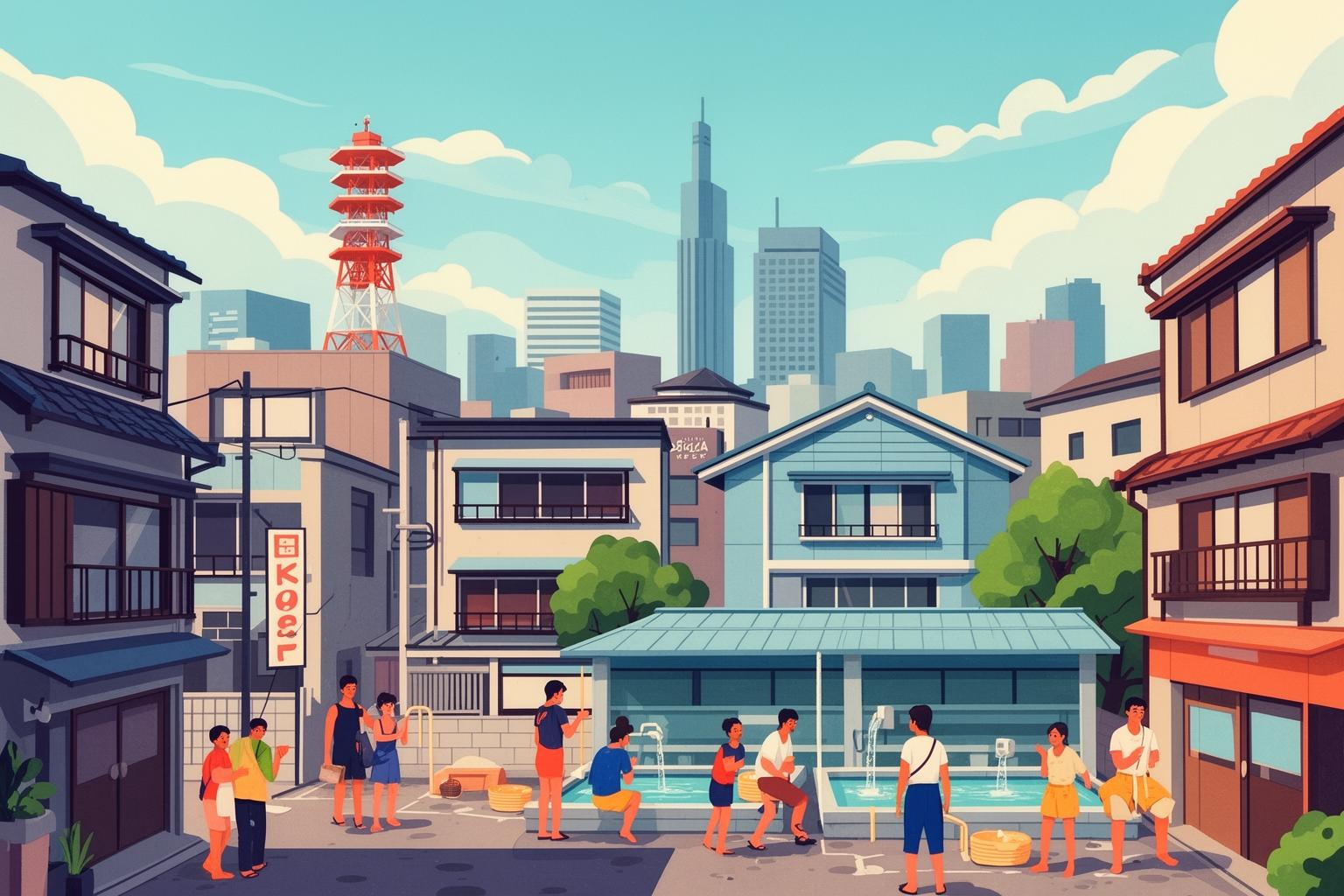
The first time you encounter a classic Sento, you might mistake it for a temple. Many feature karahafu, those elegant, undulating gables that sweep over the entrance—an architectural element once reserved for buildings of high status. This design choice is intentional, meant to elevate the bathhouse and signal that it is a special, respected place for ordinary people. It immediately conveys that what happens inside is more than a simple, everyday task. As you approach, the faint scent of steam and soap drifts out, blending with the evening air. A tall chimney stands prominently, a landmark in older neighborhoods, proudly guiding those seeking warmth and relaxation. The entrance is always veiled by a noren, a fabric curtain dyed in deep indigo or warm persimmon, adorned with the character for hot water, ゆ (yu), or the Sento’s name. This curtain serves as a portal, a symbolic boundary between the busy outside world and the calm, steamy interior.
More Than Just Hot Water: The Sento as a Social Hub
Once you step through that curtain, the atmosphere transforms. The city’s noise gives way to a symphony of softer, more personal sounds: the gentle clatter of wooden shoe lockers, the friendly greeting from the bandai-san (the attendant sitting on a high platform who watches over both the men’s and women’s sides), the echoing splash of water, and the soft murmur of contented conversation. This is the essence of the Sento experience. In Japan, there is a concept called hadaka no tsukiai, meaning “naked communication” or “naked fellowship.” The idea is simple yet profound: when you shed your clothes, you also shed social ranks, titles, and pretenses from the outside world. Everyone becomes equal, vulnerable, and open. In the warm, misty air of the Sento, conversations flow freely. You’ll overhear discussions ranging from the price of vegetables to the latest Hanshin Tigers game. Even if you are a foreigner with limited Japanese, a simple nod and smile can open doors. The Sento is one of the rare places where usual social barriers feel wonderfully permeable. It is a space of unspoken camaraderie, a shared experience that unites the community in ways few other public venues can.
A Gallery of Steam and Tile
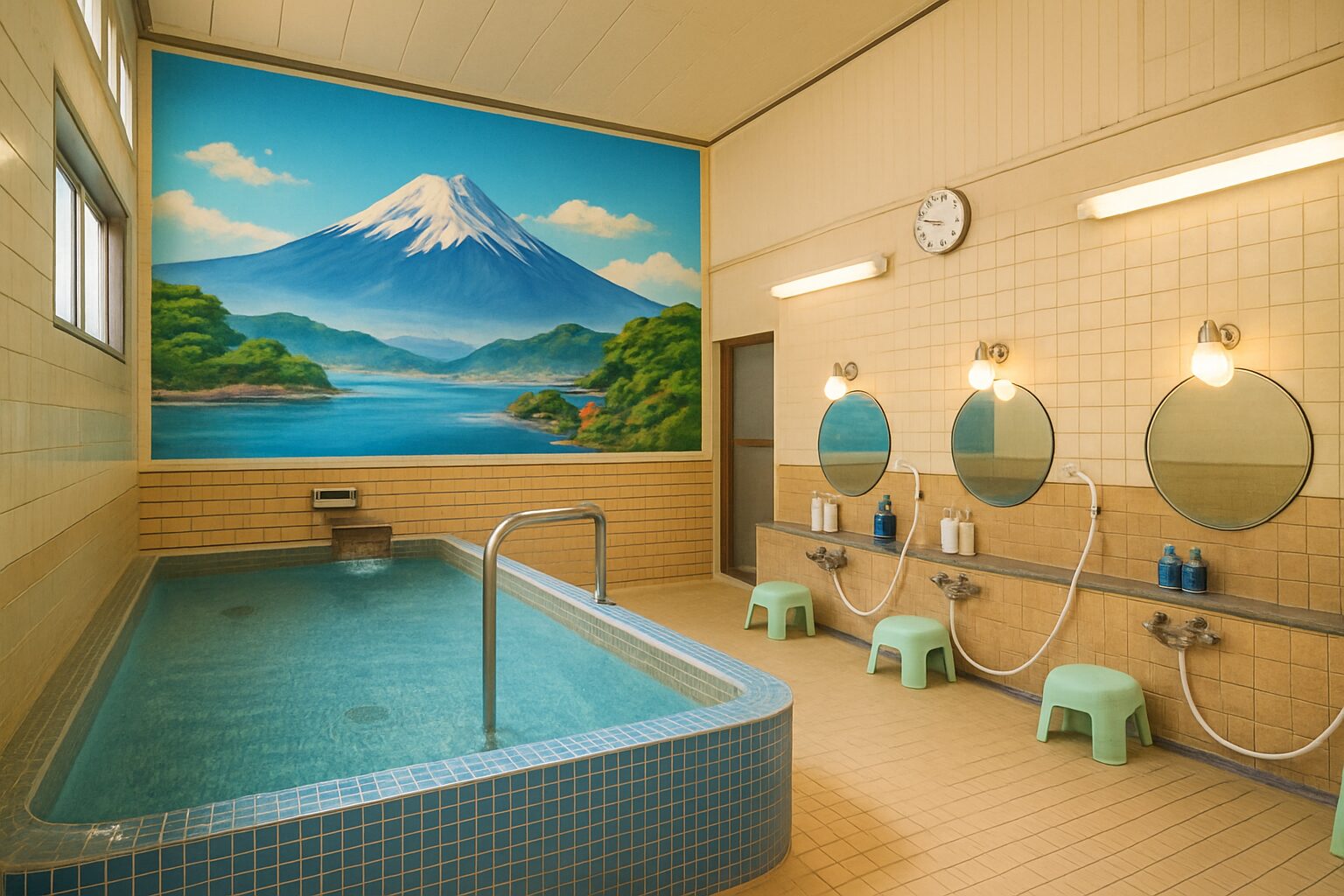
The traditional Sento’s visual appeal is a sensory delight, a journey back in time. The changing rooms, or datsuijo, often showcase dark, polished wooden lockers with intricate keys, vintage hair dryers that seem straight out of a retro sci-fi film, and perhaps an old-fashioned, non-digital scale for weighing yourself. But the true artistry reveals itself when you open the door to the bathing area. The walls are almost always adorned with beautiful tiles, sometimes arranged in intricate mosaics depicting koi fish, flowers, or geometric designs. These tiles serve not only as decoration but also as a durable, easy-to-clean solution that evolved into an art form. Dominating the main wall is often a magnificent mural. The most iconic image is a grand painting of Mount Fuji, its snow-capped peak rising above a tranquil lake. This tradition began in a Tokyo Sento in the early 20th century and spread nationwide, offering bathers an inspiring view as they soaked. In Osaka, you might also find murals illustrating local landmarks like Osaka Castle or scenes from famous festivals. These paintings, often crafted by a small group of specialized artists, turn the bathing area into a public art gallery—a place of quiet reflection and visual pleasure.
Your First Plunge: A Step-by-Step Guide to Sento Etiquette
The idea of bathing with strangers can feel intimidating for first-timers. I recall experiencing a mix of excitement and nervousness before my first visit. However, the process follows a straightforward, sensible set of rituals that quickly become second nature. Think of it less as a strict rulebook and more as an elegant dance of respect and hygiene, designed to ensure everyone enjoys a comfortable and clean experience. Let me guide you through it, just as a kind local obaa-san (grandmother) once guided me on my first visit.
Passing Through the Noren Curtain
Your journey starts at the entrance. You’ll see rows of small lockers called getabako for your shoes. Place your shoes inside and take the wooden key. This simple action marks your first step in leaving the outside world behind. Then, approach the entrance, which is divided by gender. The men’s side is marked with the kanji 男 (otoko) and often a blue curtain, while the women’s side shows 女 (onna) and usually a red or pink curtain. Step inside and you’ll find yourself in the changing room, where the bandai-san will greet you. Here, you’ll pay the fee, typically a modest 400-500 yen. You can also buy soap, shampoo, or a rental towel if you didn’t bring your own. Many Sento now offer vending machines for tickets, making the process even easier.
The Changing Room Routine
Find an empty locker and take a basket for your clothes. This is the moment of truth: you fully undress. Yes, completely. Bathing suits are not allowed in a Sento. It might feel awkward at first, but a quick look around will show that no one is paying any attention. Body positivity is an unspoken rule here; people of all ages, sizes, and shapes are simply there to enjoy the bath. The only items you bring with you into the bathing area are a small towel—often called a “modesty towel”—and your washing supplies if you have them. This small towel serves multiple purposes: you can use it for modesty while walking around and for scrubbing yourself clean. Just remember one golden rule: this small towel never goes into the bathwater.
Before the Bath: Mastering Kakeyu
This is the most important step of Sento etiquette. Before dipping a toe into those inviting tubs, you must wash your entire body thoroughly. Along the bathing area’s walls, you’ll find rows of washing stations, each with a low plastic stool, a faucet, a handheld shower head, and a bucket. Sit on the stool—it’s considered rude to wash standing up, as you might splash others—and give yourself a thorough scrub from head to toe. This is not a quick rinse but a deep cleansing. This ritual ensures the shared bathwater remains pure and clean. The sound of everyone diligently washing is a hallmark of the Sento environment. Once fully clean, use your bucket to scoop hot water from the main tub—this is called kakeyu—and pour it over yourself to adjust your body to the temperature before entering. It’s a final, respectful rinse before entering the communal bath sanctuary.
Soaking in Calm: Discovering the Tubs
Now for the best part: the soak. Most Sento feature several tubs with varying temperatures. There’s usually a main tub that’s quite hot (atsuyu), sometimes reaching 42-44 degrees Celsius. Ease yourself in slowly and avoid making splashes. Let the heat soothe your muscles. Though intense at first, a profound sense of relaxation soon follows. Often, you’ll also find a cooler tub (nuruyu) for those preferring gentler warmth. Beyond the standard baths, many Sento offer therapeutic options. You might encounter a jet bath with powerful water streams massaging your back and shoulders. A word of caution for newcomers: you may find a denki buro, or electric bath, which sends a mild electric current between two plates, creating a tingling, muscle-stimulating sensation. It can be surprising if unexpected, so approach carefully! Some Sento also offer yakuyu, or medicinal baths, infused with fragrant herbs, minerals, or even seasonal ingredients like wine or coffee. If you’re fortunate, the Sento may have a rotenburo, an outdoor bath where you can soak under the stars or a clear sky. As you soak, keep your small towel out of the water. Most fold it neatly and place it on their head, which helps prevent dizziness in the heat. You can also rest it on the side of the tub. Relax, breathe deeply, and let the world melt away.
The Sento Spectrum: From Retro Gems to Modern Spas
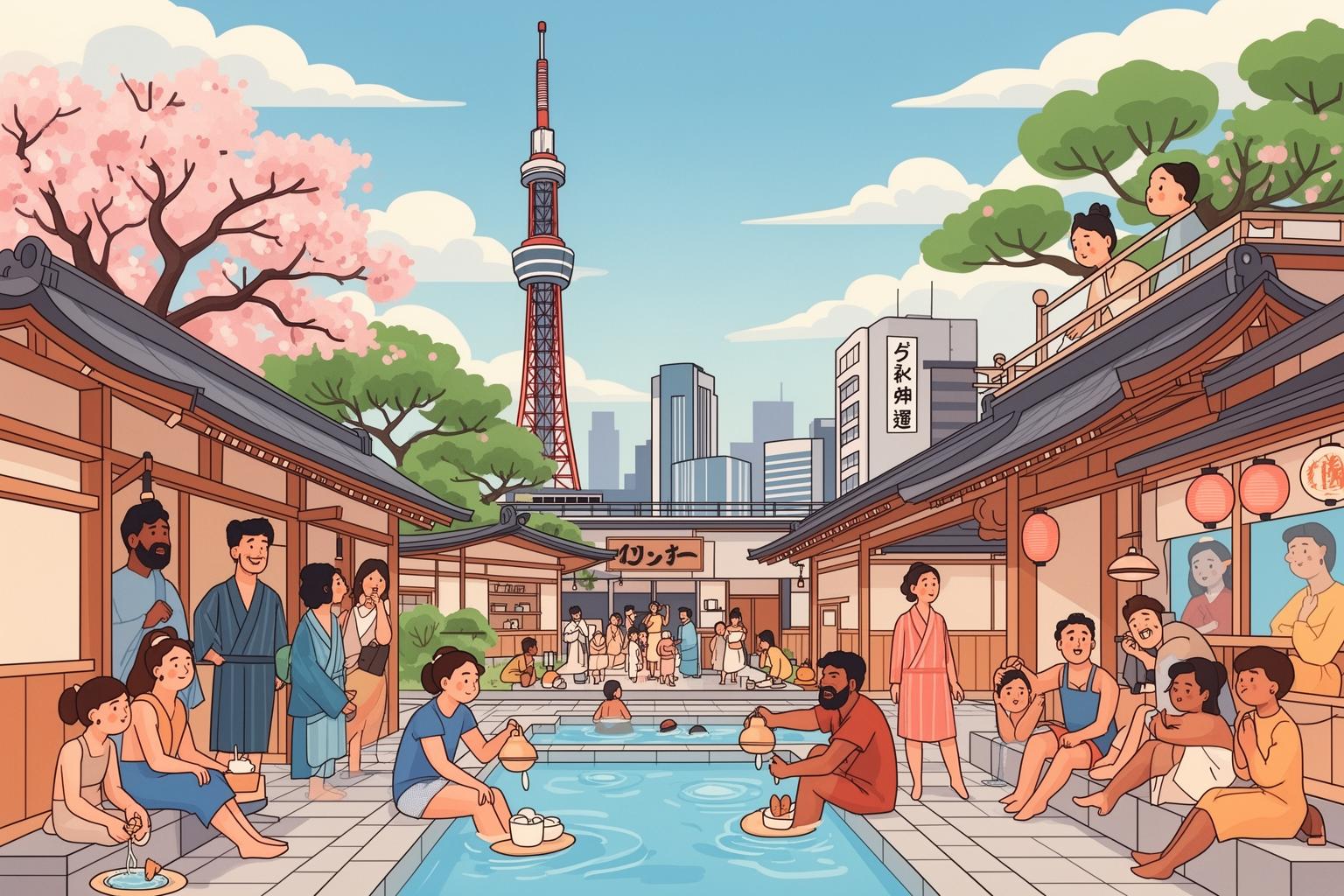
Not all Sento are alike, and Osaka offers a wonderful variety, ranging from traditional neighborhood establishments to expansive, contemporary wellness complexes. Discovering the different types is part of the joy of embracing Sento culture in your daily life here. Each provides a unique experience tailored to various moods and needs.
The Classic Machi no O-furo-san
At the heart of the Sento tradition is the machi no o-furo-san, which translates to “the town’s bathhouse.” These small, often family-operated venues have served their communities for generations. Entering one is like stepping into a living museum. The decor may be a bit worn and the facilities simple, but the atmosphere is rich with history and authenticity. These are the places where community spirit runs strongest. The bandai-san might know every visitor by name, and the air buzzes with the easy conversation of regulars. These Sento are deeply embedded in the neighborhood fabric. They may not offer a variety of baths or fancy saunas, but they provide something far more valuable: a sincere connection to local culture. Finding and regularly visiting a classic Sento in your neighborhood is one of the best ways to feel less like a temporary visitor and more like a true Osaka resident.
Super Sento: The Modern Evolution
At the other extreme are the “Super Sento.” These large, modern complexes have expanded the simple concept of communal bathing into a full-fledged resort experience. Think of them as an accessible and affordable spa day. Super Sento typically feature a wide array of baths, both indoor and outdoor, with varying mineral compositions and temperatures. They almost always include multiple types of saunas—dry saunas, steam rooms, salt saunas—and cold plunge pools. But the experience extends beyond bathing. These facilities often include restaurants, massage and spa treatment centers, relaxation lounges with reclining chairs and personal TVs, and even extensive manga libraries. You can easily spend a whole day at a Super Sento, cycling between bathing, dining, and relaxing. While they may lack the intimate, historical charm of a neighborhood Sento, they offer an unmatched level of relaxation and are a fantastic way to reward yourself after a particularly stressful week.
Weaving the Sento into Your Osaka Life
A Sento visit is more than just a one-time tourist experience; it’s a lifestyle and a ritual that can enrich your life in Osaka. It’s about discovering small havens of peace and warmth amidst the city’s hustle and bustle. The true magic unfolds when you go beyond trying it once and make it part of your regular routine.
The Post-Bath Bliss: A Ritual in Its Own Right
The Sento experience doesn’t end once you step out of the water. The post-bath ritual is equally important and treasured. After drying off and getting dressed, your body feels remarkably clean, warm, and light. Your skin will glow, and your mind will be serene. This is the ideal moment to enjoy another classic Sento tradition: the post-bath drink. Head to the vintage refrigerators in the changing room or lobby, where you’ll find a variety of beverages in old-fashioned glass bottles. The favorites are furutsu gyunyu (fruit-flavored milk) and kohi gyunyu (coffee-flavored milk). There’s something uniquely satisfying about sipping a cold, sweet milk drink after a hot soak. Find a bench in the lobby, savor your drink, and simply sit for a while. This is a time for quiet reflection, letting the sense of well-being settle before heading back out into the night.
An Evening Centered on Sento in the City
One of my favorite ways to experience Osaka is to plan an evening around a Sento visit. Pair it with exploring a new neighborhood. For example, spend the afternoon wandering through the retro Showa-era vibe of the Shinsekai district, then visit a nearby Sento to wash away the city’s grime. Afterwards, you’ll feel refreshed and ready to enjoy kushikatsu and a cold beer for dinner. Or, after a day of shopping along the sprawling Tenjinbashisuji Shotengai, you can slip into one of the many hidden Sentos in the area for a relaxing pause before dinner. Each neighborhood’s Sento has its own distinct character, reflecting its local community. By visiting different Sentos, you’re not just bathing—you’re exploring Osaka’s rich and varied neighborhood tapestry one step at a time.
A Note for Tattooed Travelers
It’s impossible to discuss public bathing in Japan without mentioning tattoos. Historically, tattoos have been linked to the yakuza, or Japanese mafia, causing many establishments—especially high-end onsen resorts—to ban customers with tattoos. However, the situation is changing, particularly in a relaxed and welcoming city like Osaka. Many local Sentos are far more lenient than onsen resorts. You’ll often find that smaller, neighborhood bathhouses do not enforce strict policies. Some might request that you cover small tattoos with waterproof patches, which are available at convenience stores. The best approach is to be observant and respectful. Look for signs at the entrance—some explicitly say “Tattoos OK” (タトゥーOK) or display a tattoo icon. If unsure, it’s wise to ask, but usually, if you are discreet and respectful, you’ll be welcomed. Attitudes are gradually shifting as Japan grows more accustomed to international visitors and the cultural meaning of tattoos beyond Japan.
Finding Your Neighborhood Oasis
So, how do you uncover these hidden gems? Part of the thrill lies in the search itself. As you stroll or bike through Osaka’s residential neighborhoods, watch for those tall, slender chimneys—they are the classic signs of a Sento. Look for the ゆ symbol on signs and curtains. Naturally, in this digital era, Google Maps is a great ally. Typing “銭湯” or “sento” will display a map filled with options you never realized were there. Yet, my preferred way is simply to get a bit lost. Meander down a quiet side street, and you might come across the gentle glow of a Sento lantern, an unexpected invitation to warmth and community. Don’t hesitate to try places that seem modest from the outside; these often hold the most character and offer the warmest welcome. Every Sento you find will feel like your own secret haven, a private refuge in the midst of the city.
A Warm Embrace for Body and Soul
In a world that constantly demands our attention, keeping us glued to screens and rushing from one task to another, the Sento offers a radical form of self-care. It’s a deliberate disconnection, a required moment of mindfulness. No phones are allowed in the bathing area, no deadlines, no social media feeds. There is only the hot water, the steam, the quiet murmur of your own thoughts, and the gentle presence of others partaking in this simple, profound ritual. It’s a place to soothe tired muscles, detoxify the body, and calm a busy mind. But more than that, it’s a place to feel connected—to a tradition, to a community, and to the warm, unpretentious, and deeply human spirit of Osaka. So when the city lights begin to twinkle and the air turns cool, listen for the gentle hum of the neighborhood, find that glowing lantern, and step into the warm embrace that awaits. You won’t just be washing away the day; you’ll be soaking in the very soul of Osaka.