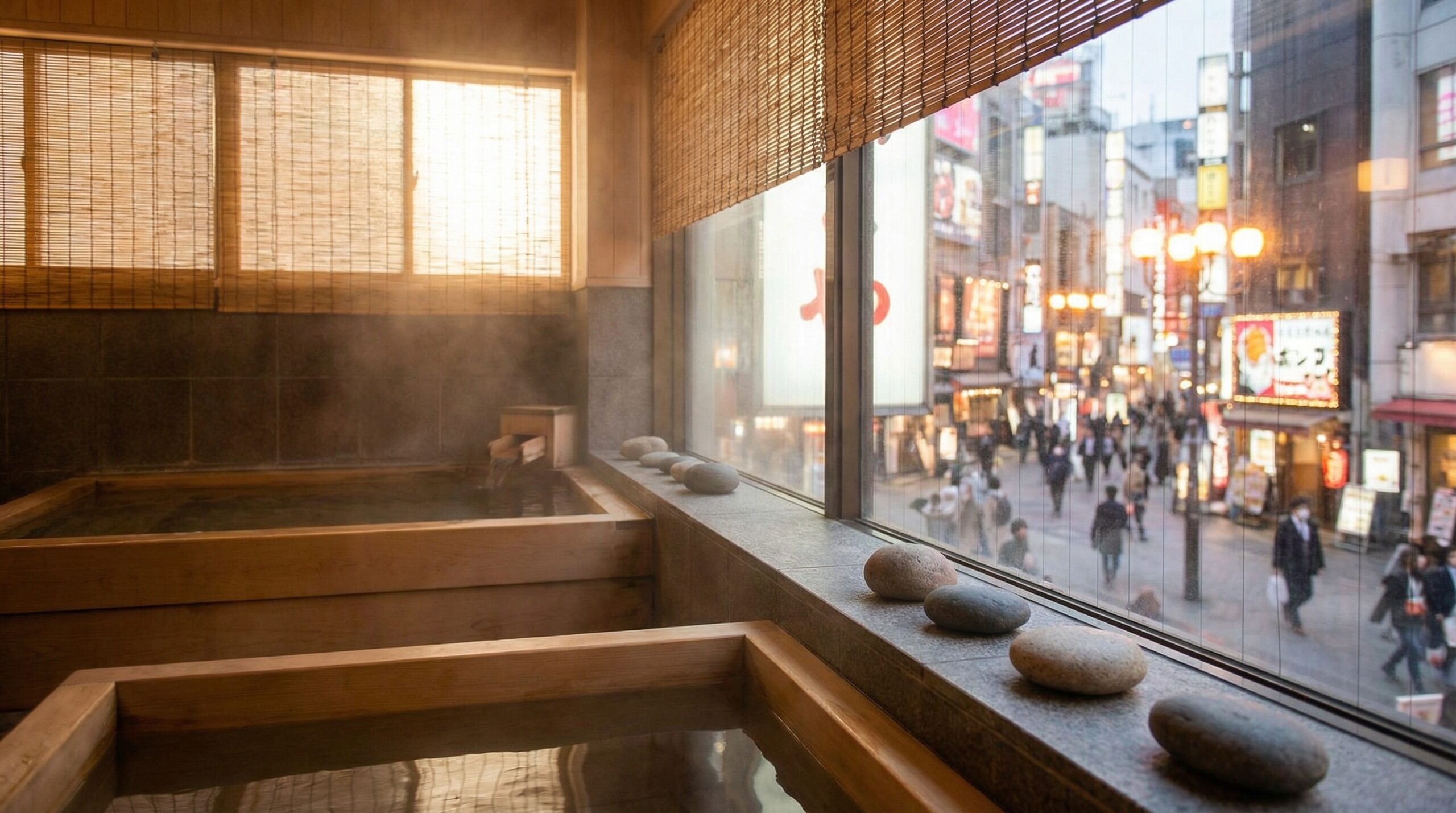
Hey everyone, Sofia here! Let me paint you a picture. Imagine the end of a long, exhilarating day exploring the electric maze of Osaka. Your feet ache from wandering through Kuromon Market, your senses are buzzing from the neon glow of Dotonbori, and your mind is a happy whirlwind of new sights and sounds. You’re tired, but it’s that good kind of tired—the kind that comes from a day well-lived. Now, what if I told you there’s a place, hidden in plain sight on a quiet residential street, where you can wash away that fatigue, connect with the true heart of the city, and emerge feeling reborn? I’m not talking about a fancy spa or an exclusive club. I’m talking about the humble, magical, and utterly essential neighborhood sento, Osaka’s public bathhouses. When I first moved to this incredible city, I saw the tall, slender chimneys and the charming, traditional entrances with their split curtains, and I was intrigued. But it wasn’t until I finally summoned the courage to step inside that I understood. The sento isn’t just a place to get clean; it’s the city’s communal living room, a sanctuary of steam and stories, and a cornerstone of daily life. It’s where generations connect, where the day’s worries dissolve in hot water, and where you can experience a slice of Japanese culture that is as authentic as it gets. Integrating this beautiful ritual into my life has been one of the most rewarding parts of living in Osaka, and I want to share that warmth with you. So, grab a towel, open your mind, and let’s take the plunge together into the wonderful world of the local sento.
If you’re looking for more ways to connect with the local community beyond the sento, consider exploring the vibrant Osaka coworking spaces that also foster cultural exchange.
The Soul of the Neighborhood: What Exactly is a Sento?

Before we begin, let’s address a common question. You’ve likely heard of onsen, Japan’s well-known natural hot springs. A sento is somewhat different, yet equally special. The main difference lies in the water source. Onsen water is naturally heated underground and contains specific minerals from volcanic origins. In contrast, sento use tap water heated by boilers. But don’t be mistaken into thinking it’s just a large bathtub! Sento owners often add unique elements, infusing the water with minerals, bath salts, or seasonal herbs to offer a distinctive and therapeutic experience. Think of it as a carefully crafted bathing experience, designed with the local community in mind.
The history of the sento is deeply embedded in Japanese society. For centuries, especially after World War II when many homes lacked private baths, the sento was essential. It served as the neighborhood’s communal bathroom, but it soon became much more. It was a place to catch up on news, discuss business, build friendships, and find a sense of belonging. It remains a vital social hub to this day. This rich history is evident the moment you enter a traditional sento. The architecture itself tells a story. Many classic bathhouses were constructed in a style called ‘miyazukuri,’ which imitates the grand, sweeping roofs of Shinto shrines and Buddhist temples. This was no accident; it was a conscious effort to elevate the simple act of bathing into something sacred, a ritual of purification for both body and soul. This design fosters a feeling of reverence and tranquility. Though modern sento may have sleek, minimalist designs, the essential spirit of community and renewal endures. The atmosphere inside is a harmony of comforting elements: the soothing, continuous sound of running water, the gentle echo of voices in the high-ceilinged space, the fresh, soapy scent filling the steamy air, and above all, the enveloping, deep warmth that relaxes every muscle in your body.
Your First Sento Adventure: A Step-by-Step Guide to Soaking in Style
Alright, I understand your first visit might feel a bit intimidating. There are customs to follow, unspoken rules to keep in mind, and yes, nudity is involved. But trust me, it’s much less overwhelming than it appears, and the payoff is pure bliss. Let’s walk through the entire experience together, from stepping through the front door to enjoying the post-bath milk, so you can enter confidently like a seasoned regular.
Gearing Up for Glory: What to Bring
Many sento are ready for spontaneous visitors, offering what’s called a ‘tebura setto,’ which literally means an “empty-handed set.” For a small additional fee, you can rent a large towel for drying, a small towel for washing, and often single-use shampoo and soap packets. It’s extremely convenient. However, as you begin to make the sento a regular habit, you’ll probably want to put together your own kit—it’s more cost-effective, and you can use your favorite products.
Here’s your essential sento checklist:
- The Entrance Fee: Sento prices are regulated by the prefecture, keeping them very affordable. In Osaka, the standard adult fee is usually just a few hundred yen. Bring coins to make the payment easy.
- Small Towel: This is your all-purpose tool. It serves as a washcloth in the washing area and a modesty cover when you move between the baths and changing room. Importantly, it does not go into the bath water.
- Large Towel: This is strictly for drying yourself off completely after soaking, when you’re ready to dress.
- Soap, Shampoo, and Conditioner: Many sento provide a basic toiletries set at the washing stations, but it’s common to bring your own, typically carried in a small waterproof basket or caddy.
- Change of Clothes: After soaking and feeling refreshed, putting on fresh clothes is the perfect finishing touch.
- Optional Extras: A hair tie or clip if you have long hair, facial cleanser, moisturizer, and any other skincare items you prefer.
Crossing the Threshold: The Entrance and Noren Curtains
Your journey starts at the entrance, where you’ll be greeted by beautiful ‘noren’—split fabric curtains hanging in the doorway. This is your first important choice! The curtains are color-coded and marked with kanji to show which side is for men and which is for women. Typically, blue or purple indicates men (男 – otoko), and red or pink is for women (女 – onna). Take a moment to check the sign and step into the correct side. Inside, you’ll find the ‘getabako,’ a wall of small wooden shoe lockers. Pick an empty one, slip your shoes inside, and take the wooden key—a long, satisfyingly chunky piece of wood. Don’t lose it!
Next, you’ll approach reception. In traditional sento, this might be a raised platform called a ‘bandai,’ where the owner sits with a view of both changing rooms (a holdover from an earlier time). In newer places, it’s a standard front desk. Here, you’ll hand over your shoe locker key (sometimes) and pay the entrance fee. If you need to rent towels or buy soap, this is the time. In exchange, you’ll likely receive another key for your changing room locker, often attached to a waterproof wristband you can wear while bathing.
The Datsuijo (Changing Room): The Great Undressing
Here we are at the ‘datsuijo,’ or changing room. Locate the locker that matches the key on your wristband. This is where you store your clothes, large towel, and belongings. The only items you’ll bring into the bathing area are your small towel and your washing supplies. Now for the part that often scares newcomers: undressing. The most important thing to remember is no one is watching. Seriously. The sento is a fully non-sexual, non-judgmental space. People of every age, shape, and size come simply to relax and get clean. Any self-consciousness will vanish within about five minutes. It’s actually very liberating. After undressing, you can use your small towel for modest coverage when walking to the baths, though it’s not mandatory. Just act natural, stay confident, and you’ll fit right in.
Pre-Soak Prep: The Art of the Kakeyu
Before you even dip a toe into the steamy tubs, there’s one golden rule—the cornerstone of sento etiquette: you must wash yourself thoroughly. This isn’t just a quick rinse; it’s a full scrub. Upon entering the bathing area, you’ll see rows of washing stations (‘arai-ba’). Each has a faucet, handheld shower, a small plastic stool, and a bucket. Do not wash standing up; that’s rude, as you risk splashing others. Grab a stool and bucket, find an empty station, and sit down. Use the bucket to pour hot water over yourself or the shower head for a complete wash—hair and body. This ritual, called ‘kakeyu,’ ensures you are clean before entering the communal bath, keeping the water pure for everyone. It’s a sign of respect for the space and fellow bathers. Take your time here; it’s part of the relaxation.
The Main Event: Navigating the Tubs
Clean and warmed up, you’re ready for the main event. Most sento offer various tubs, each providing a unique experience—a real journey through heat and relaxation!
- The Main Tub: Usually a large, simple tub heated to a comfortable 40–42°C (104–108°F). Perfect for a long, meditative soak.
- Jet Baths (‘Jetto-buro’): These tubs have strong underwater jets positioned to massage your back, legs, and shoulders. Find your spot, lean back, and let the pressure ease your tension.
- Electric Bath (‘Denki-buro’): A uniquely Japanese experience to approach cautiously! Two low-voltage electric plates in a small tub send a mild electric current through the water, making your muscles tingle and contract. It’s said to help muscle stiffness, but the sensation is unusual and not for everyone. If you try it, enter slowly! Look for the sign with 電気風呂.
- Herbal Bath (‘Yakuyu’): Often one tub is reserved for a special medicinal or aromatic bath, changing daily or seasonally. You might find lavender, chamomile, ginseng, or even red wine or sake baths. They smell delightful and are believed to offer health benefits.
- Cold Plunge Pool (‘Mizuburo’): An essential part of the sento experience, usually near the sauna. The water is shockingly cold. The practice is to heat yourself thoroughly in a hot tub or sauna, then take a quick, brisk plunge into the mizuburo. The contrast is startling but invigorating, great for circulation and closing pores.
- Outdoor Bath (‘Rotenburo’): Not every neighborhood sento has one, but it’s a special treat if they do. There’s nothing quite like soaking in warm water while feeling a cool breeze and gazing at the sky.
Remember the tub etiquette: your small towel stays out of the water. Most fold it and place it on their head, which also helps prevent dizziness. You can also rest it on the tub’s edge. Long hair must be tied up to keep it out of the water. Finally, the baths are for soaking, not swimming. Move slowly, be mindful of others’ space, and let the warmth sink into your bones.
The Post-Bath Ritual: Wind Down and Re-enter the World
When you feel thoroughly relaxed and warmed through, it’s time to leave the baths. Before heading back to the changing room, use your small, damp towel to blot off as much water as possible. This is an important courtesy to keep the changing room floor safe and dry. Once back at your locker, you can dry off properly with your large towel. The changing rooms usually have mirrors, hair dryers (sometimes coin-operated), and powerful fans for cooling down. Take your time; there’s no rush. This is part of the experience.
Now, for my favorite ritual: the post-sento drink. It’s an unwritten rule that after a good soak, you must rehydrate. Look for vintage-style vending machines in the lobby. The holy trinity of post-sento drinks are coffee milk (‘kohi gyunyu’), fruit milk (‘furutsu gyunyu’), and plain milk, all served in iconic glass bottles. Popping the paper cap and sipping a cold, sweet milk beverage when your body still glows with warmth is a moment of pure, simple joy. Many people linger in the lobby or small rest areas, fanning themselves, watching sumo matches on old TVs, and chatting with the owner before heading home.
More Than Just a Bath: The Sento as a Community Hub

The true charm of the sento lies in its function as a social institution. It remains one of the rare places in modern life where the digital world fades away, and face-to-face interaction takes center stage. You’ll find elderly regulars who have visited daily for fifty years, young parents gently washing their toddlers, and friends gathering for their weekly soak-and-chat. It serves as a microcosm of the neighborhood. Here, you can experience the concept of ‘hadaka no tsukiai,’ meaning “naked communion” or “naked friendship.” The idea is that when everyone is stripped of their clothes, they are also free from titles, status, and pretenses. A company CEO might be soaking next to a construction worker, and in the bath, they are simply two people. This egalitarian environment encourages a unique kind of open and honest communication. Don’t be surprised if an elderly woman strikes up a conversation, asking where you’re from or complimenting your Japanese. A simple smile and nod usually suffice, but engaging in some small talk can be a wonderful way to practice your language skills and feel more connected to your community. The sento owner, or ‘sento-no-aruji,’ often serves as the heart of this community. They know everyone by name, keep track of neighborhood happenings, and maintain the bathhouse not merely as a business, but as a public service. They are the guardians of this cherished cultural space.
Finding Your Neighborhood Gem: Sento Spotting in Osaka
Osaka is a treasure chest of sento, ranging from historic landmarks to sleek, modern facilities. Part of the charm is finding “your” favorite spot, the one that feels like a second home. You can often recognize them by their tall chimneys, a necessary feature from the era of wood-fired boilers. Also, watch for the universal symbol for a bath: a stylized kanji or hiragana character for hot water, ゆ (yu), commonly displayed on noren curtains or lanterns outside.
The Old-School Classics
These sento transport you back in time. Look for the magnificent ‘karahafu’ gabled roofs and intricate wooden carvings on the exterior. Inside, you’ll discover vintage tilework, high ceilings designed to let steam escape, and, most famously, a large mural painted on the wall above the main bath. While Mount Fuji is the iconic sento mural throughout Japan, in Osaka, you may find local landmarks such as Osaka Castle or other scenic landscapes. Soaking in a tub while admiring one of these impressive, slightly faded paintings is a deeply nostalgic experience. These places possess an irreplaceable charm and a rich sense of history.
The Modern Marvels: Super Sento and Health Lands
At the other end of the spectrum are the ‘super sento’—large, modern complexes that have transformed bathing into a resort-like experience. For a somewhat higher fee, you gain access to a wide variety of baths, several types of saunas (including salt saunas and steam rooms), cold plunge pools, and often expansive rotenburo. But the offerings don’t stop there. Super sento frequently include restaurants, massage and spa services, nap rooms with reclining chairs and individual TVs, and massive manga libraries. You can easily spend half a day or more relaxing and sampling everything. They make for a fantastic weekend treat and can be less intimidating for first-timers due to their size and more anonymous atmosphere.
How to Find Them
Beyond spotting chimneys and the ゆ symbol, the best way to find a sento is to explore your neighborhood on foot. They are often hidden away on residential streets, waiting to be uncovered. Asking at your local ward office or community center can also provide helpful leads. There are also websites and apps dedicated to mapping sento across Japan, which can be useful for a more focused search. Ultimately, the real joy comes from the serendipitous discovery of a hidden gem just around the corner from your apartment.
Sento Etiquette Deep Dive: The Unspoken Rules

We’ve gone over the basics, but let’s delve a little deeper to ensure you feel fully comfortable and show proper respect for this cultural institution.
- The Tattoo Question: This is a significant concern for many foreigners. Historically, tattoos in Japan have been linked to the yakuza (organized crime), leading many bathing facilities to enforce strict “no tattoos” policies. However, this is changing, especially with the rise in tourism and international residents. Rules differ widely depending on the location. Traditional neighborhood sento can be surprisingly tolerant, particularly if you’re a regular and well-known. Larger super sento and chain establishments tend to be more strict. Some places allow entry if you cover your tattoos with waterproof patches (available at drugstores). The best approach is to check their website beforehand or look for signs at the entrance. When unsure, it’s courteous to ask the staff at the front desk before paying. A simple phrase like “Tatuu wa daijoubu desu ka?” (Are tattoos allowed?) usually works.
- Noise Level: While the sento is a social space, it’s also a place for relaxation. Normal conversation is fine, but avoid loud talking, shouting, or boisterous laughter. Let the gentle sounds of the bathhouse be the main background.
- Saving a Spot: When moving from the washing station to the baths, take your personal items (caddy, towel, etc.) along. Don’t leave your stool and bucket at the station to “reserve” a spot. Since it’s a shared space, make it available for others to use.
- Sauna Rules: If you use the sauna, most will provide a small mat or towel to sit on—always use it. Importantly, after sweating in the sauna, be sure to rinse your body at a washing station before entering the cold plunge pool or any other bath.
- No Photography: This goes without saying, but changing rooms and bathing areas are spaces of absolute privacy. Keep your phone stored in your locker.
A Year in the Sento: Seasonal Soaks and Traditions
One of the most charming aspects of sento culture is its harmony with the changing seasons. Special baths are prepared to mark various times of the year, linking the daily custom to ancient traditions.
- Winter: On the winter solstice (‘toji’), it is customary to enjoy a ‘yuzu-yu.’ The baths are filled with numerous whole yuzu citrus fruits that float on the surface, releasing their wonderful, uplifting fragrance. The oils from the peel are believed to warm the body, prevent colds, and soften the skin. There is nothing more soothing than a fragrant yuzu bath on the longest night of the year.
- Spring: On Children’s Day, May 5th, ‘shobu-yu’ is offered. The baths are filled with long, green iris leaves (‘shobu’), which have a fresh, herbal aroma and are thought to promote health as well as provide strength and vitality.
- Summer: After a hot, sticky Osaka summer day, nothing compares to the sento. A quick, hot soak followed by a long, invigorating stay in the mizuburo is the perfect way to cool off and feel refreshed. Some sento also provide special cooling baths infused with mint or other herbs during this season.
- Autumn: As the air turns cooler, enjoying a rotenburo becomes especially meaningful. Soaking in the hot water while the crisp autumn breeze flows around you is a simple yet profound delight.
Embracing the Sento Lifestyle

In a world that constantly vies for our attention, the sento offers a rare and precious gift: a dedicated moment to disconnect, to focus on the physical sensation of warmth and water, and simply to be present. It serves as a form of active meditation. The health benefits are tangible—improved circulation, relaxed muscles, better sleep—but the benefits for the soul are even more profound. It’s a link to a tradition passed down through generations, a way to engage with the rhythm of your local community, and an incredibly affordable luxury that can transform an ordinary Tuesday into a mini-vacation. So, here’s my advice: be brave. Find that little sento with the charming noren curtain in your neighborhood. Bring your small towel, have your coins ready, and step inside. You might feel a bit awkward for the first ten minutes, but I promise that once you slip into that first hot bath and let out a long, contented sigh, you’ll understand. You’ll have uncovered one of Osaka’s most beautiful secrets and found a new home for your heart.