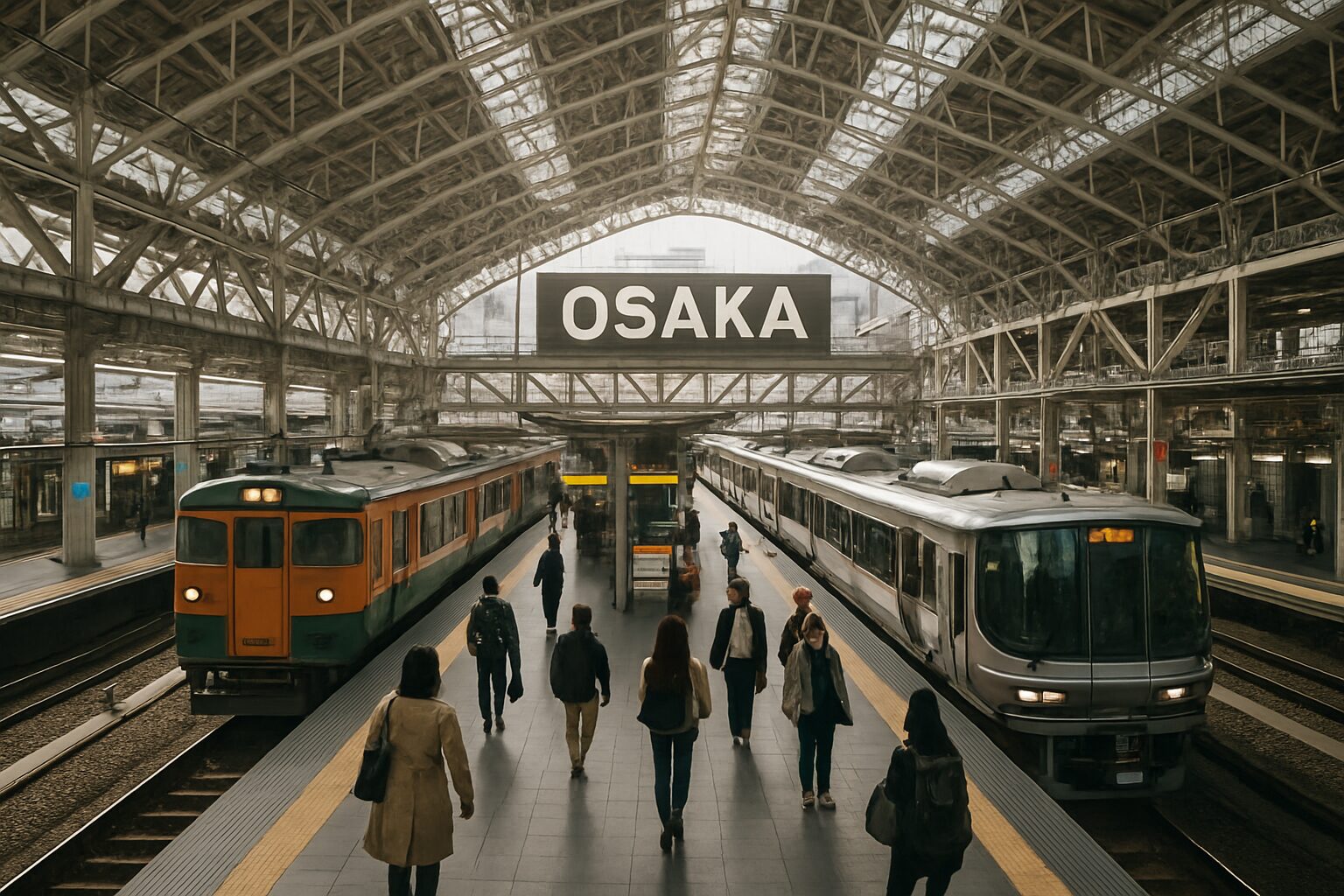
Welcome to Osaka, a city that beats with a relentless, vibrant rhythm. From the sizzling sounds of takoyaki stands in Namba to the soaring heights of the Umeda Sky Building, this is a place of perpetual motion. And the force that drives this energy, the very circulatory system of the city, is its intricate, sprawling, and beautifully complex train network. To live in Osaka is to ride its rails. It’s more than just a commute; it’s a daily immersion into the local culture, a ballet of unspoken rules and shared understanding that, once mastered, makes you feel like a true Osakan. Forget seeing the train system as a daunting challenge. Instead, think of it as your key to unlocking every corner of this incredible city and the wider Kansai region. It’s the steel artery that connects you to work, play, adventure, and the heart of Japanese life. This guide isn’t just about which train to catch; it’s about how to catch it, how to ride it, and how to feel the pulse of the city through the gentle sway of the carriage. Let’s embark on this journey together, navigating the platforms and protocols that define daily life here, transforming you from a visitor into a seasoned local who moves with the city’s unique flow.
After a long day of navigating the city’s rhythm, you can truly unwind like a local by experiencing the relaxing culture of an Osaka neighborhood sento.
The Cast of Characters: Understanding Osaka’s Railway Empires
Before tapping your IC card and passing through the gates, it’s important to realize that Osaka’s train network is not a single unified system. Instead, it’s a competitive ecosystem of powerful railway companies, each with its own history, territory, and unique character. Getting familiar with them is the first step toward mastering navigation. Think of these companies less as mere lines on a map and more as characters in a grand play, each adding to the story of the city.
The National Titan: JR West
The Japan Railways Group, or JR, forms the backbone of the country’s rail system, with JR West operating in western Japan. Its most vital artery in Osaka is the Osaka Loop Line (Kanjo-sen), a crimson-colored circle linking most of the city’s key hubs such as Osaka Station, Tennoji, and Kyobashi. Riding the Loop Line offers a grand tour of the city’s diverse faces—from the gleaming skyscrapers of Umeda and the retro charm of Shin-Imamiya to the historic grandeur near Osaka Castle Park. JR lines are ideal for inter-city travel, seamlessly connecting you to Kyoto, Kobe, and Nara. They also operate the Haruka limited express, a sleek white train offering direct service to Kansai International Airport (KIX). The trains often feel sturdy and utilitarian, designed for efficiency and longer distances. The stations, particularly the enormous Osaka Station, are destinations themselves—modern marvels of architecture, commerce, and human flow. To use JR is to understand the core framework on which the city’s transport system is built.
The City’s Veins: The Osaka Metro
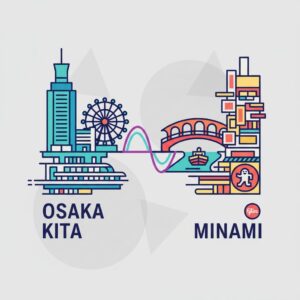
If JR is the backbone, the Osaka Metro is the intricate web of veins and capillaries extending deep into the city’s neighborhoods. It is your primary mode of transport within Osaka City itself. The lines are color-coded and easy to recognize, with the Midosuji Line (red) serving as the most important north-south corridor. This line connects the city’s two largest commercial and entertainment districts, Kita (Umeda) and Minami (Namba, Shinsaibashi). Riding the Midosuji Line during rush hour is a quintessential Osaka experience, showcasing organized, high-density urban life. Other notable lines include the Tanimachi Line (purple), which parallels the Midosuji and serves more residential and historical districts, and the Chuo Line (green), which runs east-west and connects to the Osaka Bay area, home to the aquarium and Universal Studios Japan. Metro stations tend to be simpler than the grand JR hubs but are clean, efficient, and exceptionally well-signposted in multiple languages. Mastering the Metro lets you live like a local, surfacing from underground to discover a hidden izakaya in Tenma or a tranquil temple in Shitennoji.
The Private Powerhouses: Kansai’s Railway Barons
This is where Osaka’s railway landscape becomes truly distinctive. A handful of private companies, founded over a century ago, not only built their own railways but also developed the towns and attractions along their lines. They established department stores, theaters, and even baseball teams to boost ridership. Understanding their unique identities is essential for exploring the wider Kansai region.
Hankyu Railway: The Mark of Elegance
Hankyu is often regarded as the most refined of the private lines. Its trains are a distinctive polished maroon, with interiors often upholstered in plush, golden-olive mohair fabric that exudes a charming retro feel. Hankyu’s domain radiates from its grand terminus at Osaka-Umeda Station, located beneath the massive Hankyu Department Store. Its main lines whisk passengers to the stylish port city of Kobe, the ancient capital Kyoto (ending in the bustling Kawaramachi and scenic Arashiyama districts), and the affluent northern suburbs of Osaka, including Takarazuka, home to the famous all-female musical revue. Riding a Hankyu train feels like stepping back in time, evoking an era of more elegant travel. The company’s philosophy was to cultivate a desirable lifestyle along its routes, a sense of curated quality that endures today.
Hanshin Electric Railway: The People’s Line
If Hankyu is elegant, Hanshin is its scrappy, down-to-earth rival. Also departing from its own station in Umeda (adjacent to Hankyu’s), Hanshin’s main line runs parallel to the coast, providing another vital connection to Kobe. It’s the railway of the people, famously used by fans of the beloved Hanshin Tigers baseball team. On game days, the trains become a sea of yellow and black, packed with passionate fans heading to Koshien Stadium, one of Japan’s most revered sporting venues. The atmosphere is lively and friendly. Hanshin trains feel practical and energetic, linking neighborhoods and communities with no-frills efficiency that its loyal passengers deeply appreciate.
Kintetsu Railway: The Sprawling Giant
Kintetsu operates the largest private railway network in Japan, a vast system extending deep into the Kii Peninsula. From its dual hubs at Osaka-Namba and Osaka-Abenobashi (near Tennoji), Kintetsu serves as your gateway to some of Japan’s most sacred and historic sites. It is the best choice for reaching Nara and its famous bowing deer, the majestic Ise Grand Shrine in Mie Prefecture, and the vibrant city of Nagoya. Kintetsu offers a wide variety of train types, ranging from local commuters to luxurious limited express trains like the Hinotori and Shimakaze, which are destinations in themselves, featuring premium seating and panoramic views. Traveling with Kintetsu feels like embarking on a true adventure, leaving behind the urban jungle for the mountains and coastlines of ancient Japan.
Nankai Electric Railway: The Gateway to the South
Nankai reigns supreme to the south. Its grand, European-style terminus at Namba Station is an architectural landmark. For many, Nankai’s primary service is access to Kansai International Airport via its iconic Rapi:t limited express, a futuristic blue train resembling something from a sci-fi anime. But Nankai provides more than just airport transport. Its lines extend south to Wakayama Prefecture and the sacred mountain temple of Koyasan, one of Japan’s most profound spiritual sites. To reach Koyasan, you take a Nankai train and then transfer to a charming cable car that climbs the steep mountainside. Riding Nankai is often about pilgrimage and escape—whether it’s catching a flight to another world or ascending into the serene, misty forests of a sacred mountain.
The Silent Symphony: Mastering Onboard Etiquette
Now that you’re familiar with the key players, it’s time to learn the dance. Japanese trains, especially in a vibrant city like Osaka, run according to a set of deeply rooted, unwritten rules. Following them isn’t just about politeness; it’s about fostering the `wa` (和), or social harmony, that keeps the system running so smoothly. This is the silent symphony of commuting, and knowing your role is crucial.
The Platform Ballet: Boarding and Alighting
The performance starts even before the train arrives. Look down at the platform, and you’ll notice painted lines marking where the train doors will open. This is where you line up. People form neat, orderly queues, a testament to collective patience. The cardinal rule is clear: let passengers get off before you board. As the doors open, those waiting will naturally move to the sides, creating a clear path for disembarking passengers. Boarding before everyone has exited is the ultimate faux pas; it disrupts the flow and is considered very rude. Once the path is clear, boarding proceeds in an orderly, smooth, practiced manner. This simple act of waiting lays the foundation for the entire system’s efficiency.
The Sanctuary of Silence: The Code of Conduct Inside
Once you step onto a Japanese train, the atmosphere often changes significantly, especially outside rush hour. It becomes a space of quiet, private reflection. The most important rule concerns noise. Keep your voice low. If you’re with friends, speak softly. The biggest taboo is talking on your mobile phone. It’s viewed as a major intrusion into the shared public space. If you must take a call, be apologetic, keep it brief and quiet, or ideally wait until the next station and step onto the platform. Texting and browsing are perfectly acceptable, but keep your phone on silent. Notification sounds, keyboard clicks, and game noises common in other countries are considered disruptive here. The aim is to preserve a peaceful environment for everyone.
Consuming and Cosmetics: The Finer Points
What about eating and drinking? On long-distance trains like the Shinkansen or limited express services with tray tables, it’s perfectly acceptable and even encouraged (welcome to the world of `eki-ben`, or station bento boxes). However, on regular commuter trains for short trips—like the Osaka Loop Line or the Midosuji Line—it’s generally frowned upon. A quick sip of water or tea is fine, but opening a noisy bag of chips or eating a strong-smelling meal is not allowed. Strong odors can disturb fellow passengers in the enclosed space. Likewise, applying makeup on the train is rare and considered a private act; doing so in public can be seen as uncouth, especially since powders and sprays may affect those nearby.
The Art of Space: Bags and Seating
In a crowded city, personal space is precious, and on the train, there are rules designed to maximize it for everyone. If you’re carrying a backpack, the polite thing to do during crowded times is to either wear it on your front or place it on the floor between your legs. This prevents bumping into people behind you as you move. Regarding seating, you’ll see designated priority seats (`yūsen-seki`), usually marked in a different color. These are reserved for the elderly, pregnant passengers, people with disabilities, and those with small children. You may sit in them if they are empty, but you’re expected to give them up immediately should someone who needs them board. It’s also good etiquette to be aware of your surroundings and offer your regular seat to someone who might need it more. In Japan, this kind of courtesy is deeply valued. When a bench seat is partially empty, people tend to fill in from the ends, leaving middle seats for last. Squeezing into a small gap is less common, as the subtle buffer of personal space is respected.
Practicalities for the Daily Grind: Tickets, Cards, and Navigation
Grasping the culture is half the challenge. The other half involves mastering the practical aspects. Fortunately, Osaka’s system is built for efficiency, and a handful of essential tools and tips will make your daily commuting smooth and hassle-free.
The Magic Wand: Your IC Card
The most indispensable tool for any resident is an IC card. In the Kansai area, the local card is called ICOCA (issued by JR West), but it works seamlessly with cards from other regions, such as Suica and PASMO from Tokyo. This rechargeable smart card acts like a magic wand: simply tap it on the reader at the entry gate and again when exiting your destination. The fare is automatically calculated and deducted, eliminating the need to handle cash or decipher complicated fare maps. You can recharge your IC card at ticket machines in any station (most offer English menu options). It can also be used for purchases at convenience stores, vending machines, and select restaurants. This card greatly simplifies everyday life. Keep it topped up, and you’ll have easy access to the entire Kansai transport network with just a tap.
Passes and Tickets: When to Choose Alternatives to the IC Card
While an IC card is ideal for everyday point-to-point travel, there are occasions when a special pass provides better value. If you plan a day packed with sightseeing in Osaka City, the Osaka Enjoy Eco Card is an excellent choice. It offers unlimited rides on Osaka Metro and city buses for a day (weekends come with a slightly higher price) and grants discounts at many tourist spots. For wider travel, private railways offer their own day passes. The Kansai Thru Pass covers most private railways—including Hankyu, Hanshin, Kintetsu, and Nankai—along with subways and buses across Osaka, Kyoto, Kobe, and Nara. However, it does not cover JR lines. This pass is perfect for multi-day trips focused on exploring private railway networks. For residents, the best strategy is to use an IC card for daily commutes and purchase day passes on weekends when planning extensive travel within a particular area.
Decoding Train Types: Not All Trains Are the Same
On a single line, you’ll often encounter different categories of trains. Understanding their hierarchy is essential to avoid slow journeys or missing your stop. Here’s a common breakdown:
- Local (普通 / 各駅停車): Stops at every station along the line. Though slower, it guarantees you won’t miss even the smallest stops.
- Rapid (快速): Skips some smaller stations, allowing faster travel between major hubs. Be sure to check the platform’s route map to confirm it stops where you need.
- Limited Express (特急): Stops only at key stations and is the fastest way to cover longer distances, such as from Osaka to Kyoto or the airport. On most private railways and some JR lines, these trains require an additional express ticket on top of the base fare, offering speed and often reserved seating as benefits.
Always check the digital displays on the platform, which show train type, destination, and departure time, usually alternating between Japanese and English. Knowing how to match the train type with your destination is crucial for efficient travel.
Taming the Maze: Navigating Umeda and Namba Stations
Osaka’s two city centers and their main stations—Umeda/Osaka and Namba—are famous for their complexity. More than just stations, they are underground cities filled with platforms, extensive shopping arcades, and connecting passageways. Don’t be overwhelmed. The trick is to break them down.
Umeda/Osaka Station: This hub of Kita is actually several stations merged together: JR Osaka Station, Hankyu and Hanshin Osaka-Umeda Stations, and Osaka Metro’s Umeda, Nishi-Umeda, and Higashi-Umeda stations. A golden rule is to stay above ground as much as possible when transferring between lines. Use landmarks like the large Daimaru, Lucua, and Grand Front Osaka buildings to orient yourself. If you must go underground, carefully follow the color-coded signs for each line. Don’t simply follow the crowd—pause, read the signs, and locate your line’s logo. Always allow extra time for transfers here.
Namba Station: The heart of Minami, Namba is equally intricate, serving Metro, Nankai, and Kintetsu/Hanshin lines, with JR Namba Station a short walk away. The vast underground shopping arcades like Namba Walk make navigation trickier. Once again, signage is essential. Know which company’s Namba station you need—Nankai? Metro? Kintetsu? Using exits as landmarks is a helpful tip. For instance, knowing to exit near the Takashimaya department store (for Nankai) or the Glico “Running Man” sign (for the Metro) can make all the difference.
The Rhythm of the City: Special Conditions and Experiences
Your experience traveling on Osaka’s trains is far from static. It varies greatly depending on the time of day, the day of the week, and even the season. Recognizing these patterns adds a deeper dimension to your local knowledge.
The Morning Crush: Navigating Rush Hour
Between about 7:30 AM and 9:00 AM on weekdays, trains become incredibly crowded, often surprising newcomers. This is the well-known Japanese rush hour. Carriages reach full capacity, with station staff (`oshiya` or “pushers,” though less common in Osaka than Tokyo) occasionally assisting passengers to board so the doors can close. To cope, adopt a defensive posture: wear your backpack on your front, hold your belongings securely, and move toward the center of the car to make space for others. Personal space disappears. The best approach is to accept this as a temporary, collective situation. Everyone shares the experience, and remarkably, it remains quiet and orderly despite the crowd. If possible, try to travel just before or after peak times to avoid the busiest periods. The evening rush, from around 5:30 PM to 7:30 PM, is similarly intense.
A Space for Comfort: Women-Only Cars
During weekday morning peak hours on many major lines, there are designated “Women-Only Cars” (`josei sen’yō sha`). These cars are usually positioned at the front or rear of the train and are clearly marked on both the platform and the train windows. This policy was introduced to create a more comfortable and secure environment for female passengers during the busiest times. While primarily intended for women, it also includes elementary school-aged children and people with disabilities along with their caregivers. This restriction is enforced only during certain hours, typically until around 9:00 AM on weekdays. Outside these times, the cars are open to all passengers. Being mindful of these cars helps everyone board the correct carriage.
The Sounds and Sights of the Journey
Notice the small details that give the Osaka train experience its distinctive character. Each station features its own unique departure melody (`eki-melo`). For example, JR Osaka Station’s Loop Line platform plays the upbeat tune “Yappasuki yanen” by a local Osaka artist, providing a cheerful send-off. Train announcements are delivered with a polite, melodic rhythm. Inside the train, advertisements offer an intriguing glimpse into Japanese consumer culture. Through the windows, the urban landscape transitions from dense city blocks to quiet residential areas and eventually to green, rolling hills—all within a single ride. The train serves as a moving stage for everyday life. Observe high school students in their uniforms, “salarymen” in dark suits, and elderly couples on day trips. It’s a cross-section of society, a shared experience that links everyone in this vast metropolis.
Your Journey Begins
Mastering Osaka’s trains is a rite of passage for any local. At first, the network of lines and rules may seem complicated, but with some practice and observation, it quickly becomes second nature. You’ll discover your preferred routes, shortcuts through the labyrinth of Umeda, and the quietest car for your morning commute. You’ll start moving in harmony with the city’s rhythm rather than against it. Tapping your IC card will become a smooth, automatic gesture. The silent understanding in a crowded carriage will feel natural, even comforting. To embrace the train system is to embrace Osaka itself. It’s your gateway to endless exploration, from the neon-lit streets of Dotonbori to the serene temples of Kyoto and the sacred forests of Koyasan. So recharge your ICOCA, take a deep breath, and step through the gates. Your Kansai rail adventure is only beginning.