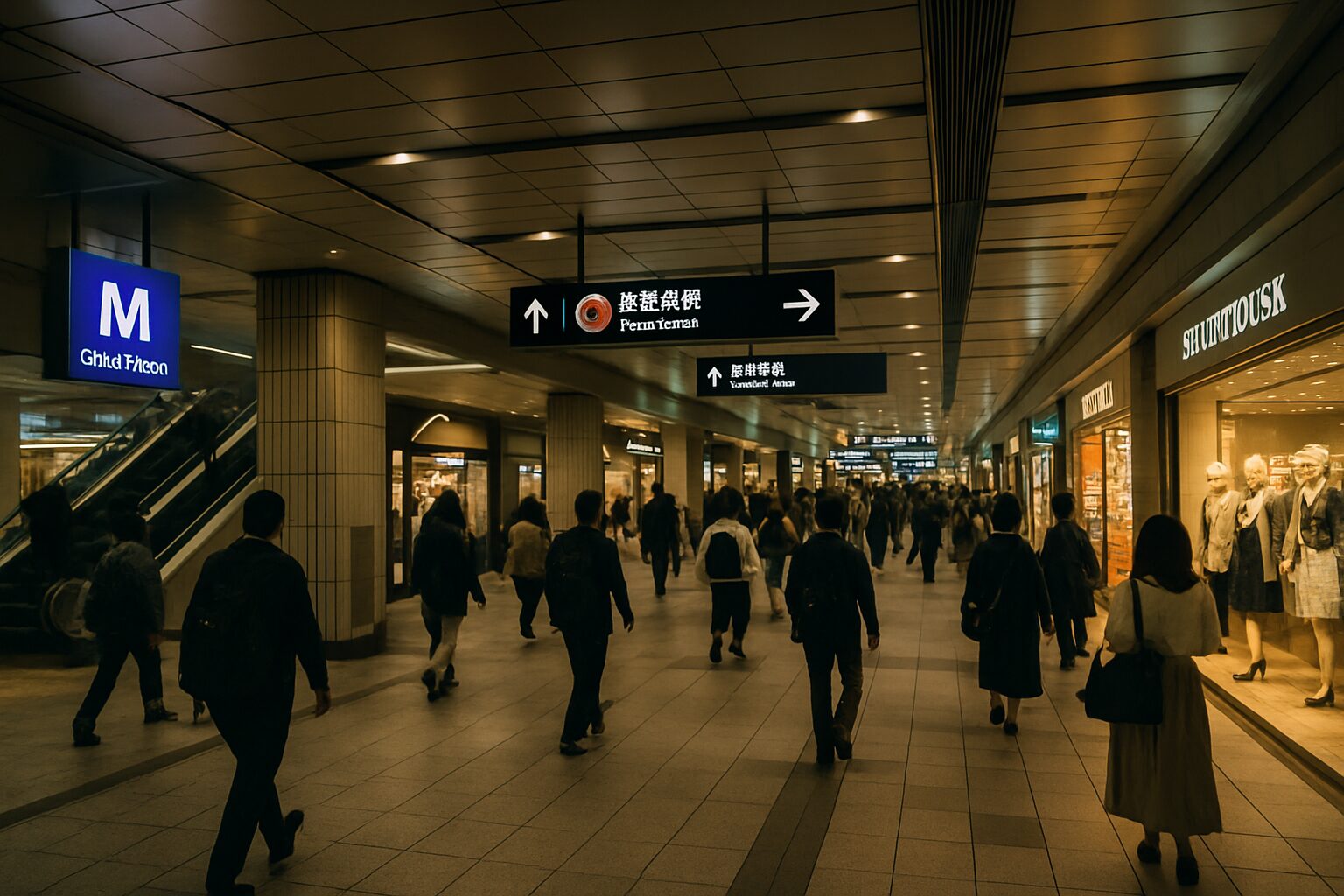
Step off the train in Tokyo, and the underground is a river, a current pulling you swiftly from one platform to another. It’s a place of purpose, of transit, a sleek and efficient network of veins designed to move the lifeblood of the city. You rush, you follow the signs, you emerge. It serves its function with an almost invisible perfection. Now, step off the train in Osaka, into the sprawling, subterranean worlds of Umeda or Namba. The current slows. It eddies. It pools into great, vibrant plazas. The river becomes a sea, teeming with its own unique life. This isn’t just a passage; it’s a place. Osaka’s underground malls, or chikagai, are not merely connections between train lines; they are destinations in their own right, a parallel city that breathes and thrives with a rhythm all its own. They are the city’s climate-controlled living room, its bustling marketplace, its secret garden, all hidden in plain sight, just a few steps beneath the asphalt. To understand Osaka is to understand its heart, and so much of that heart beats underground. Forget what you know about subways and underpasses. Here, we descend into a world built not for haste, but for life itself—a testament to Osakan ingenuity, commerce, and a profound desire to create a comfortable, vibrant space for people, no matter the weather or the time of day.
To truly experience the rhythm of daily life in Osaka, one must also explore its unique morning culture, such as the cherished rituals found in its traditional kissaten.
Umeda’s Labyrinth: A Metropolis in Miniature
The first descent into the Umeda underground is a rite of passage. You might be trying to get from JR Osaka Station to the red Midosuji subway line, a trip that seems straightforward on a map. But as you follow the signs for “subway,” you are engulfed by a world that defies easy navigation. The air shifts, instantly replacing the day’s humidity or chill with a steady, pleasant coolness. The low ceilings, far from oppressive, are bright and crisscrossed with signage, advertisements, and directional arrows that create a language of their own. You are no longer in a station; you are in Whity Umeda, a name that suggests bright, clean modernity—and it delivers. This is the grand dame of Osaka’s underground—a sprawling network that feels less like a mall and more like a beautifully orchestrated city district.
The Symphony of Sights and Sounds
What strikes you first is the sound. It’s not the echoing clamor of a transit hub, but a layered symphony of urban life. There’s the gentle splash of water from Izumi no Hiroba, the Fountain Plaza, a landmark that has served as a meeting spot for generations of Osakans. Recently renovated, its classic fountain was replaced with a symbolic tree of water and light, but its purpose remains unchanged. It’s the town square of this subterranean world. Friends greet each other with smiles, couples wait patiently, and shoppers pause to get their bearings. From this central hub, wide avenues extend in every direction, each with its own distinct character. The floors are polished stone, reflecting the warm glow of countless shop windows showcasing everything from the latest fashion trends to traditional sweets. The air carries a delicious mix of scents: the rich aroma of brewing coffee from a classic kissaten, the sweet, buttery fragrance of a freshly baked cream puff from Beard Papa’s, the savory smell of dashi broth drifting from a standing udon bar tucked into a narrow corridor.
This is not a place for rushing. The pace here is a stroll, an unhurried amble. People aren’t just passing through; they are browsing, window-shopping, deciding where to have lunch. You’ll see impeccably dressed women examining silk scarves, office workers grabbing quick yet delicious bento boxes, and students laughing as they explore a store full of character goods. The crowd is a cross-section of the city itself—a constant, flowing river of humanity moving with relaxed, unhurried grace. Umeda’s underground connects everything: JR Osaka Station, Hankyu and Hanshin Umeda Stations, multiple subway lines, and the basements of the city’s most prestigious department stores—Hankyu, Hanshin, and Daimaru. These connections are seamless. You can walk from a train platform, through the mall, and directly into the dazzling food hall of a department store without ever stepping outside.
Navigating the Maze: Landmarks and Lifelines
For a newcomer, the sheer scale can be intimidating. The interconnectedness of Whity Umeda, Diamor Osaka, and the station buildings creates a labyrinth that has famously confused even lifelong locals. But the key is to stop thinking of it as a route from A to B and start seeing it as a landscape. Learn the landmarks. Izumi no Hiroba is the north star. The circular plaza in Diamor Osaka, with its elegant high ceiling and seasonal decorations, is another. The distinct tile patterns on the floor shift as you pass from one section to another, a subtle clue that you’ve crossed an invisible border. The signage, while complex, is color-coded. Deep blue points toward JR lines, bright red to the Midosuji subway, and wine-red to the Hankyu railway. Mastering this visual language is essential to navigating the maze.
A local’s tip: don’t hesitate to look up, but also look down. Overhead signs are your primary guide, but floors often have inlaid lines or symbols indicating major exits or train lines. And when in doubt, follow the flow. If you see a sudden surge of people walking with purpose, they’re likely heading for a major train line during rush hour. If the crowd meanders, you’re in a pure shopping zone. Perhaps the most important advice is to embrace the possibility of getting lost. Some of the best discoveries happen when you take a wrong turn. You might stumble upon a tiny shop selling exquisite handmade paper, a bar that seats only five people, or a quiet corridor with benches offering a moment of peace away from the main thoroughfares.
The Depachika: A Food Lover’s Paradise
One of the most wonderful aspects of the Umeda underground experience is its seamless integration with the depachika, the legendary food halls in the basements of Japanese department stores. The Hankyu and Hanshin department stores, in particular, boast two of Japan’s most incredible food destinations. You can be walking down a corridor in Whity Umeda, turn a corner, and suddenly find yourself in a wonderland of culinary delights. The transition is breathtaking. The lighting grows warmer, the sounds shift to the polite calls of vendors, and the air is thick with the scent of a thousand delicious treats.
Hanshin depachika is famous for its lively, market-like atmosphere. It’s home to the legendary Ikayaki stand, where a simple grilled squid pancake draws constant lines. The tachinomi (standing bar) culture thrives here, with small counters where you can enjoy a fresh beer and some snacks. By contrast, the Hankyu depachika is more refined and elegant. It’s a gallery of gourmet food. You’ll find delicate French pastries that look like jewels, perfectly marbled wagyu beef, rare sakes, and designer fruit that can cost a small fortune. Wandering through these spaces is an experience in itself—a feast for the eyes before it becomes a feast for the stomach. This is where Osakans come to buy gifts, pick up a special dinner, or simply treat themselves. The depachika culture—with its focus on quality, presentation, and seasonal ingredients—is a core part of the city’s identity, and in Umeda, it’s woven directly into the fabric of the underground.
Namba’s Nexus: The Pulse of Entertainment
If Umeda’s underground is a sophisticated, vast city, then Namba’s is its lively, somewhat chaotic, and endlessly entertaining younger counterpart. Situated in the heart of Minami, Osaka’s southern entertainment district, the Namba underground network—mainly Namba Walk and Namba Nannan—offers a completely different atmosphere. It’s faster, louder, and more connected to the vibrant street culture buzzing just above. It serves as the lifeblood that feeds directly into Dotonbori, Shinsaibashi, and the Den Den Town electronics area. Entering Namba’s chikagai feels less like stepping into a pristine city and more like plunging backstage into a massive, ongoing festival.
An Atmosphere of Spontaneity
Namba Walk stretches nearly a kilometer, a long, straight passage linking the various Namba stations—Nankai, Kintetsu, Hanshin, and the subway lines. It is divided into themed areas, such as the “Art Park” boasting whimsical sculptures and the “Water Park” featuring a canal and fountains, yet the overall vibe is one of constant movement and eclectic energy. The shops range from major chains and quirky independent boutiques to discount stores. You’ll find ticket vendors selling seats for the latest shows at the Namba Grand Kagetsu comedy theater, stores filled with colorful socks priced at 300 yen, and walls lined with gachapon capsule toy machines. The lighting can seem a bit harsh, the ceilings slightly lower, but all this contributes to its unpretentious, high-energy vibe.
The sounds differ, too. You’re more likely to hear upbeat J-pop blaring from a storefront or the clatter and electronic jingles of a nearby pachinko parlor. The scents are earthier: the savory-sweet aroma of takoyaki sauce, the rich fragrance of pork bone broth from a ramen shop, the faint, sugary smell of crepe batter. The crowd is younger—a mix of tourists fresh off the Nankai airport express, students heading to entertainment venues, and locals on their way to a baseball game or concert. There’s a sense of purpose here, but one focused on leisure and fun rather than business or upscale shopping.
The Gateway to Play
What makes the Namba underground so essential is its role as a gateway. Every few meters, stairs lead up to a different world. Exit 14 brings you to the base of the Dotonbori bridge, beneath the iconic Glico running man sign. Another exit drops you right into the middle of Sennichimae Doguyasuji, the kitchenware street. Yet another leads to the entrance of the Shinsaibashi-suji shopping arcade. The underground serves as a weatherproof, year-round concourse for the city’s entertainment district. On a scorching summer day or during a sudden downpour, you can travel from train to restaurant, movie theater, comedy club, and bar without ever facing the elements. This practical feature makes it an indispensable part of a night out in Minami.
Namba Nannan, located beneath the Takashimaya department store and Nankai Station, is one of Osaka’s oldest underground malls, exuding a slightly retro, Showa-era charm. The shops here are smaller and more specialized, including old-school coffee shops and restaurants serving the same classic dishes for decades. It feels cozier and less like a thoroughfare than Namba Walk. Exploring these older corridors is like peeling back layers of the city’s history—almost as if you can sense the echoes of commuters and shoppers who’ve tread these tiled floors for generations.
The Tale of Two Cities: Tokyo’s Veins vs. Osaka’s Heart
The core distinction between the underground worlds of Tokyo and Osaka lies in their purpose. It represents a philosophical divide that captures the essence of these two cities. Tokyo’s underground is an engineering marvel, a system designed for the utmost efficiency in transporting millions. Consider the labyrinth beneath Tokyo Station or the extensive connections at Shinjuku. They are vast and intricate, yet their essence is that of a passageway. The shops and restaurants lining these corridors primarily serve the commuter in transit: convenience stores for a quick drink, bento shops for takeaway meals, souvenir stands for last-minute gifts. These spaces are clean, well-lit, and clearly signed, but inherently transient. There’s a subtle, constant pressure to keep moving—catch your train, reach your destination. Tokyo’s underground functions like veins, expertly circulating people through the urban body.
Conversely, Osaka’s underground is the city’s heart. It is a destination in itself. People don’t simply pass through Whity Umeda; they make plans to meet there. They spend entire afternoons shopping, eating, and relaxing, sometimes without any intention of boarding a train. The ecosystem is designed to encourage lingering. Wide plazas with ample seating, captivating fountains, art installations, and a vast variety of shops catering not only to needs but also to desires—all embody an urban design philosophy that values dwelling as much as movement.
This contrast stems from Osaka’s history as a merchant city, known as the tenka no daidokoro, or “the nation’s kitchen.” Commerce and community are deeply entwined here. Every space, even underground, is an opportunity to create a lively marketplace and a hub for social interaction. Additionally, Osaka’s climate—with its hot, humid summers and chilly winters—makes expansive, climate-controlled public spaces especially attractive. The underground malls act as the city’s all-weather parks and piazzas. They exemplify practical urbanism, driven by a desire to enhance comfort, convenience, and enjoyment in city life. While Tokyo built its underground for speed, Osaka built its for living.
Living by the Seasons, Underground
The underground’s role as a living space becomes most evident in its seasonal transformations. It mirrors the city above, reflecting the changing seasons with distinct flair. In spring, plazas are adorned with delicate cherry blossom motifs. Cafes and bakeries feature sakura and strawberry-themed specialties, and display windows showcase the soft pastels of spring fashion. Summer reveals the underground as the city’s savior. As the asphalt above swelters, the cool, dry air of the chikagai offers refuge. Shops hold sales, and restaurants highlight refreshing dishes like hiyashi chuka (cold ramen) and kakigori (shaved ice). Tanabata brings bamboo branches where visitors hang wishes on colorful paper strips.
Autumn arrives in deep reds and oranges. The aroma of roasted chestnuts and sweet potatoes wafts from specialty food stalls. Halloween decorations, once a novelty, have grown into extravagant displays, especially in the youth-oriented Namba underground. Winter, perhaps the most enchanting season, drapes the entire underground network in spectacular illuminations. From late November through Christmas and into the New Year, corridors and plazas glitter with millions of tiny lights, creating a warm, festive ambiance that offers a welcome escape from the cold winds above. This ongoing transformation ensures the underground is never static or monotonous. It is always evolving, consistently offering fresh sights and experiences that invite repeated visits.
An Explorer’s Guide to the Netherworld
For a first-time visitor, diving into this underground world can feel intimidating. However, with the right attitude, it becomes one of the most fulfilling urban experiences you can enjoy. Here are some suggestions to guide your exploration.
First, release the fear of getting lost—in fact, expect it. Set aside time to wander aimlessly. Follow a passage that catches your eye. Let curiosity lead the way. The worst outcome is discovering parts of the city you wouldn’t have encountered otherwise. Remember, being truly lost is impossible. Every route eventually leads to a major station or department store, where finding your bearings is easy. Signs pointing to key landmarks are everywhere.
Second, use the underground as your all-weather thoroughfare. Check the map before heading out. If you need to get from your hotel near Umeda to a restaurant on the far side of the station complex on a rainy day, there is almost certainly an underground path. Learning to navigate these routes like a local transforms your city travel experience. It shelters you from rain, summer heat, and winter cold while often revealing interesting shops and cafes along the way.
Third, immerse yourself in the food culture. Don’t just pass by the depachika; dive into it. Sample the free offerings from vendors. Watch how locals carefully choose their items. An excellent budget tip is visiting a depachika about an hour before closing. Many fresh foods—sushi, salads, bento boxes—are marked down with discount stickers. It’s a perfect way to enjoy a high-quality meal at a fraction of the cost.
Finally, pay attention to the details. Notice the art. Many corridors showcase permanent or changing installations, from stained glass murals to modern sculptures. Observe the architecture and how the style and materials shift between older and newer mall sections. Listen to the music—some areas have curated background tunes that vary throughout the day. These subtle details turn a simple walk into a rich sensory adventure.
As you ascend to the surface and adjust to natural light, the city above feels different. You’ve just glimpsed its hidden workings—its warm, beating heart. Osaka’s vast underground is more than impressive infrastructure; it is a living expression of the city’s soul—practical, commercial, and deeply human. It’s a space made for people, a reminder that sometimes the city’s most vibrant parts aren’t those that reach skyward, but those that burrow deep, creating community and comfort for all. So next time you’re in Osaka, don’t just pass through. Take a detour, descend the stairs, and lose yourself in the city beneath the city. A whole world awaits discovery.