The sun hasn’t quite wrestled the neon glow of last night into submission, but the city of Osaka is already stirring. It’s a low hum at first, the rumble of the day’s first trains, the metallic clang of shop shutters rolling up along a covered shotengai. Amidst this urban overture, a different kind of ritual is unfolding behind doors fogged with condensation, in spaces that seem to exist outside of time. This is the world of the kissaten, Osaka’s classic coffee houses, and the sacred tradition of mōningu sābisu—the morning service. Forget the grab-and-go coffee culture you know. This isn’t about a quick caffeine hit. This is a gentle easing into the day, a moment of profound, affordable luxury that is woven into the very fabric of local life. It’s a cultural institution, a breakfast bargain, and a time machine all rolled into one. For the price of a single, thoughtfully prepared cup of coffee, a small feast appears before you: thick, golden toast, a perfectly boiled egg, and a small salad. It’s a simple promise that says, “Slow down. The day can wait.” To understand Osaka, you must understand its morning rhythm, and that rhythm beats strongest inside the warm, coffee-scented heart of a neighborhood kissaten. It’s where the city takes a collective breath before plunging into its famously energetic day.
Just as the kissaten offers a moment of calm to start the day, many locals find a similar sense of peace to end it by unwinding at a traditional Osaka sento.
The Atmosphere: Stepping into a Showa-Era Dream
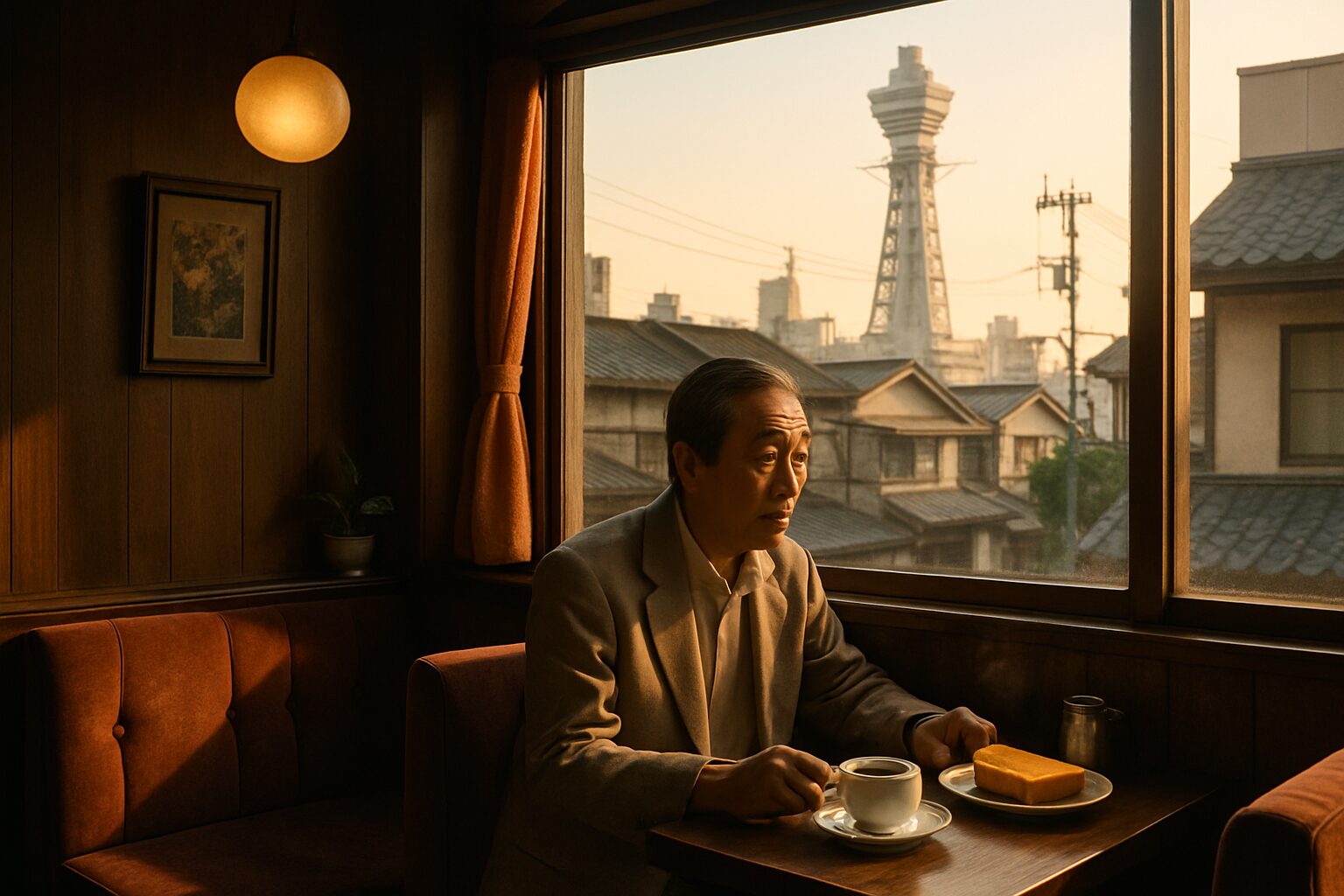
Opening the door of a genuine Osaka kissaten is like stepping away from the 21st century’s rush on the pavement. The first thing you encounter is a wave of warm air, thick with the rich aroma of dark-roast coffee and, often, a faint, nostalgic trace of cigarette smoke—a lingering echo of a past era. The frantic energy of the city streets fades immediately, replaced by a deep and cherished quiet. The soundscape here is subtle, a gentle symphony of porcelain cups clinking, the soft rustle of broadsheet newspaper pages turning, the low murmur of longtime regulars’ conversations, and the rhythmic, almost meditative hiss and gurgle of a siphon coffee brewer at work. These are not places for loud music or rushed transactions; they are havens of calm, meant for lingering.
Your eyes gradually adjust to the typically dim, atmospheric lighting. The decor exemplifies Showa-era (1926–1989) aesthetics, a style born from a time of significant economic and cultural transformation in Japan. Dark, polished wood paneling lines the walls, absorbing sound and light to create a cozy, womb-like atmosphere. Seating rarely consists of mere chairs and tables; instead, plush, high-backed booths upholstered in well-worn velvet or cracked vinyl in hues of burgundy, forest green, or deep brown provide a sense of privacy, allowing you to carve out your own little world. Light filters through ornate Tiffany-style stained-glass lamps hanging low over the tables, casting colorful geometric patterns. An old pendulum clock on the wall ticks with a steady, comforting rhythm, its hands having marked countless mornings like this one. A vintage rotary telephone might even be tucked away in a corner, a silent testament to the kissaten’s past as an essential communication hub before the mobile phone era.
This is no curated, retro-themed design dreamed up by a modern stylist. It is authenticity earned through decades. Every scuff on the floor, every faint stain on the upholstery, every yellowed poster on the wall tells a story. The air itself carries the weight of accumulated conversations, business deals, quiet reflections, and first dates that have unfolded within these walls. At the heart of this world is the counter, the territory of the masutā, or master. Often a quiet, focused figure, they move with the economy of motion refined by years of experience. Watching them prepare coffee using a flannel drip or a gleaming siphon is like witnessing a craftsman at work. Their presence is a grounding force, the silent guardian of this peaceful little realm. The clientele represent a cross-section of the neighborhood: elderly couples who have visited for forty years, a salaryman in a crisp suit reviewing documents before a meeting, a student absorbed in a textbook, a group of women chatting quietly. These are the jōren, the regulars, who treat the kissaten as an extension of their own living room. For a visitor, stepping into this world feels like being entrusted with a beautiful local secret.
The Morning Service: Deconstructing the Perfect Start
The core idea of morning service is surprisingly simple and wonderfully generous. You order a drink—usually coffee or tea—and for that price, or a tiny extra charge of 50 to 100 yen, you receive a complimentary breakfast plate. This tradition, which famously began in the neighboring Aichi Prefecture, was eagerly embraced by the practical and value-minded people of Osaka. The classic set is a study in balanced simplicity, with each element playing an essential role.
First, the coffee. This is not the bright, acidic, fruity brew typical of the third-wave coffee movement. Instead, kissaten serve coffee that is unapologetically traditional. The beans are generally dark roasted, producing a bold, rich, low-acidity cup with notes of chocolate and caramel. It’s often brewed with meticulous, slow-drip techniques. The flannel drip, or neru dorippu, involves pouring hot water over grounds in a cloth filter—a skillful process that yields coffee with a uniquely smooth, velvety texture. Another iconic method is the siphon, a theatrical and scientific-looking device of glass globes and open flames that uses vapor pressure and vacuum to create an exceptionally clean and aromatic cup. The result is a strong but smooth coffee, perfect for awakening the senses. It’s served in a thick, pre-warmed porcelain cup that feels substantial in your hand—a small but meaningful detail.
Next to the coffee is the highlight of the plate: the toast. This is no ordinary slice of bread. It’s shokupan, Japanese milk bread, cut into a gloriously thick slab, often over an inch thick. This atsu-giri tōsuto (thick-cut toast) is toasted to a perfect golden-brown on the outside, while inside it remains incredibly soft, fluffy, and cloud-like. It’s a textural delight. Served warm, it’s pre-cut into a grid for easy eating and topped with a melting pat of butter. Some places offer toppings like a small pot of strawberry jam or, for a truly Japanese touch, Ogura-an, a sweet adzuki red bean paste. The combination of sweet bean paste and salty butter on fluffy toast is a revelation—comfort food at its best.
Accompanying the toast is the protein, usually a single hard-boiled egg, or yude tamago. Often served warm in its shell, nestled in a small dish with a salt shaker, peeling the egg yourself is part of the morning routine. There’s a satisfying pleasure in revealing the perfectly set, creamy yolk. Some kissaten might provide a freshly made tamagoyaki (rolled Japanese omelet) or a small scoop of scrambled eggs instead, but the humble boiled egg remains the classic choice. To complete the plate, there’s often a small side salad. More of a garnish than a full salad—a few crisp lettuce leaves, a slice of tomato, and perhaps a thin cucumber slice—dressed with a tangy Japanese-style sauce, commonly sesame or soy-based vinaigrette. This adds a fresh, clean contrast to the richness of the toast and coffee.
While this classic set is the standard, many kissaten offer delightful variations. You may find morning sets featuring a hotto sando (hot sandwich), usually filled with egg salad, ham, and cheese pressed between slices of shokupan. Another favorite is the mikkusu sando (mixed sandwich), a colorful assortment of different cold sandwiches cut into neat triangles. For a few hundred yen extra, you can often upgrade to more elaborate sets that include items like a small sausage, yogurt, or a fruit cup. No matter the combination, the defining trait is the incredible value. A satisfying, thoughtfully prepared breakfast for the price of a single coffee is a small economic miracle and a tribute to the spirit of hospitality, or omotenashi, that defines these cherished establishments.
A Cultural Time Capsule: The History Behind the Coffee

The kissaten is more than merely a coffee shop; it serves as a living museum of mid-20th century Japanese culture. Their peak era was the Showa period, a time marked by rapid post-war reconstruction and economic expansion. During this phase, the kissaten became a crucial “third place,” a social space that was neither home nor office, where people could connect, relax, and conduct business comfortably.
Before the widespread availability of telephones and the internet in every home, the local kissaten functioned as an informal community center and remote office. Salarymen would meet clients over coffee, using the shop’s rotary phone for important calls. Artists and writers gathered in smoky corners to debate philosophy and plan their next great work. Young couples attended omiai, or arranged marriage meetings, discreetly supervised by their parents. The kissaten provided the backdrop for everyday Japanese life.
They were also centers of information and entertainment, with shelves stocked with the latest newspapers, weekly magazines, and vast manga collections. For the price of a coffee, patrons could sit for hours, catching up on current events, following their favorite comics, or simply watching the world go by. This habit of providing reading material encouraged lingering, transforming the kissaten from a place of simple consumption into one of leisure and self-enrichment. The quiet, studious ambiance in many kissaten today is a direct inheritance of this tradition.
Osaka, known for its long history as a merchant city, developed a distinctive kissaten culture. Marked by down-to-earth pragmatism and a sharp sense of value, Osaka’s kissaten are, and remain, deeply integrated into the life of the local shotengai (covered shopping arcades). These are unpretentious, inviting spots where shop owners, workers, and shoppers mix. The tradition of the morning service thrived here, fitting perfectly with the Osakan love for a good deal (mecha yasui!). It was a way for shop masters to show gratitude to regular customers and maintain steady business throughout the day.
With the emergence of global coffee chains in the late 20th century, traditional kissaten faced a serious challenge. The fast-paced, standardized experience offered by these new cafes attracted a younger generation, leading many beloved family-run kissaten to close their doors. However, in recent years, a strong wave of nostalgia and a growing appreciation for authenticity have sparked a kissaten revival. A new generation, along with foreign visitors, is discovering the unique charm of these Showa-era treasures. They seek the slower pace, the superior coffee craftsmanship, and the tangible connection to a city’s history that chain stores cannot provide. The kissaten is no longer just a coffee shop; it has become a cherished cultural asset.
Finding Your Morning Haven: Navigating Osaka’s Kissaten Scene
Osaka is a vast metropolis, and its kissaten are as varied as its neighborhoods. Finding the perfect one is part of the journey. Rather than searching for a single “best” spot, consider exploring the unique flavors each area offers.
In the busy business districts of Umeda and Kita, kissaten often serve the city’s white-collar workers. Nestled in the basements of office buildings or within the winding underground shopping malls like Whity Umeda, these spots are polished yet provide a welcome escape from the corporate rush. Here, the morning service is a quick but vital ritual for salarymen gathering their thoughts before a day of meetings. A prime example in this area is Marufuku Coffee, a long-established place renowned for its rich, strong coffee and classic ambiance. It’s a space where you can sense the rhythm of Osaka’s commercial core while enjoying a moment of calm.
Travel south to the lively entertainment district of Namba and Minami, and the kissaten take on a different vibe. Among the bright lights of Dotonbori and the fashionable shops of Shinsaibashi, you’ll find venues with more glamour and history. These were once frequented by entertainers, theater patrons, and night owls seeking morning refreshment. One must-visit is American, a kissaten near Dotonbori that feels like entering a film set. With its high ceilings, crystal chandeliers, and grand staircase, it offers a touch of old-world luxury alongside generous morning sets. It’s a reminder of a time when coffee outings were truly special occasions.
For a genuine local, down-to-earth experience, stroll through Tenjinbashisuji Shotengai, Japan’s longest covered shopping arcade. This bustling, 2.6-kilometer commercial thoroughfare is filled with countless small, independent kissaten that have served the neighborhood for generations. Here, you’ll sit beside local shopkeepers and elderly residents as they go about their daily lives. The morning service is simple, hearty, and incredibly affordable. Finding a kissaten here feels like being invited into the neighborhood’s living room—no airs, just good coffee, honest food, and the warm, vibrant spirit of Osakan life.
To really step back in time, head to Shinsekai. This area, nestled beneath the iconic Tsutenkaku Tower, is a living relic of the Showa era. The kissaten here brim with nostalgia, seemingly frozen in time. Enjoying a morning set in Shinsekai before exploring its retro game arcades and kushikatsu eateries is an ideal way to soak up Osaka’s old-school charm. Places like Grill Den-en offer not only coffee but a full menu of Western-style Japanese dishes (yoshoku) in an atmosphere that feels preserved in amber.
Finally, for a glimpse into the future of kissaten, visit Nakazakicho. This quiet neighborhood of narrow alleys is known for its bohemian atmosphere and beautifully preserved pre-war wooden buildings. Here, you’ll find a blend of traditional, long-standing kissaten alongside a new wave of cafes run by young entrepreneurs who have lovingly restored old buildings. These newer spots pay homage to the spirit of classic kissaten—the focus on quality, the relaxed pace, and unique ambiance—while sometimes adding modern touches. Exploring Nakazakicho reveals how the beloved kissaten culture is being reimagined and kept alive for a new generation.
A Beginner’s Guide: Kissaten Etiquette and Tips

Stepping into a kissaten for the first time can feel a bit daunting, as they follow a set of unwritten customs different from those of modern cafes. However, with a few pointers, you’ll quickly feel at home.
When you enter, you might not be welcomed with a loud, cheerful Irasshaimase! Instead, the masutā behind the counter may simply offer a quiet nod. This isn’t rudeness; it reflects the calm, unobtrusive style of service. Look for a sign that says お好きな席へどうぞ (o-suki na seki e dōzo), meaning “please take any seat you like.” If uncertain, just pause briefly and you will be guided to a table.
Ordering is simple. The morning service menu is usually displayed clearly on the table or near the entrance. You can just say, “Mōningu, kudasai” (“Morning service, please”). If there are different sets (often labeled A, B, C), you can point to your choice. Don’t feel hurried; the rhythm is slow and relaxed. The master expects you to take your time.
The key piece of etiquette is to embrace this leisurely pace. A kissaten isn’t meant for a quick coffee run. It’s a place to linger. It’s perfectly normal—and even encouraged—to stay long after finishing your food and drink. Read a book, write in a journal, or simply sit and absorb the atmosphere. This is the true purpose of the space.
A critical cultural point to keep in mind is smoking. Traditionally, kissaten were refuges for smokers, and the scent of cigarettes was part of their ambiance. Although laws have recently changed, many established places may still have smoking sections or allow smoking throughout. Look for signs at the entrance indicating kin’en (禁煙, non-smoking) or kitsuen (喫煙, smoking). If cigarette smoke bothers you, it’s wise to check beforehand.
When it’s time to leave, you usually don’t pay at the table. Take the check, often left in a small holder on your table, to the cash register near the entrance. Many small, older kissaten operate on a cash-only basis, so it’s wise to have some yen ready. As you depart, a polite “Gochisousama deshita” (meaning “Thank you for the meal, it was a feast”) is a lovely way to show your appreciation to the master. This small gesture will typically be met with a warm smile or a respectful nod.
Beyond the Morning: The All-Day Allure of the Kissaten
While the morning service is the most well-known offering, the appeal of the kissaten lasts all day, evolving to suit the needs of its customers. Limiting your visit to the morning hours means missing some of its most enjoyable culinary delights.
As lunchtime nears, the menu changes to hearty and nostalgic yoshoku, or Western-style Japanese dishes. A classic kissaten lunch favorite is Napolitan spaghetti. Though not an authentic Italian dish, it is a uniquely Japanese creation featuring soft spaghetti pan-fried with onions, green peppers, sausage or bacon, and a sweet, ketchup-based tomato sauce. It is pure comfort food, evoking Showa-era childhood memories for many Japanese. Another common dish is Japanese curry rice (karē raisu), a thick, mild, and savory curry served over white rice. You may also find omurice (a fluffy omelet covering fried rice, often adorned with a swirl of ketchup) or a perfectly toasted katsu sando (pork cutlet sandwich).
Afternoon is reserved for a relaxed coffee break, when the kissaten’s remarkable dessert menu shines. Forget simple cakes; kissaten specialize in elaborate, old-fashioned sweets. The pafē (parfait) is a towering masterpiece, a tall glass layered with ice cream, crunchy corn flakes, fresh fruit, whipped cream, and sauces. Another favorite is coffee jelly (kōhī zerī), bittersweet coffee-flavored gelatin cubes served with heavy cream or a scoop of vanilla ice cream. Then there is the grand pudding a la mode, a firm caramel-topped custard pudding (purin) presented on a plate with a colorful assortment of canned fruits, whipped cream, and a maraschino cherry.
The drink menu also surprises beyond coffee. The cream soda is a vibrant green melon soda topped with a scoop of vanilla ice cream, offering a fizzy, sweet, and creamy treat. In Osaka, you must try the mikkusu jūsu (mixed juice). This local specialty is a thick, frothy blend of banana, milk, and various canned fruits like peaches and mandarins. Each kissaten has its own secret recipe, but the result is always a sweet, nutritious, and delicious smoothie-like beverage. These dishes and drinks are more than just food; they are edible history, a taste of the past that continues to bring happiness to people of all ages.
Your Invitation to Slow Down
In a city as fast-paced as Osaka, the kissaten stands as a quiet act of defiance. It declares that there is value in stillness, in savoring a simple meal, and in observing the world from behind a window. Spending a morning in one of these establishments is more than just having breakfast; it is participating in a daily ritual that connects you to the city’s living history and its unhurried spirit. It reminds us that the most memorable travel experiences are often not found in grand monuments or famous attractions, but in the small, quiet moments of everyday life.
So, on your next morning in Osaka, resist the urge to rush. Pass by the convenience stores and sleek modern cafes. Find a side street, spot a hand-painted sign and an unassuming doorway, and step inside. Let the warm, coffee-scented air surround you. Order the morning set. Read a chapter of your book. Watch the master at work. Discover your own neighborhood kissaten and become, even if only for a little while, a jōren. In doing so, you will uncover the true rhythm of Osaka, one slow, delicious, and deeply satisfying sip at a time.