In the neon-soaked, high-speed heart of Osaka, a city that pulses with an insatiable forward momentum, there exists a parallel universe. It’s a world that doesn’t shout but whispers, a place where time doesn’t sprint but ambles, measured not in nanoseconds but in the slow, deliberate drip of dark coffee through a cloth filter. This is the realm of the kissaten, the traditional Japanese coffee house, a living, breathing relic of the Showa era. These aren’t just cafes; they are time capsules, mahogany-paneled sanctuaries where the ghosts of artists, writers, and lovers still linger in the air, thick with the scent of roasted beans and, often, a faint haze of tobacco smoke. For the uninitiated, wandering into a kissaten in a neighborhood like Nakazakicho or a hidden alley off the Tenjinbashisuji Shotengai is to willingly step through a portal, leaving the 21st century behind on the pavement outside. It’s an experience that promises a deep, authentic connection to a bygone Japan, a quiet rebellion against the relentless pace of modern life. But like any journey into the past, it comes with its own set of beautiful, and sometimes challenging, truths. Is this retro retreat the dream it promises to be, a perfect escape into handcrafted nostalgia? Or is it a faded memory, an experience whose charms might be obscured by the very authenticity that defines it? The answer, like the coffee they serve, is rich, complex, and deeply personal. Before we dive into the steam and shadows, let’s get our bearings. These pockets of the past are scattered throughout the city, but one of the most beloved concentrations can be found in the labyrinthine lanes of Nakazakicho, a wonderful place to begin your journey.
For a similarly immersive dive into another facet of the city’s traditional, communal life, consider exploring Osaka’s sentō culture.
The Siren Song of Showa: The Pros of a Vintage Escape
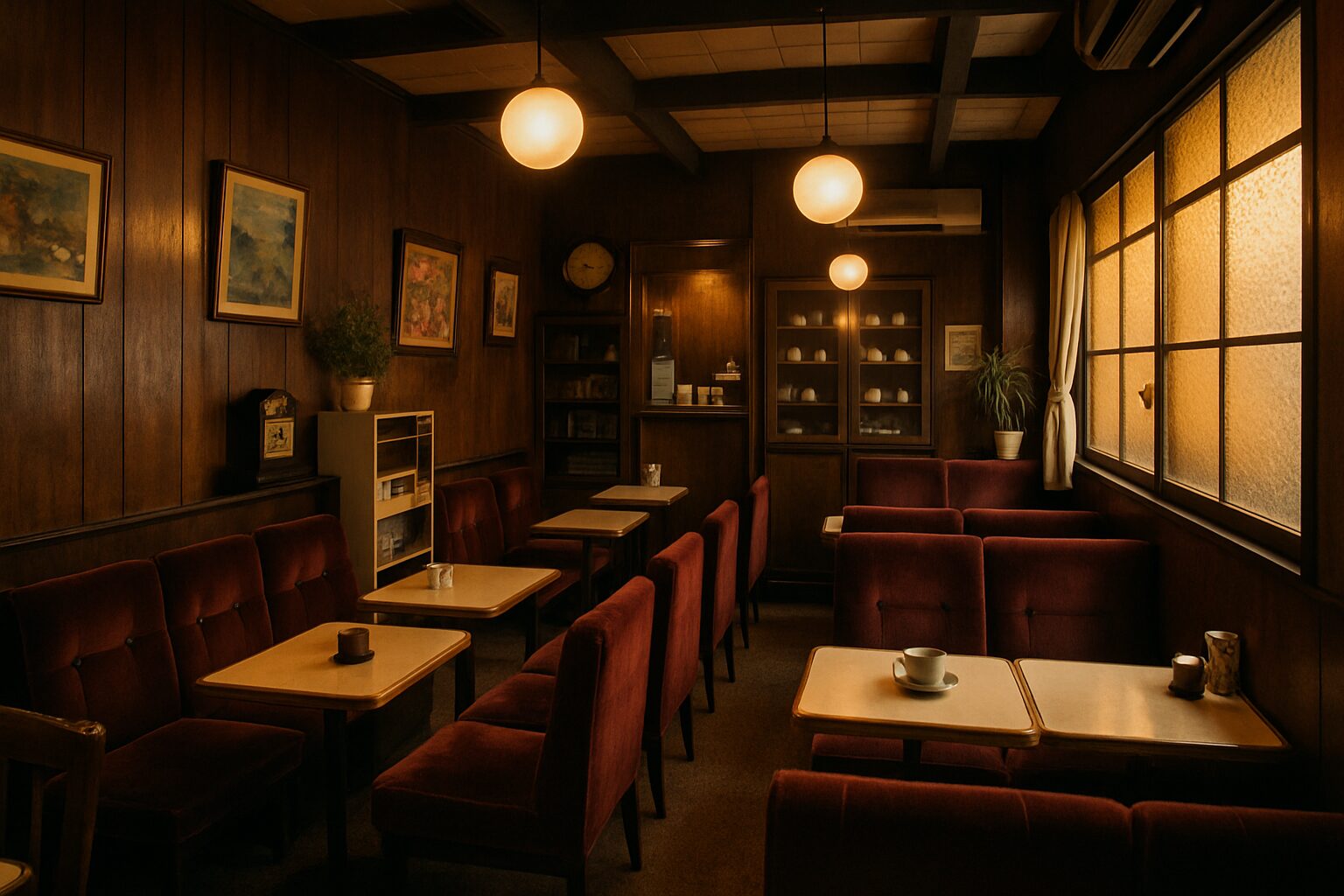
To truly grasp the deep allure of Osaka’s retro cafes, you must first set aside your modern sensibilities at the threshold. The instant you step through the heavy wooden door, often marked by a small, tinkling bell, you are embraced by an atmosphere so dense it seems almost tangible. This is the primary, undeniable advantage: an immersive, multi-sensory experience of a world carefully preserved. It begins with the lighting—or rather, the absence of typical brightness. Sunlight is softened and filtered, frequently replaced by the warm, intimate glow of stained-glass Tiffany-style lamps suspended low over dark, polished tables. The walls tell stories through their textures and aged surfaces: deep mahogany or teak paneling, walls yellowed by decades of conversations, and perhaps a curated collection of antique clocks, each showing slightly different times, as if to emphasize that the present moment is all that matters here. Your eyes follow the worn velvet on the booth seats, the intricate patterns in the dated wallpaper, and the solid, reassuring heft of furniture built to endure. This is a space crafted for intimacy and contemplation, standing in stark contrast to the bright, open-plan designs of contemporary cafes made for laptop work and rapid turnover.
Next comes the soundscape—a carefully arranged symphony of quietness. The city’s frantic rhythm outside fades into a distant murmur. Inside, the prominent sounds are the gentle clinking of ceramic on saucer, the soft rustle of a newspaper page turning, and the low murmur of hushed conversations. The soundtrack is rarely modern; instead, you are treated to the crackle and warmth of a vinyl record playing classic jazz standards or melancholic classical pieces. This sound fills the space without intruding, creating a sonic blanket that is both calming and refined. Even the noises of preparation add to the charm: the hiss and gurgle of a gleaming siphon brewer, a theatrical laboratory-like device that turns coffee-making into performance art, or the rhythmic tap-tap-tap of the “Master” crafting a legendary tamago sando. This is not the jarring blast of a steam wand or the impersonal beep of a cash register; it is the sound of craftsmanship, a slow, deliberate process honoring tradition.
At the heart of the kissaten experience lies the menu—a carefully selected array of nostalgic flavors evoking comforting simplicity. This is no place for oat milk flat whites or deconstructed avocado toast. It’s the home of saifon kōhī, brewed in that extraordinary glass apparatus. The process itself is a spectacle: water heated in the lower globe defies gravity, rising to saturate the coffee grounds in the upper chamber before filtering back down to produce a remarkably clean, smooth, and nuanced cup. The “Master,” often an elderly, stoic owner who has likely stood behind that same counter for decades, performs this ritual with surgical precision. It is their kodawari—an unwavering devotion to a particular craft. To order siphon coffee is to order a piece of their life’s work. Beyond coffee, the menu features delightful Showa-era treats. The iconic kurīmu sōda (cream soda) arrives as a jewel-like tower of vibrant green melon soda, fizzing around a perfect scoop of vanilla ice cream, crowned with a bright red maraschino cherry. It is pure childhood joy in a tall glass. Then there is the food, dishes that have become legendary themselves. The Napolitan spaghetti, a uniquely Japanese pasta, consists of soft noodles stir-fried with sausage, onions, and bell peppers in a sweet, tangy ketchup-based sauce. Born from post-war creativity, it has become a comfort food titan. Equally famous is the Osaka-style tamago sando, elevating the humble egg into art. Imagine thick, fluffy slices of shokupan (Japanese milk bread) cradling a generous, creamy, often slightly warm omelet, perfectly seasoned. It’s a culinary embrace—simple yet profoundly satisfying. Even the toast, the atsu-giri tōsuto, holds something special: a thick slice of bread toasted golden crisp outside while remaining soft within, served with melting butter, a dollop of sweet red bean paste (ogura), or a simple boiled egg. This food doesn’t challenge; it welcomes you home.
Beyond the tangible pleasures, the greatest benefit is the intangible sense of sanctuary. In a world demanding constant connectivity and productivity, the kissaten offers a refuge of solitude and genuine, slow-paced connection. It is a place where sitting alone with a book, losing yourself in thought, or simply watching the world drift by through the window is not only acceptable but encouraged. The “Master” is neither barista nor server; they are a quiet guardian of this space. Though they may not engage in lengthy conversations, their steady presence is a comforting constant. They know their regulars—the jōren-san—by name and typical order. Observing the quiet, respectful interaction between Master and patrons reveals a form of community increasingly rare. For foreigners, stepping into this world is an unparalleled cultural immersion. Here, you are not a tourist consuming a product but a temporary participant in a living tradition. You sit in the same booths where deals were struck, novels written, and romances blossomed decades ago. It is a direct connection to mid-century Japan’s social fabric—a time of tremendous change, optimism, and artistic vitality. This authenticity also offers a visual feast for the modern eye. Every corner of a classic kissaten is a photograph waiting to be taken, a story eager to be shared. Vintage seltzer bottles, ornate sugar pots, beautifully aged copper kettles, and custom-printed matchboxes compose an aesthetic born not from marketing but from a lifetime of organic existence. This makes neighborhoods like Nakazakicho—with its blend of kissaten, independent art galleries, and vintage clothing shops housed in preserved old wooden row houses (nagaya)—a paradise for those who find beauty in the details of the past.
A Reality Check in Sepia Tones: The Cons of a Bygone Era
Despite its undeniable charm, the journey back to the Showa era is not without its challenges. The very authenticity that makes the kissaten so captivating also brings potential drawbacks for contemporary visitors. The most notable and often surprising of these is the smoke. It must be emphasized: many, if not most, truly old-school kissaten are strongholds of smoking culture. Although Japan’s nationwide smoking regulations have tightened in recent years, many small, owner-operated establishments like these have been granted exemptions. For a non-smoker, stepping into a beloved, historic café can feel like hitting a wall of stale tobacco smoke. It permeates the velvet curtains, has seeped into the wooden beams, and hangs thickly in the air, becoming an unavoidable constant. This is no afterthought; it is an essential part of the historic ambiance. For decades, the kissaten was the quintessential “smoky room” where salarymen, artists, and thinkers exchanged ideas over coffee and cigarettes. While some may see this as an absolute deal-breaker, others might regard it as an authentic, albeit pungent, aspect of the time-travel experience. Nevertheless, it remains the most divisive feature and the major downside for many potential visitors.
Closely following is the challenge posed by the pace and unwritten rules. The kissaten operates on what can only be called “Showa time.” Everything is slow, deliberate, and methodical. That beautiful siphon coffee, which takes ten minutes to brew? It genuinely takes ten minutes. There is no rush. This stands in stark contrast to the grab-and-go coffee culture. If you are pressed for time, this is not the place for you. The unhurried pace is a feature, not a flaw. This leisurely tempo often comes with a set of implicit expectations. While modern cafes are frequently used as co-working spaces, you will likely face a stern, if silent, disapproval if you pull out a laptop and start typing. These spaces are meant for reading, quiet conversation, or contemplation. Loud chatter is frowned upon. The unspoken agreement is that you pay not just for a drink, but for the privilege of occupying a peaceful environment. This often takes the form of a “one drink per person” minimum, and lingering for hours over a single cup, though sometimes tolerated, is not always welcomed—especially if the small venue becomes busy. For those used to the freedom and anonymity of large chain cafes, this atmosphere may feel restrictive and somewhat intimidating.
Then there is the issue of price. A single cup of coffee at a historic kissaten can easily cost between 700 and 900 yen, a price that might seem steep when a latte at a modern chain costs half as much. This is not price gouging; it reflects a different economic model. The Master uses high-quality beans and often employs labor-intensive brewing methods like nel drip or siphon. Customer turnover is intentionally slow. You are paying for the quality of the product, the meticulous service, the rent on prime real estate, and, most importantly, the atmosphere. It is a fee for an experience—an admission ticket to a living museum. However, for travelers on a tight budget, the cost can be prohibitive, making it more of a special occasion treat than an everyday stop. This is particularly true if you want to try both a coffee and one of the famous food items, which can quickly add up to the cost of a full lunch elsewhere.
Navigating the world of the kissaten can also bring practical difficulties. The most authentic and treasured spots are often the hardest to locate. They are hidden away in quiet residential streets, on the second floor of unassuming buildings, or down narrow yokocho (alleys) with signage written only in elegant, flowing Japanese calligraphy. There may be no pictures, no English menu, and no clue of what lies behind the mysterious door. The Master, often running the shop since the 1960s, will almost certainly not speak English. While this adds to the adventure for some, it can create anxiety for others. Menus may be puzzles of unfamiliar katakana and kanji, requiring guesswork or a translation app. This is not a world tailored for tourists; it simply exists, inviting you to enter on its own terms. Finally, it’s important to distinguish between “faded glory” and “curated retro.” Some kissaten are genuinely old, and with age comes wear and tear. The velvet seats might be frayed, the wallpaper peeling slightly at the edges, and there may be a faint scent of dust and aged wood. To some, this epitomizes charm and authenticity; to others, it might feel somewhat shabby. Conversely, especially in areas like Nakazakicho, many newer establishments have been carefully designed to emulate the Showa retro style. These are often brighter, cleaner, and more accessible, but they sometimes lack the deep, soulful history of places that have served the same community for generations. Knowing which experience you seek can help set appropriate expectations.
Your Key to the Past: A Practical Guide to the Kissaten World
With an understanding of the advantages and disadvantages, you’re ready to begin your own kissaten pilgrimage. The key lies in knowing where to go and approaching the experience with the right mindset. Osaka presents a rich variety of retro cafe experiences, each reflecting its own unique neighborhood character.
Your first and most important stop should be Nakazakicho. Located just a short walk east of Umeda’s gleaming skyscrapers, this neighborhood feels like an entirely different city. It’s a beautifully preserved maze of narrow, winding lanes where traditional wooden nagaya houses have been transformed into a vibrant array of cafes, vintage shops, zakka (miscellaneous goods) stores, and small art galleries. Exploring here is an experience itself. You may find a cafe hidden behind a curtain of ivy, another operating in what appears to be a private living room, and yet another displaying a collection of antique cameras in its window. Nakazakicho strikes the perfect balance between authenticity and bohemian charm, while also welcoming visitors and photographers. Many cafes have picture menus or a slightly more modern approach (some are even smoke-free), making it an ideal starting point for newcomers. It’s the epitome of a “curated retro” experience, where the past is not only preserved but celebrated and stylishly reinterpreted.
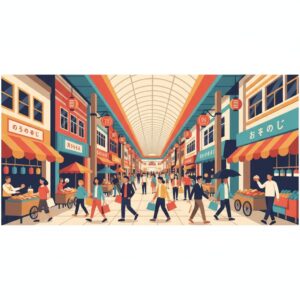
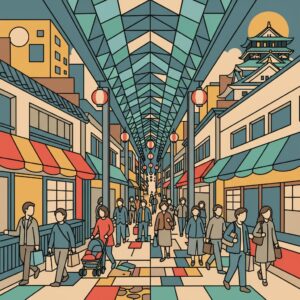
For a rougher, more lived-in retro vibe, make your way to Tenjinbashisuji Shotengai. As Japan’s longest covered shopping arcade, extending over 2.6 kilometers, it offers a genuine slice of Osaka life. Amid the busy pharmacies, pachinko parlors, and greengrocers, you’ll discover some legendary kissaten that have served local shoppers and merchants for generations. These spots are not designed for tourists; they are straightforward, no-frills establishments where the coffee is robust and the atmosphere buzzes with local conversation. A smart move here is to take advantage of the mōningu sābisu (morning service) tradition. Between roughly 8 AM and 11 AM, ordering a coffee often comes with a complimentary breakfast set, usually featuring thick toast, a hard-boiled egg, and sometimes a small salad or yogurt. It’s excellent value and a fantastic way to start your day like a true Osakan.
Even in hectic, tourist-heavy areas like Shinsekai and Namba, fragments of the past linger. In Shinsekai’s shadow of Tsutenkaku Tower, you can find kissaten that seem untouched since the neighborhood’s pre-war heyday. These are often spots where local elders gather to play Go and read horse-racing forms, offering a captivating glimpse into a niche subculture. Similarly, if you venture into Namba’s back alleys, away from the Glico Running Man and the giant crab signs, you’ll uncover quiet coffee houses that have provided sanctuary from sensory overload for decades. Discovering them is like a treasure hunt, rewarding the curious explorer who ventures off the beaten path.
When you find a place that draws you in, here are some tips for a smooth visit. First, carry cash; many of these small, family-run shops accept cash only. Second, take a moment to observe the atmosphere before entering. If it’s calm and quietly serene, be ready to match that mood. Third, embrace the simple menu. Don’t hesitate to point and say “Kore, onegaishimasu” (This one, please). A simple “Kōhī” will get you the house coffee. Learning a few key terms can enhance your experience: “Hotto” for hot, “Aisu” for iced, and “Sumimasen” to politely get the staff’s attention. If smoking is a concern, check for a small sign at the entrance. A green sign usually means non-smoking, while others might indicate “bun’en” (separate smoking areas) or “zen-seki kitsuen” (all seats smoking). Above all, be patient. The slow service is a gift—a forced moment of mindfulness. Put your phone away, pick up the book or magazine provided, and simply be present.
A Final Sip: The Enduring Legacy of the Kissaten
Visiting Osaka’s retro cafe district is more than just a culinary or aesthetic choice; it is a philosophical one. It represents a deliberate decision to momentarily step away from the relentless pace and efficiency that characterize much of modern life. The benefits are profound: an immersive experience in an authentic cultural setting, the enjoyment of handcrafted nostalgic food and drink, and the discovery of a peaceful refuge for the soul. The drawbacks are tangible and stem from that very authenticity: the common presence of smoke, unspoken rules, a slower rhythm, and higher prices. However, focusing only on the negatives misses the essence entirely. The kissaten does not aspire to be a modern cafe. It makes no excuses for what it is. It stands as a proud, stubborn remnant of a bygone era, a guardian of a vanishing way of life.
In a city that is constantly evolving, these cafes serve as cherished anchors to the past. They remind us of the value in slowness, the beauty found in imperfection, and the sense of community in the quiet shared space between strangers. Each visit acts as a small preservation effort, a vote for a world where craftsmanship matters more than convenience and atmosphere is as vital as the product. So, when you find yourself in Osaka, I encourage you to seek out that modest door with the faded awning. Push it open, let the little bell announce your arrival, and take a seat. Order a siphon coffee and watch the Master perform their quiet magic. Inhale the complex aroma of coffee, old wood, and history. You may discover that it’s not just a dream or a distant memory, but something far more precious: a quiet, perfect moment, suspended in time.