Welcome to Osaka, a city that pulses with a vibrant, relentless energy, a rhythm that you can feel in the air, taste in the food, and hear in the lively cadence of the local dialect. To truly understand this city, to navigate its sprawling urban landscape and tap into its very core, you need to understand its transportation network. And at the heart of it all, beating like a powerful drum, is the Midosuji Line. This isn’t just a subway line; it’s the city’s main artery, a crimson river of steel flowing from the northern gateway of Shin-Osaka down to the southern suburbs of Sakai. It’s the first line most visitors use, the last line locals rush for at night, and the single most important thread weaving together the diverse tapestries of Osaka’s major districts. For anyone living here, or planning to, mastering the Midosuji is not just a suggestion, it’s a rite of passage. It offers unparalleled convenience, a straight shot through the city’s greatest hits, but it also presents a unique set of challenges that can test the patience of even the most seasoned city dweller. It’s a beautiful, chaotic, indispensable part of daily life. This is your guide to riding that rhythm, to understanding the profound advantages and the very real disadvantages of relying on Osaka’s iconic red line. Get ready to dive deep into the soul of the city, one station at a time.
After navigating the bustling Midosuji Line, you might seek a moment of quiet reflection in one of the city’s classic kissaten.
The Unbeatable Advantage: The Spine of the City
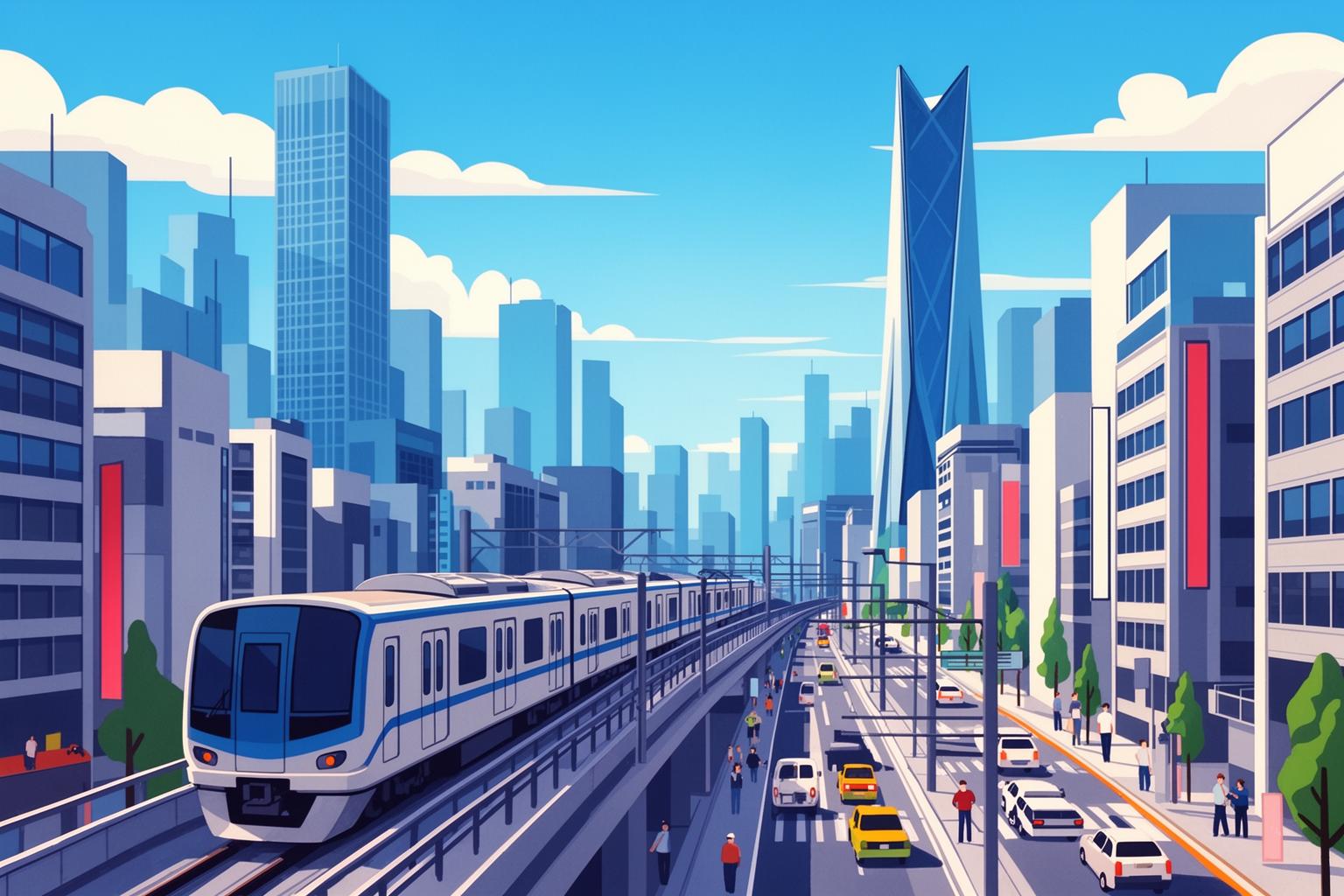
The Midosuji Line’s greatest, unquestionable strength lies in its pure and uninterrupted connectivity. It serves as the backbone of Osaka, with every other major transit line acting like ribs branching off from it. If you were to design a subway line specifically to hit every key hub in a city, the result would look exactly like the Midosuji. Its straightforward north-to-south route is a masterstroke of urban planning, offering a simple layout that helps newcomers navigate the city and remains the foundation of daily commutes for millions.
Your journey most likely starts at Shin-Osaka Station. This isn’t just a simple stop; it’s Osaka’s grand gateway, where sleek, futuristic Shinkansen bullet trains arrive from Tokyo, Kyoto, and Hiroshima. The moment you step off the Shinkansen and follow the signs marked with the red ‘M’ logo, you are entering Osaka’s lifeblood. The convenience is remarkable. No confusing transfers or costly taxi rides are needed. Just go down one level, tap your ICOCA card, and within minutes, you’re on a train speeding towards the heart of the city. This flawless transition from inter-city to intra-city travel is the Midosuji’s powerful first impression.
Just two stops south is Umeda, effectively Osaka’s northern capital. Umeda is not just a place to pass through; it’s a destination, a vast and layered urban ecosystem. The Midosuji’s Umeda Station ushers you into an underground world connecting the massive JR Osaka Station, the terminals for the Hankyu and Hanshin railways to Kobe and Kyoto, and the Tanimachi and Yotsubashi subway lines. Above ground, skyscrapers tower, housing corporate headquarters, the shimmering Grand Front Osaka shopping complex, the iconic red HEP Five Ferris wheel, and an endless array of department stores like Hankyu and Daimaru. The atmosphere here is electric, buzzing constantly with business, commerce, and activity. Living on or using the Midosuji Line means having this monumental hub available at your fingertips—a place to shop, dine, and connect anywhere.
Heading further south, the line enters the city’s professional core. Yodoyabashi and Honmachi form Osaka’s business center. At Yodoyabashi, you step into a more sophisticated, dignified environment. Streets are lined with major bank and corporate headquarters, infused with an air of ambition. This station is also home to the elegant neo-renaissance Osaka City Hall and the tranquil Nakanoshima Rose Garden, a peaceful park nestled between two rivers. Importantly, it connects to the Keihan Line, offering a scenic, direct route to Kyoto’s center. Honmachi, the next stop, is Osaka’s commercial and administrative heart—an area full of office blocks and wholesale textile merchants. It’s less glamorous than Umeda but equally vital. For many corporate workers in Osaka, these two stations and the Midosuji Line itself are daily essentials, delivering the city’s workforce every morning.
Then the atmosphere shifts dramatically. At Shinsaibashi, the city’s pulse accelerates into a vibrant, fashionable rhythm. This is Osaka’s premier shopping and style district. Step outside the station and you’re immediately immersed in a world of high fashion, trendy boutiques, and youthful energy. To the east lies Shinsaibashi-suji, an almost endless covered shopping arcade stretching to Namba, while to the west is Amerikamura, or ‘Amemura’—a lively hub of street fashion, vintage shops, and quirky cafes clustered around a park that serves as an open-air runway for Osaka’s youth. The Midosuji Line runs directly beneath this area, making it incredibly easy to dive into retail therapy or soak up the cutting-edge vibe.
Next is Namba, the bustling, neon-lit heart of southern Osaka. If Umeda represents the city’s sophisticated brain, Namba is its wild, pulsing heart. Midosuji’s Namba Station is another vast hub, connecting to the Nankai Line for access to Kansai International Airport (KIX) and serene Mount Koya. But the station is only the entrance. Just steps away is the iconic Dotonbori canal with its Glico Running Man sign, giant mechanical crabs, and a sensory explosion of street food stalls. You can explore the upscale Takashimaya department store, wander the futuristic terraced gardens of Namba Parks, or get lost in the maze-like alleys of Hozenji Yokocho for a glimpse of old Osaka. Namba is loud, crowded, and unapologetically fun, and the Midosuji Line offers a direct, nonstop ride to the heart of the party.
Finally, as the line continues southward, it reaches Tennoji—a fascinating microcosm of Osaka where the ancient meets the ultra-modern. The Midosuji Station here is a key transfer point to the JR Loop Line and routes toward Nara. Stepping out, you are greeted by Abeno Harukas, Japan’s tallest skyscraper, with breathtaking panoramic views from its observation deck. Nearby lies Tennoji Park, a vast green oasis that includes the Tennoji Zoo and the Osaka City Museum of Fine Arts. A short walk away is Shitennoji Temple, one of Japan’s oldest Buddhist temples, founded in the 6th century. Traveling from the hyper-modern Abeno Harukas to the ancient calm of Shitennoji in minutes exemplifies the district’s unique character, made effortlessly accessible by the Midosuji Line.
This remarkable sequence of key destinations is the line’s true strength. Its straightforward route allows you to board at one end and embark on a grand tour of the city’s most important landmarks without a single transfer. The frequent trains add another huge benefit—during peak and off-peak hours alike, you rarely wait more than three to four minutes for the crimson train to arrive. This continuity creates a sense of freedom and spontaneity; there’s no need to carefully plan your trip around a schedule. You simply show up, and a train is ready to take you. For newcomers finding their way or residents running daily errands, this mix of direct access and high frequency forms an unbeatable convenience.
The Vibe of the Red Line: A Journey Through Osaka’s Soul
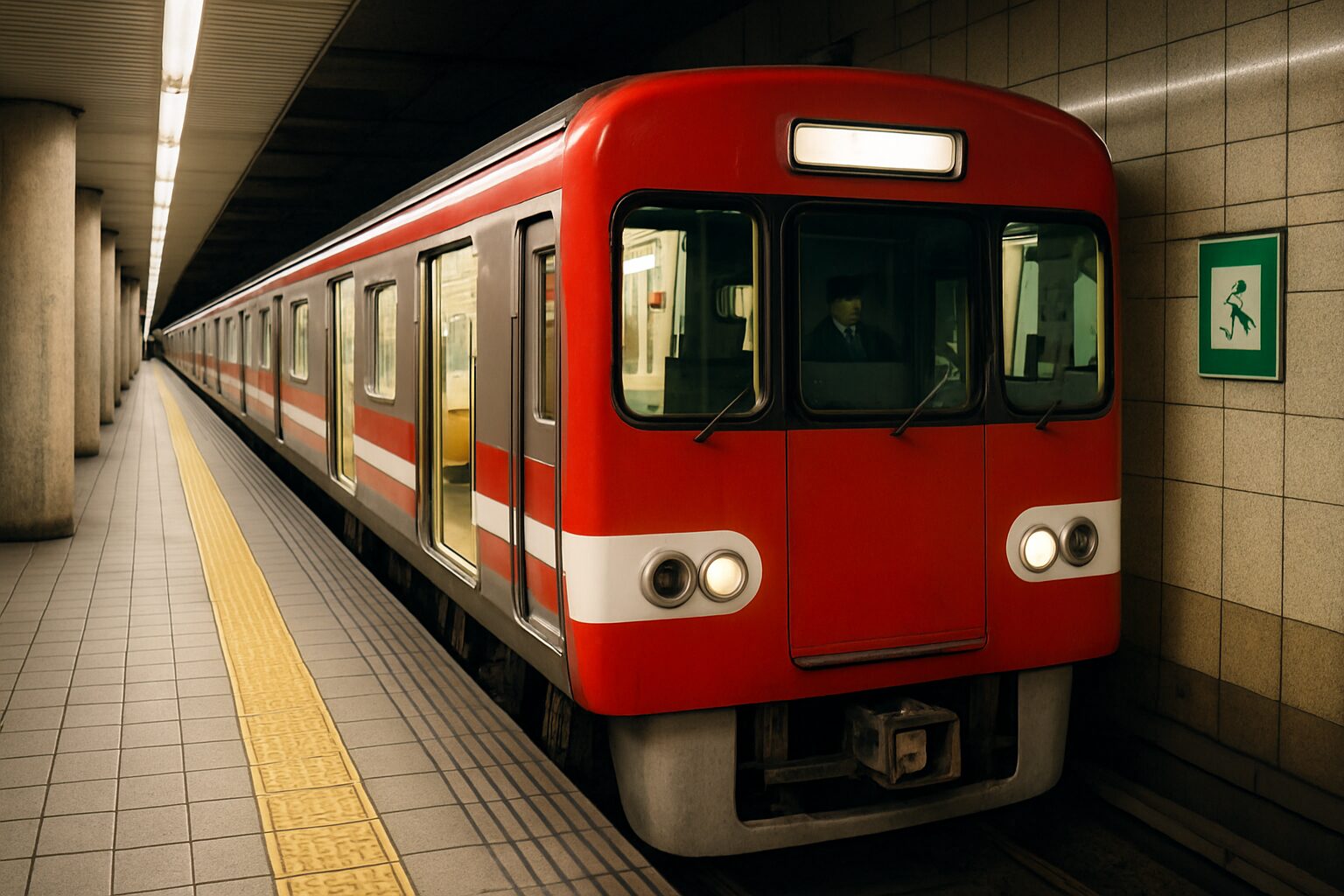
Riding the Midosuji Line is more than simply traveling from point A to point B; it’s a full sensory immersion into the daily life and rhythm of Osaka. The trains, painted in a distinctive crimson red, form an iconic part of the city’s visual identity. This bold hue was selected to symbolize the city’s main artery, a fitting metaphor for its vital function. Inside, the carriages are typically clean, efficient, and filled with the subtle sounds of urban life: the soft hum of the motor, the gentle clatter of the tracks, calm, melodic Japanese announcements, and the unique musical jingles that play upon arrival at each station.
These jingles, or eki-melodies, are a charming feature of the Japanese railway system, and the Midosuji Line boasts some of the most memorable tunes. The lively, upbeat melody at Umeda feels like the start of an adventure, while the more traditional-sounding tune at Namba reflects the area’s entertainment heritage. These brief musical cues become part of the city’s soundscape—a familiar audio signal that lets you know your location without needing to glance at a sign. They add a small but meaningful layer of local character to the otherwise uniform subway experience.
People-watching on the Midosuji provides a masterclass in Osakan sociology. The mix of passengers shifts dramatically from north to south. Board the train at Shin-Osaka and you’ll be surrounded by travelers with large suitcases, their expressions a blend of excitement and confusion. In the mornings, heading south from Esaka or Nishinakajima-Minamigata, the carriages fill with sleepy commuters dressed in dark suits and white shirts, clutching briefcases and scrolling through smartphones. Around Umeda and Yodoyabashi, the cars are packed with office workers, fostering a palpable sense of purpose and urgency. Near Shinsaibashi, the crowd changes—you’ll encounter groups of young people in the latest street fashion, shoppers loaded with luxury bags, and tourists eagerly consulting maps. In Namba, the atmosphere is more lively; the train fills with friends on their way to karaoke and okonomiyaki, families heading to see shows at the Namba Grand Kagetsu theater, and travelers from around the world drawn by Dotonbori’s neon lights. Traveling further south toward Tennoji and beyond, the vibe becomes local and relaxed, with elderly couples visiting Shitennoji Temple, families going to the zoo, and students from nearby schools. The Midosuji line is a moving theater, each ride offering a fresh performance and a new glimpse into the diverse lives shaping the city.
The architecture of the stations themselves tells a story of Osaka’s history and ambition. Umeda station’s platform is an engineering marvel—a vast space with a grand, high-arched ceiling reminiscent of a classic European train depot. It was designed both to accommodate a huge volume of passengers and to inspire awe, achieving both aims successfully. In contrast, the recently renovated Shinsaibashi Station is a showcase of modern design, featuring sleek, minimalist lines, stylish lighting, and art installations that mirror the area’s fashionable reputation. Thus, riding the Midosuji is also a journey through time, from the grand Showa-era ambition of Umeda to the contemporary chic of Shinsaibashi.
This connection to the city extends beyond the underground. The subway line traces the course of Midosuji Avenue, one of Osaka’s most famous boulevards. Emerging from any central station, you are greeted by this wide, majestic street. The experience of the line changes with the seasons, reflecting the transformations of the avenue above. In spring and summer, the ginkgo trees lining the boulevard are lush and vibrant, providing shaded canopies. But it is in autumn that the magic truly unfolds—the ginkgo leaves turn brilliant, fiery gold, transforming Midosuji Avenue into one of Japan’s most stunning urban landscapes for a few weeks. In winter, the trees are decorated with elaborate illuminations, turning the street into a sparkling tunnel of light that attracts numerous admirers. Though traveling underground, you remain closely connected to this seasonal rhythm—the people on the train, their moods, their destinations—all influenced by the life unfolding just meters above on the street.
The Flip Side: Navigating the Midosuji’s Challenges
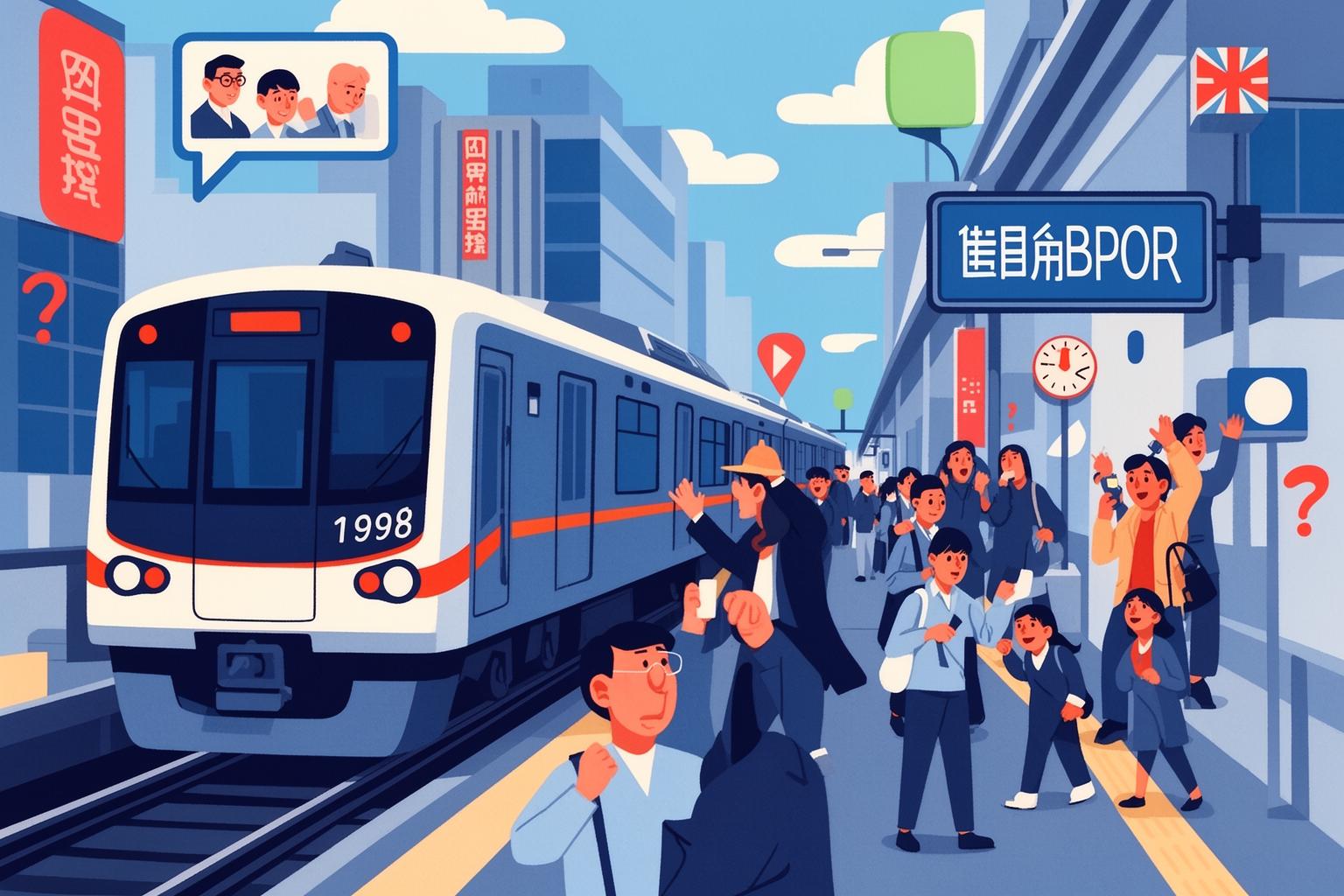
For all its unmatched convenience, the Midosuji Line has a notable and often daunting downside. Presenting an entirely positive view would do a disservice to anyone planning to use it regularly. Its most significant drawback, which defines its challenging nature, can be captured in one word: crowds. The immense number of passengers, especially during peak hours, can make for an overwhelming and highly unpleasant experience.
The morning rush, generally from about 7:30 AM to 9:00 AM, is legendary. Trains heading south from northern residential areas toward the business districts of Umeda, Yodoyabashi, and Honmachi become extremely crowded. This isn’t merely “crowded” in the usual Western sense; the density can be startling for newcomers. You’ll encounter what the Japanese term oshikura manju, originally a children’s game of pushing and shoving, now used to describe the packed train crush. Personal space disappears entirely. You will be pressed against strangers on all sides, unable to move your arms or even reach your phone. Station staff known as oshiya or “pushers” often assist at the busiest stations, gently but firmly pushing the last passengers into cars so the doors can close. The air grows hot and stifling, and even the brief ride between stations can feel interminable. The evening rush, from around 5:30 PM to 7:30 PM, is equally intense as the commuter flow reverses with workers returning from the city center.
However, the crowds are not confined to weekday commuting. Since the Midosuji Line connects nearly all of Osaka’s major shopping, entertainment, and tourist hotspots, it remains busy on weekends and holidays as well. The segment between Umeda and Namba, especially, can be just as packed at 2:00 PM on a Saturday as it is at 8:00 AM on a Tuesday. Tourists visiting attractions, shoppers heading to Shinsaibashi, and locals meeting for lunch all crowd the same trains, creating a constant state of congestion. For those who are claustrophobic or sensitive to crowds, riding the Midosuji at these times can be quite stressful.
There are ways to ease this. If your schedule allows, traveling during off-peak hours (between 10:00 AM and 4:00 PM on weekdays) makes a significant difference. Trains remain well-used but the oppressive crush disappears. When traveling at peak times, a useful tip is to board at the very front or very back cars, which are often—though not always—less crowded than the central cars near main escalators and staircases. Be prepared before reaching the platform: have your ticket or ICOCA card ready. When boarding, keep your backpack or large bag in front of you to save space and consider others. Most importantly, never force your way onto a train that’s clearly full. Another train will arrive in two to three minutes, and it’s better to wait than to add to the overcrowding.
Another key disadvantage is what might be called the “Midosuji Premium” in living costs. The line’s convenience is so highly prized that it directly influences the local real estate market. Apartments within walking distance of a Midosuji Line station are consistently among the most expensive in the city. You pay a premium for direct access to the city’s main transit artery. For many, especially those with tighter budgets, this can be a significant downside. You might find a larger, newer, or more affordable apartment just a ten-minute walk away, but on a less convenient subway line. Residents constantly weigh the trade-off: is the time and convenience saved by living near the Midosuji worth tens of thousands of yen more in rent each month? For professionals working in Honmachi who value a short, direct commute, the answer may be yes. For students or remote workers, the premium often isn’t justifiable.
Finally, while the line itself is straightforward, the major stations it serves are anything but simple. Umeda and Namba stations, especially, are vast and confusing labyrinths. Rather than single unified buildings, they are sprawling complexes of interconnected stations operated by different railway companies (Osaka Metro, JR, Hankyu, Hanshin, Nankai). Though signage is extensive, it can still be overwhelming for newcomers. For example, at Umeda, the Midosuji Line station is physically separate from JR Osaka Station and the Tanimachi Line’s Higashi-Umeda Station, despite all being part of the broader “Umeda” hub. Navigating the underground passageways to transfer between lines can feel like a quest. First-time visitors often get lost for extended periods. The best strategy is to follow the color-coded signs and logos closely—the red circle with a white ‘M’ for the Midosuji Line serves as your guide. Always allow extra time for transfers, at least ten to fifteen minutes, especially while learning the layout. And never hesitate to ask for help—station staff are used to assisting lost travelers and are happy to point you in the right direction.
Strategic Alternatives: When to Ditch the Red Line
Understanding the Midosuji Line involves more than just recognizing its pros and cons; it also means knowing when not to take it. A savvy Osaka resident realizes that while the red line forms the city’s backbone, the other subway lines serve as secret weapons for a more comfortable and sometimes faster ride. Relying exclusively on the Midosuji can give you a very linear and often overcrowded view of the city. Learning to navigate its alternatives will elevate your travel skills from beginner to expert.
The most notable alternative is the Yotsubashi Line. Think of the Yotsubashi Line (color-coded blue) as the Midosuji’s calmer, somewhat shy younger sibling. It runs nearly parallel to the Midosuji Line, just one major city block to the west. Its key stops—Nishi-Umeda, Namba, and Daikokucho—mirror the Midosuji’s Umeda, Namba, and Daikokucho stations. The walk between Midosuji’s Umeda station and Yotsubashi’s Nishi-Umeda station takes just a few minutes via an underground passage, making this transfer well worth mastering. The Yotsubashi Line is almost always much less crowded than the Midosuji. During busy times, if you’re traveling between Umeda and Namba and don’t need to stop at Shinsaibashi or Honmachi, choosing the Yotsubashi Line is a game-changer. It offers the same speed but a far more pleasant experience—you can often find a seat and avoid the intense crush of passengers. It’s the city’s best-kept secret for north-south travel, a release valve that makes moving between the two biggest hubs much easier.
Another excellent option, especially if your destination lies just off the main Midosuji axis, is the Sakaisuji Line (color-coded brown). This line also runs north-south but is positioned further east. It connects important locations such as Tenjinbashisuji 6-chome (home to Japan’s longest shopping arcade), the Kitahama business district, Nippombashi—known as ‘Den Den Town’ for its electronics and otaku culture—and the retro-futuristic Shinsekai neighborhood via Dobutsuen-mae station. The Sakaisuji Line has a unique benefit: at its northern end, it offers through-service to the Hankyu Senri and Kyoto lines. This means you can board a train in central Osaka and travel directly to Kyoto or northern Osaka suburbs like Awaji without changing trains. It’s a great choice for reaching local, character-rich neighborhoods on the city’s east side and provides a fantastic alternative route to Kyoto.
The JR Osaka Loop Line is another crucial component. True to its name, it circles the central part of the city. Unlike the straight Midosuji Line, the Loop Line excels in east-west travel. If you want to go from Osaka/Umeda to Osaka Castle (Osakajokoen Station) or the lively Kyobashi neighborhood, the Loop Line is the most direct option. It’s also the main route to Universal Studios Japan (with a transfer at Nishikujo Station) and the port area. Mastering the connection between the north-south Midosuji and the circular JR Loop Line is key to unlocking the entire city. Take the Midosuji to a hub like Umeda or Tennoji, then hop on the Loop Line to reach destinations not directly served by the subway.
Lastly, don’t underestimate walking. Osaka’s central districts are surprisingly compact. For example, the distance between Shinsaibashi and Namba stations is just one subway stop, but the walk through the lively Shinsaibashi-suji shopping arcade is an experience in itself. Often, it’s quicker and far more enjoyable to walk this route than to descend into the station, wait for the train, travel two minutes, and then climb back up. Similarly, the stroll from Yodoyabashi to Honmachi is short and pleasant, taking you through the heart of the business district. Walking lets you discover small shops, cafes, and temples tucked into side streets that you’d miss if you stayed underground. Before heading to the nearest subway entrance, check your map—you might find your destination is just a 10- or 15-minute walk away, giving you a chance to see the real city and escape the crowds below.
Living Along the Line: A Neighborhood Snapshot
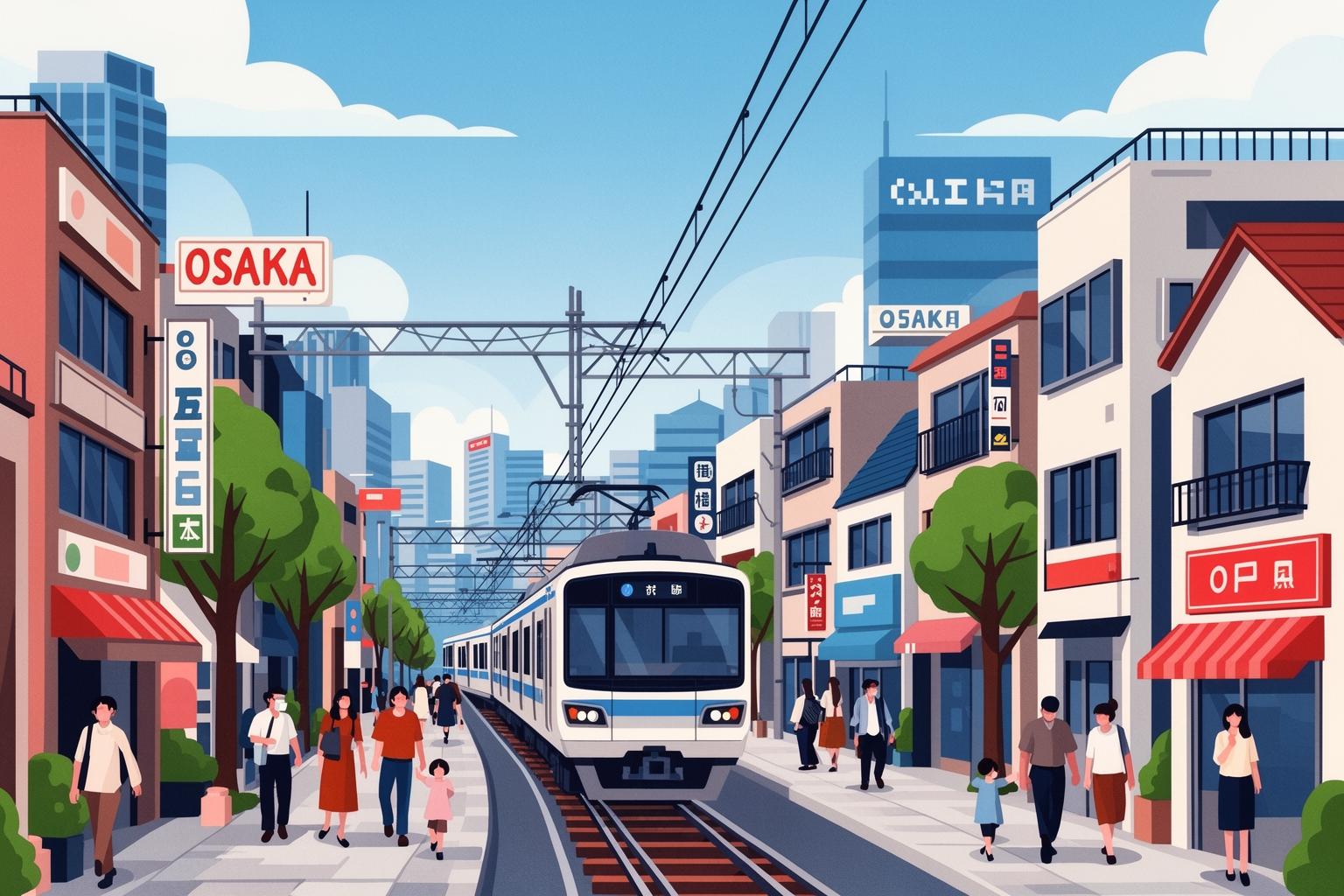
Choosing where to live in Osaka is often influenced by proximity to a convenient train line, which is why neighborhoods along the Midosuji Line are always highly sought after. The character of these neighborhoods shifts significantly along the line, providing a broad range of lifestyles, from bustling urban hubs to quiet, family-oriented suburbs.
Starting in the north, just beyond the Midosuji Line’s official terminus at Esaka (where it connects with the Kita-Osaka Kyuko Line), you find areas like Nishinakajima-Minamigata. Located just one stop from Shin-Osaka and two from Umeda, this neighborhood is popular among young professionals and couples. It strikes an excellent balance between convenience and relative affordability. The area is more residential and down-to-earth compared to the gleaming city center, featuring numerous local supermarkets, ramen shops, and izakayas. Rent here is more reasonable than in the central districts, yet you still enjoy the great advantage of a quick, single train ride into the city’s core. It’s a practical, straightforward choice for those seeking easy access without the constant hustle.
The central corridor, stretching from Umeda down to Namba, caters to those wanting to live in the very heart of the city. Residents here have the best shopping, dining, and entertainment options just steps away, rarely needing to take the train for leisure activities. However, this convenience comes with notable downsides. Rent in these neighborhoods ranks among the highest in Osaka, apartments tend to be smaller, and noise and crowds are constant. This lifestyle suits urban dwellers who thrive on energy and are willing to trade space and quiet for ultimate convenience.
South of Namba, the options become more varied and characterful. Daikokucho, the station after Namba, is a more residential area known for affordable accommodations and its proximity to both the Namba entertainment district and the traditional ambiance of Shinsekai. Dobutsuen-mae station drops you at the entrance to Shinsekai, famous for the Tsutenkaku Tower and inexpensive, tasty kushikatsu (deep-fried skewers). While Shinsekai itself has a gritty, slightly edgy image, the surrounding neighborhoods offer a glimpse of a more old-fashioned, working-class Osaka and are quite affordable. Nearby Tennoji is a vibrant hub with a major train station, a vast park, a zoo, museums, and several large shopping malls, making it a small city within the city. Its excellent transport connections and more relaxed atmosphere compared to Umeda or Namba make it a popular and practical choice for many.
Further south, the Midosuji Line enters what feels like genuine suburbia. Neighborhoods such as Showacho, Nishitanabe, and Nagai are increasingly favored by families and those seeking a quieter lifestyle. Showacho boasts a charming, slightly retro atmosphere with beautiful old houses and a strong community spirit. Nishitanabe is a reliable residential area with good local amenities. Nagai is particularly attractive due to its closeness to Nagai Park, one of Osaka’s largest green spaces, which includes a botanical garden, sports stadiums, and ample room for relaxation. Rent in these southern neighborhoods is significantly lower, and larger, family-friendly apartments are more common. The trade-off is, naturally, a longer commute. A trip from Nagai to Umeda takes about 20 minutes, which is still very convenient compared to many major cities, but noticeably longer than living further north. For many, the peace, space, and reduced living costs make the extra train time worthwhile.
Practical Tips for a Smoother Ride
To make your experience on the Midosuji Line as smooth as possible, here are a few final practical tips. First and foremost, get an ICOCA card. This rechargeable smart card is used throughout the Kansai region (similar to Tokyo’s Suica or Pasmo) and can be purchased at any station ticket machine. It lets you simply tap in and out of the gates, eliminating the need to buy individual tickets for each trip. You can also use it to pay at convenience stores and vending machines.
Follow local train etiquette. When waiting on the platform, line up in the designated queues marked on the ground. When the train arrives, allow passengers to fully disembark before boarding. Inside the train, keep your phone on silent and avoid loud phone conversations, as these are considered impolite. Eating is generally discouraged, though drinking from a bottle is usually acceptable.
If you’re traveling with large luggage, for example coming from Shin-Osaka after arriving on the Shinkansen, be mindful of the space you occupy. Try to travel during off-peak hours when possible. Stand in the wider areas near the doors or at the ends of the carriages to avoid blocking traffic flow. The same advice applies when traveling with strollers.
During weekday morning rush hours, some railway companies in Japan provide women-only cars for a safer and more comfortable ride for female passengers. Osaka Metro runs women-only cars on the Midosuji Line as well. These cars are clearly marked both on the platform and inside the train with pink signage. The restriction generally applies only until around 9:00 AM. It’s important to be aware of this so you don’t accidentally board the wrong car.
Lastly, take note of the last train times. Like most subway systems in Japan, Osaka’s subway does not operate 24 hours a day. The last trains on the Midosuji Line usually depart from central stations between midnight and 12:30 AM. If you plan to be out late, always double-check the schedule for your specific station using apps like Google Maps or Japan Transit Planner. Missing the last train may result in an expensive taxi ride home.
A Rhythmic Closing
The Midosuji Line is a paradox. It is Osaka’s greatest convenience and, at times, its biggest challenge. It is a sleek, efficient feat of engineering that can also be a hot, crowded, and overwhelming human tide. But to truly understand Osaka is to embrace this duality. It means accepting that the same crimson train that swiftly carries you from the business towers of Umeda to the neon spectacle of Namba is the very same train that will test your patience during the morning rush. Riding the Midosuji is more than just a commute; it’s a daily immersion in the city’s unyielding rhythm. It’s a journey through its ambitions, fashions, history, and soul. It’s the artery that pulses with the lifeblood of this remarkable city. So, step aboard, hold tight, and let the rhythm of the red line carry you through the very heart of it all. Welcome to Osaka.