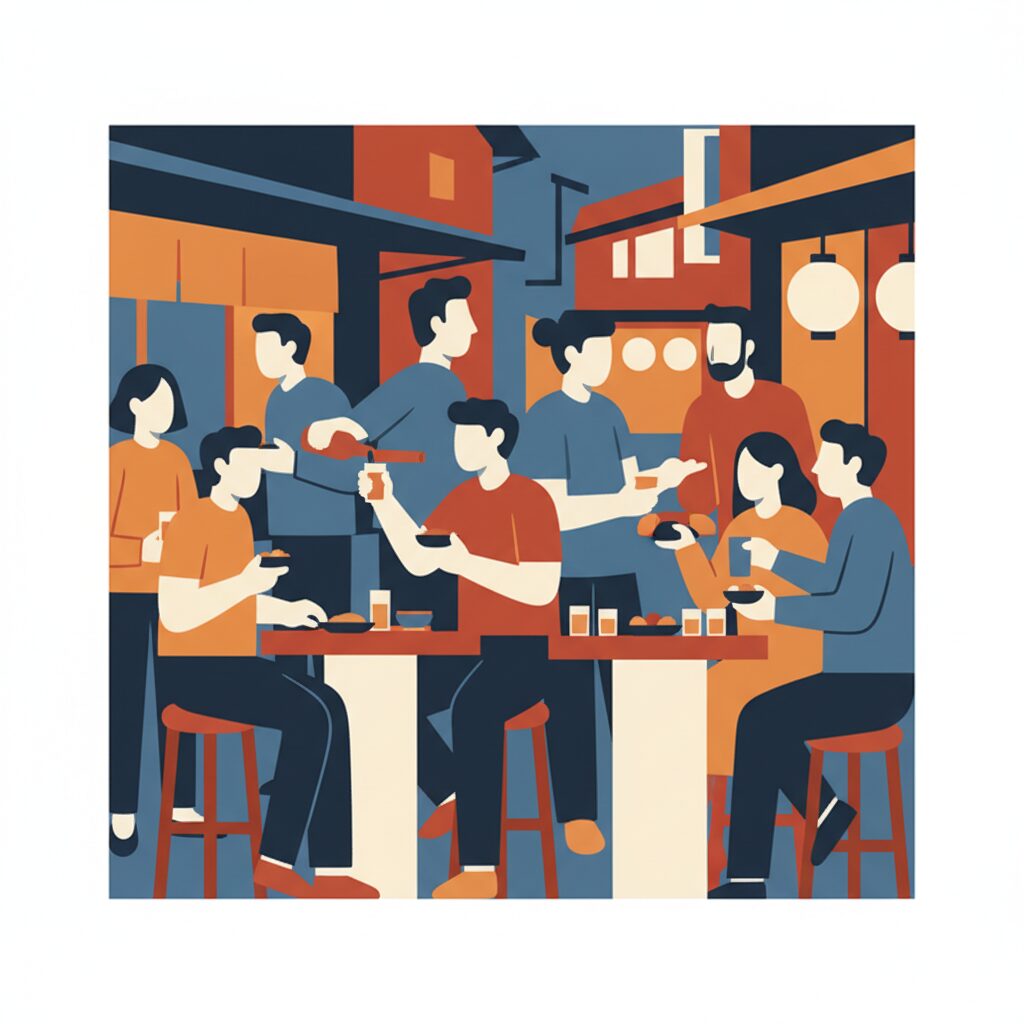
There’s a rhythm to Osaka that you don’t find in guidebooks, a pulse that beats strongest in the spaces between the glossy department stores and the quiet residential streets. You feel it most intensely in a place like Kyobashi. By day, it’s a bustling transit hub, a whirlwind of commuters rushing through the polished JR station, grabbing a coffee at Starbucks, diving into the Keihan Mall. But when the sun dips below the skyline and the office lights start to blink out, a different Kyobashi awakens. It spills out from under the train tracks, a network of narrow, smoke-filled alleyways buzzing with the raw, unfiltered energy of the city. This is where you find the tachinomi, the standing-only bars that are less a business and more a living, breathing organ of Osaka’s social body. My first encounter was a sensory assault. The air, thick with the smell of grilled offal and cheap shochu. The noise, a cacophony of laughter, gruff orders, and the clatter of plates on a worn wooden counter. And the people, packed shoulder-to-shoulder, a human mosaic of salarymen with loosened ties, grizzled old-timers nursing drinks, and young couples sharing skewers. It looked chaotic, impenetrable, a private party I had no invitation to. But I soon learned that this wasn’t chaos; it was a highly structured social ecosystem with its own language, its own rituals, and its own unwritten constitution. This isn’t just about grabbing a cheap drink. This is about understanding the fundamental operating system of Osaka—a city built on pragmatism, directness, and a fierce, unspoken sense of community. To understand the Kyobashi tachinomi is to understand the heart of Osaka itself.
To truly grasp this unspoken sense of community, it helps to understand the local concept of osekkai, which is far more than just being nosy.
The Architecture of Proximity: Why Standing Matters
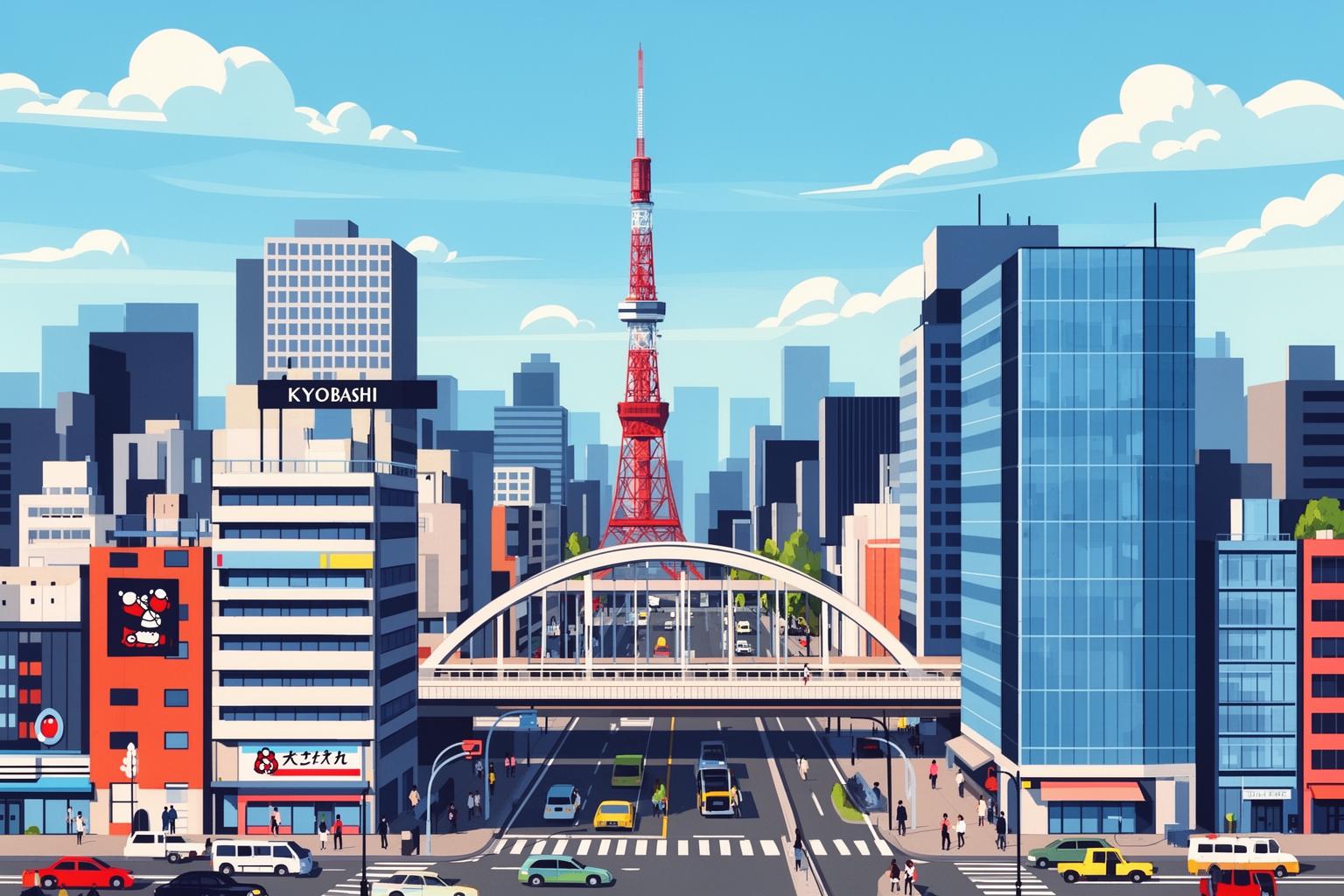
Before ordering a drink, you first need to take in the environment. A typical Kyobashi tachinomi is a study in brutalist efficiency. There are no chairs—not by accident, but by deliberate design. The lack of seating is a clear statement of purpose. This is a place of transition, not lingering. You come here for a brief recalibration after a long day, a quick stop on the way home, not for a leisurely dinner lasting hours. This mindset sets it apart from other parts of Japan. In Tokyo, even standing bars often have a polished, minimalist vibe, a sense of curated style. They are intentionally designed. A Kyobashi tachinomi, on the other hand, feels as if it simply… evolved. It grew naturally around a counter, a grill, and a beer tap. The walls are often covered with yellowed, handwritten menus called tanzaku, their edges stained with grease and the passage of time. The floor may be bare concrete. Lighting is stark and utilitarian—usually rows of naked fluorescent tubes casting no flattering shadows. There’s no pretension here.
This design fulfills an important social role. By eliminating chairs, personal territory disappears. You have no table to claim. The only space you possess is the small few square inches of floor beneath you and a tiny patch of counter before you. This enforced closeness drives the entire social experience. It physically embodies Osaka’s mindset, which prizes function over form and community over solitude. In a densely packed city like Osaka, people have developed a different sense of personal space—smaller and more flexible. The tachinomi serves as a training ground for mastering this skill. You learn to coexist closely with strangers without feeling invaded, to share space without claiming ownership. This contrasts sharply with Tokyo’s more reserved culture, where preserving respectful distance—even on crowded trains—is an art form. Here, proximity is the point. It breaks down social barriers by first eliminating physical ones. You can’t stand a foot from someone, sharing the same soy sauce dish, and sustain stoic silence for long. The very architecture encourages interaction.
Finding Your Foothold: The Art of the Squeeze
Entering a crowded tachinomi for the first time feels like merging onto a highway during rush hour. There’s no host, no maître d’, no one to direct you. You’re on your own. The first unwritten rule is to gauge the flow. You linger near the entrance briefly, making eye contact with the taisho, the master behind the counter. A slight nod from him signals your invitation into the fray. Now begins the delicate dance. You can’t just push your way through—you must find a natural gap. You watch for someone finishing up, their glass nearly empty, or spot a small opening just wide enough to slip into if those on either side slightly shift.
This is when you use the phrase “chotto sumimasen,” meaning “excuse me for a moment.” You say it softly, almost apologetically, as you slide in. The response is immediate and universal. Regulars instinctively contract their elbows, shift their weight, creating a narrow space that wasn’t there moments before. This is tsumete kudasai—please move closer—in action. It’s a shared understanding that space is communal, nobody owns their spot, they are merely temporary occupants. Making room for a stranger becomes the first handshake, an acknowledgement that you’ve joined this fleeting community. In Tokyo, you might receive a reluctant shuffle. In Osaka, it feels like an automatic reflex, a social muscle memory. They make space because the system only functions if everyone does. It’s a beautiful, unspoken cooperative choreography.
The Opening Gambit: Your First Order and the Cash-on-Delivery Code
Once you’ve secured your place at the counter, the clock starts ticking. This isn’t a spot for leisurely browsing through the menu. The taisho is busy, the pace rapid, and hesitation is a cardinal sin. It interrupts the flow. That’s why most patrons, especially the regulars, rely on a time-tested opening line: “Toriaezu, biiru.” It means, “For now, a beer.” It’s the default move, the social lubricant that initiates the exchange. It buys you time. While the master pulls your draft Asahi or Kirin, you get a moment to scan the handwritten menus on the wall and decide what you actually want to eat.
This first order is part of a larger system that defines the Kyobashi tachinomi experience: kyasshu on deribarī, or cash on delivery. In front of you on the counter will be a small plastic tray or a repurposed saucer. This is your personal bank. You’re expected to place a 1,000 or 5,000 yen note in it. When your beer arrives, the master takes the cost from the tray and returns the change. Every following order works the same way. He brings you a plate of doteyaki, takes a few hundred yen. You order a highball, he makes the exchange. This system is a marvel of efficiency and trust. There are no bills to crunch, no credit card machines to mess with, no waiting for the check at the end. The transaction is instant, transparent, and continuous.
This detail might seem small, but it speaks volumes about Osaka’s merchant spirit. The city was built by traders, and this culture values speed, clarity, and good faith. The cash-on-delivery system removes ambiguity. Everyone knows where they stand. It also empowers the customer. You have full control of your budget and can leave anytime. When you’re ready to go, there’s no awkward need to flag down staff. Just finish your drink, grab your remaining change from the tray, offer a hearty “Gochisousama!” (Thank you for the meal!), and disappear into the night. It’s a seamless system designed for high turnover, perfectly matched to the working-class tempo of a neighborhood like Kyobashi. It’s a world apart from the slow, tab-based systems found in other establishments, and it’s a core part of the tachinomi’s unique cultural identity.
Decoding the Wall: Reading the Menu, Reading the Room
In a proper tachinomi, the menu isn’t handed to you; it’s part of the environment. Long strips of paper or wooden plaques with items written in thick, black calligraphy cover every surface. English is rare, and pictures almost never appear. This can feel intimidating, but it’s also a subtle filter. It rewards the curious and committed. To navigate it, you must learn the basics of the tachinomi food pyramid.
At the base is the holy trinity: doteyaki, kushikatsu, and beer. Doteyaki is Osaka’s soul food. It’s beef sinew, slow-cooked for hours in a rich, sweet miso and soy sauce broth until meltingly tender. It usually simmers in a large pot on the counter, a fragrant, bubbling cauldron that perfumes the entire bar. Ordering a plate signals that you know your way around. Kushikatsu are deep-fried skewers of meat, vegetables, and sometimes bold items like cheese or quail eggs. They’re perfect standing food—easy to hold with one hand while sipping a drink with the other. They come with a communal pot of thin, dark dipping sauce, governed by an unbreakable rule: no double-dipping. Once a skewer has touched your lips, it can’t go back. This is about public hygiene and social etiquette; breaking it immediately marks you as an outsider.
Beyond these staples, you’ll find other classics: oden, a winter warmer featuring ingredients like daikon radish, tofu, and fish cakes simmered in a light dashi broth; grilled fish, sashimi, and simple cold dishes such as hiyayakko (chilled tofu) or potato salad. Everything is quick to prepare and easy to eat. These dishes aren’t complex or multi-layered; they’re flavorful, satisfying, and, crucially, inexpensive. A skewer may cost 100 yen, a plate of doteyaki around 300 yen. This supports the concept of senbero—the ability to enjoy a few drinks and snacks for about 1,000 yen (one sen). It’s about maximizing pleasure while minimizing cost, something Osaka locals call kosupa, or cost performance. This isn’t about stinginess; it’s about smartness. It rejects the notion that a good time has to be costly, a core value that distinctly contrasts with the often status-driven scenes in parts of Tokyo.
The Social Operating System: From Stranger to Neighbor

Once you have your drink and a plate of food, the true experience begins. The cramped space and shared atmosphere create a setting where conversation is not only possible but likely. This is perhaps the most notable difference a newcomer from Tokyo or a Western country will observe. In many other places, starting a conversation with a stranger in a bar can be a deliberate social risk. Here, it feels like the default.
Conversations don’t begin with formal introductions; they develop naturally from the shared environment. You might ask the person beside you, “Sore, nan desu ka?” (“What is that?”) when they receive an intriguing dish. They will almost certainly be happy to explain and probably offer you a taste. Or the elderly man on your other side might notice you watching the TV, where the local baseball team, the Hanshin Tigers, are playing. He’ll turn to you and say, “Akan na, kyou mo!” (“They’re terrible again today!”), and just like that, you are part of a conversation. The Hanshin Tigers serve as a potent social lubricant in Osaka. Whether loved or hated, everyone has an opinion, and sharing a collective groan or an occasional cheer instantly bonds people.
This is where the cliché of “Osaka people are friendly” needs careful unpacking. It’s not the polite, reserved friendliness of a Kyoto shopkeeper or the professional friendliness of a Tokyo concierge. It’s a more direct, sometimes blunt, and deeply pragmatic way of connecting. People talk to you simply because you are there. You share the same space, the same food, the same moment. Ignoring you would require more effort than including you. There’s a curiosity and willingness to engage that feels less common elsewhere in Japan. They might ask where you’re from, what you do, and your thoughts on Osaka—all in rapid-fire, heavily accented dialect. It can feel a bit like an interrogation, but it stems from genuine interest. They aren’t merely being nosy; they’re trying to place you on their social map.
The Role of the Taisho: Conductor, Confessor, King
At the heart of this vibrant social scene is the taisho, the master. He is much more than a bartender or cook. He is the conductor of the orchestra, the keeper of culture, the steady anchor of the entire establishment. He often works with a mesmerizing economy of motion. He pulls a beer with one hand, plates a dish with the other, calculates change in his head, and manages three different conversations, all without appearing rushed or flustered. His memory is often legendary. He knows what his regulars drink without asking, remembers conversations from weeks ago; he is the bar’s living hard drive.
His relationship with customers is a delicate balance of authority and familiarity. He may be gruff, he may shout orders, but there’s always an underlying care. He’s the one who will gently cut off a customer who’s had too much or quietly listen to a salaryman vent about his boss. He is bartender, chef, therapist, and community leader all rolled into one. Watching him work is like seeing a master craftsman in his element. He sets the tone for the entire bar. If he is open and engaging, the bar will be lively. If he is quiet and reserved, the customers will mirror him. Earning a nod of recognition from the taisho is a rite of passage. It means you’ve graduated from being just a customer to becoming part of the scene, a semi-regular. It’s a small gesture, but in the world of the tachinomi, it signifies that you’ve begun to understand the unspoken code.
The Graceful Exit: Understanding the Rhythm of Departure
Just as there is an art to entering a tachinomi, there is a rhythm to leaving one. These bars are not meant for lingering. The standing posture, the cash-on-delivery system, and the steady stream of new customers all create a natural forward momentum. The average visit often lasts less than an hour, sometimes as brief as twenty minutes. It is a place for a quick social and alcoholic refresh. This transient nature is essential to its role in Osaka life. It’s the kado-uchi, the traditional custom of having a quick drink at a liquor store on the way home, evolved into its own dedicated venue.
Because of this, departures are swift and matter-of-fact. There are no long, drawn-out farewells. When you’ve had enough, you simply gather your things, grab your change from the tray, and catch the master’s eye. A simple “Okanjo,” (bill) or more often, just a nod toward your empty tray, suffices. You say a clear, appreciative “Gochisousama deshita!” to the master, and perhaps a small nod or “Osaki ni” (“I’m leaving ahead of you”) to those you were talking with. Then you’re gone. The spot you occupied is immediately taken by a new arrival, and the river of people continues to flow. The bar, like the city, never stops moving.
This efficiency might be mistaken for impersonal, but it is quite the opposite. It shows respect for the system and for those waiting their turn. By leaving promptly, you make room for the next person to have their moment of release and connection. It’s a final, selfless act of participation in the bar’s communal life. This transient, high-turnover model perfectly reflects Kyobashi’s identity as a major transportation hub. Thousands of people pass through the station every hour, and the tachinomi bars are like small eddies in this current, offering a brief place of rest and social nourishment before sending people back into the flow.
This isn’t merely a bar. It’s a living lesson in Osaka’s culture. It showcases the city’s renowned pragmatism, its focus on value, its direct communication style, and its distinctive, close-knit community spirit. It rejects formality and pretense in favor of something more raw, authentic, and human. To stand at a well-worn wooden counter in Kyobashi, wedged between a construction worker and an accountant, sharing a plate of grilled guts and a laugh about the Tigers, is to experience the city in its purest form. You learn that in Osaka, community isn’t a weekend appointment. It’s something you practice every day, standing shoulder to shoulder, in the warm, noisy, and wonderfully chaotic heart of the city.