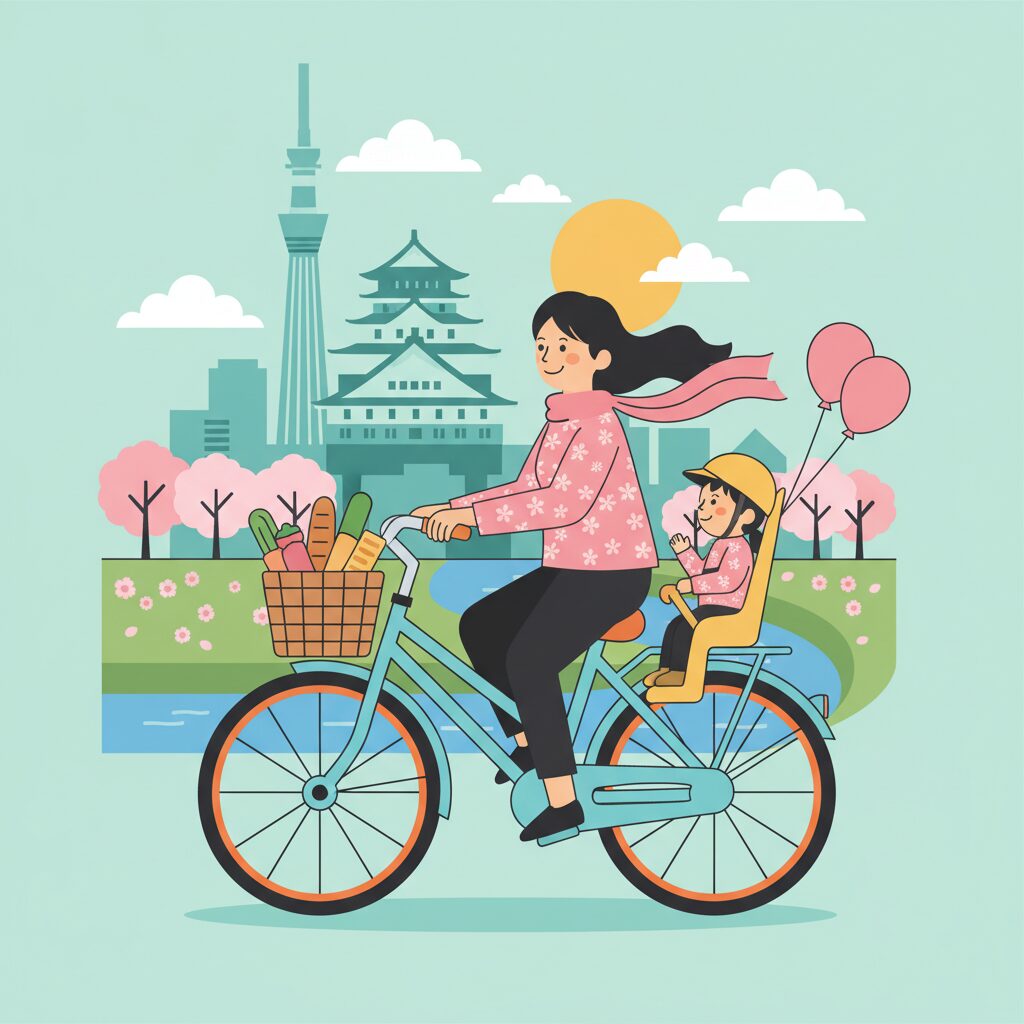
To understand Osaka, you don’t start at the castle, nor in the neon canyons of Namba. You start on a narrow residential street, a place where the air hangs thick with the scent of drying laundry and the simmer of a nearby kitchen. Here, a different kind of monarch rules the road. It’s not a car, and it’s certainly not a pedestrian. It’s a mamachari, the ‘mom’s bicycle,’ a steel workhorse gliding past with a quiet whir, its front basket laden with daikon radishes and a child seat on the back, occupied by a helmeted toddler. This machine, in all its utilitarian glory, is the key to deciphering the rhythm, the rules, and the very soul of daily life in this city. It’s the vehicle that defines the unwritten social contract of navigating Osaka’s intricate web of communities. Forget the sleek road bikes of lycra-clad hobbyists or the fixies of urban hipsters; the mamachari is the true pulse of the city, a mobile command center for the Japanese household, and its influence on the local landscape is absolute.
Foreigners arriving from the hyper-structured, train-dependent ecosystem of Tokyo often experience a peculiar sense of disorientation in Osaka’s residential zones. In Tokyo, life radiates from the train station in clean, predictable lines. People walk, they wait for the light, they adhere to a system. In Osaka, the system feels more organic, more chaotic, a fluid dance of managed improvisation. The mamachari is the lead dancer in this choreography. It flows between sidewalks and streets, navigates crowded shopping arcades with the precision of a surgeon, and parks in dense, metallic shoals that would confound a master of Tetris. It represents a fundamental difference in mindset: a deep-seated pragmatism that prioritizes efficiency and personal convenience over rigid adherence to formal rules. This isn’t recklessness; it’s a shared understanding, a collective agreement on how to make a dense, bustling city work on a human scale. To truly live in Osaka, you must learn to read the silent language of the mamachari, to understand its place in the urban hierarchy, and to respect its dominion over the neighborhood asphalt.
To truly master this silent language, one must first learn the unspoken rules of cycling in Osaka.
The Anatomy of a Mobile Command Center

The term ‘mamachari’ seems straightforward at first glance. Combining ‘mama’ (mom) and ‘chari’ (a common slang for ‘charinko,’ or bicycle), it suggests a simple household tool. However, dismissing it as such overlooks its ingenious design and vital role in managing household logistics. A mamachari is more than just a bicycle; it is a fully integrated transportation system, a piece of social infrastructure crafted with practicality as its core principle. Every part, from the frame to the kickstand, is tailored for the demanding tasks of urban caregiving and home management. It is the SUV of the Japanese suburbs, stripped of any excess and refined into the most efficient two-wheeled form.
More Than Just Two Wheels: The Mamachari Build
Look closely at a typical mamachari, and you will witness a masterclass in functional design. Its frame provides the foundation of its accessibility. Featuring a low, step-through build, often curved into a smooth ‘U’ shape, this design is far from merely aesthetic; it is a practical imperative. It enables riders wearing skirts or dresses to mount and dismount gracefully. More importantly, it allows a quick, stable dismount when the bike carries heavy groceries or when a child requires immediate attention. The rider maintains an upright posture, quite unlike the forward-leaning stance of a racing bicycle. This posture offers excellent visibility in busy settings and reduces strain on the back and wrists during frequent, short rides. It is a position of alertness, not speed. Built-in accessories that would be costly extras in other cycling cultures come standard here: a dynamo-powered front light that automatically illuminates in darkness, a sturdy lock integrated into the rear wheel frame, and a full chain guard protecting clothing from grease and snags. The bell—a simple silver dome on the handlebar—acts as its voice, used to navigate the city’s complex soundscape with varying degrees of courtesy.
The Basket: The Epicenter of Daily Logistics
The front basket serves as the mamachari’s dashboard, cargo hold, and lifeline. It is seldom empty. In the morning, it carries a commuter’s briefcase or a student’s schoolbag. By mid-morning, it overflows with the day’s shopping: a long daikon radish protruding at a jaunty angle, a plastic bag packed with milk cartons and eggs nestled securely, and a net of onions tucked into a corner. Typically constructed from sturdy metal mesh, the basket handles significant weight without bending. It fits perfectly with a standard Japanese grocery bag or a woman’s handbag. You’ll find them carrying everything from library books to potted plants. Some owners personalize their baskets by weaving plastic liners into the mesh to prevent small items from slipping through—a subtle touch on an otherwise uniform machine. The basket publicly declares the day’s mission, a transparent vessel of domestic duty moving steadily through city streets.
The Rear Rack: The Heavy Lifter
While the basket holds daily essentials, the rear rack is meant for serious hauling. This is not the delicate decorative rack seen on some Western leisure bikes. The mamachari’s rear rack is a sturdy, frame-welded platform, built to carry heavy loads. Its primary and most revered purpose is to hold a child seat. When not used for this, it acts as a flatbed truck. Secured with elastic bungee cords, it can carry a 10-kilogram bag of rice, a multi-pack of kitchen rolls the size of a small armchair, or even a case of Asahi Super Dry. The balance an experienced Osaka mamachari rider achieves on this small platform is consistently impressive. It exemplifies the Osaka mindset: maximizing every asset’s utility and devising clever, affordable solutions to logistical challenges.
The Child Seat(s): A Family Wagon on Two Wheels
Adding child seats transforms the mamachari from a personal bike into a family wagon. The engineering behind these seats is remarkable. The rear seat, most commonly used, is a high-backed plastic throne with a secure harness, footrests guarded to prevent tiny feet from getting caught in the spokes, and a handle for the child to grip. The real marvel, however, is the front-mounted child seat, positioned between the rider’s arms, snug against the handlebars. This setup allows a parent to carry two children simultaneously, one in front and one behind. These seats often come with transparent plastic windshields that shield the child from wind and rain, creating a small, safe cockpit. The image of a parent gliding smoothly through traffic with two bundled children and a basket full of groceries captures a quintessential Osaka scene. It demonstrates the mamachari’s role as a solution to the “last mile” problem public transport cannot solve, bridging home, daycare, and supermarket in a seamless, efficient circuit.
The Electric Assist Revolution
Over the past decade, the mamachari has experienced a technological transformation: the widespread introduction of electric assistance (dendo-jitensha). This shift has been a game-changer, especially in a city like Osaka, which—while mostly flat—features gentle slopes and bridges that become daunting when carrying 20 kilograms of children and groceries. The electric motor does not propel the bike alone; rather, it provides powerful assistance to the rider’s pedaling, making starts effortless and hills feel flat. An electric mamachari represents a substantial financial investment, often costing more than an inexpensive used car. This expense underscores the bicycle’s importance. It is not a frivolous purchase but a vital investment in family efficiency and the caregiver’s physical health. The quiet hum of these electric motors has become the dominant soundtrack of residential Osaka—the sound of modern domestic life in motion.
The Unwritten Rules of the Osaka Asphalt
Navigating Osaka on a mamachari involves engaging in a complex, unspoken social contract. While official traffic laws offer a basic framework, the reality on the streets is shaped by a more intricate set of informal rules, mutual understandings, and split-second negotiations. Here, the pragmatic—and sometimes impatient—nature of the Osaka personality shines through. The aim is continuous, fluid movement. Stops should be minimized, direct routes sought, and obstacles handled with a mix of assertive maneuvering and reluctant accommodation. To outsiders, this may look like chaos, but for those fluent in its language, it is a highly efficient, if somewhat nerve-wracking, system.
The Sidewalk is a Gray Area
Legally, bicycles are vehicles and are generally expected to stay on the road. In Osaka, however, this rule is, to say the least, flexible. Many city streets are narrow and congested with aggressive taxi drivers, delivery trucks, and buses, leaving little room for cyclists. For a parent with a child aboard, cycling in such traffic isn’t a safe choice. Consequently, the sidewalk has effectively become a cycling lane. This creates ongoing tension between cyclists and pedestrians, with a constant negotiation for space. Cyclists typically do not stop for pedestrians but weave around them, often with mere centimeters of clearance. The bike bell serves as an essential communication tool: a soft, single ‘chirin’ signals, “Excuse me, I’m coming from behind,” while a rapid series of sharp rings means, “I’m not slowing down, please adjust your path.” Pedestrians, in turn, develop a sixth sense, subtly stepping aside at the last moment without breaking their stride. This system operates on the brink of conflict, but rarely crosses into it—a finely tuned display of shared spatial awareness.
The “Osaka Weave”: Navigating Human Obstacles
The ultimate test of a mamachari rider’s skill is navigating a crowded shotengai, or covered shopping arcade. These bustling pedestrian areas are technically off-limits to cycling during peak hours, but this rule is widely disregarded. Riding through a shotengai isn’t about speed; it’s about maintaining a slow, steady flow, a technique I call the “Osaka Weave.” Riders must anticipate unpredictable movements: shoppers stopping abruptly, children darting out from stores, and elderly residents moving at a slow pace. This demands predictive skill that might challenge a supercomputer. The rider scans the crowd, identifies possible paths, and makes tiny adjustments to the handlebars and body weight, flowing through gaps like water. There is no clear lane here; the whole width of the arcade is shared space. This sharply contrasts with Tokyo, where a stronger sense of personal space and stricter pedestrian flow would render such maneuvering unthinkable. In Osaka, it’s simply how shopping gets done.
Parking: The Urban Tetris Game
The final challenge of any mamachari trip is parking. Designated bicycle parking areas, especially near train stations and large supermarkets, exist but are almost always at capacity. The result is a sprawling, chaotic sea of silver bicycles. Finding a spot demands skill and a bit of boldness. The goal is to slot your bike into a gap without trapping your neighbors. This often involves some physical negotiation. In Osaka, it’s perfectly acceptable social behavior to gently lift and shift a nearby bicycle a few inches to make space for your own. You might have to adjust someone’s handlebars or lift their front wheel to free your basket. While this would be a major breach of personal property in many cultures, here it’s a necessary and accepted part of the collective urban experience. The key is to be careful and avoid locking your bike to theirs. The system is self-regulating. Of course, there are limits: illegally parked bikes in busy areas risk receiving a dreaded paper ticket and, if not moved, being towed to a municipal impound lot. Reclaiming a bike from the pound is a time-consuming and costly ordeal for nearly every long-term resident—a tough lesson in the unwritten rules of parking etiquette.
The Mamachari as a Social and Economic Engine
The mamachari is more than just a means of transport; it stands as a fundamental pillar in the social and economic fabric of Osaka’s neighborhoods. Its widespread presence has influenced the very design of communities, the daily rhythm of life, and the local economy. It enables residents to live hyper-locally, strengthening neighborhood businesses and fostering a self-contained community spirit distinct from Tokyo’s vast, rail-dependent megacity. The soft hum of the bicycle signals the local economy’s steady pulse, one grocery trip and daycare drop-off at a time.
The Fifteen-Minute Neighborhood, Perfected
Urban planners globally advocate the “fifteen-minute city” concept, where all essential services are accessible within a fifteen-minute walk or bike ride. Osaka’s residential areas have embodied this ideal for decades, largely thanks to the mamachari. The typical mamachari journey—covering what is comfortably manageable when carrying children or goods—sets the boundaries of daily family life. Within this radius lie the local supermarket, doctor’s office, post office, park, library, and daycare. This naturally encourages support for local businesses. Why drive out to a soulless suburban mall when you can cycle ten minutes to the friendly neighborhood butcher, baker, and tofu maker at the local shotengai? As a historian, I see a clear connection to Osaka’s merchant-city past, organized into compact, walkable districts. The mamachari has modernized this idea by expanding the “walkable” neighborhood into a “cyclable” one, maintaining the city’s human scale against the push toward car-centric living. It keeps community life lively, local, and personal.
The Keeper of the Household Clock
The mamachari doesn’t merely cover ground; it structures time. The daily routine of countless Osaka homes revolves around its trips. There is the morning rush, a busy but coordinated dance of dropping children off at daycare or kindergarten before heading to the train station for work. Mid-morning brings a quieter period, with parents cycling to the supermarket, baskets still empty. Early afternoon sees the return flow, picking up children and taking them to parks or after-school activities. This pattern is the temporal backbone of the community. The mamachari serves as the primary caregiver’s vehicle—traditionally the mother, but increasingly fathers too. It symbolizes domestic labor: the relentless, often unseen logistics that keep family life functioning. Its constant motion visually embodies the energy needed to manage a household, making tangible the endless cycle of errands and duties.
A Status Symbol of Practicality
Though the mamachari epitomizes utilitarianism, it is not entirely detached from social status. In quintessential Osaka style, status is measured by practicality and performance rather than flash or brand prestige. A top-tier electric-assist model from reputable brands like Panasonic, Bridgestone, or Yamaha represents a significant investment, signaling a certain level of middle-class comfort. It conveys, “We are a family that values quality tools to keep life running smoothly.” Features such as larger batteries for extended range, stronger motors, or advanced child seats with enhanced safety are appreciated and respected. This stands in stark contrast to luxury cars as status symbols. The highest compliment for a mamachari is not its appearance but that it’s rakuchin—easy, comfortable, and effortless. On the opposite end, the old, slightly rusty single-speed mamachari that has served a family for years embodies a different virtue: frugality and resilience, the capacity to make do and keep going without excess spending. In Osaka, one’s worth is not measured by possessions, but by how cleverly they are used.
Osaka vs. The World: A Tale of Two Wheels
The deep integration of the mamachari into life in Osaka is not solely a cultural accident; it results from a distinctive convergence of geography, urban design, and a unique local mindset. Understanding why this particular bicycle culture thrives so strongly here, perhaps more than in any other major Japanese city, provides profound insight into what defines Osaka. It is a story of how the landscape shapes its people and how, in turn, the people shape their landscape.
Why Osaka, Not Tokyo?
Several factors explain the dominance of the mamachari in Osaka. Foremost is geography. The city is situated on the expansive, exceptionally flat Osaka Plain. This lack of significant elevation changes makes cycling a low-effort, highly efficient mode of transportation. While parts of Tokyo are flat, many of its most desirable residential areas, such as those along the Yamanote Line’s western loop, are surprisingly hilly. Riding a non-electric mamachari in those neighborhoods would be exhausting. Next is the urban layout. Osaka features a dense grid of narrow streets, alleys, and shotengai that are often impractical or inaccessible for cars. The mamachari is perfectly suited to this environment. Tokyo, although dense as well, is more defined by its massive train stations around which life revolves. The enormous scale of stations like Shinjuku or Shibuya encourages a lifestyle centered on walking and rail transit, while Osaka’s more dispersed, neighborhood-focused layout makes the bicycle the ideal connective medium. Lastly, there is the matter of mentality. Osakans are known for their pragmatism, business acumen, and intolerance for inefficiency. The mamachari embodies the optimal urban transport solution: faster than walking, cheaper than public transit or a car, offers door-to-door convenience, and carries cargo. It simply makes sense. In a city built by merchants, the most logical tool always prevails.
What Foreigners Get Wrong
Newcomers to Osaka often make key mistakes when observing the local mamachari culture, leading to misunderstanding and frustration.
Misunderstanding 1: “It’s just a bike.” This is the most common and significant error. A foreigner might view a mamachari through the lens of their own cycling experience—as a means for leisure, sport, or a simple commute. They fail to recognize it as a family’s primary utility vehicle. Underestimating its importance is to miss the entire logistical framework of suburban life. It is like looking at a farmer’s tractor and saying, “Nice car.” The function defines the object, and the mamachari’s function is life itself.
Misunderstanding 2: “The rules are so chaotic!” The apparent disorder is misleading. Foreigners accustomed to clearly marked bike lanes and strict traffic signal adherence see the Osaka weave as dangerous and anarchic. They fail to appreciate the intricate, unwritten system of negotiation underlying every interaction. It is not a system based on formal, written rules, but on a shared, intuitive understanding of flow and intention. It values adaptability over rigidity. The aim is not to follow the letter of the law but to facilitate the overall movement of the group without causing collisions. It is an organic order, not a mechanical one.
Misunderstanding 3: “Why don’t they just walk or take the bus?” This question overlooks the Osaka efficiency calculus. Walking is too slow, especially when multiple stops are needed. Buses are subject to schedules and traffic delays, and walking from the bus stop is still required. A mamachari provides the perfect balance of speed, affordability, and cargo capacity for trips under roughly five kilometers. For an Osaka parent needing to drop off a child at daycare, pick up a prescription, and buy groceries within an hour, there simply is no more logical choice. It is the path of least resistance and greatest productivity.
Riding the Wave: How to Integrate into Mamachari Culture
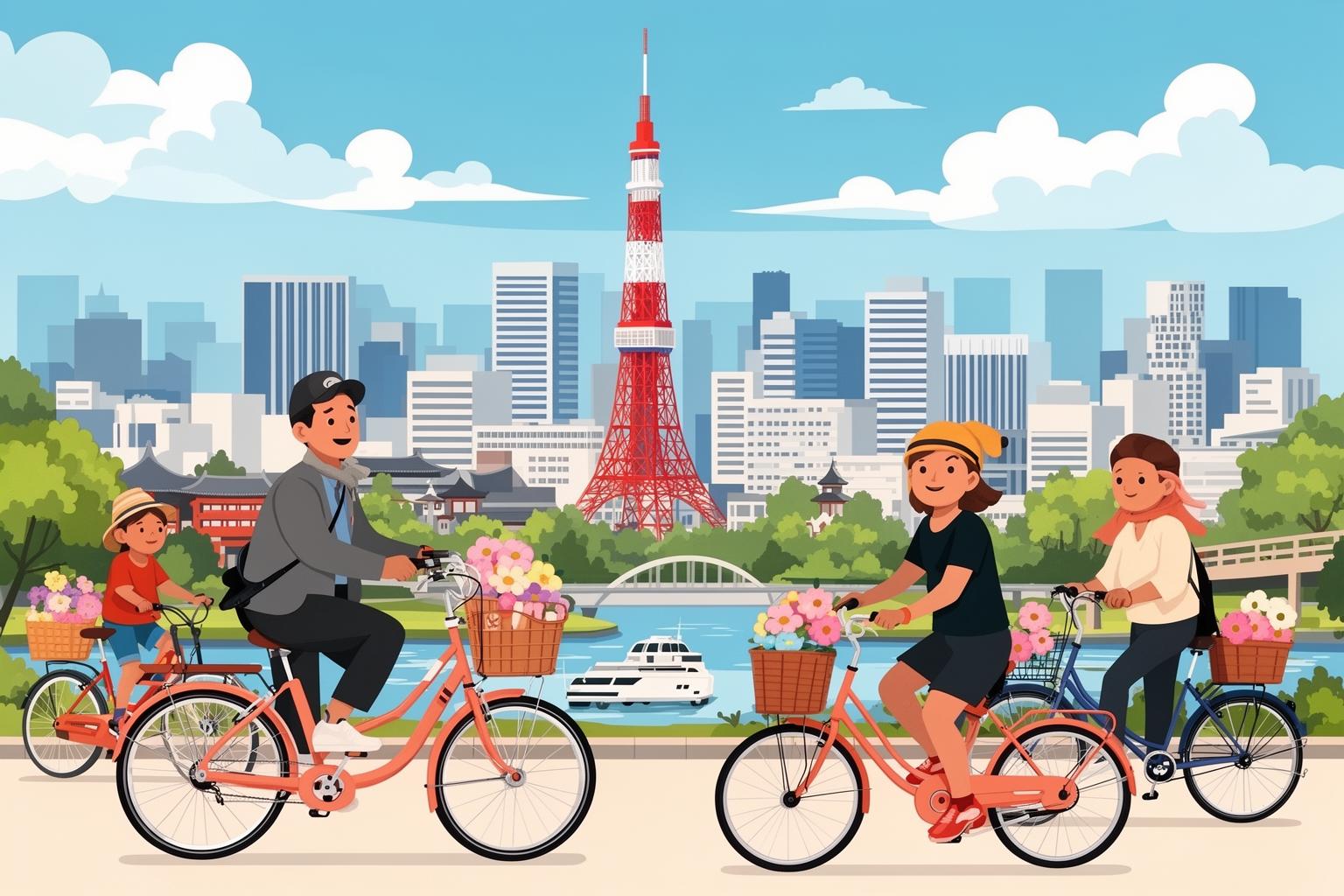
For any foreigner intending to genuinely live in Osaka rather than just visit, acquiring and mastering a mamachari is a vital step toward full integration. It goes beyond merely purchasing a product; it represents adopting a local mindset. It offers you access to the city on its own terms, allowing you to move at the local pace and operate according to the local logic. It serves as your passport to the hidden network of alleys, shops, and parks that make up the true heart of the city.
Choosing Your Steed
Your first choice is whether to buy new or used. A new mamachari from a major home center or a specialized bicycle shop provides reliability and a warranty. An electric-assist model requires a significant investment but pays off in ease of use. Used bicycles, found at secondhand shops or through online community groups (“Sayonara sales”), are much cheaper but can be uncertain in terms of maintenance. The key decision is whether to opt for electric. If your daily routine involves carrying children, substantial groceries, or dealing with any slopes or bridges, the answer is a definite yes. The extra cost is more than worth it due to the reduced physical effort. Regardless of your choice, you must complete the mandatory bicycle registration (bouhan touroku). This straightforward, inexpensive process is done at the point of sale, where a small orange sticker with a registration number is attached to your bike. It links the bike to you and is essential for recovery if it is stolen or impounded.
Essential Gear and Etiquette
To be a true Osaka cyclist, you need the right equipment and mindset. Rainy days are no reason to stop riding. The solution is a specialized cycling poncho, an ingenious garment that covers the rider, handlebars, and front basket, creating a mobile tent that keeps you surprisingly dry. Many bikes also feature an umbrella holder called a “Sasube.” This clamp on the handlebars holds a full-sized umbrella over you as you ride. Although technically illegal in many situations, they are commonly seen, perfectly illustrating Osaka’s preference for practical solutions over strict rules. Your bell is your voice. Learn its subtleties. A quick, polite ‘chirin’ is used to navigate pedestrians. A stronger, repeated ringing warns another cyclist who is about to cut you off. Use it deliberately. At night, having a light is not optional; it’s required by law, and police will stop you if you don’t comply. Finally, security is critical. Bike theft is widespread. The built-in wheel lock deters quick stops, but for longer parking, a heavy-duty chain or cable lock securing the frame to a fixed object is absolutely essential.
A Final Word on the Osaka Flow
Ultimately, mastering the mamachari means embracing the Osaka flow. It’s a state of mind that demands constant awareness of your surroundings—the pedestrian checking their phone, the car emerging from a hidden driveway, the elderly cyclist wobbling ahead. You must be predictable in your own movements while ready for others’ unpredictability. You are not merely an individual on a road but a particle in a fluid medium, aiming to move with the current, not against it. By doing so, you stop being a passive observer of Osaka life and become an active participant in its daily, chaotic, and beautiful dance. The mamachari is your invitation to join in, find your rhythm on neighborhood streets, and truly understand this city from the ground up, one pedal stroke at a time.