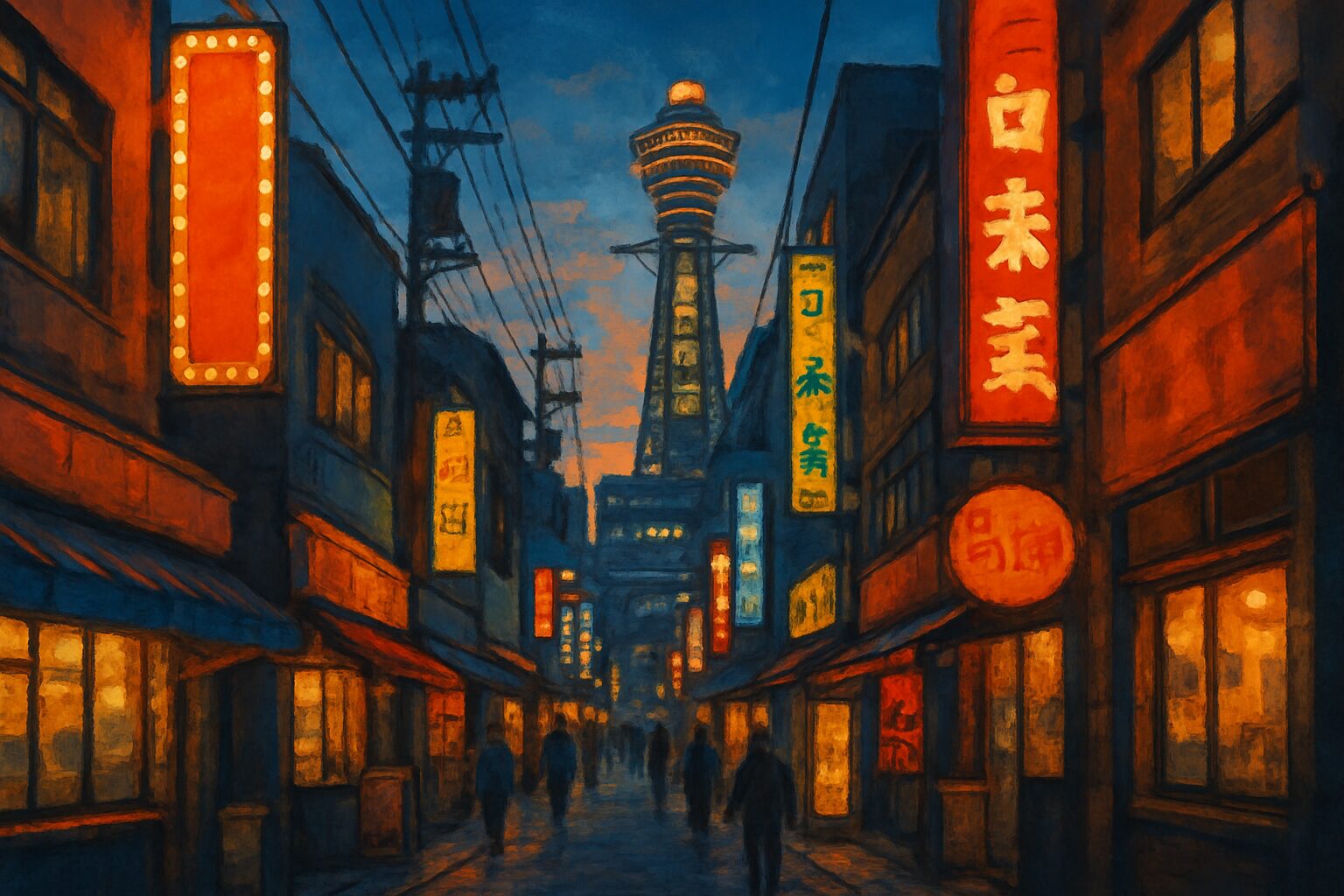
There’s a certain rhythm to Osaka, a city that pulses with an energy so vibrant it feels almost electric. You can feel it in the steam rising from a takoyaki grill in Dotonbori, hear it in the clatter of trains arriving at Umeda Station, and see it in the endless river of people flowing through Shinsaibashi. It’s a magnificent, intoxicating beat. But for the remote worker, the digital nomad, the creative soul, that constant crescendo can sometimes be a distraction rather than an inspiration. There are days when the pursuit of productivity calls not for a frantic beat, but for a gentle, steady hum. A place where thoughts can unfurl, where focus comes naturally, and where the city reveals a different, more intimate side of its personality. That place, my friends, is Showa-cho.
Tucked away in the Abeno ward, just a few stops south of the bustling Tennoji hub on the crimson Midosuji subway line, Showa-cho is an exhale. It’s a residential neighborhood that feels less like a part of Japan’s third-largest metropolis and more like a beautifully preserved town existing in its own pocket of time. Here, the skyscraper canyons give way to quiet lanes lined with elegant pre-war residences and humble nagaya row houses. The roar of traffic softens to the cheerful chime of a local tofu vendor’s bicycle and the rustle of leaves in tranquil temple gardens. For those of us who build our careers through a laptop screen, Showa-cho offers something increasingly rare and precious: an environment that nurtures deep work. It’s a place to not just work in Osaka, but to connect with its soul, find your focus, and maybe, just maybe, produce your best work yet. This is not about finding the trendiest coworking space; it’s about discovering a workspace woven into the very fabric of daily Japanese life.
For a different, more unfiltered perspective on Osaka’s soul, consider exploring the vibrant and historic Nishinari district.
The Echo of an Era: Why Showa-cho Resonates
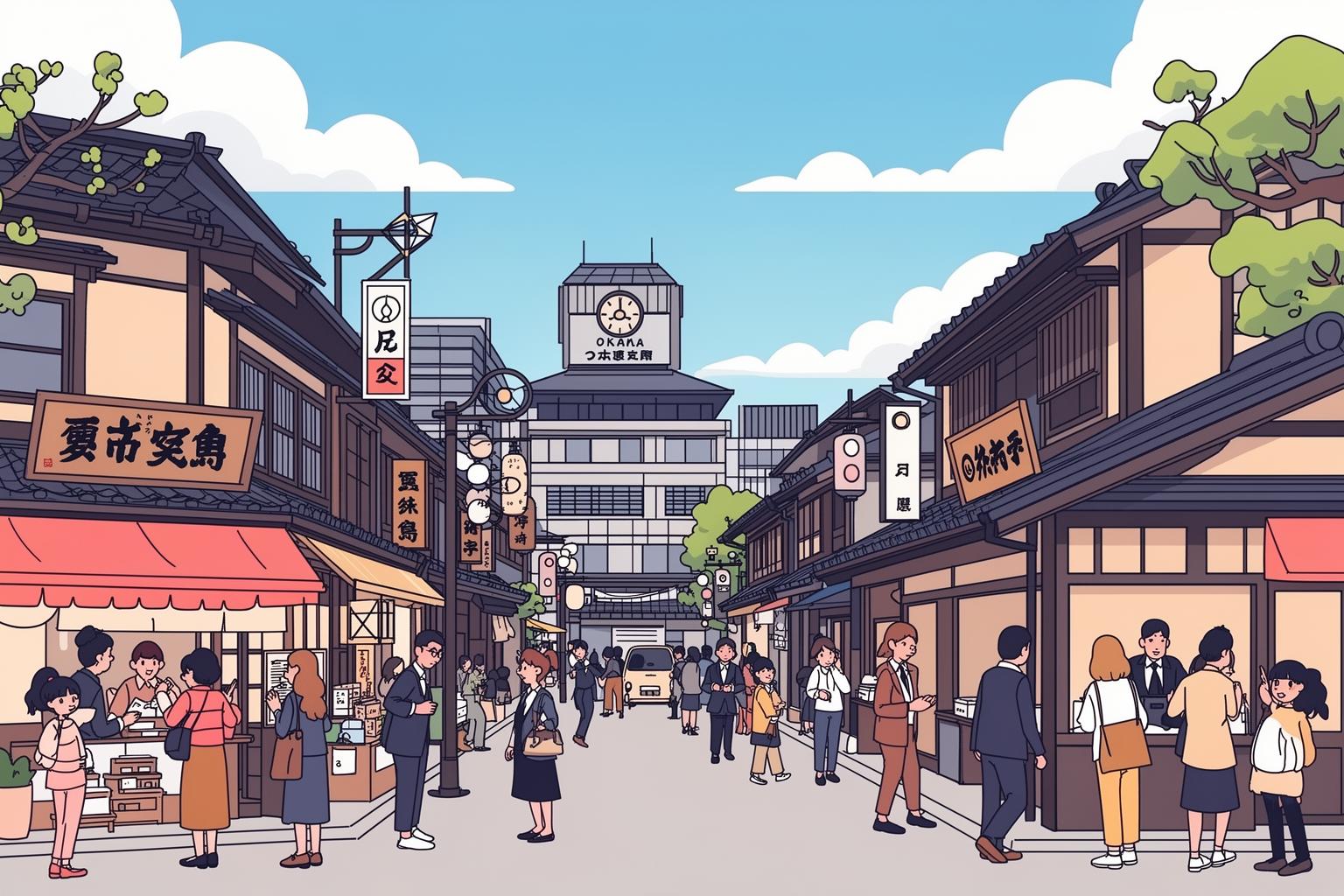
To fully appreciate Showa-cho as a workspace, you first need to grasp its unique atmosphere. The name itself offers a hint: “Showa” refers to the historical period from 1926 to 1989. While that era witnessed significant upheaval and modernization throughout Japan, the name now stirs a deep sense of nostalgia—a yearning for a simpler, community-centered time. Showa-cho embodies this sentiment vividly. Remarkably, much of this neighborhood escaped the devastating World War II air raids that destroyed large parts of central Osaka. The result is an impressive architectural time capsule, especially highlighting the styles of the late Taisho (1912-1926) and early Showa periods.
Strolling through these streets feels like a form of meditation. Your footsteps fall softly on the pavement. Instead of gleaming glass towers, you see the intricate woodwork of second-story balconies, the gentle curves of ceramic roof tiles, and the muted, earthy hues of well-preserved plaster walls. These aren’t museum artifacts behind velvet ropes; they are lived-in homes. Laundry flutters on balconies, carefully trimmed bonsai trees rest by doorways, and neighbors exchange quiet greetings as they sweep their front steps. This tangible sense of living history has a grounding effect. It offers a powerful counterbalance to the fleeting nature of digital work. When your day revolves around coding, spreadsheets, or virtual meetings, being surrounded by such enduring, tangible beauty brings much-needed balance and perspective.
The very air here feels different. It is fragrant with blooming daphne in spring, the earthy scent of damp soil after a summer rain, and the sweet smell of dango grilling at a nearby sweet shop. The soundscape is a gentle symphony, composed of the distant rumble of the subway, sparrows chirping, children’s laughter on their way home from school, and the rhythmic clip-clop of an elderly resident’s wooden sandals. This sensory tapestry contrasts sharply with a sterile office environment. It doesn’t distract; it enriches, providing a subtle, soothing soundtrack that can ease you into a state of relaxed focus—a perfect atmosphere for writing, designing, or strategic thinking.
Crafting Your Mobile Office: Sanctuaries of Study and Sips
Finding the perfect spot to open your laptop in Showa-cho is a delightful adventure of discovery. The area isn’t crowded with cookie-cutter cafe chains. Instead, it boasts a variety of unique, character-rich establishments, each with its own distinct personality. Your choice of ‘office’ for the day can be perfectly matched to your mood and the task at hand.
The Classic Kissaten: A Universe in a Coffee Cup
Imagine a place called ‘Kissa Hoshizora,’ a fictional name inspired by a very real style of establishment you’ll find here. You push open a heavy wooden door, greeted by the gentle jingle of a small brass bell announcing your arrival. Inside, the outside world fades away. Warm, soft light filters through amber-tinted lampshades. The air is thick with the rich, almost chocolate-like aroma of coffee brewed in a gleaming siphon—a contraption that looks like it belongs in a Victorian chemistry lab. Soft instrumental jazz plays from a vintage sound system, and the walls are lined with dark polished wood and shelves of well-worn books. The owner, a quiet man in a crisp white shirt, acknowledges you with a subtle nod. This is the traditional Japanese kissaten, the ultimate temple of deep focus.
Here, you don’t just order coffee; you engage in a ritual. The carefully crafted pour-over or siphon coffee demands respect and encourages you to slow down. This is no place for frantic typing or loud phone calls. It’s a sanctuary for contemplation, for writing that novel, for diving into complex documents. The unspoken rule is one of quiet and consideration. Patrons come here to read, think, and hold hushed conversations. As a remote worker, you become part of this silent agreement. By ordering a ‘morning set’ (toast, a boiled egg, and coffee at a modest price) or a slice of homemade cheesecake in the afternoon, you’re not just renting a table, but a peaceful slice of time. The Wi-Fi may not be lightning-fast, and power outlets can be few, but the reward is an atmosphere of unmatched concentration that no modern coworking space can replicate.
The Modern Haven: Light, Lattes, and Logistics
For days when reliable connectivity and more space are essential, Showa-cho and its surroundings deliver neatly. Picture a spot we’ll call ‘Fuminosato Coffee Lab,’ located near the local shopping arcade. This café offers a different kind of charm. Large floor-to-ceiling windows flood the space with natural light, highlighting minimalist wooden tables and comfortable chairs. The aroma of freshly ground espresso beans and baked pastries fills the air. The soundtrack is contemporary—perhaps chill electronic or indie folk—and the quiet hum is occasionally interrupted by the rhythmic hiss and clank of the espresso machine.
This is your go-to for a more logistically demanding day. Multiple power outlets are thoughtfully placed along the walls. The Wi-Fi is strong and stable, ideal for video calls or uploading large files. Tables are spacious enough to hold a laptop, a notebook, and a carefully crafted latte. The crowd is a mix of local university students studying, young mothers taking a brief break, and freelancers like yourself. While it lacks the time-capsule feel of a kissaten, it offers an energizing, modern atmosphere. It’s a place where you feel connected to the contemporary rhythm of the neighborhood while remaining shielded from the city center’s chaos. The key to working here successfully is timing: arrive before the lunch rush to secure a good seat, and be considerate about occupying large tables during busy periods.
The Great Outdoors: Momogaike Park as Your Green Office
Sometimes, the very idea of being indoors feels confining. On a crisp autumn afternoon or a mild spring morning, your best office might have no walls at all. Just a short, pleasant walk from Showa-cho’s main streets lies Momogaike Park, a serene oasis centered around a picturesque pond. This isn’t a grand, manicured garden like those at Osaka Castle; rather, it’s a beloved local park, and that is exactly its appeal.
Find a comfortable wooden bench beneath the shade of a cherry or maple tree. With a fully charged laptop and a mobile hotspot, you can work for hours, accompanied by the gentle quacking of ducks and turtles basking on rocks. The park provides a unique kind of focus. Its natural surroundings calm the mind, helping ideas flow more freely. It’s an ideal setting for brainstorming, mind-mapping, or tackling creative tasks that thrive in a less structured environment. Taking breaks here isn’t a distraction; it’s part of the workflow. You can stroll around the pond, watching clouds reflected on the water, or visit the quaint Momogaike Shrine on the pond’s island for a moment of quiet reflection. Working in Momogaike Park reminds you that productivity isn’t just about staring at a screen; it’s about finding harmony between your digital and physical worlds.
The Workday Interlude: Refueling Body and Soul
A successful remote workday is defined as much by its breaks as by its focused work periods. In Showa-cho, stepping away from your laptop is a chance to dive into a rich and authentic local culture. The neighborhood is a treasure chest of small, independent businesses that have served the community for generations.
When hunger calls, resist the urge to head to the nearest convenience store. Instead, stroll down a side street and discover a small, family-run udon shop. Slide open the door to a cozy interior filled with the comforting aroma of dashi broth. For a few hundred yen, you can savor a steaming bowl of kitsune udon, its simplicity highlighting the beauty of Japanese cuisine. There are also local bento shops where you can pick up a perfectly balanced meal box packed with grilled fish, rice, and a variety of colorful pickled vegetables. Or perhaps the sweet scent of a local bakery will draw you in, leaving you with a classic melon-pan or a savory curry-pan to enjoy on a park bench. These small culinary adventures are not just about nourishment; they are about supporting local businesses and experiencing the true flavors of the neighborhood.
The most refreshing break of all is simply taking a walk. Embark on a personal architectural tour with no set destination. Notice the details: the intricate wooden latticework (koshi) on a house’s front, designed for privacy and ventilation; the whimsical gargoyle-like onigawara tiles adorning roof ridge ends to ward off evil spirits; the tiny, carefully tended gardens residents cultivate in the smallest of spaces. Seek out the Teranishi Family Residence, a registered Tangible Cultural Property, to admire a magnificent example of the area’s grander homes. This mindful walking, noticing everyday beauty, is a powerful way to clear your mind and return to work with renewed clarity and creativity.
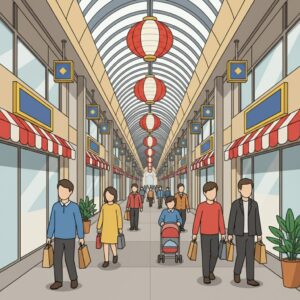
For a dose of community spirit, take a stroll through a local shotengai (covered shopping arcade), such as the Fuminosato Shotengai. This is the vibrant heart of the neighborhood. Here, you’ll find everything from fishmongers and greengrocers to futon shops and old-fashioned candy stores. The shopkeepers are friendly, the atmosphere unhurried, offering a lively slice of life that feels worlds away from the anonymous, air-conditioned malls downtown. Even a ten-minute walk through the arcade can reset your mind and remind you of the wonderful, human-scaled world just beyond your screen.
A Practical Guide for the Showa-cho Worker
Navigating Showa-cho as a remote worker is delightfully simple, but a few local insights can make the experience even more seamless.
Getting There is Effortless
Showa-cho’s biggest advantage lies in its location on the Midosuji Line, the main north-south axis of Osaka’s subway network. This provides direct access to the city’s key hubs. Tennoji, with its expansive park, zoo, and shopping centers, is just one stop away. The vibrant entertainment districts of Namba and Shinsaibashi are a ten-minute ride, while the bustling business and transit hub of Umeda is about twenty minutes north. This convenience lets you enjoy the calm of a residential area without feeling cut off. You can have a focused morning in a quiet café and then quickly be in the midst of the city for an evening meeting or dinner with friends.
The Connectivity Consideration
Although many cafes in Japan now offer free Wi-Fi, it’s not always guaranteed, especially in traditional kissaten. Connection speeds can also be inconsistent. For remote workers depending on reliable internet, the best advice is to have a backup. Investing in a personal pocket Wi-Fi device or having a robust data plan for smartphone tethering is smart. This freedom lets you work anywhere—a park bench, a cozy café, or even a temple courtyard—without relying solely on a specific Wi-Fi network. Think of it as your key to turning the entire neighborhood into your office.
Mastering Cafe Etiquette
Working in a cafe in Japan, especially a quiet, local one, comes with unspoken rules. Being a respectful customer is essential. The main rule is to keep ordering items—don’t linger over one cup of coffee for hours. A good guideline is to buy something new every 90 minutes to two hours. During busy lunch hours (usually 12:00 PM to 1:30 PM), be conscious of the space you occupy. If the cafe becomes crowded with customers waiting for tables, it’s polite to pack up your work or move to a smaller seat if possible. Phone and video calls are considered a major breach of etiquette; if you need to take a call, step outside. Keep your laptop and notification sounds muted. By respecting the space and fellow patrons, you not only make the environment pleasant for everyone but also become a welcomed regular rather than just a tolerated guest.
The Neighborhood Through the Seasons
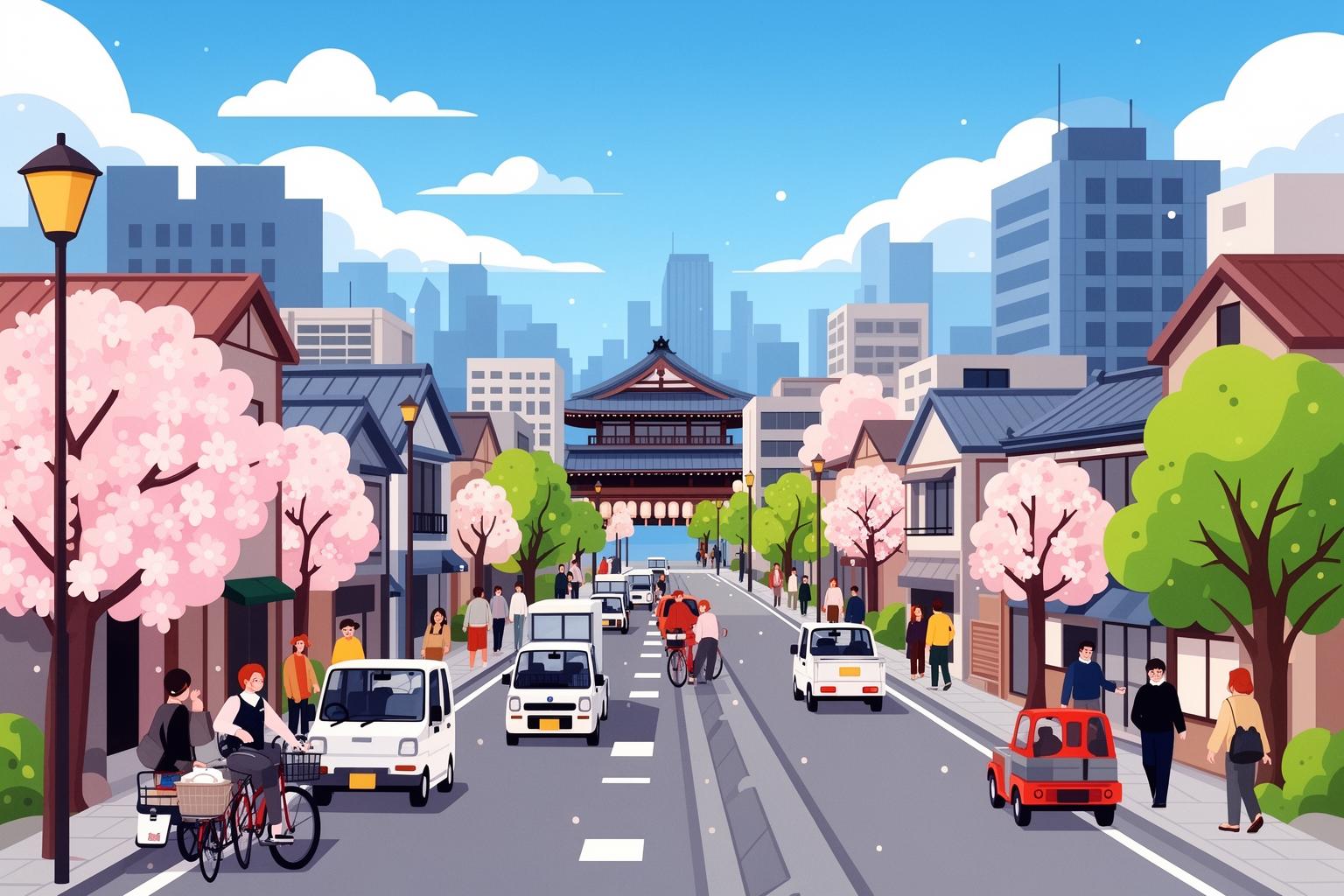
One of the greatest pleasures of settling into a place like Showa-cho for your work is witnessing its transformation through the seasons. Each season brings its own distinct character, offering fresh inspiration and new ways to enjoy your work-life balance.
Spring (March-May): The neighborhood bursts awake in a gentle palette of pastels. The cherry blossoms at Momogaike Park steal the show, forming a stunning pink and white canopy that invites you to spread a blanket and work beneath the blooms. The air is filled with a sense of hope and renewal. It’s the ideal time for long, curious walks under mild, pleasant weather. The soft warmth makes outdoor work sessions not only possible but almost essential.
Summer (June-August): Summer in Osaka is an all-encompassing sensory experience. The heat and humidity are intense, yet they bring a lush, vibrant green to every tree and garden. The air is alive with the steady, almost hypnotic chorus of cicadas. This season calls for retreating into the cool, air-conditioned comfort of your favorite cafes. Your workdays may be intermittently scored by the distant beats of drums prepping for a local Obon festival. Evenings turn enchanting as the heat wanes and paper lanterns bathe the neighborhood shrine festivals (matsuri) in a warm glow.
Autumn (September-November): Often regarded as the most beautiful season, autumn replaces summer’s heavy humidity with crisp, clear air and brilliant blue skies. Maple and ginkgo leaves blaze with vivid reds, oranges, and golds. The pleasant temperatures are perfect for working outdoors in the park or simply keeping the café door open to welcome the refreshing breeze. There’s a cozy, reflective atmosphere ideal for immersing yourself in deep, focused projects as the year draws to a close.
Winter (December-February): Winter brings a quiet, contemplative charm to Showa-cho. Streets grow calmer, and the stark, leafless trees carve elegant, minimalist shapes against the winter sky. It’s the perfect season to retreat into a warm kissaten, coffee in hand, ready to tackle your most demanding work. The chill outside makes the warmth and inviting ambiance of local shops and eateries all the more comforting. This is a time for peaceful productivity and savoring life’s simple pleasures.
More Than a Desk, A Destination for the Mind
In the global quest for the perfect remote work environment, we often concentrate on the tangible: internet speed, outlet accessibility, the quality of the coffee. Yet, Showa-cho reminds us that the ideal workspace encompasses much more. It’s about the intangible—the atmosphere, the history, the sense of community, the feeling of being in a place that soothes the spirit and ignites the imagination.
Choosing to set up your laptop in this quiet corner of Osaka is a conscious decision to reject the hustle. It’s a choice to exchange frantic energy for focused calm, to trade fleeting trends for timeless charm. It’s a declaration that your surroundings profoundly impact the quality of your work and your well-being. Showa-cho doesn’t just provide a spot to plug in your computer; it offers a rhythm to embrace, a history to learn from, and a community to watch and appreciate. It’s a place where the simple act of looking up from your screen becomes a moment of discovery and delight. So, the next time you crave a change of scenery, head south on the Midosuji Line. Let the gentle hum of Showa-cho become the soundtrack to your most inspired and productive day yet.