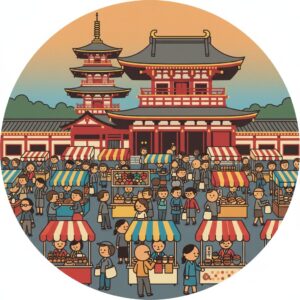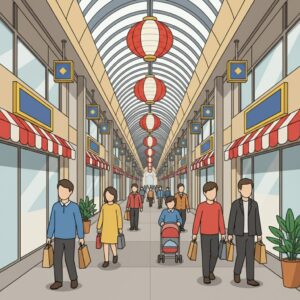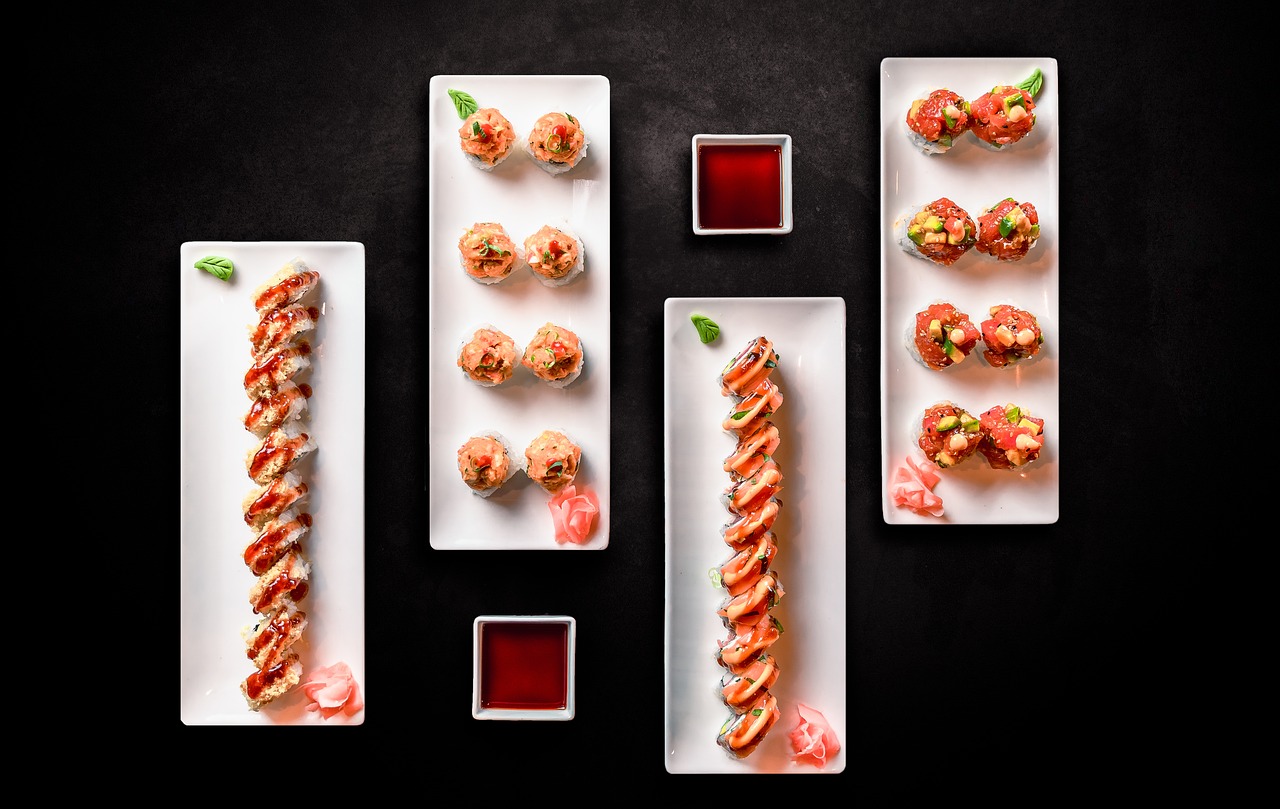
Hola, fellow travelers! It’s Sofia, and I want to share a story from Osaka that completely flipped my expectations and filled my camera roll with some of the most vibrant scenes I’ve ever captured. When you think of Osaka, you probably picture the electric energy of Dotonbori, the historic grandeur of Osaka Castle, or the endless culinary adventures of Kuromon Market. And when you think of Japanese food, pristine sushi counters in quiet, minimalist settings likely come to mind. But what if I told you that one of the most profound sushi experiences I’ve had was in a place that smells overwhelmingly of grilled meat and spicy kimchi? Welcome to Tsuruhashi, Osaka’s Koreatown, a whirlwind of sensory delight where Japan and Korea dance a lively, chaotic, and utterly beautiful tango. This isn’t just a district; it’s a living, breathing testament to the city’s multicultural soul. I came here chasing the legendary flavors of Korean BBQ, but I stumbled upon a secret world of authentic sushi that exists, paradoxically, in the heart of it all. It’s a story of discovery, of looking beyond the obvious, and of realizing that the best adventures often begin when you follow a scent, turn down an unfamiliar alley, and open a door you weren’t expecting to find. Before we dive into this maze of flavor, let’s get our bearings.
If you’re curious about the legendary Korean BBQ that initially drew me to this vibrant district, you can explore more in our guide to Tsuruhashi’s carnivorous delights.
The Electric Aroma of Tsuruhashi
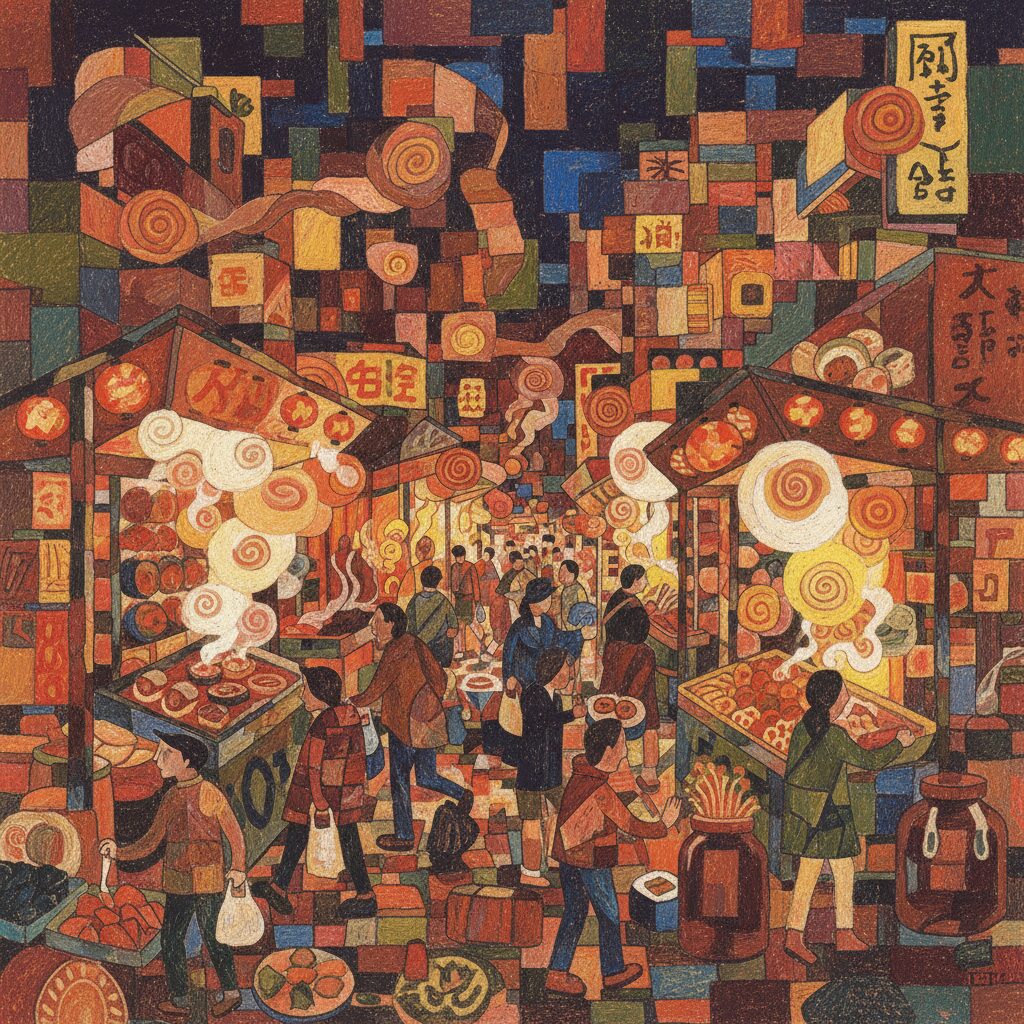
Stepping off the train at Tsuruhashi Station is an instant plunge into another world. You don’t simply emerge onto a platform; instead, you descend straight into a bustling marketplace that seems like a gateway to a different realm. The air is heavy—not with the subtle aroma of dashi or soy sauce, but with the smoky, irresistible fragrance of yakiniku, Japanese-style Korean barbecue. It lingers on your clothes, your hair, and your memory. This is the distinctive scent of Tsuruhashi, a neighborhood centered around grills that crackle from morning until late at night. Following the smoke, you find yourself drawn into a maze of covered shopping arcades, or shotengai, radiating out from the station. These are far from the sleek, brightly lit arcades you might expect elsewhere. Tsuruhashi’s shotengai are raw, gritty, and teeming with life. Narrow corridors are packed shoulder-to-shoulder with vendors, shoppers, and echoes of generations past. Time seems to bend here. Fluorescent lights flicker above stalls piled high with fiery red kimchi, each mound representing a family’s secret recipe passed down through the years. There is an endless variety: classic napa cabbage, crunchy daikon radish, spicy cucumber, and even more obscure regional delicacies. The ajummas—the spirited Korean aunties running these stalls—call out warmly, offering samples and sharing stories. The soundscape is equally rich: the sizzle of meat on hot grills, the rhythmic chopping of knives on wooden blocks, merchants chatting in a fluid blend of Japanese and Korean, and nostalgic melodies of K-pop and Japanese enka ballads drifting from hidden storefronts. It’s a thrilling chaos, a vibrant fusion of culture and commerce that makes you feel truly alive.
A Neighborhood Shaped by History
To truly grasp Tsuruhashi, you must understand its spirit. This area grew into a hub for Osaka’s Zainichi Korean community, ethnic Koreans who have made Japan their home for generations, many tracing their roots back to the early 20th century. The current marketplace developed organically after World War II, emerging as a black market out of necessity and blossoming into the cultural and culinary powerhouse it is today. This history is woven into every corner of the neighborhood — in its faded signs, aging buildings, and the resilient spirit of its people. Tsuruhashi is not a tourist-made Koreatown; it is an authentic, lived-in community. This authenticity is its greatest appeal. It feels less like a destination and more like an invitation into a sprawling family kitchen. Locals shop daily, friends socialize over sizzling pans of chijimi (savory pancakes), and families gather for hearty meals. That deep-rooted sense of community and history makes the discovery of something as quintessentially Japanese as a high-end sushi counter here all the more fascinating. It reflects the complex, intertwined tapestry of life in Osaka, where cultures don’t merely coexist—they blend, borrow, and create something entirely new and wonderful. The very ground beneath your feet tells a story of perseverance and adaptation, adding incredible flavor to every bite you take, whether it’s perfectly fermented kimchi or, as I soon discovered, an impeccably crafted piece of nigiri.
The Unlikely Quest: Searching for Shari and Neta
My mission began as a whisper, a tip from a local friend. “You want the best sushi?” he asked, a sly grin spreading across his face. “Forget the fancy places in Namba. Head to Tsuruhashi.” I chuckled, thinking it was a joke. Sushi in Koreatown? It sounded like a culinary contradiction. But he was serious. He explained that some of the city’s most skilled and humble sushi masters, known as itamae, had established themselves in this vibrant, unlikely neighborhood. They were attracted by lower rents, easy access to fresh market produce, and a clientele that appreciated quality over showiness. These weren’t the spots featured in glossy magazines. Instead, they were hidden in plain sight, nestled between kimchi shops and barbecue joints, waiting to be uncovered by those willing to look beyond the smoke and sizzle. The idea was thrilling. A treasure hunt for world-class sushi amid a sea of Korean flavors. So, with my camera in hand and curiosity ignited, I plunged into the maze. My first attempts were lessons in observation. I strolled down the shotengai, eyes searching for telltale signs: a simple noren curtain, a small, unadorned wooden sign with Japanese characters I couldn’t read, the faint scent of vinegared rice cutting through the smokiness. It was challenging. Most storefronts shouted boldness, adorned with vibrant Korean delicacies. The sushi places, by contrast, excelled at blending in. They were quiet, discreet, and emitted a serene calm that felt almost out of place against the market’s bustling energy. After a few wrong turns and some humorous pantomime with friendly shopkeepers, I finally found my first destination. It was a door I must have passed three times—so unassuming it was nearly invisible.
First Discovery: The Silent Master’s Sanctuary
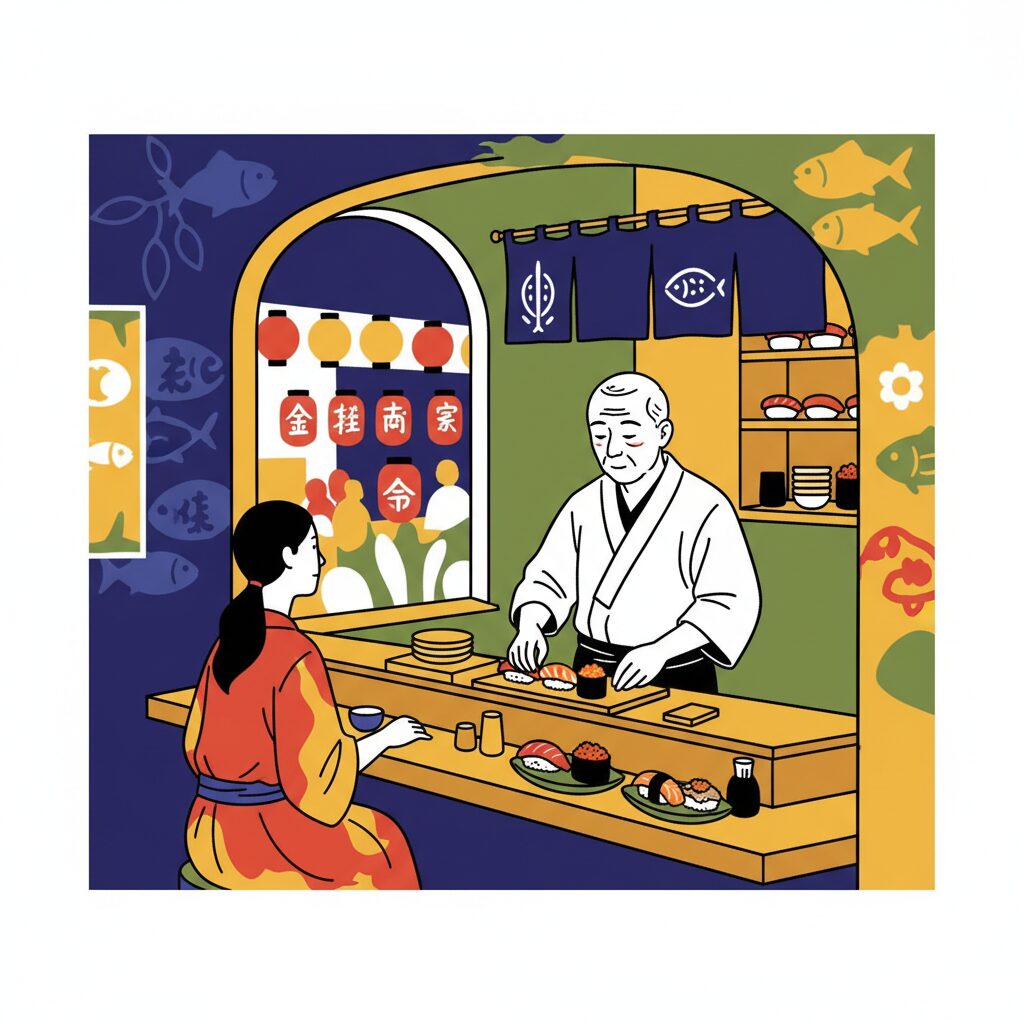
Pushing aside the simple blue noren curtain felt like stepping into another dimension. The market noise instantly faded, replaced by a deep, almost reverent silence. I found myself in a tiny, spotless space, with a pristine hinoki cypress counter seating no more than six people. Behind it stood the itamae, an elderly man with a focused gaze and hands that moved with the slow, deliberate grace of a lifelong craftsman. He acknowledged me with a slight nod, his eyes conveying a welcome that needed no words. There was no menu. The experience was omakase, a Japanese phrase meaning “I’ll leave it up to you.” It involved completely surrendering control and placing full trust in the chef’s hands. Here, sushi transcended mere food and became an art form—a dialogue between the chef, the ingredients, and the guest. I watched, captivated, as he began his work. Each movement was precise and economical. The way he sliced the fish—the neta—was a fluid, single motion. The way he shaped the rice—the shari—was a gentle cupping in his palm, creating a pillow that was airy yet firm. The rice was slightly warm and seasoned with red vinegar, giving it a delicate, earthy tang, a hallmark of traditional Edomae-style sushi. The first piece he placed before me was kohada, or gizzard shad. This fish is considered by many connoisseurs as the ultimate test of an itamae’s skill due to its intricate curing and preparation. The skin shimmered silver, a work of art in itself. The flavor was bold yet clean, perfectly balanced between saltiness, vinegar, and the fish’s natural oiliness. It was breathtaking. Piece after piece followed, each a small masterpiece. A creamy slice of chutoro (medium-fatty tuna) melted on my tongue. A delicate piece of hirame (flounder) was seasoned with a pinch of sea salt and a drop of sudachi citrus. A tender morsel of anago (sea eel) was brushed with a sweet, dark tsume sauce simmered for years, its flavor deepened over time. There was no conversation, only the soft sounds of his knife, the gentle pat of rice, and my quiet appreciation. It was a meditative experience. Here, in this silent sanctuary tucked within the clamor of Tsuruhashi, I wasn’t merely eating sushi; I was witnessing a master practicing his craft, a tradition refined over decades, presented with humility and absolute confidence. Leaving the shop and returning to the bustling market felt like waking from a dream. The contrast was staggering, making the experience all the more special. It was a secret world I now shared with a few others—a perfect, quiet jewel hidden in the most unexpected of places.
The Heartbeat of the Market: A Standing Sushi Bar
My next discovery was its complete opposite, proving the incredible diversity of Tsuruhashi’s hidden sushi scene. Deep within the covered market, surrounded by fishmongers shouting out the day’s catch and vendors selling dried goods, was a brightly lit corner with no chairs, only a high counter slick with condensation. This was a tachigui, or standing sushi bar. The energy here was electric, a total 180 from the silent sanctuary. It was loud, cheerful, and wonderfully chaotic. Salarymen on their lunch break, local shoppers taking a quick pause, and curious travelers like me were all cramped together, elbow-to-elbow, shouting orders to the two young, lively chefs behind the counter. The menu was scrawled on wooden slats hanging on the wall, and the prices were surprisingly reasonable. This was sushi for the people—fast, fresh, and without an ounce of pretense. The beauty of this place was its direct connection to the market. The neta was as fresh as it could be, sourced from the very vendors around the bar. I watched as a fishmonger delivered a wriggling octopus, which minutes later was expertly prepared and served as a deliciously chewy and sweet piece of nigiri. I started with some classics: a glistening piece of sake (salmon), a rich and oily saba (mackerel) lightly cured in vinegar, and a generous portion of ikura (salmon roe) that burst in my mouth with a salty pop. The chefs worked at lightning speed, their hands blurring as they sliced, shaped, and served. There was a friendly rapport between them and the customers; they recommended the best catch of the day, joked with regulars, and skillfully managed the constant flow of orders. It was a performance—a delicious and dynamic one. Feeling bolder, I tried some of the more seasonal offerings: a creamy uni (sea urchin) gunkan-maki tasting of the ocean itself, and a sweet, succulent amaebi (sweet shrimp) served with its fried head, a crunchy and savory treat. The atmosphere was infectious. I found myself chatting with the man next to me, a local who had been coming here for over twenty years. He pointed out his favorites on the menu and shared stories about how the market had evolved over time. This was more than a meal; it was a communal experience. It was about sharing a moment of simple, pure pleasure with strangers united by a love of fresh, delicious sushi. This standing bar was the market’s beating heart—a place where the frenetic energy of Tsuruhashi was distilled into quick, perfect bites. It proved that incredible quality doesn’t always require silence and ceremony. Sometimes, it’s found amid beautiful chaos, served with a smile and a side of lively conversation.
Modern Traditions in a Hidden Alley
Just when I believed I had grasped the duality of Tsuruhashi’s sushi scene—the serene traditionalist versus the lively market stall—I came across something that seamlessly blended the two. A short walk from the main shotengai, down a quiet residential side street that felt worlds away from the market’s commotion, I found my third and final destination for the day. Its exterior was modern and chic, marked only by a single, beautifully crafted wooden door and a small, stylishly designed lantern hinting at what lay inside. This place felt different. Younger. More design-conscious. Inside, the decor was a stunning blend of traditional Japanese aesthetics and modern minimalism. A smooth, polished concrete counter was set against a wall of dark, textured wood. The lighting was warm and intimate, while soft instrumental jazz played in the background. It was run by a young couple; he was the itamae, and she acted as the gracious host and sake sommelier. Here, the omakase experience felt more like a conversation. The chef, who spoke some English, was passionate about sharing his philosophy. He honored the Edomae traditions he had trained in but wasn’t afraid to innovate. He sourced fish from the nearby Tsuruhashi market and also collaborated with fishermen across Japan to acquire unique, seasonal ingredients. His style was creative and playful, adding subtle twists that elevated classic dishes. A piece of seared kinmedai (golden eye snapper) was served with a hint of yuzu zest and a few grains of pink salt, creating an explosion of flavor. A slice of sawara (Spanish mackerel) was lightly smoked over cherry wood, imparting a depth and complexity that was utterly surprising. The shari, too, was distinctive. He used a blend of vinegars, seasoning it milder than traditional red vinegar, allowing the delicate flavors of the white fish to shine more brightly. The experience was curated not only around the sushi but also around the drink pairings. The chef’s partner was a sake expert, recommending a different sake for each course and explaining how the notes of each brew complemented the fish. A crisp, dry junmai for the lighter white fish, a richer, more full-bodied yamahai for the fatty tuna. It was both an educational and incredibly delicious journey. This spot embodied the new generation of sushi chefs in Japan—artists who honor the past while boldly embracing the future. They understand that tradition isn’t about rigid rules, but about mastering fundamentals to thoughtfully and creatively build upon them. Discovering this place felt like uncovering the future of sushi, quietly thriving in a neighborhood deeply rooted in the past. It was a beautiful paradox, the perfect conclusion to my unlikely sushi quest in Koreatown.
Savoring the Rest of Tsuruhashi’s Treasures

While discovering the sushi was an incredible experience, you simply can’t visit Tsuruhashi without indulging in its Korean culinary delights. Between my sushi outings, I eagerly immersed myself in the vibrant world of Korean street food. Exploring the market is a true adventure for your taste buds. The air is alive with the sizzle of chijimi—savory Korean pancakes filled with green onions, seafood, or kimchi. You can purchase a large, freshly made slice, straight off the griddle, and enjoy it while strolling. Crispy on the outside, chewy on the inside, and bursting with flavor, it’s the ultimate comfort food. Then there are countless stalls offering tteokbokki—chewy rice cakes swimming in a sweet and spicy gochujang sauce—and kimbap, Korean seaweed rice rolls resembling sushi’s cousin but flavored with sesame oil instead of vinegar, providing an entirely different taste experience. But the true highlight, apart from the yakiniku, is the kimchi. You can easily spend an entire afternoon sampling kimchi varieties. Each shop has its own unique recipe, and the owners take great pride in their creations. They happily allow you to try different kinds while explaining the subtle differences. I bought a bag of freshly made cucumber kimchi that was so crisp, spicy, and refreshing it became my favorite snack. Beyond the food, Tsuruhashi is a shopper’s paradise for anyone interested in Korean culture. You’ll find shops selling beautiful traditional Korean clothing (hanbok), Korean ceramics, K-pop merchandise, and a wide selection of Korean groceries and ingredients rarely found elsewhere. It’s a place to wander without a set plan, letting your senses lead the way. Turn down a narrow alley and you might discover a tiny shop selling homemade Korean sweets or a cozy café serving traditional teas. The photo opportunities are endless—the vibrant colors of the produce, steam rising from food stalls, intricate patterns of hanging lanterns, and the expressive faces of vendors—every corner of Tsuruhashi tells a story waiting to be captured.
A Few Tips for Your Tsuruhashi Adventure
If you’re ready to set off on your own journey, here are some practical tips to help you make the most of it. Getting to Tsuruhashi is incredibly easy. It’s a major station served by the JR Osaka Loop Line, the Kintetsu Nara Line, and the Sennichimae Subway Line, making it accessible from nearly anywhere in the city. The best time to visit depends on what you’re seeking. During the day, the market is at its most bustling and vibrant—ideal for shopping, snacking on street food, and soaking up the lively atmosphere. Evening brings a different vibe. As market stalls close, yakiniku restaurants and izakayas (Japanese pubs) come alive. The neighborhood fills with laughter, clinking glasses, and the smoky aroma of grilled meat grows even more intense. When it comes to the hidden sushi spots, it’s best to approach them with an open mind and a bit of patience. Many are quite small and may not have English menus or staff. A simple “Omakase, onegai shimasu” (Chef’s choice, please) often suffices. Cash is still king in many of these smaller, older places, so it’s wise to carry some yen. Most importantly, be respectful. These establishments are not just businesses—they represent people’s livelihoods and a close-knit community. A smile and a simple “arigato” (thank you) or “kamsahamnida” (the Korean equivalent) go a long way. Let your curiosity guide you, but always move with kindness and an appreciation for the unique culture you are privileged to experience.
An Invitation to the Unexpected
My day in Tsuruhashi was a profound reminder that travel is most enchanting when it breaks our expectations. I visited Osaka’s Koreatown anticipating one experience but discovered something entirely different, yet equally captivating, just beneath the surface. It’s a neighborhood full of fascinating contradictions: a Japanese spirit living within a Korean soul, peaceful sanctuaries nestled in vibrant chaos, and centuries-old traditions blending with a fresh, modern energy. Tsuruhashi is more than a place to eat; it’s a place to feel. It invites you to look deeper, listen more intently, and taste with an open heart. It shows that authenticity isn’t about fitting into one identity but about the rich, complex, and sometimes messy ways cultures intersect and enrich each other. So, when you’re next in Osaka, I encourage you to stray from the usual path. Follow the smoke from Tsuruhashi Station, explore the winding markets, and let the neighborhood unveil its secrets. Whether you come for the sizzling barbecue, the spicy kimchi, or the unexpected, perfect piece of sushi, you’ll leave with a satisfied stomach and a heart full of stories. You’ll depart with a deeper appreciation of Osaka and the understanding that the most unforgettable adventures are often the ones you never anticipated.