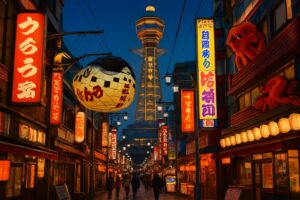
Ask anyone, even in Japan, to picture Osaka, and they’ll paint you a scene straight from a sci-fi movie. They’ll talk about Dotonbori, that electric river of neon signs, the Glico Running Man frozen mid-stride, the frantic energy of takoyaki vendors shouting greetings over sizzling iron plates. They’ll tell you it’s a city of commerce, of comedy, of people who talk a little too loud and laugh a little too easily. They’re not wrong. That is Osaka. But it’s only the surface, the noisy, brilliant crust. The real soul of the city, the bedrock of its character, lies somewhere much quieter, much older, and much stranger. It’s found in a sprawling compound just a short walk from the glittering skyscrapers and seedy alleyways of Tennoji. It’s found at Shitennoji, Japan’s oldest officially administered temple. And if you want to understand what makes Osaka tick, what makes its people so maddeningly and wonderfully unique, you don’t go to a comedy club. You come here. You come here and you watch, and you listen, and you begin to understand the central paradox of this city: how a place so obsessed with the future and the deal is so profoundly shaped by a 1,400-year-old promise.
Shitennoji isn’t a museum piece, preserved in amber like so many temples in Kyoto. It’s not a tourist attraction in the way Senso-ji is in Tokyo, swarmed by crowds seeking a perfect photo. Here, the sacred ground feels less like a sanctuary and more like a neighborhood park with a pagoda in the middle. It’s a living, breathing, sprawling part of the city’s anatomy, a place where history isn’t just remembered; it’s stepped on, haggled over, and casually integrated into the messy business of everyday life. It’s here you’ll find the answer to the question that perplexes so many outsiders: why are Osakans the way they are? The answer isn’t simple, but its roots are planted firmly in the soil of this temple, a place built not just on faith, but on a battlefield vow, a business deal with the gods themselves. And that, right there, is the most Osaka story you’ll ever hear.
For a different perspective on Osaka’s authentic character, consider exploring the vibrant daily life along Tenjinbashisuji Shopping Street.
A Temple Built on a Promise, Not Just Piety
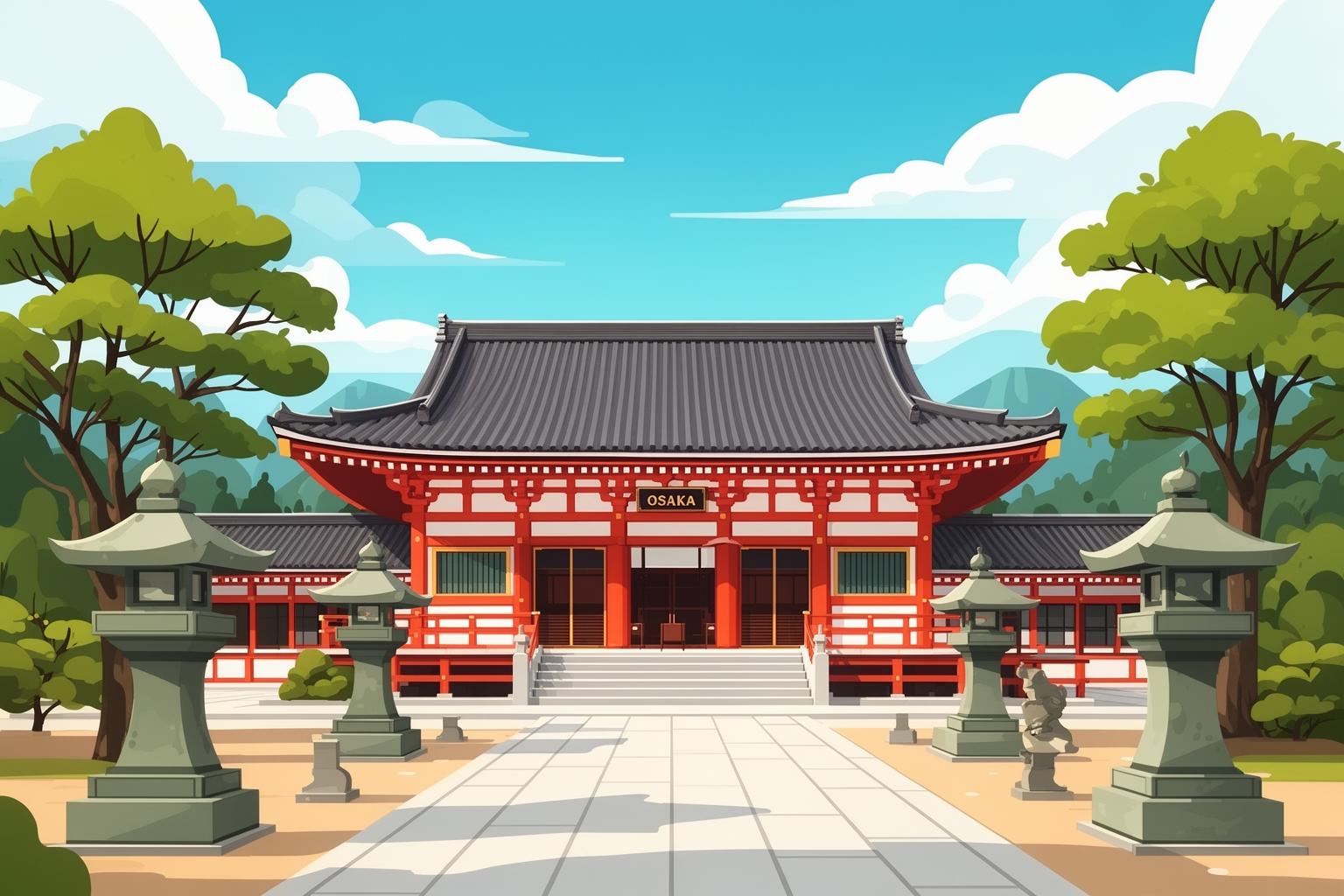
To truly understand Osaka, you have to know the story behind the founding of Shitennoji. It’s far from a quiet tale of peaceful enlightenment. Instead, it’s born out of conflict—a raw, desperate plea from the battlefield. In the 6th century, Japan was engulfed in a fierce civil war over whether Buddhism should become the new state religion. On one side were powerful anti-Buddhist clans, holding tight to the traditional Shinto faith; on the other stood Prince Shotoku, a dedicated supporter of Buddhism. The battles were intense, and the Prince’s side was struggling. In a moment of pragmatism, he carved statues of the Four Heavenly Kings, the Shitenno, fierce Buddhist guardian deities, and prayed to them—not with a humble, uncertain request, but with a clear bargain: “If you grant me victory, I vow to build a magnificent temple in your honor.” The gods apparently agreed. Prince Shotoku won, Buddhism was established in Japan, and he fulfilled his promise by founding Shitennoji in 593 AD.
Prince Shotoku’s Pragmatic Pact
This origin story is essential—it’s the Rosetta Stone of the Osaka mindset. Consider this: the city’s oldest and most respected institution began with a straightforward deal: “You help me, and I’ll help you.” This is not the abstract, philosophical spirituality you might associate with a Zen garden in Kyoto. Instead, it is a practical, results-driven faith—a heavenly contract. This perspective infuses every aspect of life in Osaka. The city is known for its merchants and deal-makers, where relationships rest on mutual benefit and obligation. This might seem cold or cynical to outsiders, but it’s simply honest. While Tokyo relationships, both business and personal, can be wrapped in layers of formality, tacit rules, and delicate etiquette, Osaka is more direct. The spirit of Prince Shotoku’s deal continues to shape interactions here. People value clear communication and concrete results. When an Osaka businessperson says, “Let’s work together,” they mean a real, mutually advantageous partnership—not just an abstract alliance. This directness can come across as blunt or even rude to those used to Tokyo’s often ambiguous style, which aims to preserve harmony. But in Osaka, clarity is a form of kindness—it means everyone knows where they stand, with no guessing games. This pragmatism extends to modern spirituality, too. People here pray for specific, tangible outcomes: passing exams, healing from illness, gaining new clients. The gods are not distant figures to be merely revered—they are powerful allies to be called upon in the practicalities of life. Shitennoji itself stands as a constant reminder: faith is potent, but better still when it produces results.
The Layout as a Testament to Social Welfare
Prince Shotoku’s pragmatism didn’t stop with founding the temple. The design of the original Shitennoji complex was groundbreaking—a plan for a compassionate, functional society. Alongside the Golden Hall and pagoda, he created four institutions, the Shika-in, dedicated to community care. These included the Kyoden-in for religion and education; the Hiden-in for welfare of the elderly and children; the Ryobyo-in, a hospital for the sick; and the Seiyaku-in, a pharmacy providing medicine. This was the 6th century. Essentially, it was one of the world’s first public welfare centers, embedded within a religious complex. This is a crucial piece of understanding Osaka. From its very start, the city’s spiritual heart was also its civic center. The temple’s mission was not just to save souls in the afterlife but to care for bodies in the present. This legacy—a deeply rooted belief in active, tangible community care—is perhaps Osaka’s defining trait. It’s the foundation of the city’s famed friendliness, often misunderstood. When people say “Osaka is friendly,” they may picture a loud fan in a Tigers baseball cap giving a hearty slap on the back. That can happen, yes, but true friendliness runs deeper and is more practical. It’s the elderly woman at the neighborhood shotengai (shopping arcade) who knows just how ripe you like your bananas and slips an extra orange into your bag. It’s the neighbor who sees you struggling with your trash on the wrong day and doesn’t just tell you when to put it out but helps sort it. It’s a communal spirit that says, “We’re all in this together, so let’s make it work.” This impulse to help, engage, and care for others is a direct inheritance from the Shika-in. While Kyoto’s temples might inspire poetry and Tokyo’s shrines invite career reflection, Shitennoji urges you to check on your elderly neighbor. It grounds spirituality in social responsibility, and it’s this fusion that powers Osaka life.
The Flea Market: Where Gods and Bargains Collide
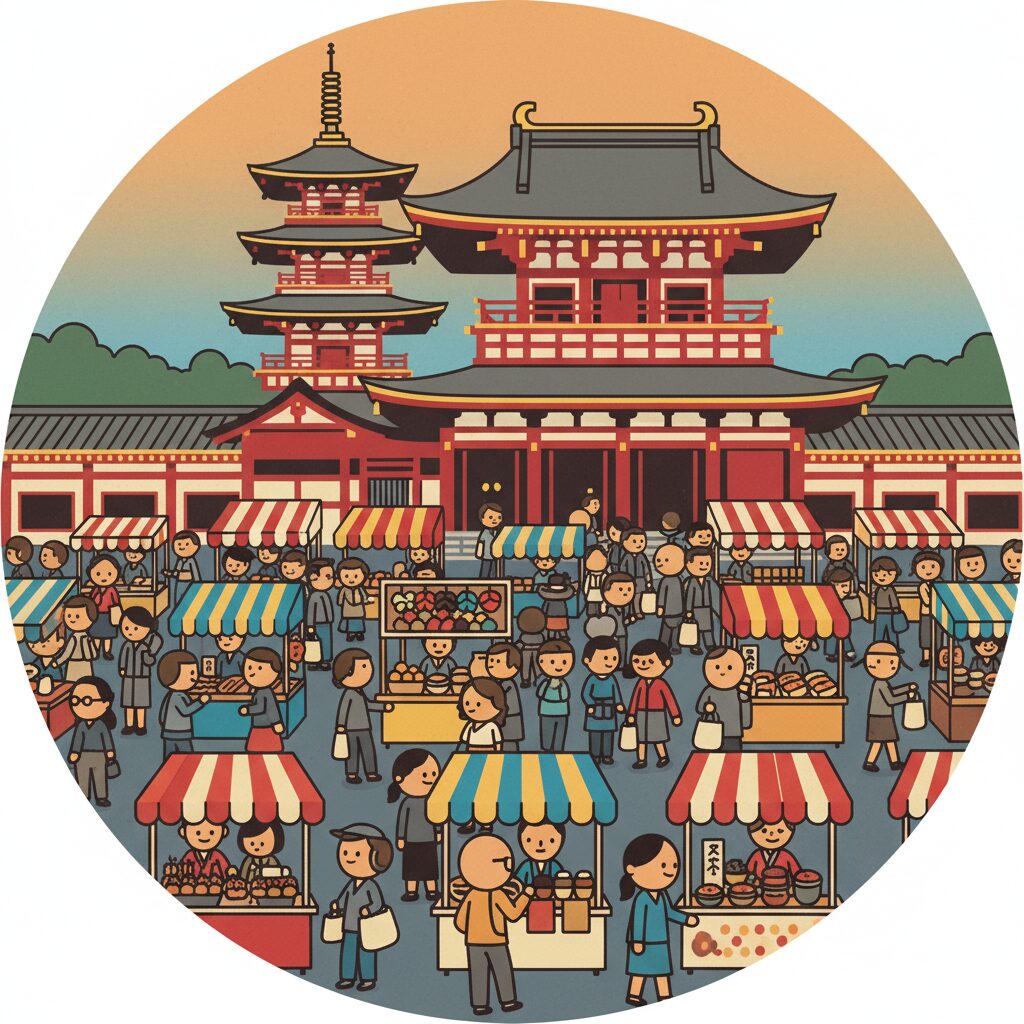
If you truly want to experience the soul of Osaka in all its chaotic, beautiful, and unapologetic glory, you must visit Shitennoji on the 21st or 22nd of the month. On these days, the peaceful temple grounds transform into one of Japan’s largest and oldest flea markets. The 21st is the Daishi-e, honoring Kobo Daishi, and the 22nd is the Taishi-e, dedicated to Prince Shotoku. But for the thousands who flock to the temple, these are simply called “market days.” And what a spectacle it is. The air, normally filled with the gentle scent of incense, becomes thick with the aroma of sizzling takoyaki, sweet soy sauce from yakitori grilling, and the dusty smell of forgotten attics. The quiet pathways overflow with a river of humanity—a jostling, laughing, bargaining crowd from every walk of life. This is not the curated, visually polished craft market you might find in Tokyo’s trendier neighborhoods, where every stall is Instagram-ready. This is the genuine article: a gritty, sprawling, unpredictable treasure hunt. Stalls overflow with chipped ceramics, rusty farming tools, exquisite silk kimonos for a few thousand yen, stacks of old manga, boxes of tangled electronic cables, military surplus, and art of questionable taste. It is a microcosm of Japanese history, consumer culture, and the human desire to find a diamond in the rough.
The Art of the Haggle
Here, in this chaotic bazaar on sacred ground, you will witness a quintessentially Osakan ritual: the haggle. In most of Japan, especially Tokyo, the price tag is law. Bargaining is often seen as inappropriate, a bit cheap, and can cause mild social panic for vendors. It disrupts the smooth, predictable flow of commerce. But at the Shitennoji market, it’s not only accepted—it’s expected. It’s part of the entertainment. The haggle is a performance, a conversation, a dance between buyer and seller. It lies at the heart of the akindo (merchant) culture defining this city. Watch an Osaka obachan (auntie) in her element. She’ll pick up a small, cracked dish. The vendor names a price—say, 2,000 yen—with a serious face. The obachan delivers a theatrical gasp. “So high! For this little thing?” she exclaims, pointing out a tiny flaw. The vendor sighs, lamenting the economy and his razor-thin profit margins. They volley back and forth—a flurry of feigned outrage, playful appeals to sympathy, and shared laughter. Finally, they settle on a price, perhaps 1,500 yen. The money changes hands, but so does something else: a moment of human connection. The transaction is no longer anonymous; it becomes a relationship, however brief. The obachan walks away with not just a dish but the satisfaction of a successful negotiation. The vendor has made a sale and enjoyed the sport of it. This is what many foreigners—and even some Japanese from other regions—misunderstand about Osaka’s obsession with getting a good deal. It’s not just about saving money. It’s about the process. It’s about engagement. It’s about refusing to be a passive consumer and instead becoming an active participant in the commercial dance. Treating the transaction seriously enough to discuss it is a sign of respect for the goods and the seller. Not even trying is almost an insult. This spirit is what makes shopping in Osaka feel so different—it’s alive, it’s human, and it’s always a bit of a game.
Sacred Space, Secular Activity
Another profound lesson of the Shitennoji market is the seamless blending of the sacred and the profane. Just meters away from a vendor loudly auctioning an old box of power tools, a family quietly lights incense and offers a prayer at a small shrine. The smoke from prayer candles mingles with the smoke from the squid vendor’s grill. The sound of a monk chanting might momentarily be drowned out by the clatter of someone dropping a stack of plates. To outsiders, this might seem disrespectful—a chaotic mess violating the temple’s sanctity. We are conditioned to think of religious spaces as quiet, contemplative, and separate from the vulgarity of commerce. In Kyoto, such a raucous market would be held far from the main sanctuary. But this is Osaka. Here, spirituality is not fragile and needing protection in silence. It’s robust. It’s part of life. It lives and breathes alongside the need to make a living, find a bargain, and enjoy a good meal. This lack of preciousness is a core Osaka trait. Life is messy, noisy, and complicated, and faith inhabits the middle of it—not floating above. It shows that in the Osaka worldview, there is no strict divide between the spiritual and the material. Praying for your ancestors’ peace and haggling over a vintage Famicom game aren’t contradictory acts; they are simply two parts of the same day, happening in the same place. It’s a beautiful, practical, and deeply human approach to faith that you won’t find anywhere else in Japan.
Surviving Fires and Cynicism: The Osaka Resilience
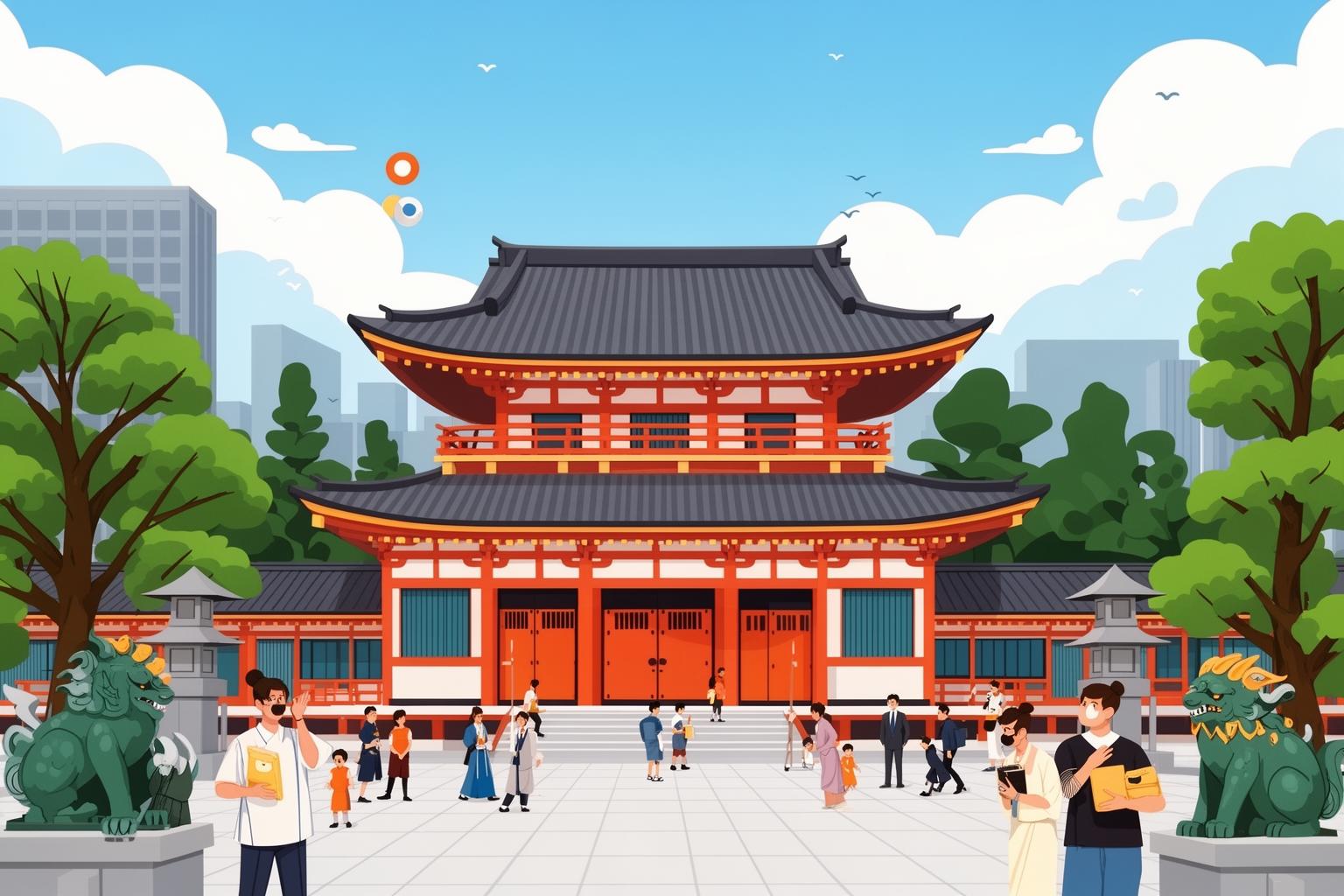
Shitennoji’s history is not merely about its founding; it’s a story of endurance. Over its 1,400-year existence, the temple has been destroyed by fire, war, and disaster at least seven times. It has been struck by lightning, caught in the chaos of civil wars, and, most recently and devastatingly, completely razed by American bombing raids during World War II. Each time, it was rebuilt without fail. This cycle of destruction and renewal is deeply ingrained in the identity of the city. Osaka has always been a city that falls and rises again. It is a city of merchants and entrepreneurs who have faced numerous economic crises and continuously found new ways to thrive. Its people possess a fierce, pragmatic resilience. Rather than indulge in poetic mourning, they roll up their sleeves and rebuild. This spirit is perfectly embodied in the temple that stands here today.
The Concrete Pagoda Controversy (and Why Osakans Don’t Mind)
Following the complete devastation of World War II, Shitennoji was reconstructed in the 1960s. However, it was not restored through traditional, costly, and meticulous carpentry methods. Instead, it was rebuilt mostly with reinforced concrete. When you visit now, the grand five-story pagoda, the Golden Hall, and the other central garan structures are not ancient wooden relics but faithful, modern concrete reconstructions. For architectural purists or those familiar with the aesthetic finesse of Kyoto’s historic wooden temples, this can be jarring. You might overhear them muttering, “It’s not authentic.” They might sneer at its flawless lines, the absence of weathered wood, and the uniformity that concrete offers. To an Osakan, however, the usual response is a characteristic shrug and a simple “So what?” This exchange highlights the fundamental difference between Osaka’s mindset and that of its neighbors. In Kyoto, authenticity is closely tied to materials, preserving original forms, and adhering to aesthetic ideals—turning the city into something like a magnificent museum. In Osaka, authenticity means something else entirely: spirit, function, and continuity. The old temple burned down—that was tragic. But the temple’s purpose—as a place of worship, a community hub, and a symbol of the city’s founding promise—did not perish. So, it was rebuilt using the most practical, durable, and efficient methods available at the time. Does the pagoda still point heavenward? Yes. Can visitors enter the Golden Hall to pray to the statues? Yes. Does the temple still serve its community? Absolutely. For an Osakan, that makes it authentic. The idea of Shitennoji, its living purpose, is what matters—not the specific materials of its walls. This pragmatism is often mistaken for a lack of appreciation for beauty or history, but it is quite the opposite. It reflects a belief that history is a living thing to be carried forward, not a fragile artifact to be kept under glass. Osaka is a city that works, that functions, and that moves forward with life. It values substance over style, and the concrete heart of Shitennoji is the ultimate symbol of that resilient, unsentimental, and profoundly practical philosophy.
Everyday Faith: How Osakans Use Their Oldest Temple
One of the most remarkable aspects of Shitennoji, especially if you’ve experienced the more tourist-heavy temples in other cities, is how seamlessly it blends into the everyday life of the local community. It’s not a site people visit once on a school trip and then forget. Instead, it’s an integral part of the neighborhood’s living fabric. Its true essence emerges not during grand festivals, but on an ordinary Tuesday afternoon. That’s when the temple reveals its real significance to the people who live nearby.
It’s Not a Tourist Attraction, It’s a Community Space
Stroll through the extensive outer grounds and you won’t find throngs of tourists competing for photos. Rather, you’ll see elderly men gathered under a tree, faces marked by intense focus as they place pieces on a shogi (Japanese chess) board. Young mothers push strollers, taking a shortcut on their way to the grocery store. High school students from the prestigious Shitennoji Gakuen, part of the temple complex, walk home laughing and chatting, their modern school uniforms a sharp contrast to the ancient structures behind them. By Kame-no-ike, the Turtle Pond, families and couples lean over the bridge, watching dozens of turtles bask on the rocks. The pond is famously stocked with turtles released by visitors—a unique example of the temple’s role as a communal refuge for both spiritual and, well, reptilian needs. For the people of Tennoji, Shitennoji is their backyard. It’s a gathering place, a spot for a quiet walk, or a peaceful corner to enjoy a convenience store bento. This casual, everyday use of such a historically significant site contrasts sharply with the atmosphere at many of Japan’s other renowned landmarks. In Tokyo, Meiji Jingu feels vast and detached, a solemn forest entered and exited with a sense of ritual. In Osaka, the city’s most important temple is simply… part of daily life. It’s so tightly woven into the urban landscape that the sacred and the ordinary blend together indistinguishably. It’s a place that belongs to the people, not just to history.
Praying for Everyday Needs
As you approach the various halls and smaller shrines throughout the grounds, you’ll notice the pragmatic side of Osaka faith in action. While the main halls honor the grand figures of Buddhism, the smaller, specialized shrines are where everyday prayers are directed. Visitors don’t only pray for lofty ideals like world peace or enlightenment. They come with specific, pressing concerns from their daily lives. There’s a shrine for Daikokuten, one of the seven lucky gods associated with wealth and commerce. Local shop owners and office workers clap their hands and bow, likely hoping for a successful sales month or business deal. Elsewhere, wooden ema plaques hang, covered in students’ desperate wishes for success in high school or university entrance exams. Prayers for health, finding a marriage partner, or a safe childbirth are common. Shitennoji operates like a spiritual department store, a one-stop shop for divine support in all aspects of life. This is not seen as trivializing religion, but as making practical use of it. It echoes the principle initiated by Prince Shotoku: spirituality is a resource, a powerful tool to help navigate the challenges of everyday life. It’s yet another example of the Osaka mindset that everything, even faith, should serve a practical purpose.
Obon and Shoryo-e: Honoring the Ancestors
This doesn’t mean tradition is taken lightly. During major annual events, the temple’s profound historical and cultural importance shines through. During Obon in August, the festival honoring ancestral spirits, the temple fills with families. The mood is not somber or mournful but lively and communal. It feels like a huge family reunion where the guests of honor happen to be invisible. People come to clean family graves, leave offerings, and light candles. The Shoryo-e festival, also in August, features performances of Bugaku, an ancient courtly dance and music form performed at Shitennoji for over a thousand years. The dancers wear vibrant, elaborate costumes and move with slow, intentional grace, creating a sense of stepping back in time. Yet even during these deeply traditional ceremonies, the spirit of Osaka remains evident. It’s a living tradition, not a sterile reenactment. Families and children fill the space, mingling with the aromas of festival food. The reverence is present but warm and familiar. It’s about keeping a connection to your roots and to the long chain of ancestors before you. In Osaka, your ancestors aren’t distant figures in a history book—they’re part of the extended family, and Shitennoji is where everyone gathers.
Shitennoji’s Place in the Modern City
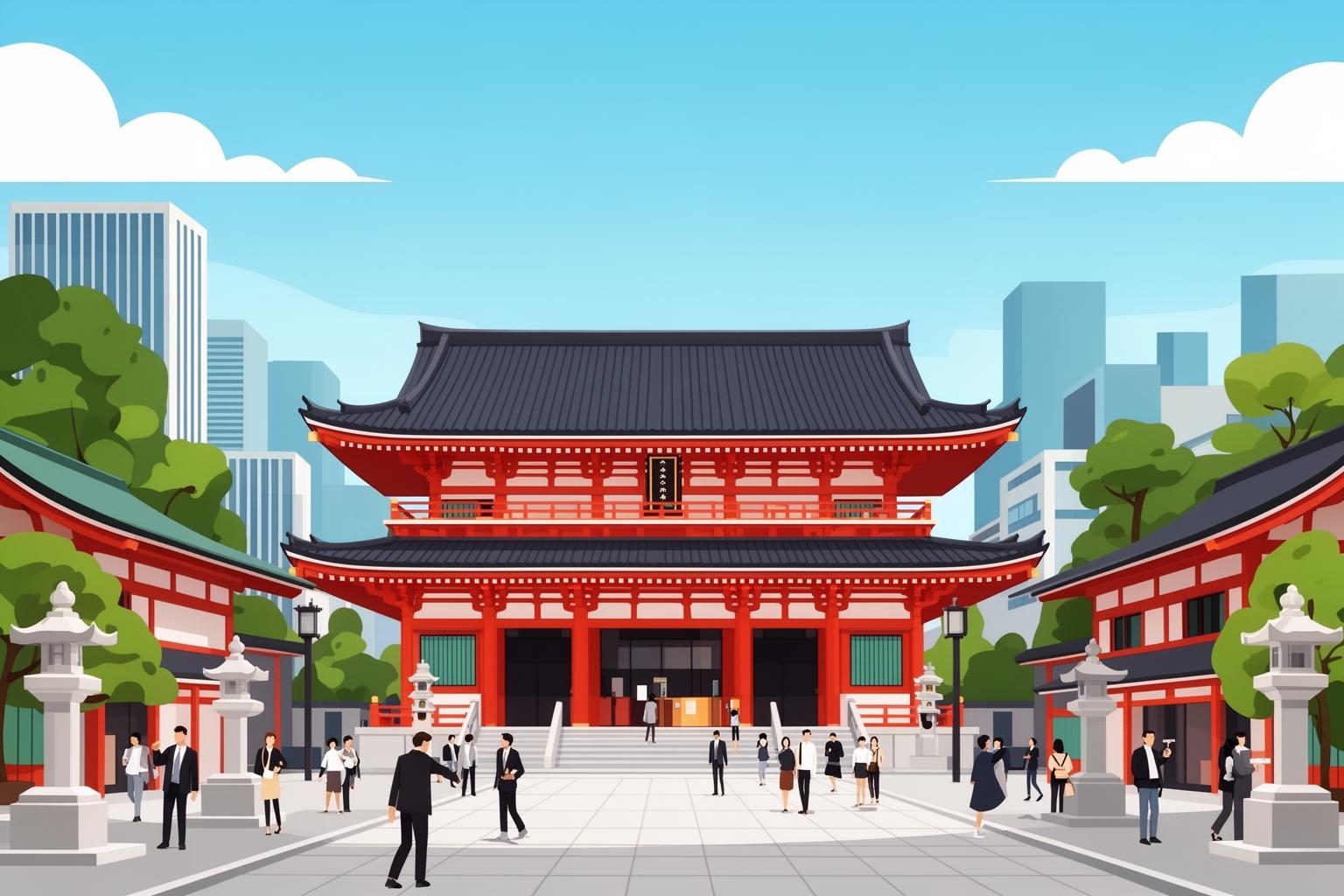
Standing within the quiet central compound of Shitennoji and looking up at the sky offers the perfect metaphor for Osaka itself. Above the gracefully curved roof of the ancient pagoda, you will almost certainly see the sleek, glittering pinnacle of Abeno Harukas, Japan’s tallest skyscraper, piercing the clouds. The temple stands as an island of antiquity amid a sea of relentless modernity. It is surrounded on all sides by the quintessential chaos of Osaka: the bustling commercial hub of Tennoji station, the retro-futuristic grit of the Shinsekai neighborhood with its Tsutenkaku Tower, and the endless sprawl of residential and commercial buildings. Yet, it does not feel overwhelmed. It feels like an anchor.
A Quiet Anchor in a Loud Town
Shitennoji is the city’s subconscious—a quiet, steadying presence that balances the frantic, commercial energy on the surface. It embodies the duality that defines every Osakan. They can be shrewd, fast-talking businesspeople, obsessed with profit and efficiency. They can be loud, joke-cracking, and irreverent. But beneath all that is a deep and abiding connection to their history, to their community, and to a set of values that are anything but superficial. They simply don’t feel the need for a grand, formal display of it. Their respect for tradition is expressed not through hushed reverence, but by keeping those traditions alive within the messy, vibrant context of the modern world. They honor the temple’s spirit of social welfare not by speaking of charity, but by genuinely looking out for their neighbors. They honor their merchant roots not through greed, but by celebrating the human connection within each transaction. Shitennoji serves as a reminder that despite Osaka’s forward-looking, scrappy, and sometimes cynical energy, the city is built on a foundation of compassion, resilience, and a 1,400-year-old promise that has never been broken.
What Shitennoji Teaches About Living in Osaka
If you’re considering living in Osaka, or if you’re already here trying to make sense of it all, a visit to Shitennoji is more insightful than any guidebook. It teaches you to look beyond stereotypes and understand the city on its own terms. It shows that in Osaka, the most profound things are often found right alongside the most mundane. It proves that a concrete building can possess as much soul as a wooden one if its purpose remains genuine. It reveals that commerce and community are not opposing forces, but two sides of the same coin. Most importantly, it teaches that the city’s heart is not made of neon and steel, but of a tough, practical, and deeply human spirit that has endured fires, wars, and the relentless passage of time. To truly understand Osaka, you must recognize that the boisterous vendor at the flea market and the silent monk in the main hall are part of the same story. Both are guardians of a legacy—a legacy of getting things done, caring for one another, and knowing that sometimes the most spiritual act is making a deal, keeping your promise, and rebuilding stronger than before.