Welcome to Osaka, a city that pulses with a vibrant, unapologetic energy. It’s a place where towering neon-lit skyscrapers cast their glow on ancient, serene temples, where the scent of sizzling takoyaki drifts through crowded market streets, and where the people greet you with a warmth and humor that’s famously Osakan. If you’re dreaming of calling this city home, you’re likely faced with the thrilling yet daunting question: where to plant your roots? Allow me to introduce you to Tennoji, a district that isn’t just a place on a map, but a living, breathing cross-section of everything that makes Osaka magnificent. Tennoji is where the city’s past, present, and future collide in a spectacular fusion of culture, commerce, and community. It’s a transportation nexus that connects you to the entire Kansai region with effortless grace, a shopping paradise that caters to every whim, and a green oasis offering a tranquil escape from the urban hustle. For a foreigner navigating the complexities of setting up a new life in Japan, Tennoji offers a unique and compelling proposition: all the convenience you could ever need, wrapped in a rich tapestry of authentic local life. It’s more than just a place to live; it’s a place to thrive, to explore, and to truly feel the heartbeat of Osaka. Before we dive into the intricate dance of renting an apartment in this incredible district, let’s get our bearings and see exactly where this hub of activity is located.
To get a broader perspective on Osaka’s diverse neighborhoods, you might also be interested in learning about the pros and cons of living in Nishinari Ward.
Capturing the Vibe: The Dual Soul of Tennoji
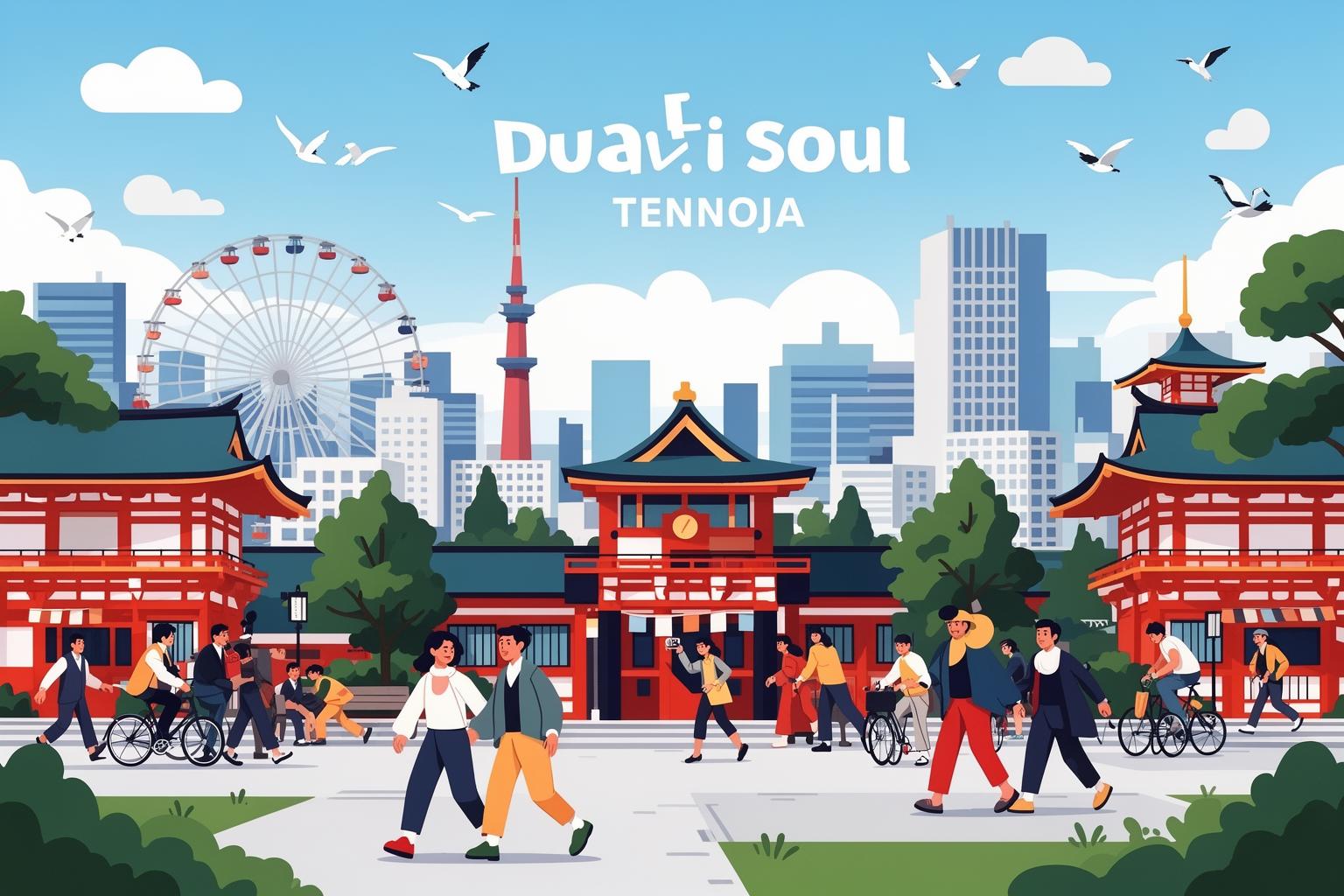
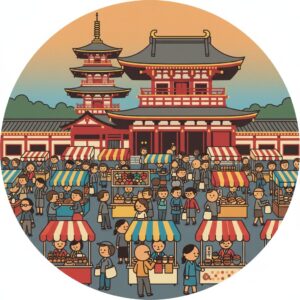
To truly understand Tennoji, envision a place with two distinct yet harmonious souls. One soul is modern, ambitious, and brilliantly radiant. It lives within the soaring form of Abeno Harukas, Japan’s tallest skyscraper. Standing at its base, you feel the magnetic draw of contemporary Japan—a world of sleek glass, high-end fashion, and gourmet dining with views that reach the skies. Inside, the Kintetsu Department Store is a realm of its own, housing a carefully curated selection of luxury goods, elaborate food halls, and an art museum seemingly floating in the clouds. This modern spirit extends into the vast Q’s Mall and Mio Tennoji, lively centers where crowds of shoppers—from trendy youths to families—generate a continuous, vibrant buzz. This is the Tennoji of convenience, of seamless connections, of having everything you could possibly desire right at your doorstep. It’s the sensation of stepping off a train after a long day, knowing a world of entertainment, dining, and retail therapy awaits just a few steps away.
Yet, only a short walk from this sparkling cityscape, you discover Tennoji’s other soul: ancient, serene, and deeply rooted in history. This soul whispers from the sacred grounds of Shitennoji, one of Japan’s oldest Buddhist temples, established in the 6th century. Passing through its gates transports you back in time. The air grows still, permeated by the faint scent of incense and the soft crunch of gravel beneath your feet. The elegant five-storied pagoda rises skyward, a timeless symbol against the modern city backdrop. Here, life’s pace slows to a reflective rhythm. You see locals engaging in daily rituals, monks moving silently across the courtyards, and turtles basking on rocks by the temple pond. This is the Tennoji of quiet contemplation, of cultural richness, of a bond to a past that continuously shapes the present. This duality is the charm of the area. You can spend your morning immersed in the tranquil beauty of a 1,400-year-old temple and your afternoon savoring craft coffee on the 58th floor of a skyscraper. This ongoing balance between old and new, sacred and secular, calm and lively, creates a living experience that is endlessly captivating and deeply fulfilling for its residents.
The Unbeatable Advantage: Why Tennoji is a Foreigner’s Dream
For anyone relocating to a new country, convenience and connectivity are the essential keys to a seamless transition, and this is precisely where Tennoji stands out, establishing itself as one of the most strategic residential hubs in all of Kansai. The district centers around a vast transportation hub, a fusion of steel and efficiency that serves as a gateway to the entire region. Let’s consider the JR lines. The Osaka Loop Line, the city’s main circulatory route, passes through Tennoji, placing you within easy reach of major spots like Osaka Castle, the business district of Kyobashi, and the lively nightlife of Tsuruhashi’s Koreatown. The Yamatoji Line provides a direct connection to the ancient capital of Nara, perfect for a day trip to see bowing deer and grand temples. Most importantly for international residents, the Haruka Express train offers a direct, non-stop service to Kansai International Airport (KIX). The convenience of reaching the airport without any transfers is a luxury you’ll value every time you travel.
Then there’s the subway network. Tennoji serves as a key stop on two of Osaka’s most crucial subway lines. The Midosuji Line, the city’s main artery, cuts through the heart of Osaka, linking you directly to the vibrant energy of Namba and Shinsaibashi for shopping and entertainment, as well as the sleek corporate district of Umeda in the north. The Tanimachi Line provides another important north-south corridor, granting access to various neighborhoods and cultural sites. Adding to this are the Kintetsu Minami Osaka Line, which transports you to the southern parts of Osaka Prefecture and beyond, and the charmingly nostalgic Hankai Tramway, which clatters down to Sumiyoshi Taisha, one of Japan’s most significant Shinto shrines. This unmatched network means less commuting time and more time to enjoy life. Whether your workplace is in Umeda, your language school in Namba, or you simply want to explore Kyoto on a whim, Tennoji is your perfect springboard.
Beyond transportation, the lifestyle amenities are truly exceptional. The sheer concentration of shopping options means you’ll rarely need to travel far for daily necessities. From upscale department stores to the expansive Q’s Mall featuring familiar international brands, your retail needs are well covered. For groceries, you have options ranging from gourmet selections in the basement of Abeno Harukas to more budget-friendly local supermarkets hidden in side streets. Drugstores, 100-yen shops, and specialty stores are abundant. But what truly enhances living in Tennoji is the wealth of green space, a rare find in a city as dense as Osaka. Tennoji Park is a vast urban oasis, perfect for jogging, picnicking, or simply relaxing on a bench to watch the world go by. Inside the park, you’ll find Tennoji Zoo and the Osaka City Museum of Fine Arts, offering cultural and recreational experiences right at your doorstep. This blend of ultimate urban convenience with immediate access to nature and culture creates a balanced, fulfilling lifestyle that’s difficult to find anywhere else.
Cracking the Code: The Japanese Rental System Explained
Before you begin dreaming of your ideal Tennoji apartment with a view of Abeno Harukas, it’s important to recognize that renting in Japan is a unique cultural and financial experience, quite different from what you may be accustomed to back home. The initial expenses are the first major obstacle and can cause considerable sticker shock. Be prepared for a range of fees that can total four to six times the monthly rent. This system is rooted in tradition, and successfully navigating it requires patience and a solid grasp of the terminology.
First, let’s break down the main components of this financial process. You will encounter Reikin (礼金), often called “key money” or “gift money.” This is a one-time, non-refundable payment made to the landlord, usually amounting to one or two months’ rent. Its origins are unclear, with some suggesting it arose after the post-war housing shortage as a way to thank landlords for providing housing. For many foreigners, this fee is the most confusing and frustrating, as it is essentially a large sum paid for nothing tangible in return. It is purely a cultural tradition, and although some modern or foreigner-friendly landlords have begun waiving it, it remains a common aspect of renting.
Next is Shikikin (敷金), the security deposit, which is more familiar to most. It usually equals one to two months’ rent and is held by the landlord to cover any damage beyond normal wear and tear, or unpaid rent. At the end of the lease, cleaning and repair costs will be deducted from the shikikin, with the remainder refunded to you. The amount returned can vary greatly, making it essential to leave the apartment in good condition.
Then there is the Chūkai Tesūryō (仲介手数料), the real estate agent’s commission or agency fee. This covers their services in finding the property, negotiating with the landlord, and managing the paperwork. By law, this fee is capped at one month’s rent plus consumption tax and is a standard, non-negotiable charge for almost any property found through an agent.
Now, we come to the most significant obstacle for foreigners: the Hoshonin (保証人), or guarantor system. Traditionally, landlords in Japan require tenants to have a Japanese national—usually a family member with a stable income—who co-signs the lease and agrees to be financially responsible if the tenant fails to pay rent or causes damage. For a newcomer foreigner, finding such a guarantor is nearly impossible. This requirement has historically made it very difficult for non-Japanese to rent apartments. Thankfully, the market has adapted with the introduction of the Hoshō Gaisha (保証会社), or guarantor company. This third-party organization, for a fee, acts as your financial guarantor. They will screen you by checking your visa status, employment, and income. If approved, you pay an initial fee—usually between 50% and 100% of one month’s rent—plus an annual renewal fee. For most foreigners, using a guarantor company is not optional but mandatory. Your real estate agent will help with this process. These initial expenses—reikin, shikikin, agency fee, first month’s rent paid upfront, and the guarantor company fee—make up the bulk of your move-in costs. It is a substantial upfront investment, but understanding these fees is the crucial first step to successfully securing a home in Tennoji.
The Hunt Begins: Finding Your Tennoji Sanctuary
With an understanding of the financial landscape, it’s time to begin the actual search. Your most vital partner in this process will be your real estate agent, or `fudōsan-ya` (不動産屋). Choosing the right agency can greatly influence your experience. Large national chains like Apaman Shop, Mini Mini, or Able are widespread, offering extensive listings and a standardized procedure. Their advantage lies in their volume, but a potential downside is that their staff may have less experience with foreign clients, and you might feel like just another number. Conversely, smaller local agencies in the Tennoji area can provide more personalized service. They often possess in-depth knowledge of the neighborhood and may have exclusive listings or long-standing relationships with landlords. The key is to find an agent who is patient, communicates well, and ideally has experience working with foreign renters. Don’t hesitate to clearly express your needs, including your budget, desired apartment size, and the need to use a guarantor company.
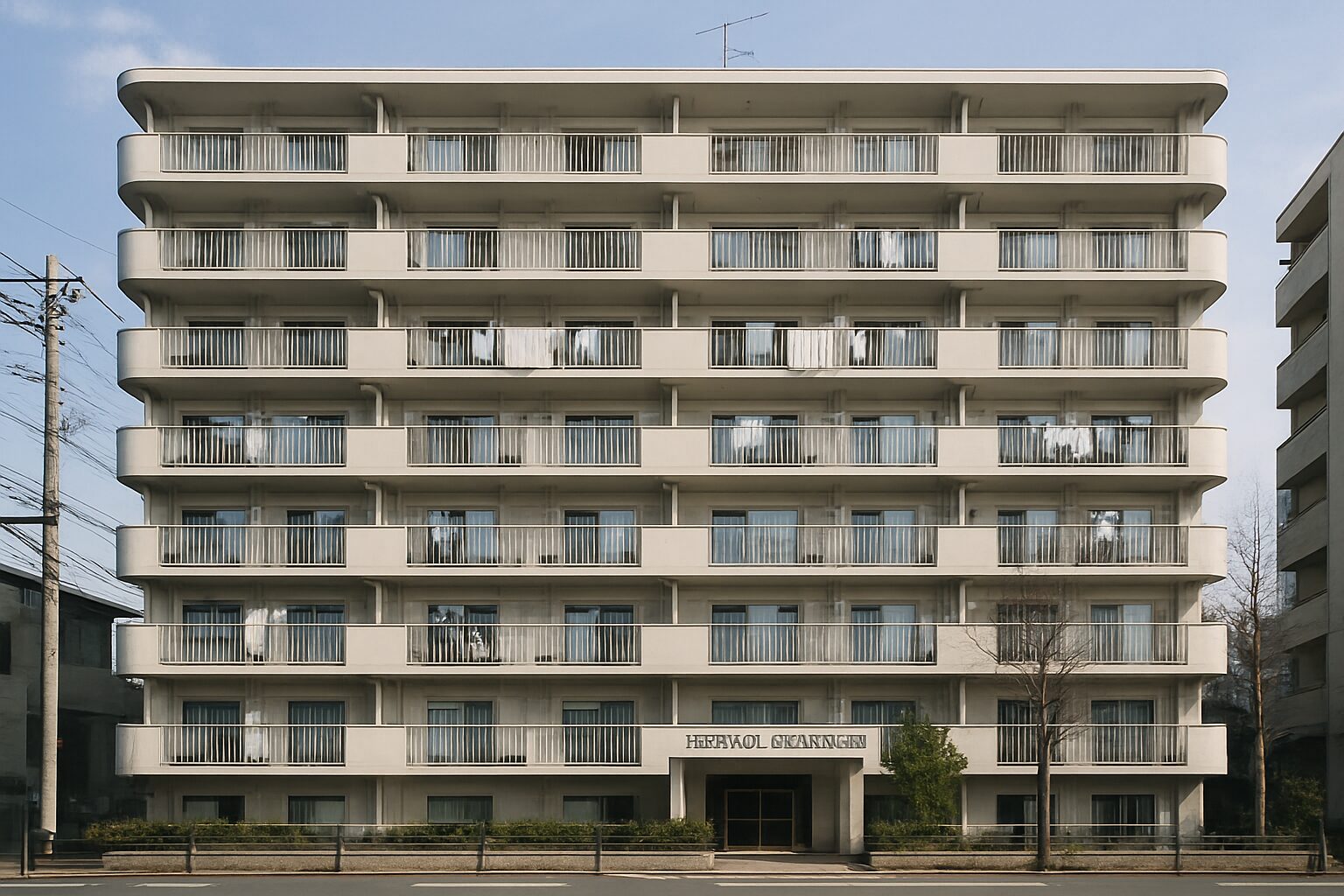
Your search will likely start online. Websites such as Suumo, Homes, and At Home dominate the Japanese property market, offering hundreds of thousands of listings. Although these sites are mainly in Japanese, they can be navigated with the help of browser translation tools. It’s important to become familiar with the distinctive vocabulary of Japanese real estate. You’ll encounter apartment types described as `1R` (one room, a studio with the kitchen area integrated into the main living space), `1K` (one room with a separate, small kitchen), `1DK` (one room plus dining/kitchen area), and `1LDK` (one room with living/dining/kitchen area). The number at the start indicates the number of separate bedrooms. Room sizes are often measured in `jō` (畳), which corresponds to the size of one tatami mat (about 1.62 square meters). Apartment buildings are classified as either an `apaato` (アパート), usually a two-story wooden or light-steel frame structure, or a `manshon` (マンション), a sturdier building made of steel-reinforced concrete (RC) or steel-frame reinforced concrete (SRC), which tend to be more soundproof and durable. Pay close attention to the building’s age; a key cutoff is 1981, when earthquake resistance standards (`shin-taishin`) were significantly upgraded. Buildings constructed after this year are generally considered safer.
When you find listings that interest you, send them to your agent. They will contact the property management company to confirm availability and to verify an important detail: whether the landlord (`ōya-san`, 大家さん) is willing to rent to a foreigner. Unfortunately, discrimination still exists, and some landlords, especially older ones, may refuse foreign tenants outright. A good agent will know how to handle this and will focus your search on properties where you have a real chance of being accepted. Once you have a shortlist of available, foreigner-friendly properties, it’s time for the `naiken` (内見), the apartment viewing. This is your opportunity to thoroughly evaluate your potential new home. Go beyond the photos: check the water pressure in the shower, open all cupboards to look for mold or mustiness, note the number and location of electrical outlets, observe how much natural light the apartment receives, and listen for noise from neighbors or the street outside. Most importantly, walk the route from the apartment to the nearest train station. The “8-minute walk” listed online can feel very different during a hot Osaka summer or when you’re carrying heavy groceries. Take your time, ask questions, and trust your instincts. This is a major decision, and the `naiken` is your most valuable tool for making the right choice.
Decoding the Application: Paperwork and Patience
Once you’ve found an apartment that feels like home, the next step is the formal application process. This is where your preparation and your agent’s guidance become crucial. The process involves a multi-layered screening, or `shinsa` (審査), initially conducted by the guarantor company, followed by the property owner or management company. It’s a thorough check aimed at assessing your reliability as a tenant and requires a substantial amount of paperwork.
First, you’ll need to gather your essential documents. Your passport and Residence Card (`Zairyu` Card) are mandatory. The details on your Residence Card, including your visa type and duration of stay, are vital. A long-term, stable visa (such as a work visa or spouse visa) is viewed far more favorably than a short-term one. Next, you must provide proof of your financial stability. If employed, this typically means a Certificate of Employment (`zaishoku shōmeisho`, 在職証明書) and a tax withholding slip (`gensen chōshū-hyō`, 源泉徴収票) or recent pay slips to demonstrate your income. If you are a student, you’ll need your student ID and evidence of sufficient funds, such as a bank statement showing enough savings to cover rent and living expenses for a reasonable period. You will also need a Japanese phone number and, in most cases, a Japanese bank account. Many real estate procedures are still handled via phone, and rent is almost always paid by automatic bank transfer.
In addition to your information, you must provide an emergency contact (`kinkyū renraku-saki`, 緊急連絡先). This person does not need to be a guarantor and bears no financial responsibility, but they must reside in Japan and preferably speak Japanese, so the landlord can contact them in emergencies if they cannot reach you. This could be a boss, colleague, or friend.
With your documents ready, your agent will assist you in completing the lengthy application form. It will be entirely in Japanese and request detailed personal information, your employment history, income, and emergency contact details. Be completely honest and precise on this form, as any inconsistencies can result in immediate rejection. After submission, the waiting begins. The guarantor company will likely contact you or your emergency contact to verify the details. They may inquire about your job, Japanese language skills, and reasons for renting the apartment. A polite and clear response helps considerably. Once the guarantor company approves, the application goes to the landlord for the final decision. This whole screening can take from a few days to over a week. It can be stressful, especially if you’re attached to a certain place. Patience is essential. If your application is denied, try not to be disheartened. Your agent can request feedback, but often no clear reason is provided. The rejection may be due to many factors, some unrelated to you personally. The important thing is to move forward and continue your search. A good agent will have alternative options available and will support you until you receive that exciting call confirming the apartment is yours.
Living the Tennoji Life: From Keys to Comfort
Congratulations! Your application has been approved, you’ve signed the lease agreement (a detailed document that your agent will guide you through, clause by clause), and you’ve paid the substantial initial fees. The keys to your new Tennoji home are finally in your hands. However, the journey isn’t quite over yet. Now begins the process of turning that empty space into a functional and comfortable home, which involves a few more necessary administrative steps.
First and foremost, you must register your new address. This is a legal requirement in Japan. Within 14 days of moving, you need to visit your local ward office (`kuyakusho`, 区役所) – in this case, either the Tennoji or Abeno Ward Office, depending on your exact address – to update the information on the back of your Residence Card. This crucial step officially connects you to your new neighborhood and is required to access local services, enroll in national health insurance, and complete other official procedures. The process is straightforward, though you should expect some waiting time at the office.
Next are the utilities. Your real estate agent will usually provide contact details for the local electricity, gas, and water companies. You’ll need to call each one to activate service in your name. Electricity and water can typically be arranged by phone and often turned on remotely. Gas, however, requires a different approach. For safety reasons, a gas company representative must visit your apartment to open the main valve and conduct a brief safety inspection. You’ll need to schedule an appointment for this, and someone must be present to meet them. This is one of the first times where a bit of Japanese language skill or assistance from a friend proves very useful. Don’t forget about the internet. Unlike in some countries where activation is instant, setting up fiber-optic internet in Japan may take several weeks, so it’s wise to start this process once your lease is confirmed. Keep in mind that most internet contracts last for two years and include steep penalties for early cancellation, so choose your provider carefully.
Then comes the enjoyable part: furnishing your new home. Your apartment will almost certainly be unfurnished, often lacking light fixtures, curtains, or a stove. For affordable new furniture, stores like Nitori and Muji are excellent choices, offering everything from beds and tables to kitchenware and home décor—with delivery options. If you’re on a tighter budget, consider “recycle shops,” which sell second-hand furniture and appliances in good condition. Also, check out online communities and Facebook groups for foreigners in Osaka, where people often hold “Sayonara Sales” when leaving Japan, offering their belongings at great prices. As you settle in, you’ll need to get accustomed to one of the most important traditions of Japanese residential life: garbage disposal. Japan has an extremely strict system for sorting trash. Burnable, non-burnable, plastics, cans, bottles, and oversized garbage must all be separated and placed out on specific days in designated bags. Your apartment building will have a poster showing the schedule. Following these rules carefully shows respect for your community and is essential for harmonious living. Although it may seem complicated at first, you’ll quickly become accustomed to it, and it will become a natural part of your new routine in your wonderful Tennoji home.