Step off the train at Tennoji Station, and you step into a whirlwind of time. This isn’t just a place on a map; it’s a living, breathing paradox, a corner of Osaka where the sacred whispers of ancient history resonate against the glittering hum of a hyper-modern future. To the north, the serene eaves of Japan’s oldest temple complex rise in quiet dignity. To the south, the nation’s tallest skyscraper pierces the clouds, a beacon of ambition and progress. In between, a world of neon-drenched nostalgia, sprawling green parks, and hidden artistic treasures awaits. Tennoji is the heart where Osaka’s many identities converge—the deeply spiritual, the wildly futuristic, the grittily nostalgic, and the peacefully natural. It’s a district that doesn’t just show you different eras; it lets you walk between them in a matter of minutes. For anyone living in or exploring this incredible city, understanding Tennoji is to understand the very soul of Osaka, a place that honors its past while racing boldly into tomorrow. It’s a sensory feast, a historical pilgrimage, and a modern adventure, all wrapped into one unmissable urban tapestry. Come, let’s unravel the beautiful complexities of Tennoji, where every street corner tells a different story.
To fully appreciate how this dynamic district supports modern lifestyles, explore our guide on finding the perfect balance of work and life in Tennoji.
The Spiritual Heart: Shitennoji Temple
Long before the skyscrapers and subway lines existed, there was Shitennoji. Passing through its grand southern gate is to take a profound step back through the currents of time, into the very dawn of Japanese Buddhism. Founded in 593 by the legendary Prince Shotoku, this is more than just a temple; it is a cornerstone of the nation’s spiritual identity, among the oldest officially administered Buddhist temples in all of Japan. The moment you cross its threshold, the hectic energy of the modern city seems to fade away. The air grows still, rich with the sweet, woody scent of burning incense. The sound of your footsteps on the carefully raked gravel becomes a rhythmic meditation. You find yourself within a vast sanctuary of weathered wood, vibrant vermilion paint, and gracefully curved tile roofs. The temple grounds are a masterpiece of symmetry and symbolism, with the main buildings aligned perfectly from north to south—a classical architectural style brought from the Asian continent that reflects an era of significant cultural exchange and discovery. This is a place of tangible peace, a serene island of contemplation that has endured centuries of change, fires, and reconstruction, always rising anew to serve as Osaka’s spiritual anchor. It is a place to slow down, breathe, and connect with a history that is almost unfathomably deep.
Your visit to Shitennoji should undoubtedly include the Gokuraku-jodo Garden, the Garden of the Pure Land of Paradise. Created as a physical embodiment of the Buddhist Western Paradise, it is a realm of exquisite and calm beauty. A central pond, sparkling under the open sky, is dotted with lotus flowers in summer, their blooms symbolizing purity and enlightenment. Graceful, arched bridges link small islands, while carefully sculpted pines and weeping willows hang over the water’s edge. Winding stone paths make it feel like walking through a living painting. In spring, the garden blooms into a cloud of soft pink and white as cherry and plum blossoms come alive. In autumn, it bursts into fiery reds and brilliant golds from the Japanese maples. It is a space designed for quiet reflection, perfect for sitting on a shaded bench and watching the dance of light on the water and the slow movements of colorful koi fish below.
At the heart of the temple complex stands the majestic five-storied pagoda, or Goju-no-to. This towering structure, a landmark of the Tennoji skyline for centuries, symbolizes the Buddhist cosmos. Unlike many pagodas in Japan, visitors can often climb its inner staircase. The ascent is a journey itself, with each level revealing intricate artworks and offering fresh perspectives through small windows. Reaching the top floor rewards you with a unique and captivating view—not a sweeping panorama as from a modern skyscraper, but a more intimate glimpse over the temple’s magnificent roofs and gardens, with the sprawling city of Osaka providing a strikingly modern backdrop. It’s a view that perfectly captures Tennoji’s dual essence. Nearby, the Kondo, or Golden Hall, houses the temple’s principal object of worship—a statue of Nyoirin Kannon—while the Kodo, or Lecture Hall, serves as a place for sermons and holds important cultural treasures. These halls are stunning examples of traditional temple architecture, with their heavy, ornate roofs, detailed woodwork, and interiors filled with sacred art glowing softly in the reverent light.
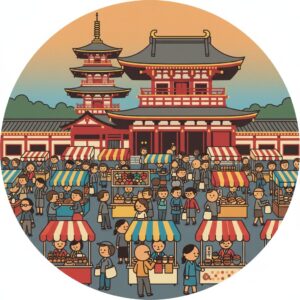
Be sure not to miss the charming Rokujido Hall, home to a large stone pond filled with turtles. You’ll see them basking on the rocks, dozens upon dozens creating a scene of simple, natural joy. These turtles are believed to carry the spirits of ancestors, and the pond serves as a focal point for prayers and remembrance. For a truly special experience, plan your visit to coincide with the temple’s famous flea market, held on the 21st and 22nd of every month. The usually peaceful grounds transform into a bustling, lively marketplace—a treasure hunter’s paradise. Hundreds of stalls cluster together, offering everything from antique kimonos and ceramics to old scrolls, vintage toys, handmade crafts, and tasty street food. The atmosphere is electric, filled with the calls of vendors, the haggling of shoppers, and the sizzle of takoyaki on the grill. It’s a wonderful chance to find a unique souvenir and experience the temple as a vibrant community hub, just as it has been for centuries.
A Walk on the Wild Side: Tennoji Park and Zoo
Just a stone’s throw from the ancient spiritual grounds of Shitennoji lies Tennoji Park, an expansive green space that serves as the community’s backyard and cultural playground. This is not a single park but a collection of varied areas, each with its own unique character. The most prominent and celebrated part today is Tenshiba, a broad, carefully maintained lawn that gently slopes upward, offering a perfect, unobstructed view of the towering Abeno Harukas skyscraper. Opened in 2015 after significant revitalization, Tenshiba transformed the park’s entrance into a modern, open, and irresistibly welcoming public space. On any sunny day, the lawn is sprinkled with families enjoying picnics, couples relaxing with books, and children chasing bubbles. Around the edges are stylish cafes, restaurants with outdoor seating, and even a Futsal court, creating a lively, resort-like atmosphere. It’s an ideal spot to grab a coffee, unwind, and soak up the vibrant, contemporary energy of Osaka. The contrast between Tenshiba’s free-flowing, casual vibe and the structured, sacred serenity of nearby Shitennoji perfectly illustrates the neighborhood’s dynamic character.
Nestled within the park’s lush surroundings is the stately Osaka Municipal Museum of Fine Art. Housed in a magnificent historic building that once served as the main residence of the powerful Sumitomo family, the museum itself is a masterpiece. Its grand, classical architecture offers a dignified home for an impressive collection of over 8,000 Japanese and Chinese art pieces and crafts. The galleries exhibit everything from delicate Buddhist sculptures and intricate painted scrolls to exquisite ceramics and calligraphy. While the museum hosts major international exhibitions, its permanent collection provides a rich and rewarding exploration of East Asian aesthetic traditions. It offers a peaceful, culturally enriching break—a quiet space to appreciate centuries of human creativity away from the hustle and bustle of the city.
Further into the park, you’ll find the entrance to the beloved Tennoji Zoo, a place of wonder and excitement that has delighted visitors for over a century. Opened in 1915, it is one of Japan’s oldest zoos, carrying a nostalgic charm. Though it retains some historic features, the zoo is constantly evolving, with a strong emphasis on creating naturalistic habitats that replicate the animals’ native environments. The African Savanna zone is especially impressive, where giraffes, zebras, and rhinos roam a large, open enclosure designed to resemble the African plains, with Abeno Harukas rising like a surreal, futuristic mountain range in the background. The zoo is home to a diverse range of animals, with standout residents including the majestic polar bears whose underwater viewing area offers a captivating look at their graceful swimming, and the nocturnal kiwi, a rare and precious bird from New Zealand that is a true delight to see. Exploring the various zones—from tropical rainforests to the reptile house—is a fantastic way to spend an afternoon, particularly for families with children. Tennoji Zoo is more than just a collection of animals; it is an institution, a living piece of Osaka’s history that continues to educate and entertain generations of visitors.
Reaching for the Sky: Abeno Harukas and the Modern Face of Tennoji

Towering over the Tennoji skyline and visible from nearly every corner of the district, Abeno Harukas is a gleaming glass-and-steel symbol of Osaka’s unstoppable progress. At an impressive 300 meters, it stands as the tallest skyscraper in Japan and embodies the pinnacle of Tennoji’s contemporary identity. More than just a building, it functions as a vertical city, housing a world-class department store, an art museum, a luxury hotel, and, crowning it all, a stunning observatory that offers a panoramic view of the entire Kansai region. Its presence has transformed the area, creating a sleek, sophisticated contrast to the historic charm of the nearby temple and the nostalgic grit of Shinsekai. Abeno Harukas represents ambition, serves as a beacon of modern culture, and is a must-visit destination for anyone eager to experience the exhilarating heights of today’s Osaka.
Harukas 300 Observatory
The highlight, of course, is the Harukas 300 Observatory, occupying the building’s top three floors (58th to 60th). The journey begins with a high-speed elevator that swiftly and silently ascends, enhanced by floor and ceiling lights that display a cosmic show to build anticipation. When the doors open on the 60th floor, the impact is immediate and breathtaking. You enter a gallery in the sky, enclosed by floor-to-ceiling glass panels offering an uninterrupted 360-degree panoramic view. Below, the entire city of Osaka unfolds like an intricate circuit board. On clear days, the vista seems endless—you can follow the Yodo River winding toward Osaka Bay, spot iconic landmarks such as Osaka Castle and the Umeda Sky Building, and watch Shinkansen bullet trains weaving through the city. The view extends far beyond Osaka, reaching the port of Kobe, the ancient hills of Nara, and even across the bay to Awaji Island and the Akashi Kaikyō Bridge. Experiencing this vista at sunset is especially magical; watching the sun set behind the Rokko Mountains, painting the sky in fiery oranges and purples while the city below sparkles with countless lights, is truly unforgettable.
The 58th floor offers a different yet equally enjoyable experience. This level features the Sky Garden, an open-air inner courtyard with a beautifully landscaped wooden deck, trees, and seating areas. Here, visitors can feel the breeze and enjoy the view in a more tranquil, natural environment. The café and restaurant, Sky Garden 300, serve drinks and light meals, making it an ideal spot to savor a beer or coffee while feeling suspended above the world. For the thrill-seekers, the observatory offers “Edge the Harukas,” an adrenaline-pumping attraction where participants, harnessed for safety, can walk along a narrow, open-air catwalk at the very edge of the building, 300 meters above ground—a terrifying yet exhilarating way to grasp the scale of the skyscraper and the city beneath.
A World of Shopping and Dining
At the tower’s base lies the Abeno Harukas Kintetsu Main Store, one of Japan’s largest and most impressive department stores. It is much more than a shopping spot; it offers a cultural and culinary adventure. The standout for many visitors is the depachika, the sprawling basement food halls, a dazzling wonderland of gourmet delights where every counter is a feast for the eyes and taste buds. There you’ll find rows of beautifully crafted wagashi (traditional Japanese sweets), piles of gourmet pickles, perfectly marbled Kobe beef, and an endless variety of exquisite bento boxes. Bakeries offer freshly baked breads and delicate French pastries, while delis showcase both Japanese and international cuisines. It’s the perfect place to build a luxurious picnic for Tennoji Park or to pick up unique and delicious souvenirs. Higher up, the building’s three restaurant floors, known as “Abeno Harukas Dining,” provide an incredible range of dining options—from casual noodle shops to upscale sushi, tempura, and teppanyaki restaurants—many boasting spectacular views of their own.
Abeno Harukas Art Museum
Adding cultural depth to this vertical city is the Abeno Harukas Art Museum on the 16th floor. Unlike traditional museums with permanent collections, this space functions as a dynamic exhibition venue, hosting a rotation of high-profile, large-scale temporary exhibitions from Japan and around the world. The programming is diverse, covering everything from European masters and Impressionist painters to ancient Buddhist art and contemporary design. It has quickly become one of Osaka’s premier cultural destinations, attracting art enthusiasts from across the region and offering a compelling reason to visit Abeno Harukas beyond the views and shopping.
A Step Back in Time: Shinsekai and the Tsutenkaku Tower
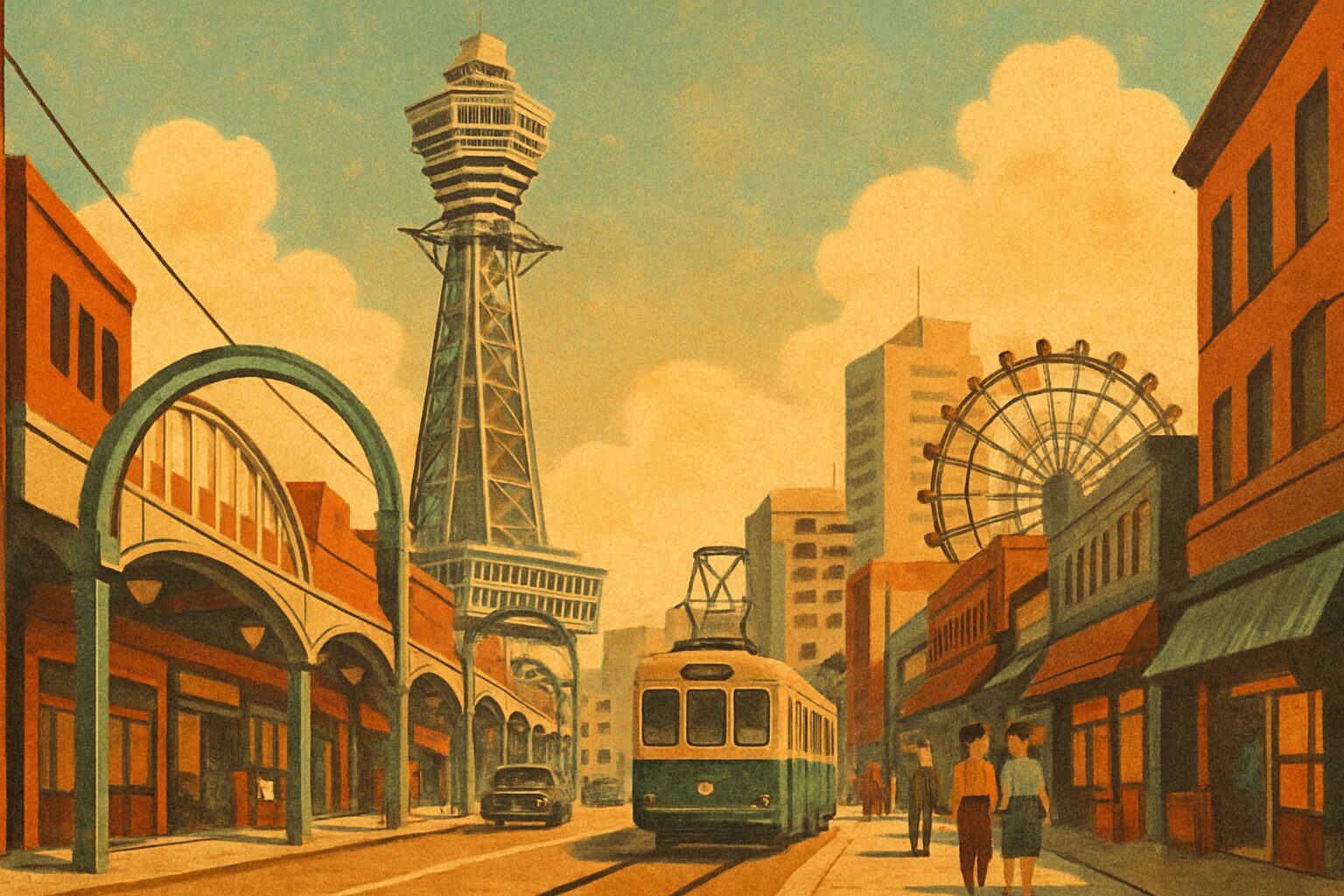
If Abeno Harukas represents Tennoji’s shining future, then Shinsekai, located just to the west, embodies its gloriously flashy and wonderfully preserved past. The name means “New World,” a title given when the area was developed in the early 20th century, inspired partly by Paris and partly by New York’s Coney Island. Today, entering Shinsekai feels like stepping back in time to the Showa Era (1926-1989). The district proudly displays its history, bursting with color, sound, and flavor that is unapologetically retro and irresistibly charming. The air is thick with the aroma of frying oil from the numerous kushikatsu restaurants. The streets dazzle with flashing neon signs, giant paper lanterns shaped like fugu (pufferfish), and enormous statues of a peculiar grinning deity. The sounds of traditional enka music drift from tiny bars, blending with the electronic buzz of pachinko parlors. Shinsekai is loud, a bit gritty, and absolutely filled with a raw, joyful energy that is quintessentially Osaka.
The Iconic Tsutenkaku Tower
At the heart of this retro wonderland stands its unmistakable symbol: the Tsutenkaku Tower. Though it may be overshadowed by the nearby Abeno Harukas, Tsutenkaku holds a unique character and a place in the city’s heart that no modern skyscraper can match. The original tower, built in 1912 and inspired by the Eiffel Tower, was a sign of Japan’s modernization. It was dismantled during World War II but rebuilt in 1956, becoming a beloved emblem of Osaka’s post-war resilience and optimism. Its observation deck provides a fantastic mid-level view distinct from that of Harukas—offering a more intimate perspective, looking directly down into the vibrant, chaotic streets of Shinsekai, allowing appreciation of the district’s unique layout and architecture. The tower is also home to the Billiken, a cherubic, smiling figure who serves as Shinsekai’s unofficial mascot. Known as “The God of Things as They Ought to Be,” it is believed that rubbing the soles of his feet brings good luck. Joining the queue to give Billiken’s feet a friendly rub is a cherished Shinsekai ritual. Recently, a delightfully quirky addition—a massive slide—has been attached to the tower, providing a thrilling spiraling descent from the third floor to the basement.
The Taste of Shinsekai: Kushikatsu
Shinsekai is the undisputed spiritual home of kushikatsu, one of Osaka’s most famous and beloved comfort foods. These are deep-fried skewers of nearly anything imaginable—meat, seafood, vegetables, cheese, and even desserts such as mochi and bananas. The experience is essential to any visit here. You’ll find dozens of kushikatsu-ya ranging from large, lively restaurants to small counter-only spots packed into the narrow Janjan Yokocho alley. The ritual is simple: sit at the counter or a table, order your skewers, and they arrive golden and sizzling, fresh from the fryer. At the center of the table is a communal container of a thin, savory dipping sauce. Here, the most important rule of kushikatsu applies: NO DOUBLE-DIPPING. You may dip your skewer only once before taking your first bite. If you need more sauce, use the provided raw cabbage slices to scoop it up and drizzle it onto your plate. This rule is both a matter of hygiene and a sacred part of local etiquette, with signs everywhere reminding you of it. The crunchy batter, tender ingredients, and tangy sauce, all washed down with a cold beer, make for a perfect and deeply satisfying culinary experience.
Urban Relaxation at Spa World
For a truly unique and surreal experience that perfectly matches Shinsekai’s eclectic vibe, look no further than Spa World. This massive, multi-story complex is an onsen theme park—a grand palace of bathing. It features two main zones: the European Zone and the Asian Zone, each containing a variety of themed baths designed to resemble famous places from around the world. One month, men enjoy the Roman-style baths and the Spanish grotto, while women relax in Japanese cypress baths and Balinese resort-style pools; the next month, they switch. Beyond extensive bathing facilities, Spa World also offers a swimming pool level with water slides, a food court, relaxation lounges, and an assortment of massage and wellness services. It’s a fantastic, family-friendly way to unwind and rejuvenate after a day of sightseeing, and its slightly extravagant thematic flair is pure Shinsekai.
Local Life and Hidden Gems: Exploring the Periphery
While Tennoji’s major landmarks are undeniably impressive, some of the area’s greatest charms lie just off the beaten path, in places that showcase the rhythm of daily life and hold captivating, lesser-known stories. Exploring beyond the main attractions lets you connect with the neighborhood on a deeper, more personal level. It is within these spaces—a temple with a unique tradition, a lively local shopping mall, or a quiet side street—that you can truly experience the authentic heartbeat of Tennoji.
One of the most remarkable and distinctive temples in Japan is Isshinji Temple, situated just north of Tennoji Park. At first glance, its bold, modern architecture, featuring striking concrete forms and a futuristic gate designed by the temple’s head priest, stands in sharp contrast to the classical design of Shitennoji. Yet its true distinctiveness lies in its sacred tradition of the Okotsubutsu, or “bone Buddhas.” Since the late 1800s, the temple has collected the cremated remains of devotees. Every ten years, these ashes, contributed by tens of thousands of people, are mixed with resin and cast into large statues of the Amida Buddha. This profound practice creates a tangible, physical bond between worshippers and their object of devotion. The main hall houses several of these powerful statues, each a composite of countless lives and prayers. The sense of collective memory and faith here is deeply moving. Visiting Isshinji provides a fascinating insight into a very personal and innovative aspect of Japanese Buddhism, and its stark architectural contrast with Shitennoji presents a compelling juxtaposition of old and new.
For a taste of contemporary local life, the area around Tennoji Station offers abundant shopping and entertainment options beyond the luxury of Abeno Harukas. Abeno Q’s Mall is a large, bright, modern shopping center catering to younger crowds and families. It features popular domestic and international fashion brands like Uniqlo and Zara, a massive Tokyu Hands selling creative goods and household items, and the flagship store of the Shibuya 109 brand, a symbol of Japanese youth fashion. Its food court and numerous cafes make it a favored gathering spot. Adjacent to the station are the Apolo and Lucias buildings, slightly older but equally vibrant complexes serving as entertainment hubs. Here you’ll find a multi-screen cinema, multiple floors of restaurants offering diverse cuisines, and lively game centers filled with the newest arcade machines and crane games. These malls are where locals shop, meet friends for dinner, and catch a movie, offering an authentic glimpse into the neighborhood’s everyday life.
To fully immerse yourself in the local vibe, however, you should explore the smaller shotengai, or covered shopping arcades, that branch off from the main streets. These pedestrian passageways, sheltered from the elements, form the lifeblood of many Japanese communities. Here, you’ll discover a charming mix of businesses that have served the area for generations. Small, family-run fruit and vegetable stands, fishmongers displaying the day’s fresh catch, and tiny shops selling everything from tea and pickles to stationery and traditional sweets line the streets. Scattered among them are unpretentious eateries and standing bars where locals grab quick lunches or after-work drinks. Walking through a shotengai engages all the senses, filled with shopkeepers’ friendly calls, the aroma of grilling fish, and neighbors chatting over daily gossip. It’s a world apart from the polished gloss of large department stores, offering a warm, authentic, and utterly genuine taste of life in Osaka.
A Practical Guide to Navigating Tennoji
One of Tennoji’s top advantages is its outstanding accessibility. Tennoji Station serves as one of Osaka’s key transportation hubs, a busy junction where major railway and subway lines intersect, making it extremely easy to access from nearly anywhere in the Kansai region. For travelers using Japan Rail (JR), the station is an important stop on the Osaka Loop Line, which circles the city center and links directly to Osaka Station (Umeda) and other major terminals. It is also served by the JR Yamatoji Line, offering a direct and convenient connection to Nara, and the JR Hanwa Line, which provides express services to Kansai International Airport (KIX) and Wakayama. On the subway network, Tennoji is serviced by two vital lines: the Midosuji Line, the main north-south route connecting it directly to Shinsaibashi, Namba, and Umeda, and the Tanimachi Line. This convergence of lines ensures that whether you’re traveling from elsewhere in Osaka or from a nearby city, reaching Tennoji is straightforward and efficient.
Once you arrive, you’ll discover the district is wonderfully compact and very walkable. Most of its main attractions are grouped within a 15- to 20-minute walk from the station. From the central exit, a brief stroll north leads into the green space of Tennoji Park, which includes the zoo and museum. Shitennoji Temple is an enjoyable 10-minute walk from there. Heading south from the station, you’re immediately greeted by the towering Abeno Harukas and the nearby shopping complexes. To the west, the nostalgic charm of Shinsekai and the Tsutenkaku Tower lie about a 15-minute walk away. Exploring on foot is by far the best way to experience the area, as it lets you appreciate the intriguing transitions between neighborhoods and discover many hidden gems tucked away in side streets.
For first-time visitors, a few small tips can enhance your experience. First and foremost, wear comfortable shoes, as you’ll be doing plenty of walking, and your feet will thank you. It’s also wise to have a loose plan for your day to make the most of your time. A great itinerary might start with the history and calm of Shitennoji Temple in the morning. Then, enjoy a leisurely stroll through Tennoji Park, perhaps stopping by the zoo or art museum. In the late afternoon, head up Abeno Harukas to take in the stunning sunset and city lights. Finally, round out your day by indulging in the vibrant, neon-lit atmosphere of Shinsekai with a delicious and memorable kushikatsu dinner. While credit cards are generally accepted at larger stores and restaurants, it’s always smart to carry some cash, especially for smaller eateries in Shinsekai, temple entrance fees, or purchases at the Shitennoji flea market. Most importantly, embrace the spirit of exploration. Don’t hesitate to wander down an intriguing alleyway or step into a shop that catches your interest. Tennoji is a district that rewards curiosity.
The Endless Discovery of Tennoji

Tennoji is more than a mere destination; it tells the story of a city engaged in a continuous, dynamic dialogue with itself. It’s a place where you can stand in a centuries-old temple garden and look up at the tallest building in the country, where the tranquil chants of monks give way to the lively laughter of a retro entertainment district just a few blocks away. This neighborhood serves as a compelling reminder that the past and future are not distinct but are intricately woven into the rich, complex fabric of the present. It’s a microcosm of Osaka—a city deeply proud of its history, culture, and unique character, yet always looking forward, innovating, and striving for new heights. Whether you find your perfect moment of calm by a turtle pond, your thrill on a sky-high catwalk, or your joy sharing a plate of fried skewers, Tennoji offers an experience as diverse as it is profound. So come walk its streets, explore its corners, and listen to its many stories. You’ll leave with a deeper understanding of Osaka and a collection of memories as vibrant and varied as Tennoji itself.