There’s a certain frequency to Osaka, a city that hums with a mercantile buzz and a rebellious spirit, a rhythm that pulses differently from the measured cadence of Tokyo. But if you travel south, deep into the city’s heart, past the glittering towers of Tennoji and into the sprawling, unvarnished streets of Nishinari Ward, that frequency shifts. It drops an octave. It becomes a raw, percussive beat, a language of the pavement spoken without frills or fanfare. This is Nishinari, a district that wears its history on its sleeve, where the gloss of modern Japan peels back to reveal something grittier, more fundamental, and profoundly human. And nowhere is this more evident than in the way people speak to each other. Forget the delicate dance of honorifics, the subtle art of indirectness that defines so much of Japanese communication. Here, in the shotengai arcades that hum with the sound of bicycle bells and gruff greetings, in the standing bars where sake is poured with a steady hand and conversation is served straight, you’ll find a dialect of directness. It’s a style that can feel abrasive to the uninitiated, a conversational sandpaper that smooths away all pretense, leaving only the raw grain of intention. But to understand this unvarnished communication is to understand the soul of Nishinari itself—a place built on resilience, community, and the simple, unspoken agreement that life is too short for anything but the truth.
To truly grasp the rhythm of life in this unvarnished district, one must also consider the practical realities of its cost of living in Nishinari Ward.
Echoes of a Working Heart: The Historical Roots of Nishinari’s Straight Talk
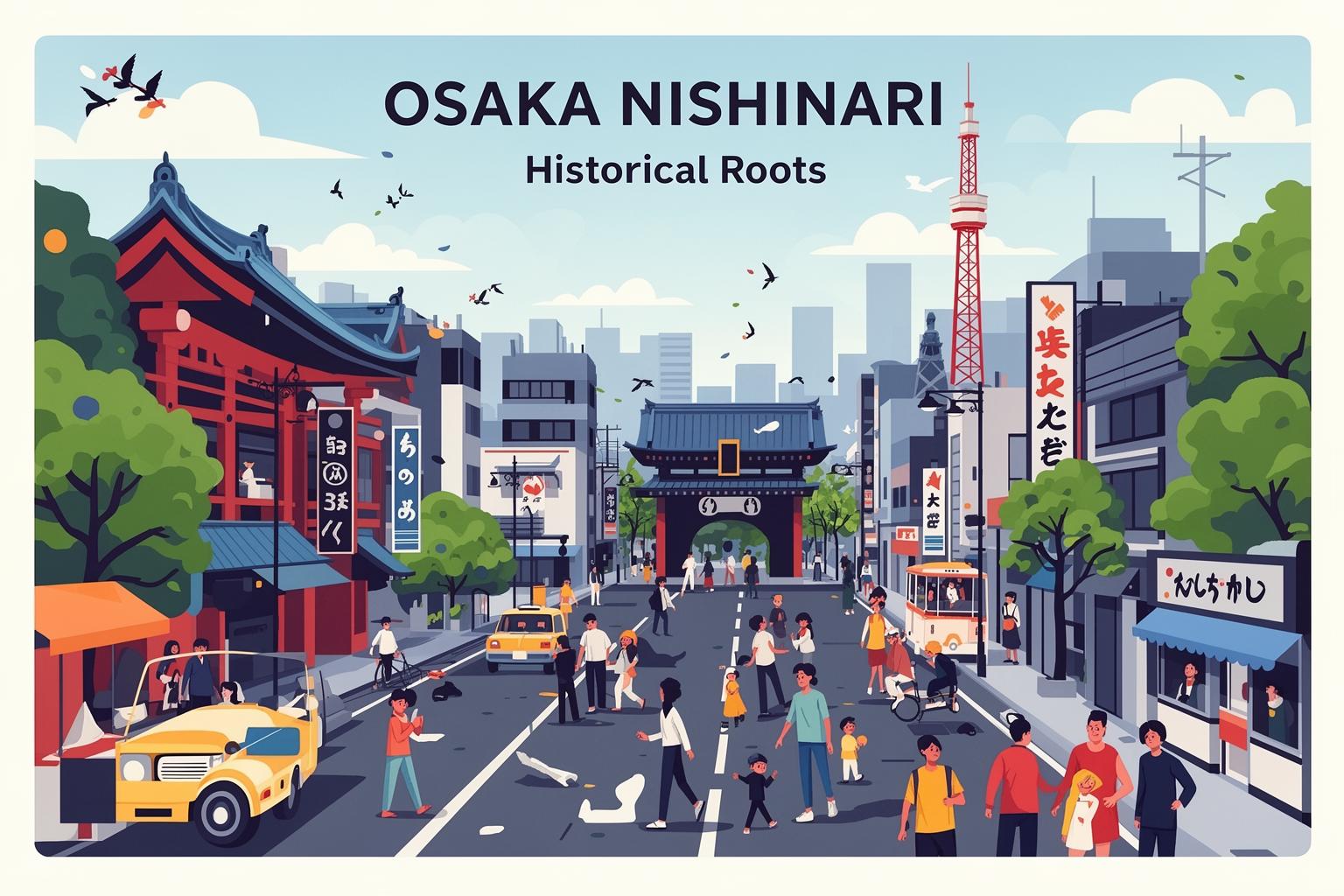
To truly understand why conversations in Nishinari feel so distinct, you need to turn back time. You must strip away the present layers and examine the economic and social foundations on which this district was established. This is not a place that emerged from aristocratic gardens or samurai estates. Its roots lie in concrete and calloused hands. The story of modern Nishinari is deeply connected to Japan’s post-war reconstruction, a period of rapid growth that required a vast labor force. At the center of Nishinari is the district often referred to as Kamagasaki, officially renamed Airin-chiku in an effort to improve its image. This area became the nation’s largest gathering point for day laborers, or `hiyatoi rōdōsha`. Men from across Japan, seeking jobs in construction, shipping, and manufacturing, would assemble here each morning before dawn, hoping to be selected for a day’s hard work. This daily, intense scramble for survival created a unique social contract and a strong linguistic code. There was no room for the elaborate politeness of the corporate world. Efficiency was crucial. Communication had to be direct, clear, and immediate. A foreman shouting instructions on a loud construction site wouldn’t use honorific language; he used words that pierced through the noise and got the job done. This setting fostered a culture where `tatemae`, the public facade of politeness and social harmony, was an unnecessary indulgence. What mattered was `honne`, the raw, unfiltered truth of one’s feelings and thoughts. This spirit flowed from the morning labor markets into the entire ward’s fabric. Shopkeepers, restaurant owners, and residents all lived within this ecosystem of straightforwardness. Life was a daily grind, and your word was your bond because often it was the only thing you had. This historical background is not just a side note; it’s the core explanation. It clarifies the absence of verbal cushioning, the prioritization of function over form, and the deep-rooted distrust of anything overly polished or insincere. Past social unrest and occasional riots in the area, fueled by frustration and economic hardship, also reinforced a strong sense of internal community. It created a world where you looked out for your own, where trust was gained through deeds, not fancy words, and where outsiders often faced a barrier of cautious silence or blunt questioning. However, that barrier is not always hostile. It acts as a filter, a test of sincerity. The frank speech is a way of asking, “Who are you, and what do you want here?” without wasting anyone’s time.
The Art of No Artifice: Deconstructing the Nishinari Vernacular
Navigating a conversation in Nishinari is like learning a new kind of grammar, where the usual rules of standard Japanese are often flipped. The intricate system of `keigo`, with its respectful, humble, and polite forms, largely fades away on these streets. An elderly shopkeeper, who elsewhere in Japan would be addressed with great respect, might instead greet you casually with a simple “`Nani sagashiten no?`” (“What’re you lookin’ for?”) rather than the formal “`Irasshaimase, nani ka o-sagashi deshou ka?`”. The tone isn’t disrespectful; it communicates immediacy. It’s a verbal shortcut that creates a direct, human-to-human connection, bypassing the social hierarchies that `keigo` upholds. This is a language of efficiency, but also one of implied equality. In the standing bars, or `tachinomi`, conversations are stripped down to their essentials. A gruff “`O-nii-san, biiru ippon`” (“Hey brother, one beer”) is the norm. There’s a mutual understanding that everyone is there for the same reason—a cheap drink, a quick bite, and a brief escape from the day. The bluntness can be surprising. You might be asked straightforwardly where you’re from, what you’re doing, or why you’re in a place like this. These questions aren’t meant to be intrusive, as a Westerner might think; they are a way to size you up, to place you within their worldview. Vague or evasive answers feel more suspicious than simple, honest ones. The dialect itself, the raw Osaka-ben spoken here, adds another layer of texture. It’s known for being direct and expressive, filled with colorful and sometimes earthy phrases. In Nishinari, it feels even more intense, more powerful. The rhythm is quicker, the intonation sharper, and the humor as dry as winter asphalt. You’ll hear the typical `yanen` and `honma ni` of Osaka speech, but delivered with a gruffness that reflects a lifetime of hard labor. This communication style prizes sincerity above all else. Compliments, when given, are genuine. Insults, though rare unless provoked, are unmistakable. This lack of pretense can be remarkably refreshing once you attune your ear. It’s a world without mixed signals, a place where your position is always clear. The challenge for outsiders is to learn to listen beyond the words and understand the intent—that a blunt remark can be a form of welcome, and a gruff question the start of a genuine connection.
Portraits in Conversation: Encounters Through a Photographer’s Lens
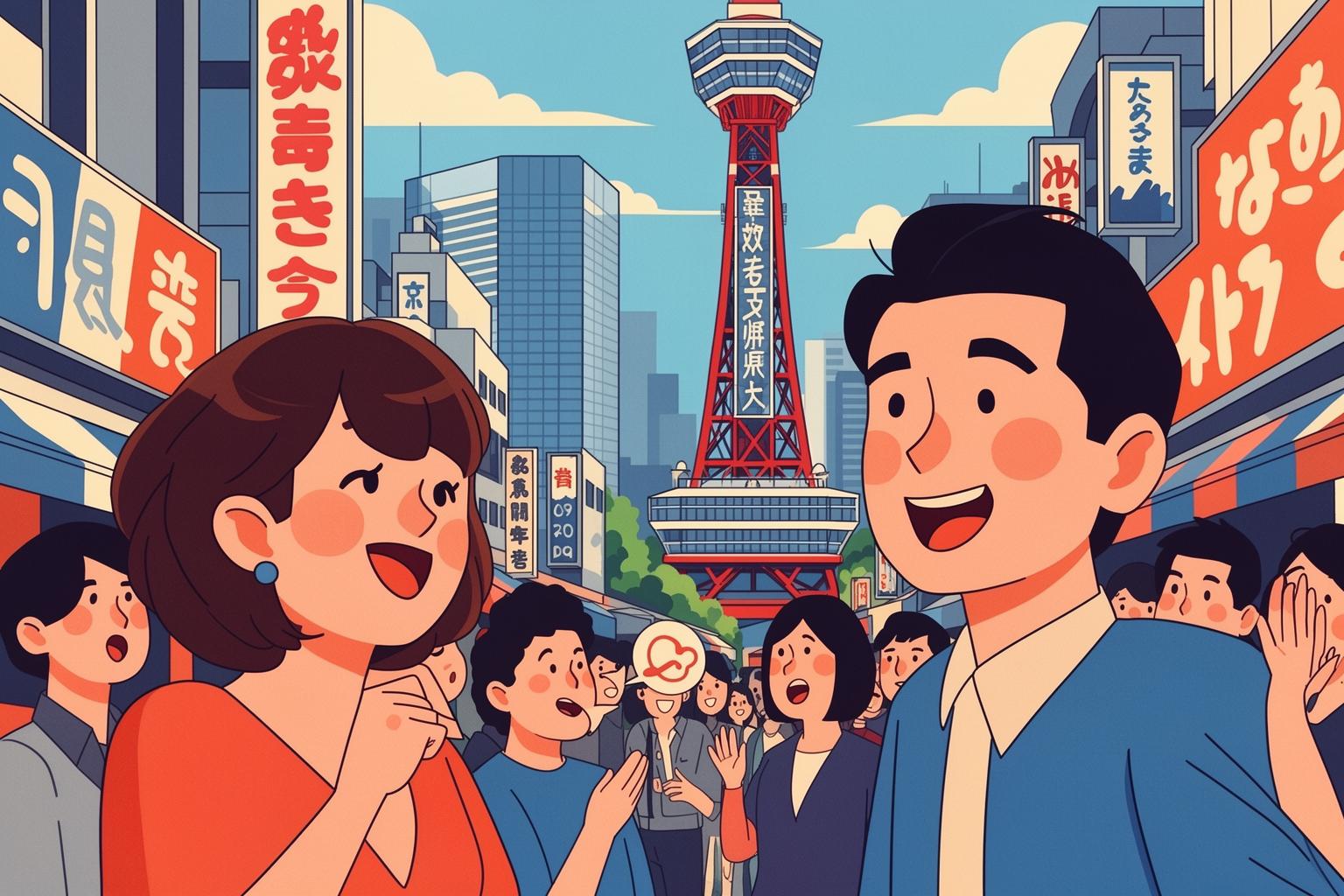
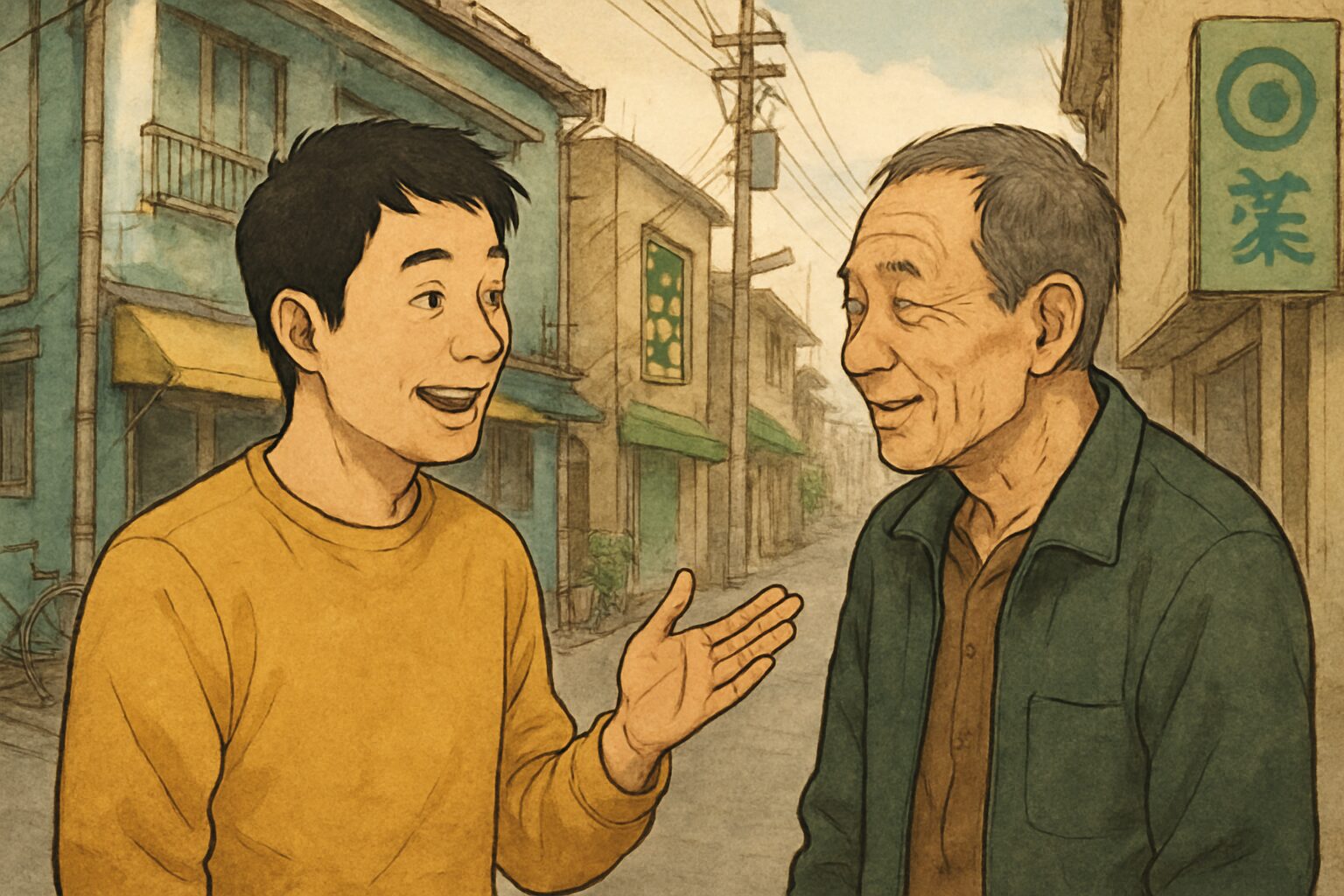
As a photographer, I’m drawn to faces that tell stories and to landscapes marked by the passage of time. Nishinari is a treasure chest of both. Every street corner, every shadowed arcade, offers a composition full of character. Yet, the true spirit of the place emerges not just through images, but in the interactions that take place between the shots. I recall my first visit to a tachinomi near Shin-Imamiya station. The air was thick with the scent of grilled offal and cheap shochu. I ordered a beer, and the man beside me, a construction worker with hands toughened like worn leather, turned and stared at my camera. “Sonna mon de nani torun ya?” he grunted. “What’re you gonna shoot with that thing?” There was no introduction, no polite question—just a direct challenge. My textbook Japanese stumbled for a reply. I explained that I was trying to capture the real feeling of Osaka. He snorted, then took a long sip from his glass. “Koko ni wa e-e mon nai de,” he said. “There’s nothin’ pretty here.” But after a long pause, he nodded toward the old man behind the counter, skillfully grilling skewers. “Ano oyakata no te wa kirei ya de. Goju-nen yattoru.” (“But that master’s hands are beautiful. Been at it for fifty years.”) In that simple, unvarnished exchange, he dismissed my naive search for beauty and pointed me toward a deeper, more profound truth. Another time, I was wandering through the sprawling, wonderfully chaotic Tsurumibashi Shopping Arcade. I stopped at a small stall selling pickled vegetables, captivated by the vivid colors. The elderly woman running it, her face a map of wrinkles, watched me with keen eyes. “Kau n ka, kawan no ka, docchi ya?” (“You buyin’ or not, which is it?”). Her voice was a saw-rasped command. Startled, I pointed to some pickled daikon. As she bagged it, her expression softened almost imperceptibly. “Shōga sukoshi omake shitaru wa. Karada atatamaru de.” (“I’ll throw in some ginger for free. It’ll warm you up.”) It was an act of unexpected kindness wrapped in plain pragmatism. These moments are the essence of Nishinari. They are portraits told through conversation. The initial contact can be sharp, high contrast like a black-and-white photo. But if you stand your ground and show genuine interest and respect, the focus shifts, revealing a deeper, richer texture. It is the story of a community that shields its gentle core with a tough exterior, revealing warmth only to those willing to look beyond the surface.
The Proving Grounds: Where to Hear the Real Voice of the Southside
Experiencing this distinctive communication culture isn’t something you can simply book on a tour; it demands immersion. It involves walking the streets, visiting local haunts, and quietly, respectfully observing until the right moment to engage arises. The ideal place to begin is in the `shotengai`, the covered shopping arcades that serve as the neighborhood’s lifeblood. The Haginochaya Shotengai or the longer Tsurumibashi Shotengai are excellent examples. Here, everyday life’s drama unfolds. Listen to the rapid-fire exchanges between vendors and regulars — a lively blend of gossip, complaints, and jokes, all delivered in that signature straightforward style. Don’t just pass through; pause at a fruit stand or grab some fried croquettes from a butcher shop. A simple purchase can open the door to a brief, candid interaction. For a deeper experience, the `tachinomi` standing bars near major train stations like Shin-Imamiya and Dobutsuen-mae serve as proving grounds. These are not trendy spots but functional, no-frills places for the working class. The etiquette is simple: don’t take up too much space, order clearly, pay as you go, and avoid disturbing those who prefer solitude. But if you find a spot and keep to yourself, curiosity often sparks conversation with fellow patrons. This is where you’ll hear unfiltered stories of the district and candid opinions on everything from baseball to politics. It’s a masterclass in listening. No visit to Nishinari is complete without stepping into the dazzling, almost psychedelic chaos of a Super Tamade. These 24-hour supermarkets are local institutions, renowned for their flashy neon lights and unbelievably low prices. More than that, they serve as community centers. Watch the interactions at checkout, observe how shoppers maneuver through the crowded aisles, and listen to the uniquely rhythmic announcements over the PA system. It’s a microcosm of Nishinari’s energy: loud, somewhat overwhelming, yet pulsating with a strange and wonderful vitality. Even quieter spots reveal insights. In the small parks where elderly men gather to play `shogi` (Japanese chess), or at local shrines where people pause for quiet reflection, you can witness a different, more subdued form of this directness—comfortable silences between old friends that speak volumes. These places are the stages where Nishinari’s voice is performed daily. Go, listen, and learn.
A Visitor’s Guide to Genuine Connection: Navigating Your First Dialogue
Interacting with the locals in Nishinari calls for a change in mindset rather than fluency in Japanese. The most important advice is to leave your ego behind. Expect exchanges that may seem blunt or even rude by Western or typical Japanese standards, but know it is rarely personal—it’s cultural. This community values clarity and straightforwardness, so your communication should be clear and honest. Start small with a genuine “Konnichiwa” or “Gochisousama deshita” (“Thank you for the meal”), which makes a big difference. When you enter a shop or a small bar, make eye contact, offer a nod, and greet warmly. Your presence as a foreigner will be noticed, and this simple recognition shows respect. If you wish to take a photo, especially of someone, you must ask first. Avoid lengthy, overly formal Japanese phrases; a brief, direct question like “Sumimasen, shashin, ii desu ka?” (“Excuse me, is it okay to take a photo?”) works best. Be ready for a blunt “Akan!” (“No!”) and, if you receive it, respond immediately with a nod and “Wakarimashita” (“I understand”). In conversation, listen more than you speak, as locals can easily detect insincerity. Don’t pretend to understand if you don’t; honesty about your Japanese skills is better. Often, people will appreciate your effort and adjust their language accordingly. The tachinomi scene is a great social icebreaker but has unspoken rules. Don’t join conversations uninvited; if someone talks to you, answer warmly but briefly. To offer a drink, a simple gesture toward their glass paired with a questioning look usually suffices. Visitors aren’t always expected to reciprocate, but doing so is a strong goodwill gesture. Above all, remain quiet, humble, and respectful. Avoid treating the area like a zoo or engaging in poverty tourism. These are people’s homes, lives, and community. Let your curiosity come from a genuine wish to understand, not to judge or exoticize. When your intentions are sincere, it often shows, and that’s when the tough exterior softens, revealing the warmth beneath.
Beyond the Gruff Exterior: Uncovering the Deep-Seated Warmth
For every tale of a gruff encounter in Nishinari, there is another, quieter story of profound and unexpected kindness. This is the great paradox and the ultimate reward of engaging with this community. The direct style of communication is not a barrier to warmth; it is often the very gateway to it. Once a local determines you are genuine, that same directness extends to acts of generosity and friendship. There is no pretense, no hesitation. I once got hopelessly lost in the labyrinthine residential streets behind the main arcades. I was staring at a map on my phone, completely confused, when an old man on a rusty bicycle skidded to a halt beside me. “‘Doko ikitain ya?’” he asked, his voice rough as gravel. “Where’re you trying to go?” I told him the name of a small shrine I was searching for. He grunted and gestured impatiently with his head. “‘Tsuite koi.’” (“Follow me.”) He then led me on a ten-minute detour, cycling slowly ahead and turning back now and then to check I was still behind him. When we arrived, he simply pointed at the entrance, grunted again, and rode off without another word. There was no expectation of thanks, no polite farewell. The act itself was the entire message. This is the ‘jō,’ the deep sense of community and mutual obligation that underlies everything. It’s a pragmatic kind of kindness. You need help, I can help, so I will. End of story. You see it in the ‘tachinomi’ when a regular ensures you know what the best item on the menu is, or in the shotengai when a shopkeeper warns you the vegetables you’ve picked won’t be good for a few more days. It’s unsolicited, straightforward advice, offered as a matter of fact. The humor, too, is a key element of this hidden warmth. It serves as a defense mechanism and a social glue. It’s often self-deprecating, cynical, and delivered with a completely straight face. A bar patron might tell you with mock seriousness that the only good thing about Nishinari is how easy it is to leave, only to spend the next hour passionately sharing its hidden virtues. To share a laugh over a cynical joke is to be accepted, to be let in on the shared secret of survival in a harsh world. This warmth is earned, not given freely. But when it comes, it is as real and solid as the concrete sidewalks. It’s a connection that feels deeper precisely because it lacks the sugary sweetness of superficial politeness. It’s a reminder that true human connection requires no elaborate rituals, only a shared sense of sincerity.
A Final Frame: The Lasting Impression of Nishinari’s Unfiltered Soul
Leaving Nishinari feels like stepping back into a world of muffled sounds and hidden intentions. Your ears, now attuned to the raw frequency of its streets, find the polite chatter of the city center oddly subdued. The bluntness that first unsettled you now reveals itself as a form of deep clarity. You come to understand that what you perceived as a lack of manners is actually a different, older code of conduct, shaped by labor, necessity, and a fierce, unyielding pride. Nishinari teaches you to hear differently. It compels you to look beneath the surface, to recognize the humanity in a harsh command, the generosity in straightforward advice, the community in a shared, cynical laugh. It challenges conventional ideas of politeness and connection, suggesting that sometimes the greatest respect lies in shedding formality and speaking honestly from the heart. As a photographer, I arrived seeking images of an older, tougher Japan. I found them, etched in the faces of people and the worn facades of buildings. Yet the most powerful impression was not one I could capture on film. It was the resonance of its voice, the unfiltered rhythm of its dialect—a memory of a conversation as bracing as a winter wind and as warming as a cup of hot sake, a dialogue that stripped away everything but the essential, leaving a lasting mark. This is Nishinari’s truth: its greatest challenge is also its greatest gift. It demands patience, sincerity, and the courage to engage on its terms. If you meet it with these, it will reward you with a view into a side of Japan that is raw, resilient, and unapologetically, beautifully real.