There’s a moment when you step off the train at Tsuruhashi Station in Osaka, a singular, defining moment where the air itself tells you that you’ve arrived somewhere special. It’s not just the cacophony of train announcements, the shuffling of feet, or the distant city hum. It’s the scent. A thick, primal, and utterly intoxicating aroma of grilled meat, garlic, and fermented spice that hangs in the air like a permanent, savory haze. This isn’t a subtle suggestion; it’s a bold declaration. You are now in the heartland of Japanese Yakiniku, the sprawling, vibrant, and unapologetically authentic Koreatown of Tsuruhashi. For a traveler, a photographer, a seeker of genuine experiences, this is not just a destination; it’s an immersion. The smoke that stings your eyes and clings to your clothes is the very soul of this place, a living archive of flavors passed down through generations. This is where the story of Yakiniku in Japan is not just told, but lived and breathed, grilled over live coals, and shared in boisterous camaraderie every single night. It’s a place where the lines between Japanese and Korean culture blur into a delicious, harmonious whole, creating an experience that is uniquely, powerfully Osakan.
To further explore Osaka’s rich cultural tapestry beyond its culinary delights, consider visiting the ancient Sumiyoshi Taisha, a shrine deeply connected to the city’s maritime history.
The First Breath: An Arrival in Flavor Country
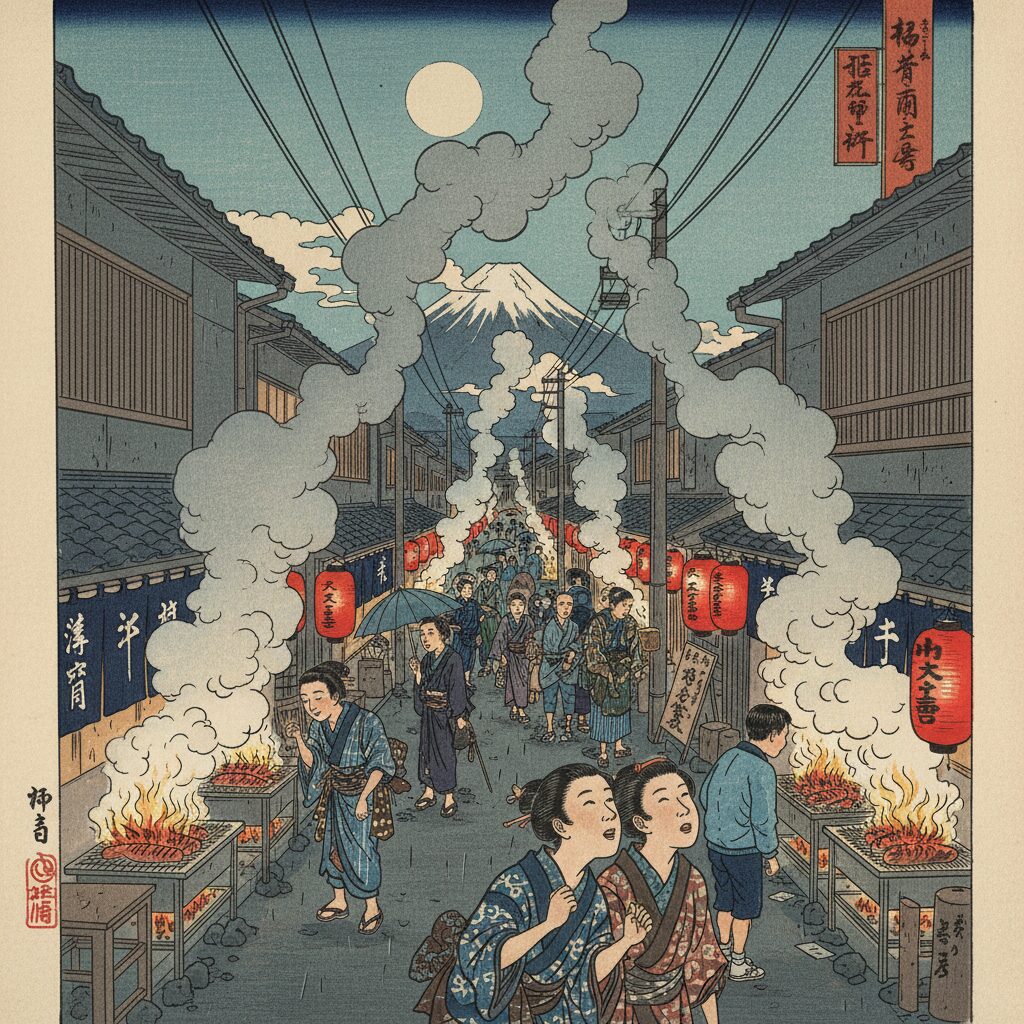
Your journey into the heart of Tsuruhashi begins the moment the train doors slide open. Tsuruhashi Station serves as a nexus, a bustling hub where the JR Osaka Loop Line, the Kintetsu Nara Line, and the Sennichimae Subway Line intersect. But it’s more than just a transit point; it’s a gateway. The platform itself seems charged with a distinct energy. Unlike the polished, sterile efficiency of many major Japanese stations, Tsuruhashi feels raw, lived-in, and rich with character. The air, thick with the unmistakable aroma of grilling meat, acts as an invisible guide, drawing you toward the station’s exits and into the labyrinthine world that lies ahead.
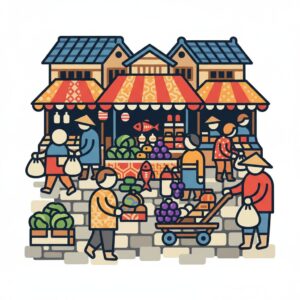
As you descend the stairs and step into the open, the sensory experience intensifies exponentially. You’re immediately immersed in the Tsuruhashi Shopping Arcade, a sprawling network of covered streets known as a shotengai. This isn’t a single, linear market but a tangled, organic maze of alleyways branching out in every direction. The light is dim, filtered through the weathered plastic roofing, and the narrow lanes are packed with a dizzying array of sights and sounds. Elderly women with remarkably strong arms tend stalls overflowing with vibrant red kimchi in all its varieties—cabbage, radish, cucumber—piled high in massive plastic tubs. The sharp, tangy scent of fermentation blends with the sweetness of simmering gochujang and the earthy fragrance of sesame oil.
Butchers stand behind glass counters showcasing cuts of beef you won’t find in a typical supermarket. Deep crimson fillets of harami (skirt steak), pearly white blocks of fat-laced karubi (short rib), and a bewildering assortment of horumon (offal) are all displayed with pride. This is the source, the very engine of Tsuruhashi’s culinary reputation. These aren’t just shops; they are institutions, many run by the same families for decades, supplying local restaurants with the freshest, most expertly prepared ingredients. The soundscape is a rich tapestry: the rhythmic chop of a cleaver striking a wooden block, the sizzle of something frying on a griddle, the lively calls of vendors hawking their goods in a unique mix of Japanese and Korean, and the constant murmur of locals exchanging gossip as they shop. It is here, in these crowded, smoky, and vibrantly alive alleyways, that you come to understand Tsuruhashi is not a tourist attraction. It is a community—a living, breathing neighborhood where food is the language, the history, and the lifeblood.
Echoes of the Past: The Soul of a Community
To fully appreciate the flavor of Tsuruhashi’s Yakiniku, one must first understand its story. This neighborhood’s identity is closely linked to the history of the Zainichi Korean community, the ethnic Koreans who have made Japan their permanent home. The origins of this community are complex, rooted in Japan’s colonial rule over Korea from 1910 to 1945. During this period, many Koreans migrated to Japan—some seeking economic opportunities, others forcibly brought to fill labor shortages, especially during World War II.
After the war, with the Korean peninsula divided and devastated, many were unable or unwilling to return. They formed close-knit communities across Japan, with Osaka becoming home to one of the largest populations. Tsuruhashi emerged as a central hub for this community. In the challenging post-war years, they faced significant hardships and discrimination. Yet through resilience, hard work, and preserving their culture, they carved out a space for themselves. Food became a powerful means of both survival and identity.
The origin of what we now call Yakiniku in Tsuruhashi directly reflects this history. While grilling meat is a tradition in both Japanese and Korean cuisines, the particular style that thrived here was born from ingenuity and necessity. Initially, the Zainichi Koreans used less-desirable cuts and offal (horumon, from the Kansai dialect horu-mono, meaning ‘discarded items’) often overlooked by the mainstream market. They took these humble ingredients and, using Korean marinades and cooking techniques, transformed them into something incredibly delicious. Beef was marinated in sauces of soy, garlic, sugar, and sesame oil, then grilled over charcoal fires, filling the air with an irresistible aroma.
Small, often makeshift restaurants and stalls began appearing beneath the railway tracks and in the market alleys of Tsuruhashi. These were not fancy places; they were spots of sustenance and community, where people could gather, share a meal, and speak their language. The smoke, noise, and powerful flavors were a comforting reminder of home. Over time, the appeal of this hearty, flavorful cuisine crossed cultural boundaries. Japanese customers, drawn by the enticing smells and lively atmosphere, began frequenting these restaurants. Yakiniku evolved from a food of necessity into a celebrated culinary phenomenon, eventually becoming a beloved part of Japan’s national food culture. When you sit at a grill in Tsuruhashi today, you are not just eating a meal; you are partaking in a piece of living history. Every sizzle of meat on the grill echoes that post-war resilience, a testament to a community that built its identity one delicious bite at a time.
The Alleys of Appetite: Navigating the Tsuruhashi Market
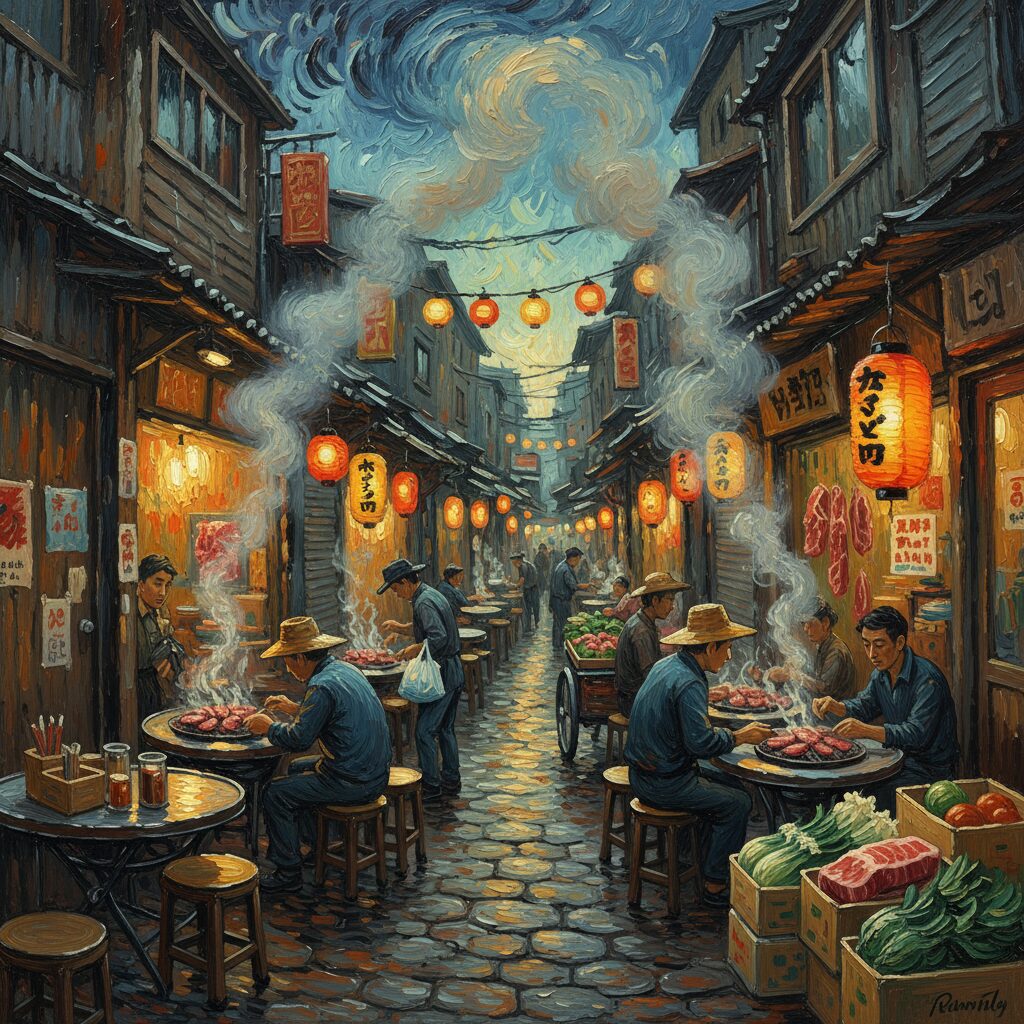
Before you even consider settling into a restaurant, a slow, deliberate exploration of the Tsuruhashi market is essential. It serves as the prologue to your Yakiniku feast, a sensory journey that builds anticipation and offers a deeper appreciation of the food you are about to savor. The market is not a single entity but a sprawling network of at least six distinct shopping arcades that interconnect and blend into each other around the station. Don’t worry about a map; the best way to experience it is to simply lose yourself. Let your nose be your guide.
Follow the aroma of toasted sesame oil, and you might find a shop specializing in Korean side dishes, or banchan. Here, you’ll encounter heaps of namul (seasoned vegetables), gleaming piles of spicy squid, and countless varieties of kimchi. The sheer quantity and diversity are astonishing. The women running these shops are masters of their craft, and watching them work is a spectacle in its own right. They are often happy to offer you a small taste. Be adventurous. Try the crunchy radish kimchi (kkakdugi) or the refreshing cucumber kimchi (oi sobagi). Purchasing a small portion to take with you is a wonderful way to support these local vendors, and it makes for an amazing snack later.
Turn a corner, and you might stumble upon a section of the market dedicated to chijimi or jeon, savory Korean pancakes. Large, round pancakes studded with green onions, seafood, or kimchi are cooked on massive circular griddles. The sound of the batter hitting the hot, oiled surface is a symphony of sizzles and pops. You can buy a freshly made wedge, straight off the griddle, and eat it as you wander. It’s the perfect fuel for further exploration. The crisp edges and chewy interior, dipped in a light soy-vinegar sauce, are a revelation.
Then there are the butchers. These are not your ordinary meat counters. The butchers of Tsuruhashi are specialists, artisans who understand the anatomy of a cow with almost surgical precision. They are the gatekeepers of the Yakiniku experience. You will see them expertly breaking down large primal cuts, trimming fat, and slicing beef with practiced ease. This is where you can truly appreciate the quality of the meat that makes Tsuruhashi famous. Look for the beautiful marbling in the karubi and the deep, rich color of the rosu (loin). Notice the incredible variety of horumon, from the familiar tripe (mino) and intestine (tecchan) to more obscure parts. These butchers supply the restaurants, but they also sell directly to the public. You’ll see locals lining up to buy their preferred cuts to prepare Yakiniku at home, a testament to the deep-rooted love for this cuisine in the community.
The market is also a vibrant, chaotic jumble of everything else. You’ll find shops selling colorful Korean dresses (hanbok), stores piled high with Korean snacks and instant noodles, vendors selling pigs’ feet (jokbal), and stalls offering Korean-style sushi rolls (gimbap). It’s a place where you can feel the powerful pulse of a thriving culture. Take your time. Absorb the atmosphere. This is the ecosystem that gives Tsuruhashi its flavor, its grit, and its undeniable charm. The market experience makes the eventual Yakiniku meal not just a dinner, but the grand finale of a cultural deep dive.
The Sacred Fire: A Guide to the Tsuruhashi Yakiniku Experience
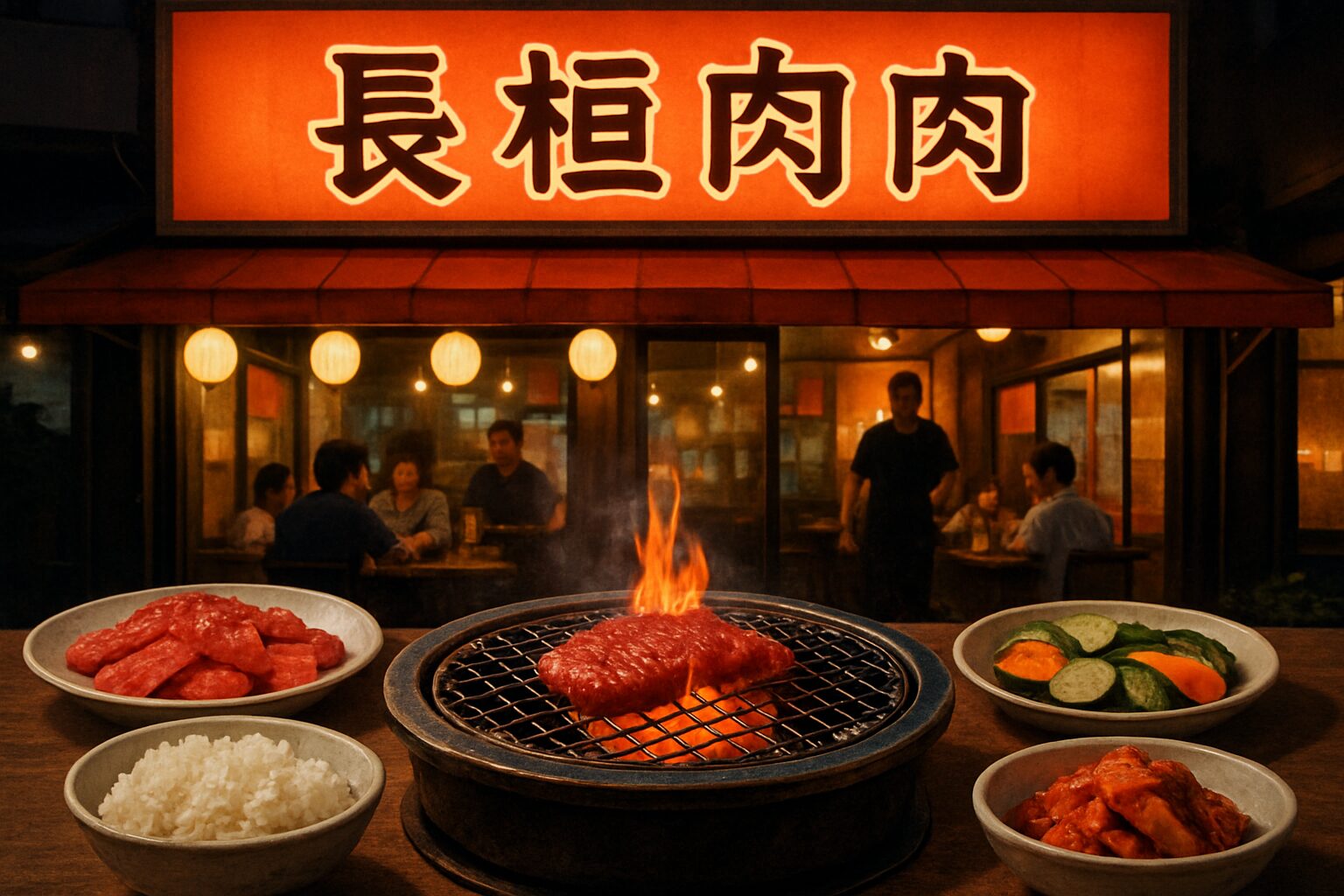
As dusk begins to fall, a new energy flows through Tsuruhashi. The market stalls start to close for the day, and the warm glow of red lanterns lights up the narrow alleyways. The thickening smoke in the air carries the promise of the evening feast. Now is the moment to select your sanctuary. The sheer number of Yakiniku restaurants can be overwhelming, with dozens clustered around the station. They range from tiny, standing-only counters to larger, livelier establishments.
Finding Your Temple of Meat
How do you decide? There is no single “best” restaurant; Tsuruhashi’s charm lies in its variety. Some are legendary, with lines forming well before opening hours. Others are hidden gems, tucked away in unmarked alleys, known only to locals. A good first-timer’s strategy is to wander and observe. Look for spots bustling with local patrons. A long queue is often an excellent sign. Don’t be deterred by the absence of English menus or polished storefronts. Some of the most authentic experiences come from the most rustic settings. Peek inside—do you see charcoal grills (shichirin) on the tables? While gas grills are common, many purists swear by the subtle smoky flavor only charcoal imparts. What’s the atmosphere? Is it lively and cheerful, or quiet and focused? Choose the vibe that calls out to you.
Many classic Tsuruhashi spots have a distinct, old-school feel. The walls may be stained from decades of smoke, the décor minimal, and the seating simple stools or tatami mats. This is not a place for fine dining in the conventional sense. The focus is singular: the meat. Service tends to be brisk and efficient, rather than overly polite. The staff are there to support your feast, bringing plates of glorious meat and ice-cold beer. Embrace the unpretentious, down-to-earth atmosphere. This is the real deal.
The Language of the Grill: Ordering Like a Pro
Once seated, you’ll receive a menu. It might be entirely in Japanese, but don’t worry. Many places include photos, and you can always point. Knowing a few key terms, however, will greatly enhance your experience. Menus are typically divided into categories.
First, the classic cuts. Karubi (short rib) is the king of Yakiniku, prized for its rich marbling that melts into sublime tenderness on the grill. Rosu (loin/sirloin) is leaner but still packed with flavor. Harami (skirt steak) is a personal favorite; it boasts a robust, beefy taste and a satisfying chew. Though technically offal, its flavor and texture place it firmly among steaks for most diners. Another must-try is Tan (tongue), often served thinly sliced with salt and lemon. It has a unique, slightly crunchy texture that’s incredibly addictive.
For the adventurous, the world of Horumon awaits. This is where Tsuruhashi truly shines. Tecchan (large intestine) is chewy and fatty, soaking up the smoky flavor of the grill beautifully. Mino (first stomach/tripe) has a firm, almost crunchy texture. Reba (liver) is rich and creamy but requires careful cooking to avoid toughness. Ordering a moriawase (assortment plate) is a great way to sample a variety of cuts, both standard and offal, without committing to full plates of each.
Your meal isn’t complete without side dishes. A plate of assorted kimchi (kimchi moriawase) and seasoned vegetables (namul moriawase) are essential. Their acidity, spice, and freshness cut through the richness of the meat, cleansing your palate between bites. A bowl of fluffy white rice is indispensable; it’s the perfect base for the savory, juicy meat. And what to drink? A frosty mug of Japanese draft beer (nama biiru) is the classic pairing, its crispness perfectly balancing the fatty meat. For a more traditional Korean touch, try makgeolli, a cloudy, lightly sparkling, slightly sweet unfiltered rice wine.
The Ritual of Grilling: A Dance of Fire and Flesh
When the glowing charcoal grill arrives at your table, the ritual begins. You become the chef. Grilling your own meat is the essence of the Yakiniku experience. There is an art and rhythm you’ll quickly embrace. You’ll receive long tongs for handling raw meat—never use your own chopsticks to avoid cross-contamination.
Start with salt-seasoned items like tan before moving on to marinated meats (tare). Place a few slices on the grill at a time; don’t overcrowd it. Listen for the sizzle as the fat melts and drips onto the hot coals, sending fragrant smoke swirling upward. The goal is a good char outside while keeping the inside juicy and tender. Thin slices might take less than a minute per side; thicker cuts need more time and care. Turn the meat frequently for even cooking.
There’s a deep, primal satisfaction in this process. You’re fully engaged in creating your meal. The warmth from the grill touches your face, the smell of caramelizing meat fills your senses, and the sizzling sound becomes the soundtrack to your dinner. It’s a communal, interactive experience. You and your companions share grilling duties, pass plates, and pour drinks. The conversation is punctuated by the satisfying work of cooking and eating. When a piece is done to your liking, pick it from the grill, dip it in the provided sauce—usually a sweet, savory soy-based tare or a simple mix of salt and sesame oil—set it on your rice, and savor the moment. It’s a flavor explosion: smoky charcoal, deep umami beef, sweet marinade, and a hint of spice. This is the true taste of Tsuruhashi.
Practical Wisdom for the Yakiniku Pilgrim
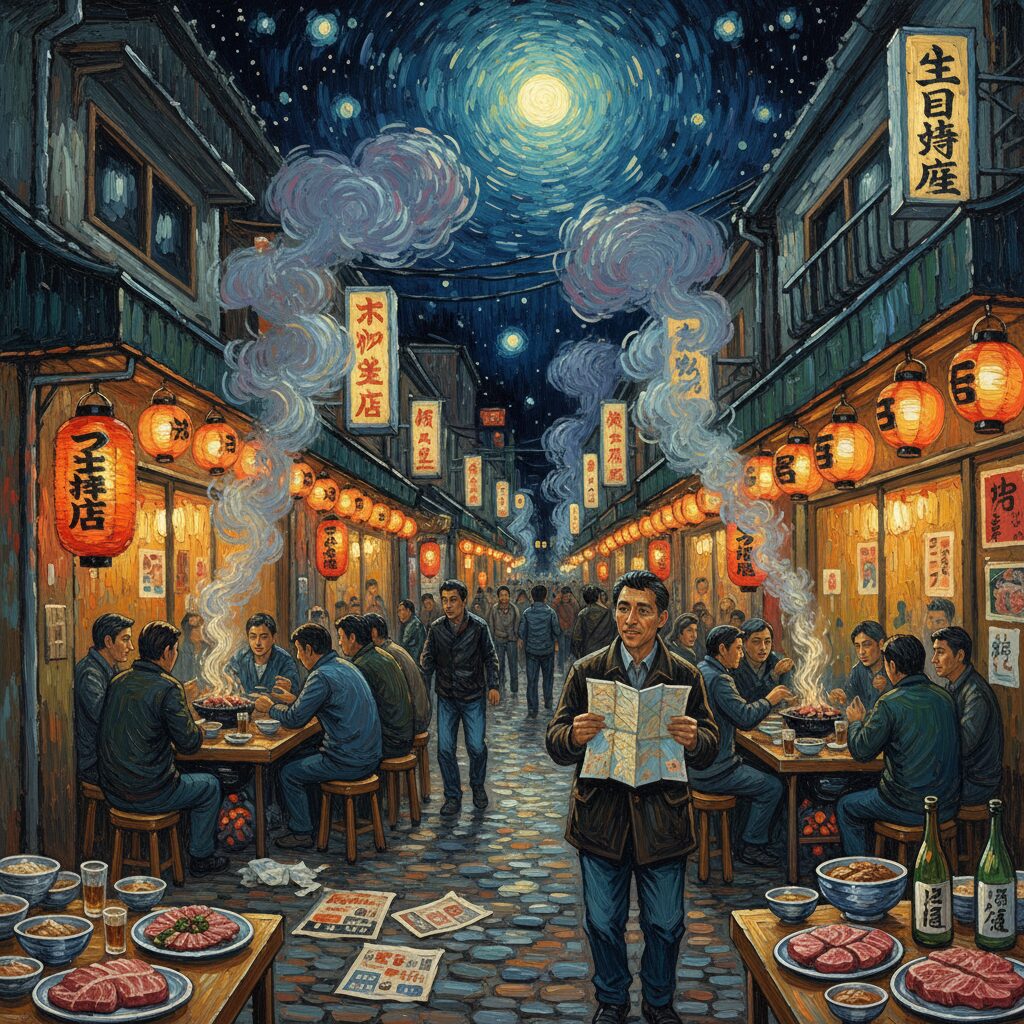
Embarking on a culinary journey in Tsuruhashi is exceptionally rewarding, and a few practical tips can help make the experience even smoother for first-time visitors.
First and foremost, be ready for the smoke. It’s an unavoidable and integral part of the ambiance. Ventilation in many older establishments can be, to say the least, rustic. Avoid wearing your finest clothes or anything that can’t be easily cleaned. You will leave smelling like a delicious, smoky barbecue—consider it a badge of honor, a sensory memento of your genuine experience. Many restaurants thoughtfully provide large plastic bags to protect your coat and bag from the smoke.
Although Japan is becoming more credit card-friendly, many of Tsuruhashi’s traditional eateries still operate on a cash-only basis. It’s wise to carry enough Japanese yen to avoid any awkwardness when paying the bill. The prices are generally very reasonable for the quality and quantity of food, making it one of the best value dining experiences in Osaka.
Don’t be intimidated by the language barrier. The people of Tsuruhashi are used to visitors, and a smile, a point, and a few basic Japanese phrases like “sumimasen” (excuse me) and “arigato gozaimasu” (thank you very much) will go a long way. Many menus, as mentioned, include pictures. You can also use a translation app on your phone, but honestly, pointing at what looks good on a neighboring table is a tried-and-true, highly effective approach.
The best time to visit for the full Yakiniku experience is in the evening, from around 5 PM onward, when the restaurants come alive. However, to experience the markets at their liveliest, a daytime visit is essential. A perfect itinerary might be to arrive in mid-afternoon, spend a few hours wandering the shotengai, soaking up the atmosphere and snacking on street food, then transition into the evening by dining at a Yakiniku restaurant for a hearty meal.
Finally, embrace the pace. Tsuruhashi is not a place for rushing. It’s a neighborhood that rewards slow, attentive exploration. Stop for coffee at a small, local kissaten. Watch the world go by. Engage with vendors, even if only through gestures. The true essence of Tsuruhashi lies not just in the food, but in the people and the strong sense of community that fills every smoky alleyway.
A Flavor That Lingers
As you finally return to Tsuruhashi Station, full, content, and wrapped in the aroma of charcoal and grilled meat, you bring with you more than just a satisfied hunger. You carry the story of a place. Tsuruhashi stands as a powerful reminder that food is never simply food. It embodies history, culture, resilience, and community served on a plate. It tells the story of the Zainichi Koreans who transformed hardship into a culinary art, creating a cuisine that has become an essential part of Osaka’s identity.
The smoke rising from the grills is more than just smoke; it is the visible spirit of a neighborhood that steadfastly maintains its traditions while welcoming all who seek an honest meal. As a photographer, I arrived intending to capture images, but I left with something much deeper: a sensory memory etched not on film, but in my mind and on my palate. The taste of perfectly grilled harami, the sharp tang of homemade kimchi, the lively laughter echoing through a narrow alley—these are the true portraits of Tsuruhashi. It is a place that seeps under your skin and into your soul, leaving a flavor that lingers long after you have boarded the train and returned to the quiet, orderly streets of modern Japan.