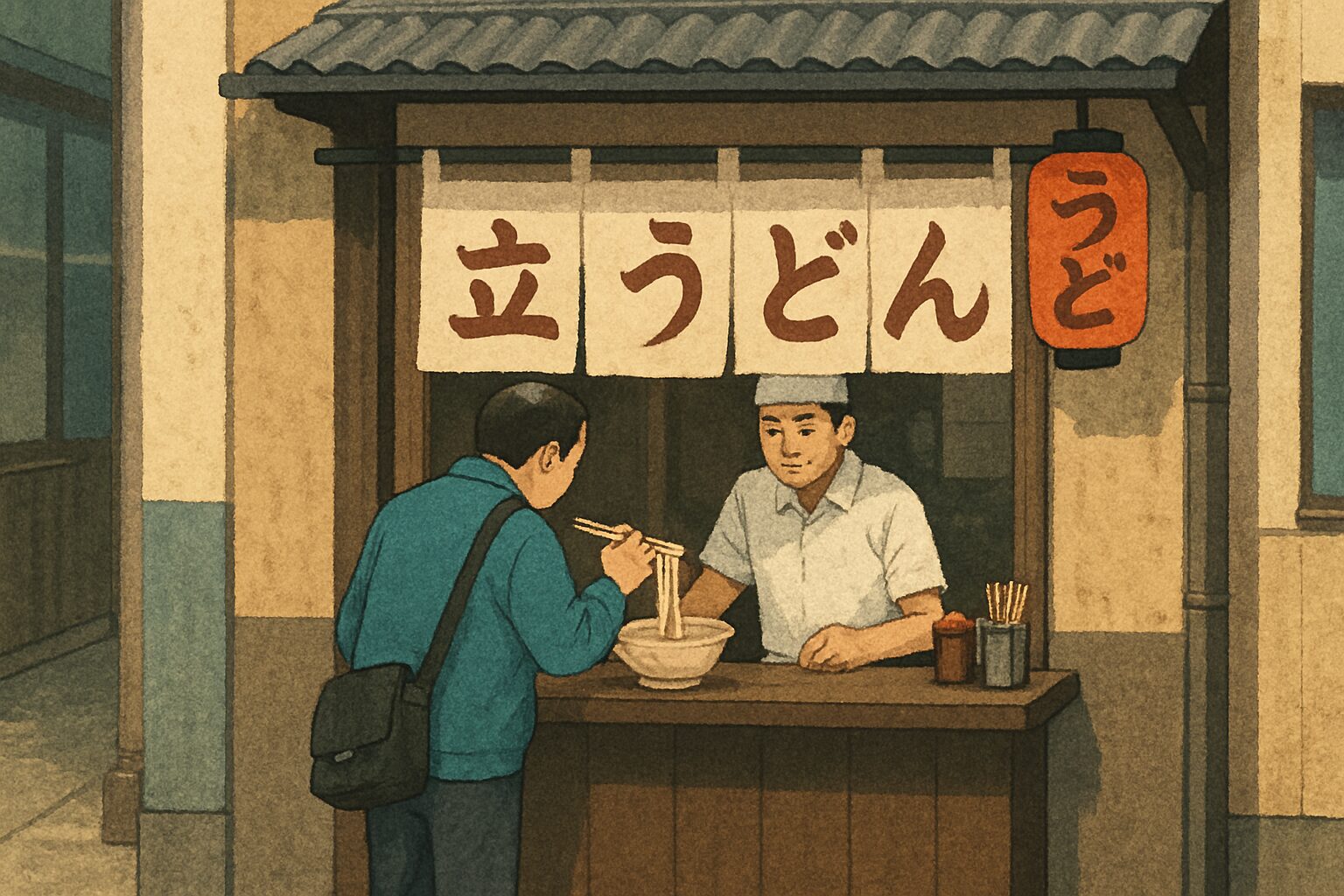
In the grand, chaotic theater of Osaka, where the city’s heart beats to the rhythm of arriving and departing trains, there exists a unique and sacred stage. It’s not found in the spotlight of Dotonbori’s neon glow or the hallowed halls of Osaka Castle. Instead, it’s tucked into the liminal spaces of urban life—the corners of sprawling train stations, the narrow alleys just beyond the ticket gates, the unassuming storefronts that exhale clouds of savory steam into the perpetual motion of the commuter rush. This is the world of tachigui udon, the standing udon stall, a culinary institution that serves as both pit stop and sanctuary for the city’s workforce. Forget leisurely dining; this is sustenance as a synchronized art form, a meal consumed in minutes that speaks volumes about Osaka’s pragmatic, warm-hearted, and unapologetically fast-paced soul. To eat here is to participate in a daily ritual, a silent ballet of efficiency and etiquette that fuels Japan’s third-largest city. For the uninitiated, it can seem intimidating, a whirlwind of unfamiliar customs. But once you understand the rhythm, you unlock one of the most authentic and satisfying culinary experiences Osaka has to offer, a taste of the city’s true, unvarnished flavor, slurped straight from a humble bowl.
To truly understand the rhythm of the city, consider starting your day like a local with a classic Osaka breakfast at a retro coffee shop.
The Symphony of Steam and Speed

Before you even enter, the tachigui udon experience begins through the senses. It’s an aromatic siren song that cuts through the sterile, metallic smell of the train station. It’s the rich, soul-warming fragrance of dashi, the essential soup stock of Japanese cuisine. In Osaka, this aroma is particularly exquisite. Unlike the darker, bolder soy-and-bonito-heavy broth of Tokyo, the Kansai-style dashi is a delicate, almost translucent golden elixir. It’s crafted from high-quality kombu (kelp), often the esteemed Rishiri or Rausu varieties, which imparts the water with a profound, oceanic umami. This is enhanced with flakes of dried bonito (katsuobushi) and sometimes other dried fish like mackerel or sardine, producing a broth that is simultaneously light and complex, savory yet clean. This scent, mingling with the gentle sweetness of mirin and the earthy undertones of soy sauce, serves as the first and most essential invitation. It promises warmth, nourishment, and a brief respite from the relentless pace of the day.
Move closer, and the soundscape becomes part of the experience. There’s the rhythmic clatter of ceramic bowls set on the counter, the soft hiss of tempura batter frying in hot oil, the splash of noodles expertly lifted from boiling water in a wire basket, and above it all, the defining noise of the place: the collective, uninhibited slurping of noodles. In the West, this might be viewed as impolite. Here, it is a sign of reverence, a compliment to the chef indicating the noodles are being enjoyed at their peak temperature and flavor. It’s a percussive, vital sound that conveys deep satisfaction. The atmosphere inside is one of focused, purposeful energy. There are no lingering conversations, no scrolling through phones, no leisurely sipping of tea. The space is a temple of transience, designed for one purpose only. The counter, often a single slab of wood or stainless steel worn smooth by decades of leaning elbows and sliding bowls, is the altar. The patrons are the congregation, each engaged in their own private yet public moment of communion with their meal. It’s a strangely intimate form of anonymous dining. You stand shoulder-to-shoulder with strangers from every walk of life—a construction worker in his dusty uniform, a salaryman with his briefcase tucked between his feet, a student grabbing a quick bite between classes, an elderly woman who has been eating at this same counter for fifty years. No words are exchanged, but a shared understanding fills the air. We are all here for the same reason: a fast, cheap, and deeply delicious bowl of udon.
A Portal to Post-War Japan
To fully appreciate the standing udon stall, one must recognize its origins, which are deeply rooted in post-war Japan. The tachigui concept did not arise from a trend for fast-casual dining; it was born out of necessity. In the years after World War II, Japan was a nation racing against time. Cities like Osaka were rapidly rebuilding, and a new class of urban worker—the salaryman—emerged as the driving force behind the country’s economic boom. These workers faced long commutes on expanding train lines and had little time for a seated lunch. They needed something hot, satisfying, and above all, quick and affordable. The standing stall, conveniently located within train stations, provided the perfect answer.
These establishments became a crucial part of the daily commute, as essential as the train ticket itself. They provided a reliable source of calories and comfort, a reassuring routine amid a swiftly changing world. The emphasis was on speed and volume—a culinary assembly line designed to serve the greatest number of customers in the shortest possible time. The menu was straightforward, the ingredients modest, but the execution impeccable. This tradition of efficiency remains evident today. The entire experience, from ordering to finishing the last spoonful of soup, exemplifies streamlined service. It stands as a living tribute to Showa-era pragmatism, a tangible connection to the grit and determination that rebuilt the nation. Every worn countertop and steaming bowl carries the spirit of that industrious past, reminding us that this humble meal is more than just food; it is a symbol of resilience.
Decoding the Menu: A Guide to the Classics

The menu board at a standing udon shop highlights the elegance of simplicity. While some larger establishments might offer a dozen varieties, most focus on a core selection of beloved classics. Mastering this basic vocabulary is key to ordering like a seasoned local.
The Foundational Trinity
At the center of the menu are the three essential offerings. The first is Kake Udon, the purest form of the dish. It consists of thick, chewy udon noodles served in a soul-soothing hot dashi broth, often garnished with finely chopped green onions. Ordering kake means appreciating the craft at its most fundamental—the quality of the noodles and the clarity and depth of the broth. It serves as the standard by which all other bowls are judged.
Next is Kitsune Udon, arguably Osaka’s most famous contribution to the udon world. This bowl features a large, shiny piece of abura-age (thin sheets of deep-fried tofu) simmered in a sweet and savory broth made from soy sauce, mirin, and sugar. The name kitsune, meaning “fox” in Japanese, refers to folklore that foxes favor fried tofu. When the sweet, juicy tofu topping absorbs the savory dashi, it creates a flavor explosion quintessentially Osakan. The tofu’s sweetness balances the broth’s salty umami, and its soft, spongy texture delights in contrast to the firm noodles.
Completing the trinity is Tanuki Udon. Here, the name playfully nods to folklore, as tanuki are raccoon dogs. This bowl is topped with a generous spoonful of tenkasu—crispy bits of deep-fried tempura batter. These crunchy pieces slowly soak up the hot broth, becoming soft and flavor-packed while adding texture and a rich, oily taste to the soup. It’s a simple yet brilliant way to add substance and satisfaction to a basic noodle bowl.
Venturing into Toppings and Tempura
Beyond the basics lies a variety of toppings for personalization. Niku Udon offers a heartier option, featuring thinly sliced beef simmered in a sweet soy-based sauce that infuses the broth with rich flavor. It’s a filling, protein-rich choice perfect for a cold day. Wakame Udon delivers a taste of the sea, with rehydrated wakame seaweed adding a subtle briny flavor and slippery, pleasant texture. For egg lovers, Tsukimi Udon is a poetic pick—its name means “moon-viewing,” featuring a raw egg cracked into the hot broth. The soup’s heat gently poaches the egg, producing a silky, creamy yolk that enriches the dashi once broken.
However, the undisputed king of toppings is tempura. Most standing udon shops display a tray of freshly fried tempura items for customers to add to their bowls. The most common is kakiage, a mixed vegetable and shrimp fritter, a golden-brown disc of crispy delight. There’s also usually ebi-ten (prawn tempura), chikuwa-ten (fish cake tempura), and various vegetable tempura like sweet potato or pumpkin. The magic happens when you add the crispy tempura to the hot soup. The batter softens, releasing its savory, oily flavor into the dashi while retaining some of its original crunch. It’s a textural and flavorful journey with every bite.
The Unspoken Rules: A Choreography of Consideration
Navigating a crowded standing udon stall for the first time can feel like trying to board a moving train. However, the system operates under a set of unwritten rules, a shared choreography meant to ensure everyone eats quickly and efficiently. Grasping this etiquette is the key to a smooth and enjoyable experience.
The Approach and the Order
First, take stock of the situation. If a ticket machine (kenbaiki) is near the entrance, it’s your first stop. These machines are marvels of efficiency, often decorated with pictures of the dishes, which helps non-Japanese speakers. Simply insert your money, press the button for your chosen udon, any extra toppings, and perhaps a side dish like an onigiri (rice ball) or inari-zushi (sushi rice in a sweet tofu pouch). The machine will dispense a small ticket or two. If there’s no machine, you’ll order directly from the staff behind the counter, which requires a bit more confidence. A simple “Kitsune Udon, kudasai” (“Kitsune Udon, please”) will suffice.
Once you have your ticket or have placed your order, find a spot at the counter without delay. The flow is constant. Look for an opening and slide in. In very busy shops, you may need to wait briefly behind someone near finishing. Mind your belongings—place your bag or briefcase on the hook under the counter or securely between your feet. The counter is for bowls, not baggage.
The Transaction and the Toppings
If you have a ticket, set it on the counter in front of you. The staff will note it, prepare your bowl swiftly, and place it before you. If you ordered verbally, this is usually when you pay. Many stalls work on a simple cash-on-delivery basis. Have your money ready. Place coins or bills on the small tray provided or directly on the counter. The staff will take it and return your change with practiced speed. Fumbling for cash at the last moment disrupts the flow.
Now, take in your surroundings. On the counter, you’ll find communal condiments. The most important is shichimi-togarashi, a seven-spice blend typically containing red chili pepper, sansho pepper, roasted orange peel, black and white sesame seeds, ginger, and nori. A light sprinkle adds a complex heat and fragrance that cuts through the broth’s richness. You may also find containers of free tenkasu or chopped green onions. Use the provided spoon to add a modest amount—this isn’t an all-you-can-eat buffet but a subtle enhancement.
The Art of Eating and Exiting
Now for the main event. Pick up your chopsticks and bowl. It’s perfectly acceptable—and encouraged—to lift the bowl to your mouth to drink the soup directly. This is more practical than trying to chase the last drops with a spoon, which you likely won’t be given. Then, slurp your noodles with confidence. Slurping serves two purposes: it cools the hot noodles as they enter your mouth to prevent burns, and it aerates the noodles and broth, enhancing their flavor. Listen to the veterans around you; their rhythmic slurping sets the tempo of the restaurant.
Eat with focus. This isn’t a place for idle chat or distraction. Your time at the counter is brief, and others are waiting. The goal is to finish your meal within five to ten minutes. When done, including drinking as much broth as you like, the final act of the ballet begins. Gather your bowl, chopsticks, and any small side dishes. Lift them and place them on the raised ledge above where you ate. This simple gesture signals to the staff that you’re finished and makes cleaning easier for the next guest. Wiping your space quickly with the provided cloth (fukin) is a thoughtful touch appreciated by all.
Finally, as you turn to leave, a simple, quiet “Gochisousama deshita” (“Thank you for the meal”) directed toward the staff is the perfect closing note. It’s a sign of gratitude that completes the ritual. Then, you blend back into the flow of commuters, stomach warm and spirit lifted, having successfully taken part in one of Osaka’s essential daily dramas.
Finding Your Bowl: Navigating the Landscape

Standing udon stalls are everywhere in Osaka, especially near major transportation hubs. The vast underground maze of Umeda Station, linking JR, Hankyu, Hanshin, and subway lines, is a prime location. Each platform and connecting passage seems to have its own popular stall, each offering a slightly unique version of the classic dashi. Namba and Tennoji stations are also well-known spots. Don’t hesitate to explore the smaller, less flashy places. Often, these are the hidden gems that have been serving the same flawless recipe for generations. Look for the short noren curtains, steamed-up windows, and a steady flow of customers—these are signs of a quality establishment.
While the stalls at stations are iconic, you’ll also find them in business districts and covered shopping arcades (shotengai). The experience is quite similar, though perhaps a bit calmer than those directly on train platforms. The charm of tachigui udon lies in its consistency. Whether you’re in a sleek, modern station or a Showa-era alley, the core values of speed, affordability, and flavor stay constant. It is the great culinary equalizer of the city, a place where anyone, regardless of status, can enjoy a moment of genuine, unpretentious satisfaction. It’s a reminder that in Osaka, the best things in life aren’t always the most costly or elaborate. Sometimes, they come in a simple bowl, served hot and fast, enjoyed standing up, and ready to fuel you for whatever the city brings next.