Landing in Osaka, your heart is probably pounding a rhythm of pure excitement. The neon glow of Dotonbori, the savory scent of takoyaki hanging in the air, the promise of a life woven into the vibrant tapestry of Kansai culture. It’s a dream. But then comes the reality, the one that often brings that high-flying dream down to a screeching, bureaucratic halt: finding a place to live. You start your search, bright-eyed and optimistic, only to be confronted by a wall of unfamiliar terms and staggering upfront costs. Key money? Guarantor? Agent fees? Renewal fees? Suddenly, the welcoming embrace of Osaka feels a little less certain, and the process of simply finding a home transforms into a complex, expensive, and often disheartening puzzle. It’s a story I’ve heard countless times, and one I nearly starred in myself. But what if I told you there’s a different path? A key to a door that bypasses this traditional, foreigner-unfriendly labyrinth. It’s called UR Housing, and it’s quite possibly the best-kept secret for expats looking to build a stable, affordable life in this incredible city. UR, or the Urban Renaissance Agency, is a government-backed organization that offers a direct, transparent, and refreshingly simple way to rent. It’s a system designed for fairness and accessibility, and for many of us, it’s the golden ticket that makes living in Japan not just possible, but truly enjoyable from the very start. Forget the financial hurdles and the stress of finding someone to vouch for you. Let’s talk about how you can find your own little piece of Osaka, hassle-free.
Once you’ve secured your home, you can start exploring the city’s vibrant culture and efficient public transportation system.
The UR Revelation: Cracking the Code of Japanese Rentals
So, what exactly is UR Housing, and why does it seem like a magical solution in the often frustrating landscape of Japanese real estate? UR stands for Urban Renaissance Agency, essentially a large, semi-public landlord managing an extensive portfolio of apartment buildings throughout Japan, including many here in Osaka. These apartments aren’t just ordinary units; they were frequently constructed during Japan’s rapid economic growth periods to offer quality housing to its expanding urban population. Today, they still fulfill that role, providing stable and affordable homes to both Japanese citizens and, importantly, foreign residents on equal terms. The real magic, however, lies in what UR doesn’t require. In the typical Japanese rental market, you face what I call the “Initial Cost Avalanche,” including a security deposit, first month’s rent, and various non-refundable fees, which can overwhelm your finances. UR Housing completely bypasses this system with a philosophy well-loved by the expat community: the “Four No’s.”
The First ‘No’: No Key Money (Reikin – 礼金)
Key money is perhaps the most confusing concept for foreigners—a non-refundable “gift” paid to the landlord as a token of appreciation for renting their property. It usually ranges from one to three months’ rent, and you never get any of it back. This cultural tradition has become a significant financial obstacle. UR eliminates this concept entirely—no gift, no thank-you payment. The savings here are substantial, often amounting to hundreds of thousands of yen you can instead spend on furnishing your new home or enjoying Osaka’s culinary scene.
The Second ‘No’: No Agent Fee (Chukai Tesuryo – 仲介手数料)
When renting a typical apartment, you almost always work through a real estate agent (fudosan-ya), who finds properties, arranges viewings, and handles contracts, charging a fee usually equivalent to one month’s rent plus tax. With UR, however, you deal directly with the landlord or a UR-licensed agent paid by UR, not by you, so this fee disappears. No middleman means another significant saving, simplifying the process and making pricing transparent—the price you see is exactly what you pay.
The Third ‘No’: No Guarantor (Hoshonin – 保証人)
This is often the biggest challenge for foreigners. Most Japanese landlords demand a guarantor—a Japanese national who promises to be financially responsible if you miss rent or damage the property. For newcomers without strong local ties, finding such a person is nearly impossible. The alternative is a guarantor company (hoshonin-gaisha), which charges a high initial fee (often 50-100% of one month’s rent) and sometimes an annual renewal fee. UR Housing removes this requirement entirely. As long as you meet their financial standards, you don’t need a person or company to back you. This policy alone opens the door to independent living for countless foreign residents who would otherwise be excluded.
The Fourth ‘No’: No Renewal Fee (Koshinryo – 更新料)
In the private rental market, leases are typically two years, and when renewing, tenants often must pay a renewal fee equal to one month’s rent—essentially a charge for continuing to live in your own home. UR contracts differ; they don’t have fixed terms in the same way and don’t require renewal fees. You can stay as long as you wish, gaining peace of mind and long-term stability without periodic penalties. This set of “no’s” isn’t just a marketing pitch—it transforms the rental experience. It makes moving into a new apartment more predictable and affordable, cutting upfront costs by as much as four to six months’ rent. It’s a system grounded in common sense and offers a refreshing alternative.
The Reality Check: Are You a Match for UR?
Although the UR system sounds fantastic, it’s not open to just anyone. The Urban Renaissance Agency acts as a responsible landlord with clear and transparent criteria to ensure tenants can comfortably afford the rent. This is actually beneficial—it’s fair, straightforward, and entirely non-discriminatory. The main gatekeeper is the income requirement, which is the key hurdle to overcome. Fortunately, the rules are refreshingly logical and consistent for everyone, regardless of nationality. You need to demonstrate a stable income sufficient to cover the rent. The exact amount depends on the monthly rent of the apartment you’re interested in. Generally, your average monthly income must be at least four times the rent. For instance, if the rent is ¥80,000 per month, you’ll need to prove an average monthly income of at least ¥320,000.
There are several ways to meet this requirement. If the rent is under ¥200,000 per month, you can often qualify based on an annual income threshold instead of a monthly one. For a single applicant, the required annual income is usually ¥3,000,000 or more. Household applications are accepted if the combined income meets the criteria, which is especially helpful for couples or families. You’ll need official documents to verify this income. The most common is the Certificate of Taxation (Kazei Shomeisho – 課税証明書), available at your local ward or city office. This shows your total income and taxes paid during the previous calendar year. If you’ve recently started a job in Japan and don’t have a Kazei Shomeisho from last year, a combination of your employment contract and recent payslips is usually acceptable.
What if you don’t meet the income requirement? For students, retirees, or self-employed individuals with fluctuating income, UR provides an alternative: paying a full year’s rent upfront along with the standard two-month security deposit. Although this requires significant upfront funds, it offers a valuable option for those who don’t fit the traditional salaried employee profile. Besides finances, you must have a valid visa allowing medium- to long-term residence in Japan. Tourist visas are insufficient. Appropriate status includes work visas, student visas, spouse visas, or permanent residency. Your Residence Card (Zairyu Card – 在留カード) serves as the key form of identification.
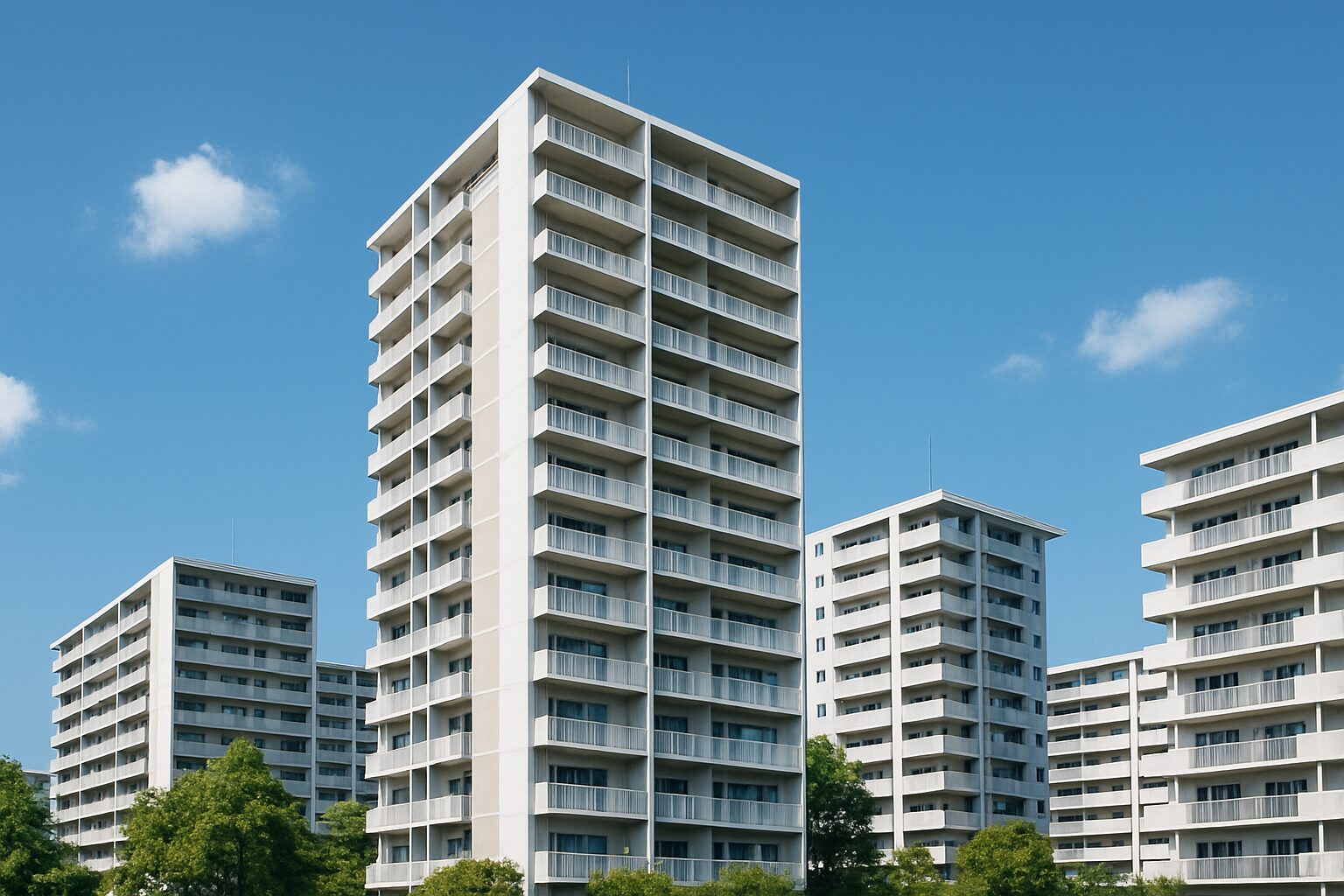
Finally, consider the nature of the apartments themselves. UR buildings, or “danchi” (団地), are not luxury condos. Many were built decades ago during the Showa era. While they are very well-maintained and structurally sound, they can feel a bit outdated compared to brand-new private developments. Layouts often combine traditional tatami rooms with Western-style rooms. However, UR has been investing heavily in renovations, so you can frequently find units that have been completely modernized with updated kitchens, stylish flooring, and contemporary fixtures. These renovated units are highly desirable, so you need to act quickly. Another point to remember is that UR apartments come completely empty. And when I say empty, I mean it. You’ll likely need to install your own light fixtures in every room, bring your own gas stove for the kitchen, and supply your own air conditioning units. This is standard for many rentals in Japan but is an important expense to factor into your moving budget.
The Hunt Begins: Navigating the Path to Your UR Home in Osaka
Ready to start your search? Finding and securing a UR apartment is a clear, step-by-step process. It requires some preparation and occasionally quick action, but it’s completely manageable. Here’s an overview of the journey ahead.
Step 1: Exploring and Selecting Your Apartment
Begin at the UR Housing website, a comprehensive database of available properties. Although the main site is in Japanese, it can be easily navigated using your browser’s auto-translate feature. You can search by train line, station, or specific areas within Osaka. This allows you to get a sense of the types of apartments, their sizes (expressed in layouts like 2DK, 3LDK, etc.), their age, and of course, their monthly rent. Pay close attention to the details. Listings often include floor plans, photos (if available), and indicate whether units are standard or recently renovated. Popular UR areas in Osaka include the expansive, green complexes of Senri New Town in the north, ideal for families, as well as well-placed buildings in areas like Morinomiya, which provide easy access to Osaka Castle Park and the city center. After identifying a few potential options online, your next step is to visit a UR Plaza or UR Information Center. In Osaka, main offices are conveniently located in major hubs such as Umeda and Namba. No appointment is necessary; you can just walk in. The staff are very helpful, patient, and experienced in assisting foreign clients, though their English proficiency can vary. They can provide the latest availability, print detailed information sheets on apartments you’re interested in, and answer any questions about the process. At this stage, you can officially register your interest in a particular apartment. Popular units, especially renovated ones in prime locations, are rented very quickly—within hours rather than days. If you find one you like, be ready to act swiftly.
Step 2: Preparing Your Documents
Once you’ve reserved a unit, the countdown begins. Usually, you’ll have about a week to submit all required paperwork. This is the most critical part of the process, so being organized is essential. The documents you will almost certainly need include:
- Certificate of Residence (Juminhyo – 住民票): An official document from your local ward or city office verifying your residence. It lists your name, address, visa status, and other details. If applying as a family, be sure to request the version that includes all household members. It must have been issued within the last three months.
- Proof of Income: Typically, this is your most recent Certificate of Taxation (Kazei Shomeisho). If you’re new to Japan, you will need your employment contract (showing salary), a letter from your employer confirming your income, and possibly your latest payslips. The specific requirements may vary, so confirm with UR staff what’s needed for your situation.
- Residence Card (Zairyu Card – 在留カード): You’ll need to show your physical card along with photocopies of the front and back.
- Passport: Present the original and provide photocopies of the main photo page and the page with your Japanese visa stamp.
Gathering these documents can take a few days, so it’s wise to know the location and hours of your local city office. Having everything prepared will make the process smooth and stress-free.
Step 3: The Viewing (Naiken – 内見) and Final Choice
Before making a commitment, you’ll have the opportunity to view the apartment—a process called naiken. UR staff will give you the key (or a lockbox code), allowing you to visit the property at your convenience. This is your chance to thoroughly inspect the unit. Check the condition of the rooms, measure space for your furniture, assess natural light, and test water pressure. Take photos and videos. Get a feel for both the building and surrounding neighborhood—is it close to the station? Are there nearby supermarkets and parks? Since this could be your new home, take your time and be thorough. If you like it, return to the UR office to confirm you want to proceed. If not, simply return the key and continue your search.
Step 4: Signing the Contract and Paying Initial Costs
Once your documents are approved and you’re certain about the apartment, the final step is signing the lease agreement. The contract will be entirely in Japanese, so if you’re not confident reading it, it’s recommended to bring a Japanese-speaking friend or use a support service to review it with you. UR staff will explain key points, but it’s your responsibility to fully understand the terms. At this stage, you’ll also pay the initial fees, which are refreshingly straightforward compared to private rentals:
- Security Deposit (Shikikin – 敷金): Equal to two months’ rent, this refundable deposit covers potential damages or unpaid rent when you move out. Provided the apartment is left in good condition, most or all of this will be returned.
- First Month’s Rent: This will be pro-rated based on the number of days remaining in the month from your move-in date.
And that’s it—no key money, no agent fees, and no guarantor fees. You’ll sign the paperwork, make your payment via bank transfer, and receive a date to pick up your keys. Congratulations, you’ve successfully rented an apartment in Osaka through UR Housing!
Life in the Danchi: The Unique Atmosphere of a UR Community
Moving into a UR apartment means more than just receiving a new set of keys; it’s about joining a community with its own distinct character and rhythm. These large housing complexes, known as danchi, are a hallmark of the Japanese urban landscape. Living in one provides a different experience compared to a standalone apartment building in the city center. The first thing you’ll notice is the space. Danchi are often designed to evoke a sense of openness, typically consisting of clusters of buildings surrounded by well-maintained green areas, wide pathways, benches, and mature trees. This creates a serene, park-like environment that offers a welcome escape from the dense concrete surroundings of downtown Osaka. For families, this is a major attraction. Most danchi have their own playgrounds, which naturally become social hubs for children and parents alike. You’ll see kids playing after school, toddlers taking their first steps on the grass, and parents chatting while watching over their little ones. This fosters a safe and interactive setting that can be more difficult to find in private high-rise apartments.
The resident population in many UR danchi is wonderfully diverse. You’ll find young families just starting out, elderly residents who have lived there for decades, and an increasing number of foreign residents from around the world. This mix creates a vibrant, multi-generational community. There is an unspoken sense of shared living: neighbors greet each other in the mornings, children play together freely, and community centers often host local events, classes, or seasonal festivals. Life in the danchi also involves following a set of well-established rules that help maintain harmony. Garbage separation and disposal regulations are especially strict and must be followed carefully. There are designated days and spots for different types of waste—burnable, recyclable, oversized items—and residents are expected to comply with these schedules. Additionally, there are rules about noise, particularly in the evenings, and guidelines for using common areas. These rules are not meant to be restrictive but are part of the social contract that enables hundreds of families to coexist peacefully.
In Osaka, the character of danchi varies depending on their location. The large complexes in Senri New Town, built for the 1970 World Expo, resemble self-sufficient towns with their own shopping centers, schools, and parks, representing a legacy of visionary urban planning. UR complexes closer to the city center, such as those in Miyakojima or near Morinomiya, tend to be more compact but provide unbeatable convenience and easy access to Osaka’s excellent public transportation network. Whether you choose an older Showa-era building with its charming retro vibe and tatami rooms or a fully renovated modern unit, you become part of a stable, well-managed community. It’s a lifestyle that feels grounded, connected, and truly Japanese, offering a glimpse of everyday life that is often missed in isolated city apartments.
Insider Tips for a Smooth UR Journey

Having traveled this path myself, I’ve gathered some tips that can help make your UR experience smoother. Think of this as a casual chat over coffee, sharing small insights that can have a significant impact.
First and foremost, speed is your best friend. The Japanese rental market moves incredibly fast, and UR is no exception. Popular apartments—especially those newly renovated, near a desirable station, or featuring a rare layout—can be reserved and gone within hours of their listing. If you’re serious about your search, check the UR website daily. Have your documents ready, or at least know exactly how to obtain them quickly. When you find a place you like, don’t hesitate—visit the UR Plaza immediately to put a temporary hold on it. You can always change your mind after seeing the apartment, but you can’t view a place once someone else has taken it.
Next, weigh the agent versus direct approach. You can handle the entire UR process on your own by visiting a UR Plaza directly. This is the most straightforward method and entirely doable if you have some Japanese language skills or don’t mind using translation apps. The staff are patient and helpful. However, there are real estate agents who specialize in UR apartments and don’t charge you a fee, as they are compensated by UR. These agents offer language support and guidance, helping you navigate the website, complete Japanese forms, and communicate your questions with UR staff. They can be an invaluable resource, especially for first-timers overwhelmed by the bureaucracy. The trade-off is that adding an agent means another layer of communication, but for many, the peace of mind is worth it.
It’s also important to understand Japanese apartment layouts. You’ll encounter terms like 1K, 2DK, and 3LDK. The number indicates the count of bedrooms. The letters represent Living, Dining, and Kitchen areas. A ‘K’ is just a kitchen area, a ‘DK’ combines dining and kitchen in a mid-sized room, and an ‘LDK’ is a larger open-plan space serving as living, dining, and kitchen areas. Study floor plans carefully to see if the layout suits your lifestyle. And don’t forget to measure your large furniture! A bed or sofa that fit perfectly in your home back in Australia might not go through a Japanese doorway or up a narrow staircase.
Finally, prepare for the unfurnished reality. When you receive the keys to your UR apartment, it will be completely empty. You’re responsible for everything—installing light fixtures in every ceiling socket, buying a gas range for the kitchen (check your gas type: city gas or LP gas), and installing air conditioners. Curtains are also usually not provided; often only the rails are installed, so you’ll need to purchase your own curtains. These initial setup costs can add up, so budgeting is essential. The upside is you get to personalize your space exactly how you want, and you take all these appliances with you when you move out.
The Graceful Exit: Moving On From Your UR Home
Life is full of changes, and there may come a time when you need to move out of your UR apartment. The good news is that terminating your lease is just as straightforward and fair as moving in. Unlike many private contracts that require a fixed term, UR contracts offer excellent flexibility. To move out, all you need to do is give 14 days’ notice. That’s it. You must submit an official “dissolution notice” form to your local UR office at least two weeks before your desired move-out date. This short notice period is a major advantage, allowing you the flexibility to relocate for a new job or a different phase in life without penalties.
After submitting your notice, a final inspection of the apartment will be arranged. A UR staff member will visit your apartment (usually after you’ve removed all your belongings) to evaluate its condition. They will look for any damage beyond normal wear and tear (futsu sonmo). Issues such as faded wallpaper from sunlight or minor floor scuffs are generally regarded as normal wear and tear, so you won’t be charged for them. However, damages like large holes in the walls, broken fixtures, or excessive stains caused by you will be your responsibility. The cost of these repairs will be deducted from your two-month security deposit. UR is known for being very fair in these inspections, unlike some private landlords who may try to withhold as much of the deposit as possible. After the inspection, final calculations are made. Costs for repairs and a standard cleaning fee are deducted from your deposit, and the remaining balance is refunded to your Japanese bank account within a few weeks. It’s a transparent and professional process, providing a clear and predictable conclusion to your tenancy.
A New Beginning in Osaka, With a Key in Your Hand

Starting a new life in a vibrant and soulful city like Osaka should be an adventure filled with discovery and joy, not a struggle against financial and bureaucratic obstacles. Japan’s traditional rental system, with its steep upfront costs and social barriers, can unfortunately overshadow that initial excitement. UR Housing effectively clears those clouds. It provides a path that is not only more affordable but also more dignified and respectful toward foreign residents. It levels the playing field, evaluating you based on straightforward, transparent criteria rather than on connections or background. By removing key money, agent fees, guarantors, and renewal fees, UR allows you to focus your time and resources on what truly matters: creating your home, exploring your new neighborhood, and immersing yourself in Kansai’s rich culture. Whether it’s the family-friendly green spaces of a sprawling danchi or a conveniently located apartment near a bustling train station, UR offers a stable foundation to build your Osaka story. It’s a system that works, and it’s a secret too good not to share. So take a deep breath, leave rental worries behind, and get ready to open the door to your new life. Osaka is waiting for you.