Yo, let’s talk Osaka. The city that pulses with a vibrant, electric energy. It’s a place of neon-drenched nights in Dotonbori, the savory sizzle of takoyaki on a street corner, and the boisterous laughter spilling out of packed izakayas. Osaka is a feast for the senses, a whirlwind of modern dynamism and delicious chaos. But what if I told you that hidden within this incredible urban sprawl, tucked away behind ancient wooden gates and nestled in the quiet corners of serene temple grounds, lies another kind of feast? A meal that doesn’t shout, but whispers. A culinary experience that calms the spirit instead of just filling the stomach. I’m talking about Shojin Ryori, the soul-stirring world of Japanese Buddhist vegetarian cuisine. This isn’t just about skipping the meat; it’s a profound, artful practice that connects you to the seasons, to centuries of tradition, and ultimately, to a more mindful way of being. As an event planner from Tokyo, my days are usually a blur of logistics and high-energy productions. But when I come to Osaka, I seek out these tranquil moments. It’s a chance to press pause on the city’s relentless rhythm and tune into a deeper, more ancient beat. Forget the queues and the hype for a moment. Join me on a journey to discover a side of Osaka’s food culture that nourishes you from the inside out, where every bite is a meditation and every dish tells a story of gratitude and harmony. This is the authentic heart of Japanese cuisine, served with a side of pure Zen.
After this serene culinary meditation, you might be ready to dive back into the city’s vibrant chaos, perhaps starting with a visit to one of Osaka’s most eccentric grocery stores like Super Tamade.
The Soul of Shojin Ryori: More Than Just a Meal
Before you even enter a temple for this experience, it’s crucial to understand what Shojin Ryori truly represents. Set aside any preconceived ideas of dull, restrictive vegetarian fare. This is something entirely different. The term “Shojin” roughly means devotion or focused mindfulness, while “Ryori” simply means cuisine. Thus, this is a cuisine born of devotion. It’s food prepared as a spiritual practice, an offering of gratitude for nature’s gifts. Rooted in the core principles of Japanese Buddhism, which emphasize compassion for all living beings, Shojin Ryori contains no meat, fish, or seafood. Yet, the philosophy extends far beyond that, creating a framework that is both nutritionally exceptional and remarkably delicious.
The Philosophy Behind the Plate
Shojin Ryori is founded on a beautiful set of principles crafted to harmonize body and mind. The most well-known is the “rule of five,” a guideline ensuring every meal is complete, balanced, and visually pleasing. This holistic approach values taste, color, and preparation method equally.
First is gomi, the five tastes. A Shojin Ryori meal skillfully balances sweet, sour, salty, bitter, and umami. The misconception that vegetarian food is bland is completely dispelled here. Sweetness might come from mirin or natural sugars found in root vegetables like carrots and kabocha squash. Sourness is introduced through subtle vinegars or pickled vegetables that refresh the palate. Saltiness, used sparingly, often derives from soy sauce or miso, enhancing but not overpowering flavors. Bitterness—a taste often overlooked in Western cuisine—is celebrated through mountain vegetables (sansai) or a hint of yuzu peel, believed to detoxify the body. Finally, umami, the savory fifth taste, is the essence of the cuisine. Without meat or fish broth, Shojin chefs masterfully create deep, complex umami from kombu (kelp), dried shiitake mushrooms, and fermented soybean products.
Next comes goshiki, the five colors. A Shojin meal is a feast for the eyes, showcasing a vibrant palette of red, white, green, yellow, and black. This tradition is not merely aesthetic; it naturally ensures a nutritionally varied meal. Green comes from spinach, beans, or a delicate sprig of kinome (prickly ash leaf). Red may appear as a slice of red bell pepper, a small pickled plum (umeboshi), or the subtle blush on a radish. White is represented by rice, tofu, and daikon. Yellow could be kabocha squash, sweet potato, or a sprinkle of toasted sesame seeds. Black appears as black sesame seeds, dark seaweed like nori or hijiki, or glossy shiitake mushrooms. When these five colors are artfully arranged on your tray, you’re about to enjoy a meal rich in vitamins, minerals, and antioxidants.
Lastly, there’s goho, the five cooking methods. Each meal features a variety of techniques: serving ingredients raw (such as in crisp salads or pickles), stewing or simmering (nimono), grilling (yakimono), steaming (mushimono), and frying (agemono). This combination delivers a captivating interplay of textures and flavors. You might find silky steamed tofu, a hearty simmered root vegetable stew, grilled eggplant brushed with sweet miso, and light, crispy tempura of seasonal vegetables—all in one meal. This variety keeps your palate engaged and makes the meal feel both substantial and satisfying.
Beyond the rule of five, the core philosophy is one of reverence. It emphasizes respecting the life force of the plants you consume and honoring the effort involved in growing and preparing them. This is reflected in the principle of mottainai, the profound Japanese aversion to waste. Every part of the vegetable is utilized. The peels of a daikon might be used in a clear soup, and carrot tops might be fried into savory fritters. This mindfulness transforms cooking from a task into a sacred act.
A Symphony of Seasonal Ingredients
At its very heart, Shojin Ryori embraces the concept of shun, or seasonality. This cuisine reflects purely what nature offers at any given moment. The menu does not shift on a chef’s whim but follows the earth’s cycles. Eating Shojin Ryori is like capturing a snapshot of the season, forging a direct connection to the fields, forests, and mountains of Japan. The ingredients are hyper-local and at their absolute peak of flavor and nutrition.
In the gentle warmth of spring, the menu awakens with vibrant, slightly bitter flavors believed to cleanse the body after winter’s dormancy. This is the season for sansai, or wild mountain vegetables. You’ll encounter delicate fiddlehead ferns (kogomi), crisp bamboo shoots (takenoko), and the unique aroma of butterbur shoots (fukinoto), often served lightly tempura-fried to preserve their tenderness. The meal feels fresh, green, and full of life, mirroring the world’s burgeoning energy.
As Japan moves into the humid embrace of summer, Shojin Ryori shifts toward ingredients that cool and hydrate. Think crisp cucumbers, glossy eggplant, vibrant tomatoes, and cooling winter melon (togan). Dishes grow lighter and are often served chilled. You might enjoy a beautiful block of chilled goma-dofu (sesame tofu) with a touch of wasabi or thinly sliced eggplant steeped in a chilled dashi broth. The focus is on refreshment and providing a delicious respite from the heat.
Autumn brings a sense of abundance and grounding. Flavors deepen, becoming earthy and comforting. This is the time for root vegetables like taro (satoimo) and daikon, sweet chestnuts (kuri), and a rich variety of mushrooms. Kabocha squash is simmered until tender and sweet, and fresh figs may appear as a naturally sweet dessert. The meal feels like a warm, nourishing embrace, preparing the body for the approaching cold.
Finally, amid the stark beauty of winter, Shojin Ryori offers warmth and deep nourishment. Hearty dishes featuring root vegetables, deep-fried tofu (atsuage), and freeze-dried tofu (koya-dofu) that soaks up savory broths take center stage. Soups like kenchin-jiru, a clear broth filled with a medley of vegetables, provide warmth. The flavors are concentrated and intense, delivering the sustenance needed to endure the cold. This meal is a testament to nature’s resilience and the chefs’ ingenuity in crafting comforting food from the seemingly sparse winter landscape.
The Temple Experience: Dining in Tranquility
Grasping the philosophy is one thing, but truly experiencing it firsthand within the sacred space of a temple is where the real magic occurs. It elevates the meal from a mere intellectual exercise into a deeply moving, multi-sensory journey. The setting is just as vital as the food itself. The soft toll of a distant temple bell, the aroma of aged wood and incense lingering in the air, the view of a meticulously raked Zen garden—all these elements become part of the dining experience, fostering a sense of calm and mindfulness that’s impossible to replicate in a busy city restaurant.
Shitennoji Temple: A Taste of History at Osaka’s Heart
There may be no better place to begin your Shojin Ryori adventure in Osaka than Shitennoji Temple. This isn’t just any temple; it’s one of Japan’s oldest officially managed Buddhist temples, founded in 593 by Prince Shotoku, a crucial figure in establishing Buddhism in the country. Passing through its gates is like stepping back in time. Its expansive grounds offer a peaceful oasis amid the urban sprawl of Tennoji. The five-story pagoda stands proudly as a centuries-old symbol of faith, and the gentle ripple of water in the turtle pond seems to slow time itself. The atmosphere is distinct—thicker with history, quieter, more intentional.
Experiencing Shojin Ryori in this setting is deeply moving. Although dining inside the main prayer halls is uncommon, affiliated restaurants or traditional inns (shukubo), though rarer for single meals in major cities, on or near the grounds preserve the temple’s culinary traditions. Imagine being led into a quiet, tatami-matted room. Shoji paper screens diffuse sunlight into a soft, ethereal glow. You kneel on a zabuton cushion at a low lacquered table, with only the subtle shuffle of the server’s feet and perhaps distant monks’ chanting for sound.
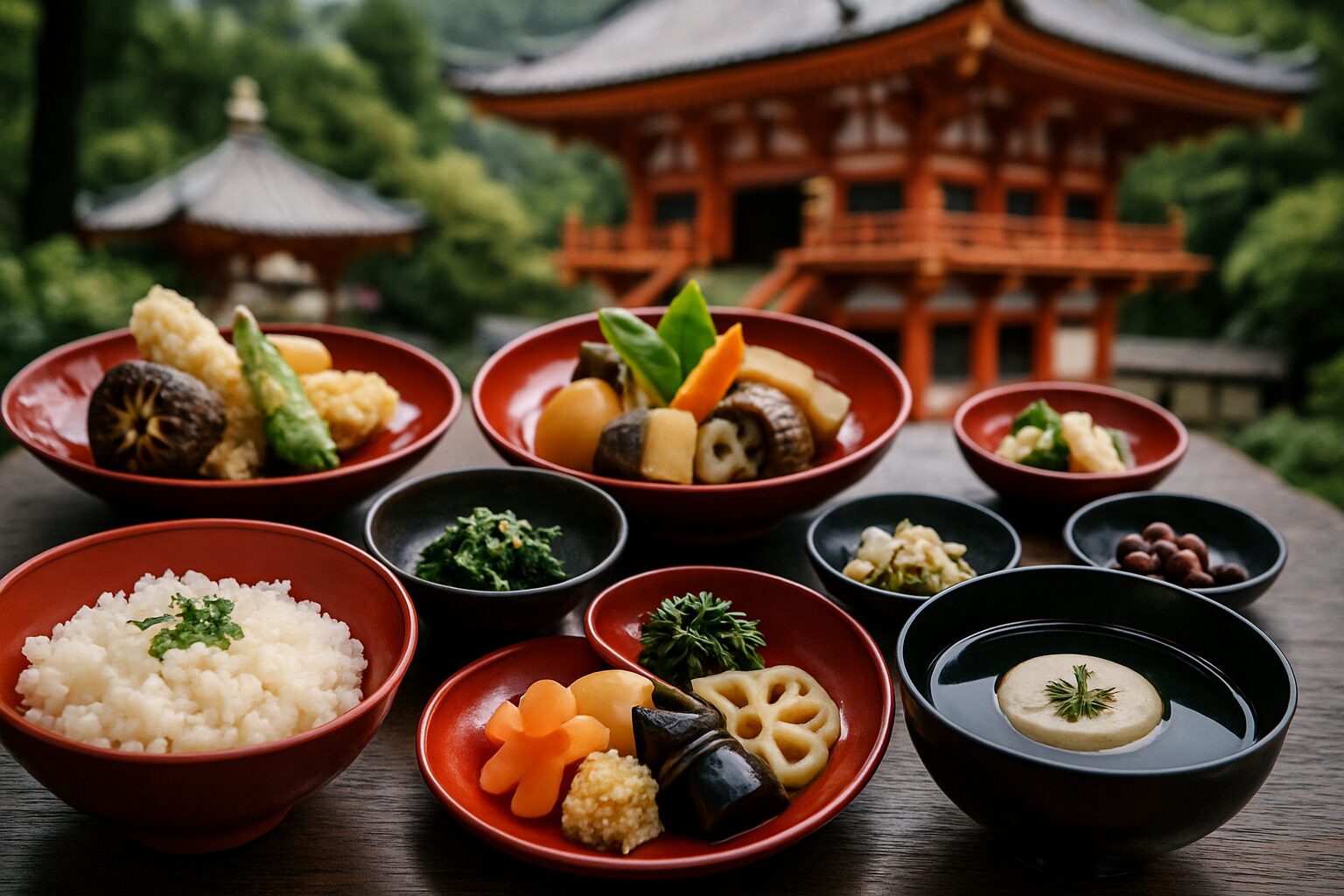
When the meal is served, it’s breathtaking. A beautifully lacquered tray holds a dozen small, exquisite dishes. You might begin with goma-dofu. Unlike regular tofu made from soybeans, this is crafted from sesame paste and arrowroot starch. Its texture is sublime—rich, creamy, and melting in your mouth, leaving a nutty aroma of roasted sesame. It perfectly introduces the cuisine’s subtlety and depth. Then comes the nimono, a simmered dish, perhaps tender daikon radish, sweet kabocha, and a piece of koya-dofu. This freeze-dried tofu acts like a sponge, soaked with the complex savory-sweet flavors of the kombu-shiitake dashi it was simmered in. Each bite releases comforting, umami-rich broth.
A small bowl might hold aemono, a dressed salad, possibly blanched spinach with a sweet, nutty ground sesame dressing—a simple yet perfect pairing. The agemono, or fried dish, showcases lightness. Seasonal vegetables—a shiso leaf, lotus root slice, asparagus spear—are dipped in a feather-light batter and fried crisp, served with a pinch of sea salt to highlight their natural sweetness. The meal centers around a bowl of perfectly cooked white rice and a small bowl of miso soup with a deep, flavorful broth made from vegetable stock. Naturally, there are tsukemono, Japanese pickles, offering a sharp, crunchy, salty contrast that refreshes the palate between bites.
To reach Shitennoji, take the train to Tennoji Station or Shitennoji-mae Yuhigaoka Station on the subway; it’s a short walk from either. For the most tranquil experience, visit on a weekday morning. The temple grounds are quieter, allowing you to fully absorb the atmosphere before your meal. Remember, the etiquette is simple: be quiet, respectful, and express your gratitude. Eating every last grain of rice is not just polite; it honors the food and embodies the philosophy of no waste.
Beyond Shitennoji: Discovering Other Sacred Spaces
While Shitennoji is a magnificent starting point, the true joy lies in exploring off the beaten path. Osaka and its surrounding areas are dotted with smaller temples, some offering more intimate, personal Shojin Ryori experiences. Let me share a place, not found in any guidebook, discovered on a recent trip—let’s call it Seiryu-ji, the Temple of the Clear Stream—nestled in the green hills north of Osaka near Minoo.
The journey itself was part of the experience. It involved taking a local Hankyu line train to a small, sleepy station, then following a winding path away from residential streets into a dense bamboo grove. The air grew cooler, carrying the scent of damp earth and green leaves. After a twenty-minute walk, I saw it: a simple wooden gate weathered by time, bearing the temple’s name carved into it. There were no crowds, no tour buses, only the sound of a small stream trickling nearby and bamboo leaves rustling in the breeze.
I had reserved weeks in advance by phone—a nerve-wracking process given my awkward Japanese. An elderly monk with a kind, wrinkled smile greeted me at the entrance and led me to a small room overlooking a stunning moss garden. The garden was a miniature green world dotted with smooth river stones and a stone lantern—this was my dining room. Only one other table was occupied by a silent elderly couple.
The meal here differed from Shitennoji’s. It felt more rustic, more deeply connected to the surrounding forest. The monk explained that many ingredients were foraged from the temple’s mountain land. The centerpiece was a stunning platter of sansai tempura, featuring wild vegetables I’d never seen before, each with a unique earthy flavor. There was a clear soup, or suimono, with a single perfectly round rice cake (mochi) and a floating yuzu peel that released an incredible citrus aroma. The tofu was homemade at the temple, firmer and richer in soybean flavor than any I’d tasted before, served simply chilled with freshly grated ginger and soy sauce.
The entire meal was a form of meditation. With no distractions, my senses sharpened. I could taste the subtle sweetness of carrot, earthy depth of burdock root, and delicate perfume of mitsuba leaf. The monk didn’t rush me—he softly explained each dish and then left me to contemplate my food and the view. Dining at Seiryu-ji was a reminder that the most luxurious experiences don’t depend on price or fame but on simplicity, authenticity, and a profound connection to place. Finding these hidden treasures takes some research and courage, but the reward is a memory that stays with you forever.
The Craft and Artistry of Shojin Ryori

To truly appreciate Shojin Ryori, it is helpful to look beyond the plate and recognize the immense skill and profound mindset involved in its creation. The temple kitchen is a place of discipline and mindfulness, where the chef is more than a cook—they are a practitioner channeling Buddhist principles through their craft. Every step, from washing the rice to slicing a vegetable, is carried out with intention and precision.
The Chef’s Mindset: A Spiritual Practice
Preparing Shojin Ryori is regarded as a form of shugyo, or spiritual training. It demands patience, humility, and a deep respect for the ingredients. The aim is not to impose the chef’s will on the food but to bring out its natural, inherent flavors. This requires intimate knowledge of each vegetable, its texture, best season, and the optimal cooking method to showcase its essence.
A crucial skill for a Shojin chef is the art of making dashi. This essential Japanese broth forms the base of many dishes, delivering vital umami flavor. While standard Japanese cuisine typically uses bonito flakes (katsuobushi) to make dashi, this is prohibited in Shojin Ryori. Instead, chefs craft an incredibly rich and satisfying broth solely from plant-based ingredients. The highest quality kombu kelp is gently steeped in water without boiling, extracting a delicate oceanic flavor free of bitterness. Rehydrated dried shiitake mushrooms add a deep, earthy, almost smoky umami. Occasionally, dried gourd skins (kanpyo) or toasted soybeans are included for added depth. Mastering this vegan dashi is a lifelong endeavor, infusing many dishes with their signature, soul-nourishing flavor.
Knife skills are equally essential. Vegetables are cut with meticulous precision, not only for visual appeal but to ensure even cooking and proper texture. A daikon radish might be sliced into impossibly thin, translucent sheets, or a carrot carved into shapes like a maple leaf or cherry blossom to reflect the season. This is more than decoration; it expresses reverence for the ingredient and delights the diner.
The Beauty of the Presentation
The final aspect that elevates Shojin Ryori to an art form is its presentation. The meal becomes a visual poem, a carefully arranged landscape on a tray. The principles of Japanese aesthetics, especially wabi-sabi—the appreciation of beauty in imperfection and impermanence—are deeply woven into how the food is presented. Nothing is perfectly symmetrical or ostentatious; rather, there is a sense of natural, understated elegance.
Choosing the tableware is vital. Each dish is presented in a unique bowl or on a small plate selected for its texture, color, and form to complement the food it contains. You might find a rustic, earth-toned ceramic bowl for a hearty stew, a delicate porcelain dish for a brightly colored pickle, and a lacquerware bowl with a lid for the soup, preserving its aroma until the moment it is lifted. The food’s arrangement itself is an art. It’s never heaped; instead, it embraces space and balance, drawing attention to the natural colors and shapes of the ingredients. A single, vibrant green maple leaf might be used as a garnish in autumn, or a dish served on a large, glossy magnolia leaf in summer. These subtle touches link the meal directly to nature and the current season, crafting a harmonious and immersive dining experience that engages all the senses.
Practical Guide for the First-Timer
Feeling inspired to try it yourself? That’s wonderful. Enjoying a Shojin Ryori meal in a temple can become one of the most memorable highlights of your visit to Japan. To ensure everything goes smoothly, here are some practical tips to guide you through your first experience.
How to Book and What to Expect
First and foremost: you must make a reservation. Walk-ins are not accepted. Shojin Ryori is prepared with great care, and ingredients are sourced fresh specifically for the number of guests expected. Most places require booking at least a few days, and sometimes even weeks, in advance—especially at well-known temples or during peak tourist seasons. You might need a Japanese-speaking friend or your hotel concierge to assist you with the reservation, as many smaller temples don’t have English-speaking staff or online booking systems.
When booking, you will usually select a set course menu, or omakase. À la carte options are rarely available. The price is fixed per person, with several course choices offered at different price points; the more expensive ones generally include additional dishes or rarer seasonal ingredients. Be prepared for the cost—this isn’t an inexpensive meal. Prices range from about 5,000 yen for a simpler course to well over 15,000 yen per person for a more elaborate experience. Remember, you’re paying not simply for the food but for the meticulous craftsmanship, high-quality ingredients, the serene and beautiful setting, and a unique cultural immersion. It’s an investment in an unforgettable experience.
Make sure to inform them of any serious allergies or dietary restrictions when booking, though the cuisine is inherently vegan and mostly gluten-free (note that soy sauce contains gluten, so celiacs should check). Avoid requesting too many special modifications; the menu is thoughtfully designed by the chef to provide a balanced, holistic experience. Trust their expertise.
Temple Etiquette for Diners
Dining at a temple is a special privilege, and observing proper etiquette reflects respect for the place and its traditions. Dress neatly and respectfully. You don’t need formal attire, but avoid shorts, tank tops, or anything overly revealing. Smart casual is a safe choice. You will likely be asked to remove your shoes before entering the dining area, so wear clean and presentable socks.
Once seated, maintain a quiet and calm demeanor. This is a contemplative space, so speak softly and avoid loud conversations or laughter. Put your phone on silent and keep it away. The aim is to be fully present, focusing on the meal and the surroundings.
When the food arrives, it’s customary to put your hands together and say itadakimasu before beginning to eat. Though often translated as “bon appétit,” it carries a deeper meaning—it expresses gratitude to the plants (and animals, in other contexts) that gave their lives for the meal, as well as to the farmers, cooks, and everyone involved in bringing the food to your table. Likewise, when you finish, say gochisosama deshita, meaning “thank you for the feast,” acknowledging the effort and care behind the meal.
Handle the elegant bowls and dishes with care. When drinking soup directly from the bowl, hold it with both hands. Most importantly, try to eat every last bite you’re served, down to the final grain of rice. This is the ultimate sign of respect for the food and embodies the principle of mottainai—a deep appreciation that nothing should be wasted. It shows you have truly received the nourishment and spirit of the meal with gratitude.
Leaving the temple grounds after a Shojin Ryori meal is a unique sensation. The bustling energy of Osaka feels different—its sharp edges softened. You feel calmer, lighter, and more in tune with your surroundings. It’s not just about enjoying a delicious vegetarian meal; it’s about participating in a centuries-old tradition that harmonizes food, art, and spirituality. It serves as a quiet rebellion against the fast-paced, consumer-driven world, reminding us that the most profound experiences often come from simplicity. In a city known for its bold and lively spirit, discovering the gentle, mindful essence of Shojin Ryori is like uncovering the true, deep soul of Osaka.