You hear the name whispered before you ever see the place. Nishinari. Even in a city as famously direct and unpretentious as Osaka, this ward comes with a warning label. Other Japanese people, even fellow Osakans from up north in Umeda or out in the suburbs, might lower their voice. “Ah, Nishinari,” they’ll say, their expression a mix of caution and intrigue. “Be careful over there.” The internet paints a grim picture, full of stark, black-and-white photos and sensationalist headlines about crime, poverty, and the yakuza. It’s branded as Japan’s largest slum, a place forgotten by the country’s economic miracle, a black hole on the otherwise pristine map of urban Japan. This is the story you’re told, the one-dimensional caricature of a place that is, in reality, infinitely more complex, human, and, in its own way, profoundly Osakan. To truly understand the soul of Osaka, to grasp the city’s capacity for resilience, its raw honesty, and its deep-seated skepticism of authority, you have to understand Nishinari. Not as a tourist attraction or a social experiment, but as a living, breathing community with its own rhythm, its own rules, and its own undeniable heart. This isn’t a guide on where to go; it’s an exploration of what it feels like to be there, to peel back the layers of myth and witness the unvarnished reality of daily life in Osaka’s most misunderstood corner.
To further explore the raw, unfiltered side of Osaka, consider a visit to the neighboring Shinsekai district.
The Ghost of Kamagasaki: Understanding the Historical Weight
To truly understand Nishinari today, you need to delve into its past, focusing on a neighborhood within the neighborhood—an area whose name has been officially erased from maps but remains vivid in the minds of people across Japan: Kamagasaki. This ghostly district, now often called Airin-chiku, stands as the historical and psychological heart of everything that shapes Nishinari’s reputation. It is the origin, the source of warnings, and the root of the area’s fierce, worn pride. Without this background, Nishinari is just a collection of bleak statistics; with it, it becomes a narrative of Japan’s modern history, of the men who built the dream and were subsequently left behind in its shadow.
A Name Missing from the Map
Kamagasaki’s tale mirrors post-war Japan’s explosive growth. As the country rose from devastation, it needed countless workers—millions of them. Men from struggling rural villages and impoverished coal-mining towns across the nation flocked to bustling cities in search of employment. Osaka, a major industrial and commercial hub, drew them in. Kamagasaki became the epicenter, a vast, informal hiring ground for day laborers known as hiyatoi rōdōsha. These men laid the concrete for expressways, erected the skyscrapers defining the Umeda skyline, and built pavilions for the famed 1970 World Expo in Osaka. They powered the economic miracle. They lived in cheap inns called doya—a play on the syllables of yado, the standard word for inn—a cynical twist reflecting the impermanence of their lives. Rising before dawn, gathering in the dark, they hoped a foreman in a truck would choose them for the day’s grueling labor. It was a tough life, yet it was a life with purpose and, for a while, a paycheck. The issue is that booms don’t last forever. As Japan’s economy shifted from heavy construction to high-tech and finance, and as this original generation of workers aged, worn down by decades of labor, the demand for their skills disappeared. They had no corporate pensions, no family support to fall back on. Kamagasaki, where they had come seeking work, became their only home. The lively labor market gradually transformed into a sprawling district for the elderly, the unemployed, and the unwell.
The Reverberations of Riots and Resistance
The neighborhood’s volatile reputation isn’t entirely unjustified, but its context is often omitted. Throughout the latter half of the 20th century, Kamagasaki witnessed more than twenty riots. The word “riot” (bōdō) evokes images of chaotic violence, but in Kamagasaki, these uprisings were seldom random. They were eruptions of long-standing frustration, often triggered by specific incidents of police arrogance or misconduct. A laborer’s traffic accident or allegations of police brutality often ignited these flare-ups. For a community that felt ignored and disrespected by authorities, constantly surveilled and suspected, such incidents were the breaking point. The riots were raw, desperate pleas to be seen and treated with basic dignity. This history of conflict stamped Kamagasaki’s—and by extension, Nishinari’s—image in the national consciousness as a lawless, dangerous zone. It became a place where Japan’s usual societal rules—emphasizing harmony and respect for authority—seemed not to apply. This was not solely a neighborhood of poverty; it was a place of resistance, which made it genuinely frightening to the mainstream.
How History Influences Today’s Atmosphere
This historical burden still lingers in Nishinari. You feel it on the streets. There’s a tangible sense of being outsiders looking in. Relations with authority, especially the police, remain tense. Police patrol these streets more frequently than in other parts of Osaka, but they move cautiously, while residents watch them with a seasoned, weary gaze. This shared history nurtures a strong, almost defiant independence. It’s a community that has learned to depend on itself because it rightly believes that no one else will protect it. This isn’t the cheerful, inviting spirit of a tourist-friendly area; it’s a quieter, deeper solidarity born from collective hardship. The past here isn’t just history—it’s an invisible framework shaping every interaction and defining the character of this place. It accounts for the distrust, the pride, and the profound resilience evident in the faces of the old men who continue to call these streets home.
Decoding the Nishinari Soundscape: What Daily Life Actually Feels Like
Forget the frantic energy of Namba or the polished commercialism of Umeda. The rhythm of Nishinari is an entirely different creature. It moves slower, rougher, and resonates on a completely different frequency. To truly grasp life here, you need to listen to its distinctive soundscape, observe its unique economic pulse, and stroll through its weathered shopping arcades. It is within these everyday sensory details that the authentic texture of the neighborhood emerges, worlds apart from the glossy brochures of modern Osaka.
The Morning Rush That Isn’t a Rush
The day in Nishinari begins early, but not with the familiar roar of commuter trains packed with office workers. The first sound you hear is the clatter of steel shutters rising on small shops, followed by the soft murmur of voices. By 5 AM, the area near the Airin Labor and Welfare Center is already waking up. This spot is the modern version of the old open-air labor market. Elderly men, their faces marked by hard-lived years, gather in small groups, smoking, coughing, and waiting. They hope to find work in construction or cleaning, though jobs have grown far scarcer than before. A quiet tension lingers in the air—a mix of hope and resignation. The scent is a unique blend of cheap canned coffee from vending machines, tobacco smoke, and the faint, greasy aroma of grilled offal (horumon) from a stall open through the night. As dawn breaks, the soundscape broadens: the tinny, cheerful jingle of a pachinko parlor opening, the clatter of bicycles—the main mode of transport here—and the rough greetings exchanged among men who have known one another for decades. This isn’t a rush to get ahead; it’s a slow, deliberate ritual of survival, confronting another day.
The Economy of 100 Yen
Nishinari functions on a different economic level, a world where the 100-yen coin reigns supreme. This is the most visible sign of the local reality. Vending machines are ubiquitous, serving as a lifeline. They don’t just offer green tea and Coke; they provide hot corn soup, sweet red bean porridge, and even hot noodles in a can, all for a single coin. This isn’t a novelty, but a source of affordable nourishment. Prices across the board echo a bygone era. Tiny eateries serve bowls of udon or soba for 200 or 300 yen. Bento boxes, filled with rice, a piece of fried fish, and some pickles, are available for as low as 250 yen. The undisputed symbol of this low-cost economy is Super Tamade, a supermarket chain unique to Osaka, famous for its retina-burning neon lights, chaotic hand-written signs, and legendary 1-yen sales. You can buy a pack of noodles or a head of cabbage for only one yen, provided you meet a minimum purchase threshold. Super Tamade isn’t just a grocery store; it embodies Nishinari’s economic philosophy: stretch every last yen as far as it can go. It is a lively, essential community hub—a place where backpackers, elderly residents, and young families all search for the best deals, their paths crossing beneath the flashing lights.
The Social Fabric of the Shotengai
To find the heart of the community, you must walk through its shotengai, or covered shopping arcades. Forget the pristine, brightly lit arcades of Shinsaibashi. Nishinari’s arcades, like Haginochaya Hon-dori, are older, dimmer, and more worn at the edges. Paint peels from some storefronts, and a few shutters remain closed permanently. Yet they are far from lifeless. They serve as the neighborhood’s public square, its living room. Here you’ll find an elderly woman selling handmade pickles from a wooden barrel, her stand unchanged for fifty years. Next door is a cluttered shop dealing in second-hand electronics, tools, and mismatched dishware. A tiny café offers coffee to a group of old men playing shogi (Japanese chess), their game punctuated by gruff laughter and the clicking of wooden pieces. Shop owners know their customers by name. They inquire about each other’s health, gossip, and complain about the weather. This is where the social safety net, though frayed, is woven. People watch out for one another in small, unspoken ways. It’s a place of human connection beyond the formal economy, a testament to the community’s resilience amid ongoing hardship.
The People of Nishinari: Beyond the Stereotypes
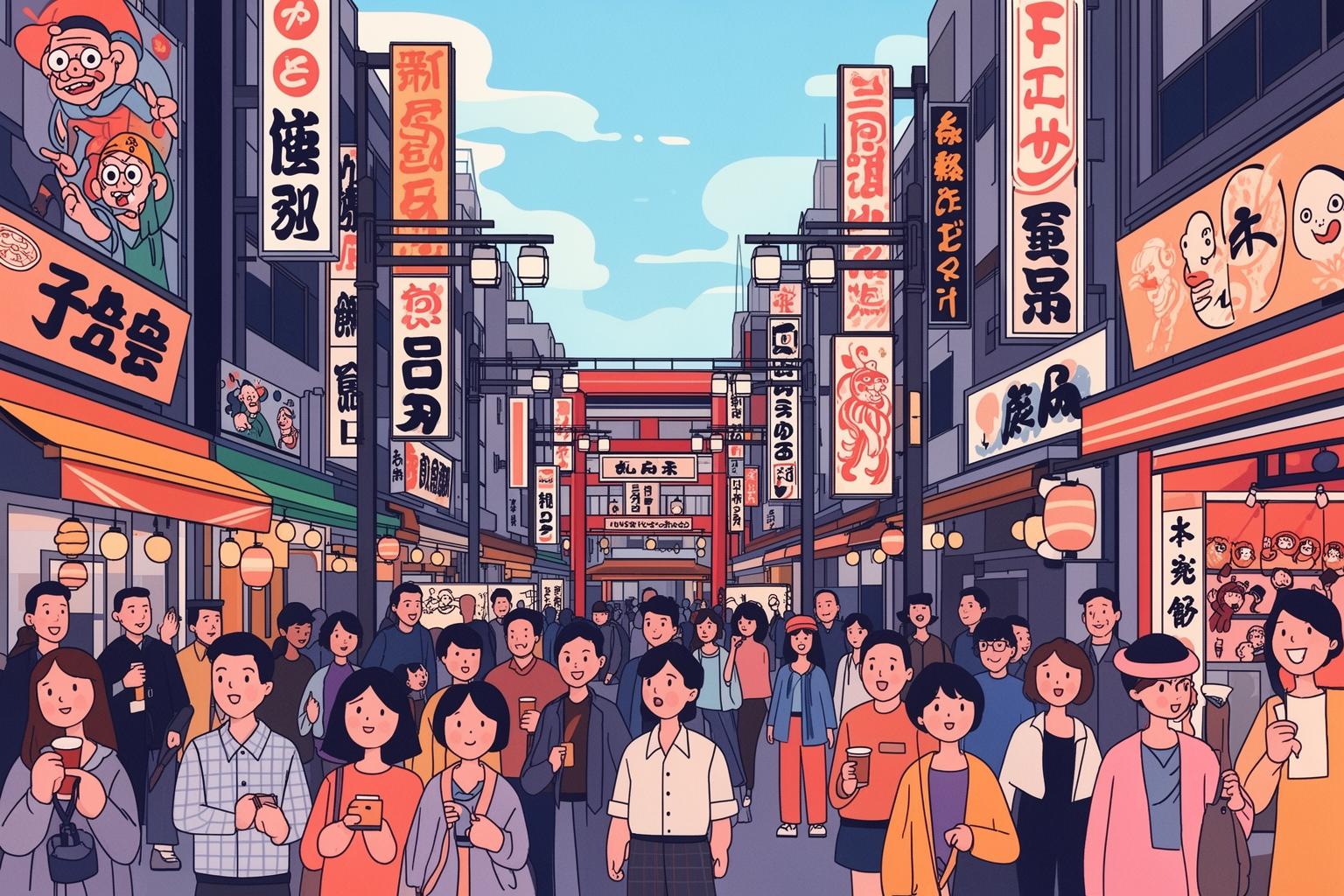
The story of Nishinari is frequently portrayed through grim statistics and wide-angle shots of deserted streets. However, this portrayal overlooks the most crucial element: the people. The residents of this ward are far from a monolithic group. They are not merely “the homeless” or “the poor.” They are individuals with personal histories, dignity, and complex lives. The population is a captivating, and sometimes startling, blend of the old generation who built the neighborhood and the new influx of people drawn here for their own reasons. Understanding these groups is essential to viewing Nishinari not as a problem to be fixed, but as a place to be truly understood.
The Aging Generation of Builders
The heart of Nishinari still lies with the elderly men seen everywhere—sitting on park benches, shuffling along the shotengai, or quietly sipping cheap shochu outside convenience stores. These are the last of the hiyatoi rōdōsha. It’s easy to overlook them, focusing only on their weathered faces, worn clothing, and sometimes vacant expressions. But doing so misses the point completely. These men are living history. They are the carpenters skilled with traditional tools, the steelworkers who balanced on girders high above the city, the plumbers and electricians who wired a nation for modern life. A quiet pride remains. It shows in the careful way one might arrange his few possessions on a piece of cardboard, creating order amid chaos. It appears in the gruff kindness shown to a stray cat, sharing a small portion of a meager meal. Stripped of much by economic shifts and an unforgiving society, their dignity remains fiercely intact. Their story serves as a poignant, tragic reminder of the human cost of progress.
The Influx of New Faces: Backpackers and Artists
Over the past decade, an unusual new dynamic has emerged in Nishinari. The very factors that make it a place of last resort for some have attracted others. The numerous doya—inexpensive daily lodgings—have caught the attention of international budget travelers. Many of these old inns have rebranded as guesthouses and hostels, offering beds for as little as 1,500 yen per night. This has created the surreal vision of young European and Australian backpackers with oversized luggage rolling their bags down the same streets where elderly Japanese men push carts laden with scrap metal. These two worlds coexist but rarely intersect meaningfully. Backpackers are often unaware of the area’s deep and troubled history; to them, it’s simply an affordable place to stay near a major train station. Alongside them are young Japanese artists, musicians, and social activists, drawn by the remarkably low rents and what they perceive as the neighborhood’s “authenticity.” They find creative freedom here, away from the commercial pressures and social conformity of other parts of Japan. Opening small galleries, performance spaces, and community cafés, they create pockets of a new bohemian culture. This results in a fascinating, sometimes tense layering of communities: the aging day laborers, transient backpackers, and aspiring artists, all sharing the same space, each holding their own version of Nishinari.
A Different Kind of Community
This diverse mix of people brings with it a unique social code. The primary rule in Nishinari is to mind your own business. This is not the cold indifference typical of big cities, but a deliberate, respectful choice to give people their space. You don’t stare at the man talking to himself. You don’t inquire about the woman with the scarred face. You don’t judge. Everyone is assumed to be battling their own struggles and is granted the privacy to do so. This can be deeply liberating. In a country like Japan, where social pressure (sekentei, or public appearance) is intense, Nishinari offers an oasis from judgment. Here, you can dress however you want, look however you want, and be yourself without the constant fear of scrutiny by neighbors. This unspoken pact creates a unique kind of freedom. The community here isn’t based on shared interests or social rank, but on a mutual understanding of hardship and a shared wish to be left alone. It’s a community of non-interference, which for many is more valuable than any polite, superficial neighborhood association.
Is Nishinari Dangerous? A Practical Guide for Residents
This is the question that always arises. It’s the first thing people ask and the fear that shapes the neighborhood’s entire reputation. Should Nishinari be avoided? Is it safe for a foreigner to live in or even just walk through? The answer, like much about this area, isn’t a simple yes or no. It demands nuance and a clear distinction between perceived danger and actual risk. The truth is, the legend of Nishinari’s danger is far more powerful than the everyday reality, but that doesn’t mean you can wander around without caution.
Separating Myth from Reality
The main fear linked to Nishinari is violent crime. People picture getting mugged, assaulted, or caught in a yakuza turf war. For the average person, especially foreign residents, the chances are extremely low—probably no higher, and maybe even lower, than in the bustling entertainment districts of Namba or Shinjuku. The yakuza have a presence, as they do in many such districts across Japan, but their affairs rarely involve random civilians. Most crime here is petty and opportunistic—like bike theft or unattended bags being taken. Most disputes happen between residents who know one another and are often alcohol-fueled. The neighborhood follows its own internal logic. As an outsider, as long as you don’t interfere, you remain largely invisible and therefore safe. The fear surrounding Nishinari is psychological, rooted in anxieties about poverty, mental illness, and social decay. It’s the visual shock of encountering conditions many in Japan prefer to ignore.
Navigating with Awareness, Not Fear
This is not to say you should be careless. The best approach to moving through Nishinari is street-smart awareness, not paralyzing fear. The same rules that apply in any tough urban area worldwide apply here: don’t flaunt expensive jewelry, cameras, or large amounts of cash. Watch your belongings carefully. Walking at night is generally okay but sticking to well-lit main streets is advisable. Above all, be respectful. This is a residential community, not a zoo or tourist attraction. The residents are not exhibits. Taking photos without explicit permission is deeply disrespectful and likely to provoke hostility. Don’t be a “poverty tourist.” Move quietly and respectfully, mind your own business, and you’ll be treated with the same respect. For women, it’s important to recognize the atmosphere can feel more intimidating. The population is predominantly older men, and a lone woman, especially a foreign woman, can attract stares. While direct harassment is uncommon, the sensation of being watched can be unsettling. This concern is valid and reflects the neighborhood’s demographics.
The Real Dangers: Systemic Neglect, Not Street Crime
If we’re talking real danger in Nishinari, it’s not street crime. The real threat is the quiet, creeping danger of systemic neglect. It’s the risk of dying alone and unnoticed in a cheap one-room apartment—a phenomenon so common it has its own name in Japan: kodokushi (lonely death). It’s the danger of chronic health issues like alcoholism and diabetes going untreated. It’s the danger of social isolation in old age without family support. These are the everyday threats that shadow Nishinari’s residents. The tragedy of the neighborhood lies not in violence but in being a place where society’s safety nets have failed. The true danger is being forgotten. Understanding this changes everything. The problem isn’t a few rough individuals on the street; it’s a societal failure in how a wealthy nation cares for its most vulnerable. Walking through Nishinari with this perspective replaces fear with a deep sense of empathy.
Why Nishinari is Quintessentially Osaka
It might seem counterintuitive, but this tough, overlooked corner of the city is perhaps the most genuinely Osakan place you can encounter. It magnifies the city’s defining character traits, stripped of any commercial polish or courteous pretense. While tourists flock to Dotonbori to experience Osaka’s loud energy, Nishinari provides a deeper, more demanding, and ultimately more sincere glimpse into the city’s essence. It embodies the honne—the true feelings and reality—that lie beneath the tatemae, or public facade. To understand Nishinari is to grasp the foundation on which the rest of Osaka rests.
The Unvarnished Honesty
Osaka is renowned across Japan for its straightforwardness. People here tend to speak their minds, for better or worse. Compared to the famously reserved and indirect communication style of Tokyo, Osaka feels refreshingly, sometimes brutally, honest. Nishinari represents the extreme of this spectrum. There are absolutely no pretenses here. Life is lived openly. Struggles aren’t hidden behind closed doors. Joy is found in simple pleasures—a warm can of coffee, a lucky pachinko ball, a friendly conversation on a street corner. This is a place stripped bare of vanity. There is no pressure to keep up appearances, wear the right brands, or project success. This radical honesty is a fundamental part of Osaka’s identity, and in Nishinari, it’s not just a personality trait; it’s a matter of survival. It’s a rawness that can be jarring, but also deeply authentic.
A Spirit of “Nantoka Naru” (It’ll Work Out Somehow)
A common phrase in the Osaka dialect, nantoka naru, captures a kind of pragmatic, fatalistic optimism meaning roughly “it’ll work out somehow” or “we’ll manage.” It’s not blind hope that things will improve, but a gritty determination to keep going, to find a way through each day. This spirit is the lifeblood of Nishinari. Despite immense structural poverty, aging populations, and social isolation, people persist. They find small means to earn money, build community, and share laughter. They gather in parks to play shogi, share cigarettes, and care for stray cats. The neighborhood’s fabric holds a profound resilience. It’s not pretty, nor inspiring in a Hollywood sense. It’s a stubborn, gritty refusal to vanish, a tribute to the human spirit’s capacity to move forward even when the path is nearly blocked. This is Osaka’s toughness—the ability to bounce back from anything life throws its way.
The City’s Hidden Foundation
Ultimately, Nishinari shouldn’t be seen as an anomaly or a blot on Osaka’s image; rather, it should be recognized as its foundation. The gleaming towers of Umeda, the busy subways, and elevated expressways didn’t emerge fully formed. They were built by the hands and on the backs of the men who now spend their final years in Nishinari’s cheap inns and cramped apartments. The neighborhood stands as a living tribute to the human cost of Japan’s economic miracle. It is the city’s memory, its conscience. To ignore, fear, or isolate it as “someplace else” is to deny Osaka’s full history. To truly know this city, you must be willing to see it all, not just the bright, shiny parts. You have to walk the streets of Nishinari and witness not just poverty, but the pride of its builders. Not just despair, but the fierce spirit of survival. In this misunderstood, maligned, and stubbornly resilient ward, you will find the raw, unapologetic, and unforgettable soul of Osaka.