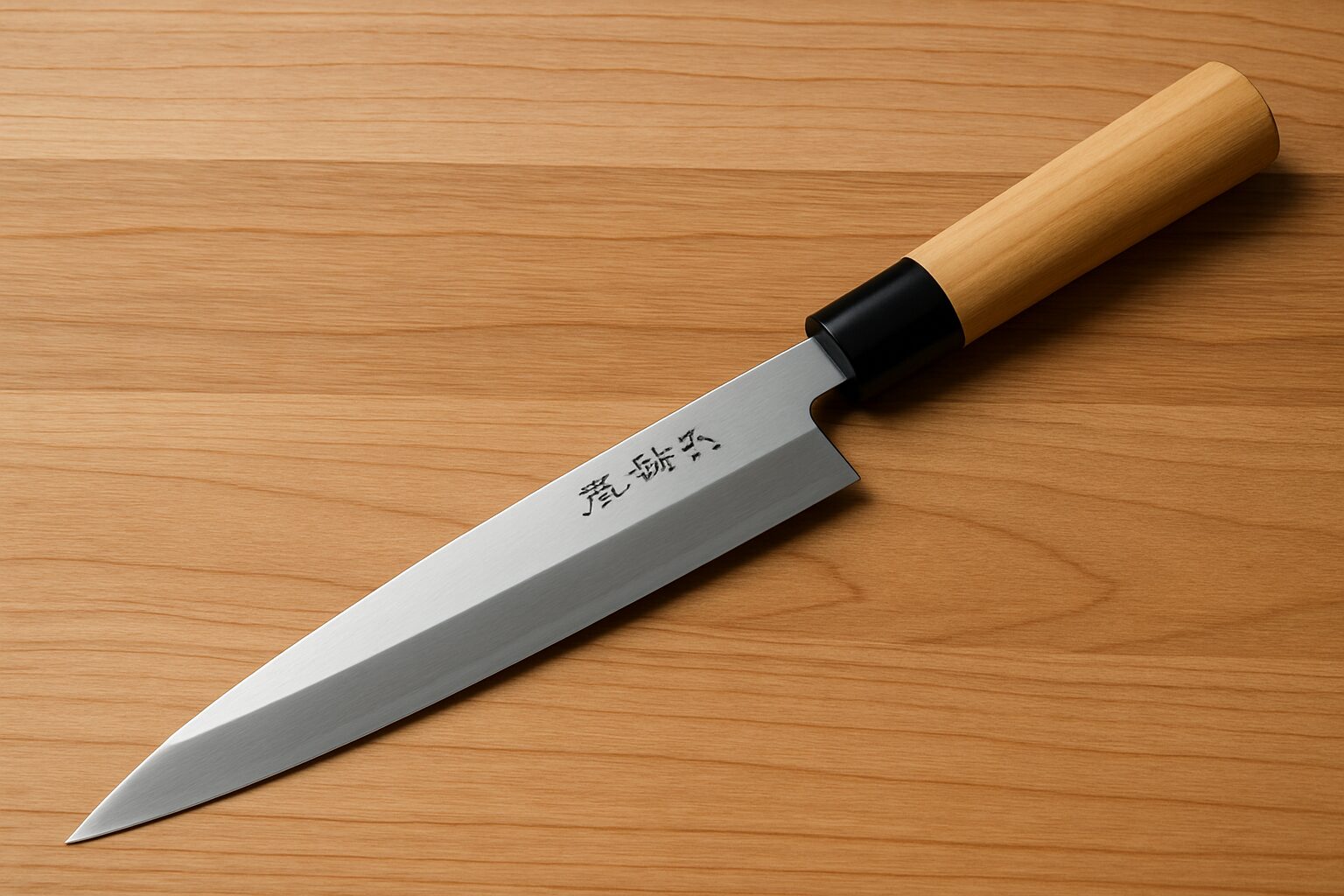
Just a short train ride south from the electric hum of Osaka’s Namba district, the air changes. The neon glow fades into a softer, more deliberate light, one that seems to emanate from the workshops and quiet streets of Sakai City. This is a place built on the sharp edge of history, a city whose identity was forged in fire and hammered into shape by generations of master artisans. To understand Sakai is to understand the soul of Japanese craftsmanship. It’s the birthplace of the sushi knife, the silent partner in every perfect slice of maguro, the tool that transforms a simple fish into a culinary masterpiece. Long before Tokyo became the bustling metropolis we know today, Sakai was a vibrant international port, a crucible of culture, and the cradle of industries that would define Japan for centuries. It’s a city where ancient, keyhole-shaped tombs of emperors slumber under manicured parks, and where the clang of a blacksmith’s hammer still rings out, a rhythmic heartbeat connecting the past to the present. A journey here is more than a day trip; it’s a pilgrimage to the source, a chance to feel the weight of history in your hand and taste the culture it created.
To delve deeper into the city’s culinary legacy and its world-renowned blades, explore our full feature on Sakai’s knife-making heritage.
The Echo of the Hammer: Uncovering Sakai’s Legacy of Blades
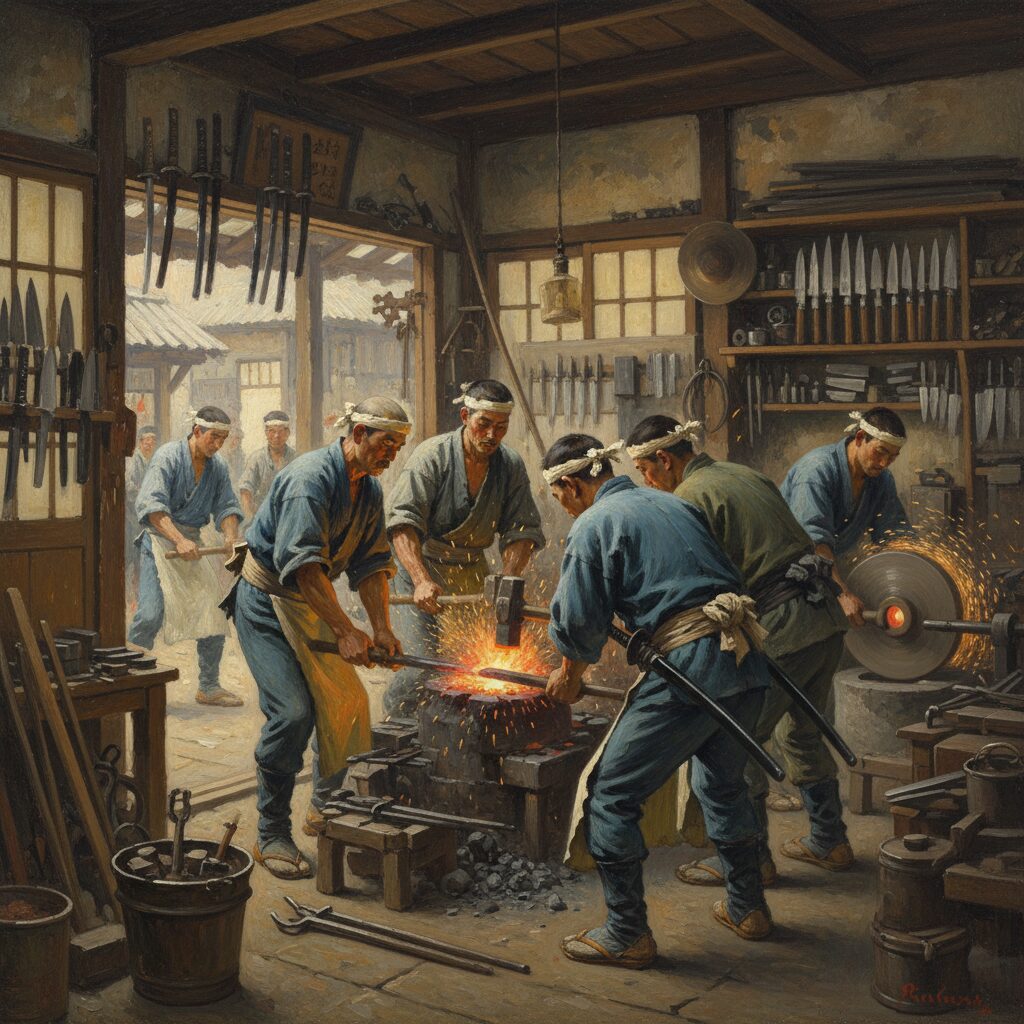
The story of Sakai is forged in steel. It’s a tale that starts not with cuisine, but with power and ambition. The very soil here carries a metalworking heritage that extends over 1,600 years. This deep-rooted connection to craftsmanship wasn’t formed suddenly; it was nurtured through centuries of necessity, innovation, and an unrelenting pursuit of perfection. As you walk through the city, you can almost sense the echoes of its industrial history, a faint pulse beneath the rhythm of modern life. It’s evident in the street names, the design of the older buildings, and most strikingly, in the sparks flying behind the doors of its renowned workshops. Sakai isn’t merely a place that produces knives; it’s a city that embodies the spirit of the blade—the fusion of raw metal and human intention to create tools of extraordinary beauty and functionality. The artisans of Sakai are not simply manufacturers; they are guardians of a sacred tradition, each one a vital link in an unbroken chain of knowledge handed down across generations.
From Swords to Sushi Knives: The Craftsman’s Journey
The saga of Sakai’s blades began in the Kofun Period, around the 4th and 5th centuries. This was a time marked by the building of massive burial mounds for the elite, the most famous of which are found here in Sakai. Constructing these monumental tombs, such as the Daisen Kofun—one of the largest graves in the world—demanded enormous labor and, importantly, superior iron tools. The need for strong shovels, plows, and hoes drove the advancement of sophisticated forging techniques, establishing the region as a hub for metalworking. Local blacksmiths became masters of their craft, their expertise highly sought for producing the tools that would help build an empire. This foundation of practical, resilient metalwork paved the way for Sakai’s future. The city’s destiny shifted in the 16th century with the arrival of the Portuguese. Along with firearms, they introduced tobacco to Japan. The Japanese quickly adopted smoking, creating a new demand: a sharp, precise knife to cut tobacco leaves. Sakai’s adept blacksmiths, already famous for their tool-making ability, adapted their craft and produced the first tobacco-cutting knives. Their superior quality earned them a special seal of approval from the ruling shogunate, granting them a monopoly and cementing their reputation nationwide. When the peaceful Edo Period began, demand for samurai swords declined. Blacksmiths who once forged weapons of war redirected their skills to craft tools for everyday life. They incorporated the same techniques of lamination, tempering, and sharpening to make kitchen knives, or hocho. This was not a downgrade but an evolution, channeling the essence of the samurai blade into instruments of culinary artistry. What distinguishes Sakai’s knife-making tradition, known as Sakai Uchi-hamono, is its unique system of divided labor. Unlike other regions where a single craftsman might create a knife from start to finish, Sakai developed a collaborative, assembly-line method of specialists. One artisan, the smith (kajiya), forges the blade by welding the hard steel cutting edge (hagane) to the softer iron body (jigane). Another shapes and grinds the blade, while a third sharpens it to a razor edge (hamono-togi). Finally, a handle maker (e-tsuke) attaches the wooden handle. This specialization allows each craftsman to attain exceptional mastery in their specific task, resulting in a product of extraordinary quality and consistency. It is a symphony of craftsmanship, with every expert performing their role flawlessly.
The Anatomy of a Hocho: What Makes a Sakai Knife Unique?
To hold a Sakai knife is to recognize that not all blades are created alike. It is a precision instrument—balanced and elegant—designed for a particular purpose. The realm of Japanese knives, or hocho, is vast and intricate, with Sakai at its heart. The most iconic knife is the Yanagiba, meaning “willow leaf blade.” This is the classic sushi and sashimi knife, featuring a long, slender, single-beveled blade designed to slice fish with a single, smooth pulling motion. This technique prevents tearing of the delicate flesh, preserving texture and flavor while creating a glossy, flawless cut surface. Using a Yanagiba is akin to painting with a brush; it demands skill and grace, and the knife becomes an extension of the chef’s intent. Next is the Deba, a heavy, robust knife. With its thick spine and sturdy blade, it is the kitchen’s workhorse, used for butchering and filleting whole fish. Its weight allows it to cut through bones and cartilage easily, yet it retains a sharp edge for detailed work. The Usuba, or “thin blade,” specializes in vegetables. With its straight, flat edge and thin profile, it excels at making paper-thin slices, performing decorative cuts like katsuramuki (rotary peeling), and preparing vegetables with surgical precision. A defining feature of these traditional Japanese knives is their single-bevel edge. Unlike Western knives, which are usually sharpened symmetrically on both sides, a Yanagiba or Usuba is honed predominantly on one side, with the opposite side slightly concave. This design creates a sharper cutting angle and helps separate the slice from the food, preventing it from sticking to the blade. This precision is essential to the aesthetics and texture of Japanese cuisine. The steel itself embodies complexity. Many of Sakai’s finest knives are forged from high-carbon steels like Shirogami (White Steel) or Aogami (Blue Steel). These steels achieve remarkable hardness and maintain a razor-sharp edge far longer than typical stainless steel. However, they require careful maintenance, as they can rust if not properly dried and oiled. This is the trade-off for superior performance—a knife that becomes a treasured possession, maintained through ritual that deepens the bond between user and tool. For those seeking easier upkeep, many Sakai makers also produce outstanding knives from stainless steel alloys, offering an excellent balance of sharpness, durability, and ease of care.
A City Forged in Time: Beyond the Blade
Though steel forms the sharpest edge of Sakai’s identity, the city’s history is rich and multi-layered, extending back to an era of emperors and mystics. The landscape itself narrates a tale of power, reverence, and artistic elegance. Exploring Sakai means uncovering these layers, revealing a cultural depth that grounds its world-renowned crafts. The same precision and respect for form found in knife-making resonate in the ancient tombs and the profound tea ceremony tradition. These intertwined histories share a common source in Japanese aesthetic and spiritual values. In Sakai, one can spend a morning contemplating the vastness of a 1,600-year-old tomb and the afternoon admiring the microscopic exactness of a blade’s edge. This dual nature—grand history alongside intimate craftsmanship—is the true essence of the city.
Whispers of Emperors: The Mozu-Furuichi Kofun Group
Long before the first knife was crafted, Sakai stood as a center of power in Japan. This is evident in the massive, keyhole-shaped burial mounds called kofun, scattered throughout the city’s landscape. Built during the Kofun Period from the 3rd to 6th centuries, these tombs house emperors and powerful clan leaders. The entire collection, known as the Mozu-Furuichi Kofun Group, holds UNESCO World Heritage status, underscoring its global historical significance. The group’s highlight is the Daisen Kofun, traditionally linked to Emperor Nintoku. By surface area, it is among the largest tombs worldwide, even surpassing the Great Pyramid of Giza. Standing at its edge, its full scale is not immediately apparent—it resembles a dense, man-made forest encircled by three protective moats, a tranquil, sacred green island amidst urban life. The main mound itself is closed to the public out of respect for the imperial family, but a worship area at the front allows visitors to honor the site and sense its grandeur. To truly grasp the kofun’s geometry and scale, the viewing platform on the 21st floor of Sakai City Hall is an ideal spot. From there, the iconic keyhole shape emerges clearly—a remarkable feat of ancient engineering. For a deeper insight, the Sakai City Museum in Daisen Park, adjacent to the tomb, offers invaluable exhibits. It displays artifacts excavated from smaller surrounding kofun—pottery, armor, and clay figures (haniwa)—that vividly illustrate the culture and technology of the era. Renting a bicycle is the best way to explore the scattered kofun. Cycling through Daisen Park and the peaceful residential streets surrounding these ancient sites feels magical. It is a journey through time, where turning a corner can reveal a 1,500-year-old mound, a silent monument to a forgotten ruler, its moat reflecting the modern sky.
The Way of Tea: Sen no Rikyu and the Soul of Simplicity
Sakai’s influence stretches beyond its physical artifacts of tools and tombs into the philosophical realm of aesthetics. During the 15th and 16th centuries, as a prosperous, independent port city led by wealthy merchants, Sakai became a crucible for the arts. It was here that Sen no Rikyu, the most venerated figure in the history of the Japanese tea ceremony, was born and developed his philosophy of wabi-cha. This concept champions simplicity, tranquility, and the beauty found in imperfection. It stripped away the previously ostentatious luxury of the tea ceremony to focus on a meditative appreciation for the moment, the tools, and the bond between host and guest. This philosophy of deeply valuing simple, carefully crafted objects and mindful actions aligns perfectly with Sakai’s craftsmanship spirit. The admiration for a hand-forged knife, with its subtle irregularities and flawless balance, stems from the same cultural roots as that for a hand-thrown tea bowl. To immerse oneself in this heritage, a visit to Sakai Risho no Mori, or the Sakai Plaza of Rikyu and Akiko, is essential. This elegant cultural center honors two of Sakai’s most renowned figures: Sen no Rikyu and the pioneering female poet Yosano Akiko. Here, visitors can participate in an authentic tea ceremony inside a meticulously reconstructed tea house, gaining direct insight into Rikyu’s principles. Exhibits showcase his life and the understated tea utensils he cherished. The experience reveals a crucial aspect of Sakai’s spirit—the quiet focus, meticulous attention, and reverence for objects—the same values found in the intense, noisy environment of a blacksmith’s workshop. In Sakai, the paths of the sword, the knife, and the tea ceremony converge in a shared reverence for masterful craftsmanship.
The Modern Pilgrim’s Path: Experiencing Sakai Today

A visit to Sakai is an immersive experience, an opportunity to step beyond the museum and into the living history found in its workshops and markets. It’s a sensory journey: the steady clang of the hammer, the scent of burning coal and hot steel, the intense heat radiating from the forge, and the flavor of seafood so fresh it seems to carry the aroma of the nearby ocean. Here, the past is not only remembered but actively practiced and perfected every day. For today’s traveler, Sakai provides a rare chance to connect directly with artisans, observe their craft firsthand, and appreciate the extraordinary skill and dedication involved in producing these world-famous tools. After witnessing the creation of the blade, you can experience its true purpose by savoring the local sushi culture, a culinary tradition elevated by knives forged just streets away.
Stepping into the Workshop: Where Steel Comes to Life
The heart of Sakai’s craft district pulses within its workshops, many of which are small, family-run businesses passed down through generations. Entering one feels like stepping into another realm. The air is thick with the metallic aroma of grinding wheels and quenching oil. Walls, darkened by decades of soot, are lined with tools of all shapes and sizes arranged in deliberate disorder. At the center stands the forge and the artisan, a figure of intense focus. Watching a master smith work is captivating. They pull a piece of layered steel from the glowing forge, its orange heat so bright it’s nearly blinding. Then begins the hammer’s dance—a rapid, precise rhythm of blows that shape, weld, and refine the metal. Sparks fly in a brilliant cascade with every strike. The process is simultaneously violent and graceful. Many workshops and showrooms welcome visitors, offering a glimpse into this hidden world. Places like the Sakai Traditional Crafts Museum provide demonstrations and exhibits that detail the entire process. For a more intimate experience, visits to renowned knife shops such as Jikko or Mizuno Tanrenjo can be deeply rewarding. Here, you can often watch artisans sharpen blades with astonishing speed and precision on large, rotating water stones. Some workshops even offer hands-on opportunities, from knife sharpening classes to attaching handles to your own blade. These experiences are priceless, turning a simple purchase into a lasting memory. When selecting a knife, staff in these specialty shops are highly knowledgeable. Don’t hesitate to seek their advice—they’ll inquire about your cooking habits, the types of food you plan to cut, and your comfort with maintenance. They will encourage you to handle different knives, feeling their weight and balance. This step is crucial; a knife should feel like a natural extension of your hand. It’s not just an investment in a cooking tool but a piece of functional art that embodies the spirit of the city in its steel. A helpful tip for visitors: always ask permission before taking photos or videos, especially close-ups of the artisans. These are active, sometimes hazardous workplaces, and respect is essential. Booking tours or classes ahead of time is strongly recommended, as many places are small and have limited capacity.
A Taste of Tradition: Sakai’s Local Sushi Scene
With a legacy rooted in crafting the world’s finest sushi knives, it’s no surprise that Sakai boasts a vibrant and delicious culinary scene. The city’s proximity to Osaka Bay ensures a steady supply of incredibly fresh seafood, and local chefs, equipped with locally forged blades, know exactly how to handle it. The quality of the cut is vital in sushi, and in Sakai, the difference is palpable. Fish is sliced with such precision that its texture remains perfectly preserved, its surface smooth and jewel-like, blending seamlessly with the vinegared rice. One of Sakai’s local specialties is Anago, or conger eel. Often grilled or gently simmered in a sweet soy-based sauce, Sakai’s anago is renowned for its delicate softness that melts in your mouth. It features prominently on many sushi menus as a highlight. To truly experience Sakai’s seafood culture, a visit to the Sakai Fish Market (Sakai Sakana Shijo) is essential. Smaller and less touristy than other famous Japanese markets, it offers an authentic, bustling atmosphere. The best time to visit is early morning, when auctions take place and local restaurateurs select their daily catch. Several small eateries and sushi counters within the market serve the freshest sushi breakfasts possible. There’s something uniquely special about enjoying sushi just steps from where the fish was sold, knowing it was likely cut with a knife made only a few kilometers away. Beyond the market, Sakai presents a variety of dining options. High-end, intimate sushi counters invite guests to savor an exquisite omakase meal, with master chefs proudly explaining each piece. Cozy, family-run neighborhood restaurants also serve excellent sushi at more affordable prices. These local favorites offer a wonderful glimpse into the everyday life of Sakai’s residents.
Practical Guidance for Your Sakai Journey
Sakai is conveniently situated and easy to explore, making it an ideal destination for a day trip or a longer stay for those wishing to immerse themselves deeper in its culture. With a bit of planning, navigating the city and its various attractions is straightforward, allowing you to fully absorb the unique atmosphere of this historic artisan town. Whether you’re traveling by train, tram, or bicycle, Sakai reveals its charms at a relaxed, unhurried pace. Some practical knowledge will help you maximize your time, ensuring a smooth and memorable journey into the heart of Japanese craftsmanship.
Getting There and Around
Reaching Sakai from central Osaka is very easy. The most direct way is by Nankai Railway lines from Namba Station. The Nankai Main Line takes you to Sakai Station, which is convenient for the old town and waterfront area. For visits to the Kofun group and Sakai City Museum, the Nankai Koya Line to Sakaishi Station is the better option. The trip is quick, usually about 15 to 20 minutes, making it a simple escape from the city center. Once in Sakai, one of the most charming ways to get around is by the Hankai Tramway. Known affectionately as the “Chin-Chin Densha” for the sound of its bell, this is one of the last remaining streetcar lines in Osaka. It runs from the Tennoji area in Osaka south through Sakai, connecting many key sites along the route. Riding the tram is an experience in itself, offering a slow-paced, scenic view of the city’s neighborhoods and everyday life. To explore the expansive Daisen Park and Mozu Kofun Group, renting a bicycle is undoubtedly the best choice. Rental stations are located near the park and major train stations. The area is flat and bike-friendly, letting you easily visit ancient tombs at your own pace, stopping to enjoy the scenery whenever you like. It provides a sense of freedom and discovery unmatched by other transportation options.
Planning Your Visit: Tips and Timing
Sakai can be enjoyed all year round, as its main attractions don’t rely heavily on specific seasons. However, spring (March to May) and autumn (October to November) offer the most comfortable weather for walking and cycling. The cherry blossoms around the kofun moats in spring are especially beautiful. A major highlight in the local calendar is the Sakai Matsuri, held in mid-October. This lively festival features a grand parade with historical costumes, traditional performances, and numerous food stalls, providing a festive and vibrant glimpse into the city’s culture. For a well-rounded one-day itinerary, start your morning in Daisen Park. Visit the Sakai City Museum to gain historical context, then explore the Daisen Kofun and surrounding tombs by bicycle. In the afternoon, head to the traditional crafts district to tour a knife workshop or showroom. End your day with an exceptional sushi dinner at a local restaurant. For international travelers purchasing a knife, remember it must be packed in your checked luggage for your flight home. The shops are experienced with this and will securely package it for you—just be sure not to carry it in your hand luggage. A final tip for first-time visitors: don’t hesitate to wander. Some of Sakai’s greatest treasures lie in its quiet backstreets, where you may stumble upon a small shrine, a traditional sweet shop, or a little workshop not found in any guidebook. The city rewards the curious traveler.
Sakai is more than just a point on the map; it is a living embodiment of Japanese dedication to mastery. It’s a city that chose not to forget its past but to sharpen it, refine it, and carry it onward into the future. Holding a perfectly balanced knife forged here, you feel a connection to centuries of artisans who perfected its form. Tasting sashimi cut with that very blade reveals that this is not just about food; it’s about a culture of precision and respect. Sakai teaches us that the greatest art often lies in the everyday tools we use, and that true quality is timeless. It’s a quiet city with a powerful story, waiting to be discovered just south of Osaka—a story of emperors, merchants, and masters, all woven together by a single, gleaming thread of steel.