Hey everyone, Sofia here! Let’s dive deep into the heart of Osaka, past the neon glow and the foodie paradise of Dotonbori, to a place where time itself seems to flow differently. We’re talking about Sumiyoshi Taisha, the Sumiyoshi Grand Shrine. This isn’t just another pretty picture for your feed; it’s a journey into a Japan that existed long before the sweeping curves of Buddhist temples dotted the landscape. It’s a place of raw power, maritime legends, and an architectural rhythm that feels utterly unique. Imagine stepping onto grounds where prayers for safe sea voyages have been whispered for nearly two millennia. It’s a spiritual anchor in a city of constant motion, a serene sanctuary where you can feel the pulse of ancient Japan. Before you even cross the first gate, you feel a shift in the air—the city’s hum fades, replaced by the rustle of thousand-year-old camphor trees and the crunch of sacred gravel underfoot. This is where the story of Osaka, the great port city, truly begins, with gods of the sea and poetry. Get ready to explore a world of vibrant vermilion, starkly beautiful lines, and timeless rituals. It’s a masterpiece of pure, undiluted Japanese spirit, and trust me, it’s absolutely captivating.
While the shrine’s architecture stands apart from the sweeping curves of later Buddhist temples, the region is also famous for its mastery of metal, as seen in the legendary knives of Sakai.
The Crimson Gateway: Crossing the Sorihashi Bridge

Your journey at Sumiyoshi Taisha begins with its most iconic and awe-inspiring feature: the Sorihashi Bridge, also known as the Taiko-bashi or drum bridge due to its strikingly steep, semi-circular arch which reflects perfectly in the pond below, forming a complete circle like a drum. Forget about a gentle incline; this is a climb! The instant you see it, you’ll understand why it is such a celebrated attraction. The vermilion lacquer is so vivid it seems to pulse against the blue sky and the surrounding lush greenery. It is a bold, confident splash of color amidst serene greens and earthy tones.
Approaching it, you leave the everyday world behind. The path leading to the bridge often hums with a soft energy—families snapping photos, couples pausing at its base—yet the bridge itself demands a quiet reverence. Its steep steps compel you to slow your pace and watch your footing carefully. As you climb, you can sense the history in the smooth, worn wood beneath your hands on the railings. Reaching the top feels like a triumph. You are elevated, gazing down at the shimmering pond where turtles bask on the rocks. The view back toward the entrance and forward into the main shrine grounds is breathtaking. This bridge is more than a physical crossing; it is a symbolic one. In Shinto tradition, crossing a bridge like this represents purification, cleansing you of impurities before you present yourself to the kami, the shrine’s deities. You are both literally and metaphorically rising above the mundane world to enter a sacred space. It is a profound, tangible experience, and the photos you capture from the summit, with the shrine’s distinctive roofs in the background, are simply stunning. My advice? Wear sturdy shoes! This is no place for unstable heels. Take your time, enjoy the gentle breeze at the apex, and let that moment of purification truly resonate.
A Blueprint of Belief: The Soul of Sumiyoshi-zukuri
Once you cross the Sorihashi Bridge, you enter the heart of the shrine, where you encounter an architectural style so pure and ancient it feels like a direct message from the past. This is Sumiyoshi-zukuri, a design that is entirely Japanese, free from any continental influence from Buddhism or Chinese architecture. It’s one of the oldest styles in existence, and seeing it firsthand is like gazing upon the very DNA of Japanese sacred design.
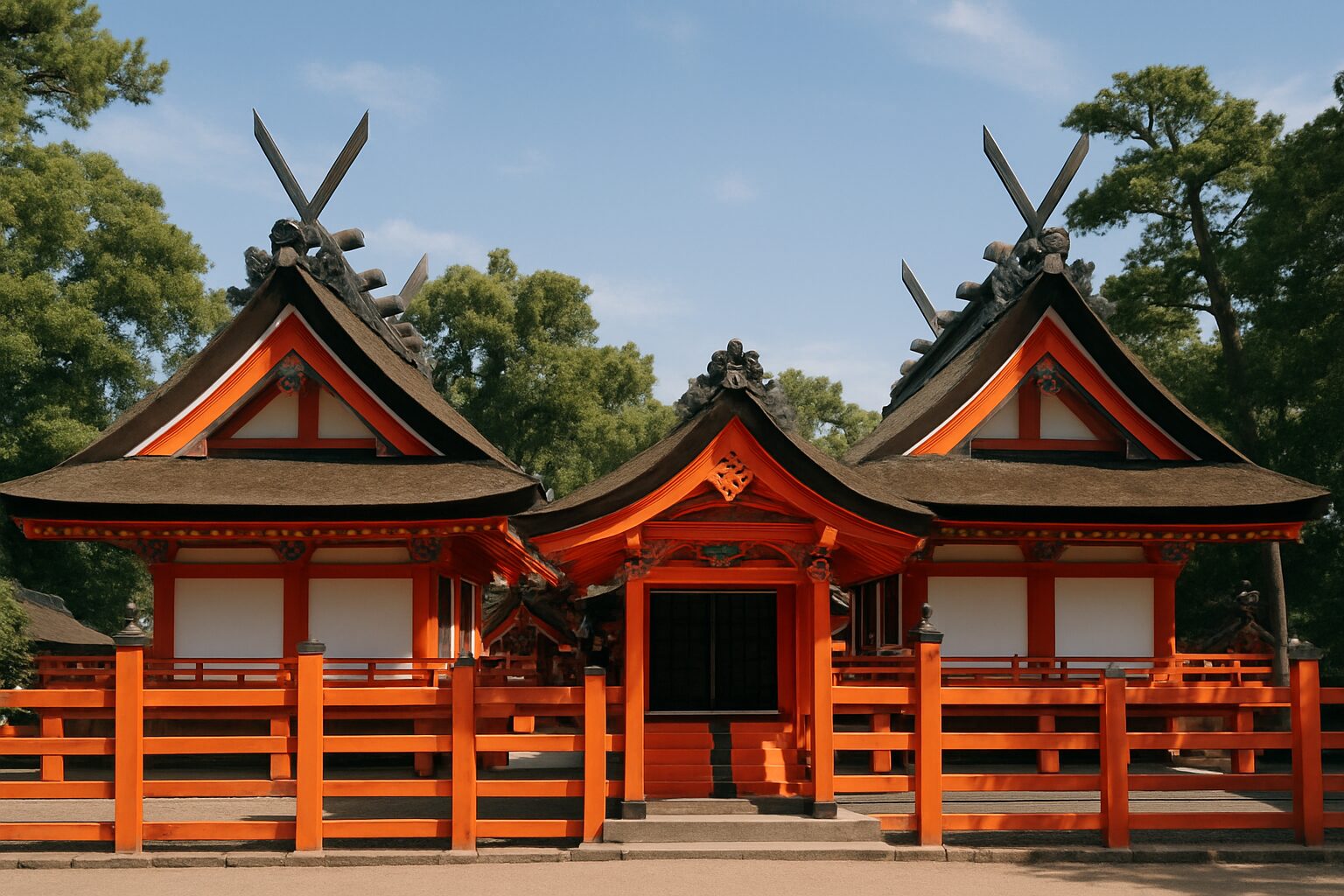
The first thing that catches your eye is the roofs. They are straight and gabled, unlike the elegant, sweeping curves typically associated with temples in Kyoto. The lines are clean, strong, and simple. The gables end in prominent, crossed finials called chigi that reach toward the sky, while heavy, log-like billets known as katsuogi lie across the roof ridge. These features lend the buildings a sense of rustic strength and authority. The walls are made of planks and painted a brilliant white, which contrasts strikingly with the vermilion of the columns, fences, and roof details. The combination is bold and highly photogenic.
What’s truly captivating is the layout of the main sanctuaries, the honden. There are four arranged in a straight line, one behind the other, like a fleet of ships heading toward the sea. This arrangement is extremely rare. The first three halls are dedicated to the Sumiyoshi Okami, the three gods of the sea and sailing, while the fourth honors the legendary Empress Jingu. This distinctive westward orientation, facing what was once the coastline, directly reflects the shrine’s purpose: to protect seafarers, travelers, and the nation’s maritime endeavors. Standing before them, you can almost smell the salty air and hear the prayers of ancient sailors entrusting their lives to these powerful deities. Though the structures are not massive, they carry immense spiritual weight. There is an honesty and groundedness to them. You’re not meant to be overwhelmed by scale but drawn in by the purity of form. It’s an architecture that doesn’t shout; it speaks with a quiet, confident, and ancient voice.
Whispers of the Kami: Deities of the Sea, Poetry, and Power

To fully appreciate Sumiyoshi Taisha, one must understand the powerful spirits, or kami, who dwell here. The shrine is chiefly dedicated to the Sumiyoshi Okami: Sokotsutsu no Onokami, Nakatsutsu no Onokami, and Uwatsutsu no Onokami. These three deities emerged from the sea during a purification ritual performed by the creator god Izanagi-no-Mikoto after his return from the underworld. As a result, they have a profound connection to the ocean and have served for centuries as patron gods of sailors, fishermen, and all who travel over water. Imperial envoys would stop here to pray for safe passage on missions to Korea and China, while warriors, including many renowned samurai, sought their blessings before naval battles. This maritime link is at the heart of Sumiyoshi Taisha and underscores its historical significance to Osaka, a city founded on trade and sea routes.
The fourth main hall honors another powerful deity: Okinagatarashihime-no-Mikoto, better known as Empress Jingu. A semi-legendary empress, she is said to have led a successful invasion of Korea following her husband’s death. The Sumiyoshi Okami appeared to her, promising protection and victory for her fleet. Upon her victorious return, she established this shrine to honor them. Her enshrinement here connects the maritime gods with imperial authority and military strength. Together, these four kami embody a formidable protective force, safeguarding everything from safe travels to national security. Yet their influence extends beyond the sea. Over time, the Sumiyoshi Okami have also been revered as gods of Waka poetry, the classical Japanese style of verse. This artistic connection adds an additional layer of cultural depth to the shrine, making it a source of inspiration for artists and writers alike.
The Living Grounds: Finding Your Own Power Spot
The magic of Sumiyoshi Taisha reaches well beyond its four main halls. The extensive grounds are filled with smaller shrines, ancient trees, and interactive spiritual spots that encourage more than just casual observation. This is a place to engage, explore, and truly feel the land’s energy. One of the favorite activities is seeking out the Omokaru-ishi, or Heavy-Light Stone, located near a smaller shrine. The ritual is simple and enjoyable: first, make a wish and bow, then lift the medium-sized stone. After setting it down, focus more deeply on your wish and lift it again. If the stone feels lighter the second time, it is believed your wish is heading toward fulfillment. It’s a delightful tradition that brings smiles to everyone, whether the stone cooperates or not!
As you venture further into the grounds, you’ll enter what feels like an ancient forest. The stars here are the giant camphor trees, or kusunoki, some of which are thought to be over a thousand years old. Their enormous, twisted trunks and expansive canopies create a sacred ambiance. Standing beneath one, you experience a deep sense of peace and stability. These trees are considered sacred and are often decorated with a shimenawa, a holy rope, marking the presence of a kami within.
For those seeking a truly unique blessing, be sure to visit the Godairiki power spot. Hidden behind the Ishibutai (Stone Stage) in a small sub-shrine named Gosho-Gozen, you’ll find a stone fence surrounding a pebble-covered area. Your task is to find three specific stones: one inscribed with the character for strength (力), another for wisdom (智), and a third for fortune (福). Locating all three takes patience and concentration, which is part of the charm. Once found, you can purchase a special charm bag at the shrine office to keep them in. It’s believed that carrying these three pebbles grants the five great powers: physical strength, wisdom, wealth, fortune, and longevity. This is a wonderful, personal quest that links you directly to the shrine’s spiritual energy.
The Rhythm of the Year: Festivals, Rituals, and Seasons
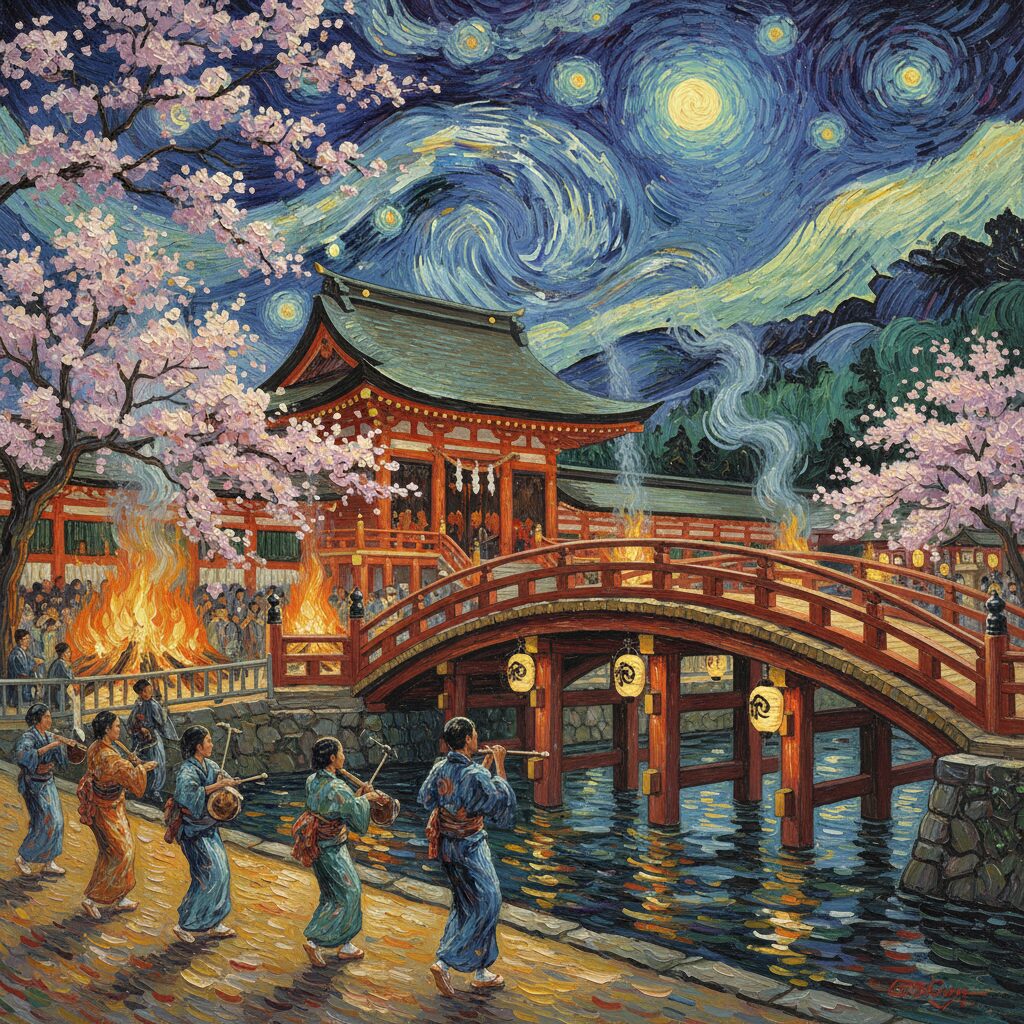
Sumiyoshi Taisha is far from being a static museum; it is a lively, vibrant cultural hub that moves in harmony with the changing seasons. Attending one of its major festivals offers an unforgettable experience that immerses you in the essence of Japanese tradition. The most significant event of the year is the New Year’s visit, or Hatsumode. From New Year’s Eve through the first days of January, the shrine is filled with millions of visitors, making it one of the most popular Hatsumode sites in all of Japan. The atmosphere buzzes with excitement—a joyful, crowded scene, infused with the scents of festive street food and the sounds of bells and prayers. It is a dynamic, bustling, and deeply spiritual way to begin the new year.
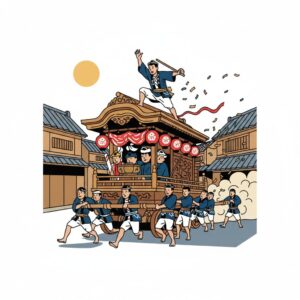
In midsummer, the Sumiyoshi Matsuri takes place at the end of July. This is one of Osaka’s most spectacular summer festivals, showcasing devotion and community spirit on a grand scale. The highlight is a procession where the shrine’s deity is carried in a magnificent mikoshi (portable shrine) through the streets. The procession culminates in a purification ritual, during which the mikoshi is carried into the sea at Sakai to cleanse the deity and pray for the community’s well-being. The energy, traditional costumes, chanting, and sheer spectacle combine to create a truly mesmerizing event.
A more tranquil yet equally beautiful festival is the Otaue Shinji, a sacred rice-planting ceremony held every June. This ancient ritual is performed to pray for a bountiful harvest, with the shrine’s own rice paddy serving as the stage for a graceful ritual. Women in traditional attire, accompanied by courtly music and dance, carefully plant rice seedlings. Recognized as an Important Intangible Folk Cultural Property of Japan, witnessing this ceremony feels like stepping into a living historical painting. It is a deeply cultural and visually enchanting event that offers a different perspective on the shrine’s life.
Beyond the major festivals, each season brings its own unique charm. In spring, the grounds are adorned with cherry and plum blossoms, providing a peaceful setting for a stroll. Autumn colors add vibrant hues, while a quiet winter day, sometimes dusted with snow, reveals a stark and tranquil beauty. No matter when you visit, the shrine is always wrapped in a distinctive seasonal atmosphere.
Your Guide to a Perfect Visit: Access and Insider Tips
Getting to Sumiyoshi Taisha is surprisingly straightforward and adds to the charm of the experience. Although it feels like a world away, it’s very easy to reach from central Osaka. The most direct way is via the Nankai Main Line from Namba Station. It’s a quick, convenient ride to Sumiyoshitaisha Station, and from there, the shrine is just a short walk. For a nostalgic and truly stylish journey, I highly recommend taking the Hankai Tramway, Osaka’s last remaining streetcar line, which is an absolute delight. Board it in the Tennoji area and get off at Sumiyoshi Torii-mae stop, which, as the name indicates, leaves you right in front of one of the shrine’s main torii gates. The gentle, clackety rhythm of the tram winding through local neighborhoods offers a perfect transition from the modern city to the ancient shrine.
Timing your visit is essential to make the most of it. For a peaceful, spiritual atmosphere and the best photo opportunities without crowds, aim for an early morning on a weekday. The light is soft, the grounds are quiet, and you can almost have the place to yourself. You’ll hear the priests’ morning chants alongside the birdsong in the ancient trees. If you seek energy and culture, plan your visit around a festival like the Sumiyoshi Matsuri or the Otaue Shinji, but be ready for large, enthusiastic crowds!
A few helpful tips for your visit: Shrine etiquette is simple but appreciated. When passing through a torii gate, it’s customary to bow once. Before approaching the main halls, stop at the chozuya, the water pavilion, to purify your hands and mouth. Use the ladle to rinse your left hand, then your right, pour a little water into your cupped left hand to rinse your mouth (avoid drinking directly from the ladle!), and finally rinse your left hand again before tilting the ladle to let the remaining water wash down the handle. At the prayer hall, the standard practice is to bow twice, clap your hands twice, say your prayer, and bow once more. Also, bring some cash for purchasing beautiful omamori (good luck charms), which make great souvenirs, or for trying your luck with an omikuji (paper fortune). After exploring the shrine, the surrounding area has charming old-fashioned shops selling traditional sweets, the perfect way to end your spiritual journey with a sweet treat.
An Echo of Eternity in Osaka

Leaving Sumiyoshi Taisha, as you cross once again over the magnificent Sorihashi Bridge, a profound sense of calm and connection washes over you. You have walked on ground that has carried the hopes and prayers of a nation for centuries. You have witnessed an architecture born from the Japanese islands themselves—a design of powerful simplicity that tells a story of reverence for nature and the sea. This shrine is far more than a collection of beautiful ancient buildings; it is a rhythmic link to Osaka‘s soul. It serves as a reminder that beneath the surface of this dynamic, forward-looking metropolis lies an ancient, steadfast heart. Whether you come seeking spiritual solace, architectural marvels, or simply a peaceful escape, Sumiyoshi Taisha offers an experience both deeply personal and universally moving. It’s a journey back in time, a dance with deities, and a quiet moment of reflection that will linger with you long after you return to the city’s vibrant rhythm.