
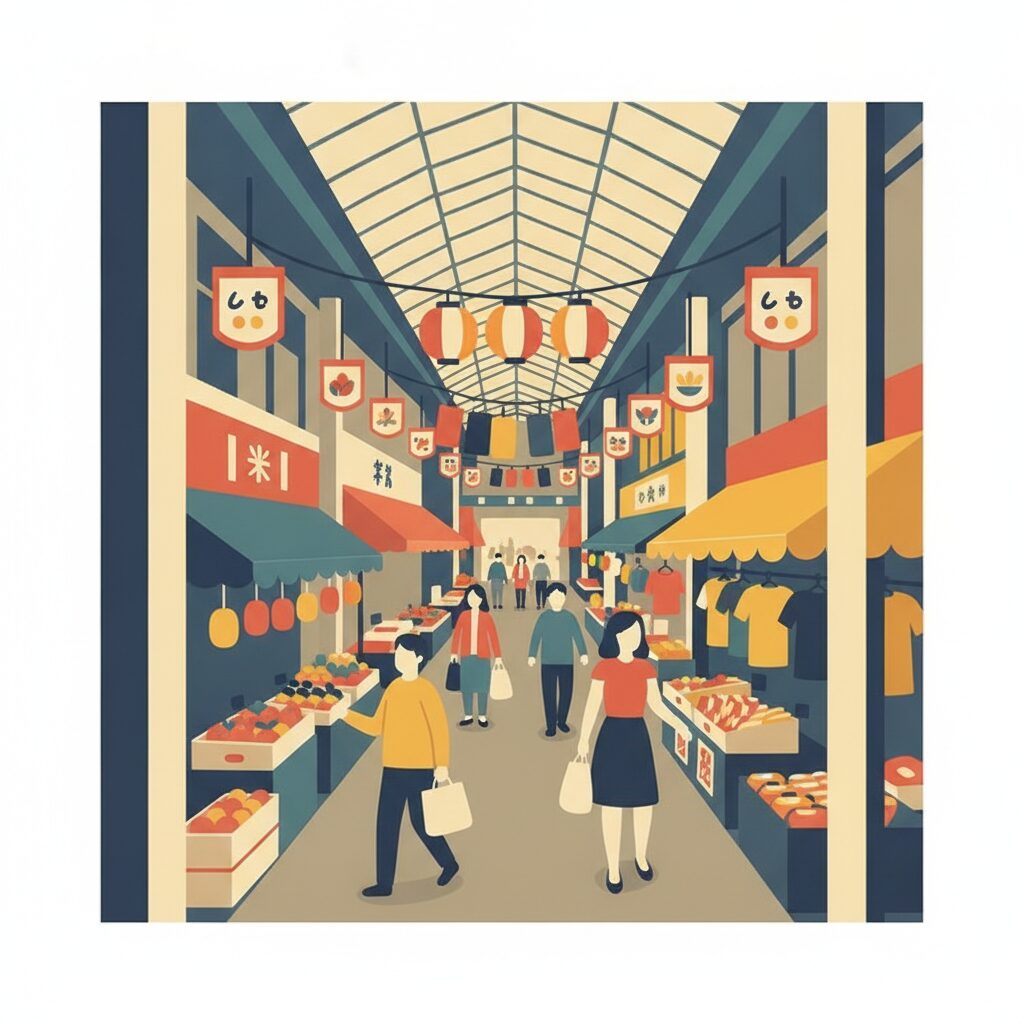
So you’re thinking about life in Osaka, and the first thing everyone says is, “It’s cheaper than Tokyo.” And sure, they’re talking about rent, which is a big piece of the puzzle. But that’s just the surface. The real, deep-down reason your wallet feels heavier here isn’t just about the roof over your head. It’s about what’s in your fridge. It’s about how you buy your onions, your fish, your tofu. The secret to Osaka’s affordability isn’t found in a real estate office; it’s shouted from the stalls of a thousand covered shopping arcades, the lifeblood of the city, the shotengai. Forget the pristine, quiet aisles of a Tokyo supermarket for a moment. Picture something more chaotic, more human, more alive. Picture a place where the price of a tomato isn’t a fixed law of the universe but a fluctuating, living thing. This is where Osaka’s true economic soul resides, in a culture of commerce that’s been honed for centuries. It’s not just about saving money; it’s a lifestyle, a philosophy, and the most authentic daily drama you’ll find in the city. To understand how to live well in Osaka, you first have to understand the shotengai.
Osaka’s shotengai not only keeps your grocery budget in check but also reflects a citywide commitment to affordability, as seen in its competitive hotel rates that further enhance the appeal of living well on a budget.
The Soul of Osaka is a Merchant’s Soul
To understand Osaka, you need to understand its history. For centuries, this city was known as Tenka no Daidokoro—the Nation’s Kitchen. It served as the central hub where rice, produce, and goods from across Japan were gathered, priced, and sold. This was more than just a nickname; it defined the city’s entire identity. That identity remains strong to this day. The spirit of the merchant, the trader, the person who lives and dies by the deal, is ingrained in the DNA of every local. This spirit is reflected in a city-wide focus on one thing: cost performance. It’s not about being cheap, which is a common misconception. An Osakan will gladly pay a high price if they believe the quality justifies it. The aim is maximum value. Why pay 500 yen for an average lunch when you can find an outstanding one for the same price just a couple of streets away? Why buy a perfect-looking apple for 200 yen when a slightly bruised but equally tasty one costs 80 yen? This constant, almost instinctive assessment of value for money drives the local economy.
In Tokyo, you often pay for the experience, the branding, the convenience, and the elegant packaging. A department store food hall in Ginza is like a museum of culinary perfection. Every strawberry is flawless, every bento box a masterpiece, and the prices reflect that. In Osaka, this approach is often seen as superficial. People want the product itself, not the fancy packaging. The shotengai perfectly embody this mindset. They are gritty, no-frills marketplaces with a single purpose: to move goods efficiently and affordably from seller to buyer. The merchant’s soul is not concerned with minimalist aesthetics; it values turnover, fresh stock, and fair prices that keep customers returning. This fundamental difference in values is the most important thing to understand about why daily life here feels so distinct.
Shotengai vs. Supermarket: A Tale of Two Cities
Your choice of where to buy groceries shapes your experience of a city more than you might realize. It’s a daily ritual that reveals the local culture beneath the surface. In this regard, the contrast between Tokyo and Osaka is striking, best illustrated by comparing the modern supermarket to the traditional shotengai.
The Tokyo Supermarket Experience
Step into a typical supermarket in a Tokyo neighborhood. The first thing you notice is the quiet. The floors are spotless, the lighting bright and consistent. Music, if present, is a gentle instrumental loop. The produce is impressive—washed, size-sorted, and neatly sealed in plastic. Packages of three green peppers, a single onion wrapped in cellophane, four uniformly sized potatoes arranged in a plastic tray. It’s a model of efficiency and predictability. You know exactly what you’re getting, with prices clearly marked on tidy little stickers. You grab your basket, fill it up, head to a self-checkout machine, and leave. Human interaction is minimal, and often intentionally so. It’s quick, convenient, and entirely anonymous. You are a consumer completing a transaction. The system is designed for a city that prioritizes time and predictability above all.
The Osaka Shotengai Experience
Now, enter a shotengai like Tenjinbashisuji or Kuromon Market on a weekday afternoon. The difference is a full sensory immersion. The air is thick with the scents of frying tempura, grilling eel, and fresh daikon radish. Instead of soft background music, you hear vendors shouting out loud. “Hona, omake shito-ku wa!” (Alright, I’ll throw in a little extra for ya!). “Kyō no sanma, metcha oishii de!” (Today’s mackerel pike is unbelievably good!). The lighting is a chaotic mix of fluorescent tubes and bare bulbs. The floor is worn concrete. Nothing is uniform. You’re not in a sterile food lab; you’re inside a vibrant, living organism.
Here, you don’t do one big shop. You piece together your dinner, on a treasure hunt for the best deals and highest quality. You visit the elderly man at the tofu stall, who makes it fresh every morning in the back. You move on to the fishmonger, whose hands work with surgeon-like precision, asking what came in from the port that day. Then you head to one of the three competing vegetable stands, where pyramids of produce are heaped in wicker baskets and cardboard boxes. You buy what looks fresh, what’s in season, and what the vendor recommends. It’s a completely different approach to food. It’s not about ticking off a shopping list; it’s about having a dialogue with the market itself.
The Unspoken Rules of the Arcade
This system can feel overwhelming to newcomers. It seems like a club with its own secret language and unwritten rules. But once you understand the code, you gain access to a more affordable and deeply connected lifestyle. Although these rules aren’t documented, they influence every interaction.
“Maido!” – The Currency of Connection
The most essential word in the shotengai is “Maido!” It roughly translates to “each time,” but its true meaning is “Thank you for your business, as always.” It serves as the usual greeting and farewell between shopkeepers and customers. Hearing it for the first time is one thing, but having a vendor say it to you with genuine recognition is another. That’s when you’ve advanced—you’ve become a jōren-san, a regular.
Being a regular is key. In Tokyo’s anonymous supermarkets, every customer is treated the same. In the Osaka shotengai, regulars receive special treatment. The butcher might offer a slightly better cut of meat at the same price. The vegetable vendor might reserve the last good bunch of spinach for you. Most importantly, you receive the gift of omake—a small extra given for free. A few sprigs of green onion, an extra potato, a handful of ginger. Though small, this gesture carries great meaning. It says, “I see you. I appreciate you. Please come again.” This system of loyalty and reward forms the social glue of the shotengai economy. It’s a relationship, not just a transaction.
The Art of the Time Sale and the “Ugly” Vegetable
The shotengai runs on its own unique rhythm. The real excitement starts in the late afternoon, usually around 4 or 5 PM, when the time sale begins. Shopkeepers need to clear out perishable goods before closing. The loud calls grow louder. Prices, written in bold black marker on cardboard signs, are crossed out and replaced with lower ones. A sashimi pack that cost 800 yen at noon might drop to 500 yen by 5 PM. This is when the experts—the neighborhood grandmas with shopping carts—arrive. They know the pattern and act quickly.
Equally important is the culture surrounding the “ugly” vegetable. Supermarkets follow strict cosmetic standards, rejecting any fruit or vegetable that is misshapen, bruised, or discolored. In the shotengai, this is viewed as an opportunity. A whole section may be dedicated to wake-ari (literally, “with a reason”) produce. These include crooked cucumbers, scarred eggplants, and slightly-too-ripe tomatoes. They taste just the same but sell for a fraction of the price. This reflects pure Osaka pragmatism—a philosophy that rejects wastefulness (mottainai) and values substance over appearance. It’s one of the best ways to reduce your grocery expenses while eating fresh, local food.
Is Haggling a Thing? Not Exactly.
Many foreigners assume that bustling markets allow for haggling. This is an important cultural distinction. Direct, aggressive bargaining, like in other parts of the world, isn’t typical here. Attempting to lowball a vendor will likely be met with confusion or offense. Prices are seen as fair for the quality offered.
However, a softer, relationship-based form of negotiation exists. It happens through banter and charm. You might say, “Chotto dake make-rarehen?” (Can’t you give me a little discount?), but with a smile and playful tone. The response might be a laugh and a no, or the vendor might offer an omake instead of cutting the price. The goal isn’t to win a deal; it’s to deepen the social bond. It’s a kind of dance—the more you engage, joke, and become part of the community, the more the market’s unwritten rules will begin to work in your favor.
A Practical Guide to Your First Shotengai Run
Ready to jump in? It’s simpler than it seems. With a bit of preparation and the right mindset, you can easily shift from feeling like an intimidated outsider to becoming a savvy shopper.
Bring Cash, Bring a Bag
Although Japan is modernizing, many small, family-run stalls still operate on a cash-only basis. Credit card fees eat into their slim margins. Arrive with yen on hand, preferably in smaller bills and coins to make transactions smoother. Also, always carry your own shopping bag—or a few—since you’ll be buying from multiple shops, and they don’t always provide bags or may charge a small fee. Bringing your own my bag shows you’re a serious, prepared shopper rather than a tourist.
Do a Lap First
Avoid buying the first thing you see; this is a common rookie mistake. The nature of the shotengai, with its many competing vendors, creates price differences. Walk through the entire arcade once before making any purchases. Take mental notes. The butcher at the north end might charge 100 yen per 100g for chicken breasts, while the one at the south end offers them for 85 yen. The first vegetable stand’s cabbage may look excellent, but one three stalls down might sell it for half the price. This reconnaissance lap is the key strategy of any experienced shotengai shopper. It’s a game, and the goal is the best value.
Learn a Few Key Phrases
Fluency isn’t necessary, but going beyond basic greetings will enhance your experience. Equip yourself with a few useful phrases. Point to an item and ask, “Kore, ikura desu ka?” (How much is this?). Request a recommendation with a simple “Osusume wa?” (What do you recommend?). When paying and leaving, a warm “Maido!” or “Gochisōsama!” (a phrase expressing thanks for the food/effort) will earn you a friendly smile. Making an effort to speak the language, even imperfectly, shows respect for their culture and a desire to be part of it, which is the quickest way to become a welcomed regular.
Why This Culture Persists in the Age of Amazon
In an age of online delivery and 24-hour convenience stores, it may seem unusual that these traditional markets still flourish. The reason lies in their offering something a corporation cannot: community. A shotengai is more than just a shopping spot; it serves as the neighborhood’s living room. It’s where the elderly woman from the tofu shop chats with a young mother pushing a stroller. It’s where local gossip is exchanged and elderly neighbors are checked on. It represents a network of human connection that exists entirely offline.
Shopping here is an act of community investment. The money you spend at the local fishmonger supports his family, not a distant corporate shareholder. It helps preserve unique, specialized skills. This is a form of resistance. It’s a deliberate choice to prioritize human interaction and local character over sterile efficiency. This is what outsiders often overlook when they compare cities with spreadsheets. They see rent prices, but they miss the social fabric. In Tokyo, you may not know your neighbors’ names. In an Osaka neighborhood with a thriving shotengai, the vegetable vendor knows exactly how you like your onions cut. That sense of belonging, of being a recognized and valued part of a place, greatly contributes to what makes Osaka so livable. It’s a feeling difficult to quantify but impossible to ignore. It’s the true value you receive for your yen.








