Osaka is a city of undeniable, unrelenting gravity. It pulls you in with the hiss and sizzle of street food griddles, the collective roar of baseball fans bleeding yellow and black, and the endless neon reflection dancing on the surface of the Dotonbori river. It is a metropolis that never stops talking, never stops eating, and never truly sleeps. You love it. I love it. Anyone with a pulse loves the sheer, unadulterated energy of this concrete jungle. But there is a secret rhythm to life here that you only learn after the honeymoon phase fades and the reality of daily life sets in. You learn that to survive the intense, high-voltage battery of Osaka, you occasionally need to unplug. You need a horizon that is not jagged with skyscrapers. You need air that does not smell like deep-fried batter, sweet soy sauce, and exhaust fumes. You need silence. You need space. And when that realization hits, you do exactly what every seasoned local does. You look west. You grab your car keys. You cross the water. You go to Awaji Island.
Living in Osaka as a foreigner often comes with a steep learning curve regarding personal space and mental downtime. Tokyo is vast and sprawling, allowing you to slip into anonymity. Osaka is compact, dense, and deeply communal. The people are in your space, in your business, and in your heart. It is beautiful, but it is loud. Awaji Island, sitting quietly just across the bay in the Seto Inland Sea, is the antidote to that noise. It is not merely a tourist destination; it is the psychological escape hatch for the entire Kansai region. It is the breadbasket, the onion patch, the dairy farm, and the weekend sanctuary.
However, Awaji is not a place you conquer by train. To truly understand Awaji, and by extension, to truly understand the weekend mindset of an Osaka local, you must understand the art of the Kansai road trip. You have to understand the freedom of the steering wheel, the hum of the highway tires, and the spectacular engineering marvels that connect the urban sprawl to the rural tranquility. This is not just about seeing flowers or whirlpools. This is about the ritual of leaving the city behind. This is about the deep sigh of relief that happens the moment your tires leave the mainland and hit the suspension bridge.
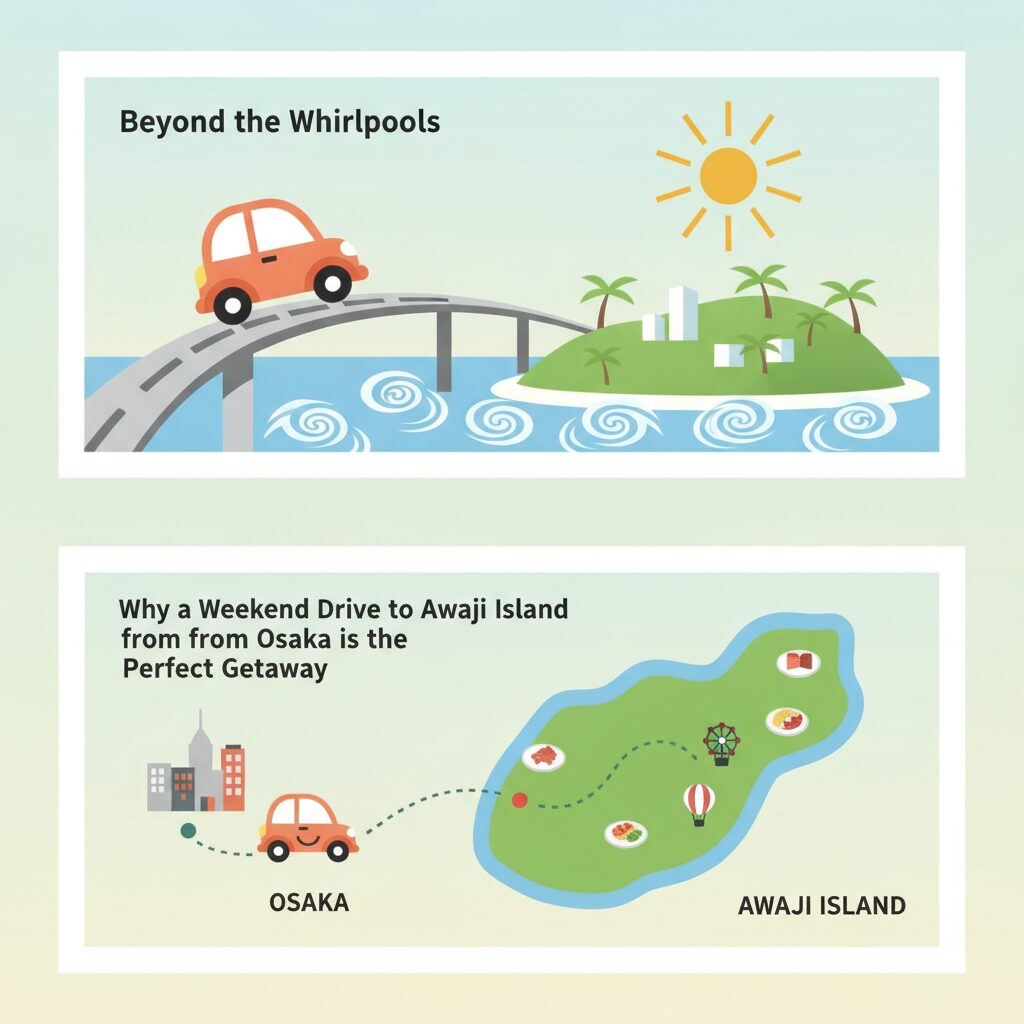
Why a Weekend Drive to Awaji Island from Osaka is the Perfect Getaway
To truly understand Osaka, you need to grasp the idea of balance. Kuidaore is the well-known local saying, roughly meaning to eat until you bankrupt yourself. It reflects a culture of indulgence. Osaka residents work extremely hard in a bustling, merchant-driven environment. When they finish work on Friday, they want their leisure time to be just as fulfilling as their working hours. While Tokyoites might be satisfied spending weekends navigating complex subway systems to crowded cafes in various wards or taking the sleek Shinkansen to a polished resort town, Osaka people yearn for something different. They long for autonomy. They long for the open road.
There is a deeply rooted, though seldom talked about, car culture in the Kansai region. Although the train systems here are world-class and perfectly suitable for daily commuting, owning or renting a car for the weekend symbolizes ultimate freedom. It means you are no longer restricted by schedules. It means you can play your music loudly. It means you can stop at obscure roadside stations to purchase fresh vegetables directly from farmers. Awaji Island is unquestionably the top Kansai road trip destination because it delivers a complete atmospheric change within just an hour’s drive. You move from the intense urban density of Umeda to expansive ocean views, rolling green hills, and quiet farming roads in less time than it takes to watch a movie.
Do You Need a Car for Awaji Island?
If you ask a local this question, the answer is an immediate, clear, and emphatic yes. Can you technically reach Awaji Island by bus? Yes, highway buses depart from major terminals in Osaka and Kobe, dropping passengers at designated points on the island. But taking a bus to Awaji is like visiting a world-class sushi restaurant and only eating the ginger—you miss the whole experience.
Awaji is an island built for vehicles. Its real allure lies in the spaces between the main tourist spots. It lies in the spontaneous choice to pull over on the Sunset Line to watch the sky light up with brilliant purples and golds over the Harima Nada sea. It lies in being able to navigate narrow, winding roads up to hidden hillside cafes overlooking the water. The island’s public transportation system is sparse, irregular, and highly localized. Relying on local buses means spending most of your weekend waiting at unshaded bus stops rather than truly exploring the island.
For expats living in Osaka, renting a car and taking control of the wheel is a rite of passage. It changes you from a passive passenger on city transit to an active explorer of the region. It enables you to break free from the expat bubble that often confines foreigners to major subway lines and the loop line. Having a car is the key that unlocks the true Kansai.
Is it Easy to Drive from Osaka? (Driving Conditions & Tips)
The idea of driving in Japan can be daunting for newcomers. The steering wheel is on the right, you drive on the left, and Osaka’s streets can appear extremely narrow, filled with weaving bicycles, delivery scooters, and pedestrians who treat traffic signals as mere suggestions. However, the drive from Osaka to Awaji Island is surprisingly simple, mostly following wide, well-kept expressways.
The journey starts on the Hanshin Expressway. This elevated highway winds through central Osaka, offering a cyberpunk-like view of the city as you speed past office windows and neon signs. Osaka’s driving culture differs from other parts of Japan. Tokyo drivers tend to be strictly by-the-book, overly polite, and very cautious. Osaka drivers are pragmatic, assertive, and communicative. They merge confidently, change lanes quickly, but are also very responsive to the unspoken language of the road.
When driving here, you must learn the hazard light thank-you. If someone lets you merge into a tight lane on the Hanshin Expressway, it’s customary to flash your hazard lights twice to express thanks. It’s a small gesture, but it reflects the city’s underlying communal spirit. Everyone is trying to get somewhere, and a little cooperation goes a long way.
Once you leave the Hanshin Expressway and enter the Kobe-Awaji-Naruto Expressway, the stress of city driving fades. The lanes broaden, traffic eases, and the towering concrete skyline of Kobe gives way to the vast blue ocean. Driving becomes a pleasure. Speed limits are strictly enforced, often by automated cameras, so there’s no need to rush. You simply set your pace, keep your hands on the wheel, and watch the island grow larger on the horizon.
Essential Preparation for Your Awaji Island Road Trip
Successfully escaping the city requires some logistical foresight. The charm of a weekend road trip comes from its spontaneity, but that spontaneity must rest on a foundation of thorough preparation. You don’t want your peaceful island retreat disrupted by administrative snafus or unexpected toll charges.
Renting a Car in Osaka and Getting an ETC Card
Renting a car in Osaka is a straightforward process, as long as you have the proper documents. You’ll need your home country driver’s license, your passport, and an International Driving Permit, or a Japanese driver’s license if you have converted yours. Major rental agencies are conveniently located around Umeda, Namba, and Shin-Osaka stations.
When reserving your vehicle, there’s one essential upgrade you must request: the ETC card. The Electronic Toll Collection system is the key to smooth travel on Japanese highways. Without it, you’ll be stuck at manual toll booths. These require you to stop, roll down your window, take a paper ticket, and fumble for exact change or a credit card while a line of impatient Osaka drivers waits behind you. This process is stressful and inefficient.
With an ETC card inserted into the dashboard reader, the highway experience becomes seamless. As you approach a toll gate, simply slow to twenty kilometers per hour, head for the purple lane marked ETC, and listen for the pleasant chime as the barrier lifts automatically. Tolls are calculated electronically and paid when you return the rental car. It’s a small card, but it ensures frictionless travel and makes you feel like a local, gliding effortlessly through the infrastructure.
Toll Costs and the Akashi Kaikyo Bridge
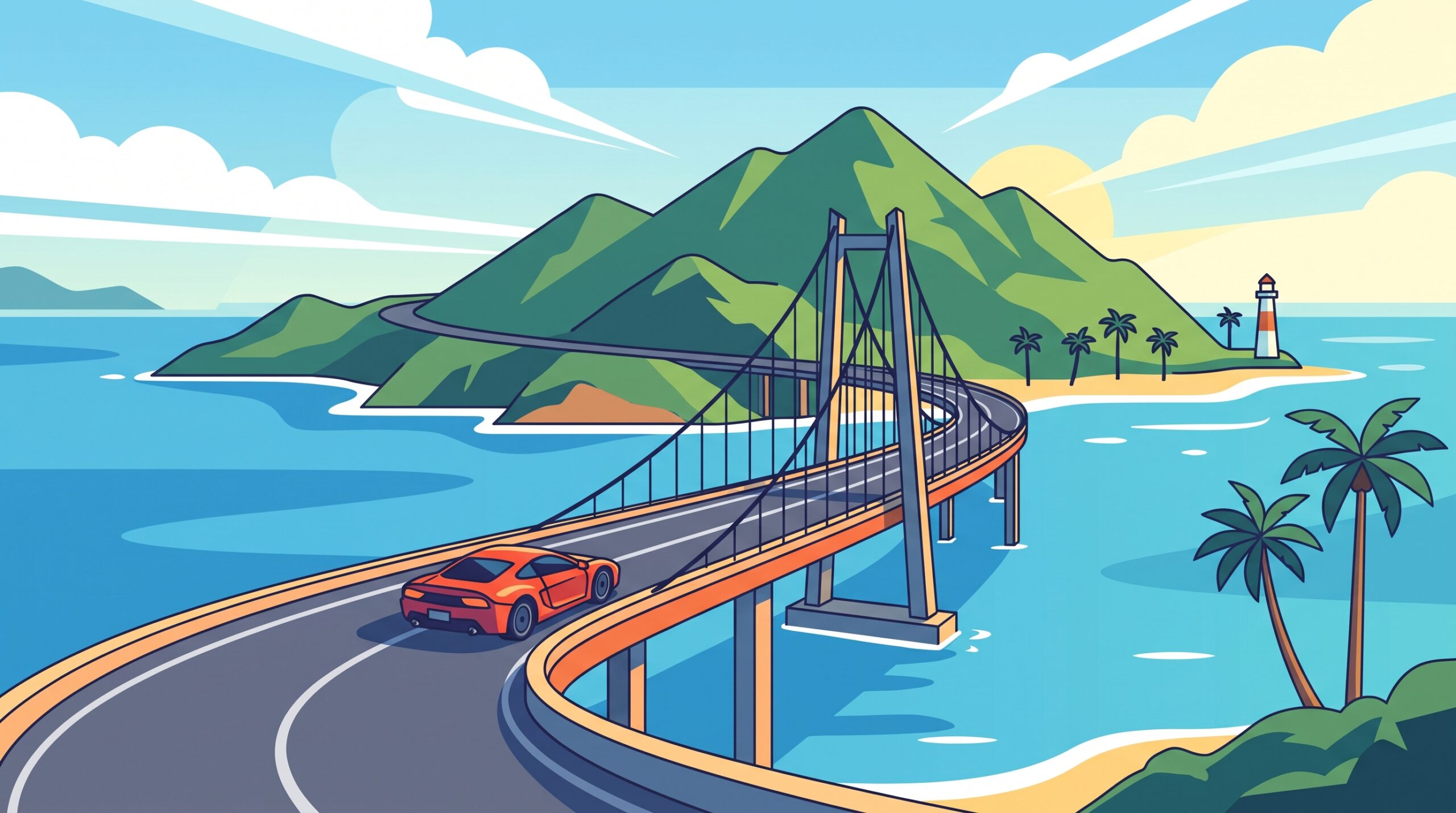
The highlight of the trip—the physical gateway from mainland stress to island serenity—is the Akashi Kaikyo Bridge. Spanning the Akashi Strait, it stands as one of the world’s longest suspension bridges. Approaching from the Kobe side is a cinematic moment. The massive steel towers rise from the water like modern monuments, with thick suspension cables sweeping down in elegant, precise arcs.
Driving onto the bridge, you’ll notice the sound of your tires shift. The wind intensifies, buffeting your car’s side. To your left, the sprawling Kansai urban landscape fades into a hazy skyline; to your right, the open waters of the Seto Inland Sea stretch toward the horizon. It is a moment of deep transition. You’re leaving the noise behind.
However, this feat of engineering comes at a cost. Highway tolls in Japan are famously pricey, and bridge tolls are the highest of all. The toll for crossing the Akashi Kaikyo Bridge varies slightly depending on the day, time, and vehicle size, but expect to pay a considerable sum for the crossing. A round trip from central Osaka to Awaji Island, including expressway and bridge tolls, can add up to a significant expense.
This is another reason why Awaji makes an ideal weekend destination. It’s close enough to keep fuel costs low, but the steep toll acts as a filter. It prevents the island from being overrun by casual day-trippers. Those who pay the toll are truly committed to the experience, willing to invest in accessing the peaceful retreat on the other side.
The Ultimate Awaji Island Weekend Itinerary: Day 1
The ideal Awaji road trip follows a thoughtful progression. You transition from the vibrant energy of Osaka to the relaxed rhythm of the island. Your itinerary should reflect this gradual unwinding. Begin in the north, right where the bridge touches down, and make your way slowly down the island, letting the urban tension fade mile by mile.
Morning: Awaji Service Area and Awaji Yumebutai
As soon as you cross the Akashi Kaikyo Bridge, your first stop has to be the Awaji Service Area. Don’t skip this. In Japan, highway service areas are much more than simple rest stops with stale coffee and dubious restrooms. They are cultural attractions, culinary centers, observation points, and social hubs.
Among Kansai drivers, the Awaji Service Area is legendary. It boasts a large Ferris wheel offering sweeping vistas back toward Kobe and the bridge you’ve just crossed. It serves as a psychological milestone—you pull over, step out of the car, and stretch your legs while reflecting on the concrete jungle you’ve left behind. Inside, the incredible variety of local products is impressive. This is where you get your first taste of Awaji’s agricultural pride, with onion soups, onion crackers, onion-flavored soft serve ice cream, and entire sections devoted to the sweet, iconic Awaji onion.
After a quick coffee and a snack inspired by onions, drive a few minutes to Awaji Yumebutai. This vast architectural complex, designed by the world-renowned architect Tadao Ando, tells the modern story of the region. In the 1990s, the hillside was heavily excavated to provide soil for Kansai International Airport’s construction, leaving a barren scar. Ando was brought in to restore the site, transforming this environmental wound into a harmonious blend of concrete, water, and nature.
Exploring Yumebutai is a deeply meditative experience. Ando’s hallmark smooth concrete brutalism is softened by the soothing sound of cascading water and the vibrant colors of Hyakudan-en, a massive terrace garden of one hundred square flower beds climbing the hillside. It contrasts sharply with the chaotic, neon-filled architecture of Dotonbori. Here, architecture frames nature rather than dominates it. Walking these peaceful concrete corridors is an ideal way to reset your mind and prepare for a weekend of slow living.
Lunch: Enjoying Famous Awaji Beef
By midday, your appetite will remind you that dining is a serious priority for Kansai residents. Osaka locals are passionate about food, and their weekend destinations must meet high culinary standards. Awaji Island excels in this area, especially when it comes to beef.
Awaji beef is the island’s most prized culinary export. Many foreigners don’t realize that the origins of Japan’s most famous beef brands, including Kobe and Matsusaka beef, trace back to the Tajima cattle lineage, much of which is bred right here on Awaji Island. Awaji beef is essentially the original source of the world’s most luxurious meats.
Visit one of the island’s steakhouses or barbecue restaurants for lunch. Eating Awaji beef is a deliberate, immersive experience—very different from a quick bowl of ramen in Umeda. You sit before a hot grill, carefully placing thin, heavily marbled slices of beef onto the grate. You listen to the sharp sizzle, watch the fat melt and ignite, then dip the meat lightly into simple soy or ponzu sauce before eating. The beef is incredibly tender, rich with umami, and practically melts on your tongue. It’s a rich, indulgent meal that encourages you to slow down and savor every bite.
Afternoon: Scenic Views at Awaji Hanasajiki Flower Fields
After a hearty lunch, the afternoon calls for fresh air and gentle strolling. Head to Awaji Hanasajiki in the northern hills. This expansive park sits on an elevated plateau, offering uninterrupted panoramic ocean views. But the real highlight is the vast fields of seasonal flowers that blanket the hillsides in vividly unnatural colors.
The flowers change with the seasons. Spring brings sprawling yellow canola blossoms. Summer features vibrant purple salvias and towering sunflowers. Autumn coats the hills with the soft, romantic shades of cosmos. For an Osaka resident accustomed to gray asphalt, glass towers, and glowing convenience store signs, stepping into these flower fields is a sensory revelation.
The air here smells fundamentally different—like soil, salt, and pollen. It is clean and crisp. Couples stroll slowly along paved paths, families spread picnic blankets, and amateur photographers set up tripods. There is no hurry here. The fast pace and constant dodging of salarymen and bicycles on Midosuji Avenue are completely forgotten. You are invited to walk slowly, observe closely, and breathe deeply.
Evening: Relaxing at a Coastal Hot Spring (Onsen)
As the afternoon fades and the sun lowers, it’s time for the most vital part of any Japanese weekend escape: the onsen. Bathing culture in Japan goes beyond cleanliness; it’s a ritual of mental purification. In Osaka, you might visit a local sento or a large super-sento complex, but these are often crowded, noisy, and full of neighborhood chatter.
On Awaji Island, the onsen experience is different. Numerous hot spring resorts dot the coastline, and the best offer rotemburo, outdoor baths with direct views of the water.
The protocol is strict yet comforting in its predictability. You wash yourself thoroughly before entering the water, then step carefully into the steaming, mineral-rich bath. Then, you simply sit. You sit in naked silence with strangers, watching the sky turn brilliant shades of pink and orange as the sun sets over the Seto Inland Sea. The heat penetrates your muscles, melting away the tension from a week spent hunched over a laptop or navigating crowded subways. The only sounds are the gentle waves and occasional splashes. It is a profound, shared stillness that simply can’t be found on the mainland.
The Ultimate Awaji Island Weekend Itinerary: Day 2
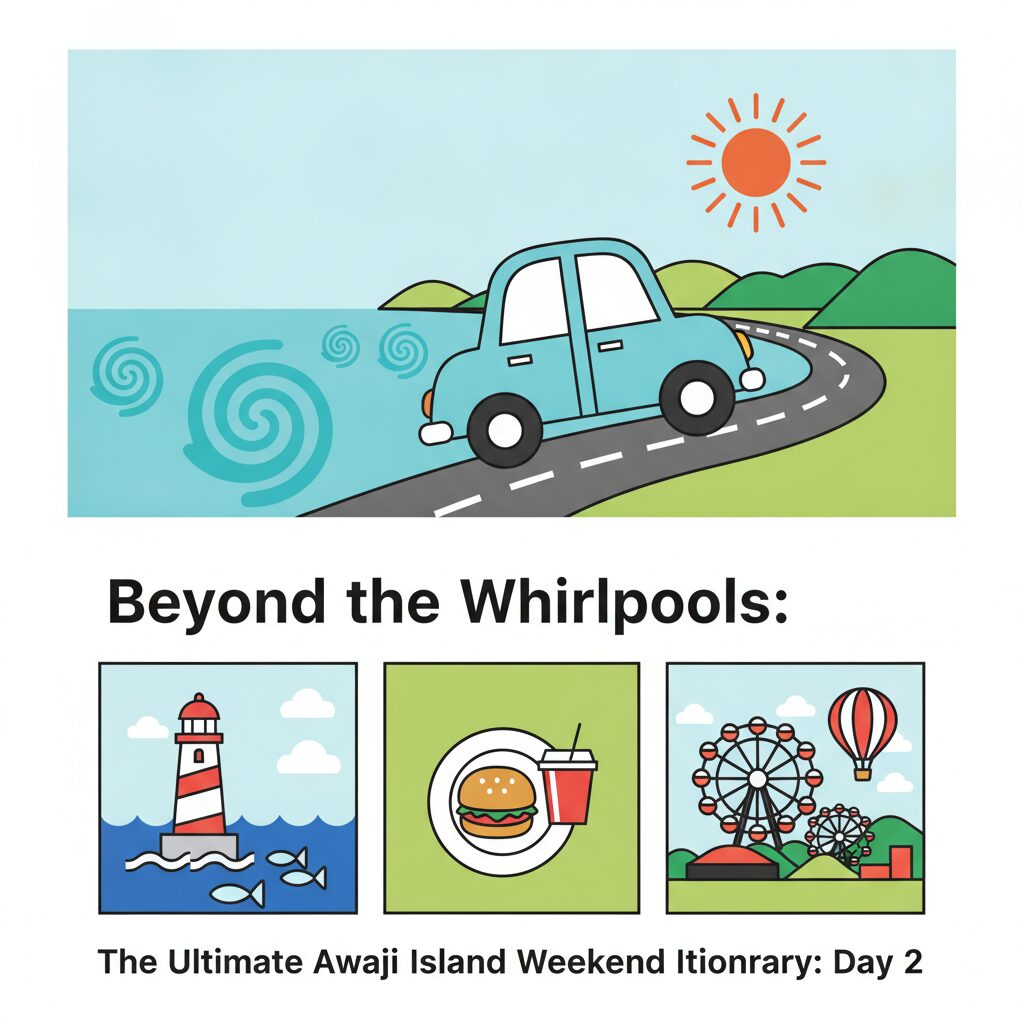
You wake up on Sunday morning feeling completely disconnected from the city’s rhythm. The noise of Osaka seems a million miles away. Day two focuses on exploring the island’s deeper, more powerful natural forces before gradually making your way back up the coast to get ready for the return journey.
Morning: Driving South to the Naruto Whirlpools
The drive from Awaji’s northern tip down to its southern end is where the true joy of the road trip comes alive. If you’re in a hurry, you can take the central highway, but the scenic coastal routes are the better choice. You roll down the windows, let the ocean breeze fill the cabin, and cruise along the winding roads that follow the island’s edge.
Your destination is the Naruto Strait, the narrow channel separating Awaji Island from Shikoku. This strait is home to one of Japan’s most mesmerizing natural phenomena: the Naruto Whirlpools. These whirlpools form due to the complex interaction of tidal currents flowing between the Pacific Ocean and the Seto Inland Sea. As the tides shift, huge volumes of water are forced through the shallow, narrow strait, creating violent, spinning vortices up to twenty meters in diameter.
Timing is key. Be sure to check the tide charts before you arrive, as the whirlpools only appear during peak tidal shifts. To see them, you can take a sightseeing cruise that sails directly into the turbulent waters, or walk out onto the Uzu no Michi, an enclosed walkway suspended beneath the Onaruto Bridge.
Standing on the glass floors of the walkway, looking straight down into the churning, violent waters, is an awe-inspiring experience. It offers a stark reminder of nature’s raw power. In Osaka, nature is controlled—rivers are confined within concrete canals, and trees are pruned into perfect geometric shapes. The Naruto Whirlpools are wild, untamed, and entirely indifferent to human engineering. Witnessing them puts the trivial stresses of city life into sharp, humbling perspective.
Lunch: Fresh Seafood and Awaji Onions at Michi-no-Eki Uzushio
Near the bridge lies Michi-no-Eki Uzushio. A Michi-no-Eki is a government-designated roadside station, but like service areas, it’s much more than just a rest stop. These stations serve as vibrant local markets celebrating regional agriculture and cuisine.
This particular roadside station is famous for its location, perched on a high bluff overlooking the bridge and whirlpools, as well as its outstanding food. If day one centered on the luxury of Awaji beef, day two celebrates the island’s bounty from the sea and soil. Here, you come to savor two specialties: raw seafood and onions.
The waters around Awaji are rich with marine life, and the raw whitebait bowls served here are exceptional. The tiny, translucent fish are piled high over warm rice, topped with a raw egg yolk and a dash of soy sauce—a pure, unadulterated taste of the ocean.
However, the true star is the Awaji onion. People from Osaka revere this onion. The island’s soil, combined with a mild climate, produces onions that are incredibly sweet, with almost none of the harsh, pungent bite common to standard yellow onions. You can enjoy them raw in salads, deep-fried as giant onion rings, or in the famous Awaji onion burger—a towering, messy creation that frequently wins national burger competitions. Sitting on the terrace, eating a sweet onion burger while gazing out over the swirling ocean, is the ultimate Awaji experience.
Afternoon: Cafe Hopping Along the West Coast (Sunset Line)
In the afternoon, you begin your journey back north. The preferred route is the Awaji Sunset Line, a coastal road running along the island’s western edge. Over the past decade, this stretch of road has seen a fascinating transformation.
A younger generation of entrepreneurs, many escaping the high-stress corporate culture of Osaka and Kobe, have moved to Awaji’s west coast to embrace a slower pace of life. They’ve opened stylish, minimalist cafes, artisan bakeries, and craft shops right on the waterfront.
This cafe culture signifies a notable shift in the Kansai mindset—a rejection of Shinsaibashi’s hyper-consumerism and an embrace of intentional living. You pull the car over, step into a wood-paneled cafe filled with the aroma of freshly roasted beans, and order a pour-over coffee. Taking your cup to a terrace seat overlooking the ocean, you simply watch the water. There’s no background noise of train announcements, no flashing digital ads—just the rhythmic crashing of waves against the seawall. It’s the perfect setting to reflect on the weekend and let the peace settle before facing the reality of the impending Monday morning.
Heading Back: Tips for Avoiding Sunday Evening Traffic to Osaka
The most difficult part of the Awaji road trip isn’t the drive itself but mentally preparing for the return. As the sun sets, casting long, golden shadows across the island, a collective sense of dread builds among weekend travelers. Everyone knows what awaits them on the other side of the bridge: Sunday night traffic.
The route back into Osaka, especially where the Kobe-Awaji-Naruto Expressway merges into the Hanshin Expressway network, is a notorious bottleneck. Thousands of cars, filled with relaxed, sun-dazed residents trying to get home before dinner, funnel into a limited number of lanes.
Navigating this traffic requires patience and a good grasp of local driving etiquette. It’s here that the assertive yet communicative style of Osaka drivers stands out. Merging becomes a complex, unwritten dance of give and take. You must be firm enough to maintain your space but courteous enough to let others in. The hazard light thank-you is used frequently. It’s a slow-moving metal river, but it operates with a surprising level of cooperation.
The best way to cope is to adjust your mindset. Don’t fight it—accept that it will take time. Put on a good podcast, listen to relaxing music, and use the slow drive as a transitional moment. Watch the scenery change from the dark, quiet ocean back to the sprawling, twinkling lights of Kobe and Osaka. The traffic jam acts as an airlock between the island’s peaceful sanctuary and the city’s high-pressure environment. By the time you finally exit the Hanshin Expressway onto the familiar neon-lit streets of your neighborhood, you’re mentally ready to rejoin the urban hustle.
Must-Try Local Foods on Your Awaji Road Trip
To truly grasp the cultural contrast between Osaka and Awaji, you need to understand their distinct relationships with food. Osaka is known as the nation’s kitchen. It is a city that processes, refines, and commercializes food, taking ingredients from all over and transforming them into fast, hot, and incredibly satisfying street food. Takoyaki and okonomiyaki are brilliant creations born from urban convenience and merchant ingenuity.
In contrast, Awaji Island is the origin. The food culture here is not about intricate preparation or heavy sauces; it is centered on absolute, uncompromising freshness. The philosophy is agrarian rather than commercial. When dining on Awaji, you are consuming items pulled from the soil or sea just miles from where you sit.
The holy trinity of Awaji cuisine consists of onions, beef, and seafood. Although discussed before, they deserve a closer look. The Awaji onion is sweet and tender due to the island’s unique soil mineral composition and traditional, labor-intensive farming methods that include drying the onions in the wind before harvesting. It is a product of patience and time—qualities often scarce in Osaka.
Awaji beef reflects careful, generational breeding. Its fat melts at an impressively low temperature, leaving a rich, buttery flavor that lingers well after each bite. It is a luxury that invites slow, deliberate eating.
The seafood, especially the sea bream (tai) caught in the Akashi Strait’s turbulent waters, is famous for its firm texture and clean taste. The powerful currents force the fish to swim continuously, building strong muscles that result in exceptional sashimi. Enjoying a fresh sea bream bowl on Awaji Island offers a fundamentally different experience from eating sushi in a bustling, fluorescent-lit chain restaurant in Umeda. It connects you directly to the region’s geography.
For a foreigner learning to navigate life in Kansai, understanding this dynamic is vital. People from Osaka don’t just visit Awaji for the scenery; they go to eat the foods that sustain Osaka’s culinary dominance. They go to honor the source.
Conclusion: Hit the Road to Awaji
Living in Osaka is a magnificent yet exhausting privilege. It is a city that demands your energy, your focus, and your appetite. But to thrive here and truly build a sustainable life in Kansai without burning out, you must learn how to step away. You need to understand the importance of the weekend escape.
Awaji Island is more than just a spot on the map; it is a crucial part of the Kansai region’s anatomy. It serves as the lungs that enable the sprawling, hyper-active metropolis to breathe. Taking a road trip to Awaji is not just a vacation; it is a cultural ritual. It is about embracing the freedom of the open road, navigating the remarkable infrastructure of the suspension bridges, and yielding to a pace of life shaped by tides and seasons instead of train schedules and office hours.
So, when the neon lights of Dotonbori begin to feel overwhelming, and the crowds on the Midosuji subway line start to feel suffocating, don’t panic. Don’t book a flight home. Simply find a rental car, get an ETC card, and head west. Cross the great bridge. Savor the sweet onions. Watch the whirlpools spin. Breathe in the salty air. Awaji Island is waiting to reset your spirit, so you can return to Osaka ready to love it all over again.