Let’s be honest. Your apartment bathroom is probably a masterpiece of compact design. It’s a plastic-molded unit, a marvel of engineering that fits a sink, toilet, and a tub so short your knees are practically kissing your chin. You can get clean in there, sure. But can you relax? Can you stretch out and let the deep, penetrating heat melt away the stress of a week navigating crowded trains and deciphering polite but impenetrable emails? Probably not. It’s a functional space, not a sanctuary. For years, I saw the local sento—the public bathhouse—with its distinctive tall chimney and humble curtained entrance as a relic, a charming but irrelevant piece of old Japan. It was for elderly folks, I thought, or for people who didn’t have a shower at home. I couldn’t have been more wrong. The sento isn’t just about bathing. In Osaka, it’s a weekly reset button, a community living room, and one of the most authentic, grounding experiences you can integrate into your life here. It’s where the city’s unpretentious, communal spirit is on full display, stripped of all pretense. This isn’t about luxury spas or onsen resorts. This is about the 500-yen neighborhood joint down the street, the one with the slightly chipped tiles and the vending machine full of ice-cold milk. This is about finding your place in the rhythm of the city, one incredibly hot, incredibly relaxing bath at a time.
Embracing the serene ritual of a neighborhood sento can naturally lead you to wonder if a complimentary Awaji Island weekend escape might offer an extended taste of Kansai’s hidden tranquility.
The Great Equalizer: More Than Just a Bath
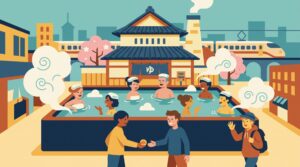
In Japan, the phrase hadaka no tsukiai is commonly used, meaning “naked communication” or “naked fellowship.” In Tokyo, it may seem like a quaint, abstract idea, but in an Osaka sento, it becomes a loud, steamy, and wonderfully tangible experience. The moment you enter the bathing area, social hierarchies fade away. The salaryman, shop owner, student, and grandmother—all are simply people in a bath. This creates a unique social environment rarely found elsewhere. Status and appearances, which hold significant importance in daily Japanese life, are literally washed off. What remains is a fundamental sense of community that’s truly Osaka. People here appreciate directness and genuine behavior. They prefer the real you over a carefully crafted facade, and the sento provides the perfect setting for this. Don’t be surprised if an elderly woman strikes up a conversation while you’re scrubbing, offering unsolicited but well-meaning tips on washing your back. Or you might catch a lively debate about the Hanshin Tigers baseball team echoing off the tiled walls. This isn’t prying; it’s connection. It contrasts sharply with the silent, individualistic atmosphere of a modern gym or spa. The sento is a place to bond with your neighbors on the most basic human level. You share a common experience—a moment of collective relaxation. It’s a subtle yet powerful reminder that you belong to a community, not just an anonymous resident in a vast metropolis.
Decoding the Sento: A Practical Guide for the Uninitiated
Walking into a sento for the first time can feel intimidating. The rules are unwritten, the rituals are deeply ingrained, and the nudity aspect can be a challenge for many. However, the process is straightforward once you grasp the underlying logic, which centers on hygiene and respect for the shared space. Mastering this will take you from feeling like a tourist to feeling like a local.
Gearing Up: What to Bring (and What Not To)
First-timers often arrive empty-handed, which is completely fine. Most sento have a front desk, called the bandai, where you can rent a “towel set” and purchase single-use shampoo and soap packets for a few hundred yen. But if you want to blend in, bring your own kit. Regulars carry a small plastic basket or waterproof bag with their personal belongings. This is the typical ofuro setto (bath set). Inside, you’ll want two towels: a large one for drying off at the end, and a small, thin one. This small towel is the versatile tool of the sento. You’ll use it for washing your body and, importantly, for modesty as you move around the bathing area. You’ll also need your preferred soap, shampoo, and conditioner. That’s all. There’s no need for fancy robes or slippers. Simplicity is key. Carrying your own little basket sends a quiet message that you belong, that this is part of your routine.
The Ritual Before the Soak
Your journey starts at the entrance. Remove your shoes and place them in one of the small lockers. You’ll pay at the bandai, which might be a modern counter or a charmingly nostalgic elevated platform where the owner sits, watching over the men’s and women’s entrances. The fee is usually city-fixed, typically around 500 yen for adults—an amazing bargain. You’ll then be directed to the appropriate changing room, marked by noren curtains: blue with the character for man (男) or red with the character for woman (女). Inside, find an empty locker or basket for your clothes and belongings. Here’s the most important rule of the entire sento experience: you must wash your entire body thoroughly before you even think about entering the bathwater. The tubs are for soaking, not cleaning. Head to the washing area, lined with faucets, handheld showers, and small plastic stools. Grab a stool and bucket, find an available station, and sit down. This is something foreigners often overlook; you wash while seated to avoid splashing others. Give yourself a complete, proper scrub. This cleansing act shows respect for everyone sharing the water. Once you’re squeaky clean, you’re ready for the main event.
Navigating the Tubs
An Osaka sento typically offers several pools. There’s a main tub, generally quite hot, around 42-44°C (107-111°F). Ease into it; it can feel intense at first, but your body will adjust. You might find a cooler tub or specialty baths with jets (jetto basu) for a water massage. The most intimidating for newcomers is often the denki buro, or electric bath. This tub sends a low-voltage electric current through the water between two plates, creating a pins-and-needles tingle designed to relieve sore muscles. Approach carefully, but don’t shy away from trying it. Lastly, there’s usually a small, very cold plunge pool (mizuburo). Alternating between soaking in the hot tub until you’re warmed through, then taking a quick, shocking dip in the cold water before returning to the heat, is excellent for circulation and leaves you feeling revitalized. A few etiquette notes: do not put your small towel in the bathwater. Most fold it and place it on their head. Avoid swimming or splashing, and be considerate of personal space. The aim is collective, peaceful soaking.
The Unmistakable Osaka Vibe: Unpretentious and Utterly Real
There’s a unique atmosphere to an old-school Osaka sento that’s difficult to reproduce. Many of these establishments have remained largely unchanged since the Showa era. The buildings themselves often feature temple-like roof designs known as miyazukuri. Inside, the tall, steam-filled ceilings are built for ventilation. You’ll find tiled floors, smoothed by decades of wear, and frequently a large mural painted on the wall above the tubs. While Mount Fuji is the classic subject, in Osaka you might see paintings of a local castle or a famous Kansai landscape. It’s this sense of history and well-worn comfort that distinguishes them. A trendy Tokyo bathhouse might be revamped by a famous architect, showcasing minimalist concrete, mood lighting, and a craft beer bar in the lobby. An Osaka sento, in contrast, emphasizes function and familiarity. It’s not aiming for style; it’s aiming to be a bathhouse. The soundtrack isn’t curated ambient music; it’s the sound of water splashing, plastic buckets clattering, and quiet conversations. It’s perfectly imperfect, and that’s part of its charm. It feels genuine because it truly is.
The Post-Bath Ritual: The Real Reward
Exiting the bathing area is far from the end of the experience. In many ways, the post-bath ritual is equally significant. After drying off in the changing room, you’ll experience a cleanliness that a quick shower at home simply can’t match. Your skin feels soft, your muscles relaxed, and your mind calm. This is the moment to take your time. The changing room often functions as a lounge. You’ll find locals sitting in their underwear, fanning themselves, watching the news or a baseball game on a small TV. This is where the hadaka no tsukiai continues—a space of relaxed, post-soak camaraderie. Before you leave, you must take part in the most cherished post-sento tradition: grabbing a glass bottle drink from the vending machine. The classic choices are fruit milk (furutsu gyunyu) or coffee milk (kohi gyunyu). There’s something inexplicably perfect about downing an ice-cold, sweet, milky drink after a hot bath. It’s a nostalgic taste of childhood for many Japanese people and a simple yet profound pleasure. For a final touch, drop 100 yen into one of the old, powerful massage chairs. They’ll vigorously knead your back with a delightful lack of subtlety, completing the rejuvenation of your body and mind.
Finding Your Local Gem: How to Spot a Neighborhood Sento
Google Maps is a useful starting point, but the best way to find a sento is to simply stroll through your own neighborhood. Watch for the tall, slender chimney (entotsu), the most distinctive sign of a bathhouse. As you approach, look for the traditional noren curtains hanging over the entrance, usually displaying the hiragana character for hot water (ゆ, yu) or its kanji equivalent (湯). These bathhouses are rarely found on major commercial streets; rather, they are hidden away in residential areas, serving as the heart of their local communities. Each sento has its own unique charm. Some are bright and modern, while others are dark, wooden, and rich in history. Part of the enjoyment is discovering the one that feels like yours. Be sure to note their hours. Most open in the mid-afternoon, around 3 PM, and close late, around midnight or 1 AM. They also observe a fixed day off each week (teikyubi), so it’s a good idea to check ahead. Visiting a few different sento is an excellent way to explore Osaka’s varied neighborhoods and find the atmosphere that suits you best.
Why This Humble Ritual Matters in Osaka
The weekly visit to the sento is more than a charming tradition. It connects you directly to the cultural heart of Osaka. This city, built by merchants, has always prized practicality, community ties, and a certain groundedness over the refined formality of the old imperial and samurai capitals. The sento embodies these values physically. It’s efficient, affordable, and deeply communal. It’s a place where good-natured teasing from a stranger isn’t an intrusion but a sign of welcome. It provides an antidote to the loneliness that can arise in a sprawling city. In a world dominated by curated digital personas, the sento remains stubbornly, wonderfully analog and genuine. It reminds you that beneath all the layers of language and culture, we’re all simply people who enjoy a good, hot bath. Making the sento part of your routine is one of the quickest ways to stop feeling like a foreigner merely observing Osaka and start feeling like a true resident. It’s where you’ll discover the rhythm of your neighborhood, engage in unexpected conversations, and find a small, steaming refuge to call your own.