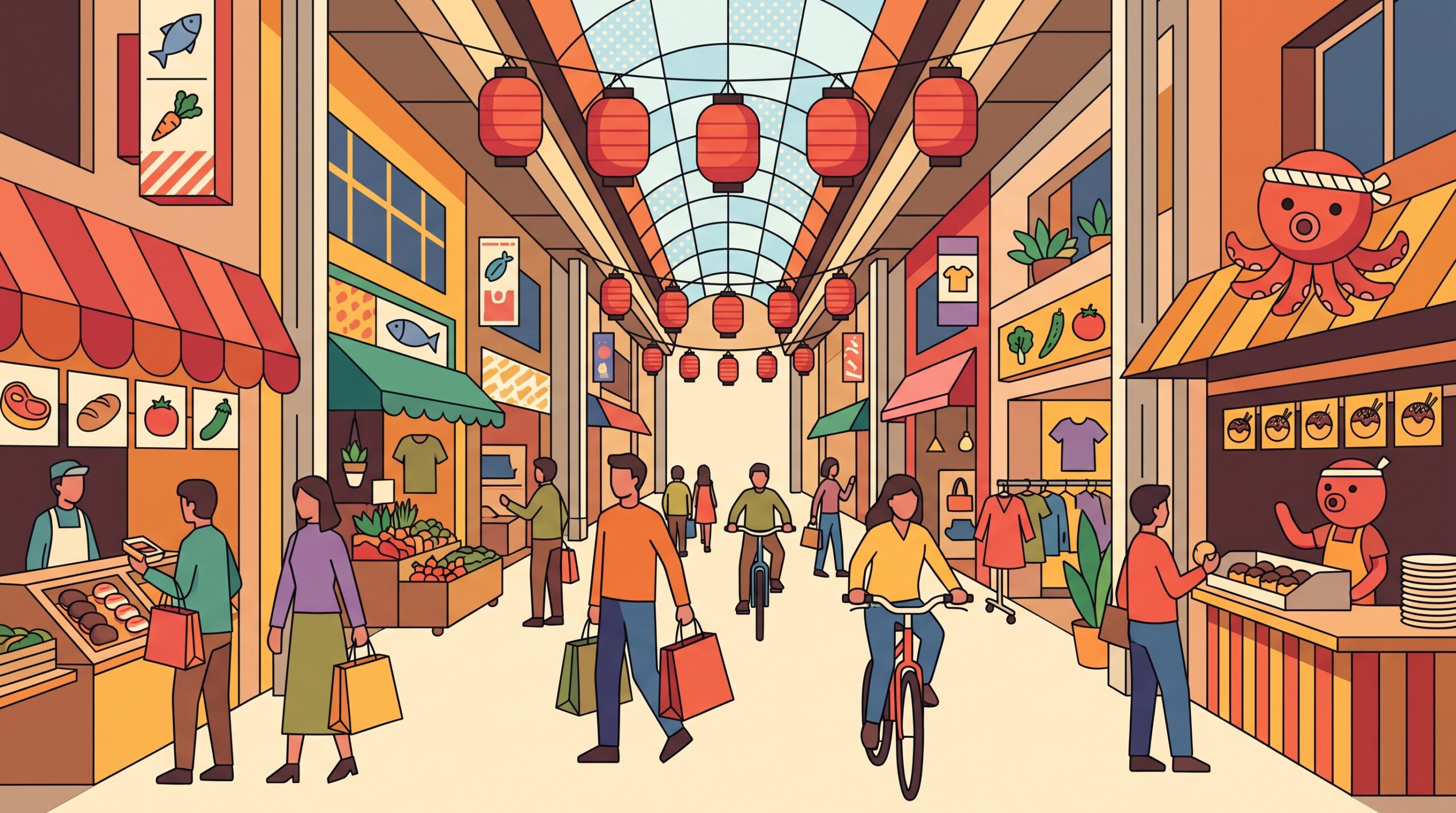
Neon lights fade into the damp evening air. The massive, shoulder-to-shoulder crowds of Dotonbori become a distant echo. The giant mechanical crab slowly recedes from your memory. You are stepping into the real Osaka. You are walking away from the glossy postcard and diving directly into the raw, beating pulse of the city. Living in a foreign country fundamentally changes your perspective. But living in Osaka, specifically, rewrites your internal rhythm entirely. When foreign residents first move to this vibrant metropolis, they often cluster instinctively around the shiny, modernized transit hubs. They want the sleek convenience of Umeda. They seek the accessible, glowing nightlife of Namba. They rent high-rise apartments with soundproof windows, effectively isolating themselves from the very culture they came to experience.
But if you want to understand how Osaka actually breathes, you have to look elsewhere. You have to step off the major train lines and wander into the older residential wards. You have to find the covered roofs. You have to locate a neighborhood shotengai. A shotengai is a traditional covered shopping arcade. It is the beating heart of local commerce. It is the communal living room of the neighborhood. It is a space where the visual texture of faded awnings and hand-painted signs tells the story of a community that has survived decades of rapid modernization. Renting an apartment near one of these historical corridors offers something profound and increasingly rare. It offers you a backstage pass to everyday, unpolished Japanese life.
You stop being a temporary visitor. You become a recognizable neighbor. You wake up not to the sound of highway traffic, but to the rhythmic clatter of bicycle kickstands echoing down narrow alleyways. You smell the rich, savory scent of kelp dashi rolling out from the corner udon shop before the sun even fully clears the horizon. You see the unvarnished, unfiltered reality of Kansai culture playing out in front of your doorstep. Osaka is a city built fundamentally on trade, comedic banter, and immediate human connection. There is absolutely no better place to witness this cultural DNA than under the fading plastic canopies of a residential shotengai. Welcome to the real neighborhood. Welcome to the Japan that exists off the screen.
Beyond Neon Lights: Why Shotengai are the Soul of Osaka’s Local Life
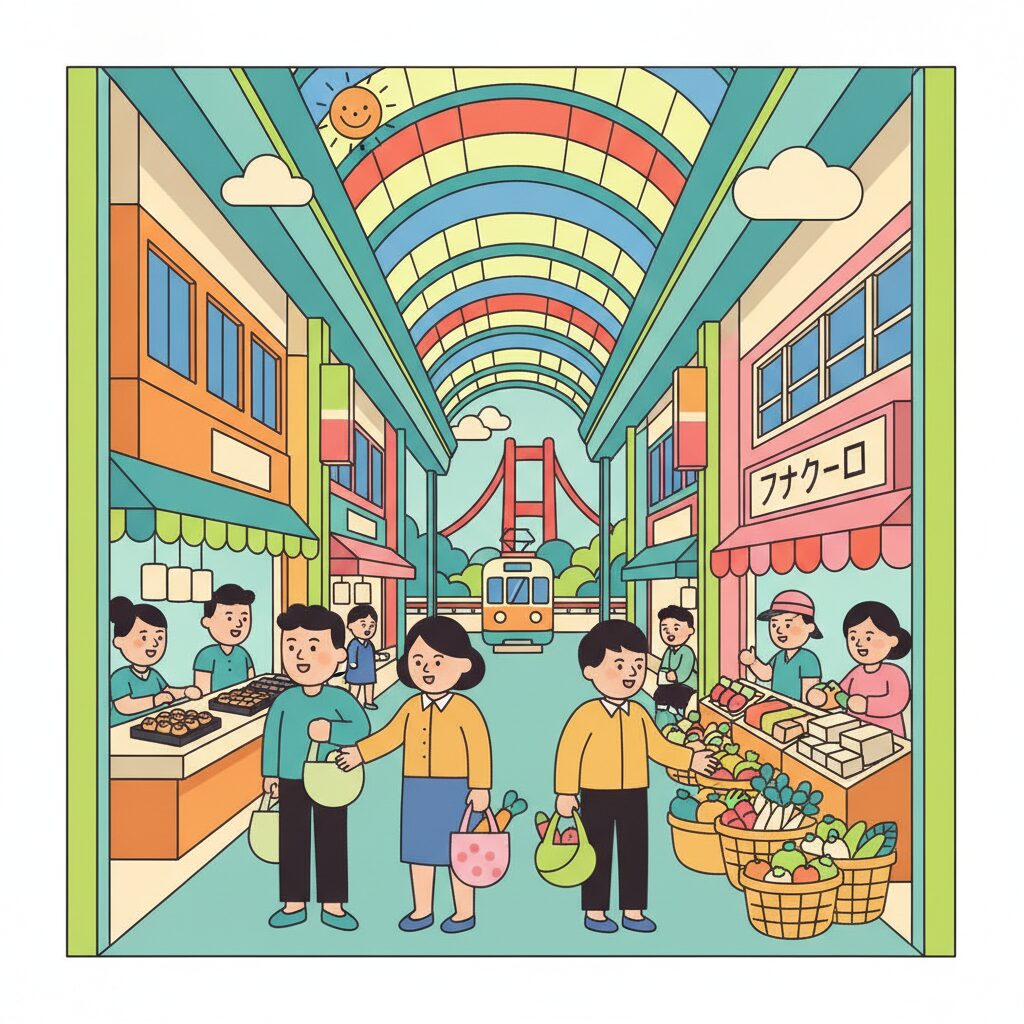
To truly understand Osaka, you must first grasp the distinct psychology of its people. They are famously loud, warmly assertive, and deeply, ruthlessly pragmatic. In Tokyo, residential neighborhoods are often so quiet that they verge on absolute silence. The streets are impeccably maintained and eerily calm. People keep to themselves, avoiding eye contact during their morning commutes. Tokyo is a city of polite distance, where harmony is preserved through non-interference. Osaka, in contrast, is a city of immediate, sometimes startling closeness.
The neighborhood shotengai perfectly embodies this spatial and emotional intimacy. These long, covered streets are far more than just shopping arcades for daily essentials. They function as intricate social ecosystems, the civic hubs where neighborhood gossip mixes with oversized daikon radishes. They are the domain of the iconic Osaka obachan. The older women of Osaka, often dressed boldly in animal prints and riding heavily loaded utility bicycles, are the true, unofficial mayors of these arcades. They ride with relentless determination, negotiate prices with a theatrical flair verging on performance art, and will strike up conversations with absolutely anyone—even a bewildered foreign resident carrying a bag of oranges.
Living near a shotengai pulls you completely out of urban isolation. Modern apartments, though comfortable, can feel profoundly lonely for expats. You ride the silent elevator, double-lock your steel door, and order groceries via an app. But when your building is just fifty meters from a bustling local arcade, that modern isolation becomes impossible to maintain. Step outside, and the community instantly surrounds you. The greengrocer calls out his morning specials with a voice thick from years of shouting over the crowd. The traditional butcher hands a freshly fried, steaming potato croquette to a passing elementary school child. The tofu maker hums softly while stirring huge vats of morning soy milk.
This continuous, vibrant sensory input fosters a deep psychological sense of belonging. Foreign residents often lament on internet forums that Japan feels socially impenetrable, that making genuine local friends is endlessly difficult, and that the local culture is too guarded and heavily armored against outsiders. That might be true in the upscale, hyper-modern high-rises of Tokyo’s Minato ward, but it is absolutely false in the humble, slightly worn alleyways of an Osaka shotengai. Here, interaction is inevitable. You must physically navigate the narrow aisles of the local grocer, learn the unspoken physical rhythm of the street, and acknowledge the presence of the people living, working, and breathing right beside you.
The shotengai is also a living, breathing tribute to Osaka’s historical commercial spirit. For centuries, this city was proudly known as the nation’s kitchen, the merchant capital of Japan, where business savvy was prized above aristocratic lineage. The people of Osaka cherish a good deal and deeply respect the art of the sale. In a local arcade, commerce is never sterile or corporate; it’s a highly interactive human exchange. You don’t just tap a plastic card against a cold, impersonal machine. You hand physical, heavy coins to a smiling grandmother whose hands tell the story of decades of labor. You exchange a few words about the stifling summer humidity or the biting winter wind. You receive your change on a small plastic tray, returned with a genuine bow. You walk back to your apartment feeling a little more connected to the world around you. This daily recurrence of small, human interactions builds a strong psychological foundation. It grounds you in your new home and teaches you that Osaka is not merely a geographical place where you live; it is a living, vibrant community you actively engage with every day.
Top Authentic Shotengai to Experience Everyday Osakan Life
We need to clarify the facts immediately for anyone planning to settle in this city. Dotonbori is not an authentic shotengai. Shinsaibashi-suji functions more like a globalized shopping mall pretending to be a traditional street, packed with international fast-fashion brands and tax-free pharmacies. Kuromon Market, while genuinely historic, has unfortunately become an overpriced seafood buffet catering almost exclusively to foreign tourists. To experience the real, residential side of Osaka, you have to leave the bright billboards of the city center behind. You must ride local commuter trains and explore the residential wards where everyday families truly shop, eat, budget, and live. These authentic arcades lack giant neon signs, do not have English menus, and are slightly worn around the edges, but utterly charming.
Senbayashi Shotengai: The Vibrant Hub of Local Housewives
Take the Keihan railway line northeast from the hectic transfer hub of Kyobashi and you will eventually reach Senbayashi. This is arguably the most famous local shotengai among genuine, born-and-raised Osakans. It is officially recognized as a legendary retail environment and a daily battleground of incredible bargains. Senbayashi is famously regarded as the undisputed headquarters of the Osaka obachan. The energy here is relentlessly kinetic—delightfully chaotic and unapologetically noisy.
The street extends before you, a seemingly endless, brightly lit tunnel of bustling commerce. Bicycles weave through the dense pedestrian crowd with surprising precision defying the laws of physics. High-energy retail music blares from competing shops, creating a surreal soundscape. The air is thick with the scents of roasted green tea leaves, freshly fried dough, and the sweet tang of okonomiyaki sauce.
Renting an apartment near Senbayashi will dramatically reduce your daily living expenses. This arcade is renowned across Kansai for its rock-bottom prices: vegetables, seasonal fruits, everyday clothing, and basic household goods—all aggressively priced for the pragmatic, budget-conscious local shopper. Beyond the unbelievably cheap groceries, Senbayashi offers a daily masterclass in local human interactions. You’ll witness shopkeepers exchanging rapid-fire Kansai dialect banter with regular customers, hear jokes and sarcastic remarks flying effortlessly across the street. The walking pace is incredibly fast, and the pace of conversation even faster.
Yet beneath this chaotic exterior lies a deep, underlying harmony. People know each other by name and watch over each other’s children. Foreigners new to the area may initially feel overwhelmed by the sensory overload here, but within weeks, the chaos becomes a comforting, familiar rhythm. The shouting greengrocer becomes a friendly face on your morning commute. You begin to recognize local characters and understand that the intense noise of Senbayashi is not a disturbance but the beautiful sound of a thriving community surviving together.
Komagawa Shotengai: Retro Charm, Groceries, and Street Food
Head south to the quieter residential neighborhoods of Higashisumiyoshi ward, where tucked among narrow streets and small local parks lies Komagawa Shotengai. This arcade strikes an ideal balance for foreign residents. It is lively and bustling with daily commerce, yet more relaxed and forgiving than the fast-paced frenzy of Senbayashi.
Komagawa stubbornly preserves a distinct, beautiful Showa-era atmosphere. The architecture feels frozen in time, with sun-faded awnings stretched over small, meticulously maintained wooden storefronts. Hand-painted signs proudly advertise fresh tofu blocks, seasonal pickles, and marbled beef cuts. This is a culinary paradise for residents who love to cook or simply enjoy eating. The focus here is firmly on food—fresh, ultra-local, and incredibly affordable, forming the backbone of the Japanese home kitchen.
Living near Komagawa ensures you’ll never have to eat a dull meal again. You can buy fish expertly filleted just minutes earlier or purchase richly fragrant miso paste from a tiny specialty shop that has fermented soybeans in wooden barrels for three generations. The street food culture here is authentically local—not stylish or Instagram-ready but practical and delicious, designed to feed hungry commuters and tired students.
You’ll find piping hot takoyaki, dense and savory okonomiyaki, and the undisputed heavyweight champion of local shotengai snacks: freshly fried croquettes made of potato and minced meat. Walking through Komagawa on a late Tuesday afternoon is a sensory delight. The low sun catches floating dust motes beneath the high arched glass roof while the heavy scents of frying oil and sweet soy sauce fill the summer air. Local students gather noisily outside inexpensive sweet shops, and elderly men sit quietly on wooden benches near bright pachinko parlors, watching the neighborhood flow by. It’s a perfect snapshot of unpretentious, enduring Japanese life—a welcoming neighborhood where foreign residents can simply exist in peace, quietly observing the beautiful, everyday reality of Osaka.
Karahori Shopping Street: Historic Slopes and Hidden Artisans
Closer to the city center geographically but worlds apart in atmosphere and topography lies Karahori. Located near the Tanimachi Rokuchome subway station, Karahori is unique among Osaka’s shopping streets. It is one of the rare central districts to have miraculously survived the World War II firebombings. The main street is surrounded by a dense maze of narrow, winding alleys and beautiful traditional wooden townhouses known as machiya.
Unlike most major arcades, Karahori is not covered by a massive plastic or glass canopy and winds its way up and down gentle slopes. This distinctive terrain alone sets it apart from the flat concrete expanse typical of the city. Karahori offers a markedly different local living experience—substantially quieter, deeply atmospheric, and steeped in history.
Recently, the Karahori neighborhood has experienced a subtle, organic renaissance. Young creatives, architects, and independent artisans have gradually restored deteriorating machiya buildings. They’ve opened specialty single-origin coffee roasteries, quiet independent bookstores, and small studios crafting bespoke leather goods. Crucially, they coexist alongside traditional kelp shops and old-school greengrocers that have anchored the street for over a century.
The neighborhood is now a seamless blend of deeply traditional and quietly modern life. Living near Karahori attracts a distinct kind of expat, appealing to those who seek aesthetic beauty, quiet contemplation, and rich historical context. The daily rhythm here is noticeably slower. You can spend weekends exploring the intricate network of stone-paved alleys, discovering hidden temples and tiny neighborhood shrines. You can converse in broken Japanese with tattooed young baristas roasting beans in century-old dirt-floor courtyards or buy daily root vegetables from grandmothers who have witnessed the neighborhood’s cycles of destruction and renewal over eight decades. Karahori proves that Osaka is not only loud, brash, and neon-lit—it also offers profound history, delicate artistry, and serene quietness.
Kohama Shotengai: A Neighborhood Culinary Treasure
Further south, just a short walk from the grand ancient grounds of Sumiyoshi Taisha shrine, lies Kohama Shotengai. This is a true hidden gem—a hyper-local neighborhood arcade that rarely sees tourists. Its narrow layout feels intimate, with an arched ceiling hanging slightly lower than usual and shops tightly clustered, creating a dense, cozy atmosphere. Locally, Kohama is famous among chefs and serious home cooks for the uncompromising quality of its fresh daily ingredients. It is a quiet and unpretentious culinary powerhouse.
Choosing to live near Kohama means fully embracing local cultural immersion. Your daily life will revolve around the rhythms of its vendors. The expert fishmongers here supply many high-end sushi restaurants in the city center, but sell their off-cuts and daily catches to locals at a fraction of those prices.
Kohama’s atmosphere is remarkably peaceful, lacking the explosive energy of Senbayashi. Instead, it hums steadily with quiet endurance and pride in craftsmanship. Trust is built slowly here over years rather than days. While shopkeepers may initially appear surprised or reserved upon seeing foreign residents shopping, consistency unlocks the true heart of Osaka. Show up daily, offer genuine smiles, and try speaking some basic Japanese, and cultural barriers will quickly dissolve.
Kohama rewards patience and offers a life deeply rooted in Osaka’s ancient rhythms. Its proximity to the sacred grounds of Sumiyoshi Taisha adds a layer of quiet spiritual significance to daily living. You can shop for evening meal ingredients in the bustling arcade, then take a silent twilight walk through ancient stone lanterns as the city winds down. This unique blend of commerce and spirituality is the true magic of living in deeply local Osaka.
Discovering Local Bazaars and Thrift Market Culture in Osaka
The legendary Osaka passion for a good bargain goes well beyond the discounted vegetables and cheap meats found in the shotengai. This city harbors a profound, enduring, and highly practical appreciation for second-hand goods. The core Japanese concept of mottainai, which roughly means a deep regret over waste, is practically treated like a secular religion here. When you step away from the major commercial shopping districts and immerse yourself in a neighborhood, you quickly discover a thriving and ongoing thrift and bazaar culture. This is entirely different from the highly curated, exorbitantly priced vintage clothing stores that fill the trendy Amemura district. This is raw, unfiltered, neighborhood-level thrifting.
Many of these residential shotengai, or the local community centers connected to them, host weekly or monthly weekend bazaars. These lively events temporarily transform the quiet arcade spaces and nearby Buddhist temple grounds into bustling, chaotic flea markets. Local residents simply set up small folding tables, selling absolutely everything imaginable from their packed homes. You’ll find slightly chipped yet beautiful used ceramics, stunning vintage silk kimono folded in cardboard boxes, dusty old vinyl records of Showa-era pop stars, and delightfully retro children’s toys.
If you’re a newly arrived expat trying to furnish an empty apartment in Osaka on a tight budget, these local bazaars are an absolute goldmine. You can elegantly outfit your small Japanese kitchen with gorgeous, mismatched, hand-painted Japanese pottery for the price of a single cup of Starbucks coffee. You can find incredibly heavy, beautifully patterned warm blankets to brave the surprisingly harsh Kansai winter. You can uncover remarkable textiles and fabrics that would cost a fortune in a boutique shop.
But more importantly than the cheap goods, these neighborhood thrift markets are vital social gatherings. They represent the purest, most authentic expression of the historical Osaka merchant spirit. Haggling here isn’t merely socially accepted; it’s practically expected. In Tokyo, attempting to negotiate a price at a neighborhood flea market can often feel deeply awkward, like a serious breach of polite etiquette causing both parties to lose face. In Osaka, haggling is treated as a friendly sport. The older vendors eagerly want you to engage with them—they crave the banter.
If you spot a dusty old teacup you love, you absolutely don’t pay the asking price right away. You pick it up slowly, admire it in the light, and playfully ask the vendor if they can offer a little break for a new neighbor. You might only save fifty yen in the end, but the actual amount of money exchanged is irrelevant. The social interaction is everything. It becomes a shared joke between two people, a fleeting moment of genuine human connection across cultural boundaries.
Exploring these neighborhood thrifting spots teaches you the true local value of money and the supreme importance of communication in Kansai. You learn that everyday household goods carry a long, hidden history. You understand that the physical transfer of a used item from one person to another is a deeply social act. Living near a shotengai grants you continuous, front-row access to this beautiful cycle of community recycling and hyper-local commerce.
Essential Etiquette for Exploring Local Neighborhood Arcades
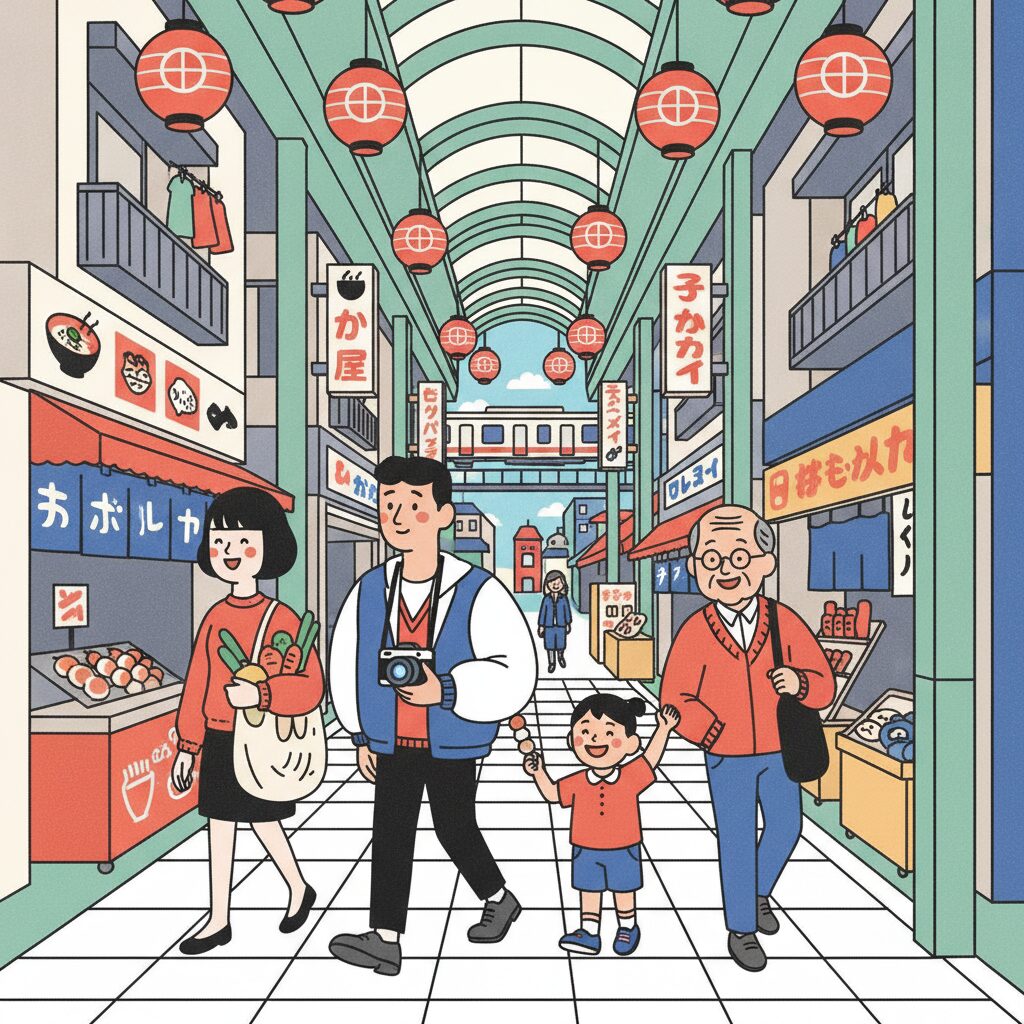
Fully immersing yourself in a deep local neighborhood demands a deliberate shift in your daily mindset. You must keep in mind that you are no longer navigating a commercial space designed explicitly for tourists. Instead, you are literally walking through someone else’s communal living room. The shotengai operates seamlessly under a strict set of deeply unwritten rules. These rules exist solely to preserve the delicate harmony of a densely packed community. Foreign residents who take the time to understand and respect these subtle guidelines are welcomed warmly and with open arms. Conversely, those who knowingly disregard them will quickly find the everyday experience frustrating, alienating, and surprisingly cold. You must carefully observe how the locals behave and willingly adjust your ingrained habits to align with the specific rhythm of the arcade.
Cash is King in Traditional Shops
Japan as a whole is gradually, inevitably transitioning toward a cashless society. Brightly lit convenience stores and large corporate supermarkets readily accept a wide variety of digital payments and transit cards. However, the neighborhood shotengai remains a fiercely proud cash-based ecosystem. These shops are mostly mom-and-pop businesses, surviving on razor-thin profit margins, and simply cannot afford the high fees associated with credit card machines and digital payment systems. Moreover, the physical exchange of hard cash is a deeply rooted, almost ritualistic part of the daily transactional experience.
When you commit to living near an arcade, adapting is essential. You must always carry a dedicated coin purse and learn to appreciate the physical weight and distinctive jingle of Japanese yen in your pocket. When you buy a single skewer of freshly grilled chicken, you hand over a few shiny coins, but the shopkeeper rarely takes the money directly from your hand. Instead, they present a small, often blue or green plastic tray called a calton.
Never try to force money directly into the shopkeeper’s hand if a tray is present on the counter. Always place the cash gently on the tray, as it is a fundamental sign of respect, personal boundaries, and physical cleanliness. The shopkeeper will then carefully count your change and return it to you on that same tray. This slow, deliberate process should not be seen as a modern inconvenience to rush through but as a designated moment of connection. It compels you to slow your hectic modern pace, to look the person across from you in the eye, and acknowledge the human transaction taking place. Mastering the subtle art of always having exact change ready will also swiftly earn you unspoken respect from the deeply impatient older women waiting in line behind you.
Mind Your Manners: The Rules of Eating and Walking
The local shotengai is packed with incredible, cheap, mouth-watering food. The temptation to buy a steaming hot croquette wrapped in thin white paper and eat it while happily strolling down the middle of the street is overwhelming. In tourist-heavy areas like Dotonbori, walking and eating simultaneously is very common, despite occasional half-hearted city campaigns against it. However, in a working residential shotengai, the practice of tabearuki, or eating while walking, is strongly frowned upon by the local community. It is considered highly rude, inherently messy, and poses a hazard to speedy bicycles and elderly pedestrians navigating the narrow lanes.
When you buy a delicious hot snack, follow the local protocol carefully. Look for a small wooden bench nearby or a tiny designated standing area just to the side of the main shopfront. Stand there, eat your food quickly, neatly, and quietly. When finished, always return your trash directly to the vendor you bought from. Do not carry greasy wrappers down the street searching for public trash cans that do not exist, and do not drop fried crumbs in the main walking path.
The shotengai is a shared community space held to a high standard of cleanliness through the continuous efforts of shopkeepers and residents alike. By standing aside and eating your snack respectfully, you immediately show the neighborhood that you understand the local etiquette and that you are a considerate neighbor, not an oblivious, demanding visitor.
Additionally, while moving through the arcade, always stay alert for bicycles. The shotengai serves as a major local thoroughfare for the famous mamachari utility bicycles. Mothers carrying groceries and children will zip past you with barely inches to spare. Walk in a straight, predictable line. Avoid sudden, unexpected stops in the center of the aisle to check your phone. Treat the arcade like a busy, unlaned highway: keep to the side, stay aware of your surroundings, and help keep neighborhood traffic flowing smoothly.
Simple Japanese Phrases to Connect with Local Shopkeepers
You do not need to be perfectly fluent in Japanese to thrive in a deep local Osaka neighborhood, but you do need to make a genuine, visible effort. The people of Osaka value communication above almost everything else. They deeply appreciate foreign residents who try, however clumsily, to bridge the language gap. Learning and using a few specific Kansai dialect phrases will instantly elevate your neighborhood status from a random, intimidating foreigner to a friendly, recognizable neighbor. The standard Tokyo Japanese greeting Konnichiwa is fine and polite, but if you want to see a tired shopkeeper’s eyes light up with genuine surprise and joy, use the local terminology.
When approaching a familiar favorite stall, don’t just say hello—say Maido. This quintessential Osaka greeting roughly translates to a humble thank you for your continued patronage or simply a friendly “hello again.” It’s used constantly in commercial settings throughout the city. After completing your purchase and taking your bags, don’t just say the standard Arigatou. Look the shopkeeper in the eye and say Ookini. This legendary Kansai thank-you word is incredibly warm and melodious.
Hearing a visibly foreign resident drop a perfectly timed, softly spoken Ookini will almost always bring a wide, genuine smile and a deeper bow of respect from the shopkeeper. These words are not mere cute linguistic quirks; they are vital cultural keys that instantly unlock a level of warmth, acceptance, and familiarity that standard textbook Japanese never can.
If the summer heat becomes unbearable, as it often does in Osaka, you can bond by commiserating together with the phrase Atsui desu ne. The goal here is not perfect grammar or fluency but human participation. Shopkeepers working in these aging arcades have spent their lives reading people’s faces and intentions. They don’t mind if your pronunciation isn’t perfect, but they deeply appreciate that you are trying to connect on their terms and respectfully acknowledge their presence in your shared community.
Living near a traditional shotengai is more than just finding cheap groceries or cheaper rent. It’s a daily, intensive lesson in human empathy. It pushes you far outside your comfortable expat bubble, teaching you the intricate rhythm of a one-of-a-kind urban culture that values humor, extreme pragmatism, and direct, unfiltered human interaction over polite silence. You quickly realize the true heart of Osaka isn’t the shimmering neon reflections of the Dotonbori canal—it’s hiding in plain sight beneath faded plastic canopies, wrapped in the scent of roasted tea and resonating with the loud, brilliant laughter of a neighborhood arcade. This is where the city truly lives, and if you’re lucky—and observant enough—to rent nearby, it’s exactly where you can genuinely learn how to live in Japan.