When you first step off the shinkansen and onto the concrete platforms of Shin-Osaka Station, the air immediately feels different. If you have spent any significant amount of time in Tokyo, you are likely accustomed to a very specific rhythm of Japanese urban life. You expect the quiet order of escalator lines, the muffled silence of crowded train cars, and the flawlessly polite but distant greetings of retail workers. Tokyo operates on a magnificent, unspoken choreography of non-interference. It is a city where millions of people move together while remaining entirely in their own private worlds. But then you arrive in Osaka, and the invisible walls of that private world are suddenly, and quite cheerfully, dismantled.
Osaka does not do silent choreography. Osaka does not do distant politeness. This is a city built on the loud, chaotic, and wonderfully human foundation of connection. For foreigners looking to build a life here, or those who simply want to understand the true pulse of daily Kansai living, this abrupt shift in social dynamics can be both exhilarating and deeply confusing. You might walk into a small neighborhood shop expecting a simple, silent transaction, only to find yourself cornered by a smiling shopkeeper asking where you are from, what you are cooking for dinner, and whether you think the local baseball team has a chance this season.
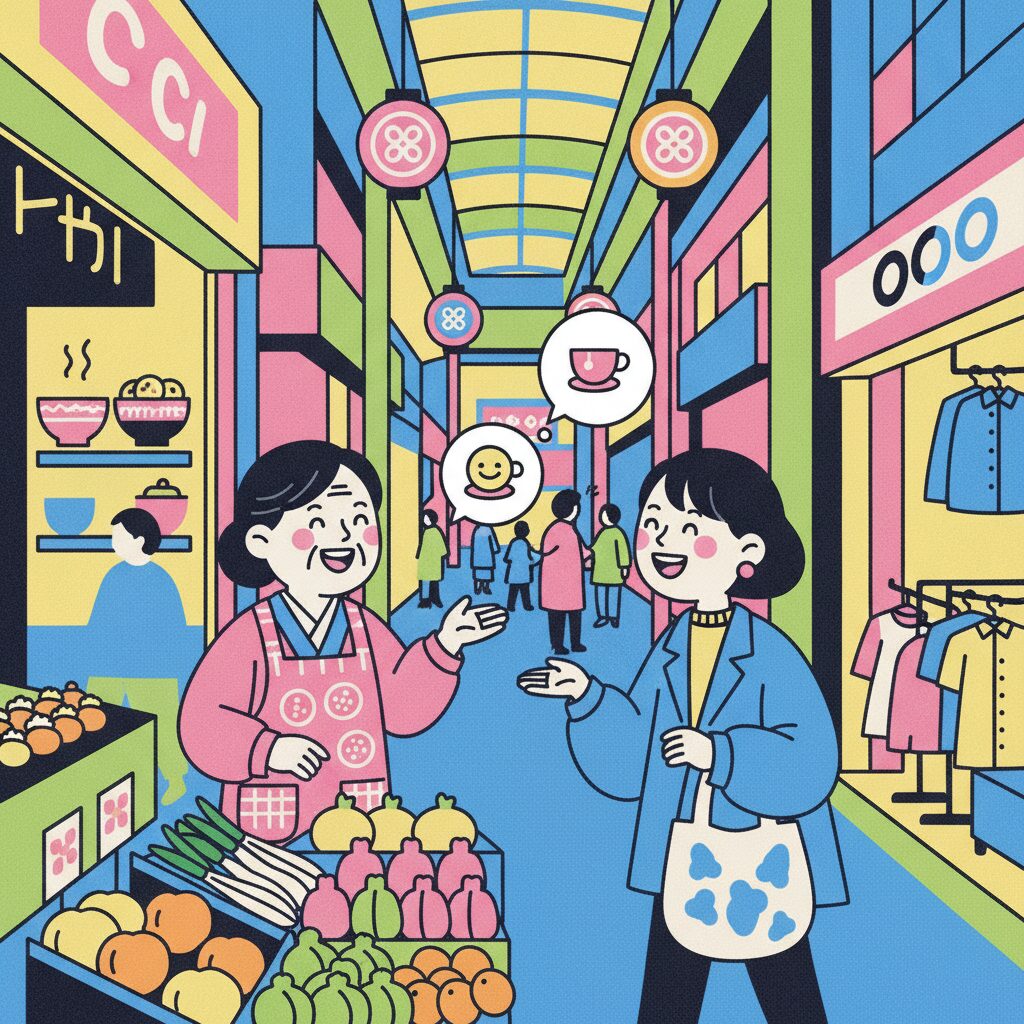
At the epicenter of this boisterous culture is the shotengai. A shotengai is a traditional Japanese shopping arcade, often covered by a high vaulted roof, stretching for blocks and lined with dozens, sometimes hundreds, of independent mom-and-pop shops. While modern shopping malls and gleaming department stores have taken over much of the retail landscape in other major cities, the shotengai remains the beating heart of Osaka’s local neighborhoods. It is here, among the scent of roasted green tea, the sizzling sounds of deep-fried beef croquettes, and the vibrant displays of seasonal fruit, that you will encounter the true essence of Osaka’s people.
Mastering the art of small talk in these covered arcades is not just about practicing your Japanese language skills. It is about understanding the fundamental mindset of a city that values human warmth over sterile efficiency. It is about moving beyond the role of a passive observer and stepping into the vibrant, messy, and joyous reality of everyday local life. If you want to know what it truly means to live in Osaka, you have to learn how to linger in the shotengai, how to catch the eye of a vendor, and how to embrace the banter that makes this city entirely unique in Japan.
The Heart of Osaka: Why Shotengai Small Talk is a Must-Do Experience
To understand why a simple errand to buy a daikon radish can unfold into a ten-minute comedy routine in Osaka, you need to consider the city’s historical DNA. Centuries ago, during the Edo period, Tokyo was the political capital, governed by stoic samurai adhering to strict hierarchies, rigid codes of honor, and the maintenance of social dignity. In contrast, Osaka served as the commercial capital, known as the kitchen of the nation—a bustling center of merchants, traders, and artisans.
Merchants cannot afford to be overly formal. If you want to sell a barrel of soy sauce or a bale of rice, merely looking serious won’t persuade people to part with their money. You need to charm them, gauge their mood, make them smile, and foster a relationship that ensures they’ll return to your stall tomorrow. This historical context gave rise to akinai, the traditional merchant spirit that still shapes how Osakans engage with the world today.
In standard Japanese service culture, heavily influenced by Tokyo’s norms, customer service is often a one-way performance. Staff deliver a flawless, standardized level of respect, treating customers almost like royalty. The phrase irasshaimase is called out, a polite but impersonal greeting that demands no response from shoppers. The interaction is smooth, effortless, and entirely anonymous.
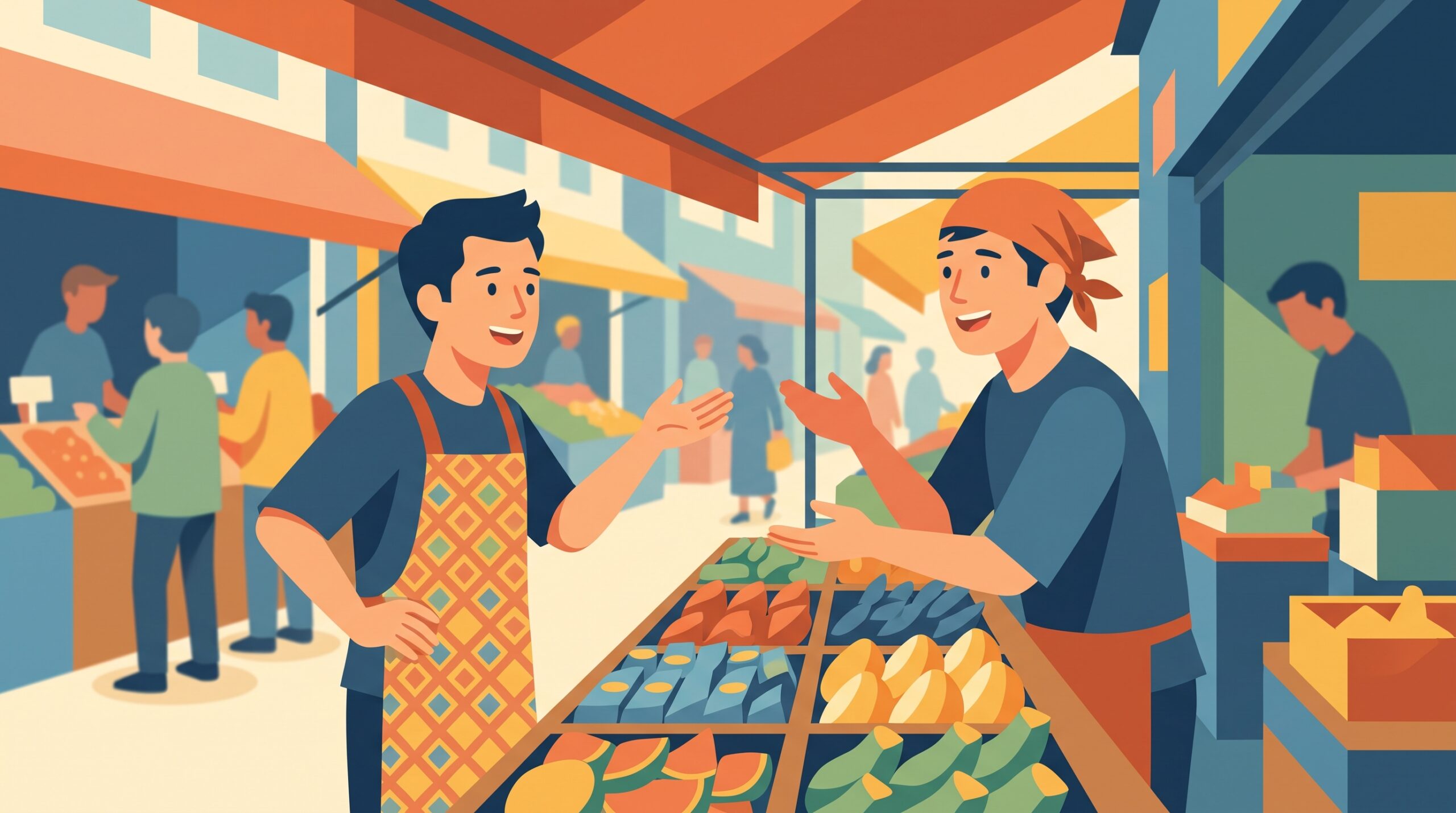
Osaka’s service culture, however, is fundamentally different. Here, the shopkeeper and customer are seen as partners sharing a daily rhythm. The boundary between server and served is deeply blurred. When a shopkeeper in a local Osaka shotengai speaks to you, they aren’t reciting lines from a corporate script; they are talking to you as a fellow human standing at their fish counter. They might remark on the weather, tease you about the quantity of onions you’re buying, or offer unsolicited yet spot-on advice on how to braise the pork belly you selected.
For foreign residents, mastering this kind of small talk is the key to feeling truly at home. It breaks through the isolation many expatriates experience in the polite but impenetrable world of standard Japanese society. When you share a joke with the local butcher, you stop being just another anonymous tourist passing through—you become a recognizable character in the neighborhood’s daily story. You become a regular. And in Osaka, being treated like a familiar neighbor is the highest compliment.
The Unwritten Rules of Chatting with Osaka Shopkeepers
While the atmosphere in an Osaka shopping arcade feels incredibly casual and inviting, it is important to remember that it is not a theme park created solely for your entertainment. These are real working markets, and the people behind the counters are earning a living. Overtourism has become a serious concern in central areas such as Dotonbori and the Shinsaibashi-suji shopping street, where crowds of visitors clog narrow walkways, snap endless photos of storefronts without making purchases, and treat local merchants like mere props for their social media feeds.
To truly experience the warmth of Osaka’s banter, you must follow the neighborhood’s unwritten rules. Interactions should be based on mutual respect and an appreciation of the local economy. Small talk is a reward for being a good customer, not a right to demand just by approaching a stall.
Start with a Small Purchase (The Golden Rule)
The fundamental rule for engaging with shopkeepers in a shotengai is that a transaction must always come first. You should never approach a vendor, point your camera at their carefully arranged strawberries, and try to chat without any intention of making a purchase. The relationship begins the moment you decide to support their business.
Luckily, participating in the shotengai economy is very accessible. You don’t need to buy a week’s worth of groceries to earn a conversation. Head to the local butcher shop and ask for a single freshly fried minced meat cutlet, known as menchi-katsu. It might cost you one hundred and fifty yen. Visit the roasted sweet potato vendor and buy a warm snack for your walk. Stop by the fruit stand and pick up a single seasonal peach.
By making even a small purchase, you immediately show that you are a participant in their world, not just an onlooker. The moment you hand over your money, the dynamic changes. The business is done, the merchant’s time is respected, and the door to casual conversation swings wide open.
Embrace the Vibe: Smiles, Gestures, and Laughter
Communication in Osaka is a deeply physical experience. If communicating in Tokyo involves maintaining respectful physical distance and speaking softly, Osaka communication is about leaning in, gesturing energetically, and letting your voice rise above the noise of passing bicycles.
You don’t need to be fluent in Japanese to master the art of shotengai conversation. The core of the interaction is completely non-verbal. When you approach a counter, make direct eye contact. This may feel unfamiliar if you’re used to other parts of Japan where indirect eye contact is polite, but in Osaka, looking someone in the eye shows sincerity and engagement.
Smile warmly. When the shopkeeper hands you your change, don’t just take it and walk away silently. Nod, offer a slight bow of acknowledgment, and present a relaxed and friendly demeanor. Osakans are known for their love of comedy, especially manzai stand-up, which pairs a funny person making absurd claims with a straight person responding with dramatic disbelief. Even in everyday life, the people of Osaka enjoy a good reaction. If a vendor hands you piping hot takoyaki and jokingly warns that it’s hot enough to melt your face off, they want you to laugh. They want to see your surprise. They want you to join in the playful spirit. By bringing energy to the counter, you provide the perfect canvas for their friendly banter.
Essential Kansai-Ben Phrases to Break the Ice
Language is the most powerful tool for bridging cultural gaps, and this is especially true in the Kansai region. Although everyone in Osaka understands and can speak standard Japanese, using it can sometimes create a subtle, invisible barrier. Standard Japanese is the language of national news broadcasts, corporate meetings, and formal correspondence. Kansai-ben, the rich, melodic, and highly expressive local dialect, is the language of the streets, the home, and the heart.
Inserting even a single word of Kansai-ben into your conversation with a local shopkeeper feels like performing a magic trick. The surprise and joy that appear on their face when a foreigner speaks their local dialect are immediate. It shows that you care enough about their unique culture to learn its nuances, going beyond textbook phrases to connect directly with their spirit.
“Maido!” (The Ultimate Osaka Greeting)
If there is one word that captures the entire essence of the Osaka merchant class, it is maido. In standard Japanese, you might say irasshaimase to welcome a customer or arigatou gozaimasu to thank them for their business. Maido carries the weight of both and more.
Historically meaning every time, maido is a shorthand way of expressing gratitude for continued patronage whenever you visit. You’ll hear shopkeepers shouting it loudly as you pass by their stalls. It is a warm, gravelly, energetic sound that echoes beneath the vaulted ceilings of the shotengai.
As a customer, you can also use maido as a casual, incredibly friendly greeting when you enter a shop where you are recognized or when completing a purchase. Saying a cheerful maido as you take your grocery bag and step back onto the street signals that you understand the city’s rhythm. It transforms you from an outsider into a participant in the lively Osaka commercial dance.
“Okini” (Thank You, Local Style)
While arigatou is perfectly understood, okini is the velvety-soft, deeply affectionate Kansai equivalent of thank you. Coming from a longer phrase meaning greatly or very much, okini has grown into a standalone expression of gratitude that carries a distinctive warmth unique to the region.
Pronunciation matters. It’s not a sharp, clipped word. It’s drawn out, melodious, often accompanied by a gentle smile and a nod. Ohhh-kee-nee. You’ll hear elderly women pushing their shopping carts along the arcade quietly murmuring it to the vegetable vendor, who will shout it back in return.
When you receive your change or neatly wrapped package from a shotengai merchant, making eye contact and offering a heartfelt okini will almost certainly bring a smile to their face. It removes the sterile formality of standard polite Japanese and replaces it with a cozy, neighborhood intimacy. It tells the vendor that you’re not just passing through but actively listening to the music of their streets.
“Kore Nambo?” (How much is this?)
In many parts of the world, and even in many parts of Japan, speaking directly about money can feel a bit awkward or impolite. Tokyo culture often encourages discretion in financial matters. Osaka culture has no patience for such pretenses. This is a merchant city where money is simply a practical reality of daily life.
Instead of using the standard textbook phrase ikura desu ka to ask for a price, true Osaka locals pick up an item, look the shopkeeper in the eye, and say kore nambo? This means how much is this, but with a breezy, confident, conversational tone.
Using this phrase signals that you are at ease in the marketplace. It invites a direct, honest exchange. In some situations, especially in deeply local flea markets or when buying in bulk at older shops, it might even open the door to a little playful haggling. Even if prices are fixed, as in most modern shotengai stalls, asking kore nambo with a smile establishes a casual merchant-to-customer rapport that feels distinctly Kansai.
Best Local Shotengai for Authentic Interactions Away from the Crowds
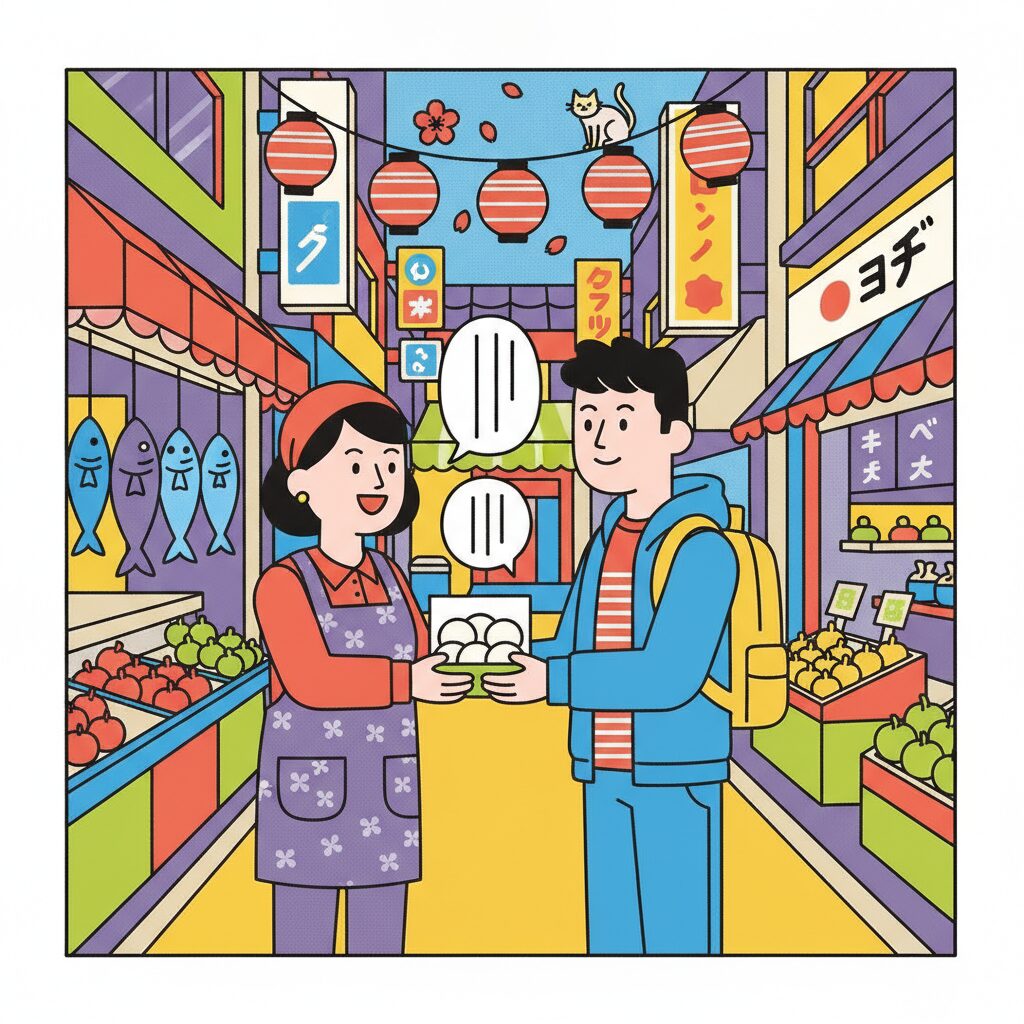
If you want to practice your newly learned Kansai-ben and experience the authentic warmth of Osaka small talk, you need to know where to go. As a local or a long-term visitor seeking real daily life, you should avoid the overly touristy main streets.
The famous Shinsaibashi-suji is visually stunning, but it functions as a conveyor belt of global tourism and international chain stores. Shopkeepers there are overwhelmed, working at full speed to handle thousands of transactions per hour. There’s no time for small talk, and trying to start a conversation will only delay the long line of people behind you. To discover the city’s true spirit, you must explore the neighborhoods where real Osaka residents live, shop for their daily groceries, and share local gossip.
Tenjinbashisuji Shotengai: Miles of Local Charm
Stretching an impressive 2.6 kilometers across multiple subway stops, Tenjinbashisuji Shotengai proudly holds the title of Japan’s longest covered shopping arcade. Walking its full length is like taking a masterclass in Osaka’s social fabric.
Unlike the polished, tourist-heavy city center, Tenjinbashisuji caters directly to surrounding residential areas. As you move from the northern end toward the south, the atmosphere gradually changes. You’ll pass small, unpretentious tea shops where the aroma of roasting leaves drifts into the walkway. You’ll see knife sharpeners at work in storefronts barely larger than closets, sparks flying as they chat with passing neighbors. You’ll encounter the legendary Osaka obachan—the spirited, friendly, often leopard-print-clad older women—skillfully navigating their heavily loaded bicycles through pedestrian crowds.
Due to its large size, Tenjinbashisuji handles crowds effortlessly. It never feels like a tourist trap. If you stop at a small corner bakery to pick up a melon pan, the person behind the counter will actually have the time and interest to ask how your day is going. It’s the perfect place to ease into local interactions.
Karahori Shotengai: Retro Vibes and Chatty Merchants
Nestled in the central, gently hilly area of Tanimachi, Karahori Shotengai offers a very different, more intimate flavor of Osaka life. Unlike Tenjinbashisuji’s endless, straight sprawl, Karahori features sloping walkways and remarkably well-preserved historic architecture. Much of this neighborhood survived World War II firebombing, so the streets are still lined with traditional wooden machiya townhouses.
Life in Karahori moves at a noticeably slower pace. It feels less like a busy commercial street and more like a cozy, sepia-toned village tucked within a modern metropolis. In recent years, young entrepreneurs have opened chic coffee stands and artisan craft shops in the old wooden houses, sitting alongside 60-year-old dried kelp sellers and traditional tofu makers.
This blend of generations makes Karahori a fantastic place for conversation. Older merchants are proud of their historic neighborhood and love to share stories about how the area has evolved, while younger shopkeepers eagerly connect with international residents who appreciate the slower, more deliberate pace of life. Buying fresh tofu here is never just a transaction; it often turns into a five-minute chat about the best seasonal garnishes.
Senbayashi Shotengai: A Glimpse into Everyday Osaka Life
If you want to skip anything remotely touristy and dive straight into the raw, unfiltered, and wonderfully gritty reality of everyday Osaka, take the Keihan railway train to Senbayashi Shotengai in Asahi Ward. This spot is so authentically local that you’ll rarely, if ever, see a guidebook-carrying traveler.
Senbayashi is well known among locals as the birthplace of the modern Japanese supermarket, but its real claim to fame lies in its fierce dedication to bargains, daily essentials, and loud, proud Osaka culture. Local theme songs blast nonstop from overhead speakers. Banners promote aggressive discounts on everything from socks to daikon radishes. The energy is intense, hectic, and completely infectious.
Shopkeepers in Senbayashi are famous for their lively banter. They don’t just wait for customers; they actively project their voices into the crowd, turning the sale of fruit or fried chicken into a theatrical show. Engaging with a vendor here takes some confidence, but the reward is well worth it. If you approach a takoyaki stand, laugh at the vendor’s loud sales pitch, and leave a perfectly timed okini, you’ll immediately earn respect and warmth that will make you feel like a lifelong neighborhood resident.
Respectful Tourism: Connecting Meaningfully in Local Neighborhoods
Ultimately, mastering the art of small talk in Osaka’s shotengai involves changing your perspective on what it means to be a resident or a visitor in a foreign country. It’s all too easy to treat a city simply as a backdrop for your own life—passing through its streets, enjoying its food, and purchasing its goods without ever truly acknowledging the people who keep it alive.
Osaka, with its deeply rooted merchant spirit, actively resists this detached way of living. The shopkeepers in the arcades, with their loud voices, warm smiles, and curious nature, are constantly extending an invitation. They encourage you to step outside your bubble, put away your phone, and engage in the shared human experience of the neighborhood.
Meaningful engagement in these local spaces demands respect. It requires recognizing that the shotengai is not a static exhibit, but a delicate, living ecosystem sustained by relationships, regular patrons, and everyday rituals. When you approach these encounters with sincere curiosity, a willingness to fumble through a few words of Kansai-ben, and the basic courtesy of making a small purchase before pulling out your camera, you help sustain that ecosystem rather than depleting it.
The rewards of this respectful, engaged approach are significant. Living in Osaka shifts from a logistical task to a deeply emotional experience. The city ceases to be a vast, overwhelming grid of concrete and neon, condensing instead into a warm cluster of familiar faces. You’ll begin to recognize the distinct hum of the local postman’s bicycle tires. You’ll know precisely which day the fishmonger brings in the best yellowtail. As you stroll through your local arcade, hearing a booming maido directed just at you, you’ll finally understand that you’re not merely living in Osaka—you are part of it.