
Osaka is a city of concrete, neon, and unapologetic noise. It runs on a relentless, vibrating momentum that can sweep you off your feet the moment you step out of the station. We walk fast, we talk fast, and we expect our takoyaki served even faster, burning our tongues in the rush to get to the next destination. Living in this city means constantly absorbing the electric energy of millions of people pressed together in the massive urban sprawl. It is a merchant town at its core, built on hustle, aggressive commerce, and highly direct human connection. Foreigners who move to the Kansai region often fall head over heels in love with this raw, unfiltered atmosphere. Unlike Tokyo, where public life is frequently masked in quiet politeness, rigid social structures, and invisible boundaries, Osaka wears its beating heart completely on its sleeve. You always know exactly where you stand with an Osaka local. We will complain loudly about the suffocating summer humidity that wraps around the city like a wet blanket. We will debate the best local okonomiyaki joint with fierce, unyielding neighborhood loyalty. And we will gladly share a cheap, ice-cold highball and a heavy, echoing laugh with a complete stranger at a cramped standing bar in the back alleys of Kyobashi or Tenma.
But this intense, beautiful social energy demands a heavy psychological toll. Over time, the endless pavement starts to feel a little too hard beneath your boots. The blinding neon lights of Dotonbori begin to burn your eyes instead of dazzling them. The endless, rumbling hum of the Midosuji subway line rings continuously in your ears, even when you are lying in bed trying to sleep. You find yourself suddenly craving something that downtown Osaka notoriously and stubbornly lacks: absolute, unfiltered silence. You do not want a manicured park filled with selfie sticks and tourists. You do not want a curated, perfectly pruned zen garden where you feel forced to whisper. You want raw, untamed nature. You want dirt under your fingernails. You want to remember what the night sky actually looks like without an ugly, orange filter of urban smog and endless building lights washing out the stars.
When that deep, undeniable craving hits, a true Osaka local does not look south toward the crowded, highly commercialized beaches of Wakayama. They do not look east toward the tourist-packed, heavily manicured hills of Kyoto, where you have to fight for breathing room on the hiking trails. Instead, they look north. Way north. They look to the rugged, quiet, and deeply spiritual town of Nose. Located at the very northern tip of Osaka Prefecture, touching the jagged border of Hyogo Prefecture, Nose feels like an entirely different universe. The air here is sharply crisp, carrying the heavy scent of pine and damp earth. The forests are dense, dark, and ancient. And at the exact heart of this rural escape lies Mount Myoken, a mountain that offers not just a grueling physical challenge, but a profound, almost startling connection to the cosmos above. This is not a polished tourist trap. This is a purely local sanctuary. If you truly want to understand how the hardworking people of Osaka recharge their battered batteries and find their spiritual center, you need to follow them away from the neon glow and straight into the dark woods of Nose.
Discover Mt. Myoken: Osaka’s Sacred Mountain of the North Star
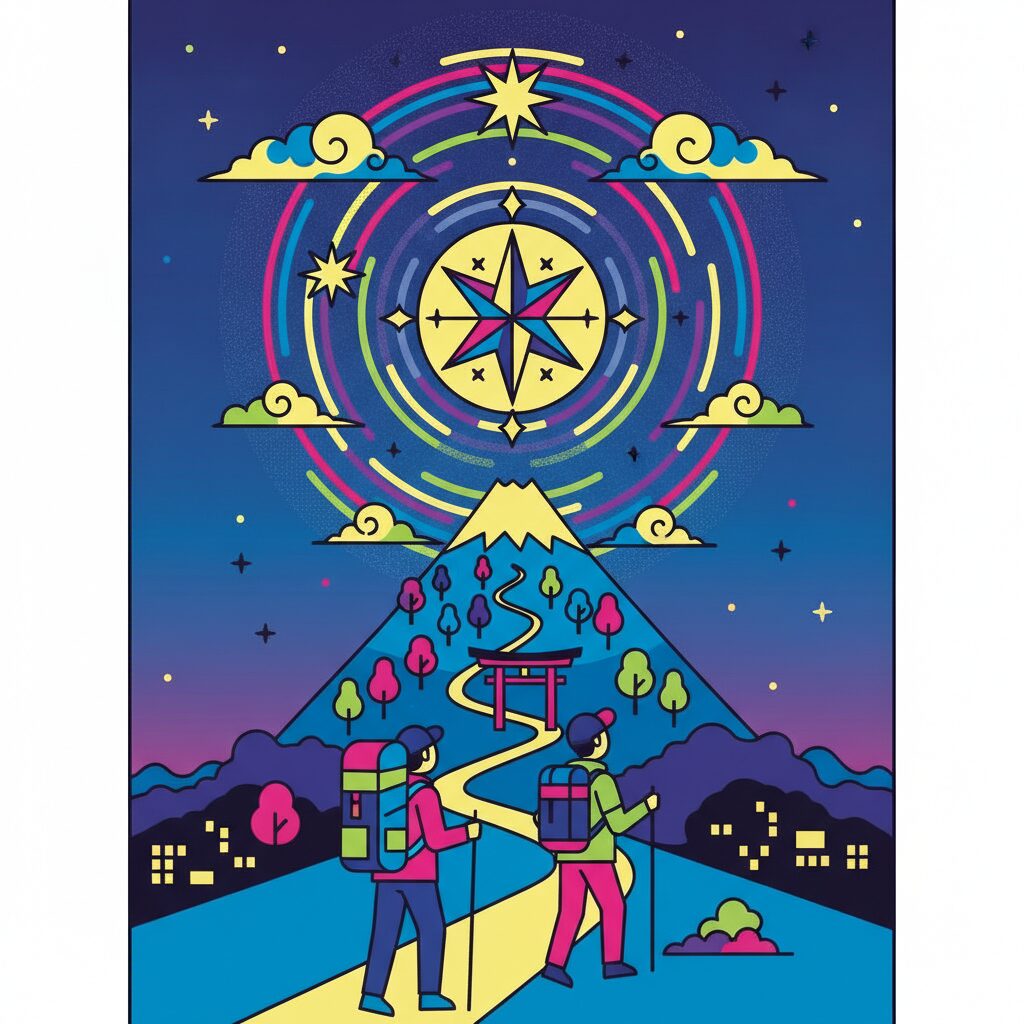
Rising roughly six hundred and sixty meters above sea level, Mount Myoken may not be an imposing alpine peak by global standards, yet it commands a substantial and undeniable presence in the cultural and spiritual fabric of the Kansai region. To grasp Mount Myoken’s appeal is to understand a very particular and deeply rooted aspect of the Osaka mindset. The people of this city are known for their pragmatism. They value things that have a clear, definable purpose and yield honest, tangible results. When seeking spirituality, Osaka locals rarely aim for vague or abstract enlightenment. Instead, they seek practical blessings—prayers for a prosperous business year, a safe sea voyage, or good health for their aging parents. Mount Myoken embodies this grounded, highly transactional form of spirituality that perfectly aligns with the merchant spirit of the city.
For centuries, long before modern trains and paved roads linked it to the sprawling urban area below, the mountain has been a powerful site of worship. Here, the physical challenge of the steep ascent is closely intertwined with the spiritual reward awaiting at the summit. Unlike the easily reachable, flat-ground temples in the city center, reaching Mount Myoken’s peak requires effort—you must sweat, breathe heavily, and physically earn your quiet moment of contemplation. This experience perfectly reflects the traditional Osaka work ethic: hard, unglamorous labor without cutting corners leads to honest rewards. The mountain makes no pretense of being anything other than what it is—a steep, demanding, and profoundly beautiful part of the untamed natural world. It is this very authenticity that draws locals back weekend after weekend, year after year.
Important Update: Myoken-no-Mori Cable Car & Lift Closure
Before you pack your hiking bags, fill your water bottles, and head to the train station, there is one crucial piece of information you absolutely must understand. If you search the internet for Myoken-no-Mori today, you will undoubtedly come across numerous outdated travel blogs, old guidebooks, and enthusiastic articles describing a charming cable car ride, a scenic single-seat chairlift gliding over the valley trees, and a bustling barbecue terrace where large families gather for weekend picnics. You must completely erase these images from your mind right now.
In December of 2023, the Myoken-no-Mori cable car, the hillside lift, the expansive barbecue areas, and all related tourist transport facilities were permanently closed. They are entirely gone, heavily shuttered, and slowly being reclaimed by the forest. The era of the effortless, motorized tourist ride up the steep side of Mount Myoken is officially and permanently over. This monumental closure was driven by a harsh combination of rapidly aging mechanical infrastructure, astronomical maintenance costs, and a steady, undeniable decline in the casual tourist ridership that once sustained these massive facilities.
For some casual day-trippers seeking an easy view, this news is a huge disappointment. But for the true Osaka local, the dedicated nature lover, and the spiritual pilgrim, this dramatic closure represents a profound, beautiful rebirth. The permanent shutdown of these noisy facilities has fundamentally changed the demographic of the entire mountain. It has successfully filtered out the casual crowds, blaring portable speakers, and large, noisy picnic groups. Today, Mount Myoken has reclaimed its quiet, ancient dignity. To reach the summit and the deeply forested areas now, you must rely entirely on your own two feet and your own willpower. It has transformed back into a raw, authentic, and demanding hiking destination. Knowing this fact distinguishes the informed resident from the completely confused tourist. If you are heading to Nose today, you are not going for a theme park ride in the woods. You are embarking on a genuine, sweat-inducing wilderness expedition.
Hiking Mt. Myoken: Best Trails for Nature Lovers
Accessing the Trailhead from Osaka
The journey to the mountain is an essential experience in itself, acting as a slow, intentional decompression from the hectic pace of city life. Your trip begins at the vast, bustling, ever-moving hub of Hankyu Umeda Station. From there, you board the Hankyu Takarazuka Line, gradually leaving behind the soaring skyscrapers, digital billboards, and endless crowds. After approximately twenty minutes traveling through dense suburban areas, you transfer at Kawanishi-Noseguchi Station to the Nose Electric Railway, a line affectionately and simply called the Noseden by locals.
It is at this very transfer that the magic truly starts to take effect. The Noseden is a modest, winding local train line that slowly ascends into the rugged northern hills. With every station passed, the gray concrete gradually gives way to deep green valleys, carefully terraced rice paddies, and dense bamboo groves. The temperature noticeably falls against the train windows. The artificial air conditioning inside the train is replaced by the cool, natural breeze coming through slightly opened windows. By the time you reach Myokenguchi Station, the final stop on the line, the psychological shift is complete. You step off into a quiet, deeply rural plaza that feels worlds away from the neon-lit city center. From this small station, the main trailheads are just a brisk twenty-minute walk through a peaceful, traditional farming village, setting a perfectly meditative tone for the challenging climb ahead.
Recommended Hiking Routes
Since motorized transport is completely decommissioned and prohibited, your only way to the summit is via the ancient, well-worn trails. The most popular and historically significant route by far is the Kurokawa Trail. This demanding path follows old logging roads and traditional pilgrimage steps that have been actively used for centuries. It is entirely unpaved, featuring prominently exposed tree roots, stretches of loose gravel, and steep, natural dirt steps that require your full attention. The ascent is quite strenuous in certain sections, compelling you to focus fully on your footing, balance, and breathing.
As you ascend, the dense canopy of ancient cedar and tall cypress trees completely obscures the sky, creating a quiet, emerald-hued world isolated from the rest of the planet. The rich scent of damp earth, decaying leaves, and crushed pine needles is intoxicating. There are absolutely no convenience stores here. No brightly lit vending machines await you halfway up to offer relief. It’s just you, the silent mountain, and the steady sound of your own heartbeat in your ears. Another excellent option for hikers is the Uesugi Trail, which features a slightly more varied, rolling terrain and occasional breaks in the thick treeline that reveal stunning, sweeping panoramic views of the distant valleys below. Whichever rugged path you choose to tackle, the nature of the hike remains the same: it demands true respect, requires genuine physical effort, and rewards you with a profound, lasting sense of solitude and deep peace that cannot be purchased in the city.
Stargazing and Spirituality in Nose
The Legend of Nose Myoken-san Temple
When you finally break through the last treeline and reach the flat summit, you are not simply met with a scenic overlook or a wooden observation deck. Instead, you find yourself standing directly on the sacred, historic grounds of Nose Myoken-san Temple. This vast complex is the true spiritual heart of the mountain, holding a fascinating and deeply rooted connection to the dark sky above. The temple is entirely dedicated to Myoken Daibosatsu, a powerful, revered Buddhist deity representing the literal deification of the North Star and the glowing constellation of the Big Dipper.
Why would a mountain temple focus so intensely on the North Star? In ancient times, long before GPS satellites and highly accurate modern compasses, the North Star was the only fixed point in the ever-changing night sky. While other stars rotated, shifted, and disappeared with the seasons, the North Star remained perfectly, stubbornly still—an infallible navigational anchor for anyone lost in the dark. For the historic merchants and brave sailors of early Osaka, whose financial livelihoods and physical lives depended heavily on safe passage through the treacherous Seto Inland Sea, the North Star was quite literally a matter of life and death. They would ascend this very mountain to pray to Myoken Daibosatsu for guidance, safe travels, and clear direction in their chaotic business endeavors. Today, modern Osakans still make the same grueling pilgrimage. In a fast-paced world that feels increasingly unstable and unpredictable, the human desire to connect with a symbol of absolute stability and unwavering guidance resonates deeply. The temple grounds, beautifully adorned with unique star-shaped crests on the wooden gates, seamlessly bridge the vast gap between the exhausting struggles of city life and the infinite, silent calm of the cosmos.
Best Spots for Night-Time Stargazing
Because Nose sits at the northernmost edge of the prefecture, heavily shielded by a thick wall of surrounding mountains, it escapes the massive, glowing dome of light pollution produced by the sprawling Osaka, Kobe, and Kyoto metropolitan areas. As the sun dips below the horizon and mountain shadows stretch long, the true breathtaking magic of Mount Myoken reveals itself. The darkness here is absolute, heavy, and profoundly deep.
Stargazing on Mount Myoken is far from a commercialized, ticketed event. You won’t find enthusiastic guided tours, annoying green laser pointers, or large observatory telescopes surrounded by noisy crowds. Instead, it is a deeply personal, solitary, and intensely quiet experience. You find a peaceful clearing near the expansive temple grounds, sit down on the cold earth, and simply wait. It takes about twenty to thirty minutes for your modern, screen-addicted eyes to adjust fully to the pitch-black surroundings. Then, the sky erupts with brilliant light. You can clearly trace the intricate, cloudy arm of the Milky Way galaxy stretching across the heavens. You can easily spot the bright points of the Big Dipper and, of course, the ever-present North Star stubbornly holding its eternal, fixed position directly above the temple. Gazing up at this vast, impossibly sparkling canvas, the heavy stress of the city, the nightmare of crowded morning commutes, and the endless stream of urgent work emails fade completely into insignificance. It is a deeply humbling, genuinely awe-inspiring experience that strips away the inflated ego of city living and leaves you sitting in a state of pure, quiet, uninterrupted wonder.
Essential Tips for Your Mt. Myoken Adventure
Living in Osaka quickly teaches you to be relentlessly practical and highly prepared, and you must apply that same gritty pragmatism to your weekend escape into the wild forests of Nose. The mountain is undeniably beautiful, but without the comforting safety net of the old, decommissioned cable car, it is utterly unforgiving to the arrogant or unprepared.
First and foremost, if you are hiking late in the afternoon to experience the stargazing, you must fully understand that you will also be hiking back down in complete, suffocating darkness. A weak smartphone flashlight is entirely useless on a steep, root-covered mountain trail. It will drain your battery in minutes, cast poor shadows, and easily leave you dangerously stranded. You absolutely must bring a high-quality, dedicated headlamp, along with spare batteries in your bag. This is not a suggestion; it is an essential requirement for your own physical safety.
Second, your choice of footwear is non-negotiable. Fashionable sneakers are perfectly fine for confidently navigating the smooth underground shopping malls of Umeda, but they will betray you on the loose rocks, wet mud, and steep descents of the Kurokawa Trail. Sturdy, ankle-supporting hiking boots are an absolute necessity to prevent serious sprains or falls in the dark.
Third, fiercely respect the drastic temperature drop. Downtown Osaka might be sweating through a humid, sticky evening, but the exposed summit of Mount Myoken at night is aggressively cold due to the wind and elevation. Always pack reliable thermal layers, a heavy windbreaker, and even thin gloves in your backpack, no matter what the weather app says about the city below.
Finally, remember at all times that you are entering a wild, natural habitat. While dangerous encounters are rare, the deep forests of Nose are home to wild boars, occasional deer, and various mountain wildlife. Carry a small bear bell attached to your bag to announce your presence on the trail, giving animals time to move away. Additionally, always pack out whatever trash you bring in. The locals and the temple monks treat this sacred mountain with immense reverence, and as a temporary guest in their spiritual sanctuary, you are expected to do the same. Prepare intelligently, hike respectfully, and the rugged, starlit peak of Mount Myoken will grant you the deep peace and mental clarity you need to return to the chaotic, wonderful, and relentless grind of daily Osaka life.