The neon hum of the city never really stops, it only changes frequency. When the midnight hour strikes in Osaka, a massive psychological shift washes over the sprawling concrete grid of the city. The loud, chaotic energy of the early evening izakaya begins to fragment. The clinking of heavy glass beer mugs fades, replaced by the shuffling of feet against the pavement, the frantic waving down of passing taxis, and the low murmurs of colleagues finally dropping their professional armor. You might think the night is over. You might think it is time to go home. But in Osaka, and indeed across Japan, the night does not end when the alcohol stops flowing. The night ends when you eat.
This is not a mere midnight snack. This is not the drunken, stumbling dive into a greasy slice of pizza or a sloppy kebab that defines the end of a night out in many Western cities. This is a vital, culturally ingrained, heavily structured ritual. It is the decompression chamber between the intoxicated camaraderie of the night and the sobering reality of the morning commute. It is the bridge between chaos and order. This is the concept of the “shime.”
To understand daily life in Osaka, to truly grasp the rhythms and mindsets of the people who call this massive merchant city home, you must understand how they conclude their evenings. Osaka is famous for its food, proudly bearing the title of the nation’s kitchen. But the food eaten at the end of the night reveals something far deeper about the local character than the extravagant feasts eaten at the start of it. The shime reveals the pragmatism, the warmth, the profound appreciation for subtle flavors, and the distinct, stubborn independence of the Kansai region. It separates the people of Osaka from the people of Tokyo in ways that go far beyond mere geography.
We need to look past the tourist brochures. We need to look past the giant mechanical crabs and the glowing running man of Dotonbori. To understand the soul of Osaka, you have to stand shoulder to shoulder with a tired office worker at one in the morning, inhaling the steam from a golden bowl of broth, watching the city slowly exhale. You have to experience the shime.
What is “Shime”? Understanding Japan’s Post-Drinking Ritual
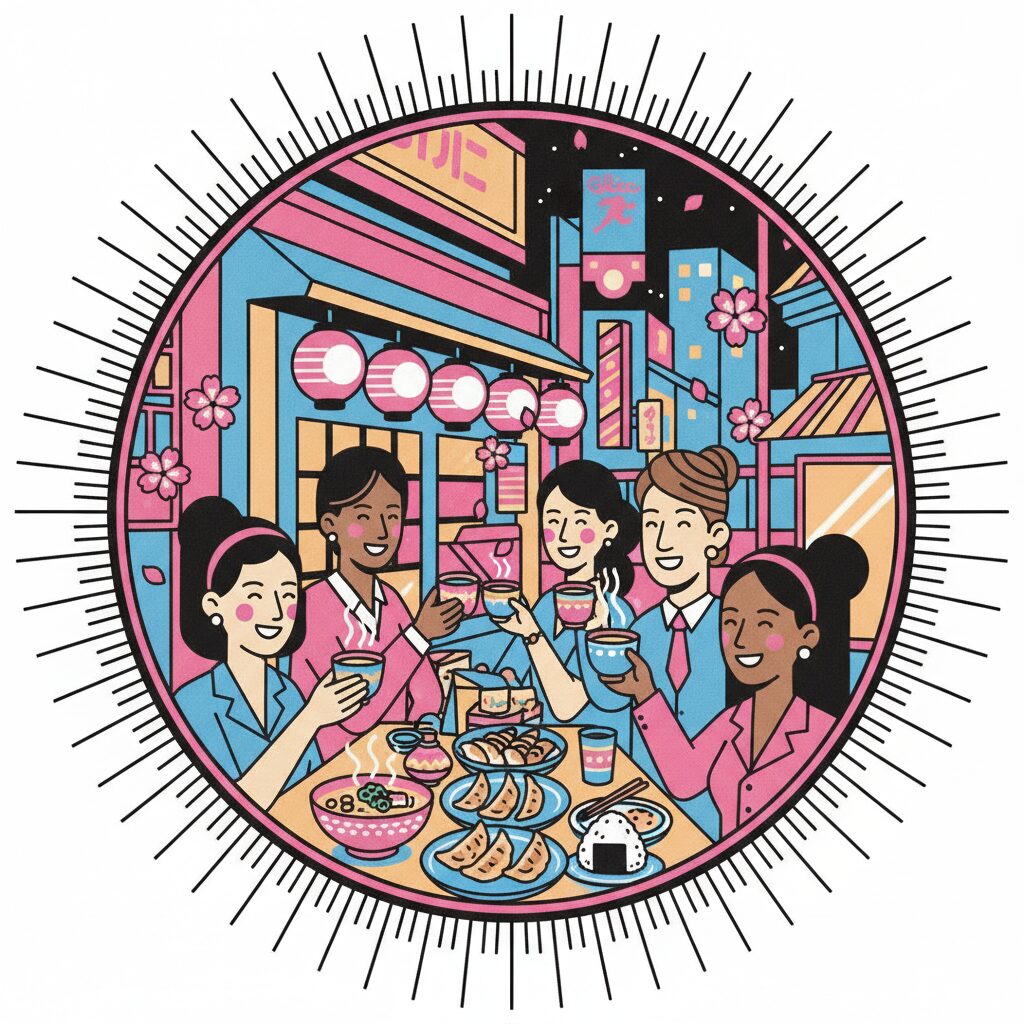
The word itself carries significant cultural weight. The term “shime” originates from the Japanese verb “shimeru,” which directly translates to “to tie,” “to fasten,” or “to conclude.” It shares the same root word used in business for closing a financial ledger or in martial arts when applying a finishing hold. In the culinary nightlife context, the shime is the definitive, unmistakable conclusion to the evening’s celebrations. It is the act of tying up the night’s loose ends.
When foreign residents first arrive in Japan, the concept of shime can be quite confusing. In many Western cultures, drinking late into the night often ends with a messy, chaotic search for the heaviest, greasiest food available. This is a biological imperative, a desperate attempt by an intoxicated body to absorb alcohol. It is rarely a conscious experience. People eat enormous burgers, dripping shawarmas, or chili-cheese fries while sitting on curbs, shouting over the noise of the street. It is the final indulgent burst before the inevitable crash.
In Japan, however, shime functions on a completely different psychological wavelength. The Japanese corporate drinking culture, known as “nomikai,” is a high-pressure, tightly structured environment. Even when people become very drunk, unspoken hierarchies remain in place. Junior employees pour drinks for senior managers. Conversations, though more relaxed than in the office, still follow a framework of social obligation. The izakaya is a stage, and everyone plays a role.
Shime represents the dropping of the curtain. When the group finally leaves the third or fourth bar of the night, the rigid structures begin to break down. Choosing to go for shime signals the collective agreement that social obligations have been fulfilled. The transition from the raucous, smoke-filled pub to the brightly lit, quiet, and intensely focused atmosphere of a late-night noodle shop is abrupt but deliberate.
You sit at a wooden counter. The lighting is often harsh, industrial, and unforgiving. Conversation is minimal. The focus narrows to the bowl placed before you. Shime is an act of grounding. It brings the body and mind back to equilibrium. The warm broth coats the stomach, settling the alcohol. The carbohydrates provide the necessary energy to make it through the train ride home or the slow walk back to the apartment. More importantly, the quiet, solitary act of eating shime allows the individual to transition from the collective group mindset back to their private self.
This ritual is indispensable. Without shime, the night feels unfinished. A Japanese salaryman stumbling home without his closing bowl of noodles experiences a profound psychological incompleteness. It is like hearing a piece of music that ends before the final chord resolves. Shime provides the closure needed to wake up the next morning, put the suit back on, and face the crushing routine of the workday once again.
The Osaka Difference: Why Udon Rules the Night
If you ask someone in Tokyo what the ultimate shime is, they will almost always say ramen. The streets of Shinjuku and Shibuya are dotted with late-night ramen shops offering incredibly dense, heavy tonkotsu broths made from pork bones or boldly salty soy sauce-based bowls. Tokyo ramen is an assault on the senses. It is rich, oily, and settles heavily in the stomach. For people in the Kanto region, that heavy impact represents the ideal sense of closure.
Ask the same question in Osaka, and the response will be very different. In the Kansai region, the undisputed late-night shime king is not ramen—it is udon.
This simple difference reveals a huge cultural divide between the two cities. People from Osaka regard Tokyo’s heavy late-night ramen with a mix of amusement and physiological disgust. “Why,” an Osaka local might ask, “would you put something so heavy and aggressive into your stomach right before going to sleep?”
Osaka is a city grounded in pragmatism. Historically a merchant city, its culture values practical solutions, bodily health, and lasting benefit over flashy, temporary indulgence. This pragmatism runs deep in their food choices. An Osaka native drinks just as hard, if not harder, than someone from Tokyo. But when the night ends, Osaka’s mindset insists that the body needs care. The stomach, already burdened by hours of cold beer, sweet chu-hi cocktails, and rich izakaya fare, requires a gentle touch—not another assault.
Udon provides that gentle touch. The thick, chewy wheat noodles are easy to digest, but the true secret lies in the broth surrounding them. To understand Osaka, you must understand the holy grail of Kansai cuisine: the broth.
The Power of Dashi Culture in the Kansai Region
If you want to spark a debate between someone from Tokyo and someone from Osaka, bring up broth. The culinary gulf between eastern and western Japan centers on the liquid in their noodle bowls. In Tokyo, the broth is dark and nearly opaque, dominated by strong, sharp soy sauce and fatty meat oils. In Osaka, the broth is golden, translucent, and deeply intricate. It is all about the “dashi.”
Dashi is the foundational soup stock of Japanese cuisine, but in Osaka, it is practically revered. Typical Osaka dashi blends dried kombu (kelp) and katsuobushi (bonito flakes), sometimes enhanced with dried sardines or mackerel. The resulting broth is light in color but overwhelmingly rich in umami, the elusive fifth taste.
The historical roots of this difference are tightly linked to the region’s geography and commerce. During the Edo period, Osaka was the main destination for “Kitamaebune” trading ships sailing south from Hokkaido along the Sea of Japan. These vessels brought vast amounts of top-quality kombu kelp to Osaka’s ports. The city’s merchants, always seeking to maximize value, developed highly sophisticated methods to extract flavor from this kelp.
Moreover, Kansai’s water is naturally soft, meaning it contains low minerals—perfect for drawing out the delicate glutamic acids from kombu. If you try to make kombu dashi with the harder water found in Kanto, the minerals interfere with flavor extraction, resulting in a weaker taste. Because Tokyo lacked reliable kombu, they relied on bolder, sharper ingredients like dark soy sauce and animal fats to build flavor. Osaka, blessed with soft water and premium kelp, chose the opposite path: elegance, depth, and clarity.
This historic quest for perfect dashi aligns exactly with the psychological needs of the late-night shime. When you step into a late-night udon stand in Namba or Tennoji at 2 a.m., the first thing that hits you is the aroma. It is an intensely comforting, profoundly oceanic scent of toasted fish flakes and sweet kelp. It smells like home.
When an intoxicated Osaka local drinks that dashi, a chemical reaction takes place. The flood of umami triggers a deep feeling of satisfaction in the brain while the warm, gentle broth soothes the stomach lining. Its high water content hydrates the body, helping stave off the coming hangover. It is culinary medicine disguised as a late-night snack. The locals understand this instinctively. They don’t eat udon at night because it’s trendy—they eat it because their bodies urgently need the healing power of the dashi.
Kasu Udon: Osaka’s Ultimate Late-Night Soul Food
While a simple bowl of plain udon makes for a perfectly acceptable shime, Osaka boasts its own highly specific local variation that dominates late-night hours. To truly eat like a seasoned Osaka veteran, you must try “Kasu Udon.”
“For many foreigners, and even Japanese from outside Kansai, Kasu Udon is completely puzzling. The word ‘kasu’ usually means ‘dregs,’ ‘leftovers,’ or ‘waste’ in standard Japanese. Naming a dish after trash seems counterintuitive. But in the working-class neighborhoods of southern Osaka, ‘kasu’ refers to something magical: aburakasu.
Aburakasu is beef intestine slowly and carefully deep-fried at low temperatures until all excess fat renders out. What remains is a concentrated, intensely flavorful, crispy-yet-chewy piece of offal. Preparing it well takes great skill and time.
The history of aburakasu is closely tied to the working-class meatpacking districts of Kansai. It began as a way to ensure that no part of the animal went to waste. Workers in these districts would take the perishable, hard-to-sell internal organs and fry them to preserve them. Over time, necessity turned into a beloved local delicacy—ultimate comfort food born of hardship and ingenuity.
When this richly savory, crispy beef intestine meets the delicate, golden, umami-rich kombu dashi of Osaka udon, a culinary marvel unfolds. The broth gradually softens the crispy kasu, while the lingering beef fat melts into the dashi, adding a layer of rich, decadent sweetness that transforms the soup from a gentle remedy into a deeply satisfying, hearty meal. The kasu’s texture changes from crunchy to deliciously chewy.
Eating Kasu Udon at 3 a.m. in a tiny, cramped, standing-only shop tucked in the back alleys of Dotonbori is a quintessential Osaka experience. It perfectly captures the city’s character. It takes a refined, delicate base (the dashi) and boldly pairs it with a gritty, working-class, unabashedly rich ingredient (the kasu). It is unpretentious, incredibly tasty, and completely unique to this particular geography. It stands as the ultimate testament to Osaka’s philosophy of finding immense value and flavor in what others might discard.
Beyond Udon: Other Popular Shime Options in Osaka
While the dashi-rich udon embodies the traditional soul of the city, Osaka is a vast, vibrant metropolis. The local culture is far from uniform, and the rituals of the shime have expanded to include a wide variety of options, catering to different neighborhoods, generations, and levels of intoxication.
Late-Night Ramen in Dotonbori
It would be inaccurate to say that no one in Osaka eats ramen after drinking. Although udon holds philosophical prestige, the raw appeal of a hot bowl of ramen is universal. The streets of Minami, the southern entertainment district covering Namba and Dotonbori, are filled with late-night ramen shops serving the large crowds spilling out from clubs, bars, and host clubs.
Still, Osaka’s late-night ramen culture carries a unique local twist. The well-known chains that light up the neon streets—establishments with giant dragons bursting from their storefronts or places where staff shout greetings with dramatic flair—often offer a ramen style that balances Tokyo’s heaviness with Osaka’s dashi-centric preferences. You’ll find broths that mix pork bone with generous amounts of sweet Chinese cabbage, resulting in a soup that’s rich yet unexpectedly sweet and gentle on the stomach.
The atmosphere inside these late-night ramen joints is pure chaos. Unlike the quiet, introspective ambiance of a traditional udon stand, Dotonbori’s ramen spots serve as an extension of the nightlife. Diners perch on uncomfortable stools, squeezed close to strangers. The air is thick with the scents of garlic, soy sauce, and spilled beer, while the floors are often slick with grease. It’s loud, fast-paced, and energetically intense. Eating here isn’t about a gentle transition to sobriety—it’s a bold refusal to let the night end. It’s the culinary equivalent of cranking the music just before the speakers blow.
The Sweet Finish: Osaka’s Shime Parfait Trend
In recent years, a major shift has transformed the post-drinking habits of younger generations, completely redefining the traditional shime ritual. Enter the “Shime Parfait.”
This trend originated not in Osaka but in the northern island of Hokkaido, specifically in Sapporo. Yet Osaka, a city that embraces trends and has a deep appreciation for extravagant visual presentation, enthusiastically made it its own.
Rather than seeking a hot, salty bowl of noodles, younger drinkers now flock to specialized late-night cafes to savor towering, elaborate ice cream parfaits. These are no ordinary desserts but architectural masterpieces layered with premium soft-serve ice cream, seasonal fresh fruits, rich chocolate sauces, delicate jellies, and crispy wafers. They are intensely visual, crafted to be photographed and shared on social media before being eaten.
The rise of the Shime Parfait reflects a broader sociological shift in Japanese nightlife. Younger generations drink less heavily than their predecessors, the older corporate warriors. The demanding, obligatory, heavily intoxicated nomikai culture is gradually fading, replaced by smaller, more intimate gatherings among friends. When you haven’t overwhelmed your stomach with ten pints of cheap draft beer, you don’t necessarily need the restorative power of dashi. Instead, you want something delicious, visually appealing, and fun to cap off the night.
The contrast is striking. The sugar delivers a sharp burst of energy, while the coldness of the ice cream jolts the system awake, cutting through the warm, fuzzy haze of alcohol. It’s an entirely different approach to the ending ritual—less about recovery and more about pure, joyful indulgence. Watching a group of sharply dressed young professionals in a chic, dimly lit cafe at midnight, carefully dismantling a towering strawberry parfait with long silver spoons, offers a perfect snapshot of a city amid cultural evolution.
Where to Experience Shime Culture in Osaka

Osaka’s nightlife geography is broadly split into two major hubs, each boasting its own unique character, vibe, and style of concluding the night with a final meal. To truly grasp the city, one must recognize the distinction between its northern and southern parts.
Namba and Umeda: The Epicenters of Late-Night Dining
For the raw, unfiltered, chaotic pulse of Osaka, head south to “Minami,” the area that includes Namba, Dotonbori, and Shinsaibashi. This is the Osaka you see in films—a maze of narrow alleys, dazzling neon lights, and a dense throng of people. Here, shime options are endless, favoring the cheap, quick, and deeply satisfying. You’ll encounter standing udon bars under railway overpasses, where the rumble of final trains shakes the bowls, and ramen shops squeezed into tiny storefronts barely wider than a door. The crowd is younger, louder, and a bit more unruly. The air carries smells of exhaust, sweet soy sauce, and the humid dampness of the nearby river. Minami is where you go to feel the city’s lifeblood.
In sharp contrast lies “Kita,” the northern district centered on Umeda. Umeda is the financial and corporate core of western Japan, characterized by gigantic, gleaming skyscrapers, sprawling underground shopping centers, and a more polished, restrained vibe. This nightlife caters mainly to the corporate set. Izakayas here tend to be pricier, the suits sharper, and the shime options reflect a higher cost. You’ll find elegant, quiet noodle shops tucked away in office building basements, serving premium dashi crafted from the finest ingredients. The noise is subdued, and the shift from intoxicated to sober happens with more dignity and poise. Umeda is where business deals conclude, and the shime carries that serious, professional tone.
Kitashinchi Shime: A Dedicated Spot for the Perfect Finale
Within Kita lies an exclusive, tightly knit neighborhood called Kitashinchi, Osaka’s premier entertainment district. It features a dense network of narrow streets filled with upscale host and hostess clubs, exclusive members-only bars, and luxury dining establishments. This is where the city’s elite come to play, operating on corporate expense accounts and wrapped in strict discretion.
Because Kitashinchi’s drinking culture is so refined, its shime culture has evolved to meet high standards. Exploring the late-night options here uncovers places that elevate the final meal to an art form. A standout example is the specialized restaurant known as “Kitashinchi Shime.”
This isn’t a greasy ramen stall or a budget udon spot. Kitashinchi Shime is a dedicated izakaya focused solely on the art of the closing dish. It perfectly embodies the neighborhood’s upscale essence. The ambiance is refined, quiet, and deeply respectful of its ingredients. Executives bring important clients here after a night of heavy drinking to ensure the evening ends impeccably.
The menu at Kitashinchi Shime goes well beyond simple noodles, emphasizing seasonal seafood, delicate rice dishes, and exquisitely refined broths. You might enjoy rice porridge (zosui) made with premium crab stock or delicate somen noodles served in a broth infused with seasonal citrus. Portions are carefully measured to satisfy without overwhelming. The service is flawless.
Understanding a place like Kitashinchi Shime is key to grasping Osaka’s social hierarchy. It shows how the closing meal concept is so deeply rooted in the culture that entire high-end business models revolve around it. It proves the shime is not merely an afterthought, but the most important meal of the night—the final impression that lingers long after the alcohol fades.
Tips for Enjoying Osaka’s Nightlife Like a Local
For a foreign resident seeking to immerse themselves in the daily life of Osaka, navigating the unspoken rules of the night can be quite challenging. The city is renowned for its friendliness and openness, but that openness rests on a foundation of unwritten social contracts. To truly experience the city’s rhythm, you must learn how the locals behave after dark.
First, grasp the concept of pacing. A night out in Osaka is an endurance test, rarely limited to a single spot. The evening unfolds in stages: the initial dinner (the first party), followed by a secondary bar for heavier drinking (the second party), possibly a karaoke box or a small snack bar (the third party), and finally, the shime. Drinking too quickly at the first location will prevent you from making it through the entire night. Locals pace their alcohol consumption with food and water, understanding that the goal isn’t to get wasted but to maintain a sustained, social elevation.
Second, embrace the physical closeness of the city. Space in Osaka is extremely limited. When you enter a late-night udon or ramen shop, you’ll likely be seated just inches from a stranger. Your elbows may bump, and you’ll overhear their conversations. While this level of physical closeness might feel intrusive in many Western cultures, in Osaka, it’s simply a matter of spatial reality. You need to make yourself small, keep your elbows in, and respect the tight boundaries of the shared space.
Yet this physical closeness often sparks unexpected social interactions, giving rise to what is known as “Osaka friendliness.” This isn’t a generic, polite customer service smile; it’s a curious, unapologetically local warmth. Sitting at a counter eating your Kasu Udon at 2 AM, the weary salaryman next to you might suddenly practice his broken English, ask how much rent you pay, or insist on buying you a small side dish of pickled vegetables.
This is deeply connected to the Kansai dialect itself. The language spoken here is softer, more rhythmic, and much more informal than the formal, polite Japanese of Tokyo. It quickly breaks down barriers. When someone speaks to you in Kansai dialect, they’re positioning themselves closer to you socially. The best response is not to shy away but to lean in—answer honestly, laugh heartily, and appreciate the brief, alcohol-fueled connection.
Third, master the art of the exit. The shime marks the night’s end. Once the noodles are eaten, the broth drained, and the bill paid, lingering is not customary. The social contract of the evening is complete. You bow slightly, offer a standard phrase expressing fatigue and gratitude, and promptly head for the train station or taxi stand. This abrupt departure can feel jarring for foreigners used to lengthy goodbyes, hugs, and promises to stay in touch. However, in Japan, this clear, swift exit is seen as respectful, allowing everyone to drop their social mask and return to their private lives without guilt.
Finally, be acutely aware of train schedules. Like everywhere in Japan, Osaka’s public transportation shuts down shortly after midnight. There are no night buses or 24-hour subway lines. Missing the last train leaves you with a stark choice: pay for an expensive late-night taxi or stay out until trains resume service around 5:00 AM.
If you choose to stay out, the night’s pace changes completely. The shime is postponed as you enter the city’s twilight zone—moving between cheap karaoke rooms, dark internet cafes, or 24-hour family restaurants just to pass time. The eventual shime, eaten at 5:00 AM as dawn breaks and garbage trucks begin their rounds, takes on a new significance. It’s not merely the night’s conclusion but the first meal of the morning, a badge of survival, and a testament to endurance.
Living in Osaka means learning to read these rhythms, realizing that beneath the city’s loud, brash exterior lies a deep structure of ritual, respect, and rich culinary tradition. The next time you find yourself wandering the neon-lit streets of Dotonbori or the polished avenues of Umeda late at night, don’t just head home when the bar closes. Follow the tired office workers. Follow the scent of kelp broth wafting through the humid air. Pull up a stool, order a bowl, and experience the final, essential act of the Osaka night. Tie the knot. Finish the job. Eat the shime.