Drop a pin in the heart of your mental map of Osaka. What do you see? I’d bet it’s a frantic, pulsing dot of neon. It’s the Glico Running Man, his arms thrown up in perpetual victory over Dotonbori. It’s the roar of the Hanshin Tigers fans shaking the walls of Kyocera Dome. It’s the sizzle of takoyaki on a hot plate, the clatter of train doors at Umeda Station, the endless, energetic hum of a city that never seems to catch its breath. This is the Osaka of postcards, the one sold to the world and the one that, for many of us living here, defines our daily grind. It’s loud, it’s proud, and it’s unapologetically urban. But that’s not the whole story. It’s not even the whole map. Take your finger and slide it north, way up to the very top edge of the prefecture, until you hit the mountainous border with Hyogo and Kyoto. There, you’ll find a place that challenges everything you think you know about Japan’s third-largest metropolis. You’ll find Nose. My first trip there wasn’t just an escape; it was a revelation. As someone who seeks solace on mountain trails, I was initially just looking for a new patch of green. What I found was a different Osaka, a quiet counter-melody to the city’s booming anthem. This isn’t a guide about what to see in Nose. It’s about what Nose helps you see about Osaka itself—its hidden duality, its deep connection to the land, and a more profound understanding of the people who call this dynamic prefecture home.
The peaceful retreat of Nose offers a striking contrast to the fast-paced urban vibe, inviting you to also experience the dynamic pulse of Osaka’s bicycle culture.
The Shock of Silence: Redefining “Osaka Prefecture”

From Namba’s Roar to Nose’s Whisper
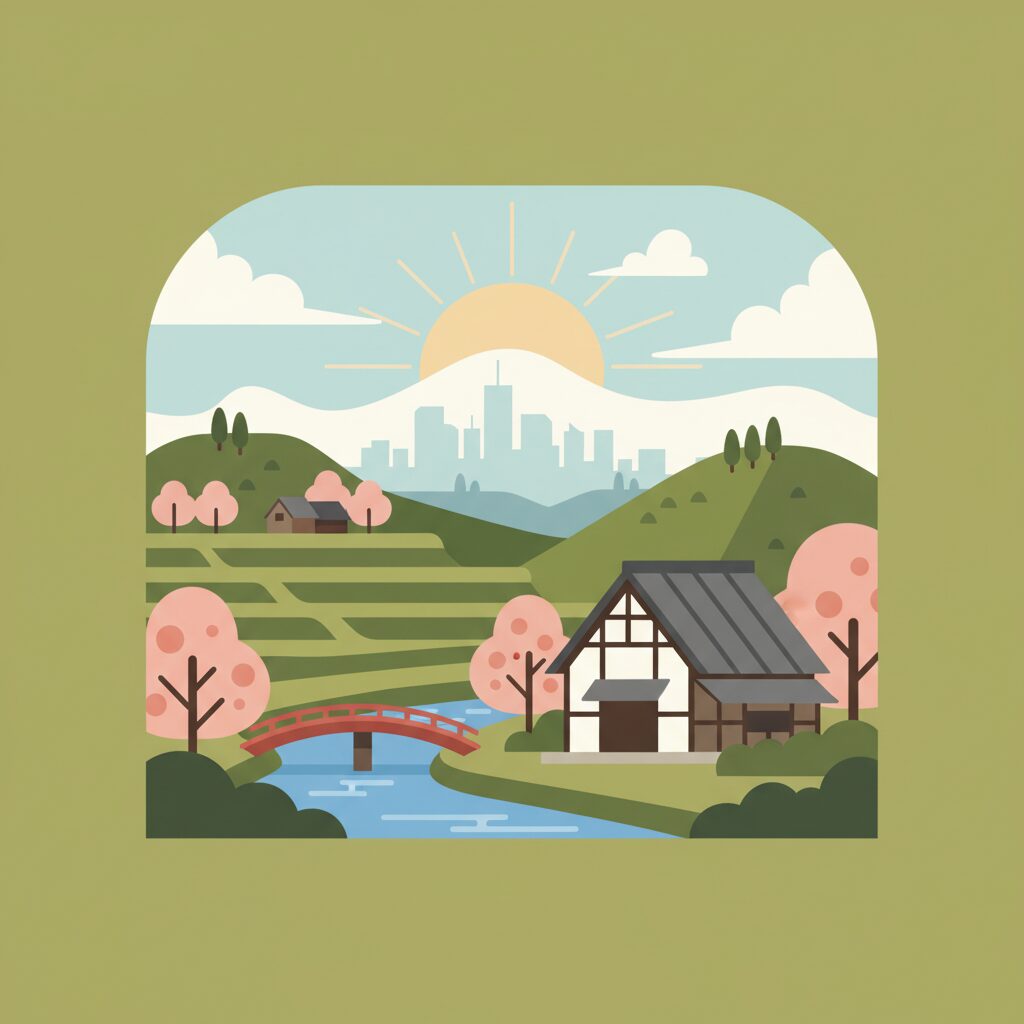
The journey itself teaches a lesson in cognitive dissonance. It begins at the heart of the beast, Hankyu Umeda Station—a cathedral of commerce and bustling human traffic. As the train pulls away, the first twenty minutes reveal classic Osaka suburbia—a dense mosaic of apartment buildings, pachinko parlors, and tangled overhead wires. Then, at Kawanishi-Noseguchi, you switch to the Nose Electric Railway. The name alone hints at the change. The train cars are smaller, the pace slows, and the scenery starts to soften. Tight clusters of houses give way first to gardens, then small fields, and suddenly you find yourself surrounded by green, rolling mountains. By the time you arrive at Myokenguchi Station, the final stop, the air feels noticeably different—cooler, cleaner, profoundly quiet. The city’s roar is replaced by the rustle of bamboo leaves and the distant caw of a crow. This sensory shift is something many foreigners—and even many Japanese from other regions—fail to fully understand about Osaka. They see it as a uniform urban sprawl. But for locals, this close proximity to nature isn’t a luxury; it’s an integral part of their lifestyle. The same salaryman who was shouting into his phone in a crowded Umeda underpass might be the very same person tending carefully to his vegetable garden in the quiet hills on a Saturday. This reveals a core duality in Osaka’s character. The high-energy, fast-talking city persona is genuine, but it’s just one mode of existence, not the whole story. It’s a tool used to navigate the urban jungle. The quiet reverence for nature found in Nose represents the flip side—a deeply rooted need for balance and a connection to something more primal.
What “Inaka” Really Means Here
In Japan, the countryside is called inaka. When it comes to Tokyo, inaka often suggests a great distance—a place to return to during Obon holidays, a world apart from the capital’s orbit. It’s somewhere left behind to succeed in the big city. In Osaka, however, the concept is wholly different. Nose is Osaka’s inaka, but it doesn’t feel remote. It feels like Osaka’s backyard, a part of the prefecture’s identity rather than separate from it. This geographical reality shapes the Osaka dream. While the Tokyo dream might be a sleek apartment with a skyline view, the Osaka dream for many is a modest house in suburbs like Minoh or Ikeda—places on the edge of this rural realm. It’s the ability to commute thirty minutes to a bustling office and then return home to the foot of a mountain. This accessibility to the countryside prevents the city from becoming an all-encompassing bubble. It keeps people grounded, quite literally. Nature isn’t an abstract idea or a yearly visit; it’s a constant, visible presence on the horizon—a reminder that life extends beyond concrete and chaos. This fundamentally shifts the city’s psychological landscape, offering a pressure-release valve that feels much less available to the average Tokyoite.
The Satoyama Lifestyle in Nose: More Than Just “Nature”
What is “Satoyama”? An Unspoken Philosophy
When you explore Nose, it quickly becomes clear that you’re not in a wild, untamed wilderness. This isn’t a national park in the American sense—preserved and untouched. This is satoyama. The term roughly means “village mountain,” but its significance goes much deeper. It describes a landscape that has been carefully cultivated and managed by humans for centuries, a mosaic of terraced rice paddies (tanada), tended cedar forests, bamboo groves, irrigation ponds, and small villages. It stands as a living, breathing testament to a harmonious relationship between people and the land. This isn’t environmentalism as a political cause or a weekend pastime. It’s a practical, inherited philosophy embedded in daily life. The forests are maintained not only for their beauty but also to prevent landslides and provide timber. The irrigation channels supplying the rice paddies also create habitats for fish and frogs. Every element serves a purpose, playing a role in a complex, sustainable system. For an outsider, this can represent a profound shift in perspective. We’re often taught to view human civilization and the natural world as separate entities. Satoyama blurs that boundary. It demonstrates a way of living where humanity is not an intruder in nature but a vital part of its rhythm. This philosophy quietly forms the foundation of much of Osaka’s culture, particularly its connection with food.
The Rhythm of the Seasons, Osaka Style
Osaka’s unofficial slogan is kuidaore, often translated as “eat ’til you drop.” It’s viewed as a celebration of the city’s love for indulgence and good times. But to truly understand why Osaka is such a food haven, you must understand places like Nose. The passion for food isn’t just about quantity; it reflects a deep, almost fanatical commitment to seasonality. That devotion stems from the satoyama way of life. In Nose, life is measured not by fiscal quarters but by the agricultural calendar. Spring is for planting rice and foraging tender bamboo shoots and wild mountain vegetables (sansai). Summer brings abundant greens and the buzz of insects over ripening fields. Autumn is the harvest season—the golden heads of rice, chestnuts, persimmons. Winter is a time for preservation, making pickles and miso, and savoring hardy root vegetables that withstand the cold. This intimate, seasonal rhythm directly influences menus in Namba and Shinsaibashi. The top chefs in Osaka don’t simply order ingredients from suppliers; they often maintain personal relationships with farmers in places like Nose. They know whose soil yields the sweetest carrots, whose rice has the finest texture. This direct farm-to-table connection is the secret behind Osaka’s vibrant culinary scene. It’s a pride rooted in knowing the source, in understanding that the incredible bowl of ramen or the delicate piece of sushi you’re enjoying is the culmination of a year-long cycle of hard work and harmony with the land just kilometers away. The kuidaore spirit is not just about consumption; it’s a joyful celebration of this cycle.
Encounters in the Heartland: A Different Kind of “Friendly”

Beyond the “Ame-chan” Cliché
Every foreigner living in Osaka for more than a week encounters the stereotype: Osaka people are friendly. This friendliness is often exemplified by the image of a leopard-print-clad obachan (middle-aged woman) who suddenly strikes up a conversation and presses a piece of candy (ame-chan) into your hand. This city-style friendliness is genuine. It’s direct, loud, slightly theatrical, and often transactional—a social lubricant meant to quickly break down barriers in a dense, competitive urban setting. The friendliness you find in Nose, however, speaks a different dialect entirely. It’s quieter, more subtle, rooted in distinct social codes. It’s the old farmer pausing his tiller to give you a slow, deliberate nod as you pass his field. It’s the woman tending her garden who softly says “Konnichiwa” without interrupting her rhythm. It’s the owner of a small, family-run soba restaurant who, noticing your interest, quietly points to a photo on the wall and explains that the buckwheat was grown just over the hill. This isn’t the effusive, in-your-face warmth of the city. It’s a form of communication based on mutual acknowledgment and a shared appreciation for the quiet space you both inhabit. It asks you to slow down, pay attention, and offer the first gesture of respect. This reveals a deeper truth about Osaka’s character. The city’s famous brashness is a performance, a social tool. The countryside unveils the foundation of that character: a fundamental sense of community and mutual respect that requires neither loud words nor grand gestures to convey.
The Unspoken Rules of Rural Interaction
Navigating this quieter social world comes with its own set of unwritten rules, essential for any foreigner to grasp. The first is reverence for property and labor. Those beautiful, terraced rice fields aren’t a public park for your Instagram photoshoot. They represent someone’s livelihood, the result of grueling work. Walking on the narrow paths between them is acceptable, but stepping into a field is a serious taboo. A simple greeting is a powerful tool. In the anonymity of the city, you can walk for hours without acknowledging anyone. In Nose, passing someone on a narrow path without a nod or a quiet “Ohayo gozaimasu” is actively rude, breaking the unspoken code of shared space. This underscores the importance of the local community, the chiiki. In a place like Nose, social ties are close, and reputations matter. As an outsider (yosomono), your behavior reflects not only on yourself but on all visitors. Being a good guest—moving quietly, packing out your trash, showing respect—is crucial. Learning these subtle rules of engagement is a masterclass in Japanese culture. It teaches you to be more observant, more mindful of your surroundings, and more conscious of how your presence affects others. This skill will serve you well, not just in the countryside but also in the city’s crowded neighborhoods.
Nose as a Microcosm of Osaka’s Future
The New Wave: Creatives and Cafes in the Countryside
For decades, the narrative of rural Japan has been one of decline—young people leaving for the cities, shuttered shops, and an aging population. Although Nose encounters these same issues, something remarkable is unfolding. A new generation of Osakans, and even some from farther away, are moving not away from Nose, but toward it. They are artists, bakers, chefs, and designers, injecting fresh energy into these tranquil hills. This energy is evident in a beautifully crafted artisanal bakery housed in a renovated traditional farmhouse (kominka). It’s savored in a farm-to-table restaurant where a young chef crafts stunning modern dishes using ingredients sourced within just a few kilometers. It’s felt in a quirky art gallery or a minimalist coffee shop that could easily fit into a trendy city neighborhood but instead overlooks a valley of rice paddies. This movement is not just about escaping the rat race; it represents a distinct Osakan style of pragmatic entrepreneurship. These creators have appreciated the value of the satoyama lifestyle—the clean air, fresh ingredients, and lower living costs—while leveraging their proximity to a massive urban market just an hour away. They are building businesses that are both creatively rewarding and economically sustainable, blending tradition with modern aesthetics and marketing. This trend offers a new vision of success—one that doesn’t demand sacrificing well-being for ambition.
A Counterpoint to Tokyo’s Gravity
This trend stands in stark contrast to the overwhelming pull of Tokyo. In the Kanto region, the capital acts like a colossal black hole, drawing in talent, capital, and ambition. The dream often feels singular: to make it in central Tokyo. The surrounding prefectures frequently seem like vast, undistinguished bedroom communities. Osaka’s relationship with its hinterland is different. Its history as a merchant city, independent and occasionally defiant of the central government in Edo (now Tokyo), has nurtured a more decentralized, entrepreneurial spirit. Success in Kansai isn’t defined solely by having an office in Umeda; it can also mean running a thriving business from a renovated farmhouse in Nose. This dynamic creates a more diverse ecosystem of opportunities and lifestyles. It suggests that urban and rural living are not mutually exclusive choices but can be harmoniously integrated. For foreigners considering where to live in Japan, this distinction is vital. If your goal is to be at the heart of power and industry, Tokyo is the clear choice. But if you seek a life with broader possibilities—a city offering intense urban energy alongside genuine rural tranquility—then Osaka’s model, exemplified by Nose, is highly appealing. It indicates that the city is not just expanding in size but also evolving smartly, finding innovative ways to preserve its soul while building its future.
Practical Realities: The Not-So-Glossy Side

It’s Not a Theme Park
It’s important to balance this idyllic image with a dose of reality. Nose is not a staged tourist attraction. It is a genuine, working agricultural community, and that entails some unglamorous facts. While the air is often clean, it can also carry the strong, earthy scent of manure used as fertilizer. The beautiful forests harbor a vast number of insects, including the Japanese giant hornet (suzumebachi) and slithering pit vipers (mamushi), which hikers need to be cautious of. The quiet country roads are frequently shared with slow-moving mini-trucks and heavy farming equipment. This authenticity contributes to its charm but requires adjusting your expectations. You are not a customer here; you are a guest in someone else’s workplace. Additionally, getting around can be quite challenging. Public transportation is limited. Local buses operate on schedules that seem tailored to residents rather than visitors, with long gaps in service during the middle of the day. To truly explore Nose’s hidden corners, having a car is less a luxury and more a necessity. This practical limitation is one key reason Nose remains off the beaten path, preserving its peaceful character but also making it less accessible for casual tourists. The slow pace of life isn’t always convenient; it calls for planning, patience, and a willingness to adapt.
The Aging Community and the Future of Satoyama
The biggest challenge, however, is one shared by rural Japan as a whole: depopulation and aging. As you stroll through the hamlets of Nose, this reality becomes clear. Beautifully maintained homes stand beside akiya—abandoned houses with sagging roofs and overgrown gardens. You’ll see elderly farmers tending their fields, bodies bent with age, prompting questions about who will carry on when they can no longer manage. The rich traditions of the satoyama—the community festivals, the collective work of planting and harvesting, the deep knowledge of the land—are all at risk due to this demographic shift. The influx of young creatives is a hopeful sign, infusing the area with new energy and ideas. Yet, this is a small current against a powerful tide. The future of Nose and the satoyama lifestyle it embodies hangs in fragile balance. It depends on whether enough people can find ways to make a modern living in this traditional setting, blending old wisdom with new innovation. Visiting Nose means witnessing this quiet struggle firsthand. It serves as a poignant reminder that this beautiful way of life is not a museum piece preserved under glass. It is a living, delicate ecosystem that demands ongoing care and dedication to endure. Understanding this struggle is key to grasping the challenges and hopes facing not just Osaka, but all of modern Japan.
A weekend in Nose does more than just refresh your spirit. It recalibrates your view of Osaka. It peels back the loud, neon-lit facade to reveal a place of surprising depth and duality. You leave behind the city’s frantic pace and discover the steady, seasonal rhythm that truly defines the region. This is where Osaka’s passion for food originates, in the fertile soil and pure water of its own backyard. This is where you learn that the famed Osakan friendliness has a quieter, more observant language, spoken through nods and subtle gestures of respect. By witnessing the innovative spirit of young entrepreneurs revitalizing old farmhouses, you glimpse a hopeful future for a balanced life that seems uniquely possible here. To fully understand Osaka, you must experience both sides of its character. You need to brave the crowds of Shinsaibashi, but also walk the tranquil forest paths of Nose. You must realize that the city’s roar and the mountains’ whisper are not opposing forces. They are two integral parts of the same complex and utterly captivating story.