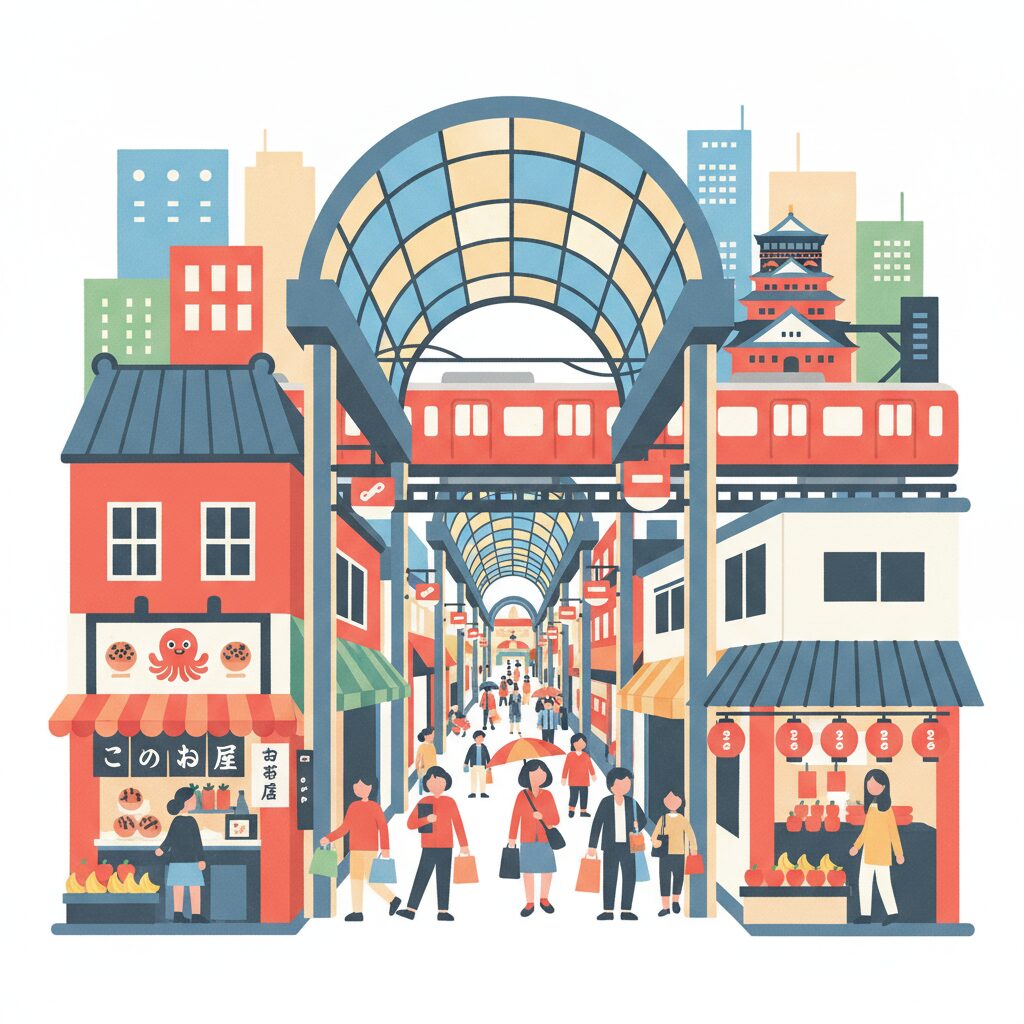
When you first think of Osaka, your mind probably jumps to a very specific image. Neon signs crawling up the sides of buildings, a giant mechanical crab waving its claws, and a river of people flowing through the Dotonbori canal district under the watchful eye of the Glico Running Man. It’s electric, it’s chaotic, and it’s an undeniable part of the city’s identity. But it’s also a performance, a face shown to the world. To understand the real, beating heart of Osaka, you have to step away from the dazzling light show and walk under the covered roofs of its countless shotengai—the neighborhood shopping arcades that are the true arteries of daily life here. This isn’t just where Osaka shops. This is where Osaka is.
Living in Tokyo before moving here, I was used to a different kind of commerce. Life revolved around the clean, efficient train station complexes, sleek department stores with their pristine food halls, and silent, brightly lit convenience stores. Shopping was a transaction, polite and anonymous. But in Osaka, it’s a conversation. It’s a relationship. The shotengai are not sterile corridors of consumption; they are rambling, noisy, intensely human ecosystems. They are the city’s kitchen, its living room, and its social media network all rolled into one. Forget trying to understand Osaka by visiting a castle or a skyscraper. If you want to know how this city truly works, how its people think and connect, you need to spend an afternoon getting lost in the glorious, messy, and utterly vital world of a local shotengai.
Understanding Osaka’s vibrant urban culture also means appreciating diverse work environments, as seen in the way traditional kissaten coworking spaces have evolved into dynamic hubs thriving on community connection.
The Arcade as Osaka’s Living Room
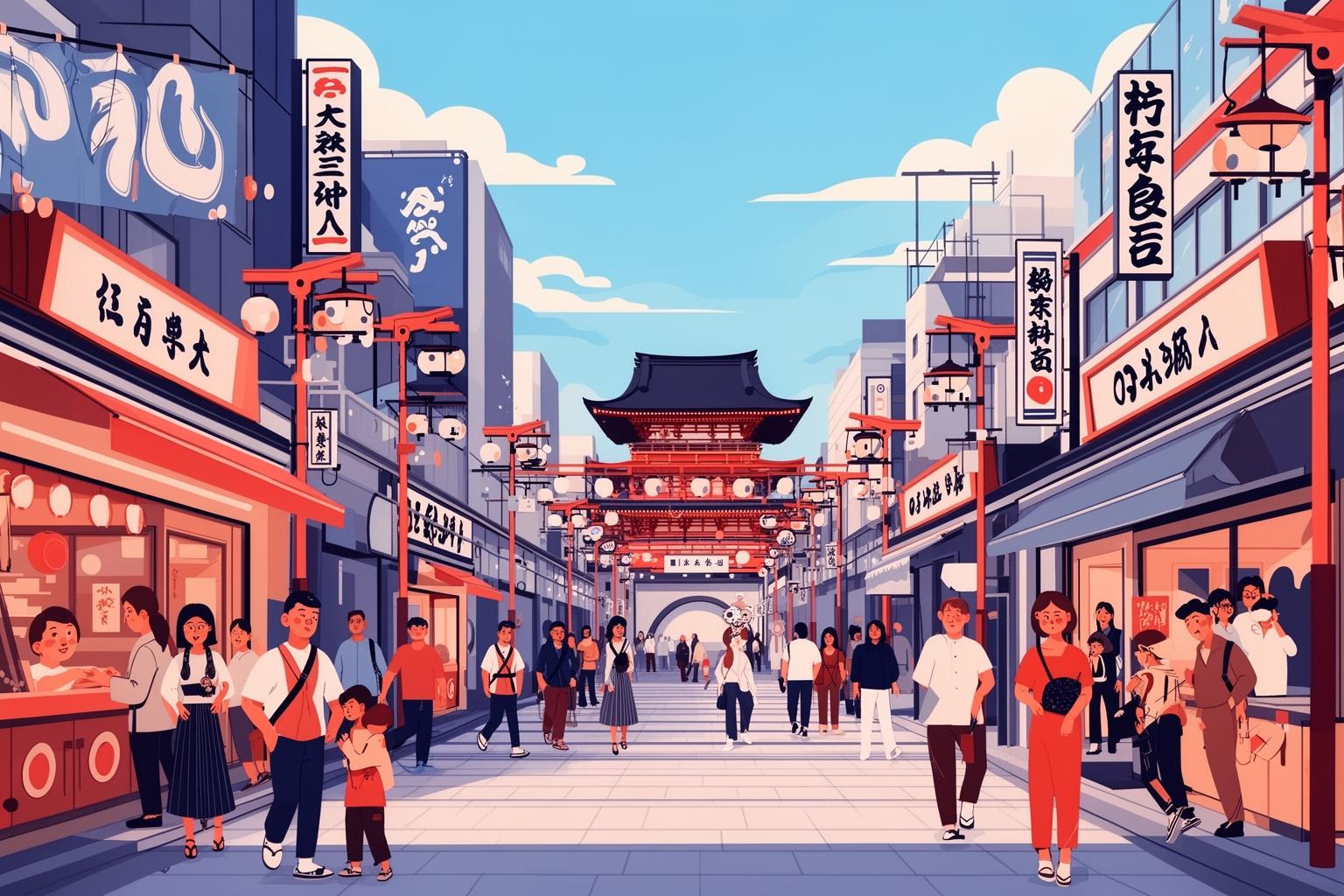
The first thing that strikes you when you enter a proper neighborhood shotengai isn’t the product displays; it’s the sound. It’s a wall of noise, but not the harsh, industrial clamor of a big city. Instead, it’s a symphony of human activity. There’s the gravelly voice of the butcher calling out his daily specials, the high-pitched cry of the fruit vendor promoting sweet winter melons, the sizzle of oil from a tempura stand, and the steady, rhythmic chatter of neighbors catching up in the middle of the walkway. Bicycles with baskets full of groceries weave through the crowd, their bells tinkling a gentle warning. This is the soundtrack of community, sharply contrasting with the polite, hushed tones common in many commercial spaces across Tokyo. In Osaka, the noise isn’t a disturbance; it’s a sign of life, engagement, and a place that is vibrant and thoroughly lived-in.
This is commerce on a human scale. The shops are often small, family-run businesses passed down through generations. The person selling you fish isn’t a nameless employee in a uniform; he’s Tanaka-san, who knows you don’t like mackerel but that your son loves salmon. He’ll ask how your mother is doing and tell you which day the freshest squid arrives. The woman at the vegetable stand will notice you eyeing a daikon radish and offer a recipe for a simmered dish she made last night. These are not just transactions—they are daily check-ins, tiny threads of connection that weave the neighborhood’s fabric. In an age of automated checkouts and impersonal online shopping, the shotengai champions a deeply personal, face-to-face way of life. It’s a place where you are not just a customer, but a member of a community, a familiar face in the crowd. This sense of belonging is something many foreigners find elusive in large Japanese cities, but in Osaka, it’s waiting for you right in the heart of the shopping arcade.
“Mokkari Makka?” – The Art of the Osaka Transaction
Nowhere is Osaka’s unique character more evident than in how people approach money and business. There’s a well-known, almost stereotypical Osaka greeting you might hear between shopkeepers: “Mokkari makka?” which roughly means “Are you making a profit?” To outsiders or those from Tokyo, this can sound surprisingly blunt or even rude. But in Osaka, it’s not an intrusive question about one’s finances; rather, it’s a playful, ice-breaking way of asking, “How’s business? How’s life?” This reflects the city’s long-standing history as Japan’s merchant capital, where business is a lively, practical part of everyday life—not a stiff, formal affair.
More Than Just a Discount
This playful spirit colors every transaction. The idea of a fixed price often feels somewhat theoretical here. While you won’t be negotiating over a can of coffee, price discussions frequently happen, especially at smaller stalls. It’s all about the relationship. If you’re a regular customer, the shopkeeper might lower the price for you or, more typically, offer “omake”—a little bonus. Buy five croquettes, and you might get a sixth for free. Pick up a bag of oranges, and the vendor could add a few extra, explaining they’re a bit small. This isn’t simply a discount; it’s a gesture of goodwill, a tangible sign of the bond between buyer and seller. It’s a small act that says, “I see you, I appreciate you.” This culture of generosity and reciprocity is deeply ingrained in the Osaka mindset, turning an ordinary purchase into a warm social exchange, a small triumph in daily life.
The Philosophy of “Nettogai” (Value Shopping)
Osakans are known for being practical and value-focused. They aren’t cheap, but they excel at finding the highest quality for the best price. This is a point of great local pride. Sharing a good deal you’ve found is far more common than boasting about luxury purchases. The shotengai is the prime setting for this citywide passion for value, or “nettogai.” It’s where you’ll see shops boasting handwritten signs with unbelievably low prices, where vendors compete not through flashy advertising but through the quality and affordability of their products. This approach is a legacy of centuries spent as a merchant city, where success relied on sharp minds, strong relationships, and a pragmatic approach to business. For locals, adopting this mindset is essential. Recognizing a good deal, valuing omake, and engaging in the friendly market banter are all part of thinking like a true Osakan.
The Taste of a Neighborhood: Fueling the City’s Stomach
If the shotengai is the heart of the neighborhood, it is undoubtedly also its stomach. While Tokyo’s culinary scene is often characterized by Michelin-starred restaurants and refined department store food halls (depachika), Osaka’s essence lies in the fresh, straightforward, and affordable food sold within its arcades. These are not places for aspirational food shopping but rather the bustling pantries of countless households, providing the ingredients for meals served at family tables every night.
From Fresh Fish to Takoyaki
You can trace the daily rhythm through the aromas that fill a shotengai. In the morning, there’s the clean, briny smell from the fishmonger, where shiny whole fish rest on ice, and the owner expertly fillets a customer’s order. Nearby, the tofu maker offers blocks of fresh, silky tofu still warm from the vat. Then there’s the butcher, the pickle shop filled with barrels of vibrant tsukemono, the tea merchant scooping fragrant leaves into bags, and the senbei-ya where rice crackers are toasted over charcoal. This specialization is essential. Unlike supermarkets, which offer pre-packaged, anonymous goods, the shotengai provides expert craftmanship. You purchase from people who are masters in their field, able to advise on how to cook a particular cut of meat or which pickles are currently in season. This direct link to the source of food deepens your appreciation of it.
The Kingdom of “Konamon”
You can’t discuss Osaka food without mentioning “konamon”—a broad term for tasty, flour-based dishes. The shotengai is the undisputed realm of konamon. Amid the produce stands and butcher shops are the perpetually busy stalls selling takoyaki (octopus balls), okonomiyaki (savory pancakes), and ikayaki (grilled squid pancakes). The air is filled with the savory aroma of dashi-seasoned batter hitting a hot griddle and the sweet, smoky scent of Worcestershire-style sauce. This is the energy of Osaka. It’s quick, affordable, and deeply fulfilling. It’s food for the people, meant to be eaten on the move, often with nothing but a toothpick. This informal, standing-and-eating culture adds to the shotengai’s lively, unpretentious vibe. It stands in contrast to the formal dining customs of other Japanese cities, reflecting Osaka’s practical, down-to-earth attitude towards life and enjoyment.
A Human Safety Net in a City of Millions

In a sprawling metropolis of millions, it’s easy to feel anonymous, like a small cog in a vast machine. This is often the case in Tokyo, where the immense size and rapid pace of the city can feel isolating. Osaka’s shotengai offer a strong remedy to this urban anonymity. They serve as an essential social safety net, a hyper-local network that keeps the community connected and looks after its members. The daily interactions here go beyond mere friendly exchanges; they form the foundation of a resilient and caring community.
The shopkeepers act as the neighborhood’s unofficial guardians. They understand the area’s daily rhythms. They know which elderly residents live alone and make a point of sharing a few words with them each day. If Mrs. Sato, who regularly buys her tofu at 10 AM, doesn’t appear for a couple of days, the tofu vendor might become concerned. He might check with the fishmonger next door if they’ve seen her, and if not, one of them might stop by her apartment to ensure she’s alright. This informal system of checks and balances is vital in a country with an aging population. It reflects a level of care and mutual responsibility that large supermarket chains or impersonal online retailers could never replicate. It’s a place where children can safely run their first errands, sent by their parents to buy a carton of milk, confident that every shopkeeper along the way is a familiar, friendly face watching over them.
For a foreigner living in Osaka, becoming part of this network is transformative. It’s the difference between merely living in a city and truly having a home. When the fruit vendor starts saving you the best strawberries because he knows your preference, or the owner of the coffee shop asks about your progress in Japanese studies, you’re no longer just a temporary resident. You become part of the neighborhood’s story. This intricate web of weak ties and casual acquaintances is what makes Osaka’s neighborhoods feel so secure and profoundly human.
Reading the Local Vibe: Not All Shotengai Are Created Equal
Once you recognize the importance of the shotengai, you begin to notice them everywhere. However, a common mistake is assuming they are all alike. Each arcade possesses its own distinct personality, a unique character that reflects the neighborhood it serves. Learning to interpret these differences is like mastering the city’s secret language.
The Famous vs. The Truly Local
There are the superstars, like Tenjinbashisuji Shotengai, which proudly claims the title of Japan’s longest. Stretching over 2.6 kilometers, it offers a marathon shopping experience. It includes everything from high-end knife shops and traditional kimono makers to bargain croquette stands and pachinko parlors. It’s a destination in itself, attracting both tourists and locals. Even along its vast length, you can sense the vibe change—from the more tourist-oriented southern end near the shrine to the intensely local, grocery-centered northern end. Then there are arcades like Senbayashi, located a bit further from the city center, known among locals for its aggressively low prices. It’s a straightforward, no-frills place focused solely on the best bargains. In contrast, Karahori Shotengai maintains a preserved atmosphere with a retro, Showa-era charm, now home to quirky cafes and artisan shops alongside traditional vegetable sellers. Each arcade tells a different story about its slice of Osaka.
What to Look For
So how do you read a shotengai? First, check out the shops. Are they selling novelty socks and tourist trinkets, or fresh daikon radishes, fish, and plumbing supplies? The balance between everyday goods and souvenirs quickly reveals if the place caters to locals or visitors. Second, listen closely. Are people speaking mostly standard Japanese, or is the fast-paced, thick Kansai-ben dialect dominating? The stronger the local dialect, the more authentic the arcade. Finally, observe the shoppers. Are they browsing casually, or moving with purpose, baskets in hand, flowing with the efficient rhythm of daily errands? Do they stop frequently to chat with acquaintances? The frequency of these social interactions is the clearest sign that you’ve found the real deal. Discovering “your” shotengai—the one serving your neighborhood—is a rite of passage for any long-term resident.
Why This Matters for Anyone Living in Osaka
To truly experience life in Osaka, you need to understand its shotengai. It’s as simple as that. These covered shopping streets are a miniature version of the city itself—slightly louder, more straightforward, openly emotional, and much more centered on human connection than similar areas elsewhere in Japan. They embody the city’s merchant spirit, where practicality, value, and community pride take precedence. For any foreigner feeling out of place or finding it hard to see beyond the polite surface of Japanese society, the local shotengai holds the key. It’s where you can practice your Japanese in casual, friendly exchanges. It’s where you’ll discover the seasonal patterns of Japanese cuisine. And it’s where you’ll form the everyday relationships that turn a foreign city into a true home.
So, next time you’re in Osaka, step away from the main streets. Slip under the arched entrance of a neighborhood shopping arcade. Let the lively sounds surround you. Grab some freshly fried tempura and enjoy it as you stroll. Smile at the shopkeepers. Try to catch bits of the rapid conversations. You might not be headed to a famous landmark, but you’ll be on a direct route to understanding the heart of this amazing city. Forget the tourist maps and top-ten lists. Your local shotengai is the most genuine and vital guide to the real Osaka.