Moving to a new city is always a profound shock to the system. Moving to Japan, with its labyrinthine social rules and towering walls of unspoken etiquette, can feel like arriving on another planet entirely. Many expatriates and long-term travelers touch down in Tokyo, spend a few months navigating the quiet train cars, the polite but distant nods of neighbors, and the hermetically sealed social bubbles, and conclude that making real, messy, human connections in Japan is an impossible dream. They feel isolated. They feel like permanent outsiders looking through a frosted glass window. But then, they take the shinkansen down to the Kansai region. They step off the train at Shin-Osaka, navigate their way down to the grittier, louder, intensely vibrant streets of Osaka, and suddenly, the frosted glass shatters. The rules are different here. The air is different here. The people look you in the eye. They speak loudly. They laugh with their whole chests. And if you truly want to understand how this magnificent, chaotic city operates on a molecular level, you cannot just look at the neon signs of Dotonbori or walk through the pristine grounds of Osaka Castle. You have to go to where the real community is built, negotiated, and celebrated every single night. You have to push aside a smoky plastic curtain, slide into a space barely wide enough for your shoulders, and order a drink at a Tachinomi.
Tachinomi, or standing bars, are the beating, unpretentious heart of Osaka’s daily life. They are not merely places to consume alcohol; they are vital community centers, social equalizers, and the absolute best entry points for a foreigner wanting to pierce the veil of Japanese society. In this comprehensive guide, we are going to tear down the intimidation factor of Osaka’s standing bar culture. We will bypass the generic tourist advice and dive straight into the mechanics of how Osaka people actually live, how they interact, and how you can seamlessly blend into the local fabric. We will dissect the unwritten rules, the specific vocabulary, the local neighborhoods that define the scene, and the psychological mindset that makes Osaka the undeniable standing bar capital of the world. Forget everything you thought you knew about Japanese reserve. Get ready to stand up, lean in, and experience the raw, unfiltered warmth of Osaka.
What is a Tachinomi? Osaka’s Standing Bar Culture Explained
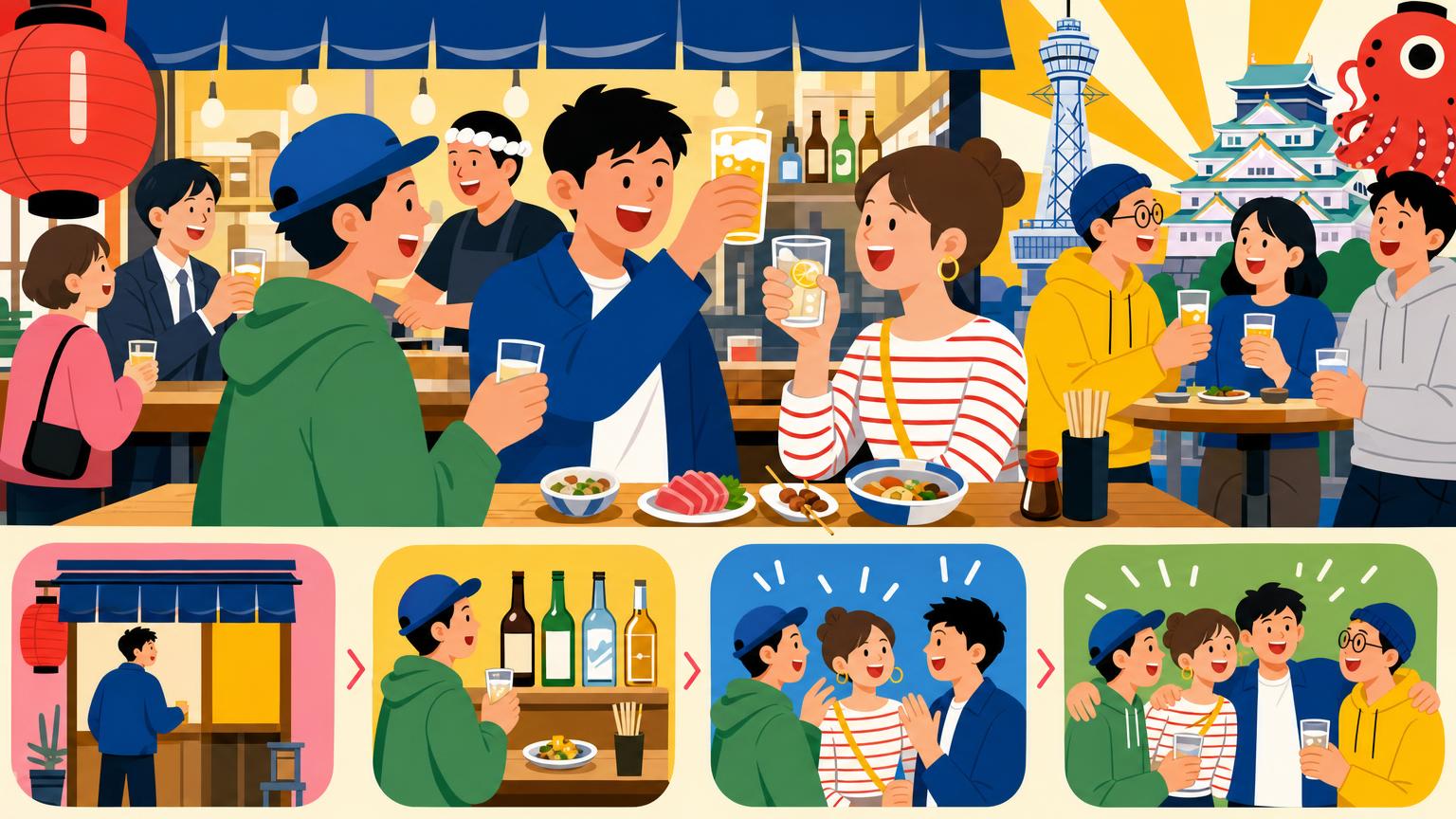
To truly grasp daily life in Osaka, you first need to understand the vocabulary of its streets. The term ‘Tachinomi’ is a straightforward linguistic blend of two Japanese words: ‘tachi’, meaning to stand, and ‘nomi’, meaning to drink. On the surface, it is exactly what it sounds like—a bar without chairs. However, limiting the definition to that would greatly undervalue the profound cultural importance these establishments hold in the Kansai region.
Historically, the concept dates back to the Edo period, but the modern version seen bustling in Osaka’s alleys developed significantly after the war. Originally called ‘kaku-uchi’, these were simple local liquor shops where working-class men, mostly day laborers and factory workers, would buy an inexpensive bottle of sake or shochu and drink it right in the corner of the store before going home. There was no pretense, no service charge—it was purely transactional and highly efficient. Over time, these corner drinking spots began offering simple snacks to encourage patrons to stay longer: a jar of pickled vegetables here, a small plate of dried fish there. Gradually, the liquor stores evolved into dedicated standing bars, adding long wooden counters and expanding their menus while fiercely preserving their core philosophy: cheap, fast, and intensely communal.
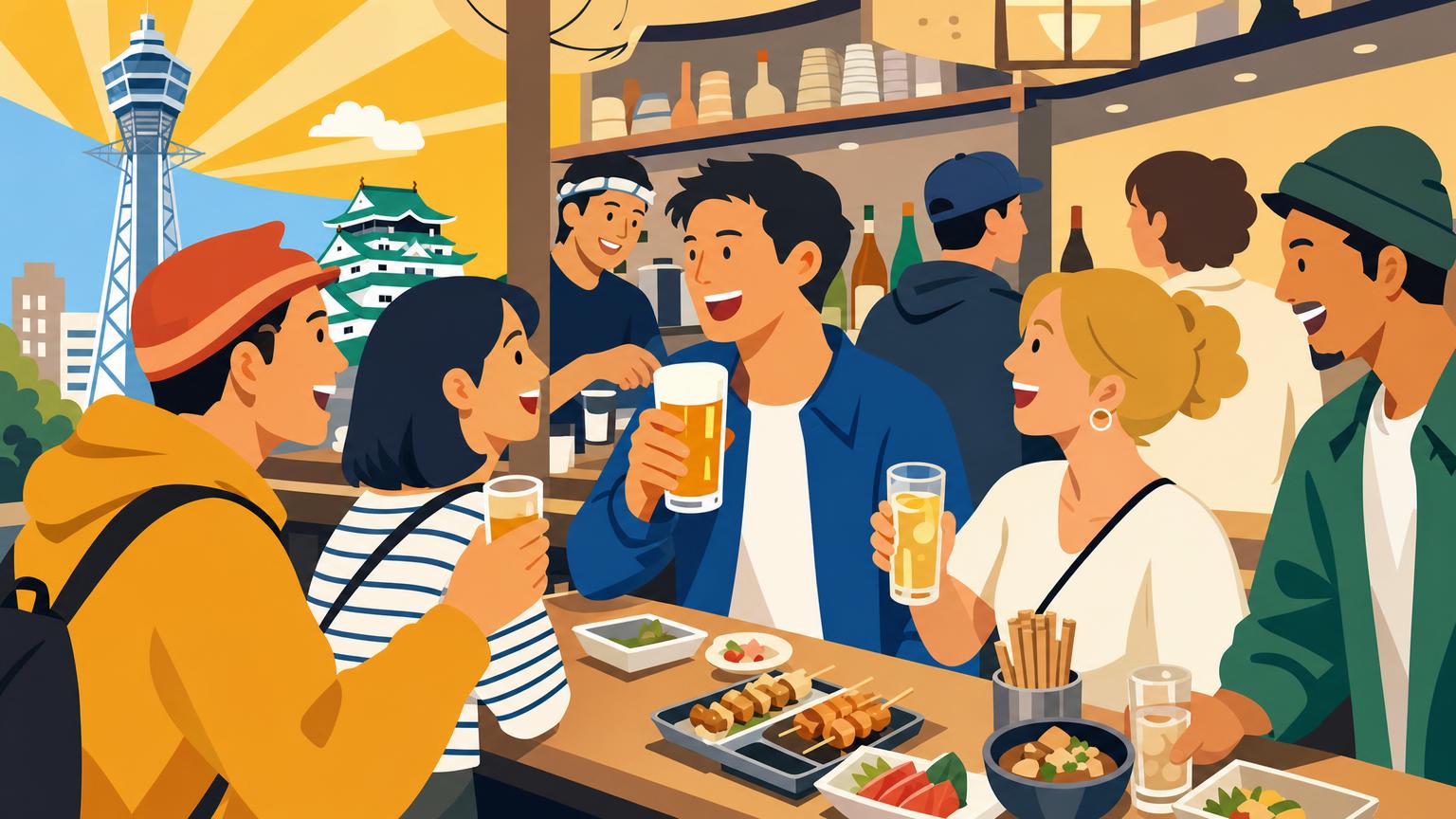
The architecture of a tachinomi shapes its social interactions. Since there are no chairs, you aren’t tied to a fixed spot as you would be in a traditional restaurant. The space is fluid. As more people enter, the existing customers naturally shift, slide, and compress to make space. This physical closeness fosters interaction. You can’t hide in a booth or turn your back on the room. You stand shoulder-to-shoulder with the city itself. In a culture that highly values personal space and boundaries, the tachinomi is a magical, liminal zone where those boundaries are temporarily lifted. It’s a place where a high-powered executive in a tailored suit stands inches away from a local plumber in paint-stained overalls, both sharing the same style of tiny ceramic plate, both commiserating about the local baseball team, the Hanshin Tigers.
This is the great equalizer effect of the standing bar. The act of standing removes the hierarchy that pervades much of Japanese corporate and social life. When everyone is on their feet, everyone is on the same level. For foreign residents trying to integrate, this is a golden opportunity. The usual barriers to entry are lowered. You don’t need an introduction; you just need a small space at the counter and a willingness to raise your glass.
Why Osaka is the Ultimate City for Tachinomiya
Standing bars can be found throughout Japan—in Tokyo, Fukuoka, Sapporo, and Nagoya—but nowhere is the tachinomi culture as deeply rooted, widely celebrated, and structurally essential as it is in Osaka. To grasp why, one must understand the fundamental psychological differences between the people of Kanto (the Tokyo region) and Kansai (the Osaka region).
Historically, Tokyo was the city of the samurai, the center of political power and strict bureaucracy. Social interactions there are often driven by a strong desire to maintain ‘wa’, or harmony, usually achieved by avoiding inconveniencing others. This mindset results in quiet trains, orderly lines, and a general culture of polite distance: people keep out of each other’s way. It is highly efficient but can seem remarkably cold to outsiders.
In contrast, Osaka was Japan’s historical merchant capital—a city of traders, brokers, and market vendors. In a merchant city, communication is currency. Deals cannot be closed by fearing conversation with strangers, nor can business networks be built by staring at the ground. Because of this, Osaka’s people developed a culture that values directness, humor, and lively social interaction. While Tokyo maintains harmony through distance, Osaka fosters it through connection and shared experience.
This merchant mentality gave rise to the famous Osaka philosophy of ‘Kuidaore’, roughly meaning ‘eat until you ruin yourself financially.’ However, Kuidaore is not merely about overindulgence—it expresses a deep appreciation for the pleasure of food, drink, and the social bonds created over a communal table. Osaka residents demand high quality but absolutely refuse to pay exorbitant prices. They are practical, seeking the best flavor at the lowest cost.
The tachinomi bar perfectly matches this psychological profile. Overhead costs for the owner are minimal—no chairs, smaller space needed, and fewer massive tables. Customer turnover is rapid. Because expenses are low, prices remain rock-bottom. One can enjoy incredibly fresh seafood and high-quality sake for a fraction of the cost of a sit-down izakaya. It appeals perfectly to Osaka’s love of a great bargain, delicious food, and the deep-seated desire to stand close to neighbors and share the day’s events. The city and the standing bar were quite literally made for each other, reflecting the very essence of the Kansai spirit: loud, affordable, tasty, and overwhelmingly friendly.
How to Enjoy a Tachinomi: A Step-by-Step Guide
Grasping the philosophy is one thing, but actually stepping into a bustling tachinomi on a Friday night is quite another. It’s loud, chaotic, and the menus are often handwritten on scraps of paper plastered to the walls, while the staff move at lightning speed. For non-Japanese speakers, or even fluent speakers unfamiliar with local slang, it can induce significant anxiety. Yet, the process is beautifully simple once you know the steps. Think of it as a dance: once you learn the basic rhythm, you can groove anywhere in the city.
Entering the Bar and Securing a Spot
The hardest part of the tachinomi experience is simply sliding open the door and stepping inside. Don’t linger outside peering nervously through the glass like a deer caught in headlights. Commit: slide the door open and enter confidently. The first thing you need to do is make eye contact with the master (the owner behind the counter) or a staff member. The place might look completely packed, seemingly with no way for another person to squeeze in. Don’t be discouraged.
Hold up your fingers to indicate how many people are with you. If you’re alone, boldly hold up one finger. The staff will briefly scan the counter, assessing the crowd’s geometry. Then they’ll glance at a section that looks full, issue a short, sharp command or a polite nod to the locals standing there, and magically, the crowd will part. Patrons will tuck their elbows, shift their stance, and a gap just wide enough for you will appear.
Walk to this gap. As you slide into your spot, it’s important to acknowledge those who just made room for you. No need for a deep bow. A simple, polite nod, a small smile, and a quick ‘Sumimasen’ (excuse me) or ‘Arigato gozaimasu’ (thank you) is enough to show goodwill. You’re now part of the ecosystem.
How to Order and Pay (Cash-on-Delivery vs. Tab)
Once you are settled at the counter, the next step is to order a drink. In Osaka, you don’t wait to peruse a massive menu before ordering your first beverage—you order immediately to signal your presence. A classic first order is ‘Nama onegaishimasu’ (Draft beer, please) or ‘Lemon sour onegaishimasu’.
Now, understand the payment systems, which usually fall into two categories at Osaka standing bars: Cash-on-Delivery (COD) and the traditional Tab system.
The COD system is very common in older, more established tachinomi and is a brilliant invention to avoid math at the end of a night out. When you find your spot, you’ll probably see a small plastic bowl, woven basket, or tiny tray on the counter in front of you—this is your “bank.” You’re expected to take out some cash, usually a few thousand-yen bills and some coins, and place it directly into this bowl. When the master brings your beer, they’ll take the exact cost from your bowl and return any change. This continues for every dish and drink you order. You can visibly watch your budget shrink, which is very practical. It also eliminates the awkwardness of asking for the bill. When ready to leave, simply pocket whatever change remains and walk out—it’s the ultimate frictionless transaction.
Alternatively, there’s the traditional tab system, called ‘tsuke’. Here, there is no bowl. You just order, and the staff magically remember every item you consume or tally it on a clipboard near the register. In a busy, chaotic bar, their ability to track consumption of thirty moving, swapping, shouting customers is nothing short of superhuman. When you’re ready to leave a tab-based tachinomi, catch the master’s eye, cross your index fingers in an ‘X’ (the universal Japanese hand sign for the bill), and say ‘Okaikei onegaishimasu’ (The check, please). They’ll total it up, you pay, and continue your night.
Unspoken Rules and Local Etiquette
Though standing bars are among Japan’s most casual drinking spots, they are governed by strict unspoken rules to keep a highly compressed space running smoothly. Ignoring these rules is the quickest way to mark yourself as a clueless tourist.
- Tuck Your Elbows: Space is the most precious commodity in a tachinomi. Be highly aware of your physical footprint. Keep your elbows tucked close to your body when eating or drinking. Don’t spread newspapers wide or flail your arms while telling a story.
- Bag Management: Never, under any circumstances, place backpacks, briefcases, or shopping bags on the counter. The counter is sacred space reserved solely for food and drink. Most tachinomi have small hooks beneath the counter near your knees. Hang your bag there. If no hooks or floor baskets exist, place your bag on the ground between your feet.
- The Rotation Protocol: A standing bar isn’t a place to camp out for hours. It’s designed for high turnover. The unspoken rule is to stay for two or three drinks and a few small plates, then move on to the next bar. If you see a line forming outside or the bar is packed and you’ve finished your drinks, it’s polite to pay your bill and free your spot for the next wave of drinkers.
- Clearing Your Space: When finishing a small plate, it’s polite to lift the empty dish and place it on the raised inner ledge of the counter, closer to the kitchen staff. This helps them clear space faster and shows respect for their workflow.
- Handling the Locals: In Osaka, unlike Tokyo, strangers will strike up conversations—especially if you look like a foreigner, and especially if they’ve had a few lemon sours. An older man (an ‘ojisan’) might lean over to ask where you’re from. Don’t panic or ignore him. Engage politely. They’re not trying to scam you but are genuinely curious and want to show hospitality in their gruff way. A little broken Japanese mixed with plenty of smiles goes a long way. If they offer a drink, graciously accept, say ‘Kanpai’ (Cheers), and enjoy the moment.
The Classic Osaka Tachinomi Menu: What to Eat and Drink
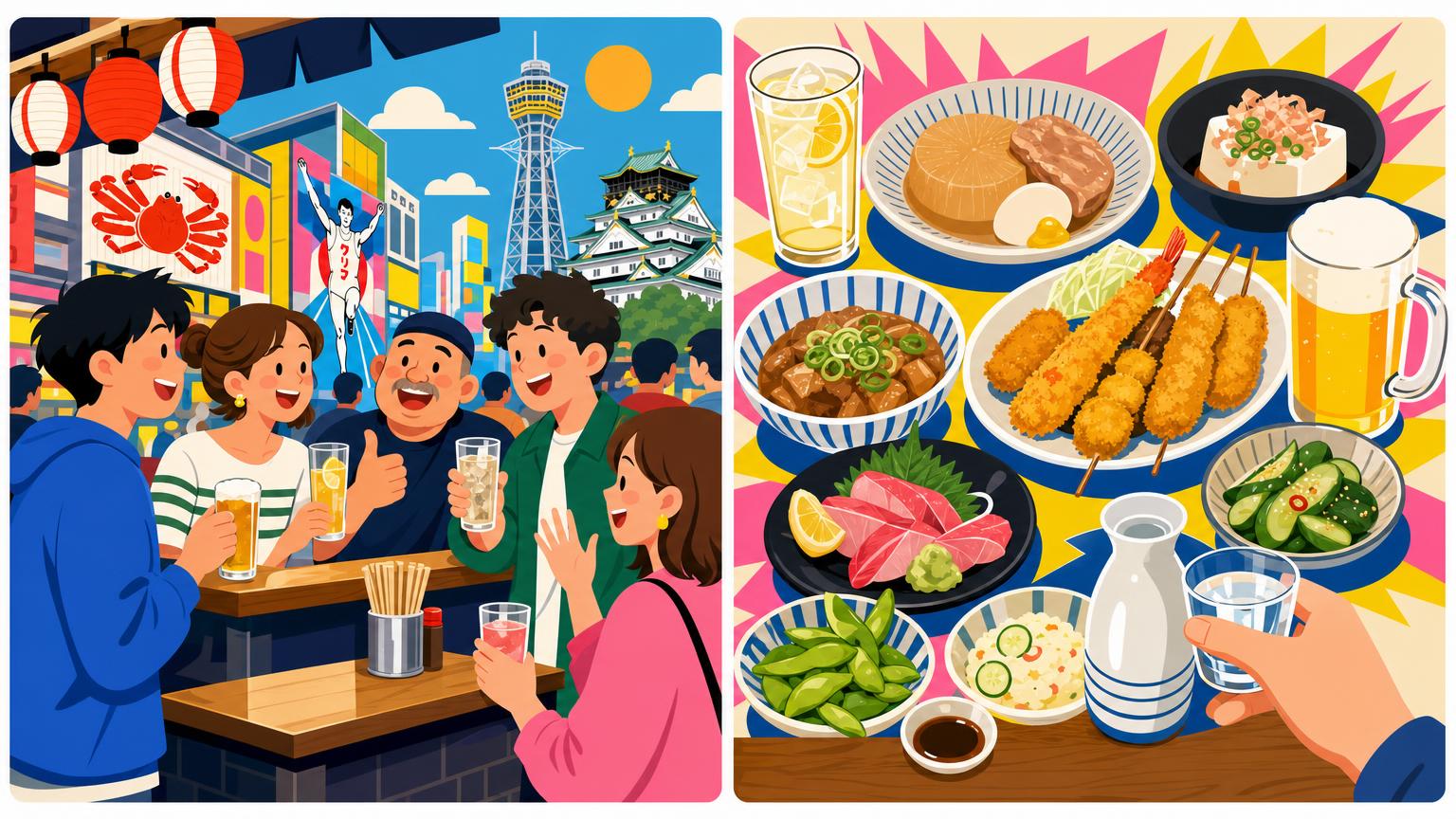
One of the most daunting features of a tachinomi is its menu. In many authentic locations, there are no English menus, no helpful pictures, and no QR codes to scan. Instead, there are hundreds of vertical strips of paper, covered in bold, stylized calligraphy, plastered over every available wall surface. To navigate successfully, you need to know what to look for—you need to understand the ‘Osaka tachinomi menu’.
Essential Drinks to Order
- Nama Beer (Draft Beer): The universal starting point. Typically served in a chilled glass mug. Osaka locals pay close attention to the balance of liquid and foam (the head). The foam is crucial; it acts as a lid, preventing the beer from oxidizing and keeping it carbonated.
- Lemon Sour (Remon Sawa): The ultimate workhorse of the Osaka standing bar. It is a simple, refreshing mix of shochu (a clear, distilled Japanese spirit), soda water, and fresh lemon. It perfectly cuts through the heavy grease of fried foods. Each bar has its own twist—some use sweet lemon syrup, others freshly squeezed whole lemons, and some serve it with frozen lemon halves piled high in the glass.
- Highball (Haiboru): The lemon sour’s rival. A blend of whisky and heavily carbonated soda water, poured over ice cubes. It is dry, crisp, and exceptionally popular. The standard is usually a Suntory Kakubin whisky highball, though many bars now offer variations using scotch or bourbon.
- Shochu: The staple spirit. You can order it mixed with hot water (oyu-wari) in winter, with cold water (mizu-wari), or on the rocks (rokku). It is typically made from sweet potato (imo), barley (mugi), or rice (kome). Imo shochu has a distinctive, earthy, pungent aroma favored by locals, while mugi is cleaner and easier for beginners.
- Nihonshu (Sake): When ordering sake at a tachinomi, you’ll often witness the splendid ‘mokkiri’ pour. The master places a glass inside a small wooden box (masu) or ceramic saucer, then pours sake until it overflows, spilling into the saucer below. This intentional gesture symbolizes generosity. You drink from the glass first, and when empty, pour the overflow back into the glass.
Must-Try Small Plates and Pub Food
The cuisine at a tachinomi isn’t meant to be a formal meal. It’s designed to be bold in flavor, inexpensive, and quickly prepared, perfectly complementing the alcohol. When searching for ‘Osaka tachinomi reviews’, praise almost always highlights the astonishing quality of these affordable dishes.
- Doteyaki: If there is one dish that embodies the spirit of an Osaka standing bar, it is Doteyaki. A rich, thick, bubbling stew made from beef sinew (suji) simmered for hours in sweet white miso, mirin, and sake until incredibly tender. Usually topped with chopped green onions and a dab of spicy Japanese mustard (karashi). It is sweet, savory, gelatinous, and absolutely essential.
- Kushikatsu: Deep-fried skewers of meat, vegetables, and seafood. Originating in the working-class district of Shinsekai, these are the ultimate affordable snack. Crispy batter covers everything from lotus root to quail eggs to pork belly. The golden rule, strictly enforced everywhere, is no double-dipping in communal stainless steel sauce containers. (Though post-2020, many bars have adopted squeeze bottles for hygiene, the spirit of the rule remains).
- Sashimi: You might think raw fish in a cheap standing bar is a bad idea. In Osaka, you’d be mistaken. Thanks to high turnover and proximity to huge wholesale markets, tachinomi often serve incredibly fresh, thick cuts of maguro (tuna), buri (yellowtail), and tai (sea bream) at shockingly low prices. The presentation is simple, but the quality rivals high-end restaurants.
- Potato Salad (Potesara): Don’t underestimate the potato salad. In the realm of Japanese standing bars, it’s the true measure of a chef’s skill and the benchmark of the bar. Each bar has its own secret recipe—some mash the potatoes completely smooth; others leave generous chunks. Some add loads of black pepper, some fold in boiled eggs, cucumbers, ham, or even smoked mackerel. Ordering potesara lets you judge the character of the bar.
- Edamame and Oden: Seasonal staples. Lightly salted, perfectly boiled edamame during the sweltering summer, and steaming bowls of oden (ingredients like daikon radish, fish cakes, and boiled eggs simmering in a light soy-dashi broth) in the freezing winter.
Best Areas for Tachinomi in Osaka (Local Vibe & Reviews)
Osaka is a vast metropolis, with standing bars spread throughout every ward. However, some neighborhoods have developed into large, concentrated centers of tachinomi culture. Each area draws a different crowd, features a unique architectural style, and exudes a distinct atmosphere. Knowing where to go is essential to finding the experience that suits your mood.
Tenma: The Retro and Bustling Drinking Haven
For the most visually intense, chaotic, and authentic Osaka drinking experience, head to Tenma. Situated just one stop from the major transit hub of Osaka Station on the JR Loop Line, Tenma is a maze of narrow alleys, covered arcades, and plastic-curtained storefronts. The energy is electric.
Tenma lies adjacent to the extensive Tenjinbashisuji Shopping Street and was historically a spot where market workers gathered after early morning shifts. This has made daytime drinking in Tenma legendary. Even at 2:00 PM on a Tuesday, the standing bars are filled with patrons enjoying sashimi and large bottles of beer. The crowd is a vibrant mix of local retirees, students hunting for affordable meals, off-duty chefs, and office workers loosening their ties. The aroma of yakitori grills fills the air, neon signs buzz overhead, and laughter spills from every open doorway. Though Tenma can be intimidating due to its density, it is also the most rewarding—a raw expression of Kuidaore.
Ura-Namba: Trendy, Hidden, and Local
Namba is the dazzling, neon-lit tourist hotspot of southern Osaka. But just a few streets east of the sprawling Takashimaya department store lies ‘Ura-Namba’ (literally, the back of Namba). Over the past decade, this once quiet, somewhat rundown area of wholesale restaurant supply stores has transformed into the city’s trendiest tachinomi district.
Ura-Namba attracts Osaka’s younger generation. The bars here tend to be newer, cleaner, and more adventurous. You’ll find standing bars focused entirely on natural wines, craft beer tachinomi pouring local IPAs, and chefs mixing fusion tapas with traditional Japanese pub fare. The style blends old-school grit with modern hipster design—exposed concrete, vintage posters, and gleaming stainless steel counters. The crowd is stylish, lively, and often made up of couples on dates and groups of young professionals. It’s less daunting than Tenma, making it an excellent choice for foreigners seeking a genuine local atmosphere without the overwhelming chaos.
Fukushima: Upscale Gourmet Standing Bars
Just one stop west of Osaka Station is Fukushima. Don’t confuse it with the northern prefecture; this is a distinct, slightly upscale ward in Osaka known as the gourmet tachinomi capital.
Because it’s near major corporate offices and media outlets, Fukushima’s primary clientele are salarymen and office ladies with more disposable income. They aren’t looking for cheap eats but high-quality food—and they’re happy to stand while enjoying it. In Fukushima, you’ll find tachinomi serving top-tier sushi, elegant Italian standing bistros, and bars featuring rare, premium sakes. The vibe here is generally more refined, quieter, and cleaner than in Tenma or Kyobashi. Patrons often wear business attire, and conversations hum softly rather than shouting. For those wanting elevated culinary art in a casual standing bar setting, Fukushima is the place to be.
Kyobashi: Deep, Authentic, and Old-School
If Ura-Namba is the trendy teenager and Fukushima the polished businessman, Kyobashi is the rugged, chain-smoking grandfather. Located in Osaka’s east, Kyobashi stays true to its blue-collar roots. It’s rough, proud, and incredibly affordable.
Kyobashi’s tachinomi scene is famed for its intense, old-school vibe. You’ll see many older men drinking heavily by noon, watching horse races on small, static-filled TVs mounted high on the walls. The scent of grilled offal (horumon) lingers in the concrete. The Osaka dialect spoken here is thick and often impenetrable (Kansai-ben). Kyobashi doesn’t cater to tourists or strive to be trendy; it exists solely to serve cold beer and hot food to the working class. For a foreign resident, visiting a standing bar in Kyobashi is a true cultural immersion. If you can order confidently, sit beside a local elder, and share a laugh over doteyaki, you’ve officially earned your place—you’re no longer just a visitor but part of the city.
Tips for Solo Travelers and Non-Japanese Speakers
Entering a crowded local spot where no one speaks your language can be intimidating. It goes against our natural instincts to willingly step into an environment where communication is challenging. However, in Osaka, this fear is mostly unfounded. The city thrives on connection, and language is just a small part of how people communicate here. Whether you’re alone or your Japanese is limited to saying ‘hello’ and ‘thank you’, here’s how to get by and make friends.
First, master your body language. In a tachinomi, your presence speaks louder than words before you even speak. Appear relaxed. Avoid crossing your arms defensively. When you make eye contact, nod and smile. The Osaka smile is a powerful gesture, signaling openness, non-threat, and a willingness to engage.
Second, embrace pointing. If the menu is filled with kanji you can’t read, don’t worry. Observe what the person next to you is eating. If it looks tasty (which it almost always will), simply point at their dish, glance at the master, and nod confidently. The person enjoying the food will usually feel flattered you chose their plate. This often sparks a conversation. They may try to explain it with exaggerated gestures and broken English. Play along. Guess the dish. Laugh when you get it wrong.
Third, use technology wisely. Translation apps are great, but staring at your phone for twenty minutes to decode a menu kills the social atmosphere. Use the camera translation feature briefly to get a rough idea of the options, then put your phone away. If you want to chat with the person beside you, typing a sentence into a translator and showing the screen is okay—it shows effort.
Fourth, learn the magic of ‘Otsukaresama desu’. This phrase roughly means ‘thank you for your hard work,’ but in a bar, it’s the ultimate greeting, toast, and sign of camaraderie. When the master serves your beer, say it. If you clink glasses with the businessman next to you, say it. It instantly transforms you from a clueless tourist into someone who gets the rhythm of the workday.
Finally, let go of perfection. You will order the wrong thing. You will unintentionally block someone briefly. You will misunderstand a joke. In Tokyo, a mistake might earn a cold look. In Osaka, a mistake becomes a moment for humor. If you accidentally order a plate of fermented squid guts instead of fried chicken, laugh at yourself. The whole bar will likely laugh along, and the master might just pour you an extra sake shot to help wash it down.
Final Thoughts on Experiencing Osaka’s Nightlife
Living in Osaka isn’t about ticking off a list of tourist spots. You can see the castle in a single day. You can snap a photo of the Glico running man sign in five minutes. But to truly grasp the essence of everyday life here, you need to engage in the people’s rituals. You must recognize that this city is shaped by the friction of human interaction.
The tachinomi is the ultimate expression of Osaka’s spirit. It is loud, crowded, intensely practical, and remarkably warm. It’s a place where titles and salaries are left at the door, where the quality of the potato salad sparks passionate debates, and where strangers become temporary best friends over an inexpensive glass of lemon sour.
When you finally take a deep breath, slide aside that plastic curtain, and squeeze yourself into a narrow spot at a counter in Tenma or Kyobashi, you’re doing more than just ordering a drink. You’re stepping off the sidelines. You’re accepting the city’s invitation to join the conversation. You’re showing that you don’t just want to observe Osaka from afar, but that you want to stand shoulder-to-shoulder with it. And I promise, once you take that step and feel the chaotic, beautiful embrace of a local standing bar, you will finally understand why the people of Osaka are considered the warmest in all of Japan. You won’t just be living in the city; you’ll be part of its heartbeat.