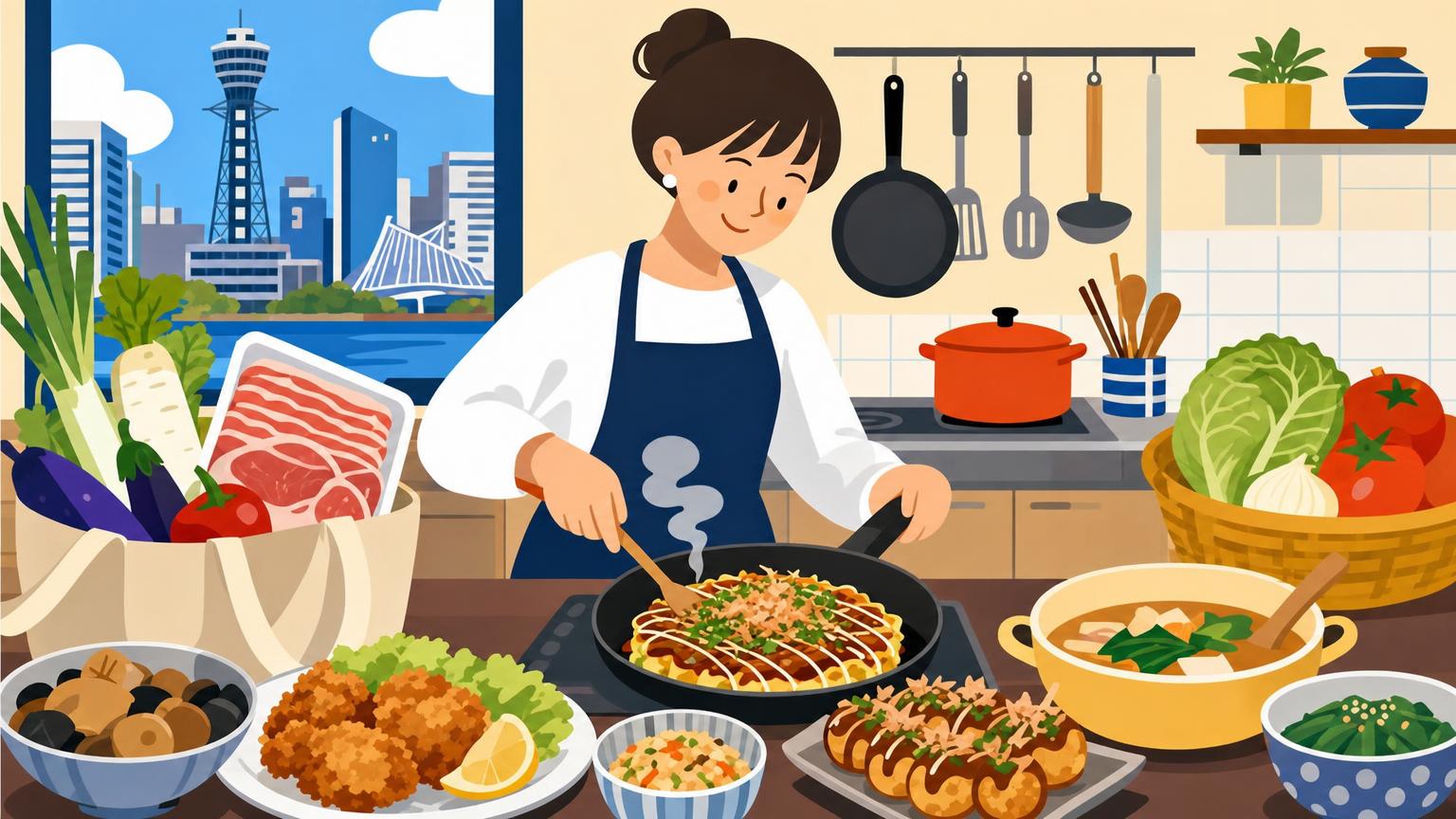
If you hear that Osaka is a city of kuidaore, you may imagine crowded restaurant streets, mountains of takoyaki, or people spending their last yen on an extravagant dinner. But that picture misses the most important part of the idea. In everyday Osaka life, kuidaore is often quieter, more practical, and more domestic.
The word is commonly translated as “eat until you drop,” or more literally, “eat until you ruin yourself.” In daily conversation, however, it does not usually mean reckless spending. It suggests that food deserves attention, pleasure, and a sensible share of the household budget. It is pronounced roughly kwee-dah-oh-reh, with the final syllables spoken lightly and evenly.
For many Osaka residents, the philosophy appears in the supermarket rather than the restaurant: comparing prices on fish, buying vegetables that are in season, choosing a good sauce, checking the discount time, or deciding that an inexpensive dinner can still feel generous. It appears when someone says, “That is cheap, but is it actually good?” It also appears when a family buys a small amount of excellent food instead of a large amount of ordinary food.
This is one reason living in Osaka can feel different from living in Tokyo. Tokyo often rewards speed, convenience, presentation, and access to many choices. Osaka also values convenience, but it adds a strong instinct for value: the emotional satisfaction of feeling that you bought well, cooked intelligently, and enjoyed more than you paid for.
The map below marks the historic Dotonbori location associated with the word kuidaore. The subject of this article is not sightseeing there. It is understanding how the same attitude travels from the city’s food history into an ordinary kitchen in neighborhoods such as Tennoji, Joto, Hirano, Suita, Higashiyodogawa, and beyond.
What Kuidaore Means in an Osaka Household
More than eating a lot
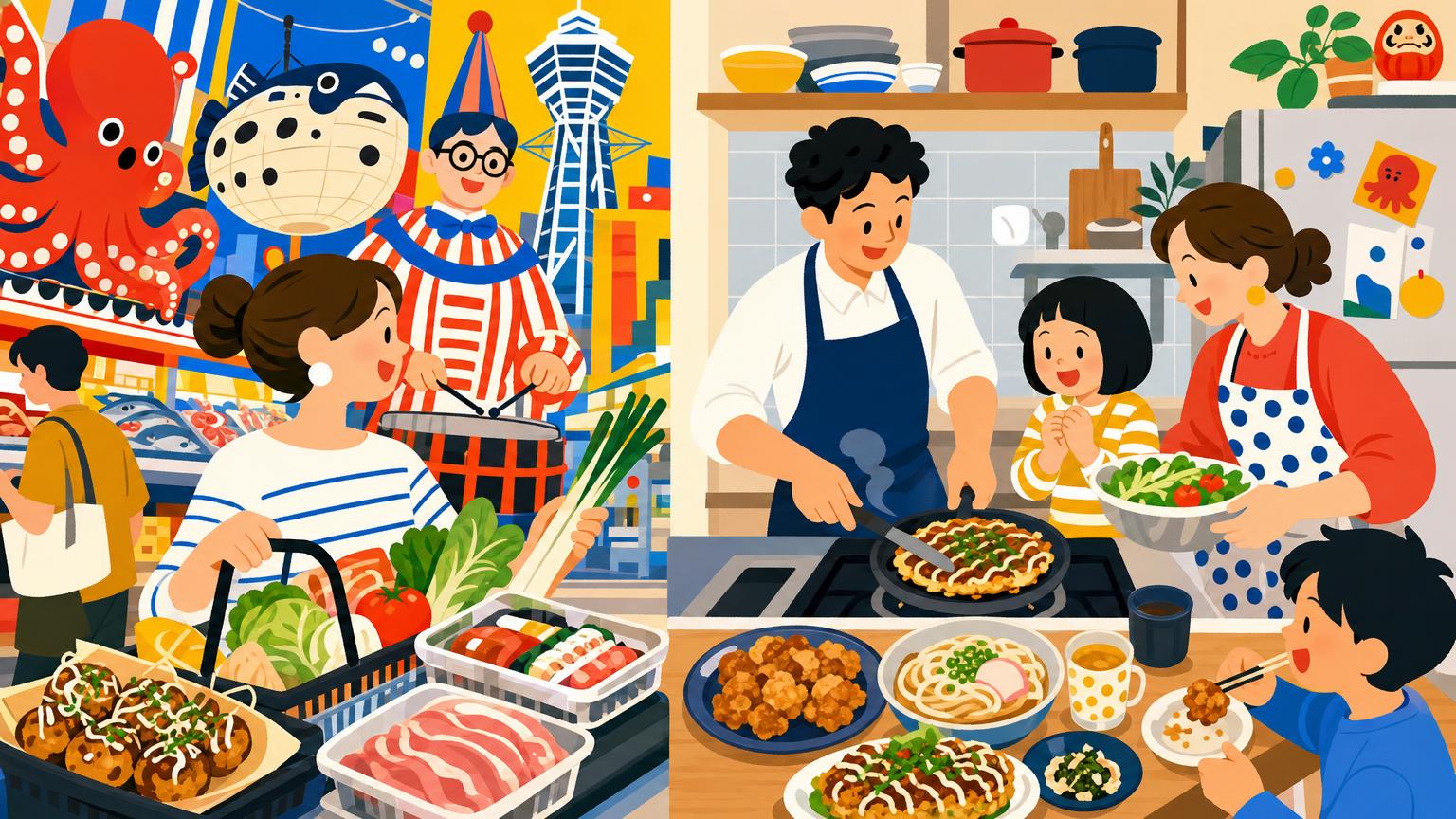
Foreign residents sometimes interpret kuidaore as a promise that people in Osaka eat excessively. That is only partly true. Osaka certainly has many big appetites, but the deeper idea is not quantity. It is the belief that food is one of the most worthwhile ways to spend money, time, and conversation.
A person can practice kuidaore with a bowl of rice, miso soup, grilled mackerel, and a good side dish. The meal does not have to be expensive; it needs to feel thoughtfully prepared. A cheap cabbage may be better than an expensive imported vegetable if it is fresh, suits the dish, and makes the meal satisfying.
This practical pleasure is connected to Osaka’s long history as a commercial and trading city. Osaka became known as “the nation’s kitchen” because food products passed through the city during the Edo period, connecting producers, merchants, wholesalers, restaurants, and households. The city’s food culture developed not only around luxury ingredients, but also around circulation, comparison, bargaining, preservation, and making ordinary ingredients enjoyable.
At home, that history becomes a way of thinking. Food is not simply fuel, nor is it automatically impressive because it is expensive. The cook considers practical questions: Is this fish fresh? Is the supermarket price reasonable? Can I use the leftover daikon tomorrow? Would this sauce improve the dish, or would it conceal poor-quality ingredients?
The household budget is part of the pleasure
In Osaka, discussing price is not always considered vulgar or embarrassing. People may talk about what something cost, whether a shop is worth visiting, or which supermarket offers better quality. A friend may praise a meal by saying it was yasūte umai—cheap and delicious—or describe a purchase as a good deal even when the food was not the absolute cheapest available.
That does not mean every Osaka resident always wants the lowest price. The key is value. A lower price is appealing when it does not result in extra work, waste, or disappointment. A slightly more expensive piece of fish may be the better choice if it is fresh enough to cook quickly. A prepared side dish may be worth buying after a long shift. A family-size pack may offer poor value if half of it spoils before anyone can eat it.
This is where foreigners may misunderstand Osaka’s reputation for thrift. Thrift is not the same as being unwilling to spend. Many people will spend freely on food they believe is worth the price, while avoiding purchases that seem overpriced, fashionable, or unnecessarily formal.
A household might save money by buying tofu, eggs, cabbage, chicken thighs, and seasonal fruit. It may then spend extra on a favorite miso, good soy sauce, local fish, premium rice, or a special ingredient for the weekend. The spending pattern is selective rather than uniformly cheap.
Why “good value” can feel better than luxury
A luxury meal provides pleasure through rarity and status. A good-value meal offers a different kind of pleasure: the feeling that you understood the situation correctly. You noticed that a supermarket had fresh sardines at a good price. You knew how to use the greens that looked slightly wilted. You chose the less fashionable cut of meat and cooked it well.
This is particularly visible in family kitchens and older shopping streets. A customer may visit several stores instead of buying everything in one place. Fish comes from the fish shop, meat from the butcher, vegetables from the greengrocer, and household goods from the drugstore or supermarket. The trip takes longer, but the shopper gains information and control.
For an international resident, this can be one of the most useful ways to understand Osaka. Shopping is not always organized around the idea of making one perfect weekly supermarket visit. It may instead involve a series of small decisions based on freshness, price, weather, work schedules, and what is already in the refrigerator.
How Osaka People Shop for Weekday Meals
The supermarket is a place for judgment
A Japanese supermarket can seem highly organized to a foreign newcomer. Labels are neat, packages are small, and ingredients are generally clean and ready to use. But Osaka shoppers are not simply following the store’s arrangement. They are constantly evaluating it.
They look at the date, but also at the product’s condition. They compare the weight, number of servings, amount of trimming required, and likely cooking time. A package of sliced pork may seem cheap until a shopper notices that it contains very little meat. A bag of vegetables may be inexpensive but inconvenient if it is too large for one person.
Many residents also learn the rhythm of their local store. They know when fresh fish arrives, when the bakery discounts bread, when prepared foods receive stickers, and when the aisles become crowded. Discount timing is not a secret trick; it is part of ordinary urban life, especially for people managing a tight budget or returning home late.
However, a discount sticker does not automatically make something a bargain. The product must still be useful. Buying cheap food that no one wants to eat is not kuidaore. It is waste.
Shopping changes with the weather
Osaka’s hot, humid summers influence grocery decisions. People may avoid buying too much fresh food if they have to walk home in the heat. They may choose ingredients that can be cooked quickly, such as thinly sliced pork, bean sprouts, tofu, eggs, or frozen vegetables. Cold noodles, chilled tofu, cucumber salads, and prepared side dishes become appealing because they reduce time spent near a hot stove.
In winter, the shopping basket changes. Napa cabbage, daikon, mushrooms, root vegetables, tofu, and inexpensive cuts for hot pot become useful. A family can buy one central ingredient, add vegetables gradually, and turn the same meal into several variations. A hot pot is not only comforting; it is also an efficient way to feed several people while using ingredients that might otherwise be difficult to combine.
Seasonality is practical rather than decorative. Seasonal produce is often cheaper, more flavorful, and easier to find. A person does not need to make a formal statement about local food culture. They simply see what looks good and adjust the week’s meals around it.
The small kitchen shapes the menu
Many apartments in Osaka have compact kitchens. This affects cooking more than foreign residents sometimes expect. A kitchen may have one narrow counter, limited storage, a two-burner stove, a small sink, and a refrigerator that must serve as both pantry and freezer.
The result is not necessarily less cooking, but more adaptive cooking. Residents favor dishes that can be prepared in one pan, one pot, or a rice cooker. They use a toaster oven, microwave, electric kettle, or countertop grill to avoid making the whole room hot. They may prepare basic stock, cooked rice, or marinated meat in advance, then assemble different meals throughout the week.
Japanese home cooking is often described as elaborate because a traditional meal may include rice, soup, a main dish, and several side dishes. In an actual weekday apartment, the meal may be much simpler. Rice and miso soup can be combined with store-bought kinpira, grilled fish, leftover curry, or a fried egg. The important thing is not that every meal contains many handmade dishes, but that the household knows how to make a small number of components feel complete.
Weekday Meal Prep the Osaka Way
Cook components, not rigid menus
A foreign resident may begin life in Osaka by planning seven complete dinners, but that can quickly become exhausting. A more practical approach is to prepare flexible components.
Cook a pot of rice. Wash and cut vegetables. Make a simple soy-based sauce. Boil some eggs. Prepare one protein that can be used in several dishes. Keep instant miso soup, frozen udon, tofu, or canned fish on hand for nights when work runs late.
The same chicken can become a rice bowl on Monday, a salad topping on Tuesday, and a sandwich or fried rice filling on Wednesday. Cabbage can be served raw with dressing, cooked with pork, added to miso soup, or mixed into okonomiyaki-style batter. This is not laziness; it is an efficient response to limited time and space.
The philosophy is similar to a good Osaka conversation: flexible, responsive, and not overly formal. You begin with a plan, then adjust when something better comes along.
Make one “anchor” dish
An anchor dish is a meal that carries the week. It might be curry, nikujaga, simmered chicken and vegetables, tonjiru, a large vegetable soup, or a pot of sauce for noodles and rice.
The first serving is eaten in its original form, while later servings are changed. Curry becomes curry udon or curry toast. Tonjiru becomes a filling soup with extra tofu. Simmered vegetables may be served with rice, placed alongside grilled fish, or eaten cold in a lunch box. Food is not considered boring simply because it appears more than once. It becomes boring only when nobody adapts it.
This approach is useful for foreigners living in Osaka because it does not require a perfect understanding of every Japanese ingredient. You can start with familiar techniques and gradually add local products such as miso, ponzu, abura-age, konnyaku, dried sardines, Japanese mustard, or regional pickles.
Prepare for the night you will not cook
One of the most realistic aspects of Japanese meal planning is accepting that your energy for cooking will vary. You may intend to prepare dinner after work but arrive home tired, wet, or hungry. A successful household keeps emergency options ready.
Frozen rice, frozen dumplings, eggs, canned tuna, tofu, instant soup, and prewashed vegetables can help prevent an expensive impulse meal. A supermarket deli item can be combined with rice and soup instead of being treated as an all-or-nothing substitute for cooking.
Osaka’s food culture does not require every meal to be theatrical. Sometimes kuidaore means buying a good croquette at the neighborhood shop, placing it beside leftover rice, and enjoying dinner without pretending that Tuesday is a festival.
The Role of Neighborhood Shops
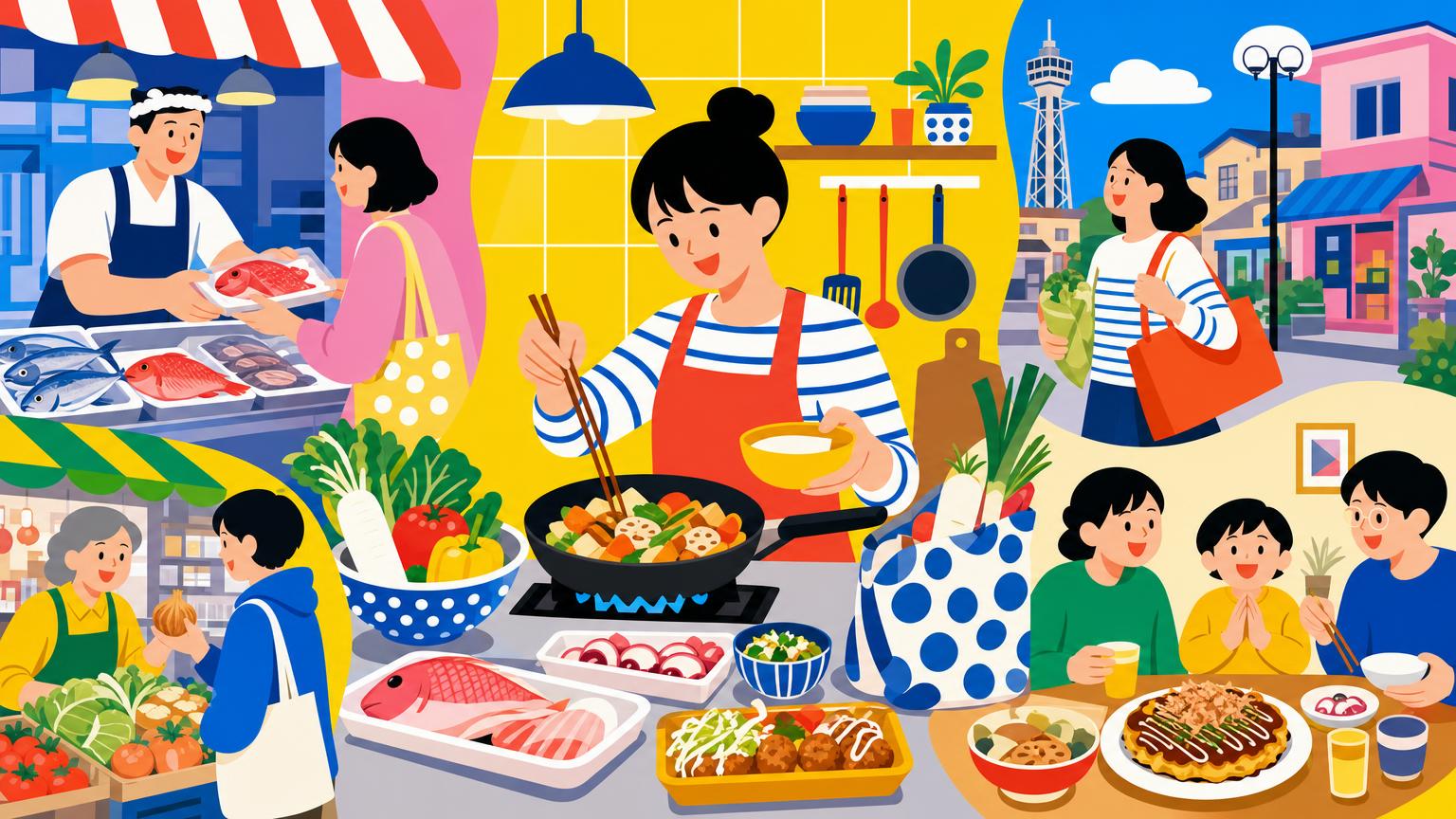
Shopping streets offer information, not just products
A local shopping street, or shotengai, can feel confusing to a foreign resident because it may not provide the uniform experience of a large supermarket. Shops open and close at different times. Products may not be displayed with detailed explanations in English. Quality and prices may vary from day to day.
But these streets are valuable because they offer human information. A fish seller may explain which fish is easiest to cook. A butcher may suggest a cut for curry rather than steak. A greengrocer may tell you that a vegetable is especially good today because it arrived that morning. You may not receive a long explanation. Often, the advice is brief, direct, and practical.
Do not expect every shopkeeper to provide hospitality for a foreign customer. A quiet transaction can still be helpful. Watch what regular customers buy, ask one clear question, and return another day if the shop suits you. Familiarity develops through repetition.
Tenjinbashisuji is not a model for every neighborhood
People often hear about Osaka’s famous long shopping streets and assume that all daily shopping works this way. In reality, residents choose among supermarkets, convenience stores, drugstores, shopping centers, small specialty shops, farmers’ stalls, and delivery services.
Someone living near Tennoji may shop differently from someone in Moriguchi or Sakai. A household with a car may visit a large suburban supermarket. A student may rely on a convenience store, a discount chain, and a small local market. An older resident may continue using a butcher and fish shop that their family has known for decades.
There is no single Osaka grocery lifestyle. The common thread is not the type of store, but the habit of judging what is worth buying today.
The convenience store is not just for emergencies
Foreign residents sometimes assume that convenience-store food is a sign that someone has given up on cooking. That is too simple. Convenience stores are part of the urban food system. They provide rice balls, salads, eggs, milk, bread, noodles, frozen items, prepared vegetables, and small portions that are useful for one-person households.
The question is not whether convenience food is morally good or bad. The question is whether it solves a real problem at a reasonable price. Someone working late may combine a convenience-store salad, a boiled egg, miso soup, and rice from home. Someone living alone may prefer a small prepared meal to buying ingredients that will spoil.
High-value eating includes avoiding waste, and waste can result from ambitious cooking plans just as easily as from excessive restaurant spending.
Osaka Versus Tokyo: Different Food Priorities at Home
The difference is not that “Osaka eats while Tokyo does not”
Comparisons between Osaka and Tokyo are often exaggerated. Tokyo residents care deeply about food, while Osaka residents also care about work, design, status, convenience, and presentation. The difference is better understood as one of emphasis and social rhythm.
Tokyo can feel more segmented. People may choose food based on neighborhood identity, professional schedule, dietary preferences, trends, or personal brand. There is enormous variety, and people often accept that a high price may reflect location, scarcity, atmosphere, or reputation.
Osaka also offers variety, but conversations about food more often return to satisfaction and value. Does it taste good? Is it enough? Is the price fair? Is the portion reasonable? Can an ordinary person enjoy it regularly? These questions do not reject quality; they ask quality to prove itself.
A Tokyo-style food purchase may be admired for being refined, while an Osaka-style purchase may be admired for being clever. Both can be excellent. The difference lies in what people feel they are praising.
Why Osaka meals can look casual while still being serious
A meal of rice, grilled fish, cabbage, and soup may look plain to a foreign observer. In Osaka, the quality of the rice, the freshness of the fish, the balance of the side dishes, and the price may all form part of the judgment.
Likewise, a casual meal of noodles or okonomiyaki is not necessarily treated as low culture. The cooking method, texture, sauce, timing, and portion all matter. A person may have strong opinions about which brand of sauce is best, which shop serves the right texture, or whether a family recipe should include a particular ingredient.
This seriousness does not always sound serious. Osaka speech may rely on humor, teasing, understatement, or blunt criticism. Someone may call a meal “nothing special” while eating every last bite. Someone may praise a dish by saying, “This is dangerous,” meaning that it is so good or easy to eat that they might have too much.
Foreigners can mistake this style for insincerity, but often it is the opposite. Direct comments are a way of showing that the food is being taken seriously enough to discuss honestly.
What Foreign Residents Often Misunderstand
Friendly does not mean instantly intimate
Osaka is often described as friendly, and this can certainly be true. However, the more useful question is what “friendly” actually looks like. It might mean that a cashier makes a joke, a neighbor comments on the weather, a shopkeeper offers direct advice, or a colleague teases you once you become familiar.
It does not mean that everyone wants a long conversation, an invitation into their home, or an immediate personal relationship. Warmth and boundaries can coexist. Someone may joke with you in a shop while still expecting you to keep the transaction efficient.
Food can create opportunities for contact, but you should not force them. Ask about an ingredient, thank the shopkeeper, and allow the relationship to develop naturally.
Cheap is not the same as low quality
A foreign resident may see an inexpensive lunch or discounted ingredient and assume that it is inferior. Osaka’s everyday food culture challenges that assumption. A product may be affordable because it is seasonal, locally abundant, close to its sell-by date, visually imperfect, or sold by a shop with low overhead.
Of course, some cheap products are disappointing. The Osaka response is not blind optimism but comparison. Try different shops, notice when prices change, and learn which items are worth buying prepared and which are cheaper to make yourself.
Not every Osaka person enjoys eating heavily
Dietary restrictions, health concerns, religion, allergies, fitness goals, age, and personal preference all influence modern households. Some residents enjoy rich food, while others prefer vegetables, simple soups, or carefully portioned meals. The kuidaore philosophy can also include restraint when restraint leads to greater satisfaction.
Eating until you feel physically uncomfortable is not a daily requirement. The expression is cultural, playful, and historical. In everyday life, it is often closer to “do not neglect the pleasure and quality of food” than to “consume as much as possible.”
Homemade food is not automatically traditional
A Japanese home meal may include frozen food, convenience-store items, pasta, curry from a packet, Korean ingredients, Chinese vegetables, or a Western-style sandwich. Osaka kitchens are not museums; they respond to work, migration, family composition, prices, children’s preferences, and changing tastes.
If you live in Osaka, you may see a household eat takoyaki one night, pasta the next, and a simple bowl of rice with natto after that. Local identity is not protected by rejecting outside influences. Instead, it is expressed through how food is selected, adjusted, shared, and enjoyed.
How to Practice Kuidaore as a Foreign Resident
Learn three reliable meals first
You do not need to master Japanese cuisine right away. Choose three meals that suit your kitchen, budget, and schedule.
One could be a rice bowl with egg and vegetables. Another could be miso soup with tofu, mushrooms, and any vegetables that need to be used. A third could be noodles with a simple protein and greens. Once these meals become reliable, you can substitute local seasonal ingredients.
The goal is not authenticity as performance. It is confidence. When you know how to prepare a satisfying meal from ordinary ingredients, grocery shopping becomes less stressful and less expensive.
Keep a price memory
You do not need a spreadsheet, but it helps to remember the approximate prices of foods you buy regularly. Notice the usual prices of eggs, rice, tofu, chicken, cabbage, bananas, and milk in your area. Then you can recognize a genuine bargain instead of simply reacting to bright discount signs.
Price memory also helps you understand differences between neighborhoods. A supermarket near a station may charge more for convenience. A suburban store may offer larger packages. A local shop may have better produce but shorter opening hours. The best store for you is the one that fits your everyday routine, not the one with the lowest price on a single item.
Buy for the person you are on Wednesday night
Many food budgets fail because people shop for an imaginary version of themselves. On Sunday, you imagine cooking complicated meals every evening. By Wednesday, you are tired, and the ingredients are still waiting.
Shop for your actual life. If you work late, buy ingredients that can be prepared quickly. If you live alone, choose smaller portions or foods that freeze well. If you enjoy cooking only on weekends, prepare sauces and proteins then. If you dislike leftovers, cook half portions and buy one prepared side dish.
This is a very Osaka form of practicality: pleasure should be sustainable. A meal plan that makes you feel guilty is poor value, even when the ingredients were inexpensive.
Treat good food as an everyday right, not a special event
The most meaningful part of kuidaore is not extravagance. It is refusing to believe that ordinary life must be flavorless. A busy worker can still buy a good piece of fish. A student can improve instant noodles with vegetables and an egg. A family can turn cabbage, pork, and sauce into a satisfying meal. A foreign resident can learn which local ingredients make a familiar recipe taste even better.
Osaka’s food philosophy is generous, but it is not naive. Money matters. Time matters. Health matters. Storage space matters. The skill lies in balancing these factors without giving up enjoyment.
Reading Osaka Through the Kitchen
The famous Kuidaore Taro originally began as a restaurant sign and mechanical mascot. The original Osaka restaurant opened in Dotonbori in 1949, and the drummer was added in 1950. Although the restaurant later closed, the character remained connected to the city and now stands at the Nakaza Kuidaore Building, which underwent a full renovation in March 2025.
That history matters because it illustrates how Osaka transforms food into public culture. Eating is tied to humor, commerce, performance, competition, and belonging. But this spirit does not remain in Dotonbori. It returns home through grocery choices, leftover management, dinner conversations, and judgments about whether a meal was worth the money.
If you want to understand what living in Osaka is truly like, observe how people shop on an ordinary weekday. Notice the customer checking the fish counter before deciding what to cook. Notice the parent choosing a small package instead of a large one because waste is expensive. Notice the office worker buying one good side dish and preparing rice at home. Notice the friend who spends more on a favorite ingredient but refuses to pay for a meal that feels overhyped.
That is kuidaore in everyday life. It is appetite guided by judgment. It is thrift without joylessness. It is pleasure that must fit within the monthly budget. And it explains why Osaka’s food culture is not just something you experience in a restaurant. It is a way of making an ordinary evening feel worth sitting down for.