You hear it before you see it. The rhythmic slapping of plastic yellow basins against wet tile. The low, resonant hum of the Kansai dialect bouncing off a high vaulted ceiling. The splash of hot water washing away the grime of a twelve-hour workday. In a city that never stops moving, the local bathhouse is where Osaka finally sits down to breathe.
I spend a lot of my time in the mountains. As someone in his early twenties who focuses on outdoor survival and hiking, I am used to stripping away the excess of city life. I seek out the quiet ridges and the hidden trails of the Kansai region. But when I come back down to the concrete grid of Osaka, the silence of a solitary apartment feels wrong. I need the noise. I need the friction of everyday life. And there is no place that captures the raw, unfiltered reality of this city quite like the local sento.
If you are a foreigner living in Osaka, or if you are planning to make this neon-lit metropolis your home, you will quickly realize that the official tourist guides only scratch the surface. They tell you where to eat takoyaki. They tell you where to take photos. But they do not tell you how the city actually functions on a Tuesday night. They do not tell you where the neighborhood gathers when the shutters roll down on the shopping arcades. Foreigners often misunderstand Osaka as simply being the loud, food-obsessed sibling to Tokyo. The reality is far more nuanced. Osaka is a city built on merchant culture, where communication is currency, and isolation is the enemy.
To understand Osaka, you have to understand its people. You have to understand how they think, how they speak, and how they act when the formalities of the workplace are literally stripped away. The sento is not just a place to get clean. It is the nightly social hub of the neighborhood. It is the great equalizer. It is where you will find the truest expression of daily life in Osaka.
Why the Osaka Sento is the Ultimate Local Social Hub

The Heart of the Neighborhood Community
Osaka is a dense, sprawling collection of neighborhoods connected by train lines and covered shopping arcades. While Tokyo often feels like a set of distinct, polished municipalities, Osaka comes across as one massive, interconnected village. At the heart of every village lies the sento. Decades ago, most homes in Japan lacked private baths, making the local sento essential for daily hygiene. Today, almost everyone has their own shower at home, yet bathhouses remain deeply embedded in the urban fabric. Their survival is not due to a strict need for cleanliness, but rather a profound human need for community.
Walking into a neighborhood sento in Osaka is like stepping into a communal living room. Regular patrons have their unassigned but universally respected spots. They recognize each other by face, voice, and even the specific brand of shampoo stored in their rented lockers. The sento serves as a neighborhood watch, a local gossip hub, and a nightly check-in spot for the elderly. If a regular doesn’t show up for a few days, someone inevitably asks the attendant about their wellbeing. In a modern society increasingly plagued by urban isolation, the Osaka sento stands as a strong counterforce. It demands presence. It demands interaction.
Are People Friendlier in Osaka? The Sento Proof
One of the most common clichés is that Osaka people are friendly. But “friendly” is a vague term that doesn’t fully capture the dynamic. Tokyo residents can be exceptionally polite, accommodating, and friendly. The difference lies in boundaries. Tokyo respects your privacy to the point of isolation, while Osaka disregards privacy in pursuit of connection.
Osakans are inherently curious, fiercely talkative, and refreshingly unpretentious. They don’t just tolerate conversations with strangers; they actively seek them out. The sento offers the best proof of this. Sitting naked on a small plastic stool, scrubbing your back, the social barriers that dominate Japanese corporate and public life dissolve. A high-powered executive sits shoulder-to-shoulder with a retired carpenter and a university student.
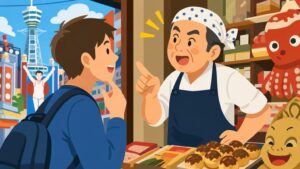
As a foreigner, you might expect to be left alone, treated as an outsider. In a Tokyo sento, this might be true—people will politely ignore you to give you space. In Osaka, however, you become prime real estate for conversation. An older gentleman might lean over from the next faucet to ask where you’re from, compliment your skill handling the scalding hot water, or grumble about the local baseball team. Perfect Japanese isn’t necessary for this. The language of the Osaka sento is built on nods, smiles, and the universal grimace shared when lowering yourself into a painfully hot bath. This is the kind of friendliness Osaka is known for: an intrusive, warm, and deeply physical sense of belonging.
Sento vs. Onsen: Understanding Japan’s Bath Culture
Shedding the Gear: Daily Rituals Versus Weekend Retreats
To truly understand the role of the bathhouse in everyday life, one must recognize the fundamental difference between a sento and an onsen. While foreigners often use the terms interchangeably, to a Japanese person they signify completely distinct concepts.
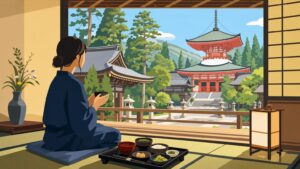
I view it through the perspective of the outdoors. An onsen is like a destination hike. It is a natural hot spring heated geothermally by volcanic activity. You travel to an onsen, stay at a traditional inn, wear a yukata, enjoy an elaborate multi-course meal, and soak in mineral-rich waters surrounded by expansive mountain views or coastal cliffs. An onsen is an escape from daily life, a weekend retreat intended to heal ailments and offer profound luxury.
A sento, by contrast, is the base camp. It represents everyday living. A sento is a public bathhouse located right in the heart of a residential neighborhood. The water typically comes from standard municipal tap water, heated in a boiler room out back. There are no grand mountain vistas—just a painted mural of Mount Fuji on the wall. You don’t travel to a sento; you walk there in your sweatpants and sandals after a long day at work.
The sento is about shedding the heavy gear of the day. You drop your work clothes in a woven basket, leave your titles at the door, and scrub the city’s exhaustion off your skin. While an onsen is a geological blessing, a sento is a municipal necessity. It is gritty, real, and the very foundation of working-class Osaka.
The Architecture of Shared Spaces
The physical layout of a sento is deliberately designed to encourage interaction. When you slide open the frosted glass doors, you are usually greeted by the bandai, a raised platform where the attendant sits. Historically, the bandai was placed so the attendant could oversee both the men’s and women’s changing rooms, monitor the facilities, and collect the entrance fee.
Beyond the changing room lies the bathing area—a vast space filled with the sounds of splashing water. The walls are tiled, often adorned with retro advertisements for local businesses. The baths themselves are divided into various sections: usually a deep main tub, a shallow tub with massage jets, a cold water plunge pool, and the well-known denki buro, or electric bath, which passes low-voltage electrical currents through the water to soothe aching muscles.
The design enforces closeness. Washing stations are tightly arranged along the walls and central islands. You can’t help but notice those around you. You hand a dropped soap bar back to your neighbor and share the cold water bucket. The architecture of the sento makes it impossible to stay fully in your own bubble, and this physical proximity directly fosters social connection.
Best Sentos in Osaka for a Genuine Social Experience
The Classic Retro Bathhouse Experience
If you want to travel back in time, you need to visit a traditional Showa-era sento. These are the aging, charming, fiercely independent bathhouses that have been running for fifty or sixty years. You can recognize them by the tall brick chimneys rising above the low residential rooftops in neighborhoods like Nishinari, Taisho, or Ikuno.
Inside a classic retro sento, the floors are tiled with small, colorful mosaics faded by decades of use. The lockers are made from dark, polished wood and require an old metal key attached to a coiled plastic bracelet. These places lack modern conveniences like craft beer on tap or stylish relaxation lounges. Instead, they offer scalding hot water, icy cold plunges, and a television permanently tuned to a local variety show or a Hanshin Tigers baseball game.
This is where Osaka’s true old guard gathers. The regulars here are formidable, moving through the space with complete authority, shifting from the dry sauna to the cold plunge with rhythmic precision. As a newcomer, you may feel intimidated, but this is where the Osaka spirit truly shines. Show respect, follow the unwritten rules, and you’ll soon earn a nod of approval. These retro sentos are vanishing as their owners age, making it all the more important to visit them while they still exist.
Modern Sentos Connecting the New Generation
In recent years, Osaka has witnessed a robust revival in bathhouse culture, led by a younger generation determined not to let the sento fade away. These modern, refurbished sentos bridge the gap between old working-class traditions and the aesthetic tastes of today’s city dwellers. Neighborhoods known for their artistic and youthful vibe, like Nakazakicho or Fukushima, host these revitalized hubs.
Modern sentos preserve the core layout of a traditional bathhouse but bring fresh energy to the space. You might find a lobby doubling as a local art gallery or a listening bar playing ambient music on vinyl. After your bath, instead of a simple chilled milk bottle, you can order a locally brewed craft beer or a specialized organic soda.
The social dynamic here is intriguing. You’ll see seventy-year-old neighborhood grandfathers scrubbing down beside twenty-something graphic designers and foreign exchange students. The modern sento demonstrates that communal bathing isn’t just a relic of the past; it’s an evolving social practice. These spaces warmly welcome foreigners, often providing English instructions and staffed by people eager to bridge cultural divides. They offer a perfect introduction for anyone nervous about taking their first public plunge.
Super Sentos for Extended Relaxation and Mingling
If a traditional sento is a quick nightly stop, the super sento is a full-day affair. Located throughout the suburbs and commercial fringes of Osaka, super sentos are vast entertainment complexes that amplify the basic public bath experience to massive proportions.
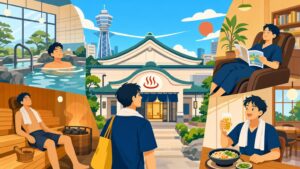
At a super sento, the bathing area is a genuine playground. Outdoor baths are landscaped with large rocks and bamboo fences, carbonated water baths cover your skin with tiny bubbles, intensely hot saunas feature hourly towel-waving performances by staff, and seasonal medicinal herb baths rotate throughout the year.
However, the real social magic of a super sento happens once you’re clothed again. These facilities boast expansive relaxation zones with hundreds of reclining chairs, thousands of manga volumes, and full-service restaurants serving everything from chilled soba noodles to crispy fried chicken. Families spend entire Sundays here, groups of friends recover from long weeks, and solo travelers find quiet corners to rest. While mingling isn’t as intimate as in smaller neighborhood sentos, it provides a fascinating glimpse into how modern Osakans unwind in the company of hundreds of strangers. It is the ultimate communal relaxation experience.
The Unspoken Rules of the Naked Social Club

Basic Bathing Etiquette for First-Timers
The biggest obstacle for foreigners wanting to try the Osaka sento is the fear of making mistakes. The etiquette may appear complicated at first, but it is built on a simple principle: respect the shared water. Think of it like a trail code when hiking. You don’t leave trash on the path, and you don’t bring dirt into the bath.
When you enter the changing room, remove all your clothes. Bathing suits are not allowed. You will be provided with, or can purchase, a small modesty towel. This small rectangular piece of cotton is the only item you should have with you.
Before stepping into the bathtub, you must wash your entire body. This is the golden rule of the sento. Take a small stool and plastic basin, sit in front of a faucet, and thoroughly scrub yourself with soap and shampoo. Rinse off all the suds completely. The bath water is meant for soaking and relaxing, not for washing.
Once you’re clean, you can enter the tubs. Move slowly, as the water is often hotter than what foreigners expect. Do not dive, splash, or swim. Most importantly, keep your small towel out of the water. You can fold it and balance it on your head or place it on the edge of the tub. If it accidentally falls in, wring it out outside the tub. Following these basic rules shows respect for the community space and is the fastest way to earn quiet respect from the locals around you.
Navigating Tattoo Policies in Local Sentos
For many foreigners living in or visiting Japan, tattoos are the biggest obstacle to enjoying bath culture. Because tattoos have been historically linked to organized crime, many hot springs, gyms, and pools ban tattooed individuals. However, understanding the legal distinctions of sentos is very important here.
There is a clear difference between an onsen or super sento and a traditional neighborhood sento. Traditional sentos fall under the Public Bathhouse Law. Since they have long been essential for public hygiene, they cannot legally refuse entry based on tattoos. They are viewed as vital infrastructure. In contrast, super sentos and private onsens are classified as leisure facilities, allowing them to refuse service to tattooed guests.
This means most local, independent sentos in Osaka welcome those with tattoos. If you have ink, you don’t need to conceal it in your neighborhood bath. You’ll often see older regulars with full traditional back pieces sharing laughs with an American English teacher sporting a modern tattoo sleeve. This visual speaks to the sento as an equalizing space. Always check the rules if visiting a large super sento, but if you enter a small, retro bathhouse with cracked tiles and a tall chimney, you and your tattoos are almost certainly welcome.
How to Respectfully Engage with the Locals
Knowing how to wash and where you are allowed to go is only half the challenge. The other half is understanding the social rhythm. You’re entering a space where people are completely vulnerable, so reading the atmosphere is vital.
The key is to balance being approachable with being respectful. When you enter the bathing area, a simple polite nod to those nearby is a good way to break the ice. Avoid staring. Staring violates the unspoken sento etiquette. Everyone is naked, which means no one is really naked. You look at faces, the ceiling, or the faded mural on the wall.
If an older Osakan strikes up a conversation, go with it. Don’t worry if your Japanese is limited. Osakans excel at physical comedy and expressive communication. Respond with enthusiasm. Learn a few phrases in the local Kansai dialect. A simple comment about how hot the water is, said with a smile, can instantly connect you. If you’re in the sauna and a sudden hush falls over the room during a sumo match on TV, join in with the collective sigh when the bout ends. Engagement here is rarely about deep discussions. It’s about being present together and acknowledging that, for this one hour of the night, everyone is sharing the exact same experience.
Soak in the True Spirit of Osaka
Living in a foreign city can feel isolating. You might learn the train routes, figure out the garbage sorting schedule, and memorize the best spots for cheap groceries. But these are merely the basics of survival. To truly experience Osaka, you need to connect with its emotional pulse.
The local sento serves as that connection point. It peels away the superficial aspects of city life, revealing the raw, steamy, and chaotic warmth that defines this area. It’s a place where the famously loud and boisterous nature of the Osakan people turns into a deep sense of community care.
When you leave the sento, stepping out into the cool night with a flushed face and a bottle of cold milk in hand, you feel changed. The street noise seems less overwhelming. The neon lights appear a bit warmer. You are no longer just an outsider looking in. By sharing the water, learning the unspoken customs, and engaging in unexpected conversations with your naked neighbors, you’ve tapped into the city’s very heartbeat. You’ve washed away the barriers and, at least for that night, you are undeniably part of Osaka.