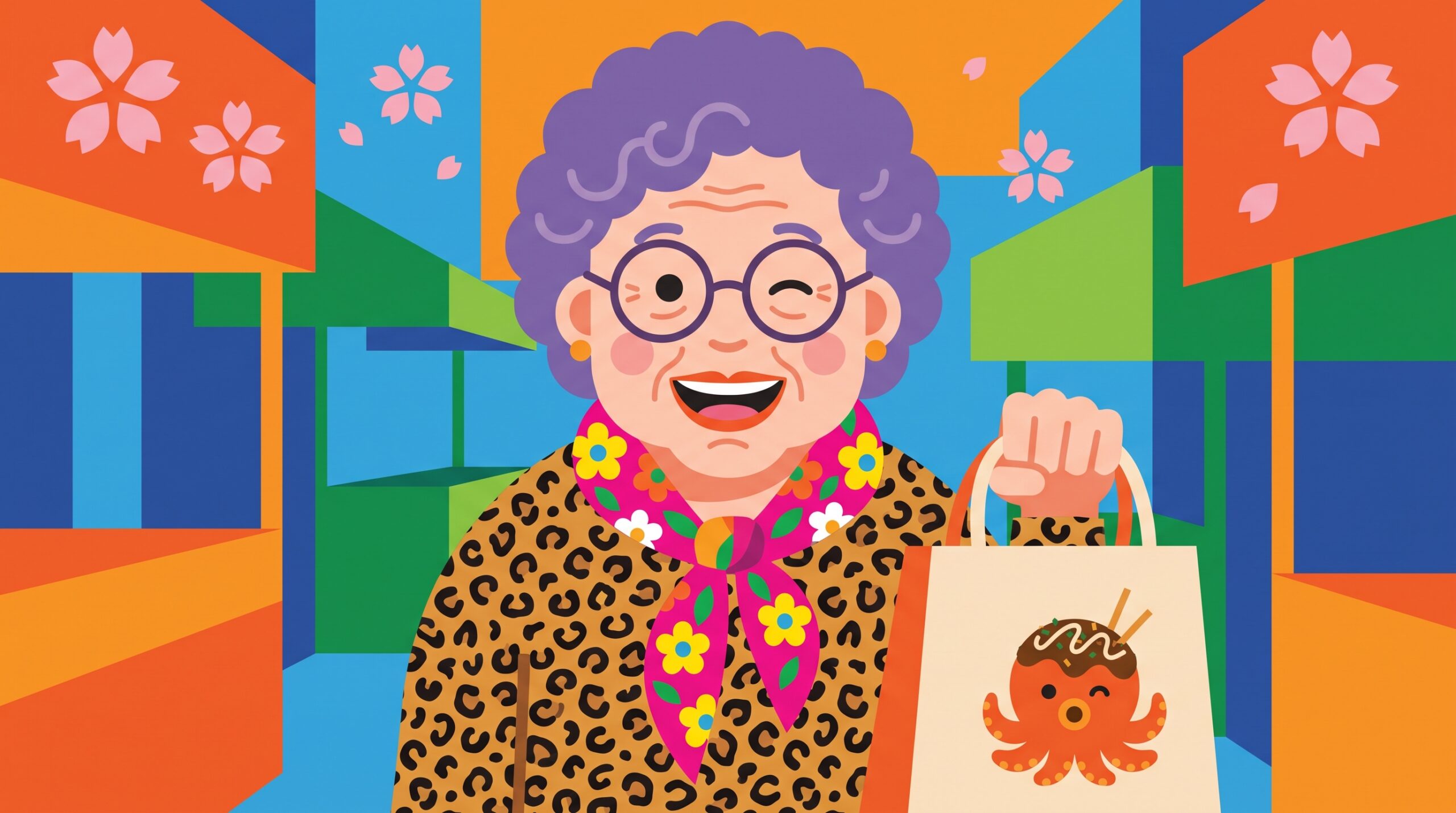
You step off the bullet train from Tokyo. You walk into the bustling corridors of Shin-Osaka Station. You expect the famous Japanese quiet. You expect polite nods, silent subway rides, and people avoiding eye contact. Instead, a lady in a neon tiger-print sweater grabs your sleeve as you stare blankly at a complex transit map. She speaks rapidly in a thick, rolling dialect. She asks where you are going. She asks if you have eaten lunch. Before you can even process the interaction, she dives deep into a cavernous handbag. Out comes a brightly wrapped hard candy. She presses it into your palm, gives you a hearty slap on the back, points you toward the Midosuji Line, and vanishes into the crowd.
Welcome to Osaka.
My name is Taro Kobayashi. I am in my early twenties, and my true passion lies far away from the concrete. I am an outdoor specialist. I spend most of my time hiking the rugged peaks of the Kansai region, exploring the silent cedar forests of Mount Kongo, and seeking the tranquility of high-altitude trails. I crave the silence of the wilderness. But whenever I descend from the mountains and return to the grid of the city, I am thrust back into an entirely different kind of wild environment. Here, the local wildlife is loud, proud, and completely unapologetic. The absolute apex predator of this urban jungle? The Osaka Obachan.
If you are a foreigner living in Osaka, or if you are considering making this vibrant city your home, you must understand this phenomenon. The Osaka Obachan is not just an internet meme or a colorful stereotype. She is the undeniable heartbeat of the city. She represents the fundamental difference between Osaka and the rest of Japan. Learning how to interact with these formidable, big-hearted women is the key to unlocking the true rhythm of daily life here. We are going to explore exactly what an Osaka Obachan is, the cultural significance behind her aggressive animal print fashion, and why her everyday presence makes this city the warmest place in Japan.
What is an Osaka Obachan? The Ultimate Guide to Japan’s Fiercest Aunties
The Friendly and Talkative Spirit of Osaka
To answer the common question of what an Osaka Obachan is, you first need to understand the city’s fundamental social fabric. In Tokyo, the golden rule of public life is to avoid being a nuisance. You keep your voice down. You keep your opinions to yourself. You maintain a respectful distance from strangers. This idea centers on harmony through invisibility.
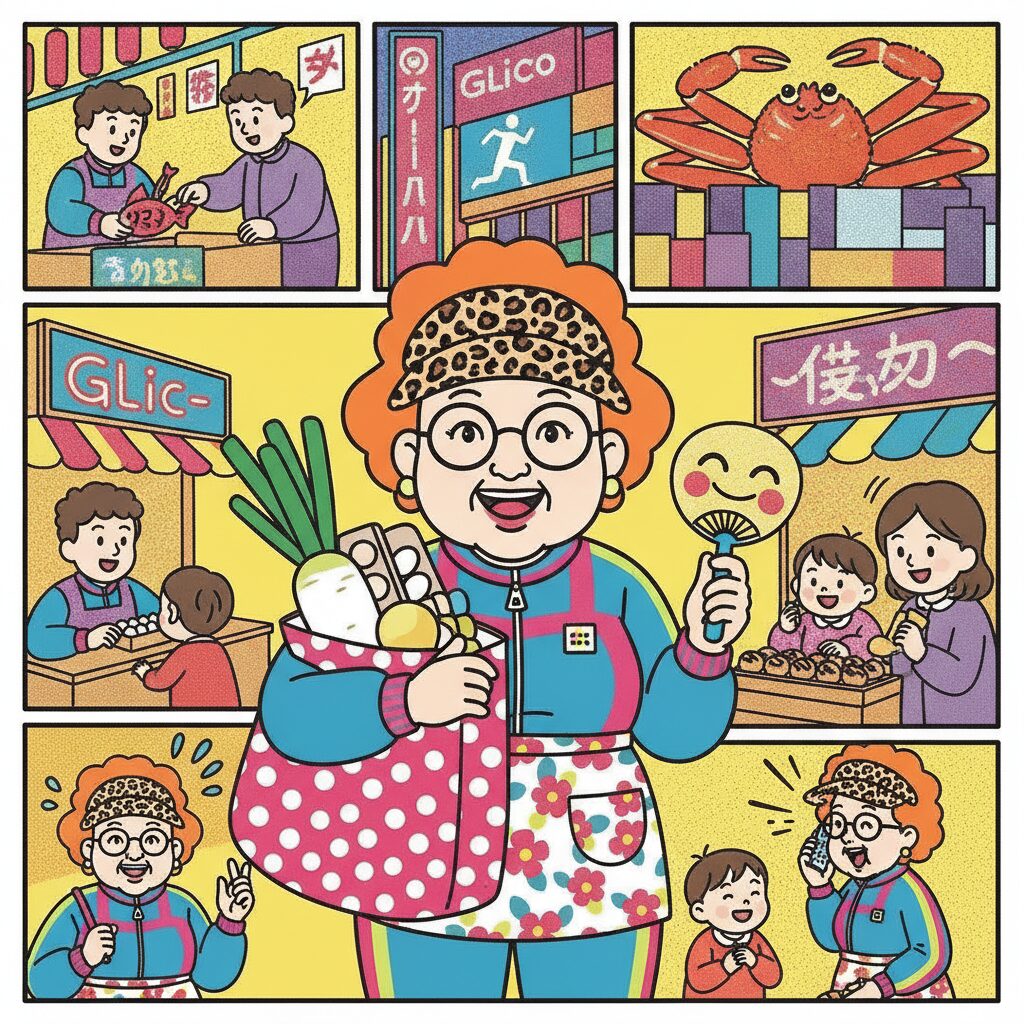
Osaka, however, operates on an entirely different wavelength. Here, harmony is achieved through lively friction. The Osaka Obachan embodies this perfectly. She is generally a middle-aged to elderly woman who refuses to be overlooked by society. She is cheerful, endlessly talkative, and fiercely generous. She treats the whole city as her extended living room.
For foreign residents, this can come as a culture shock. Expats in Japan often face feelings of isolation. The language barrier and cultural emphasis on privacy can make forming casual connections difficult. The Obachan breaks down that barrier with the force of a sledgehammer. She doesn’t mind if your Japanese isn’t perfect. She will communicate through sheer determination, exaggerated gestures, and a booming voice.
If you stand in line at a local supermarket in Osaka, the Obachan behind you will likely inspect your basket. She might tell you the daikon radish you picked is too bruised. She might ask what you’re making for dinner. She will offer unsolicited tips on preparing your meat. This is not considered rude in Kansai culture; it’s an expression of communal care. It’s a raw, unfiltered humanity that makes living in Osaka feel less like residing in a major city and more like living in a massive, chaotic village.
Why Do They Always Carry “Amechan” (Candy)?
One of the most distinctive traits of the Osaka Obachan is her magical handbag. No matter the shape or size, this bag contains an endless supply of hard candy. In the local dialect, this candy is called “amechan.”
This linguistic quirk is key to understanding the local mindset. In standard Japanese, candy is simply “ame.” But in Osaka, people often add the affectionate suffix “-chan” to inanimate objects, especially food. They say “oimo-san” for sweet potatoes, “mame-san” for beans, and “ame-chan” for candy. It personifies the food, making everyday essentials feel cute, familiar, and deeply valued.
But why does the Obachan carry it everywhere? The amechan is more than just a sweet treat. It’s a social lubricant. It’s a tool of diplomacy. If a child is crying on a crowded train, an Obachan will pull out an amechan to calm them. If a retail worker looks tired, an Obachan will slide an amechan across the counter. If a foreign tourist looks confused at a crosswalk, the amechan acts as an icebreaker before the enthusiastic help begins.
When hiking the steep trails of the Rokko mountain range, hikers often pass each other with a quiet, respectful bow. But walking through Osaka’s busy arcades requires currency for social exchanges. The amechan is that currency. It eases tension and builds instant connections between strangers. There’s an unspoken rule to learn when living here: when an Obachan offers you an amechan, you take it with both hands and a smile. Refusing the candy is refusing her hospitality, which is a serious social faux pas in Osaka.
The Signature Fashion: Can You Wear Animal Print in Japan?
The Love for Leopard Prints and Bright Colors
People planning a move to Japan often search online with a very specific concern: can you wear animal print in Japan? They have read countless blogs stressing the importance of blending in, wearing muted colors, and avoiding anything that attracts attention.
If you are in Tokyo, wearing a full leopard-print tracksuit might indeed draw some sideways glances. If you are in Osaka, you will simply look like you are heading to the grocery store.
The distinctive fashion of the Osaka Obachan is legendary. It is loud, visually explosive, and heavily reliant on leopard prints, zebra stripes, tiger faces boldly displayed across the chest, and neon colors that defy the natural spectrum. Some go even further by dyeing their hair in vibrant shades of purple or crimson.
This fashion choice is no accident. It is deeply rooted in Osaka’s history as a merchant city. Traditionally, Osaka merchants prized things that appeared expensive, flashy, and prosperous. Animal prints symbolize strength, vitality, and a hint of glamorous danger. But more importantly, this style is a rebellion against aging and societal expectations. In many cultures, older women are expected to fade quietly into the background. The Osaka Obachan completely rejects this idea. Her animal print armor is a declaration of existence. She wears a roaring tiger on her shirt because she still has plenty of roar left in her.
Breaking the Stereotype of Quiet Japanese Fashion
When you stroll through Japan’s major shopping districts, you will notice a sea of navy blue, beige, white, and black. Brands like Muji and Uniqlo have mastered the art of the unoffensive, minimalist wardrobe. Japanese corporate culture demands uniformity.
The Obachan throws this entire rulebook into the Yodo River. Her wardrobe is a chaotic symphony of clashing patterns. For foreign residents, this is incredibly liberating. Living in a new country often comes with heavy pressure to assimilate. You worry about standing out, wearing the wrong shoes, or the wrong jacket.
Seeing a local auntie strut down the street in gold sequined pants and a leopard-print visor is a huge relief. It signals that Osaka embraces eccentricity and rewards boldness. You don’t have to shrink yourself to fit perfectly into a rigid mold here. The local fashion scene is diverse enough to handle whatever you bring to the table. When I swap my drab, earth-toned hiking gear for my everyday city clothes, I feel a sense of freedom knowing that no matter what I wear, I will never be the most loudly dressed person on the block.
Language Guide: Obachan vs Obaachan
What Does Obachan Mean in Japanese?
To get by in daily life in this city, mastering the local vocabulary is essential. One of the most important linguistic distinctions you will encounter is between “obachan” and “obaachan.”
Foreign learners of Japanese often confuse these two terms, but making that error in real situations can have significant social repercussions. Let’s take a closer look at what obachan means in Japanese.
Obachan (おばちゃん), with a short, crisp “a” sound in the middle, means “aunt” or a “middle-aged woman.” It typically refers to women aged from their late thirties to their fifties or early sixties.
Obaachan (おばあちゃん), with a long, drawn-out “a” sound, translates directly as “grandmother” or an “elderly woman.”
The difference carries pride. If you address a lively, fifty-year-old shopkeeper as “obaachan” (grandmother) at a local market, you are essentially calling her old. You might suddenly find the price of your vegetables doubled. Using the short, sharp “obachan” helps maintain good relations. It is a familiar term that acknowledges her authority and experience without disrespecting her vitality.
Is Obachan a Respectful Term?
This raises a nuanced question many expats grapple with: is obachan respectful?
The answer depends entirely on context and location. In an upscale Tokyo boutique, calling a female clerk “obachan” would be seen as too blunt. It collapses the social distance too abruptly and lacks the refinement of formal business Japanese. In such settings, more neutral and respectful customer service language is appropriate.
In Osaka, however, the rules are quite different. Although you wouldn’t use it in a corporate environment, “obachan” is common language on the streets, arcades, and among small businesses. It acknowledges a woman’s role as a community pillar.
When using it, tone matters. It requires warmth and friendliness. If you’re a young foreigner trying to bargain for a discount on a secondhand bicycle at a local shop, a cheerful “Obachan, can you give me a good deal?” is a smart strategy. It breaks down the stiff, foreign-tourist barrier and creates an instant, familial connection. It shows that you comprehend the local culture. More often than not, she’ll laugh, gently tease you for being cheeky, and offer the discount. This is proof that in Osaka, warmth often outweighs strict formality.
Meet “Obachaaan”: Japan’s Most Elderly Idol Group
The Concept and Members of the Gaudy Grannies
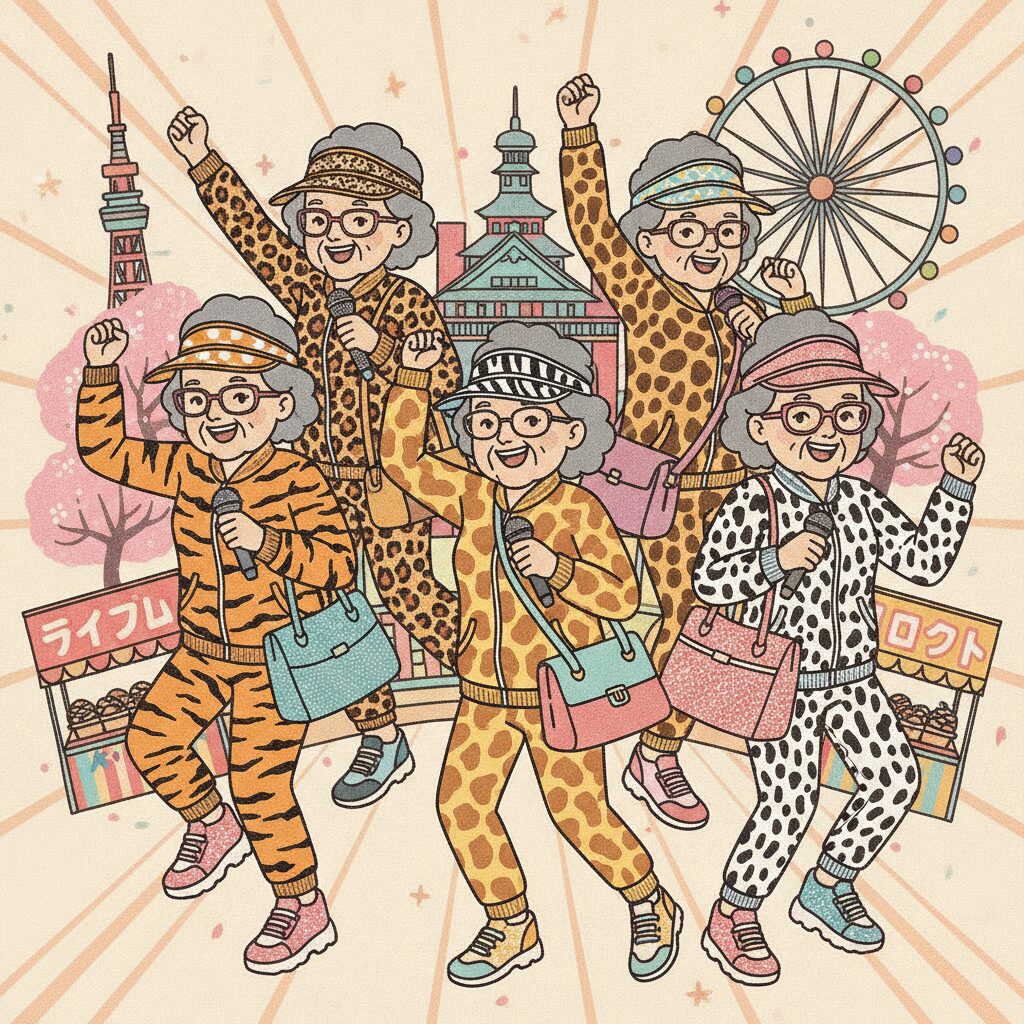
If you want evidence of how deeply this culture is cherished, look no further than the entertainment industry. Osaka has actually transformed its auntie culture into a pop music sensation. Enter “Obachaaan“—intentionally spelled with three ‘a’s to highlight the loud, drawn-out Osaka accent.
People often search for the Obachaaan members, wondering if it’s a comedy sketch or a genuine group. They are very much real. They are an idol group made up entirely of local women. The typical Osaka obachan age range for this group spans from their sixties well into their seventies and eighties.
They were chosen not for delicate singing voices, but for their booming laughter, bold leopard-print outfits, and undeniable street-level charisma. They rap. They dance. They perform at local festivals. They give straightforward life advice to troubled teens. They stand in sharp contrast to the polished, teenage idol groups that dominate Tokyo’s entertainment scene. They know exactly who they are. Fully aware of their status as walking local stereotypes, they embrace it with sheer joy.
Spreading Osaka’s Energy to the World
Their declared mission as an idol group is extraordinary. They aren’t trying to sell millions of records or top the Billboard charts. Their aim is to cure the world’s depression with their overwhelming, relentless energy.
Watching an Obachaaan music video is a surreal experience. You see a dozen elderly women in gold chains and tiger print shirts aggressively rapping about the importance of eating a good breakfast and haggling for discounts. For anyone seeking to understand the Kansai mindset, this group is the perfect example.
They show that life in this city doesn’t have to be perfect, polished, or rigidly rule-bound to be deeply enjoyable. It just needs to be lived fully, loudly, and in the company of others. Their success highlights a key aspect of Osaka society: respect for the elderly doesn’t mean expecting them to sit quietly in a corner. It means giving them a microphone and letting them take center stage.
Where to Experience Authentic Local Culture in Osaka
Shinsekai District: The Heart of Retro Osaka
If you want to move beyond theory and truly experience this culture firsthand, you need to know where to go. Osaka boasts many polished, modern neighborhoods like Umeda and the sleek developments near Osaka Station. However, the true Obachan spirit won’t be found there. You must venture into the older, grittier, and more historic districts.
The undisputed epicenter of retro Osaka is Shinsekai. Situated in the southern part of the city and dominated by the vintage Tsutenkaku Tower, Shinsekai feels like a 1970s movie set that never stopped filming. The air here is perpetually thick with the aroma of fried batter from the countless kushikatsu (deep-fried skewers) restaurants.
This is the natural habitat of the leopard-print auntie. The cheap clothing stalls lining the narrow alleys are filled with the very neon, animal-print garments that define their style. Walking through Shinsekai is an intense sensory experience. Giant mechanized crabs and paper lanterns hang overhead. Pachinko parlors blast deafening music into the streets.
As someone who spends hours in the absolute silence of the Kansai mountains, returning to Shinsekai always shocks my system. But it’s a necessary shock. The contrast between the quiet mountain trails and the roaring streets of Shinsekai is the essence of my life here. For a foreign resident, spending an afternoon drinking cheap beer and eating fried food in Shinsekai will teach you more about the soul of this city than a hundred guidebooks ever could.
Tenjinbashisuji Shopping Street: Mingling with the Locals
While Shinsekai is fantastic for a condensed, visually rich cultural experience, it can sometimes feel a little tourist-heavy. If you want to see how the Obachan goes about her daily routine, you must visit Tenjinbashisuji Shopping Street.
Stretching over two and a half kilometers, it is Japan’s longest covered shopping arcade. This is not a tourist trap. This is where real daily life unfolds. This is where you learn how to truly live in Osaka.
The arcade is a chaotic artery of commerce. Bicycles zoom past at frightening speeds, ignoring the pedestrian-only signs. Grocers stand outside their stalls, shouting daily specials in gravelly voices. Everywhere you look, local aunties are doing their daily shopping.
Here, you can witness their legendary haggling skills. You can watch them carefully inspect produce, chat with the butcher, and form spontaneous social circles in the middle of a busy walkway. For a foreigner, navigating Tenjinbashisuji is a rite of passage. You learn how to dodge incoming bicycles, read the flow of the crowd, and most importantly, smile and nod politely when a local lady inevitably stops you to comment on the weather, your height, or the groceries in your bag. It is chaotic, crowded, and absolutely wonderful.
Embracing the Warmth of Osaka’s Local Culture
When you pack your bags and move to a new country, you bring with you many expectations. Many people come to Japan imagining a life shaped by zen gardens, quiet reflection, and strict social boundaries. If you carry those expectations to Osaka, they will be completely shattered within your first week.
The Osaka Obachan is the main force behind that dismantling. She is much more than just a loud woman in an animal print shirt handing out candy. She embodies the city’s core philosophy. She symbolizes a society that prioritizes genuine human connection over rigid, sterile etiquette.
Tokyo may offer a smoother, quieter, and more orderly everyday life. But Osaka provides something often much harder to find in today’s world: sincere, spontaneous warmth. It presents a community-driven chaos that compels your participation. Being a passive observer in this city is not an option. The local aunties simply won’t allow it.
If you can let go of your reservations, embrace the bold friendliness, and gladly accept the amechan while returning a lively greeting of your own, you will unlock the real magic of the Kansai region. You will find that beneath the neon lights and loud fashion beats a heart of pure gold. And once you have been embraced by an Osaka Obachan, you will realize that you never have to feel truly alone in this vast, beautiful, chaotic city again.