
Your first encounter with Super Tamade is a rite of passage in Osaka. It’s not a gentle introduction; it’s a full-frontal sensory assault. You’re walking down a perfectly normal street, maybe in a quiet residential neighborhood, when you see it: a building plastered with garish yellow and red signage, pulsating with neon lights that would make a pachinko parlor blush. Day or night, it glows with an almost radioactive intensity. As you get closer, a relentlessly cheerful, looping jingle burrows its way into your brain, a siren song of impossibly low prices. Step inside, and the experience only intensifies. Under the glare of a thousand fluorescent tubes, surrounded by handwritten signs screaming deals, you’re not just in a grocery store. You’ve entered the beating, bargain-hunting heart of Osaka. It’s loud, it’s chaotic, and for many newcomers, it’s utterly baffling. Why is everything so… much? Why are there pyramids of bento boxes for 250 yen? Who is buying this much chuhai? And what, exactly, is the catch?
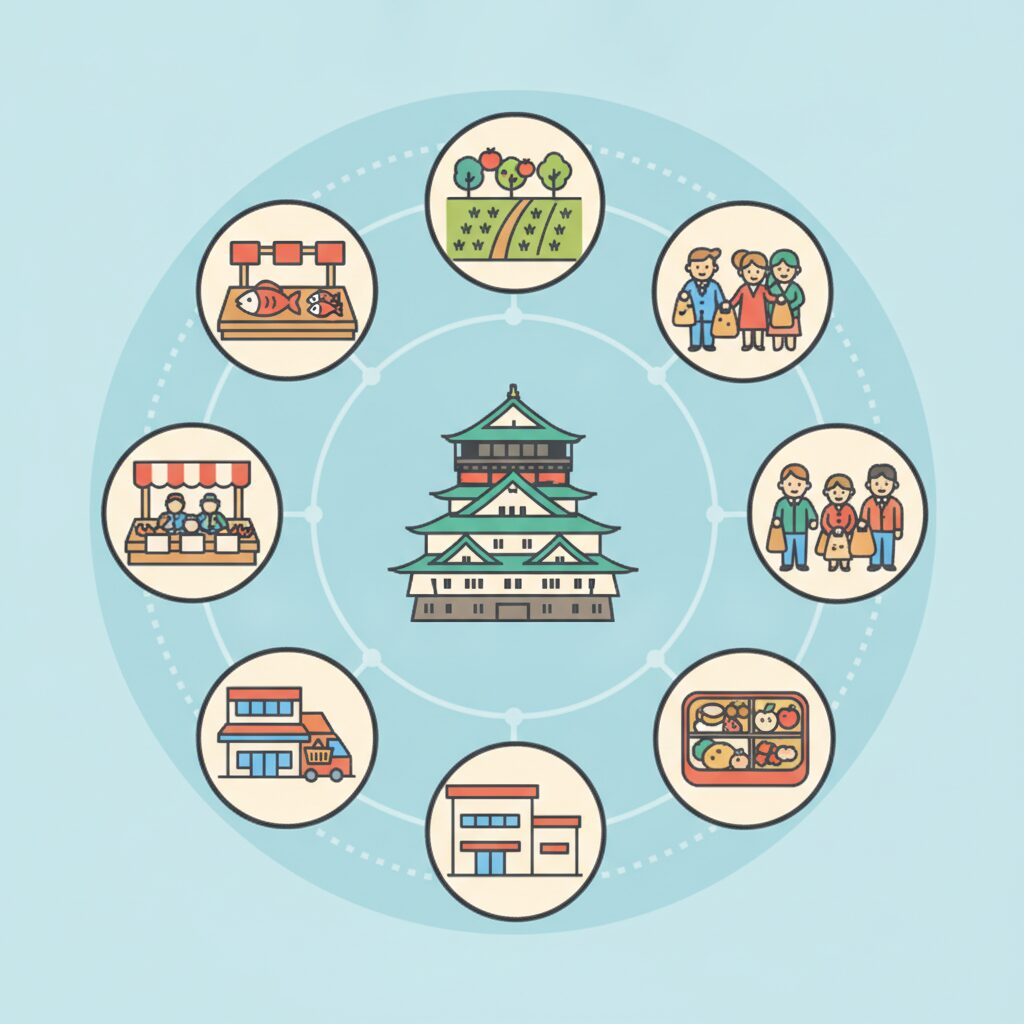
This isn’t just about one eccentric supermarket chain. Super Tamade is the most flamboyant player in a complex and deeply revealing ecosystem of grocery stores that dictates the rhythm of daily life and diet in this city. Unlike Tokyo, where convenience, polish, and niche branding often drive the grocery scene, Osaka operates on a different, more primal frequency: value. The city’s famous creed is kuidaore—to eat oneself into ruin. But the unspoken truth is that Osakans plan to do it as cheaply as humanly possible. The local supermarkets are the arsenals for this delicious, daily battle against the cost of living. They are a direct reflection of the Osaka mindset: pragmatic, unpretentious, allergic to waste, and possessed of a deep, abiding love for a good deal. Understanding where Osakans buy their groceries—from the dazzling basements of department stores to the cavernous aisles of bulk-buy warehouses—is to understand the city’s soul. It’s a story told not in Michelin stars, but in discount stickers and 1-yen eggs.
Delving deeper into how value-driven shopping intersects with local innovation reveals the compelling influence of the Osaka merchant spirit in everyday retail culture.
The Unspoken Hierarchy of Osaka Grocery Shopping
In Osaka, where you choose to buy your weekly groceries quietly reveals your priorities, your budget, and perhaps even your outlook on life. It’s a tiered system, an unspoken code familiar to every resident. At the pinnacle, you find the temples of gastronomy, and at the base, the vibrant, chaotic bazaars of everyday life. Understanding this hierarchy is the first step to eating like a local.
Tier One: Depachika – The Theater of Food
At the top of the pyramid are the depachika, sprawling and immaculate food halls located in the basements of major department stores like Hankyu, Hanshin, and Takashimaya. This is no place for a simple bottle of milk or loaf of bread. Here, you might find a gift-wrapped melon priced higher than your monthly phone bill. It’s a world of flawless displays, exquisitely crafted bento, and famous brand-name sweets that draw long lines. The depachika is pure food theater, symbolizing the hare side of Japanese life—the moments of celebration, formal gestures, and special occasions. Osakans might visit to purchase an upscale gift for a business contact or a luxurious cake for a birthday. It’s all about presentation, prestige, and impeccable quality. But for everyday nourishment? Rarely. This is a gallery to admire, not a pantry to stock.
Tier Two: The Premium Players – Quality as a Lifestyle
One level down, you encounter high-end supermarkets such as Hankyu Oasis, Seijo Ishii, and the iconic Ikari Supermarket, catering to shoppers who prioritize quality, organic products, and imported goods. These stores are calm, brightly lit, and meticulously organized. Here you’ll find artisanal cheeses, a broad selection of wines, and flawless, uniform produce. This is the domain of the discerning home cook, the health-conscious family, and residents with a bit more disposable income. Shopping here signals that you value quality over quantity and are willing to pay a premium. While some include these stores in their regular shopping routine, most Osakans reserve them for specific purposes: acquiring that one special ingredient or impressing guests at a dinner party.
Tier Three: The Standard-Bearers – The Reliable Middle Ground
This tier forms the backbone of Osaka’s supermarket scene. Chains like Life, Mandai, and Kansai Supermarket are the city’s workhorses. They embody the Japanese supermarket experience you likely imagine: clean, efficient, and offering a balanced mix of price, quality, and variety. They stock everything needed for a typical week of Japanese home cooking, from fresh produce and meat to a wide range of sauces, snacks, and household essentials. Reliable and consistent, these stores are where many, if not most, families do their primary weekly shopping. They represent the foundational middle ground where you don’t have to sacrifice too much on quality or price. Think of them as the sensible sedans of the grocery world—they get the job done without fuss.
Tier Four: The Discount Kings – Where the Action Is
Finally, at the base, lies the foundation upon which Osaka’s kuidaore spirit truly thrives: the discount supermarkets. This is where the city’s character is most vibrant. Enter the legends: Super Tamade and Gyomu Super. These aren’t merely stores; they are cultural institutions. Operating on a straightforward, uncompromising principle—price is everything—they place aesthetics, ambiance, and even conventional ideas of quality secondary. This tier reflects the ke—the everyday, the mundane—and celebrates it through the excitement of discovery. Here, the Osaka value of being kashikoi (smart, clever) over okane mochi (wealthy) is practiced daily. For a vast portion of the city’s population, from students to pensioners to working families, these stores aren’t just a choice; they are the essential engine of daily life.
Decoding Super Tamade: A Symphony of Chaos and Value
To truly grasp Osaka, you need to spend time in a Super Tamade. It offers an experience that goes beyond simple shopping. It is a full sensory immersion into the city’s core, where the relentless pursuit of bargains is celebrated with the enthusiasm of a religious festival. This system is built on a distinctive and powerful philosophy, and recognizing the method in its madness is essential to understanding the local mindset.
The Aesthetics of Urgency
Every element of a Tamade is crafted to evoke a frantic, almost delirious sense of opportunity. Its exterior, glowing neon 24 hours a day, ensures it never goes unnoticed. It shouts its presence, promising a world of deals inside. Within, the visual chaos is cranked up to the max. Harsh fluorescent lights cast a flat glare over everything. Narrow aisles are often jam-packed with precarious, Jenga-like towers of products. Signs, far from professionally printed, are handwritten in bold, thick markers, often clashing colors, advertising the day’s specials with exclamation marks. This isn’t the calm, curated atmosphere of a premium supermarket. It’s designed to feel like a limited-time treasure hunt. The disorder itself is deliberate, making you believe these deals won’t last and forcing you to act quickly. It’s a brilliant exercise in retail psychology.
The Sound of Savings
The soundscape is equally impactful. The infamous “Super Tamade” jingle plays on a short, maddening loop—a tune so embedded in the minds of locals that any Osakan can instantly hum it. This incessant, cheerful background music is interrupted by sharp, excited announcements over the PA system. “Ima kara time service!” (“Time sale starting now!”). Suddenly, a crowd rushes to a once-overlooked corner where a staff member is rapidly slapping discount stickers on meat or fish nearing their sell-by date. This creates a competitive, engaging atmosphere. You’re not just a passive shopper; you become an active participant in a city-wide game of bargain hunting.
The Legendary 1-Yen Sale
Perhaps the most iconic tactic in Tamade’s playbook is the 1-yen sale. The concept is simple and ingenious. On select days, if you spend more than 1,000 yen, you can buy a specific item—a carton of eggs, a pack of noodles, a block of tofu—for just one yen. It’s a massive loss leader, a marketing stunt that has become local legend. Outsiders might suspect a scam, but that misses the point. Osakans understand it perfectly: it’s a game. The store gets you inside and guarantees a minimum spend, and in return, you receive the deep psychological thrill of feeling like you’ve won. Securing that 1-yen item isn’t just about saving 100 yen on eggs; it’s about the triumph. This spirit of playful competition in pursuit of frugality is quintessentially Osaka.
The Sozai Revolution
The real game-changer, the aspect most influencing the city’s eating habits, is Tamade’s prepared foods section, or sozai. The prices are so low they seem illogical. A full bento box with rice, a main dish, and some pickles costs just 250 yen. A pack of sushi sells for 300 yen. A huge fried chicken cutlet goes for only 100 yen. While the quality might not earn awards, it’s filling, it’s food, and it’s unbelievably affordable. For students on tight budgets, single professionals with long work hours, and elderly people who might lack the energy to cook, this section is a vital resource. It fundamentally shifts the cost-benefit calculation of cooking. Why spend 500 yen on ingredients and 30 minutes cooking when you can purchase a complete, ready-to-eat meal for half the price? Tamade’s sozai corner democratizes the idea of prepared meals, making them an everyday reality for thousands and fueling the city with a diet of deep-fried value.
Gyomu Super: The Bulk-Buying Powerhouse
If Super Tamade represents the chaotic, high-energy street festival of Osaka grocery shopping, then Gyomu Super serves as its industrial, no-nonsense warehouse counterpart. The name literally means “Business Supermarket,” and it was originally intended to supply restaurants, izakayas, and other food service establishments. However, years ago, they opened their doors to the general public, thereby establishing another cornerstone of Osaka’s frugal food culture.
The Warehouse Vibe
Entering a Gyomu Super feels entirely different from stepping into a Tamade. The pachinko-parlor ambiance is replaced by stark, utilitarian functionality. The ceilings are high, the lighting simple, and products are often displayed in the cardboard boxes they were shipped in, stacked on industrial steel shelves. There’s no cheerful jingle or frantic announcements. The atmosphere is quiet, focused, and serious. This is not about the thrill of the hunt; it’s about the deep, satisfying logic of strategic procurement.
The Kingdom of Frozen and Foreign
Gyomu Super’s strengths lie primarily in two areas: frozen foods and imported goods. The freezer section is a sight to behold. You won’t find small, delicate portions here. Instead, there are kilogram bags of frozen broccoli, five-kilogram blocks of frozen chicken, and enormous sacks of frozen gyoza or fried rice. It’s all about scale. Buying in bulk lowers the per-unit cost to astonishingly low levels. This encourages a different approach to household management—one focused on stocking up and planning meals for the long term. You don’t pop into Gyomu Super for tonight’s dinner; you go there to stock your freezer for the entire month.
Its other major attraction is its surprisingly vast selection of international products. From Italian pasta and Thai curry paste to Vietnamese pho noodles and Brazilian sausages, Gyomu Super is a treasure trove for anyone wanting to cook international cuisine on a budget. By importing directly and cutting out the middleman, they offer these products at prices far below those found in standard or premium supermarkets. This has made it an indispensable resource for Osaka’s growing foreign population and expanded the palate of Japanese residents, making global flavors an accessible, everyday option instead of an expensive luxury.
The Impact on the Home Kitchen
While Tamade’s cheap sozai can discourage cooking, Gyomu Super encourages it. It makes home cooking incredibly economical. By leveraging the advantages of bulk buying and frozen ingredients, a family can prepare meals at a fraction of the cost of dining out or purchasing prepared foods. It shifts the household economy toward planning and preparation. A typical strategy for a savvy Osaka shopper might involve a monthly trip to Gyomu Super to stock the freezer with staples, supplemented by more frequent visits to a standard supermarket or Tamade for fresh produce, dairy, and meat. This hybrid approach allows residents to enjoy the best of both worlds, maximizing value across the entire ecosystem.
How This Ecosystem Shapes the Osaka Palate and Wallet

This multi-tiered supermarket landscape is more than just a collection of stores; it is a dynamic system that actively influences the behavior, budget, and even the identity of Osaka residents. It stands as one of the clearest examples of how the city’s culture differs from that of its eastern rival, Tokyo.
The Tokyo Contrast: Polish vs. Pragmatism
A common observation among those who have lived in both cities is the difference in the standard supermarket experience. In Tokyo, there is a stronger focus on aesthetics, convenience, and specialized lifestyles. Boutique stores offering organic produce, beautifully designed urban markets like Queen’s Isetan, and a general level of polish even in regular chains are common. Convenience reigns supreme, with a major emphasis on small portions and ready-to-cook meal kits tailored for busy urban professionals. While discount stores do exist, they don’t dominate the cultural landscape as they do in Osaka.
In Osaka, the prevailing spirit is a raw, unapologetic pragmatism. Shoppers show a willingness to accept slightly bruised apples or imperfectly cut pieces of fish in exchange for significant discounts—this is central to the shopping philosophy. The mindset is, “I’m not paying for fancy lighting or perfectly aligned shelves. I’m here for the food and want the best possible price.” This reflects a deeper cultural characteristic. Osaka was historically a merchant city, with the spirit of shobai (business, trade) running deep. Being a smart shopper (kaimonojouzu) is a source of pride. Spending money on unnecessary frills is seen not as a sign of wealth but of foolishness. It’s not that Osakans are stingy—kechi is an insult—but that they are kashikoi—smart. The difference is significant.
Fueling the ‘Konamon’ Culture
This supermarket ecosystem powers Osaka’s famous konamon or “flour-based food” culture. Dishes like takoyaki, okonomiyaki, and udon are the city’s soul food. What unites them? They are affordable, filling, and delicious, made from simple, inexpensive ingredients. Discount supermarkets ensure that flour, cabbage, eggs, and cheap cuts of meat or seafood are always available at rock-bottom prices. This availability makes takoyaki parties at home possible and allows street vendors to offer their goods at prices accessible to all. The supermarkets and local food culture exist in a perfect symbiotic relationship, each reinforcing the other in a cycle of delicious frugality.
What Foreigners Often Misunderstand
A first-time visitor to Super Tamade might be put off by its chaotic displays, less-than-perfect produce, and harsh lighting, concluding that it is a “bad” supermarket. This is a fundamental misunderstanding of its purpose. Tamade isn’t trying to be Hankyu Oasis. It doesn’t compete on quality in the traditional sense. It competes on one metric and one metric only: price. It serves its target audience perfectly. Judging it by the standards of a premium grocer is like judging a street food stall by the standards of a three-star restaurant—they are simply playing different games. To truly understand and appreciate Tamade is to recognize that in Osaka, value is a virtue in itself. It is a tribute to the city’s working-class roots and its defiant rejection of the prim and proper consumerism often associated with Tokyo.
Beyond the Price Tag: Community and Character
While the economic aspect is crucial, these supermarkets, especially the discount ones, serve as more than just transactional spaces. They are vibrant, living parts of their neighborhoods, pulsing with a distinctively Osakan energy. They embody a microcosm of the city itself.
The aisles of a local Tamade or Mandai present a cross-section of society. You’ll spot elderly residents on their daily walk, carefully selecting a single piece of fish for dinner. You’ll find young students in university sweatshirts, piling their baskets high with instant noodles and inexpensive bentos. Mothers with children in tow expertly navigate the crowded space. It’s a shared experience, a communal quest for both nourishment and savings.
The staff often reflect this community atmosphere. They are not the deferential, polished employees of a depachika. They are local obachan and ojisan (aunties and uncles), working with speed and efficiency that can be breathtaking. The checkout is a masterclass in motion. There’s no idle chit-chat, just a rapid-fire scanning and bagging routine perfected by years of practice. Yet, beneath that efficiency lies a particular warmth. It’s not the formal politeness of omotenashi; it’s a more grounded, straightforward friendliness. It’s the gruff yet genuine spirit of Osaka in action.
The overall atmosphere is loud, unpretentious, and deeply human. People converse, carts clang, and the store’s jingle serves as a constant soundtrack. It feels less like a sterile retail environment and more like a bustling indoor market. This sharply contrasts with the often quiet, almost reverent atmosphere of a high-end Tokyo store. In Osaka, life is lived louder, and its supermarkets reflect that vivacity without exception.
A Final Thought on Feasting and Frugality
Osaka’s identity rests on a delicious paradox. It is the city of kuidaore, where food is celebrated with near-religious fervor. At the same time, it is a city shaped by merchants, devoted to finding the best bargains. The supermarket ecosystem is where these two facets come together and blend. It is where the lofty goal of feasting without restraint is made possible by a deeply rooted culture of thrift.
The flashy lights of Super Tamade, the towering shelves of Gyomu Super, the dependable aisles of Life, and the sparkling halls of the depachika all contribute to this everyday story. They provide residents with a wide range of options, enabling them to create a personal food strategy that balances budget, taste, and time. To a visitor, it might seem like just a collection of grocery stores. But to a local, it is a toolkit for survival and enjoyment in a city that loves to eat but hates to overspend.
So next time you’re in Osaka, step away from the famous restaurants and tourist attractions. Find a nearby supermarket. Walk through the aisles. Observe the shoppers. Listen to the sounds. See what’s discounted. You won’t simply be deciding what to eat for dinner. You’ll be uncovering a living, breathing blueprint of the city’s soul, where the grand philosophy of kuidaore is practiced one 1-yen egg at a time.








