
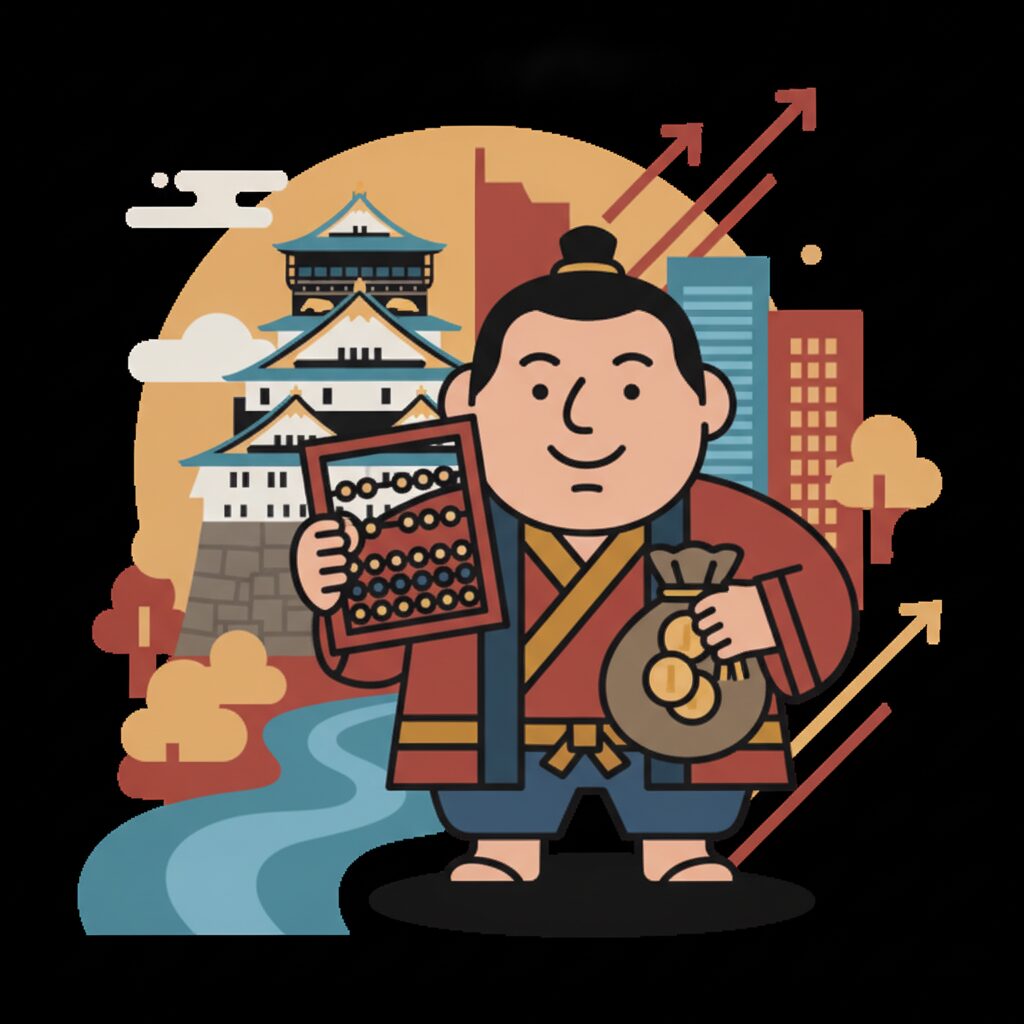
Step off the Shinkansen at Shin-Osaka Station, and you feel it instantly. The air isn’t just humid; it’s buzzing with a different kind of energy. The escalators move faster, the voices are a few decibels louder, and the greetings feel less like a formality and more like the opening bell of a stock exchange. You’ve heard the clichés, of course. Osaka is “friendly,” “loud,” “funny.” Tokyo is “polite,” “reserved,” “orderly.” But these are just postcards. They don’t explain the why. They don’t tell you why the woman at the takoyaki stand will grill you about your life story while flipping octopus balls with lightning speed, or why a simple question about price at an electronics shop can turn into a ten-minute performance of playful negotiation. To truly understand the rhythm of this city, to decode its social DNA, you need to look past the neon glow of Dotonbori and into its soul. And the soul of Osaka has a name: Akindo Shokon (商人魂), the Merchant Spirit.
This isn’t some dusty historical concept confined to museums. Akindo Shokon is the operating system running in the background of every conversation, every transaction, and every social interaction. It’s a pragmatic, resourceful, and deeply human philosophy forged over centuries of trade in the city once known as Tenka no Daidokoro, the Kitchen of the Nation. It’s the reason Osaka feels so fundamentally different from the samurai-descended formalism of Tokyo. It’s the invisible framework that explains the city’s directness, its obsession with value, its unique brand of humor, and its surprisingly warm community bonds. For any foreigner trying to build a life here, learning to see the world through the lens of the akindo isn’t just helpful—it’s essential. It’s the key to transforming from a confused outsider into someone who truly gets what makes this magnificent city tick.
In exploring the essence of Osaka’s merchant spirit, one might also encounter the takoyaki phenomenon where a simple street snack becomes a lively emblem of the city’s unique cultural rhythm.
The Kitchen of the Nation: Forging a Spirit in Rice and Gold
To understand why your landlord in Tennoji might speak with a bluntness that would embarrass a Tokyoite, you need to look back to a time when samurai were the ruling class and Osaka was the nation’s unapologetic economic powerhouse. While Edo (modern-day Tokyo) served as the political center—a city of warriors and bureaucrats governed by strict social hierarchies—Osaka was where the vital work of feeding and financing the country took place. It was a city built not on swords and lineage, but on rice futures and sharp business acumen.
Where a Merchant Outranked a Samurai
During the Edo period (1603-1868), Japan was a rigidly stratified society. At the top were the samurai, followed by farmers, artisans, and, at the very bottom, the merchants (chonin). In theory, merchants ranked lowest because they didn’t produce anything tangible; they merely moved goods and money. Yet in Osaka, this official hierarchy was little more than a formality. Here, wealth was the ultimate equalizer. A powerful rice broker with a nationwide network wielded more practical influence than a minor samurai lord drowning in debt.
This inversion of social order shaped a distinctive psychological outlook. Osakans cultivated a deep pragmatism, valuing tangible results—profit, efficiency, a good deal—over lofty titles and empty formalities. This legacy persists today. You can see it in the way Osakans emphasize substance over style. A restaurant is judged not by minimalist decor but by the undeniable quality of its okonomiyaki and the long line of loyal customers waiting outside. Success here is measured in concrete terms—a mindset that feels refreshingly straightforward compared to the more appearance-focused culture of other Japanese cities.
The Dojima Rice Exchange: Inventing the Future
The pinnacle of Osaka’s commercial innovation was the Dojima Rice Exchange, founded in the late 17th century. This was not just a market; it was the world’s first organized futures market. Merchants there weren’t simply trading rice bags; they were exchanging promises—contracts for rice delivery at a future date for a predetermined price. It was a high-stakes game of risk, speculation, and information. Success required quick thinking, decisiveness, and a sharp judgment of character.
This history of high-risk trade ingrained certain traits into the city’s character. It fostered a culture of healthy skepticism and a demand for transparency. Merchants needed to know exactly what they were getting. This is the historical root of Osaka’s renowned directness. The subtle, layered communication common in Tokyo—known as tatemae (public face) and honne (true feelings)—was a luxury Dojima merchants couldn’t afford. Vague answers could mean financial ruin. They required a clear “yes” or “no,” a firm price, and a solid handshake. This preference for clarity and dislike of ambiguity remain defining features of Osaka’s everyday conversation today.
The Language of Business as the Language of Life
In Osaka, the principles of commerce have become so deeply ingrained in the culture that they’ve turned into the default mode of social interaction. The greetings, humor, and communication style are all influenced by the practical, relationship-centered mindset of the akindo.
“Moukarimakka?” – The Ultimate Icebreaker
This is most evident in the classic Osaka greeting: “Moukarimakka?” (儲かりまっか?), which literally means “Are you making a profit?” A foreigner hearing this for the first time might be surprised. Are they really asking about my personal finances? But this is a fundamental misunderstanding. The question isn’t about your bank account; it’s a social ritual, a warm and folksy way of asking, “How are things going?” or “How’s life treating you?”
The typical reply, “Bochi bochi denna” (ぼちぼちでんな), meaning “So-so” or “Getting by,” completes the exchange. It’s a modest, non-committal response that conveys a shared understanding of the daily grind. This simple exchange is a powerful social tool. It creates an immediate, down-to-earth connection, recognizing that everyone is working hard to make their way in the world. This greeting comes from a community where everyone’s livelihood was interconnected, embodying a spirit of mutual recognition and camaraderie that you simply won’t find in a Tokyo office building.
The Myth of Rudeness: Understanding Osaka Directness
One of the biggest culture shocks for people moving from other parts of Japan or abroad is the bluntness of Osaka communication. People will tell you what they think, often without the verbal cushioning common elsewhere. Your neighbor might comment on your overflowing recycling bin. A shopkeeper might bluntly tell you the shirt you’re trying on doesn’t suit you and direct you toward a different rack. In Tokyo, this could be seen as rude or intrusive. In Osaka, it’s a sign of honesty and even concern.
This isn’t about rudeness; it’s about being efficient and sincere. The merchant spirit values clear, honest transactions, and this extends to social interactions. Why waste time with vague pleasantries when you can get straight to the point? This directness is often an effort to be genuinely helpful. The shopkeeper isn’t trying to insult your taste; they want to prevent you from making a bad purchase because they want you to leave satisfied and return. They see you as a long-term customer, not a one-time buyer. Understanding this distinction is essential. What may initially seem like criticism is often a form of practical kindness, a core principle of Akindo Shokon.
Value, Service, and the Beautiful Dance of the Deal
The stereotype that Osakans are fixated on money is both accurate and deeply misunderstood. It’s not about greed; rather, it reflects a profound, almost philosophical appreciation for value. An akindo knows that price is merely a number, while value is a complex blend of quality, service, and human connection. This philosophy is evident daily in the city’s shops and markets.
“This One’s on Me”: The Art of Omake
Stroll through any shotengai (local shopping arcade) like Tenjinbashisuji and buy some fruit. Don’t be surprised if the elderly woman at the stall throws in an extra orange or a few strawberries after you’ve paid. This is omake (おまけ), the culture of the freebie. It’s much more than a marketing trick; it’s a foundational element of Osaka’s business and social ethos.
Omake is an investment in the relationship. By offering a little something extra, the merchant is saying, “I see you. I appreciate your business. Please come again.” It turns a simple purchase into a moment of human connection. This spirit goes beyond commerce. Friends treat each other to drinks, neighbors share food, and there’s a prevailing sense of generosity rooted in this principle. The aim is to foster mutual goodwill, or jou (情), ensuring the relationship endures. It’s a long-term approach to cultivating loyalty, whether among customers or friends.
The Negotiation Game: More Than Just Saving Yen
Although haggling in a high-end department store is a major faux pas, in places like Nipponbashi’s electronics district or flea markets, friendly negotiation, or nebari (粘り), is part of the experience. This is another area where many foreigners misunderstand the custom. It’s not about aggressively low-balling the seller to save every last yen; it’s a playful interaction.
The exchange often begins with a question like, “Chotto makete kureru?” (“Can you give me a little discount?”). This initiates a dialogue. The seller might laugh, ask where you’re from, and respond with a slightly lower price or offer to include an accessory. It’s a test of wit and charm. The goal isn’t merely to get a discount; it’s to engage with the seller and earn a better price through good-natured interaction. Successfully navigating this dance demonstrates social intelligence and is a deeply rewarding part of the Osaka shopping experience. It contrasts sharply with the silent, fixed-price transactions common in Tokyo retail.
Shobaijozu: The Admired Skill of a Master Merchant
In Osaka, being shobaijozu (商売上手), or skilled in business, is a highly respected personal quality. It’s not just about being a shrewd accountant; it’s about mastering human interaction. A shobaijozu individual is clever, witty, and has a talent for making people feel good while completing a sale. They are performers. You can see them at the Kuromon Ichiba Market, their voices booming as they praise their giant tuna, their banter with customers sharp and entertaining.
This admiration for commercial skill explains the performative aspect of much of Osaka life. People aren’t just selling food; they’re putting on a show. That theatricality, that eagerness to engage and entertain, is a direct application of business acumen to daily life. It reflects the understanding that the best way to achieve your goals—whether a sale or a friendship—is to be engaging, memorable, and a little bit brilliant.
How the Merchant Mindset Shapes Society
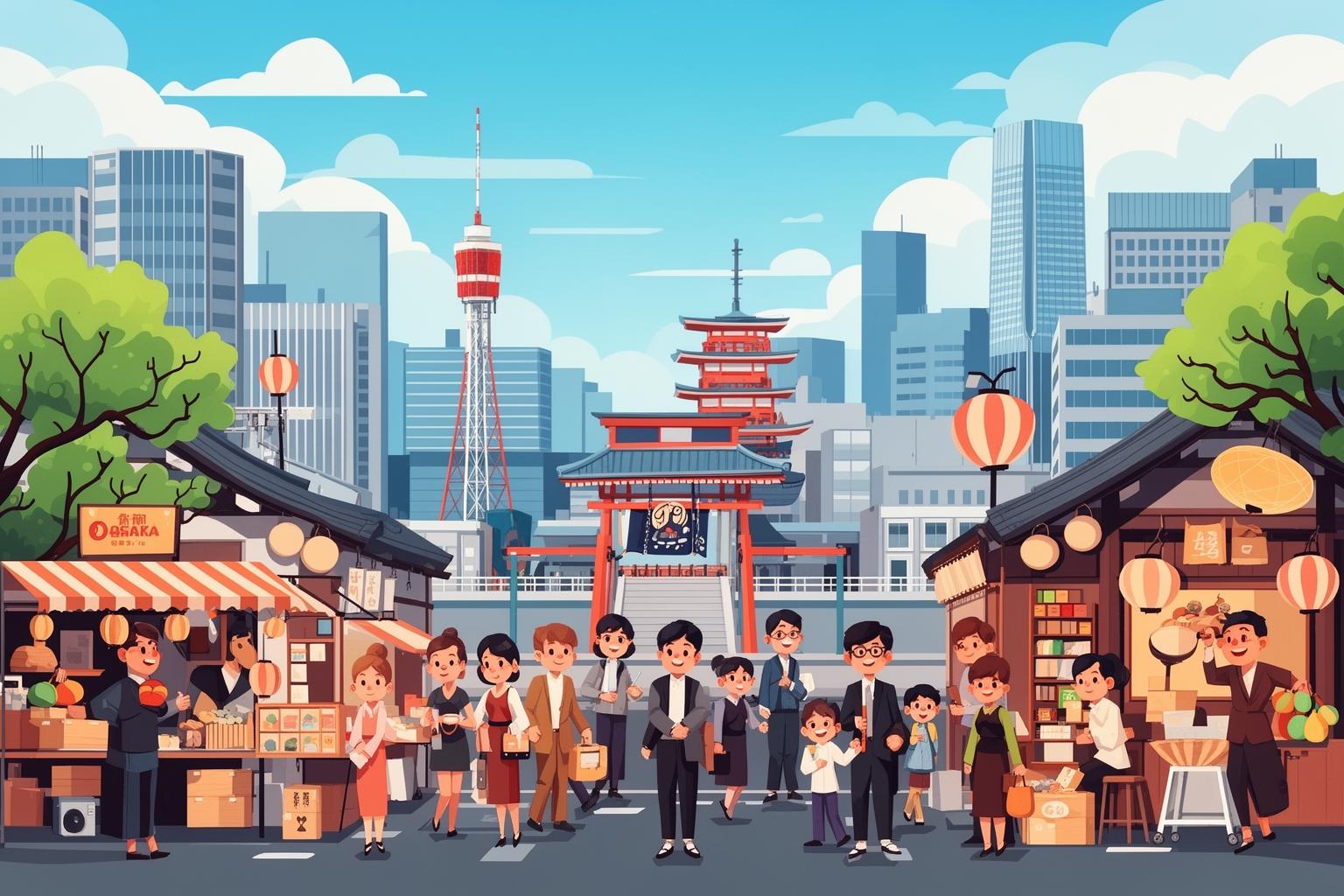
The influence of Akindo Shokon reaches far beyond the marketplace. It has shaped the city’s approach to community, humor, and problem-solving, weaving a social fabric that is uniquely resilient, cooperative, and entertaining.
Laughter as the Ultimate Social Lubricant
Why is Osaka the undisputed comedy capital of Japan, home to the vast Yoshimoto Kogyo entertainment empire? The answer lies in the merchant spirit. For an akindo, quickly building rapport is essential. And what builds trust and breaks down barriers faster than a shared laugh? Humor is a tool—a way to disarm a potential customer, gauge their personality, and create an instant connection.
This has grown into a city-wide social currency. In Osaka, being funny is a highly prized skill. People mercilessly tease one another, engage in rapid-fire comedic banter (tsukkomi and boke routines), and generally use humor to navigate almost any social context. A joke can ease tension, solidify a friendship, or close a business deal. This emphasis on laughter makes social interactions feel less formal and more spontaneous. It’s a city that doesn’t take itself too seriously because it learned long ago that a smile is often its most valuable asset.
Community Over Corporation
Despite the emphasis on individual success, the merchant spirit also cultivated a strong sense of community. In the bustling marketplaces of old Osaka, merchants had to coexist. They were competitors, yes, but also neighbors. They depended on each other for information, credit, and security. This fostered a powerful sense of interdependence still palpable in the city’s neighborhoods today.
People are generally more open to engaging with strangers. It’s not uncommon to strike up a conversation with the person next to you at a ramen counter or on the subway. There is a prevailing “we’re all in this together” mindset. This often surprises those used to the polite anonymity of larger cities. But in Osaka, your neighbor’s success is, in some small way, your success. A thriving community benefits everyone’s business, and that fundamental understanding underlies the city’s social warmth.
The Unchanging Core of a Dynamic City
Living in Osaka means learning not only the distinctive Kansai-ben dialect but also the unspoken language of Akindo Shokon. It involves understanding that direct questions signify engagement rather than intrusion. It means valuing a little omake and enjoying the humor found in everyday conversations. It means realizing that the city’s lively energy isn’t chaos; it’s the vibrant hum of countless relationships being formed, negotiated, and cherished.
For foreigners, the merchant spirit presents both a challenge and an invitation. It challenges you to be more direct, more engaging, and more attentive to the subtle dance of value and connection happening all around you. Yet it also welcomes you in, offering a path to genuine connection that can be harder to find in more reserved cultures. To thrive in Osaka, you don’t have to become a master negotiator overnight. You just need to understand the code. Appreciate the practical kindness behind a blunt piece of advice. Share a laugh with a stranger. Recognize that when someone asks you “Moukarimakka?“, they are, in their own unique and wonderful way, inviting you to the heart of their city.








