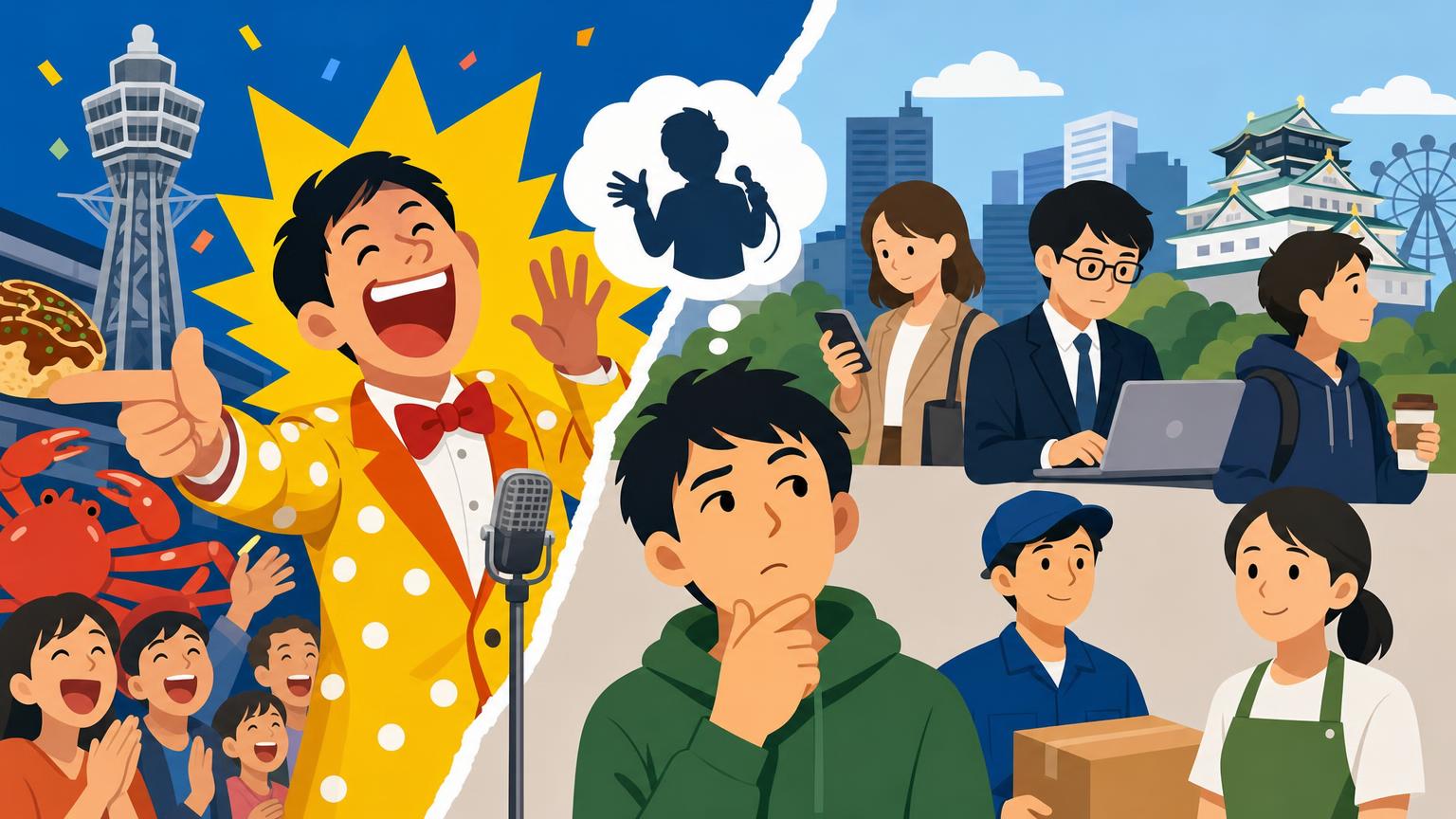
Welcome to Osaka. You have probably seen the vibrant images before you even packed your bags. The glittering neon signs reflecting off the dark waters of the Dotonbori canal, the endless arcades packed with sizzling street food, and the stylish, energetic locals moving with a rhythm completely their own. If you are planning a move to Japan, or if you have already set up your new life here in the Kansai region, you have likely been fed a very specific narrative about this city. People from all over the world, and even from other parts of Japan, will confidently tell you that Tokyo is the serious, suited-up business capital, while Osaka is the loud, unapologetic city of laughs. The prevailing stereotype paints every single resident of Osaka as a natural-born stand-up comedian. You might step off the Shinkansen expecting your taxi driver to deliver a flawless punchline, or anticipate that your local barista will serve your morning coffee with a side of physical comedy. It is a fantastic image, but as an expat navigating the beautiful chaos of daily life here, you quickly realize that the reality is far more nuanced.
Living in Osaka is genuinely an incredible experience. The energy is infectious, and the people operate with a warmth and directness that instantly makes you feel alive. However, the idea that every Osakan is a comedian is an exaggeration born from a mix of pop culture, media representation, and genuine cultural differences. We need to take a step back and examine this fascinating phenomenon. We need to separate the internet-fueled myths from the grounded reality of going to the supermarket, riding the Midosuji subway line, and making friends at a local izakaya. In this deep dive into the local culture, we are going to unpack exactly where this comedic reputation comes from. We will explore how humor is actually utilized not as a stage performance, but as an essential tool for everyday communication and human connection. By understanding the true mechanics of Kansai humor, you will not only decode the unspoken rules of your new home, but you will also learn how to participate in the lively daily rhythm of Osaka. You are about to discover why life here feels so refreshingly different from anywhere else in the country.
What Exactly is the “Osakan Comedian Myth”?
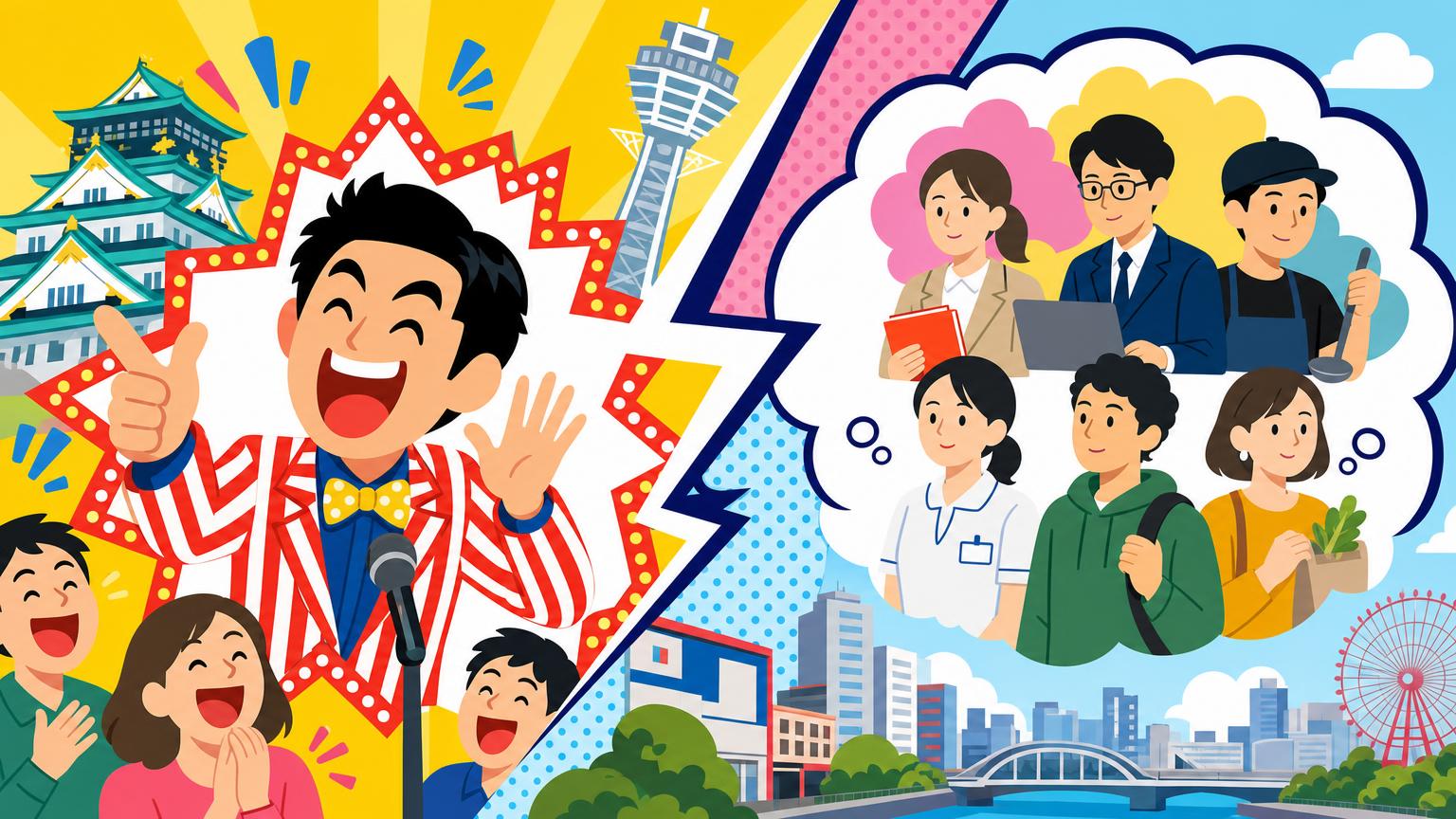
To truly understand a city, you must first grasp the stories people tell about it. The Osakan comedian myth is a compelling cultural narrative suggesting that anyone born and raised in this region possesses an innate, almost genetic gift for making others laugh. It holds that daily conversations are meticulously structured like professional comedy sketches, complete with setups, punchlines, and perfectly timed reactions. For outsiders, this myth is often the first thing they hear about the city, creating the expectation that Osaka is a vast, open-air theater where everyone is constantly trying to out-joke each other. But where exactly does this global perception come from, and why has it become the defining feature of the city in the eyes of the international community?
The Viral Connection: Atsuko Okatsuka and Comedy Myths
In recent years, the international view of Japanese comedy has been heavily influenced by viral moments and standout performers who bridge East and West. One of the most notable figures fueling this global fascination is the sensational comedian Atsuko Okatsuka. With her vibrant energy, striking bowl cut, and masterful storytelling, she has captivated audiences worldwide through her stand-up specials and hugely popular social media clips. When a dynamic performer with Japanese roots takes the global stage and highlights the cultural quirks of her heritage, the internet immediately erupts. Fans watch her hilarious routines on streaming platforms, then rush to search engines to learn more about Japan’s comedic traditions.
This is where the algorithm takes charge. When international audiences hunt for the origins of Japanese humor, they are quickly directed to Osaka. The viral success of contemporary comedians inadvertently channels millions of curious minds toward the historic “Osakan comedian myth.” The algorithm favors a simple, catchy narrative, distilling centuries of complex regional history into a neat stereotype: Osaka is the funny city. While performers like Atsuko brilliantly showcase the absurdities and joys of human interaction, the internet picks up this inspiration and broadly applies it to nearly nine million people in the Kansai region. Living there, it’s fascinating to watch this phenomenon unfold—tourists arrive expecting to step into a viral TikTok video, only to be slightly puzzled when the person beside them on the train is quietly reading a novel or listening to a podcast. The viral connection offers a wonderful entry point to cultural curiosity, but it is merely the glossy cover of a thick, complex book.
The Netflix and Wikipedia Curiosities Explained
The path from streaming a comedy special on Netflix to diving into a deep Wikipedia rabbit hole is a journey many modern expats and travelers know well. You watch a special, hear about Japanese comedy styles, and suddenly it’s three in the morning as you read detailed Wikipedia entries on the history of “Owarai” and the mechanics of Kansai-based entertainment. The internet overflows with articles explaining how Osaka produces the majority of Japan’s top TV comedians. These sources provide incredible factual detail but fundamentally lack the context of everyday lived experience.
Consuming information solely through these digital encyclopedias can skew your perception of reality. The internet tells you Osaka is Japan’s comedy capital, which is historically and industrially true. However, reading about a comedy boom on a screen doesn’t prepare you for the actual rhythm of buying fresh produce in a local Tenma market or navigating subtle office politics in a Honmachi corporate building. The “Know” intent behind internet searches satisfies factual curiosity but completely misses the “Live” experience of existing in the city. Wikipedia entries explain the entertainment industry’s mechanics but don’t capture the quiet, mundane, entirely normal moments that constitute ninety percent of life in Osaka. The myth persists because facts are removed from the context of daily human behavior. Yes, Osaka is the heart of Japanese comedy—but no, the bank teller isn’t going to juggle your yen coins while delivering a monologue.
Unpacking the Stereotype: Is Everyone in Osaka Funny?
Let’s get it out of the way immediately: no, not everyone in Osaka is funny. It may seem obvious when said aloud, but it’s an important reality check. Osaka is a vast, highly developed metropolis with a diverse population. Some people are introverted and truly dislike public speaking. Others are serious business executives who maintain strict, unwavering professionalism. There are teenagers too absorbed in their phones to notice a joke, let alone create one. Assuming everyone here is humorous strips local residents of their individuality and reduces a complex society to a single, cartoonish stereotype.
That said, while not everyone is a comedian, the baseline tolerance for humor and the social expectation for playful interaction are undeniably higher here than in other Japanese cities. The key difference lies in the social contract. In Tokyo, polite distance and avoiding friction are the unwritten rules of public interaction. People do not intrude on others’ personal space, verbally or physically. In Osaka, however, the social contract expects active participation. Silence is more often perceived as awkward than respectful. Humor here isn’t necessarily about being outrageously funny; it serves as a tool to bridge the gap between strangers. It acts as social grease to ease tension, build rapport quickly, and make everyday life more enjoyable.
The DNA of Osakan Conversations: Boke and Tsukkomi
To truly grasp how Osakans communicate, you need to understand the fundamental DNA of their conversational style. It’s rooted in a traditional comedic framework called “Manzai,” which centers around a duo: the “Boke” and the “Tsukkomi.” The Boke is the silly, forgetful, or absurd character. They make ridiculous statements, misunderstand situations, or act intentionally foolish. The Tsukkomi is the straight man—the voice of reason—who quickly and sharply corrects the Boke, highlighting the absurdity of their remarks.
This dynamic is not limited to the stage; it permeates daily conversations throughout the city. For example, imagine you’re at a local, independent bicycle shop in your area. You point to a basic, everyday bike and ask the owner the price. With a completely straight face, the owner might say, “That will be one million yen.” This is a typical Osaka Boke moment. In Tokyo, the shopkeeper would simply give you the actual price, but here, you’re being invited to join the playful exchange.
If you respond by panicking, checking your bank account, or politely saying it’s too expensive, you break the rhythm. The interaction turns awkward because you took a playful gesture literally. The right response is to accept the role of the Tsukkomi. You’d playfully wave your hand in a chopping motion and say something like, “Why would a basic bike cost a million yen?!” or “Do I look like a millionaire?!” The moment you deliver that gentle verbal smackdown, the owner will laugh openly. You’ve passed the test and created a connection. This Boke and Tsukkomi rhythm happens constantly—at grocery stores, neighborhood bars, and workplaces. For an expat, learning to recognize when someone is playing the Boke and knowing how to deliver a swift Tsukkomi is the fastest way to integrate locally. It shows that you’re attentive and willing to engage.
Why the Kansai Dialect Sounds Like Comedy
Another major factor behind the myth of Osaka’s comedic nature is the language itself. The Kansai dialect, known as Kansai-ben, differs significantly from the standard Japanese spoken in Tokyo. Standard Japanese is elegant, precise, and designed for clarity and politeness. It can sometimes sound emotionally reserved or flat. In contrast, Kansai-ben is a rollercoaster of melody, pitch, and emotion. It features drawn-out vowels, punchy consonants, and a rapid-fire tempo that naturally feels lively and playful.
Because many well-known comedians on national television speak Kansai-ben, the dialect has become closely associated with humor in the minds of both Japanese people and international audiences. When someone from Osaka speaks, their rhythm naturally sounds like the setup to a joke. Words and expressions in Kansai-ben are incredibly expressive. For example, to say “No way” or “You’ve got to be kidding me,” people use the iconic phrase “Nande ya nen!” This phrase is the ultimate Tsukkomi weapon, with a sharp, percussive sound that immediately energizes any conversation.
Similarly, instead of a polite apology when something goes wrong, you might hear a dramatic “Akan!” which roughly means “Oh no” or “This won’t do.” The dialect allows a much wider range of emotional expression without breaking social norms. For a foreigner living in Osaka, mastering a few key Kansai-ben phrases is very empowering. It acts as a cultural bridge. Dropping a perfectly timed “Nande ya nen” into a chat with a local almost always delights them. It signals respect for their culture and regional language, beyond just textbook Japanese learned in a classroom. Kansai-ben fosters lively, rhythmic banter that makes every visit to the convenience store a little more engaging.
The Real Hub of Japanese Comedy: The History of Owarai
Although not every citizen is a comedian, we cannot overlook the industrial reality that Osaka is truly the absolute epicenter of Japanese comedy, known as “Owarai.” This myth persists because it is founded on an enormous cultural output. To understand why Osakans hold humor in such high regard, one must examine the city’s entertainment history. Osaka has always been a merchant city—a hub of trade, commerce, and relentless hustle. In a business-driven city, making someone laugh became a strategic way to build trust and seal a deal. This historical dependence on charm and wit created an ideal environment for professional entertainment to thrive.
Yoshimoto Kogyo’s Influence on Local Culture
It is impossible to discuss Osaka, comedy, or daily life in the Kansai region without mentioning the unrivaled giant of the entertainment world: Yoshimoto Kogyo. Founded in Osaka in the early twentieth century, this massive talent agency essentially monopolizes Japanese comedy. Originally a management company for traditional storytellers and local theaters, it has evolved into a vast empire that controls the flow of modern television.
Turn on a TV in Japan at any time, on any channel, and there is an extremely high chance you will see a comedian managed by Yoshimoto Kogyo. Japanese variety shows heavily depend on comedians delivering energetic reactions, witty commentary, and physical humor. Because Yoshimoto’s headquarters and training facilities are deeply rooted in Osaka, most of these national TV stars speak with a Kansai dialect and use the Boke and Tsukkomi comedic dynamics native to the region.
This constant daily exposure deeply influences local culture. For generations, Osakans have grown up watching these programs every day. On Saturday afternoons, families across the city gather around the television to watch “Yoshimoto Shinkigeki,” a televised slapstick stage play featuring a recurring cast of beloved characters. It serves as a shared cultural touchstone, akin to a city rallying behind a local sports team. This heavy media diet fosters a strong appreciation for comedic timing from an early age. Locals absorb the rhythms of professional comedians and naturally integrate them into their everyday lives. Moreover, since their regional humor is broadcast nationally as the standard, Osakans feel both pride and pressure to uphold that reputation. They know the rest of the country sees them as the funny ones, and many gladly embrace that stereotype, ensuring that Yoshimoto Kogyo’s legacy endures not only on television screens but throughout the lively streets of their neighborhoods.
How to Experience Osaka’s Comedy Culture as a Traveler
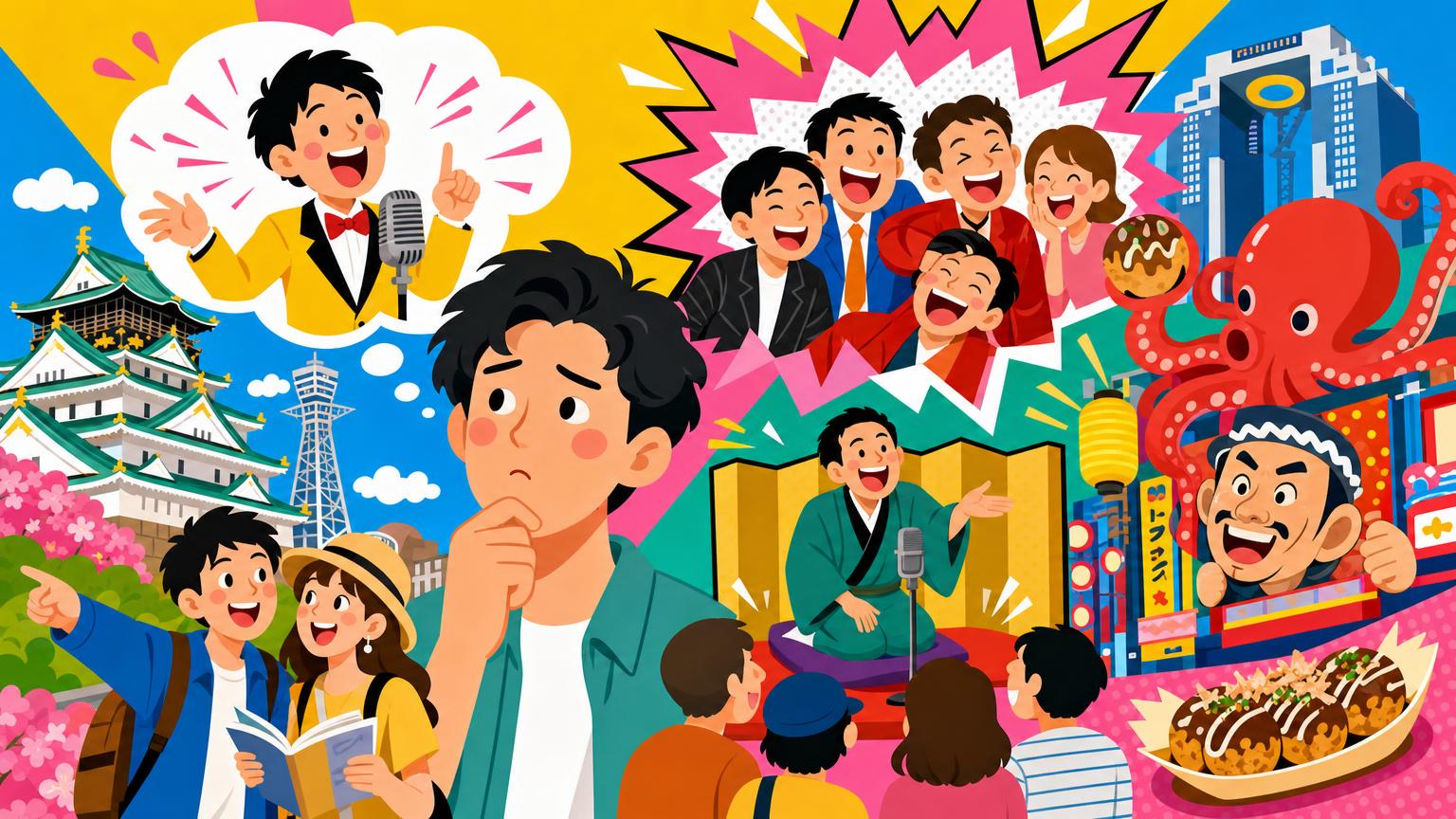
Even if you live full-time in Osaka, work an office job, and deal with the everyday realities of paying local taxes and sorting your recycling, it remains essential to break out of your routine and see the city from a fresh perspective. Spending a weekend acting like a traveler and actively exploring the roots of this comedy culture is one of the best ways to strengthen your connection to your new home. By immersing yourself in the places where this humor is created and celebrated, you gain a deeper understanding of the local mindset. This experience bridges the gap between the subtle jokes you hear at your local coffee shop and the grand, theatrical tradition that defines the region.
Visiting Namba Grand Kagetsu (NGK)
If there is a holy grail of Japanese comedy, it is undoubtedly the Namba Grand Kagetsu, affectionately known as NGK by locals. Situated in the lively, neon-lit district of Namba, this historic theater is the flagship venue for Yoshimoto Kogyo. Approaching NGK is an experience in itself. The nearby streets overwhelm the senses with vibrant colors, massive 3D signage, and the irresistible, savory aroma of fresh takoyaki cooking on hot iron plates.
NGK is not a dark, edgy, underground comedy cellar. It is a vast, brightly lit, and highly commercialized institution welcoming everyone—from noisy groups of schoolchildren on field trips to elderly couples enjoying a weekend outing. The atmosphere is unmistakably festive. Inside, the theater hosts continuous performances featuring a mix of fast-paced Manzai routines by young talents and legendary veteran acts, culminating in the famous slapstick plays of Yoshimoto Shinkigeki.
For non-Japanese speakers, enduring a two-hour Manzai show can be quite challenging. The language is rapid, deeply colloquial, and heavily reliant on regional pop-culture references. You might not catch a single punchline. However, I always suggest that expats and visitors experience it at least once. You don’t need to understand the words to grasp the energy. Watching the physical comedy, feeling the thunderous laughter of the crowd, and witnessing the performers’ professionalism offers profound insight into the core of Osaka. You come to realize that comedy here is not merely entertainment; it serves as a vital, communal release valve for a hardworking city.
Finding English-Friendly Comedy and Open Mics in Osaka
While appreciating traditional Japanese comedy is culturally rewarding, let’s be honest: sometimes you just want to relax and laugh at a joke you actually understand. Luckily, Osaka has a thriving, dynamic, and welcoming underground scene for English-language comedy. For expats longing for the familiar rhythm of Western stand-up, this scene is a true lifeline.
Tucked away in small, cozy bars in districts like Shinsaibashi and Americamura, you’ll find a dedicated community of local expats and bilingual Japanese performers testing their material at open mic nights and curated comedy showcases. This environment creates a fascinating cultural fusion. Comedians deliver traditional Western-style observational stand-up, heavily influenced by their experiences living in Kansai. They joke about the challenges of separating trash, the fear of biking through crowded arcades, and the daily cultural misunderstandings.
Attending these English-friendly comedy nights offers more than just laughter. It serves as an essential support network for the foreign community. It’s a place to share frustrations, celebrate small victories, and connect with others who truly understand what it feels like to be an outsider in this vibrant city. It proves that Osaka’s comedic spirit is not limited to locals. The city’s inherently playful atmosphere invites everyone, no matter their origin, to grab a microphone, share their story, and find humor in the beautiful, chaotic experience of cross-cultural living.
Conclusion: Embracing the Spirit of Osaka
Living in Osaka is an ongoing journey of discovery, constantly challenging your preconceived ideas of what Japan is meant to be. The notion that every single Osakan is a professional comedian waiting for their chance in the spotlight is, naturally, a colorful exaggeration. It is a stereotype intensified by internet algorithms, viral trends, and a historical stronghold in the entertainment industry. Yet, like all lasting myths, it is grounded in a genuine and beautiful truth.
The truth is that Osaka is a city that values human connection over strict formality. The people here recognize that life can be tough, work can be draining, and the world can be incredibly stressful. Their response to this reality is not silence, but reaching out with a joke, a teasing comment, or a playful observation. They use humor as a way to break down barriers, enliven the routine aspects of daily life, and remind each other that we are all in this together.
As you continue to establish your life in this vibrant metropolis, there’s no need to pressure yourself into becoming a comedy expert. You don’t have to memorize every Kansai-ben phrase or deliver perfect punchlines. All it takes is a willingness to join the flow. Embrace the Boke and Tsukkomi dynamic when it arises at the local bakery. Smile when the train conductor adopts a slightly more melodic tone than those in Tokyo. Appreciate the raw, unfiltered energy of a city that values a good laugh above almost anything else. By grasping the reality behind the myth, you will no longer merely observe Osaka from the outside but actively engage with its heartbeat, fully embracing the warm, resilient, and unmistakably joyful spirit of the Kansai region.