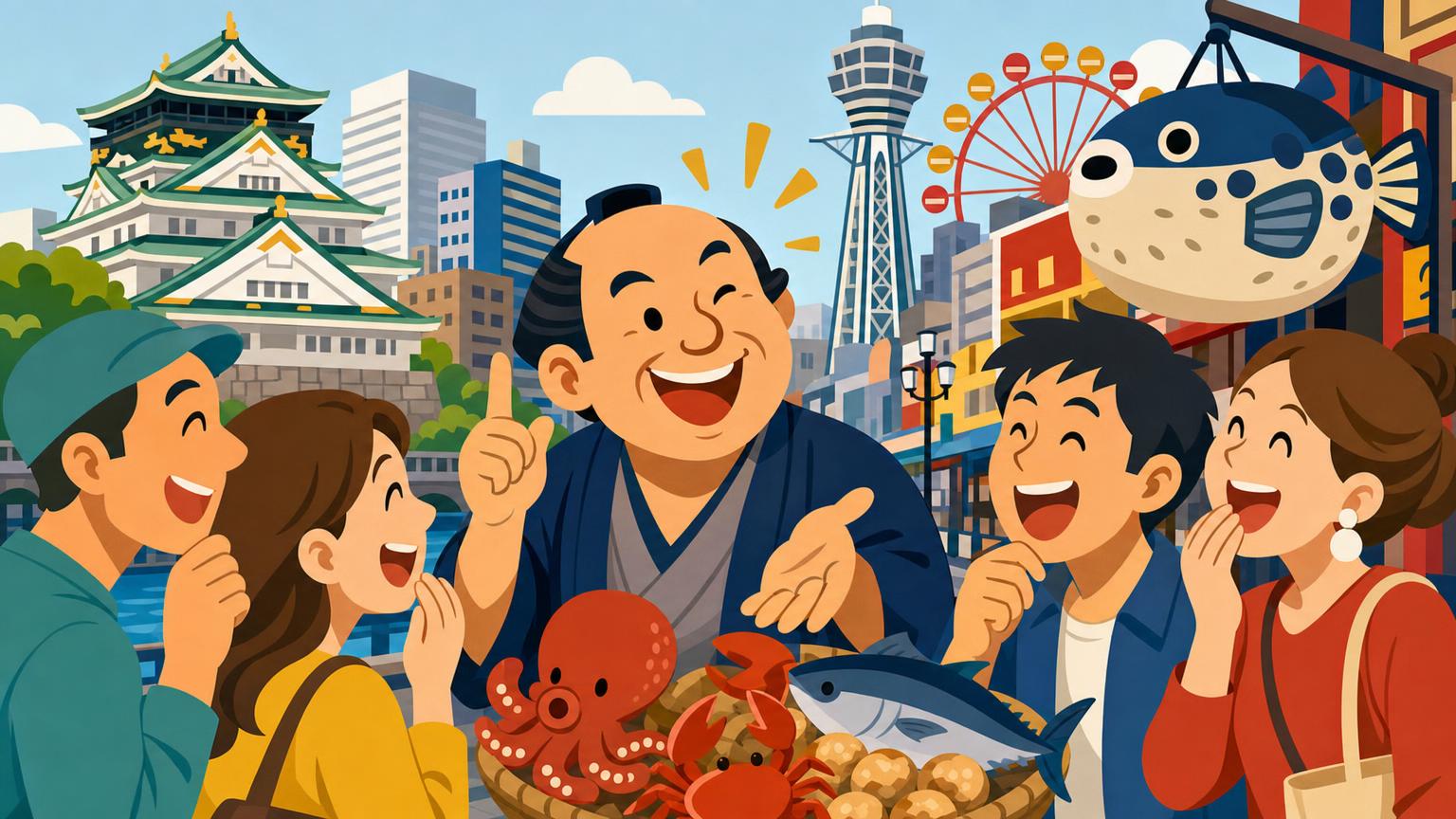
Landing in Tokyo feels like stepping into a perfectly synchronized clockwork machine. The streets are spotless, the people move with silent purpose, and the air hums with a restrained, polite energy. But when you board the Shinkansen and hurtle southwest toward Osaka, the atmosphere undergoes a profound and immediate shift. The very moment you step out of Shin-Osaka Station, you feel a completely different frequency vibrating through the concrete. The voices are distinctly louder, carrying a melodic, rolling cadence. The colors seem brighter, less constrained by corporate minimalism. The rhythm of the city is less of a ticking clock and more of a syncopated, unpredictable jazz beat. For a long time, observers have wondered why these two great Japanese metropolises, separated by a mere few hundred miles, feel like they belong to entirely different countries with divergent cultural paradigms.
As a travel writer who has spent extensive time navigating the labyrinthine streets of global cities, observing how the threads of history weave into the fabric of modern daily life, I have always been fascinated by urban psychology. My background in fashion and art has trained me to look beyond the surface aesthetics and seek out the underlying structures that dictate how a city breathes. My time wandering through the neon-drenched alleys and historic merchant quarters of Osaka taught me a crucial lesson. To truly understand this city, you have to look far beyond the glowing crab signs of Dotonbori and the towering, modern bulk of Abeno Harukas. You have to look directly into the souls of the people. And the souls of the people here in Osaka are undeniably forged in the fires of commerce. This is not a superficial tourist trait; it is a fundamental psychological baseline that dictates how life is lived on a daily basis.
Osaka is, and always has been, a city of merchants. It is a dynamic, pulsating environment where value has historically been determined not by rigid samurai lineage or bureaucratic titles, but by quick wit, relentless hustle, and the profound ability to strike a fair deal. This commercial root is not merely a dry chapter in a dusty history book. It is the beating, vital heart of everyday interactions, the rock-solid foundation of their unique brand of humor, and the unspoken, complex rulebook that governs daily life in the Kansai region. When you move to Osaka as a foreigner, or even if you just visit with a genuinely open mind, you quickly realize that the standard, rigid rules of Japanese etiquette you may have learned from language textbooks do not always apply here in the same way. There is a raw, unfiltered honesty in the air that can be jarring at first, but ultimately deeply refreshing.
There is a profound pragmatism that dictates everything from how people dress to how they negotiate business, stripping away pretense in favor of tangible results. And most importantly, there is an unwavering, deeply ingrained belief that human connection, built through conversation and shared laughter, is the ultimate currency. In this extensive exploration of Osaka’s civic soul, we will decode the ‘City of Merchants.’ We will strip away the tired clichés of simple friendliness and dive incredibly deep into how Osaka’s commercial roots profoundly influence everyday interactions, why their famous humor is actually a highly evolved survival tool, and what daily life in this vibrant, chaotic, and endlessly fascinating city is really like for those who choose to walk its streets.
What is Osaka’s Merchant Culture?
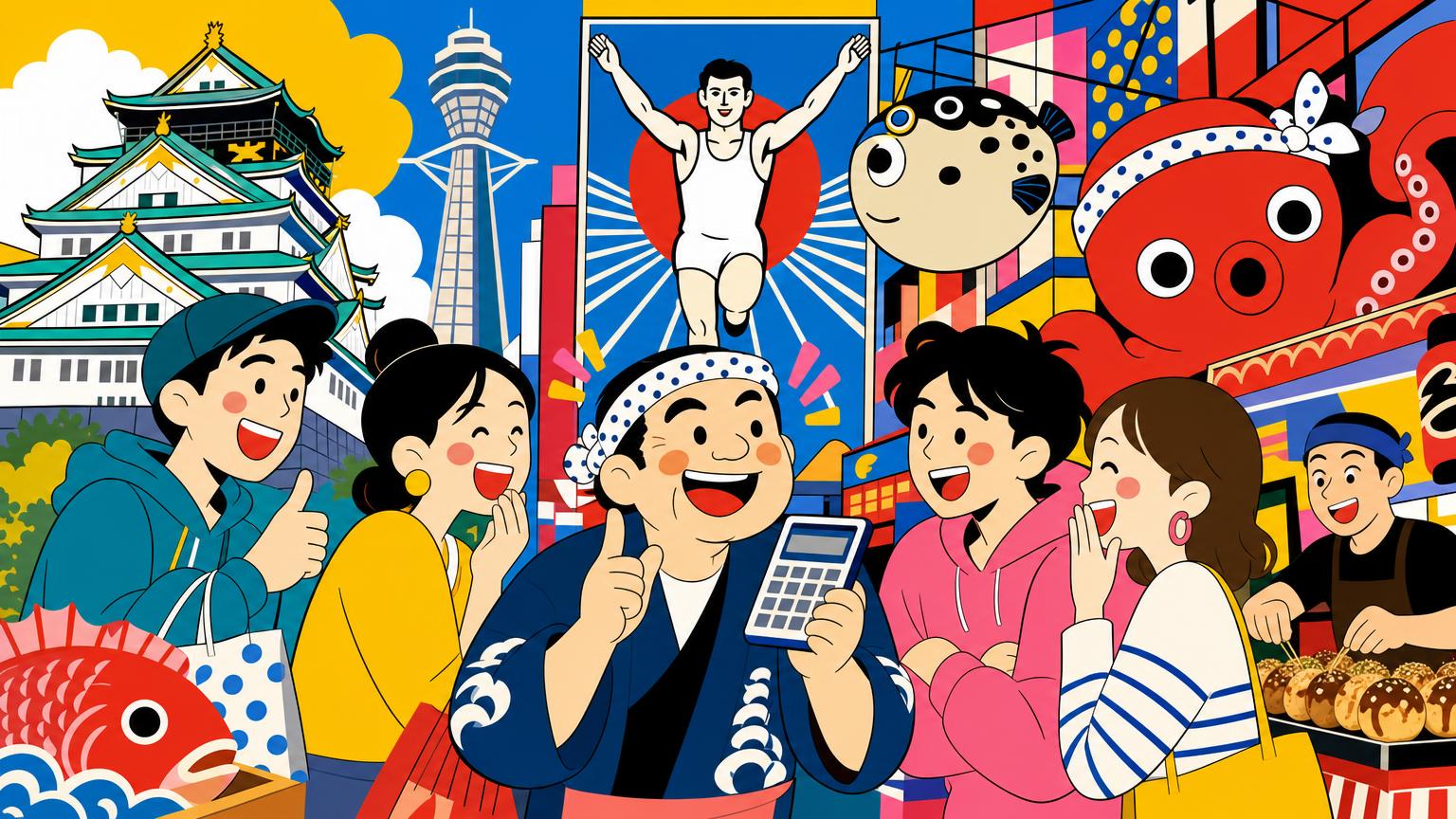
To begin understanding the intricate social dynamics of modern Osaka, one must first delve deeply into its historical roots. The attitudes you observe today at a local bakery, a busy subway station, or a lively Izakaya are direct legacies of a mindset nurtured centuries ago. The merchant culture of Osaka is not a fabricated construct for tourism; it is the natural outcome of specific geopolitical and economic conditions that compelled the people of this region to adapt, innovate, and depend on one another in ways vastly different from the rest of Japan.
The Birth of “Tenka no Daidokoro” (The Nation’s Kitchen)
To fully appreciate the enormity of Osaka’s historical identity, one must journey back to the Edo period—an era marked by strict social hierarchies, isolationist policies, and the absolute dominance of the samurai class. While the Tokugawa shogunate established its military and political stronghold in the austere, disciplined streets of Edo, which would later become modern Tokyo, a different kind of empire was rising in the western archipelago. Positioned advantageously by the sea and woven with a complex network of rivers and canals, Osaka naturally evolved into the logistical heart of the Japanese economy. The city, a marvel of waterways, earned the poetic nickname “City of Water,” where boats loaded with goods took the place of horses and carts found elsewhere.
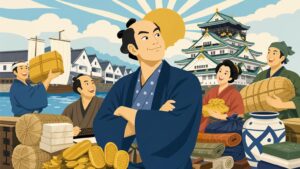
During this transformative period, Osaka gained the prestigious and meaningful title ‘Tenka no Daidokoro,’ which translates as ‘The Nation’s Kitchen.’ Yet, this title was not solely about the city’s emerging culinary fame, though that legacy would surely flourish in later centuries. It was a literal description of its crucial economic role. Feudal lords, or daimyo, from the snowy northern reaches of Hokkaido to the subtropical volcanic islands of Kyushu, sent their tax rice and regional products to Osaka’s extensive, heavily guarded storehouses. The city became a massive engine of trade—a centralized clearinghouse where the wealth of an entire nation was weighed, measured, bought, sold, and exchanged.
The creation of the Dojima Rice Exchange in the late seventeenth century marked a turning point in global economic history. Long before Wall Street was synonymous with financial innovation, Osaka’s merchants operated what is regarded as the world’s first formal futures market. They traded not only physical rice but also promises of future harvests, developing sophisticated financial tools, credit systems, and information networks that rivaled anything in Europe at the time. This environment cultivated a population that was highly sharp, mathematically skilled, and consistently attuned to the shifting rhythms of supply and demand.
Because power in Osaka rested largely with influential merchant guilds rather than heavily armed samurai lords, a unique egalitarian spirit emerged. In Edo, a commoner had to bow deeply and avert their gaze when a samurai passed, fearful of the warrior class’s absolute, lethal authority. In Osaka, while formal respect was observed, true power lay in the ledgers and gold coins of the merchants. This fundamental shift changed society so that one’s worth was determined by business savvy, reliability, and negotiation skills rather than birthright. This meritocratic foundation remains evident today, explaining why Osaka feels far more democratic and less rigidly hierarchical than the capital.
Values and Ethics: Trust, Calculation, and Customer Service
When a society is built entirely around the exchange of goods and services, specific ethical principles naturally develop to ensure long-term functionality and profitability. Osaka’s merchants, especially influenced by neighboring Omi traders, embraced a complex and deeply rooted philosophy of business ethics. The most important of these was ‘Shinyo,’ meaning trust or credibility. In a fast-moving mercantile world where large sums of money and products changed hands often on verbal agreements or promissory notes, a merchant’s reputation was their most valuable asset. Losing one’s Shinyo meant economic exile.
This historic reliance on trust continues in modern Osaka as a strong focus on forming genuine personal relationships before doing business. When arriving in Osaka, you might be surprised by how much small talk precedes any transaction. A local shopkeeper may inquire about your family, your thoughts on recent weather, or how you are settling into life in Japan before handing over a receipt. This is more than idle chatter; it echoes merchants assessing one another, establishing a foundation of human connection and mutual reliability—a subtle test of Shinyo.
Alongside this emphasis on trust is a keen sense of calculation. Osaka residents are famously pragmatic regarding money. Discussing prices, asking for discounts, or hunting for the best deal is not shameful. In Tokyo, haggling or openly talking about costs can be seen as rude or uncultured—a leftover samurai disdain for handling money. In Osaka, securing a bargain is a source of pride and a sign of intelligence. The traditional Osaka greeting, ‘Mokari-makka?’ roughly meaning ‘Are you making money?’ or ‘How’s business?’ captures this mindset perfectly. The usual response, ‘Bochi-bochi denna,’ meaning ‘So-so, just getting by,’ represents a graceful balance of humility and practical business awareness.
Moreover, Osaka’s approach to customer service contrasts subtly but significantly with Tokyo’s ultra-refined, nearly robotic perfection. Tokyo is known for ‘Omotenashi’—flawless, deeply respectful, anticipatory hospitality—whereas Osaka favors a more practical, warm, and highly personal style. Vendors in Osaka are less likely to use elaborate honorific language and more likely to treat customers like friendly neighbors. They might throw in a small extra item, crack a joke to lighten the mood, or offer blunt, honest advice on which product is truly worth the money. This direct and straightforward approach comes from the merchant belief that a genuinely satisfied customer feels they’ve received real value and honest treatment, ensuring their return time and again.
How Merchant Roots Shape Modern Osaka People
The historical significance of being the Nation’s Kitchen and a center of relentless commercial activity did more than just establish warehouses and financial institutions; it deeply shaped the psychological and behavioral characteristics of the people who call this region home. When foreign residents wonder why Osaka feels so distinctly different from the rest of Japan, the explanation almost always lies in how the merchant mindset has evolved to influence modern social interactions, dietary habits, and coping strategies.
The Origins of “Kuidaore” (Eat Till You Drop)
If there is one term that encapsulates the cultural spirit of Osaka more than any other, it is ‘Kuidaore.’ Often translated as ‘eat till you drop’ or ‘ruin oneself by extravagance in food,’ this idea is far more nuanced than a mere celebration of gluttony. To grasp Kuidaore, you must understand the financial realities of the Edo period merchant class. Although they amassed wealth that often surpassed the holdings of the ruling samurai, merchants were firmly placed at the very bottom of the state-mandated social hierarchy. Sumptuary laws strictly prohibited them from flamboyant displays of wealth. They were forbidden from constructing lavish mansions, wearing brightly colored silk garments publicly, or flaunting obvious symbols of luxury that could challenge the visual dominance of the warrior class.
Confronted with these strict rules limiting how they could spend their fortunes, Osaka’s merchants directed their financial resources toward an area the government found harder to regulate: their dining tables. Food became the ultimate discreet canvas for showcasing wealth, sophistication, and cultural refinement. Merchants invested heavily in procuring the finest ingredients nationwide, utilizing the extensive logistical networks under their control. They employed the most skilled chefs, perfected intricate culinary techniques, and elevated dining into a highly refined art form.
This historical necessity gave rise to a culinary culture unmatched in its passion and depth. At its base is ‘Dashi,’ the delicate, umami-rich broth fundamental to Japanese cuisine. As Osaka was the central hub of trade, it enjoyed exclusive access to the highest-quality kelp, known as Konbu, shipped via the perilous Kitamaebune routes from the nutrient-rich, frigid waters of Hokkaido. Combined with the exceptionally soft, high-quality water of the Osaka region, this premium kelp produced a Dashi of such profound depth and clarity that it fundamentally shaped the flavor profile of Kansai cuisine. Today, true Osaka locals judge a restaurant’s quality not by its lavish decor or Michelin stars but by the subtle, resonant quality of its Dashi.
Kuidaore, therefore, is not about mindlessly devouring cheap street food—though the street food here is unquestionably spectacular. It is about a deep, abiding, almost religious respect for food quality, ingredient provenance, and the shared pleasure of a masterfully crafted meal. Living in Osaka, you’ll quickly observe that conversations naturally gravitate toward food. People passionately debate the best spots for Okonomiyaki, defend their favorite Udon shops, and plan entire weekends around visiting a particular bakery. Food is the great equalizer here, a universal language that bridges social divides and serves as the primary vehicle for human connection.
As a resident, embracing Kuidaore means learning to appreciate the extreme attention to detail in seemingly simple dishes. It means recognizing that the vendor flipping Takoyaki on a busy street corner continues a centuries-old tradition of delivering maximum flavor and value. It means understanding that in Osaka, spending your last yen on an extraordinary meal is not seen as reckless; it is considered a life well lived.
Pragmatism, Comedy, and Friendly Locals
One of the most universally recognized—and often stereotyped—traits of Osaka people is their loud, gregarious friendliness and deeply ingrained sense of humor. However, labeling Osaka simply as a ‘funny’ or ‘friendly’ city overlooks the complex sociological roots of these traits. The humor and approachability you encounter on Osaka’s streets are not random personality quirks; they are sophisticated social lubricants born from the absolute necessity of the merchant trade.
Imagine the high-pressure environment of a bustling historical market. Merchants from various regions, holding differing values, negotiating complex, high-stakes deals. Tensions could easily flare, misunderstandings could cause financial ruin, and rigid attitudes would lead to failed agreements. In this volatile setting, humor became an essential survival tool. A well-timed joke could ease a tense negotiation, a bit of self-deprecating wit could disarm a wary buyer, and shared laughter could instantly build the ‘Shinyo’ or trust needed to seal a contract.
This historical reliance on comedy has permeated every aspect of modern Osaka society. The city is the undisputed capital of Japanese comedy, the birthplace of Manzai—a rapid-fire, highly structured double-act stand-up comedy—and home to the massive Yoshimoto Kogyo entertainment empire. But Osaka’s true comedic brilliance isn’t only found on television; it thrives in everyday interactions. The Kansai-ben dialect is inherently rhythmic, expressive, and perfectly suited for punchlines. Conversations naturally follow a pattern of ‘boke’ (the silly, oblivious, or absurd role) and ‘tsukkomi’ (the straight, pragmatic, correcting role).
Living in Osaka, you’ll notice locals constantly seek the comedic angle in any situation. A workplace mistake, a train delay, or a sudden rain shower is less likely met with silent endurance and more likely transformed into a funny story to share later. This comedic mindset is a profound psychological coping mechanism that fosters resilience and positivity amid life’s challenges.
This humor-driven outlook directly contributes to the city’s legendary friendliness. Since humor requires an audience and a willingness to engage, Osaka residents are naturally more outgoing and communicative than those in other major Japanese cities. As a foreigner, you’ll often experience ‘Osekkai,’ a form of meddlesome but deeply affectionate helpfulness. If you appear lost with a subway map, an older woman—often affectionately called an ‘Obachan’—will likely approach you, ask your destination, and personally guide you to your platform while offering a piece of candy.
From a safety standpoint, especially for women, this culture of open communication fosters a remarkably secure environment. The anonymity and cold isolation that can make large urban centers feel unsafe are largely absent in Osaka’s residential neighborhoods. Because people naturally talk to one another, notice their neighbors, and openly voice their opinions, there is a strong, organic sense of community vigilance. The streets feel safer precisely because they are filled with people unafraid to speak up, intervene, and connect with those around them.
Where to Experience Merchant History in Osaka Today
Grasping the philosophical and historical foundations of Osaka’s merchant culture is essential, but to genuinely feel the impact of this history, you must walk the very streets where it took place. The city is a captivating architectural and cultural palimpsest, where sleek glass towers of modern commerce stand directly atop the remnants of ancient trading houses. For expatriates or deeply curious travelers, exploring these specific neighborhoods offers a tangible, sensory connection to the ‘Tenka no Daidokoro’ era, far beyond typical tourist routes.
Semba and Kitahama: The Historic Financial and Textile Centers
To experience the historical heartbeat of Osaka’s wealth, you need to visit the districts of Semba and Kitahama. Located in the central Chuo Ward, Semba was historically the core of the merchant class. Unlike the organic, winding streets common in many ancient Japanese cities, Semba was carefully planned on a strict grid system by Toyotomi Hideyoshi in the late sixteenth century, designed to optimize trade efficiency and the flow of goods.
During the Edo period, Semba was dominated by enormous, influential textile wholesalers who controlled the distribution of cotton, silk, and finished garments throughout the nation. The wealth generated here was immense and gave rise to a distinct, sophisticated aesthetic called ‘Semba-style,’ which shaped fashion, architecture, and polite society. For those with a background in fashion, walking through Semba is like traversing the ghosts of Japan’s sartorial past. Though most ancient wooden storehouses have been replaced by modern office buildings, the textile heritage remains. The area still houses numerous fabric wholesalers, hidden tailoring shops, and design studios, maintaining a quiet, industrious hum that sharply contrasts with the frantic neon of southern entertainment districts.
Just north of Semba is Kitahama, gracefully situated along the Tosabori River. If Semba was the hub of physical goods, Kitahama was the financial brain. It was home to the legendary Dojima Rice Exchange. Today, Kitahama is noted for its stunning retro architecture from the Meiji and Taisho periods. As Japan rapidly modernized, Osaka’s incredibly wealthy merchants invested vast fortunes in constructing magnificent Western-style brick buildings, bank headquarters, and trading houses, determined to prove their city was a cosmopolitan financial powerhouse on par with London or New York.
Strolling along Kitahama’s riverfront today, you can admire these impeccably preserved architectural gems, many transformed into stylish cafes, bespoke boutiques, and art galleries. Sitting on a riverside terrace, sipping carefully brewed coffee while gazing at the imposing stone facade of the Osaka Exchange building, you can vividly sense the dignified atmosphere of generations of immense wealth and calculating ambition. This neighborhood commands respect, standing as a quiet tribute to the enduring power of Osaka’s commercial elite.
Sakai City: The Independent Port and Trading Precursor
To fully understand the depth of the mercantile spirit, one must step just outside modern Osaka city limits and travel south to Sakai City. Long before Osaka was established as the Nation’s Kitchen under the Tokugawa shogunate, Sakai thrived as a fiercely independent, spectacularly wealthy autonomous port city during the turbulent medieval era. Its deep natural harbor made Sakai the primary gateway for international trade, especially with Ming Dynasty China and, later, early European explorers and merchants.
Sakai was so wealthy, heavily fortified, and politically independent that visiting European missionaries often likened it to the great free city-states of Italy, like Venice. The merchants of Sakai, known as ‘Egosho,’ formed a powerful ruling council that governed the city independently of the warring samurai lords ravaging the rest of the country. They amassed great fortunes trading luxury goods, imported silk, spices, and notably, the new European firearms, which they quickly mastered to reverse-engineer and manufacture with alarming efficiency.
This extraordinary concentration of wealth and international influence sparked a cultural renaissance. In Sakai, Sen no Rikyu, son of a wealthy fish merchant, revolutionized and formalized the Japanese tea ceremony, known as Chanoyu. The tea ceremony, far from purely spiritual, was deeply integrated into merchant culture—a space where powerful men negotiated massive deals, forged alliances, and showcased their exquisite, costly imported tea bowls within a setting of enforced equality and refined aesthetics.
For modern visitors, Sakai offers a profound view into the origins of Osaka’s merchant soul. You can walk its ancient, narrow streets that survived wartime fires, visit preserved residences of historic merchant families, and explore the rich history of the tea ceremony and international trade. Sakai demonstrates that the commercial mindset of the Kansai region is ancient, deeply rooted, and closely tied to the highest forms of cultural and artistic expression in Japanese history.
The Osaka Museum of Housing and Living
For those who find it challenging to envision the past amid the city’s concrete and glass, the Osaka Museum of Housing and Living, located in the northern Tenjinbashisuji Rokuchome district, offers an immersive and highly educational experience. Unlike dry, text-heavy historical exhibits, this museum presents a fully realized, life-sized recreation of an Osaka neighborhood during the late Edo period, focusing specifically on the lives of townspeople and merchants.
Stepping off the elevator, you are instantly transported back in time. You stroll down historically accurate, meticulously reconstructed streets, lined with traditional wooden machiya townhouses. You can enter a recreation of a historical pharmacy, complete with herbal medicine cabinets, or visit a kimono shop, observing exactly how goods were displayed, stored, and sold centuries ago. The museum cleverly uses subtle lighting and sound design to simulate time’s passage, shifting from a bustling, sunlit morning filled with street vendors’ sounds to a quiet, dramatically lit evening, complete with a simulated rainstorm.
This immersive setting is vital for understanding the physical reality of merchant life. You realize how closely people lived together, explaining the need for strict yet practical community rules and the evolution of open, communicative neighborhood relationships. You can clearly see how architecture was designed to combine private family living spaces with public storefronts, demonstrating how family life and commercial enterprise were completely intertwined. For foreign residents piecing together Osaka’s historical puzzle, this museum offers an invaluable and profoundly tangible anchor.
Kuromon Market: The Vibrant Heart of Local Commerce
While museums provide a sanitized, carefully preserved glimpse into the past, Kuromon Market delivers a raw, loud, and intensely visceral experience of Osaka’s commercial heart as it beats today. Located a short walk from the neon chaos of Namba, Kuromon has been the central culinary supply hub for the city’s chefs and discerning housewives for well over a century. Entering its covered arcades is like stepping directly into the physical embodiment of the ‘Kuidaore’ philosophy.
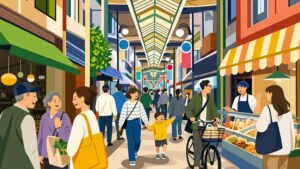
The sensory overload is immediate and spectacular. The air brims with a complex, intoxicating blend of aromas: the briny sharpness of freshly cracked sea urchin, the rich smoky scent of grilling wagyu beef, the delicate sweetness of ripe seasonal melons, and the deep savory umami of simmering Dashi vats. Narrow walkways bustle with chefs urgently gathering ingredients, locals shopping, and travelers wide-eyed at the abundance of food.
But Kuromon Market’s magic lies not only in produce quality but in the highly performative, deeply traditional interactions between vendors and customers. Here, the historical merchant spirit is alive and roaring. Vendors call out actively, their voices echoing with the rhythmic, melodic cadences of the Kansai dialect. They proudly boast about the supreme freshness of their tuna, expertly slice exotic fruits for sampling, and engage in rapid-fire, humorous banter with regular customers.
Watching these exchanges is a masterclass in Osaka sociology. You witness ‘Shinyo’ principles as chefs carefully inspect goods, trusting long-established relationships with specific fishmongers. You observe locals pragmatically navigating stalls, silently comparing prices and quality before buying. And you see how humor and charm are crucial when closing a deal. For foreign residents, becoming a regular at a particular Kuromon stall, sharing jokes with vendors, and joining in this vibrant, noisy commerce dance is among the most authentic and rewarding ways to weave into the city’s fabric.
Famous Goods to Buy: Souvenirs with Merchant Heritage
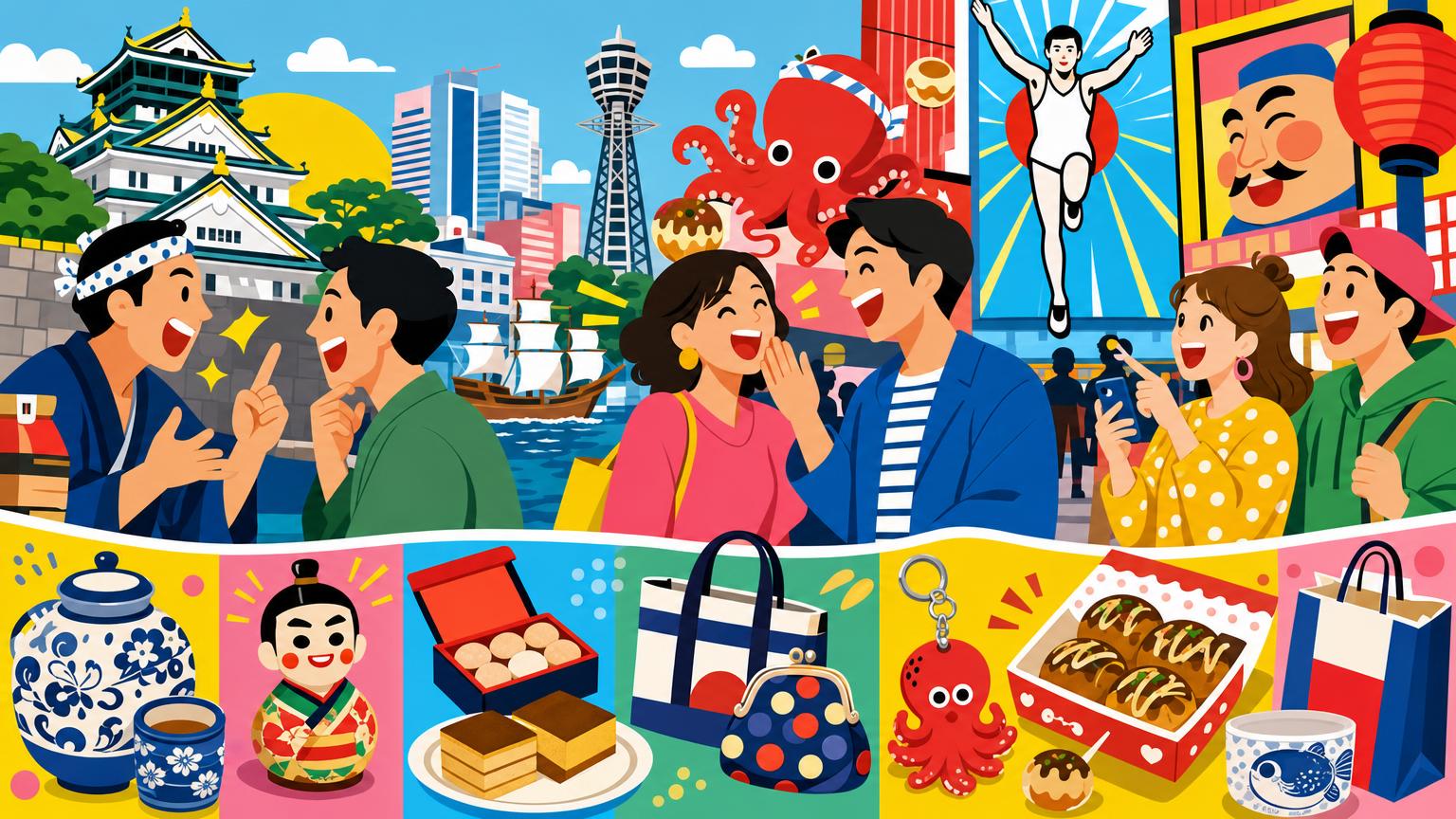
Living in or thoroughly exploring a city built entirely on the concept of trade gives the act of purchasing goods a profoundly deeper significance. Osaka’s traditional crafts and specialty products are not mere mass-produced tourist trinkets made for quick profit; rather, they are the highly refined and meticulously perfected physical embodiments of centuries of commercial evolution. They reflect the exacting standards of the merchant class, a deep appreciation for utility and aesthetics, and the historic supply chains that connected Osaka to the rest of Japan. When you buy these items, you’re not just obtaining a souvenir; you are acquiring a piece of the city’s commercial soul.
Sakai Forged Knives and Culinary Tools
We return to the ancient port city of Sakai, where one of the most revered and practically essential tools of the Japanese culinary world is crafted: the Sakai forged knife. The history of metalwork in Sakai is both ancient and captivating, beginning in the fifth century when blacksmiths gathered in the region to forge massive iron tools for constructing the colossal kofun burial mounds that still dot the landscape. Over the centuries, these skilled artisans evolved their techniques, famously producing the formidable matchlock guns that revolutionized Japanese warfare in the sixteenth century, and forging the legendary, razor-sharp katana swords demanded by the samurai elite.
However, as the Edo period ushered in prolonged peace and saw the decline of the samurai class, the pragmatic and adaptable merchants and blacksmiths of Sakai redirected their profound metallurgical expertise toward a far more lucrative market: Osaka’s booming culinary industry. They applied the intricate folding-and-forging techniques used to create samurai swords to craft kitchen knives, producing blades of unparalleled sharpness, durability, and edge retention.
Today, it is estimated that the vast majority of professional chefs across Japan—especially those working in the precise world of traditional Japanese cuisine and sushi preparation—rely exclusively on knives forged in Sakai. Purchasing a Sakai knife is an experience deeply rooted in the merchant tradition of delivering absolute, uncompromising quality. When you visit a traditional cutler in Sakai or specialized tool shops in Osaka’s Doguyasuji arcade, you won’t find flashy packaging or aggressive sales tactics. Instead, you’ll encounter a quiet, intense dedication to craftsmanship. The seller will inquire about your cooking habits, assess your grip, and recommend a blade tailored precisely to your needs. They are selling a lifetime tool—an instrument of culinary perfection requiring care, respect, and regular maintenance. This is the ultimate expression of the pragmatic, high-quality ethos defining the Osaka merchant.
Konbu (Kelp) and Traditional Japanese Sweets
To fully appreciate the culinary legacy of the ‘Tenka no Daidokoro,’ one must grasp the crucial importance of Konbu, or kelp. As mentioned earlier, Konbu forms the vital, irreplaceable foundation of Dashi, the broth that gives life to Kansai cuisine. However, kelp does not grow in the warm, shallow waters around Osaka; it must be harvested from the frigid, turbulent seas of Hokkaido at the northern tip of the Japanese archipelago.
During the Edo period, enterprising merchants established the incredibly dangerous yet highly profitable Kitamaebune shipping routes. These heavy, wooden trading ships sailed from Osaka, navigated the treacherous Seto Inland Sea, traveled up the rugged Sea of Japan coast, and finally reached Hokkaido. They traded rice, textiles, and salt for vast quantities of premium dried Konbu, herring, and other northern delicacies, bringing them back to Osaka’s storehouses. This massive logistical achievement allowed Osaka’s food culture to thrive.
Today, visiting a traditional Konbu shop in Osaka, especially those located in historic merchant districts, is a deeply sensory experience. Konbu is available in an astonishing variety of forms: thick, dark sheets aged for years in temperature-controlled cellars to maximize umami; delicate, paper-thin shavings called Tororo Konbu that dissolve instantly in hot soup; and tightly rolled bundles simmered in soy sauce and mirin to create Tsukudani, a richly flavored accompaniment to white rice. Purchasing premium Konbu means acquiring the very essence of Osaka’s culinary history—a tangible reminder of the vast trading networks that elevated the city.
Equally important to the merchant culture, though perhaps less globally recognized than Dashi, is the rich tradition of Wagashi, or traditional Japanese sweets. As Osaka’s merchants amassed wealth, they eagerly embraced the refined cultural practices of the aristocracy—most notably, the tea ceremony. This fostered a large, highly competitive market for Wagashi: delicate, seasonally inspired confections served alongside bitter matcha tea.
Unlike Kyoto’s sweets, which often emphasize visual elegance and aristocratic symbolism, Osaka’s Wagashi reflect the merchant mindset: they are slightly more substantial, intensely flavorful, and deeply satisfying, offering tangible value to the buyer. Shops in older districts have been perfecting the same recipes for centuries, obsessively refining the texture of red bean paste or the exact chewiness of mochi. Presenting a beautifully wrapped box of high-quality Osaka Wagashi to a friend or business associate remains a supreme gesture of respect and goodwill, echoing the ancient merchant traditions of relationship-building and subtle displays of refinement.
Conclusion: Embracing the Spirit of Commercial Osaka
Navigating daily life in Osaka, whether you are a newly arrived expatriate trying to understand local customs or a long-term resident reflecting on your experiences in the city, requires a fundamental change in perspective. You need to let go of rigid, textbook definitions of Japanese politeness and embrace a culture that prioritizes directness, pragmatism, and genuine human connection above all else. The city can definitely feel overwhelming at first—the voices are loud, the neon is dazzling, and the sheer density of human activity can be exhausting. But once you grasp that this chaos is not random, but rather the highly structured, historically evolved rhythm of a true merchant city, everything begins to fall into place.
The legendary friendliness of the locals is not just a superficial tourist charm; it is a profound, deeply embedded social strategy designed to build trust and navigate a complex, densely packed society. The relentless, obsessive pursuit of culinary perfection known as Kuidaore is not mere indulgence; it is a historical rebellion against rigid social hierarchies and a testament to the city’s logistical brilliance. And the sharp, rapid-fire humor that reverberates through the streets and subway cars is not merely entertainment; it is the essential lubricant that has kept the wheels of commerce and community turning for centuries.
Living in Osaka, you come to realize that the most valuable interactions are not the flawless, perfectly choreographed exchanges found in high-end Tokyo boutiques, but the messy, honest, and often hilarious conversations you have with the local baker, the neighborhood dry cleaner, or the stranger sitting next to you at a crowded Okonomiyaki counter. You learn that asking for a better price is not an insult, but a sign of respect for the rules of commerce. You learn that a loud, boisterous laugh is often the best response to a tough situation. And most importantly, you learn that in the City of Merchants, true wealth is not measured in gold or rice, but in the lasting strength of the relationships you build along the way. Understanding this is the genuine key to unlocking the vibrant, endlessly rewarding heart of Osaka.