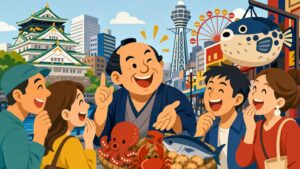
You have probably heard the rumors whispered in the quiet cafes of Tokyo or splashed across the casual threads of online expat forums. You have likely encountered the stereotype before you even set foot in the neon drenched streets of the Kansai region. The rumor claims that the people of Osaka are obsessed with money, fiercely protective of their wallets, and unapologetically cheap. They call it being a kechinbo, a colloquial Japanese term that translates roughly to a stingy person or a penny pincher. But when you actually pack your bags, move to this vibrant metropolis, and start navigating the daily rhythm of life here, you quickly realize that this national stereotype misses the mark completely. The narrative of the stingy Osaka local is not just a mistranslation of culture; it is a fundamental misunderstanding of a brilliantly pragmatic, warm hearted, and historically rich way of life. We are going to tear down this myth completely. We are going to dive deep into the everyday reality of living in Osaka, exploring how the locals actually think about money, why they speak about it so openly, and how you can seamlessly integrate into a city that values human connection just as much as a good bargain. If you are planning to build a life here, this reality check is your key to unlocking the true spirit of the city.
Are Osaka People Really Stingy? Unpacking the Stereotype
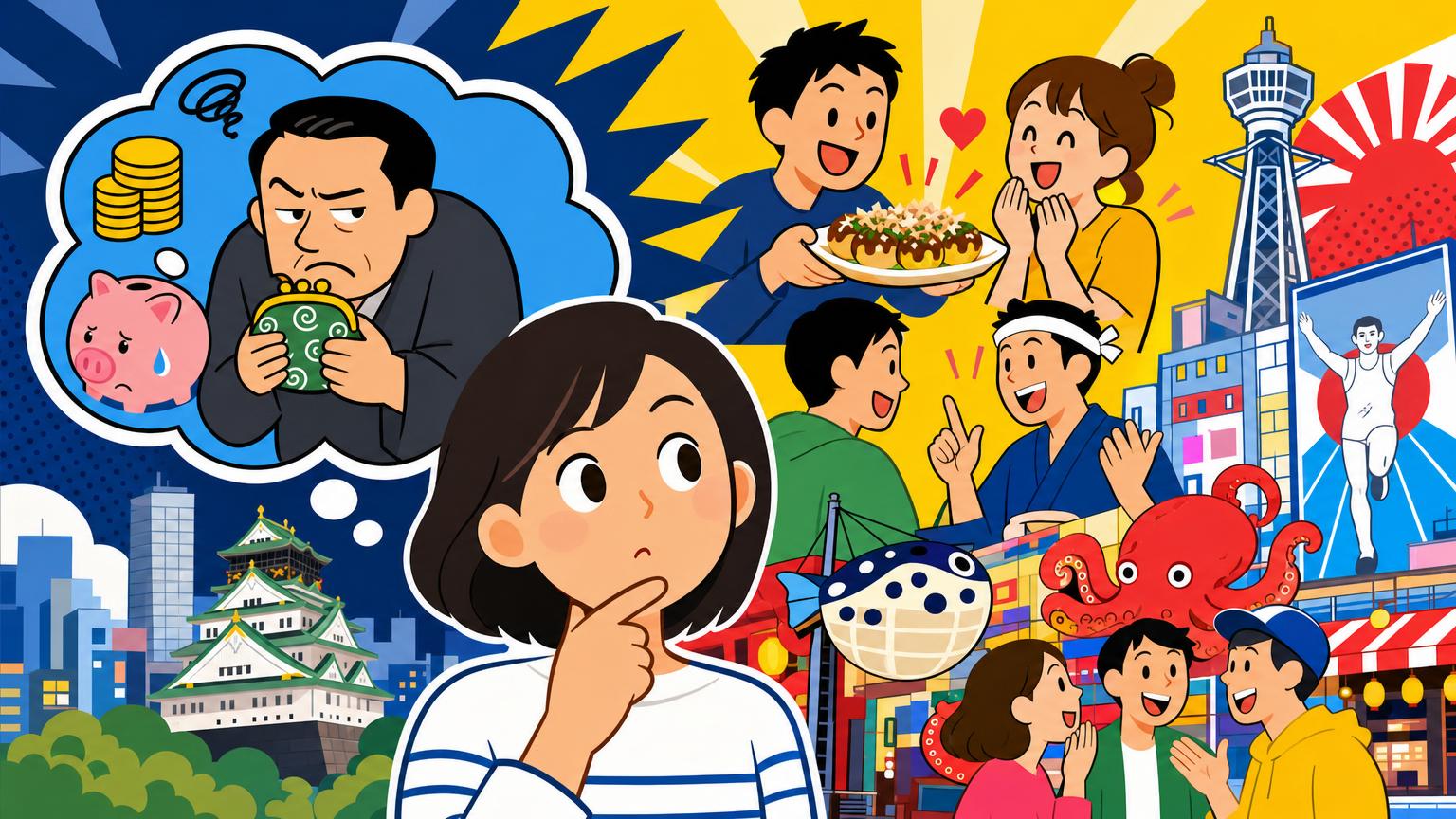
To truly understand Osaka, you must grasp the distinction between being cheap and being value-conscious. In English, the word stingy carries a strong, negative implication. It suggests selfishness, reluctance to share, and a hoarding attitude that prioritizes wealth over well-being. When expats or tourists read online that Osaka people are stingy, they picture a cold, transactional environment where every yen is squeezed and generosity is absent. Nothing could be more inaccurate. The reality on the streets, in local izakayas, and at bustling neighborhood markets tells a vibrant and very different story.
The Mistranslation of Financial Prudence
What outsiders call stinginess is, in fact, a deeply rooted cultural appreciation for financial prudence. In Osaka, scoring a good deal is not something to hide but a source of pride. When an Osaka resident buys a fantastic winter coat for half the original price, they don’t conceal the discount tag. They wear that coat out to dinner, highlight the quality of the fabric, and happily share with friends exactly how little they paid for it. This is not cheapness; it is the thrill of the hunt. It is a communal sport where cleverness is met with applause.
For a foreigner adapting to life in Japan, this can be quite surprising. In many Western cultures, and even in much of eastern Japan, talking openly about the exact price you paid for something personal is considered tacky or gauche. People tend to pretend money is no concern, even while carefully managing their household budgets privately. Osaka rejects this façade altogether. Locals value transparency, honesty, and the shared bond of weathering a tough economy together. By seeing so-called stinginess as financial savvy, you begin to view the city not as a place of penny-pinchers, but as a community of practical survivors who truly understand the worth of their hard-earned money.
From Negative Stigma to Positive Virtue
This change in perspective is essential for anyone intending to make Osaka their home. When you stop seeing the local emphasis on money as a flaw, you open yourself up to a new way of connecting with your neighbors. You realize that when a local asks how much rent you pay, they aren’t trying to judge your status or pry into your private life. Instead, they’re checking to ensure you’re not being overcharged by your landlord. They want to know if you got a fair deal, and if not, they might just share information about a better real estate agent nearby. This is a form of practical, assertive caring that outsiders often misread as rudeness.
The Merchant History: Osaka as The Nation’s Kitchen
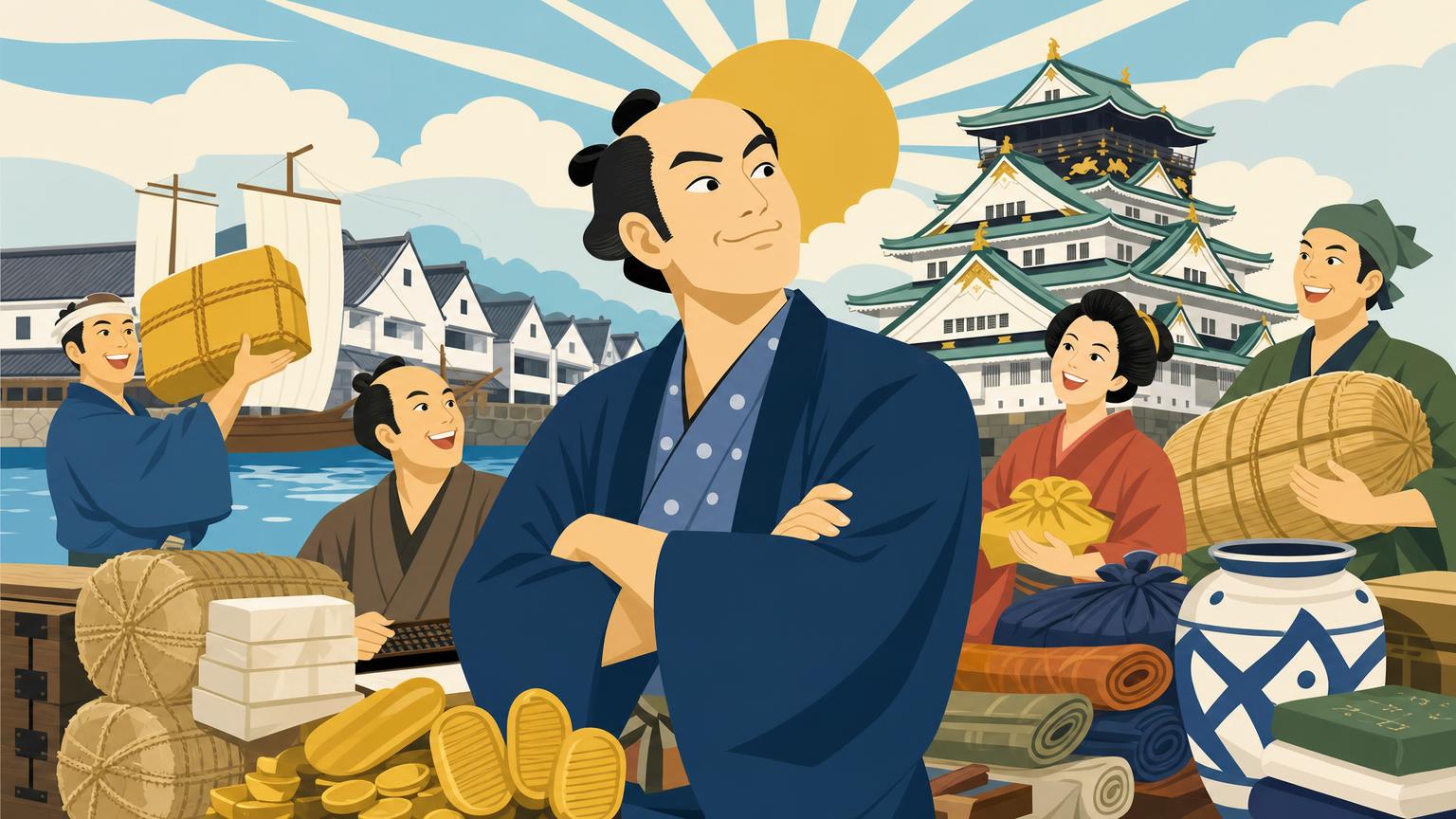
To truly understand why money is spoken of with such joyful reverence in Osaka, we need to look back into history. The modern Osaka mindset cannot be fully appreciated without recognizing its long-standing foundation as a city of merchants. During the Edo period, while Tokyo was the political center ruled by stoic samurai and rigid feudal hierarchies, Osaka thrived as a bustling hub of commerce. It earned the nickname Tenka no Daidokoro, the kitchen of the nation. Rice, textiles, spices, and products from across the Japanese archipelago flowed through Osaka’s rivers and canals.
How a Business Mindset Shaped Local Culture
The cultural divide between the political capital and the commercial capital created two fundamentally different worldviews. In Edo’s samurai culture, money was seen as unclean. The noble warrior class was expected to rise above financial concerns, focusing instead on honor, duty, and martial skill. Handling money was regarded as a vulgar necessity, relegated to the lower classes. This historical perspective still influences Tokyo today, where overt displays of wealth or forceful negotiations are often met with reserved disapproval.
In contrast, Osaka was proudly led by merchants. For them, money was not dirty; it was the lifeblood of the community—a tool to put food on the table, build infrastructure, and secure the future for generations to come. Osaka’s merchants cultivated a culture grounded in mutual trust, sharp negotiation, and the seamless flow of capital. They established the world’s first futures exchange market for rice at Dojima and were pioneers of modern economics long before the term was coined.
The Legacy of the Merchant Greeting
This deeply rooted business mentality seeped into everyday language and social customs. The classic Osaka dialect greeting, mokarimakka, literally means “are you making money?” The typical, modest reply, bochi bochi denna, means “so-so” or “just getting by.” While younger generations may not use these exact expressions as frequently today, the underlying spirit remains fully intact. Asking about business, checking on financial wellbeing, and acknowledging the daily effort of earning a living are seen as signs of empathy and connection. With this historical background, what might be perceived as stinginess reveals itself as a proud, enduring legacy of a merchant class that built the city from the ground up.
Osaka vs. Tokyo: Money, Manners, and Friendliness
If you are an expat choosing where to live in Japan, the comparison between Osaka and Tokyo is likely at the top of your list. It represents the classic east versus west rivalry. While Tokyo provides a polished, highly efficient, and intensely private lifestyle, Osaka offers a raw, loud, and exceptionally social atmosphere. The way each city approaches money and manners perfectly illustrates this contrast.
The Cultural Divide Between East and West
In Tokyo, social friction is reduced by a complex system of polite distance. People seldom invade your personal space, either physically or emotionally. You could live in a Tokyo apartment building for five years without ever learning your neighbor’s first name. Regarding money, silence is golden. Splitting a bill at a Tokyo restaurant is a quiet, orderly process, often done with exact change and minimal hassle.
Osaka is the complete opposite. The energy here is lively and wonderfully chaotic. People don’t just tolerate social friction; they actively seek social interaction. If you look lost in a Tokyo train station, people politely walk around you to avoid embarrassment. If you look lost in an Osaka subway station, a local grandmother might approach you, ask where you’re headed, grab you by the elbow, and guide you to the correct platform while inquiring about where you’re from and what you had for breakfast.
Why Osaka Locals Talk Openly About Money
This absence of a polite filter extends directly to financial topics. For many foreigners, the most surprising part of living in Osaka is how quickly a new acquaintance will bring up money. You might be sitting at a counter in a tiny bar in Fukushima ward, chatting with someone next to you. Within ten minutes, they might ask how much you earn from your English teaching job or how much you paid for your shoes.
This is where the stingy stereotype is often fueled by culture shock. A Tokyoite might see these questions as intrusive and cheap. But for an Osaka local, it’s simply friendly banter. It’s an icebreaker. Money is a universal equalizer. Everyone has to pay rent, buy groceries, and seek a good deal. By asking about your finances, they’re inviting you into their world and trying to find common ground. If you respond honestly with a bit of humor, you’ll quickly earn their respect. You can laugh, mention your shoes were a bargain from an outlet mall, and ask where they get their clothes. Suddenly, you’re no longer a stranger but a fellow participant in the great Osaka game of life.
Politeness Versus Authenticity
The fundamental difference comes down to how the two cities define good manners. Tokyo views manners as making sure you don’t inconvenience anyone. Osaka sees manners as actively connecting with others. The blunt questions about prices and salaries aren’t a sign of a society obsessed with money; they represent a culture that values raw, unfiltered authenticity over sterile politeness.
The Pursuit of Cospa
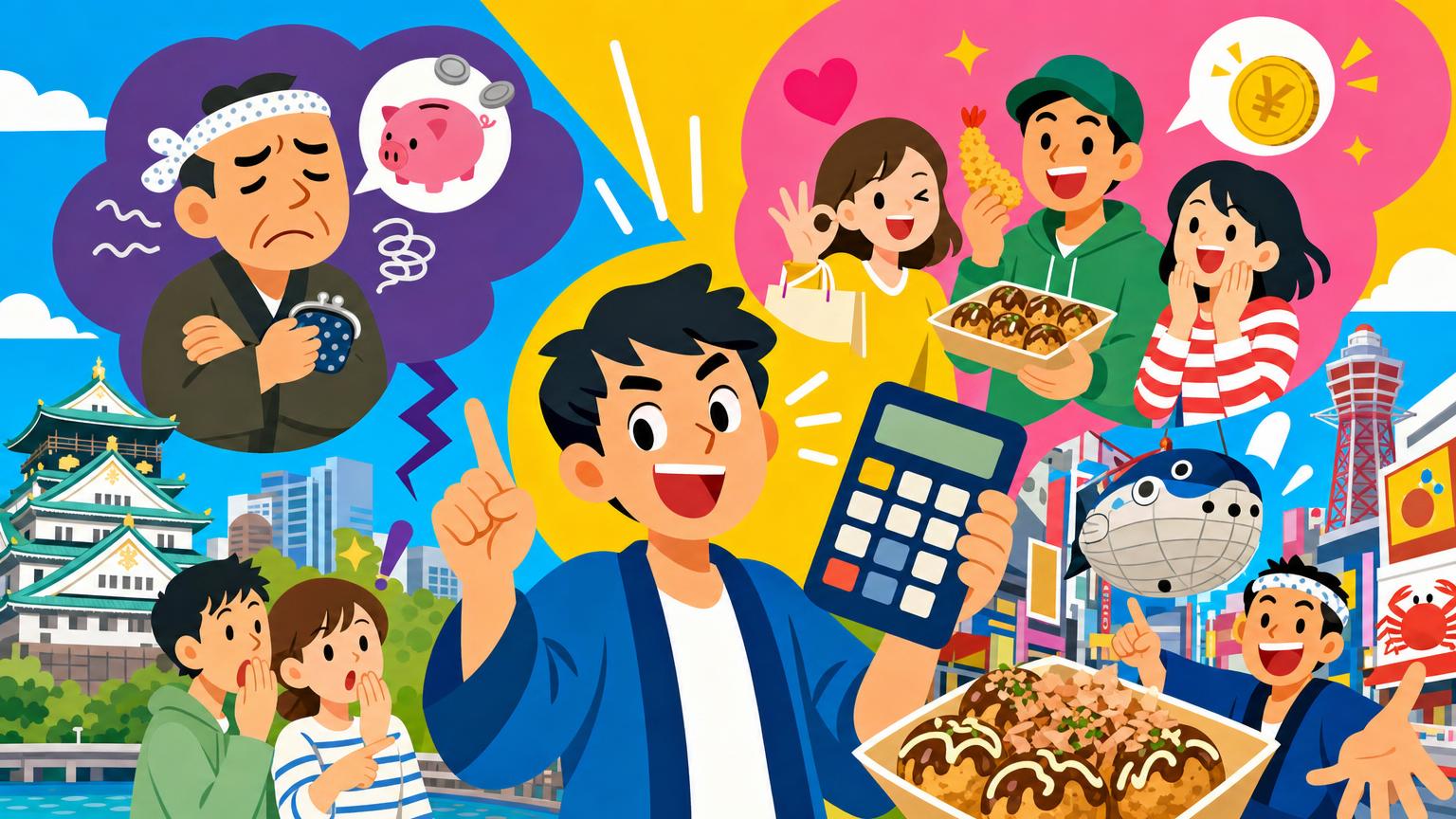
To survive and flourish in Osaka, you must grasp the concept of cospa. Cospa is a Japanese portmanteau for cost performance. While this idea is found throughout Japan, in Osaka, it is almost a religion. Cospa is the ultimate measure by which all goods, services, and experiences are evaluated. It is the exquisite skill of obtaining the highest possible value for the lowest possible price.
The Thrill of the Deal
Being a kechinbo means you hesitate to spend money even when it’s warranted. Cospa, on the other hand, means you are more than willing to spend your money, but only if the return on investment is unquestionably excellent. An Osaka local will gladly spend ten thousand yen on an exceptional, high-quality, multi-course yakiniku dinner if the meat is outstanding, the drinks are plentiful, and the service is warm. But that same person will categorically refuse to pay five hundred yen for a mediocre cup of coffee at a tourist trap simply because it lacks cospa.
This attitude shapes the entire consumer environment of the city. Restaurants in Osaka face fierce competition, not only on taste but also on value. If an eatery opens serving small portions at inflated prices, locals will simply ignore it, and it will shut down within months. The culinary standard here is remarkably high precisely because locals refuse to be overcharged. This is great news for foreigners moving to the city. You benefit directly from the local obsession with cospa, finding that your daily expenses—from groceries to dining out to entertainment—stretch much further here than they would in the capital.
Everyday Shopping Habits in Kansai
As you settle into daily life here, you will naturally adopt these habits. You’ll notice supermarkets significantly marking down their bento boxes and fresh fish just before closing time. In some places, people might feel self-conscious waiting for discount stickers to be applied. In Osaka, it’s a communal event. You’ll see business people in sharp suits standing shoulder to shoulder with university students, watching the supermarket staff like hawks, ready to pounce the moment the half-price sticker hits the tuna sashimi. There’s no shame in it—it’s a shared celebration of cost performance.
The Art of Negiri in Osaka
One of the most captivating cultural remnants from Osaka’s merchant era is the tradition of negiri, or haggling. In contemporary Japan, fixed prices are strictly observed. You won’t negotiate in a department store in Shibuya, and haggling at a convenience store is unheard of. However, in certain parts of Osaka, the age-old art of bargaining remains very much alive, providing an exciting interactive experience that foreigners seldom encounter elsewhere in the country.
Where to Experience Authentic Local Shopping
You won’t find haggling in the sleek, air-conditioned shopping malls of Umeda. To experience negiri, you need to explore the shotengai—the covered shopping arcades that weave through the older neighborhoods. Areas like the expansive Tenjinbashisuji Shopping Street, which stretches over two kilometers, or the bustling alleys of the Shinsekai district, are where the true spirit of old Osaka endures.
In these settings, shopping is far from a quiet transaction; it’s a conversation. Whether you’re buying a bicycle at a small local shop or picking up a bulk order of electronics in the Den Den Town district, there’s often room for a playful negotiation.
Navigating the Shotengai Arcades
The key to understanding negiri is knowing it’s never aggressive. It’s not about trying to squeeze the shop owner or demanding unrealistic discounts. It’s a social dance. It typically begins with a friendly chat about the weather, a compliment on the merchandise, and a lighthearted comment about the state of your wallet. The buyer might then ask if the seller can throw in a little extra service. The seller will laugh, pretend to be shocked, claim the buyer is trying to ruin them, and then happily knock a few hundred yen off or add a free accessory.
For an expat, joining in this tradition can feel quite daunting at first. But once you gather the courage to ask for a small discount using a bit of broken Kansai dialect, the response is almost always very warm. The shop owners appreciate it. It breaks the ice. It shows you respect their local culture enough to engage in their custom. When the deal is done, you don’t just leave with a cheaper item; you walk away with a story, a smile, and often a new friend who will remember you the next time you visit that arcade. This playful exchange completely dispels the stereotype of the stingy local and reveals a community that uses commerce as a key means of forging human connections.
Beyond the Stereotype: The Generosity and Ninjo of Osaka
We have discussed in detail how Osaka residents value their money, hunt for bargains, and enjoy skilled financial negotiation. However, stopping the explanation there would do the city a great disservice. The strongest counterpoint to the kechinbo stereotype is the concept of ninjo.
The Warm Heart Beneath the Calculated Mind
Ninjo broadly means human empathy, compassion, or the warmth of human emotion. It serves as the emotional balance to the cold, calculated logic of commerce. While Osaka people may be fiercely protective of their finances in general, they are remarkably generous when it comes to human relationships.
This is the intriguing paradox that baffles outsiders. The same woman who fiercely haggles over the price of a daikon radish at Kuromon Ichiba market will then surprise you by buying a round of drinks simply because you are a guest in her city. The same man who boasts about negotiating cheap rent for his apartment will invite you over and serve a lavish feast of takoyaki and okonomiyaki until you can’t eat another bite.
When Osaka residents spend money on others, they do so with vibrant enthusiasm. The local culture emphasizes treating friends well, looking after juniors, and showing hospitality to newcomers. If you go out drinking with an older local, they will almost always insist on paying the bill, waving away your wallet with a dramatic flourish. The money saved through their daily cospa efforts is joyfully spent on creating memories and strengthening social bonds.
Community Ties and Expat Integration
For foreigners living in Osaka, this ninjo becomes the defining aspect of their experience. You’ll notice your local butcher slipping an extra croquette into your bag with a wink. The owner of your regular coffee shop will remember exactly how you like your brew and sometimes refuse to let you pay for a refill. You’ll find that if you ever face real trouble, such as losing your wallet or missing the last train, people here will drop everything to help you, often going far out of their way to ensure your safety.
This profound generosity completely shatters the stingy stereotype. A truly stingy culture hoards resources out of fear. Osaka, however, shares its resources out of love, reserving its frugality only for faceless corporations and poor deals, while investing its wealth generously in the people who matter.
Embracing Osaka’s Unique and Warm Culture
Relocating to a new country is always a leap of faith, and understanding the subtleties of a foreign culture can be intimidating. However, the beauty of choosing Osaka lies in its culture, which does not want you to stay a polite, distant observer. It encourages you to roll up your sleeves, dive into conversations, and engage in the beautiful, chaotic, practical reality of everyday life.
The kechinbo stereotype is a misconception created by outsiders who mistake passion for stinginess. Living here, you discover the truth. You realize that asking about the price of an item is a gesture of friendship. You find that searching for good value is an exciting daily quest. You see that the enduring merchant spirit makes this city incredibly vibrant, fiercely independent, and endlessly entertaining.
Most importantly, you come to understand that beneath the loud voices, the bright neon signs, and the unabashed love for a good deal, lies the warmest, most genuinely hospitable heart in all of Japan. The people of Osaka know the value of money, but they also understand that true human connection is priceless. When you finally adopt this mindset, you don’t just live in Osaka; you become a part of it.