Life in Osaka moves to a wildly different rhythm than the rest of Japan. When you step off the bullet train from Tokyo, you can feel the shift immediately. The quiet, orderly silence of the capital gives way to a bustling, vibrant, and sometimes chaotic energy. People walk a little faster, talk a little louder, and laugh with their whole chests. The polished veneer of Japanese formality melts away under the neon glow of the Minami district, replaced by a fierce, pragmatic warmth. If you are planning to live in Osaka, or if you simply want to understand the true heartbeat of this incredibly misunderstood city, you have to look beyond the tourist traps. You have to strip away the expectations, the stereotypes, and quite literally, your clothes. You have to step into the hyper-local neighborhood bathhouse, known as the sentō.
The sentō is not just a place to wash your body. It is the communal living room of the Osaka neighborhood. It is where the unspoken rules of the city are written, where social hierarchies dissolve in the steam, and where you can witness the unvarnished reality of everyday Kansai life. For a foreigner navigating the complexities of Japanese culture, the public bath can be deeply intimidating. The language barrier feels thicker when you are standing naked in a humid room filled with locals. Yet, avoiding the sentō means missing out on the most authentic cultural immersion available in the city.
This guide is not a glossy travel brochure. We are not going to pretend that every bathhouse is a pristine spa waiting to pamper you. Some are gritty, some are retro, and some are filled with incredibly nosy but well-meaning local grandmothers who will not hesitate to point out if you are washing your shoulders incorrectly. We are going to break down exactly how Osaka people think, speak, and act within these tiled sanctuaries. We will explore the strict etiquette you absolutely must follow, the truth about the taboo surrounding tattoos, and the stark differences between a basic neighborhood bath and a massive entertainment complex. By the end of this journey, you will know exactly whether you are ready to dive into the deep end of Osaka bath culture, and more importantly, you will understand the people of this city much better.
What is a Sento? Sento vs. Onsen vs. Super Sento
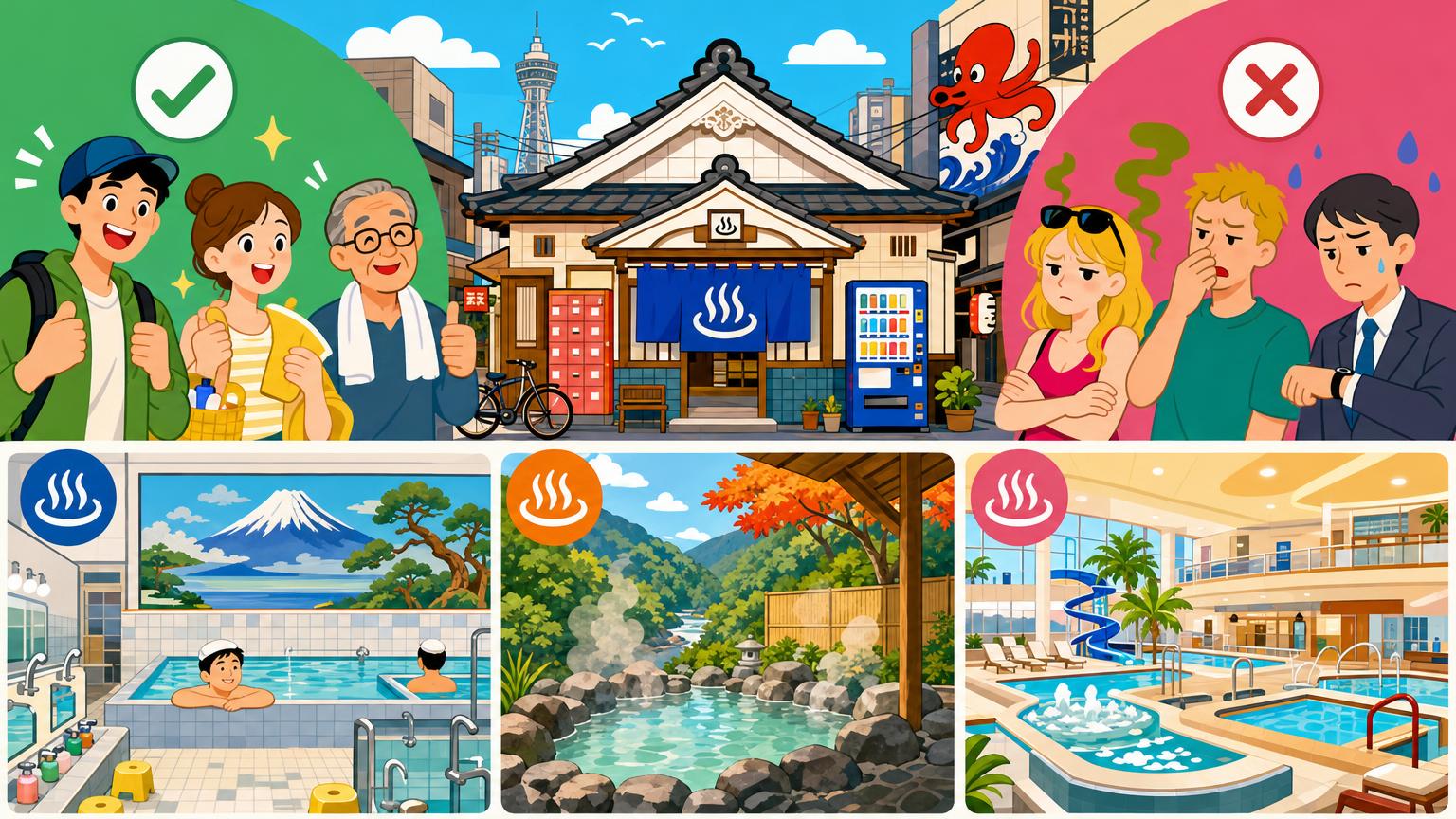
Before you grab your towel and step out into the Osaka night, it’s important to understand the landscape of Japanese bathing. Foreign residents often use the terms sentō and onsen interchangeably, but to locals, this mistake is like confusing a neighborhood diner with a fine dining restaurant. They serve completely different purposes, meet different needs, and operate under entirely different business models. Grasping this distinction is your first step toward understanding the practical mindset of an Osaka resident.
Sento (Traditional Public Bath)
The classic sentō is a deeply local institution. Historically, many Japanese homes lacked private baths, so entire neighborhoods depended on the local bathhouse for daily hygiene. While most modern Osaka apartments now have private bathrooms, the sentō remains a cherished cultural staple. These facilities use regular heated tap water, often boiled with a large wood or gas furnace at the back. They are inexpensive, usually costing around five hundred yen, and intentionally basic. You won’t find plush robes or extensive dining areas here. Instead, you’ll see faded retro tiles, high ceilings designed to let steam escape, and a strong sense of community. The sentō is the place to wash away the sweat from a hard workday without spending much. It’s hyper-local, meaning the person bathing next to you is likely your neighbor, the local butcher, or the grandmother who sweeps the street outside your apartment.
Super Sento (Entertainment Bathhouse)
If the traditional sentō is a local diner, the Super Sento is a large theme park dedicated to relaxation. These sprawling complexes take the basic idea of a public bath and supercharge it with hyper-capitalist flair. Super Sentos offer dozens of different bath types, including carbonated water baths, electric baths that lightly stimulate your muscles, outdoor rock pools, and intense saunas. They are much larger and pricier than a traditional sentō. People don’t just go to a Super Sento to get clean; they go to spend an entire afternoon or evening. These facilities often feature sleeping rooms, massage parlors, extensive comic book libraries, and full-scale restaurants serving cold beer and fried chicken. They are especially popular among families and young couples in Osaka, providing a mini-vacation within the city.
Onsen (Natural Hot Spring)
By strict Japanese legal definition, an onsen must contain water naturally heated by geothermal energy and include specific minerals. While a few natural hot springs exist around the outskirts of Osaka Prefecture, most bathing facilities in the urban center are sentōs. If a downtown Osaka facility claims to be an onsen, they are often trucking in mineral water from rural areas. Onsen culture is fundamentally connected to travel, nature, and seasonal beauty, whereas sentō culture is tied to urban survival, daily routines, and neighborhood gossip.
Essential Sento Etiquette for Foreign Travelers and Residents
Nothing exposes the true character of a society quite like its regulations on public nudity. The rules inside a Japanese bathhouse are strict, unwavering, and deeply rooted in history. However, how these rules are enforced reveals everything you need to understand about the Osaka mindset. In Tokyo, breaking a rule might earn you cold, silent stares and passive-aggressive sighs. In Osaka, breaking a rule will likely prompt an older patron to approach you directly, bluntly correct your mistake in rapid-fire Kansai dialect, and then demonstrate exactly how to do it properly. This is not done out of malice, but rather practical community management. To avoid being reprimanded, you must fully internalize these essential etiquette rules.
Can You Wear Clothes or Swimsuits? (The Naked Truth)
Let’s immediately address the most common source of anxiety for foreign residents. You cannot wear a swimsuit. You cannot wear your underwear. You cannot wear gym shorts. You must be completely, unequivocally naked. For many Westerners, public nudity is strongly linked to vulnerability, sexuality, or discomfort. In the Japanese sentō, nudity is the great equalizer. Once the clothes are off, it does not matter whether you are a wealthy business executive or a struggling artist; you are simply another person seeking warmth in the water. Wearing a swimsuit is not only a breach of tradition but is also considered highly unhygienic. The bathwater is communal, and introducing outside fabrics, detergents, and street sweat into the shared tub is a significant taboo. You must leave your modesty in your locker. Embrace the vulnerability. No one is watching you, no one cares about your body shape, and everyone is focused entirely on their own relaxation.
Step-by-Step Guide: From Shoe Lockers to the Bath
Moving through a sentō requires a certain choreography. When you slide open the front doors, you enter the genkan, the entryway. Here, you must immediately remove your shoes and place them in the small wooden lockers called getabako. You then take the wooden key and step up into the main lobby.
Next, you’ll come across the bandai, the attendant’s booth. In older, retro sentōs, this is literally an elevated wooden platform where an attendant oversees both the men’s and women’s changing rooms to collect entry fees. In more modern facilities, this has been replaced by a standard front desk. You pay your entry fee here, and you can usually purchase small bottles of soap, shampoo, or buy or rent a modesty towel if you didn’t bring one.
From there, you proceed to the datsuijo, the changing room. You find an empty locker, strip off every single piece of clothing, and lock your belongings away. The only items you take into the bathing area are your locker key, your small modesty towel, and your soap.
Before even considering stepping into the large tubs of hot water, you must thoroughly wash your body. You sit on the rows of low stools with plastic basins in front of you, rinse yourself with the showerhead, scrub your body vigorously with soap, and rinse off all the suds. You must be completely clean before entering the shared bath.
Finally, as you slide into the hot water, remember the golden rule about the modesty towel: it must never touch the bathwater. You can place it on top of your head, or set it on the stones beside the bath, but allowing the towel to soak in the communal water is a quick way to get yelled at by the locals.
Are Tattoos Allowed in Osaka Sentos?
The relationship between Japanese bathing culture and tattoos is highly complex, widely misunderstood, and continually changing. For many years, tattoos in Japan have been closely linked to the yakuza, the organized crime groups. To prevent gang members from using public facilities, a nationwide ban on all tattoos was implemented. Signs displaying ‘Irezumi kotowari,’ meaning ‘Tattoos refused,’ are commonly seen. This is where the contrast between Tokyo’s strictness and Osaka’s practicality becomes strikingly evident.
In a large, corporate Super Sento in Osaka, the rules are typically enforced with complete rigor. Whether you have a small butterfly tattoo on your ankle or a large traditional sleeve, you will be asked to leave. The staff are trained to uphold the brand’s family-friendly reputation, and exceptions are not allowed. However, the neighborhood sentōs, which are much more local, operate quite differently. Many of these older bathhouses are family-run and have been serving the same community for generations. Their survival depends on local loyalty rather than corporate regulations.
In Osaka, practicality often outweighs strict rule-following. If you are a polite foreigner living nearby, pay the entrance fee, adhere to hygiene standards, and respectfully keep to yourself, many local sentō owners will overlook your tattoos. They recognize you are not affiliated with any criminal organization. They see a paying guest who respects their space. While it’s wise to remain cautious and prepared for possible refusal, you will discover that the deep neighborhoods of Osaka are much more tolerant and adaptable than the polished tourist areas.
The Osaka Mindset Through the Lens of the Bathhouse
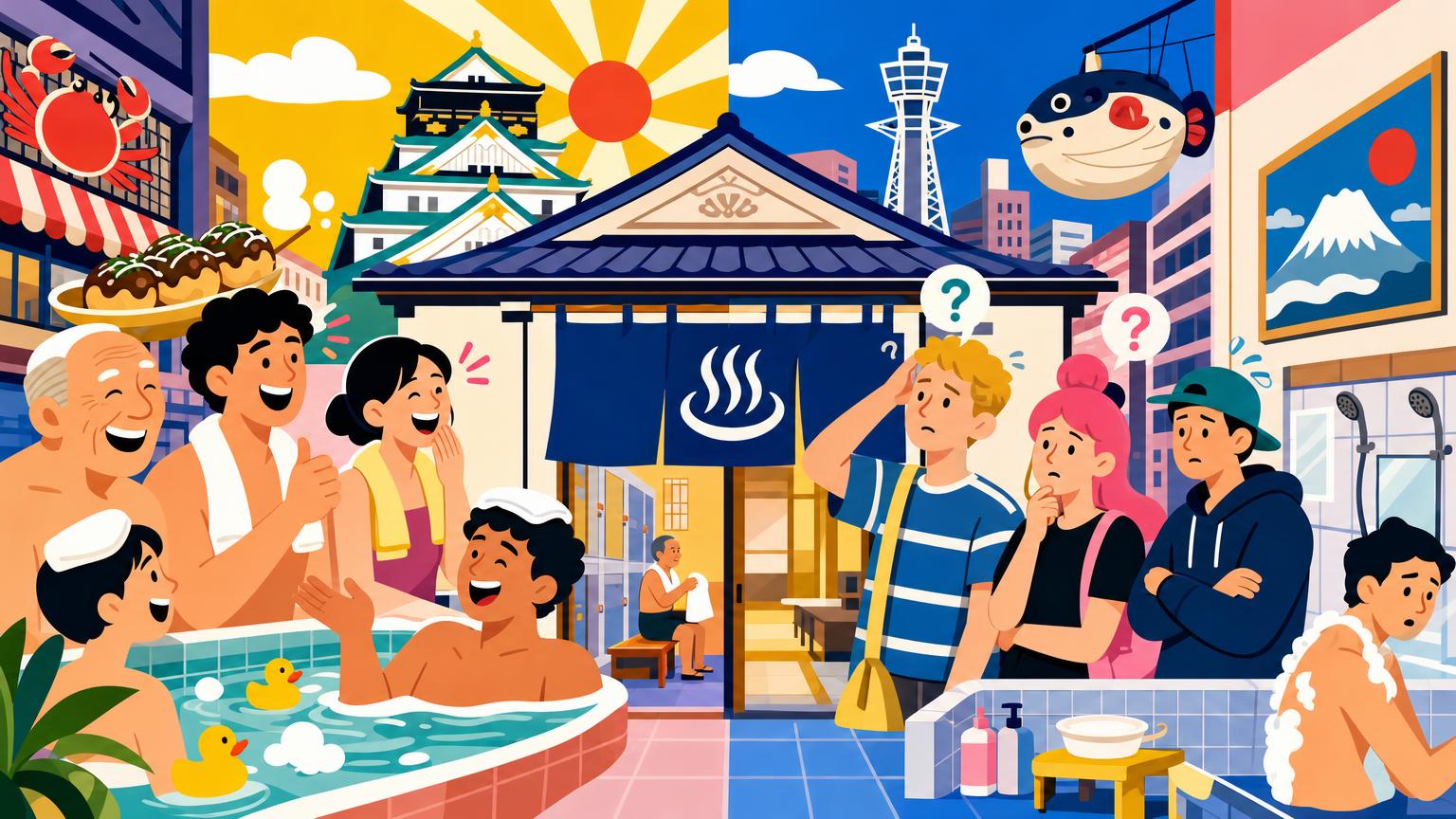
To understand why people from Osaka are considered the most outgoing and approachable in Japan, you need to observe them at the bathhouse. In Tokyo, the sentō is viewed as a private sanctuary. Bathers keep their eyes down, maintain respectful physical distance, and speak only when necessary. The atmosphere is calm, meditative, and deeply solitary.
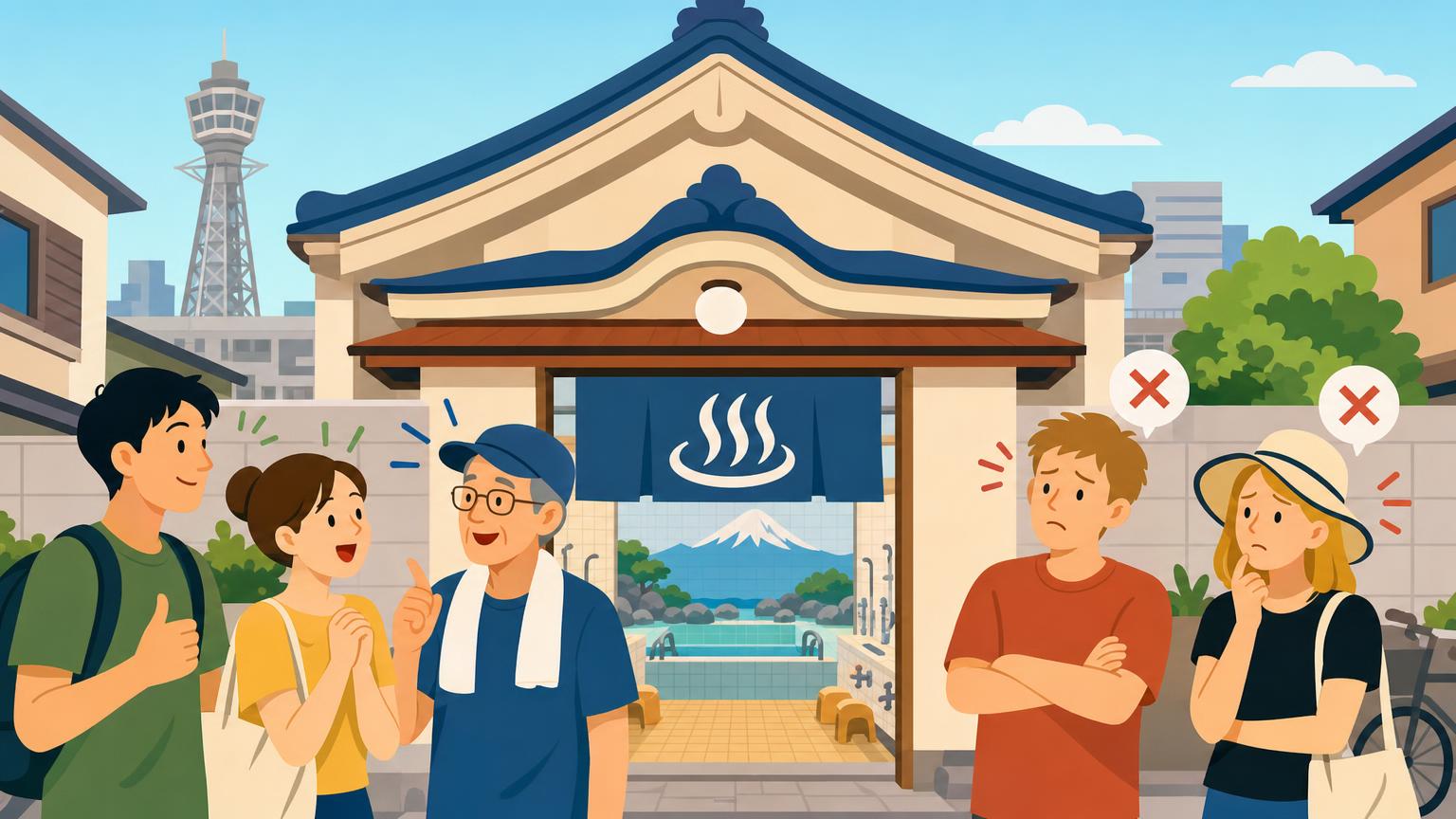
In contrast, Osaka sentōs are loud. They are lively, chaotic social centers where personal space is redefined by community interaction. It’s very common for an older man or woman to start a conversation with a complete stranger while soaking in the hot water. If they notice you are a foreigner, their natural curiosity almost always overpowers their hesitation. They will ask where you are from, why you are in Osaka, and whether you enjoy the local cuisine. They might even vent about the local sports teams or the weather.
This behavior reflects a fundamental aspect of the Osaka mindset: the belief that shared spaces require shared humanity. People from Osaka dislike pretension. They don’t value the stoic, silent endurance sometimes idealized in other parts of Japan. They appreciate connection, humor, and direct communication. When an older woman at the bathhouse tells you the water is too hot today, she’s not merely making casual conversation; she’s inviting you into a communal experience. She acknowledges your shared presence in the neighborhood. If you are someone who fiercely guards privacy and dislikes small talk, the hyper-local Osaka sentō might feel overwhelming. But if you’re willing to embrace the noise, you’ll discover a level of acceptance and warmth that is rare in modern urban life.
Best Traditional Sentos in Osaka for a Retro Vibe
To genuinely experience the authentic atmosphere of a neighborhood bath, you need to move away from the main train stations and explore the residential districts. These sentōs serve as living museums of the Showa era, preserving a lifestyle that is gradually disappearing from the modern Japanese landscape.
Showa-Yu in Higashiyodogawa Ward
Nestled in a quiet residential area of northern Osaka, Showa-Yu represents the quintessential neighborhood bathhouse. As soon as you pass through the traditional sliding doors, you are transported back in time. The facility is run by a younger generation of owners who have passionately committed themselves to preserving sentō culture while making it inviting for modern residents and courteous visitors. The water is crystal clear and heated to a sharply hot temperature that locals claim is perfect for melting away muscle tension. What sets Showa-Yu apart is its vibrant community atmosphere. The walls resonate with the sounds of splashing water and Kansai dialect. It is an excellent spot for a foreign resident to observe the daily flow of an Osaka neighborhood without the overwhelming crowds found in the city center. You will witness grandfathers bringing their grandsons, workers washing off the day’s toil, and a genuine glimpse of unpretentious local life.
Imai-Onsen in Nishinari Ward
Nishinari Ward is historically known as one of the most deeply working-class and gritty neighborhoods in Japan. It lacks the polished glamour of Umeda or the tourist-friendly neon lights of Dotonbori. Yet, it remains the vibrant core of old, unvarnished Osaka. Imai-Onsen is situated right in this intense environment. It is a no-frills, deeply traditional sentō serving local laborers and long-term residents. Visiting Imai-Onsen is not a luxury spa experience; it is an anthropological journey. The baths are extremely hot, the tiles worn from decades of use, and the patrons are the toughest, most authentic Osaka locals you’ll ever encounter. If you respect their space, follow the rules precisely, and offer a polite nod, you will be completely left alone to enjoy the deep, penetrating heat of the water. This is a place that demands respect and rewards it with a true insight into the working-class spirit of the city.
Best Super Sentos in Osaka (Relaxation & Saunas)
Sometimes, a quick neighborhood wash isn’t what you’re after. Sometimes, you want to spend four hours sweating out your stress, alternating between cold plunges and carbonated baths, and finishing the night with a huge bowl of noodles in your pajamas. This is where the Osaka Super Sento truly excels.
SpaWorld in Shin-Sekai
SpaWorld is less a bathhouse and more an architectural fever dream. Nestled in the shadow of Tsutenkaku Tower in the retro Shin-Sekai district, it is a vast, multi-level bathing colosseum. The facility is split into two distinct zones: the European Zone, showcasing baths inspired by ancient Rome, Greece, and a strangely captivating Atlantis, and the Asian Zone, featuring traditional Japanese cedar baths, Balinese resorts, and Persian pools. These zones alternate between men and women monthly. SpaWorld is wildly popular, exceptionally extravagant, and incredibly entertaining. It perfectly embodies Osaka’s bold, flashy, and somewhat gaudy entertainment culture. It is very welcoming to foreign tourists and residents, with clear English signage and a simple entry system. However, their tattoo policy is extremely strict, and anyone with ink will be denied entry or asked to leave immediately.
Rinku no Yu near Kansai Airport
If you live in southern Osaka or want a place to relax before a long international flight, Rinku no Yu is a masterclass in modern relaxation. Situated near the Rinku Town outlet malls just across the water from Kansai International Airport, this Super Sento offers a more subdued, modern aesthetic compared to SpaWorld. It boasts expansive outdoor rock baths where you can enjoy the ocean breeze while soaking in hot water. The sauna facilities are top-notch, and the relaxation lounges feature reclining chairs with personal televisions. It represents the modern evolution of the Japanese bathhouse: clean, efficient, highly organized, and designed for optimal stress relief. While it lacks the gritty charm of a local neighborhood spot, it more than compensates with sheer comfort.
Tattoo-Friendly Sentos in Osaka
For foreign residents with tattoos, finding a place to bathe without worry can sometimes feel like a part-time job. Fortunately, Osaka’s pragmatic spirit means there are areas of the city where tattoos are not only tolerated but fully accepted.
Tsuruhashi Sento Culture
Tsuruhashi is Osaka’s vast, bustling Koreatown. It’s a labyrinth of narrow alleyways filled with the aroma of roasting meat, kimchi vendors, and lively local markets. The sentōs around the Tsuruhashi and Ikuno neighborhoods are well known for their relaxed attitude towards tattoos. This area boasts a long tradition of multiculturalism and a strong independence from mainstream Japanese corporate norms. The bathhouses here are managed by tough, practical local families who prioritize your manners over the art on your skin. If you step into a traditional bathhouse in this district, you’ll likely encounter a diverse group of patrons, including older locals with traditional Japanese body suits, young residents with modern tattoos, and foreign workers all sharing the same hot water harmoniously.
Irifune Onsen in Nishinari
Irifune Onsen is perhaps one of the most well-known tattoo-friendly neighborhood baths in the city. Situated in the Nishinari district, it has adopted an open policy welcoming everyone, regardless of their background or tattoos. The owners believe the public bath should be a place of equality, and they have fashioned an environment that is extremely comforting for foreigners who have grown tired of being denied entry. The facility itself is a beautiful example of a classic sentō, featuring well-maintained baths, strong shower water pressure, and a warm, inviting atmosphere. It has become a cherished refuge for the tattooed community in Osaka, demonstrating that traditional sentōs can evolve with modern values without losing their historic essence.
How to Find Sento Hotels in Osaka
If you are a foreigner moving to Osaka or visiting to explore neighborhoods, jumping straight into a hyper-local sentō might feel overwhelming. A great transitional option is to stay at a Sento Hotel. These accommodations offer large, traditional-style public baths exclusively for their guests.
Unlike traditional ryokans, which can be extremely expensive, or capsule hotels, which tend to be cramped, many modern business hotels in Osaka have started including sentō-style bathing areas on their ground floors or rooftops. Places like the Dormy Inn chain or local boutique hotels provide an ideal environment. Since the baths are limited to hotel guests, the atmosphere is generally quieter and more forgiving of etiquette missteps. You can practice showering while seated on a stool, navigating the locker room naked, and soaking in a hot tub without the pressure of an entire neighborhood watching. This helps you build the confidence needed before eventually stepping into the real, lively, and chaotic world of street-level Osaka sentō.
The Post-Bath Ritual: Cold Milk and Chill
The sentō experience doesn’t end once you dry off and put your clothes back on. Before stepping back out onto the streets of Osaka, there is a revered, eagerly awaited ritual that must be followed in the lobby. The deep heat of the bath significantly raises your core body temperature. When you enter the changing room, you’ll feel a profound blend of physical exhaustion and absolute cleanliness.
To balance the intense heat, you head straight to the small, brightly lit glass refrigerator typically located near the bandai or the lobby seating area. Inside are glass bottles of milk—not just any milk, but ice-cold, perfectly chilled dairy that serves as the ultimate post-bath recovery drink. You have several classic options: plain white milk, richly sweet coffee milk, or the nostalgically sugary fruit milk.
You purchase your bottle, peel off the paper lid, place one hand firmly on your hip, and tilt your head back to drink it in a few long, uninterrupted gulps. This particular pose—hand on hip, chugging cold milk—is an iconic part of Japanese pop culture, deeply ingrained in the sentō routine. As the cold liquid cools your body, you sit on the lobby benches, watch the ceiling fans slowly spin, and listen to the buzz of a chaotic variety show or a Hanshin Tigers baseball game on the television. You nod at the local grandmother who scolded you earlier, and she responds with a small, knowing smile.
This quiet moment in the lobby is when you truly grasp Osaka. It’s a city that strips away pretension, pushes you beyond your comfort zone, and then welcomes you with an ice-cold bottle of coffee milk. If you can endure the heat, the nudity, and the straightforward honesty of the local bathhouse, you can handle anything this remarkable city throws your way.