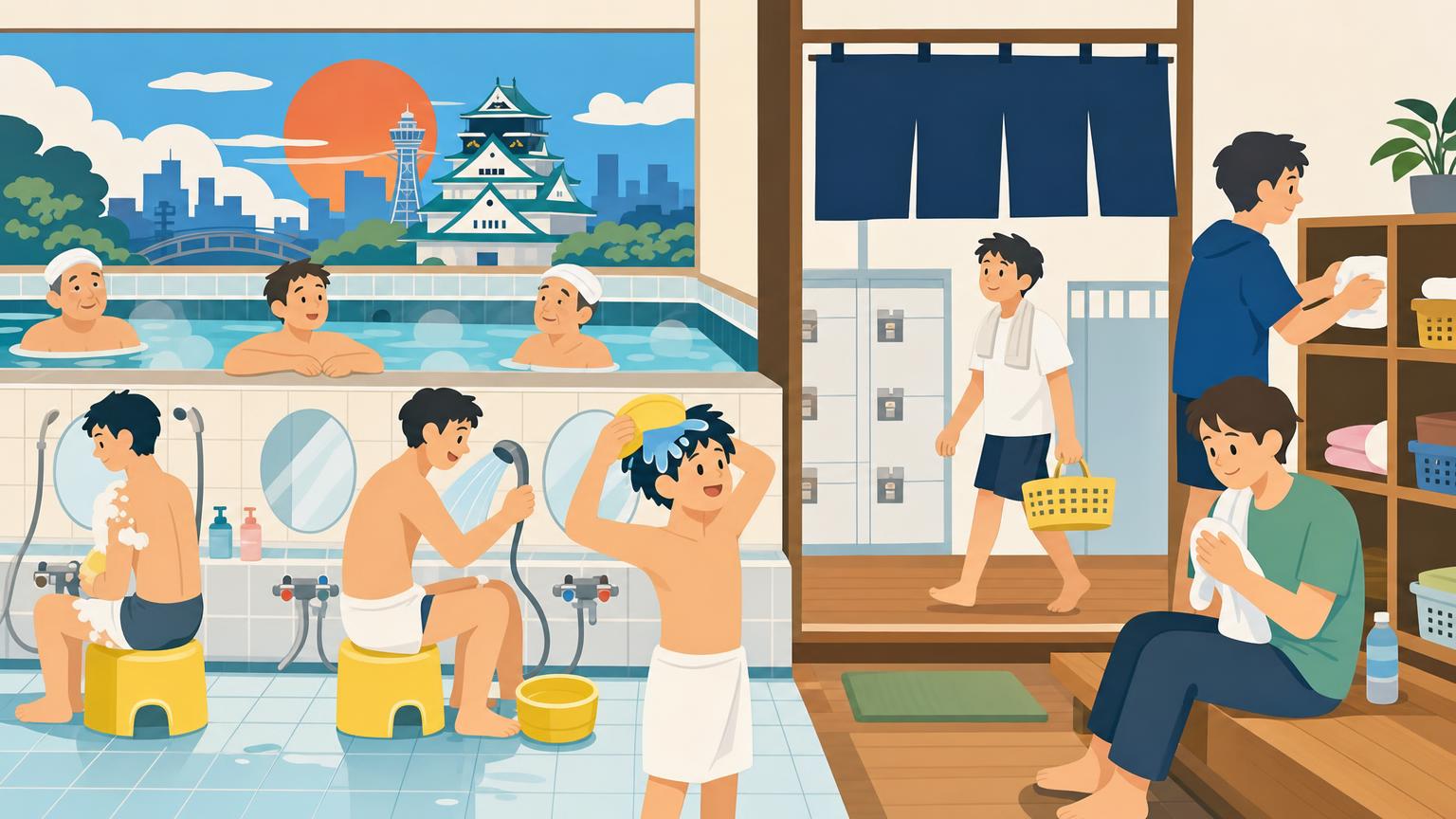
Life in Osaka moves at a frantic, vibrant pace. You hear the clatter of bicycles weaving through covered arcades. You smell the rich, savory smoke of takoyaki grills lingering in the evening air. You feel the relentless, fast-walking energy of millions commuting through the sprawling underground labyrinths of Umeda and Namba. The city is a machine fueled by commerce, comedy, and carbohydrates. But when the sun dips below the neon skyline, another side of Osaka awakens. It glows a warm red in the quiet residential alleys. It looks like a single, elegant character painted on a fabric curtain: ゆ (yu). This is the neighborhood sentō. The public bath. The great social equalizer of the Kansai region.
For foreign residents settling into life in Japan, the public bathhouse often seems like an intimidating fortress. The prospect of stripping down in front of strangers, navigating unspoken rules, and deciphering complex Japanese signs can trigger serious anxiety. Many expats live here for years without ever stepping foot inside one. But missing out on the sentō means missing out on the very heartbeat of Osaka.
Tokyo might be polite, quiet, and reserved, with its bathhouses serving as places for silent, solitary reflection. Osaka is different. Osaka is loud. Osaka is inquisitive. Osaka is deeply, wonderfully communal. In this city, personal space is treated as a gentle suggestion rather than a strict law. The sentō is where titles are dropped, where the daily hustle is scrubbed away, and where true, unfiltered local life happens. You might find yourself sitting next to a retired merchant complaining about the Hanshin Tigers baseball team, or an old woman offering you unprompted but genuine advice on the best local butcher.
To truly understand the people of this city, you have to bathe with them. This guide will walk you through the culture, the practical differences, the best spots to visit, and the exact etiquette you need to confidently step through those sliding glass doors.
Discovering the Charm of Sento in Osaka
The concept of “hadaka no tsukiai” roughly translates to “naked communion” and serves as the fundamental philosophy behind Japanese bathing culture. When you remove your clothes, you shed your social status—you are no longer a boss, a subordinate, a tourist, or a local; you become simply a human being seeking warmth.
In Osaka, this idea flourishes with a distinctive regional character. Historically known as Japan’s merchant capital, the city was home to fast-talking traders who needed to build trust quickly. That tradition endures in the relaxed, barrier-free communication you’ll encounter here. While in a Tokyo sentō, people might politely avert their gaze if you seem lost to give you privacy, in an Osaka sentō, someone will likely come up to you, point at a bucket, and explain exactly what to do. Though it might seem blunt, it arises from a genuine sense of community warmth.
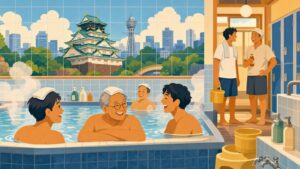
Additionally, the architecture of Kansai bathhouses often contrasts with those in the Kanto (Tokyo) region. In Tokyo, bathtubs are usually positioned against the back wall, beneath a large painting of Mount Fuji. In Osaka, however, the bathtub is frequently placed in the very center of the room. People sit in a circle around the water’s edge, facing inward. This design naturally encourages eye contact and conversation. The sentō functions as the original social network—a place where neighborhood gossip is shared, local news discussed, and where the community looks out for its elderly members.
Onsen vs. Sento vs. Super Sento: What is the Difference?
Before exploring specific locations, it’s important to understand the type of facility you are actually entering. The terminology can be confusing, but the legal and practical distinctions are clear.
- Onsen (Natural Hot Spring): According to strict Japanese legal standards, an onsen must consist of geothermally heated water sourced from a natural spring and must contain specific naturally occurring minerals. Osaka is an urban concrete jungle, so although genuine natural onsens exist within city limits, they require deep drilling.
- Sento (Public Bathhouse): This is the traditional neighborhood bathhouse. The water is ordinary tap water heated by a boiler, although some add bath salts or herbal blends. The key characteristic of a true sentō is that it serves as a public health facility. Historically, because many homes lacked baths, the government strictly regulates the entrance fee. Throughout Osaka prefecture, the price of a standard sentō is fixed. They are small, nostalgic, and closely tied to the local community.
- Super Sento (Entertainment Bathhouse): These are large, modern complexes. They are privately owned entertainment venues, not public health facilities. They offer dozens of different tubs, carbonated baths, open-air baths (rotenburo), huge saunas, cold plunges, and entire floors dedicated to dining, massage, and comic book reading. Being private entertainment spaces, they are not subject to government price caps, and their entry rules are much stricter.
Best Sentos and Public Baths to Visit in Osaka
Whether you seek the nostalgic charm of a neighborhood tub or the all-day indulgence of a mega-complex, Osaka has it all. Here are the most notable and convenient spots for foreign residents and long-term travelers to cleanse city grime away.
Tennen Onsen Naniwa no Yu
Situated in the northern part of the city, close to the bustling areas of Umeda and Tenjinbashisuji, this facility blends the local bath experience with a super sentō. What distinguishes Naniwa no Yu is its vast rooftop open-air bathing area. Because it is located near the flight path of Itami Airport, you can relax in a tub of natural, mineral-rich hot spring water while watching commercial jets quietly glide across the night sky above. It offers a surreal and highly urban bathing experience. The facility includes micro-bubble baths, saunas with varying temperatures, and exceptional dining options. It is easily accessible yet maintains strict private facility rules.
SpaWorld
If subtlety is what you want, look elsewhere. SpaWorld in the Shinsekai district is the grand, flamboyant embodiment of Osaka’s love for spectacle. It is a vast, multi-story bathing theme park divided into two distinct zones: the European Zone and the Asian Zone. Access to these zones alternates monthly for men and women. One month, you might be soaking in a replica of an ancient Roman bath adorned with marble statues; the next, you could be sitting in a Japanese cypress tub overlooking a reconstructed traditional garden. It is loud, unapologetically kitschy, and incredibly fun, operating as a full-day resort.
Rinku-no-Yu
For those living a transient expat life or preparing for a long-haul flight, Rinku-no-Yu is a strategic gem. Located in Rinku Town, just one train stop from Kansai International Airport (KIX), it serves as the perfect pre-flight or post-flight sanctuary. The facility boasts expansive open-air baths and a highly popular rock salt sauna. While soaking outdoors, you can watch the giant Rinku Ferris wheel slowly turning against the coastal skyline. Modern, clean, and well-equipped for travelers with luggage, it offers a final taste of Japanese relaxation before heading to the departure gates.
Showa-yu
Nestled in Osaka’s Awaji neighborhood, Showa-yu embodies the true spirit of traditional sentō culture. It is a classic neighborhood bathhouse, lovingly preserved and updated by a younger generation of owners. Inside, you’ll find the traditional wooden lockers, brightly tiled walls, and steaming central bathtubs that are hallmarks of the Kansai style. What makes Showa-yu especially impressive for the international community is its progressive, welcoming atmosphere. They provide multi-lingual guides, friendly explanations, and a community-first mindset, proving that traditional does not mean exclusive.
Tattoo-Friendly Sentos in Osaka for International Travelers
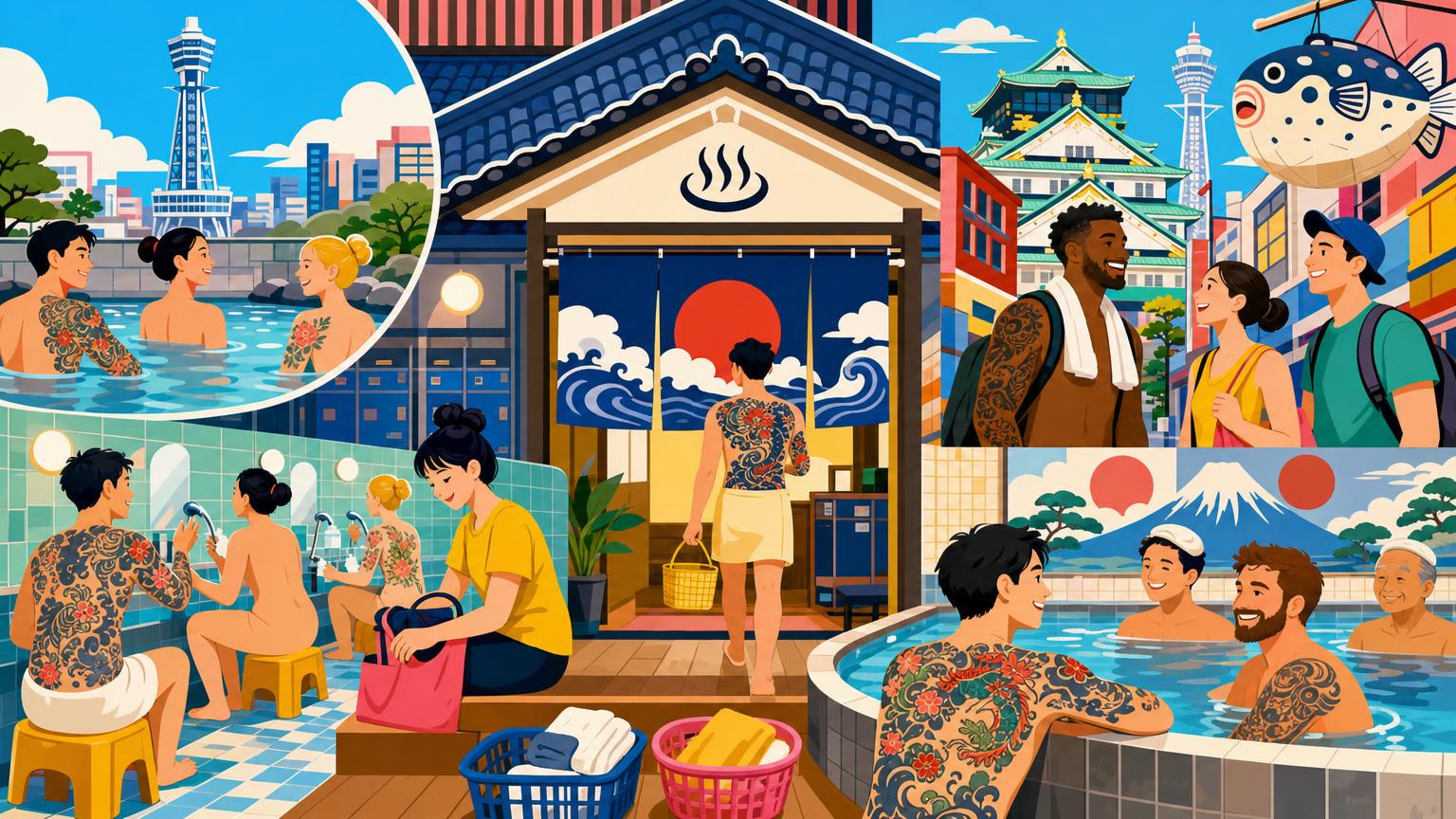
The biggest obstacle preventing foreigners from enjoying Japanese bathhouses is the strict tattoo ban. For many years, tattoos in Japan have been closely linked to organized crime groups. To exclude these elements, private businesses imposed blanket bans on all tattoos. However, the situation in Osaka is more complex, and you don’t have to hide away if you have body art.
The key rule to remember: Super Sentos and private resorts almost always prohibit tattoos. Places like SpaWorld and Naniwa no Yu enforce strict policies, and you will be asked to leave if ink is visible, regardless of your nationality or the tattoo’s artistic intent. Covering tattoos with bandages is rarely allowed at these large complexes.
On the other hand, neighborhood Sentos are a different matter. Since traditional sentos are considered public hygiene facilities subsidized by the government, they cannot legally refuse service based on appearance or tattoos. This means that almost any small, locally run sentō in Osaka is effectively tattoo-friendly.
Showa-yu in Awaji is well-known for being open and welcoming to tattooed visitors from around the world. Another great choice is Radium Onsen near Shinsekai, which features a retro neon sign and a relaxed local crowd that doesn’t mind tattoos. When unsure, look for small, independent baths marked with the classic ゆ sign. You will be welcomed, treated like a local, and able to bathe without fear of being asked to leave.
Step-by-Step Sento Etiquette: How to Bathe Like a Local
Anxiety disappears once you know the script. The sentō rules aren’t meant to be restrictive; they are practical guidelines to maintain a clean and harmonious communal space. Follow these steps, and you’ll appear like an Osaka regular on your very first visit.
What to Bring with You
While super sentos provide everything, a neighborhood sentō expects you to bring your own supplies. Pack a small bag with the essentials: a small modesty towel (about the size of a hand towel), a larger bath towel for drying off, your own shampoo and body wash, and a change of clean underwear. Many local spots sell small soap bottles and rent towels for a few hundred yen, but bringing your own is the local custom.
The Entrance and Changing Room (Datsuijo)
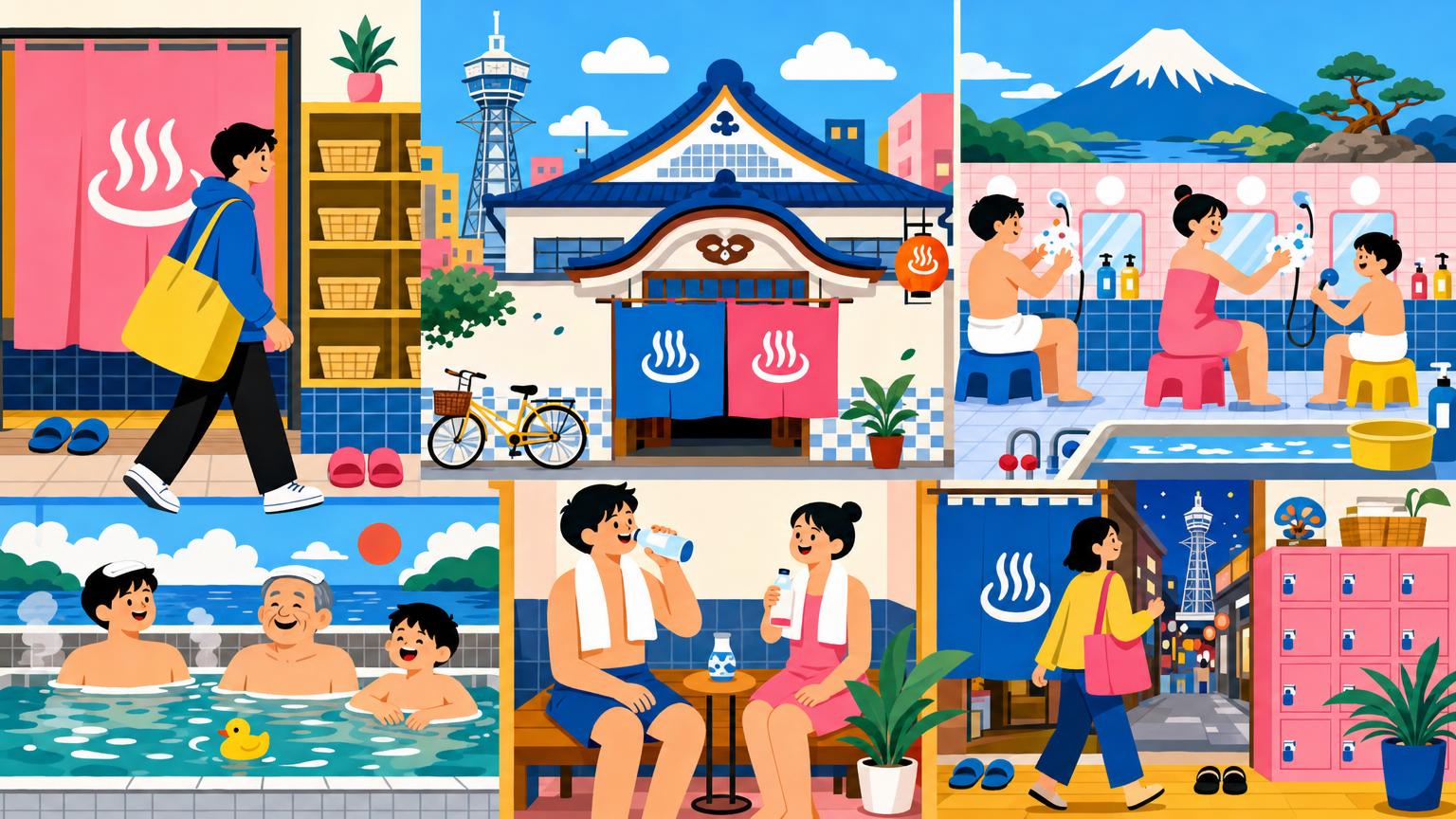
Walk through the noren (split curtains) at the entrance — red for women, blue for men. Immediately remove your shoes and put them in the small wooden lockers; take the wooden key with you.
Approach the bandai, the attendant’s booth, to pay your entrance fee. At modern sentos, you might first buy a ticket from a vending machine.
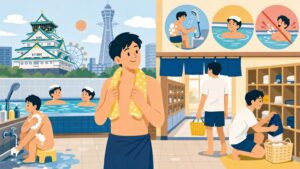
Enter the changing room, called the datsuijo. Find an empty locker and strip completely. Place everything, including your large bath towel, inside the locker. The only items you bring into the bathing area are your small modesty towel and your soap.
Important rule: Your smartphone ceases to exist here. Do not take it out or check messages. Using a camera in the changing room will get you immediately expelled and may lead to police involvement.
Golden Rules of Washing and Soaking
Open the door to the bathing area; the humid, floral, soapy steam will greet you. Do not proceed directly to the bathtub — that’s the cardinal sin of the sentō.
Find an empty washing station, take a small plastic stool and bucket, and sit down. Never stand while showering, since splashing water can disturb others seated nearby. Rinse your body completely, scrub with soap, and wash your hair. You must be entirely clean before entering the communal bath.
After washing, rinse off all soap thoroughly. Clean your stool and bucket with hot water and leave them tidy for the next guest.
Now approach the bath. The water will likely be hot—around forty degrees Celsius. Enter slowly.
Important rule: Your small towel must never touch the bathwater, as it is considered dirty. You can fold it and rest it on your head or place it on a dry rock near the tub’s edge. If it accidentally falls into the water, wring it out outside the tub immediately.
If you have long hair, tie it up securely. Floating hair in the communal tub is strongly discouraged.
The Post-Bath Tradition (Milk and Relaxation)
Once you’re fully relaxed and warmed through, step out of the tub. Before returning to the changing room, use your damp, tightly wrung-out small towel to wipe your entire body to avoid dripping water on the floor.
At your locker, dry off completely with your large towel, get dressed, and head back to the lobby.
In Osaka, the experience isn’t complete until you take part in the sacred post-bath ritual. Find the glowing vending machine or refrigerator near the attendant and buy a glass bottle of cold milk. Whether it’s plain, coffee, or fruit milk, you must stand with one hand on your hip and drink it down. The icy milk’s contrast against a body warmed by the bath is one of the greatest simple pleasures in Japanese daily life.
Frequently Asked Questions about Osaka Sentos
Even with a step-by-step guide, foreign residents often have lingering questions about the unspoken social customs of the bathhouse.
Can I wear a swimsuit, underwear, or a towel in the water? Absolutely not. The rule is no clothing at all. Japanese bathing culture depends on the absolute cleanliness of the water. Swimsuits retain dirt, detergent, and sweat. Wearing anything in the water is considered very unsanitary. You must fully embrace the naked experience.
Do I need to shower again after soaking in the tub? It depends on the facility, but generally, no. At a natural onsen or a sentō with mineral salts, rinsing off afterward will wash away the water’s moisturizing benefits. However, if the sentō water is heavily chlorinated, a quick rinse at the shower station before drying off is perfectly acceptable.
Will people stare at me? If you are visibly foreign, you might receive a few curious glances, especially in a quiet residential area. But in Osaka, this curiosity is rarely unfriendly. They are not judging your body; they’re usually just surprised to see a newcomer at their local spot. If you follow proper washing etiquette, those stares will soon turn into nods of respect.
What if the water is too hot? Osaka sentō water can be intensely hot, often made for older locals who enjoy a deep, burning soak. Don’t jump in right away. Use a bucket to splash hot water onto your feet, legs, and shoulders first. This practice, called kakeyu, helps your body adjust to the heat. If it’s still too hot, don’t force it. Stick to lukewarm tubs or enjoy the sauna. Never add cold tap water to the communal bath to cool it, as this will anger locals who prefer the heat.
Living in Osaka means embracing the messy, loud, and deeply human side of the city. The sentō embodies this better than any neon sign in Dotonbori or towering castle. It’s a place of vulnerability, cleanliness, and community. Grab your towel, find the glowing ゆ sign in your neighborhood, and step inside. The water is waiting.