Your apartment in Osaka has a perfectly functional bathroom. It’s a sleek, modern unit bath, a testament to Japanese efficiency. The water pressure is fantastic, the temperature is digitally precise, and it’s entirely, completely yours. So why, every evening around dusk, do you hear the clatter of plastic washbowls and the shuffle of sandals heading down the street? Why do your neighbors, young and old, bypass their own private baths to gather under the curved roof and steaming chimney of the local sentō, the public bathhouse? This isn’t a throwback or a novelty. This is a vital, living artery of neighborhood life in Osaka. For anyone trying to understand the city’s pulse beyond the neon glare of Dotonbori, the answer to “what is Osaka really like?” isn’t found in a castle or a skyscraper. It’s found in the steam, the chatter, and the unwritten rules of these communal spaces. This is where you graduate from being a resident to being a neighbor. It’s a dive into the deep end of the local culture, a place where the city’s famously direct, pragmatic, and communal spirit is on full display. Forget your tourist map; the real navigation starts here.
Additionally, if you’re looking to broaden your immersion in Osaka’s vibrant urban scene, our guide to riding a bicycle in Osaka offers an exciting perspective on local mobility and neighborhood exploration.
Beyond the Steam: The Sentō as a Social Hub
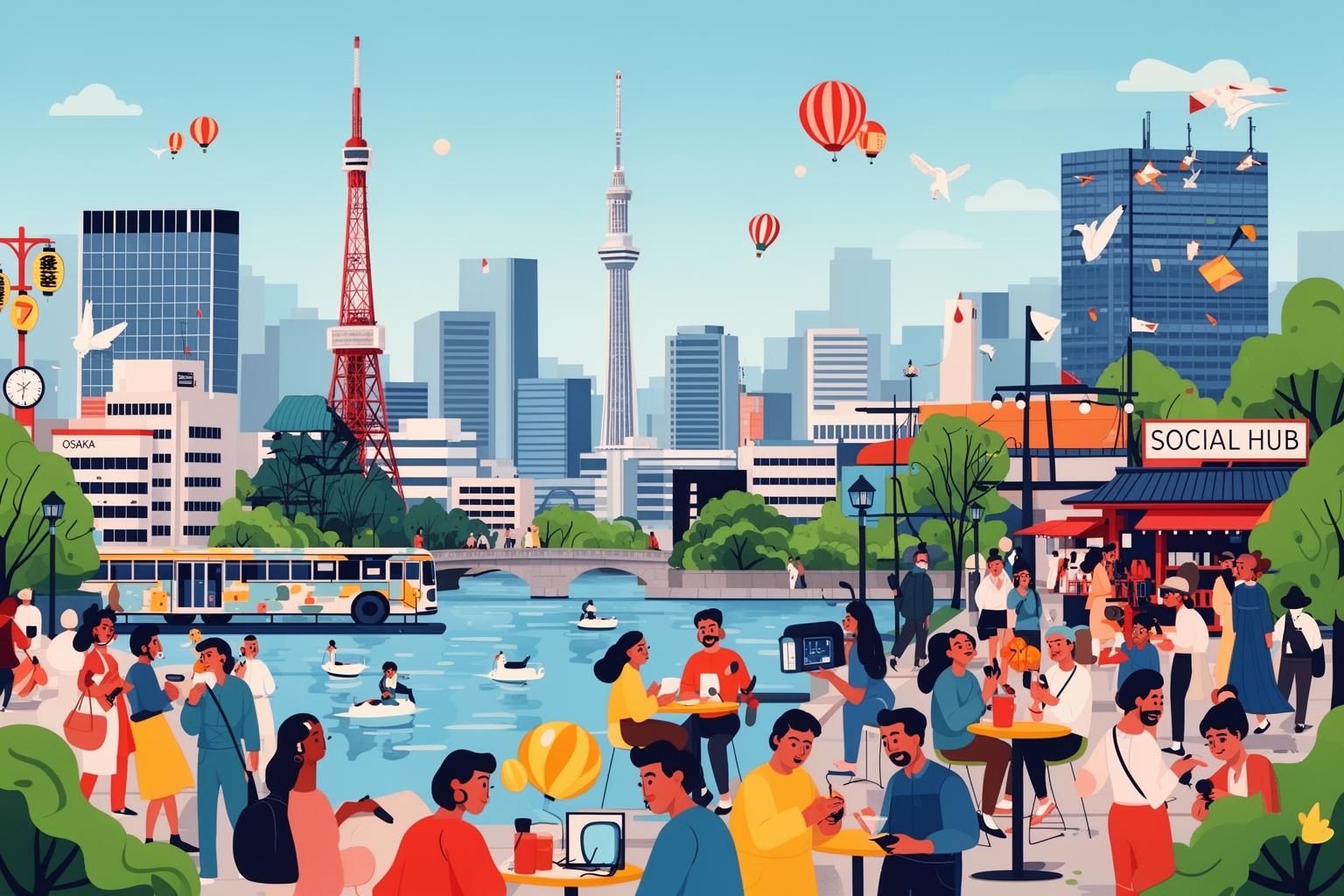
Step through the noren curtains of a neighborhood sentō and you enter a space governed by a different logic than the outside world. This isn’t a spa, nor an onsen resort meant for peaceful reflection. An Osaka sentō serves as the community’s living room, newsroom, and therapy couch all in one. The air is heavy with steam and the aroma of bar soap and shampoo. The prevailing sound isn’t soothing music, but a symphony of echoes: water splashing from faucets, the sharp slap of a wet towel on tile, and layered conversations in the rich, musical cadence of Kansai-ben. Here, the idea of hadaka no tsukiai—literally, “naked communion”—is embraced with natural, everyday sincerity. Status, profession, and wealth are left in the locker along with your clothes. In the bath, you are simply another body, another neighbor. This contrasts sharply with the more reserved social etiquette you might find in Tokyo. In a Tokyo bath, silence often prevails. In Osaka, the chatter never stops. Old men, submerged up to their necks, debate passionately about the Hanshin Tigers’ latest game. A group of obachan (grandmas) exchange gossip and compare daikon radish prices at various supermarkets. A father patiently teaches his young son how to rinse his bucket properly. Here is where you learn who’s getting married, whose cat just had kittens, and which local ramen shop offers a new seasonal special. It’s the original social network, powered by hot water and close proximity. Foreigners often mistake this lively atmosphere for a lack of decorum, but it’s quite the opposite. It signals a healthy, functioning community. The noise is the sound of connection, a stark contrast to the often silent, anonymous life of living in a huge metropolis.
The Rhythm of the Wash: Navigating Sentō Etiquette
For someone new, the apparent disorder of a busy sentō can feel overwhelming. There are rules, but they aren’t displayed on a large sign. Instead, they are ingrained in the very essence of the experience—a shared choreography that everyone seems to know instinctively. Learning this rhythm is your first true challenge in blending into the local culture. It’s not about being perfect; it’s about showing that you grasp the fundamental concept: this is a communal space, and your behavior impacts everyone.
Before You Dip: The Kakeyu Ritual
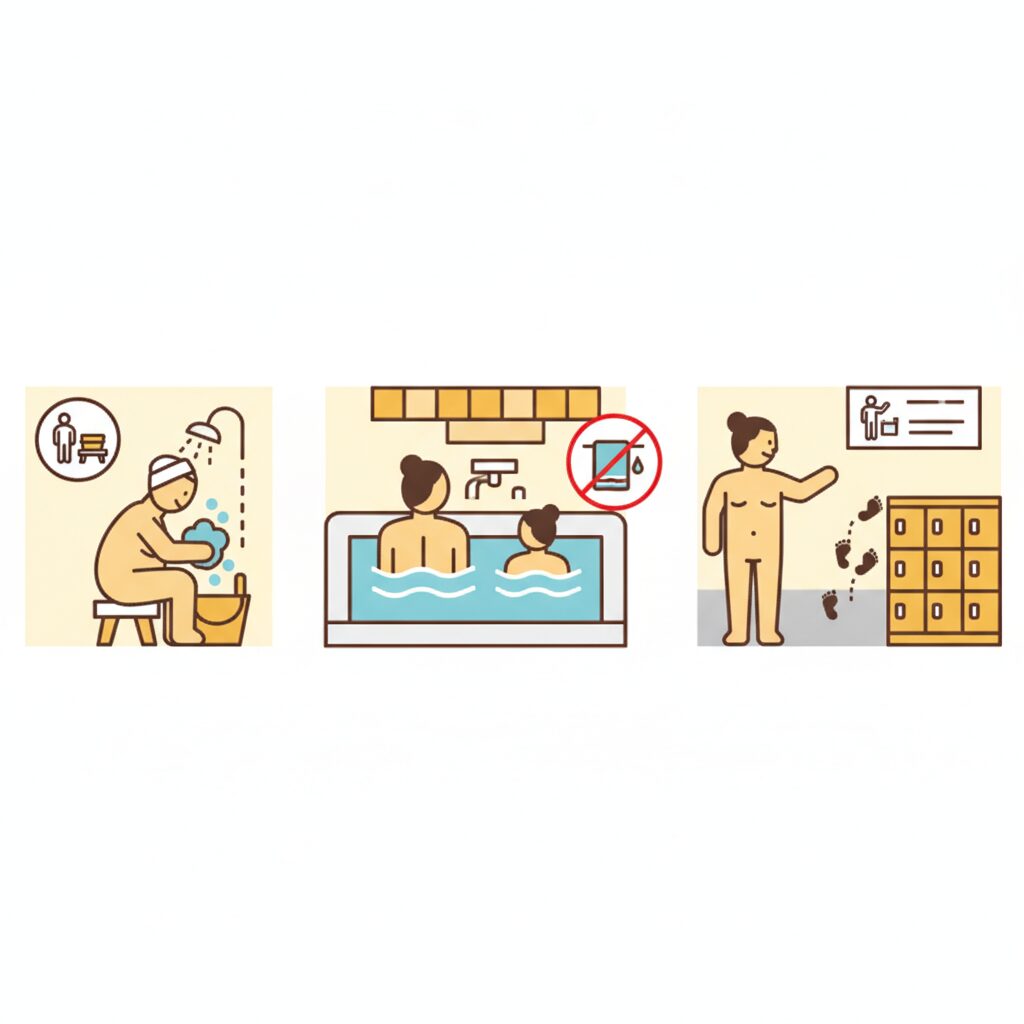
Your journey starts once you’ve undressed and stored your belongings in the changing room (datsuijo). You’ll enter the bathing area carrying only your small towel and washing items. Before you even consider entering the invitingly hot tubs, your first stop is the washing area, called the 洗い場 (araiba). Find an empty stool and faucet. The initial, and most important, step is the kakeyu ritual. Using a bucket, scoop hot water from the basin or use the shower head to pour water over your entire body, especially your lower half. This isn’t simply a symbolic rinse; it’s a vital rule of hygiene and respect. You wash away the outside world before entering the communal water. Skipping this step is the biggest mistake a newcomer can make. Afterward, you must thoroughly wash your body and hair with soap. Only once you are completely clean are you welcome in the main baths. This ritual highlights a fundamental Japanese, particularly Osakan, value: don’t cause trouble or inconvenience (meiwaku) for others. Your cleanliness contributes to the comfort of the community.
The Art of Soaking: Bath-Time Behavior
Once you’re clean, the tubs await. There may be several options: a blisteringly hot one, a milder one, a jacuzzi-style jet bath (jetto-buro), and possibly the famed denki-buro (electric bath), which passes a low-voltage current through the water. The etiquette here centers on spatial awareness and quiet respect. The main rule: your small towel must never touch the bath water. It’s considered unclean. Most people fold it neatly and place it on their head, which also helps prevent dizziness from the heat. Others leave it on the bath’s edge. Splashing, swimming, or roughhousing is naturally prohibited. When using the jet baths, be considerate of others waiting; there is an unspoken line. Stay for a reasonable time, then move on. In Osaka, people are less likely to wait silently and patiently compared to other areas in Japan. If you’re monopolizing a spot, you might hear a gentle but direct “Chotto, edesuka?” (“Excuse me, mind if I?”), signaling it’s time to move. Don’t take this personally. This directness is typical of Osaka. It’s not rude; it’s straightforward communication meant to keep things fair and flowing for everyone. They treat you like a local who should know the rules, which is a sign of acceptance.
After the Soak: The Drying-Off Dance
When you’ve finished soaking, one last etiquette step awaits. Before returning to the changing room, you should dry off as much as possible using your small, damp wash towel. Wring it out and wipe down your body thoroughly while still standing in the tiled bathing area. The aim is to avoid dripping water onto the datsuijo floor. A wet changing room floor is inconvenient for everyone; it dampens socks and clean clothes. This small act of consideration is very important. It is a final gesture that says, “I respect this shared space and the people who use it.” It’s a simple, practical display of the community spirit that forms the foundation of life in an Osaka neighborhood. You’re not just cleaning your body; you’re helping maintain a communal sanctuary.
Reading the Local Air: What the Sentō Reveals About Osaka
The daily routine of the sentō offers a glimpse into the spirit of Osaka. The behavior of its people—the mix of lively conversation, strict rules, and practical sensibility—captures the city’s distinct character, shaped by its history as a center for merchants and artisans.
Practicality and Community Over Formality
Osaka has always prioritized results over ceremony. It’s a business-oriented city where tasks are done efficiently and without fuss. The sentō perfectly represents this ethos. It’s a highly functional space. For just a few hundred yen, you gain unlimited hot water, a social setting, and a deep sense of relaxation. There’s no elaborate ritual or quiet reverence like what you might find at a Kyoto temple. It’s straightforward and inclusive. This practicality explains why people aren’t shy about correcting you directly. It’s not meant to embarrass but to uphold the communal standards so everyone can enjoy the bath. This sharply contrasts with Tokyo’s preference for maintaining surface harmony (tatemae), where people might be annoyed but avoid direct confrontation, choosing instead to complain privately later.
The “Akan Yaro!” Culture of Mutual Responsibility
Osaka shows little tolerance for rule-breakers, not out of rigidity but because the rules are understood as a shared agreement benefiting everyone. If someone notices you about to step into the tub without washing, you’ll likely hear a firm “兄ちゃん、あかん!” (Niichan, akan! – “Hey buddy, don’t!”). This can be startling to foreigners used to more indirect communication. But it’s important to grasp the mindset here. It’s not an attack—it’s community self-regulation, a way of saying, “We all share this space and have a duty to keep it enjoyable for everyone.” In Osaka, direct feedback is a way of including you. They’re not excluding you; they’re welcoming you by teaching local customs. Being ignored marks you as an outsider. Being corrected, even brusquely, means you’re on the road to becoming one of them.
From Neighbors to Nakama: Building Your Local Network
When you make the sentō a regular habit, something special happens. The initial anonymity melts away. The old man who grunted at you during your first visit will begin to give you a subtle nod. The woman at the front desk, the bandai, will remember you and greet you warmly with a “Maido!” (Osaka’s classic merchant greeting). People will start chatting with you: “It’s getting cold, isn’t it?” “Did you catch the game last night?” This is how you build your local network and become part of the neighborhood’s fabric. The sentō becomes your anchor—a place to ask for advice, practice Japanese in a relaxed setting, and forge the casual, friendly relationships (nakama) that make a sprawling city feel like a close-knit community. These connections turn a foreign city from merely a place to live into a place to truly belong.
Your First Step into the Neighborhood’s Living Room
Don’t be deceived by your perfectly good private bathroom. While it provides solitude, the sentō offers something far more valuable to a newcomer: a sense of community. It invites you to participate, not merely observe. Be courageous. Take a small towel, some soap, and a few coins, and head down the street to that steaming chimney. Expect to make mistakes—you probably will. You might forget to rinse your stool or nearly enter the bath designated for the opposite gender (look for the blue 暖簾 for men, red for women). But the locals will guide you, often with a laugh and a firm instruction. Each visit becomes a lesson in the unspoken language of Osaka, teaching you respect for shared resources, the charm of casual connection, and the direct, warm-hearted nature of its people. Immersed in that hot water, surrounded by the sounds of a relaxed neighborhood, you’ll realize you’re not just washing your body—you’re washing away the alienation of being a stranger in a new city.