When I first moved to Osaka, I thought I understood cities. I’d navigated the subways of Tokyo, the trams of Melbourne, the sheer pedestrian chaos of other global hubs. I figured Osaka would be more of the same: a complex web of train lines and bus routes that you master with an app and a transit card. I was wrong. The true circulatory system of this city, the lifeblood that flows through its wide boulevards and impossibly narrow alleyways, isn’t made of steel rails. It’s made of steel frames, rubber tires, and wicker baskets. The true king of Osaka transit is the humble bicycle.
It’s a realization that dawns on you slowly, then all at once. You see a mother gliding past, a toddler in a seat upfront and a kindergartener perched on the back, with a bag of daikon radishes poking precariously out of the front basket. You see a salaryman in a full suit, briefcase strapped to the rear rack, pedaling serenely toward the station. You see an elderly woman, her tiny dog peeking out of her bag, navigating a crowded shopping arcade with the casual grace of a fish swimming through a coral reef. This isn’t cycling as a hobby, a sport, or an eco-conscious statement. This is life. The bicycle here is not a lifestyle choice; it’s an appliance, as essential to the Osaka household as a rice cooker or a washing machine. It’s the key that unlocks the city’s unique, human-scale geography, a sprawling plain of tightly-knit neighborhoods that the train system only skims the surface of. To understand Osaka, you have to understand its rhythm, and that rhythm is set by the gentle whir of a chain and the occasional, polite chirin-chirin of a bell. Forget the subway map for a moment; the real map is the one you build in your mind, one bike ride at a time.
Osaka’s vibrant rhythm isn’t limited to the hum of bicycles, as locals find rejuvenation and connection at public baths that offer a refreshing counterpoint to everyday urban life.
The Mamachari: Osaka’s Unofficial Family Minivan
Before joining the rolling fleet of Osaka, you first need to familiarize yourself with its iconic vehicle. It’s neither a sleek road bike nor a rugged mountain bike. It’s the mamachari (ママチャリ), a blend of “mama” and “chariot.” This bike is the city’s undeniable workhorse, a testament to Japanese engineering that gloriously prioritizes function over form.
What is a Mamachari?
Imagine a bicycle designed by a group of practical parents. The frame is low and step-through, making it easy to get on and off, even when wearing a skirt or carrying a child. The handlebars are high and swept back, encouraging an upright, comfortable posture focused more on taking in your surroundings than on aerodynamics. At the front, there’s almost always a large, sturdy basket, perfect for groceries, school bags, or handbags. The rear features a heavy-duty rack that can support a child seat or serve as a platform for securing larger items with bungee cords. A strong, dual-pronged kickstand keeps the bike upright and stable on its own, essential for loading and unloading squirming children or heavy shopping without the bike tipping over. They are heavy, slow, and beautiful in their pure, unpretentious utility. These bikes aren’t made for racing; they’re made for mastering everyday life.
The Art of the Three-Person Ride
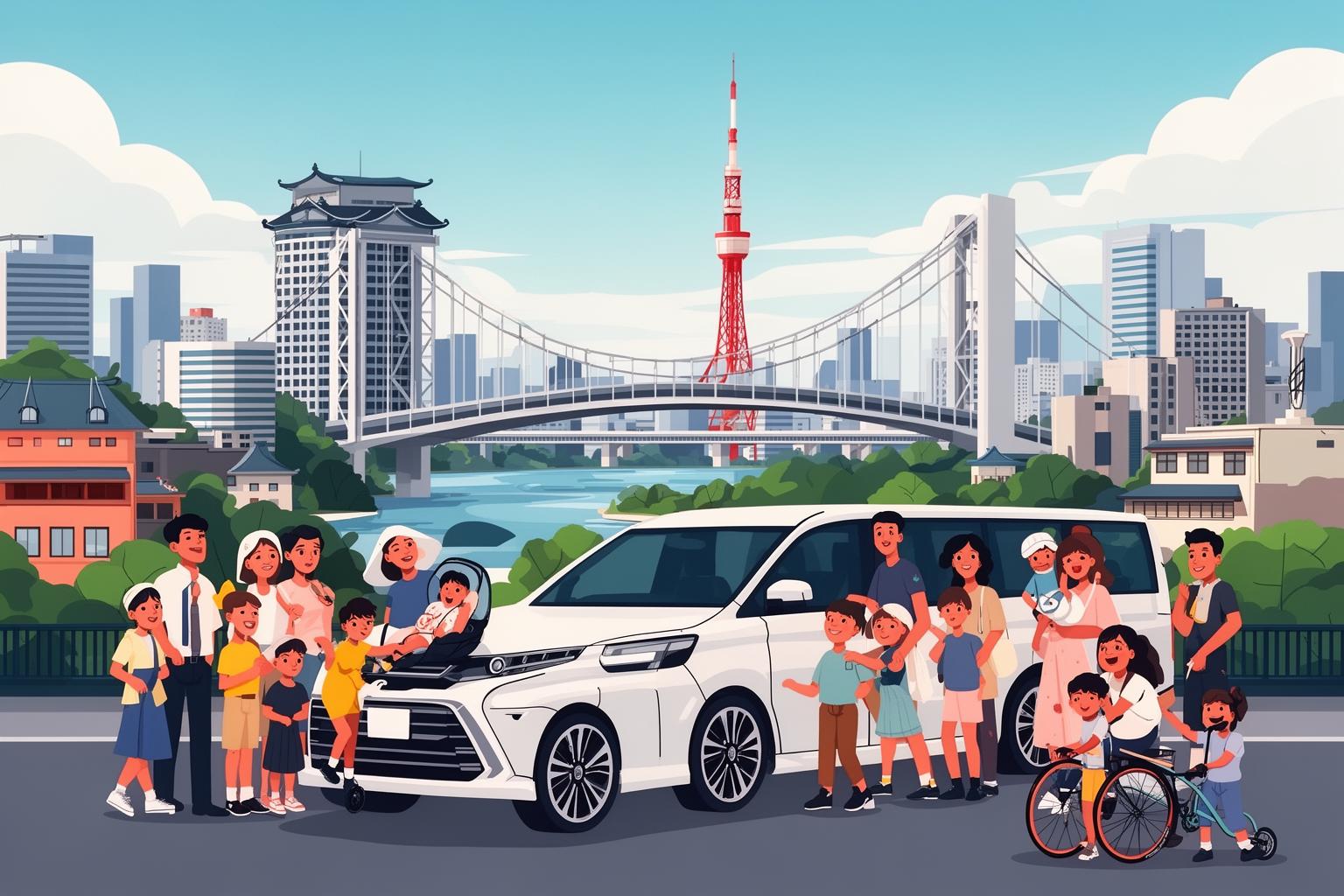
One of the first things to puzzle newcomers is the three-person, one-bicycle setup. A parent in the middle, one child strapped into a seat on the handlebars, and a second child seated on the rear rack. To the untrained eye, it might look like a daring circus stunt. But here, it’s just the usual Tuesday morning school run. This practice is perfectly legal and safe, as long as officially certified and properly installed child seats are used. This sight perfectly captures the Osaka spirit. It’s the ultimate form of pragmatism. Why take a crowded bus or walk twenty minutes when you can transport the entire small family in one trip? It’s a solution born from necessity and efficiency—a moving snapshot of family life unfolding on every street. The careful balance, the slow, steady negotiation of tight corners, and the calm pace—it’s a microcosm of daily parenting performed on two wheels.
Customization and Status
While the basic mamachari is a modest workhorse, there’s a clear hierarchy, and at the top sits the electric-assist model, or denki-jitensha. These bikes are transformative. Osaka is mostly flat, but bridges and overpasses can feel like mountains when carrying 30 kilograms of children and groceries. The electric motor offers a quiet, gentle boost that makes those climbs effortless. It’s not a throttle; it assists your pedaling, making you feel almost superhuman. Owning an electric mamachari, especially from premier brands like Panasonic, Yamaha, or Bridgestone, is a significant investment, often costing more than a cheap used car. Because of this, it carries a subtle status symbol. It denotes a family that values convenience and quality—a modern upgrade to the classic workhorse. It’s the urban equivalent of trading in a station wagon for a fully loaded SUV.
Buying Your Steed: Navigating the Bicycle Shop
Acquiring your own bicycle is a significant milestone for any long-term resident. The process involves more than just selecting a bike and riding off. It requires paperwork, decision-making, and an introduction to a core aspect of Japanese civic bureaucracy.
New vs. Used: A Practical Decision
Your initial choice is whether to purchase new or used. Large chain stores like Cycle Base Asahi or the bicycle section of home centers such as Cainz offer an extensive range of brand-new bikes. The benefits here include reliability, a warranty, and the assurance that everything functions perfectly from the start. This peace of mind comes at a premium. The alternative is the world of second-hand bicycles. Small, often cluttered neighborhood bike shops usually have a few refurbished models displayed outside. These bikes have often been abandoned, impounded, and then bought at auction by the shop owner who repairs them. They are considerably cheaper but may show cosmetic imperfections and carry a bit more character. This option appeals directly to the Osaka sensibility of finding a good bargain (horidashimono) and the cultural value placed on avoiding waste (mottainai). For many, a fully functional, lightly scratched used bike is a much wiser purchase than a flawless new one that will inevitably get scratched over time.
The All-Important Anti-Theft Registration (Bouhan Touroku)
This is the single most crucial step in owning a bicycle in Japan, and it’s mandatory. By law, every bicycle must be registered with the police. This is the bouhan touroku. When you buy a bike, whether new or used, from a shop, the staff will take care of the registration process for you. It involves filling out a form with your name, address, and phone number. You’ll pay a small, one-time fee (usually around 600 yen), and in return, you’ll receive a modest orange sticker that the shop assistant will attach to your bike’s frame. This sticker contains your unique registration number. Do not lose the receipt or the registration card they provide you. This small orange sticker is essentially your bicycle’s passport. It serves as definitive proof that you are the legal owner. If your bike is ever stolen and later recovered, this is how the police will reach you. More commonly, if your bike is parked illegally and towed to an impound lot, this registration is the only way to prove ownership and reclaim your bike. It’s a simple, low-cost system that supports the entire framework, adding an official layer of order to the otherwise chaotic streets. If you purchase a bike from a private seller, both parties must visit a bike shop together to complete the transfer of ownership, which requires the seller’s original registration card. While it can be a bit inconvenient, skipping this step will likely cause problems later on.
The Unspoken Rules of the Road (and Sidewalk)
Now that you have your bike and your orange sticker, you’re ready to ride. This marks your transition from theory to practice, and the practice itself is a complex, unwritten dance that can confound newcomers. The official rules are one thing; the way Osaka actually rides is something completely different.
Sidewalk or Street? The Eternal Osaka Question
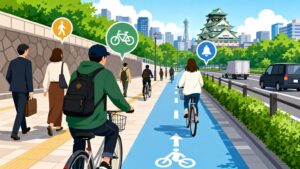
Technically, bicycles are classified as light vehicles. By law, they should be ridden on the street, on the left side, following the flow of traffic. In practice, this rule is probably the most widely disregarded throughout the city. On major arterial roads with heavy, fast-moving traffic, you’ll see nearly every cyclist—from schoolchildren to grandmothers—riding on the sidewalk. This isn’t done out of defiance but arises from a shared, unspoken understanding of safety. The sidewalks are a shared space. It’s not a free-for-all; a clear, though invisible, etiquette exists. Pedestrians always have the right of way. Cyclists are expected to ride slowly, be highly aware, and weave gently around people. The most intense example of this is in a shotengai, or covered shopping arcade. These pedestrian-only corridors frequently host cyclists moving at a walking pace, maneuvering around shoppers, displays, and children. There’s no aggression, no yelling. It’s a fluid, cooperative ballet that would be unimaginable in many Western cities but is everyday life here. This shared-space mindset represents a key difference from Tokyo, where rules tend to be followed more strictly and the boundaries between pedestrian and vehicle space are more defined.
The “Chirin-Chirin” Bell: Friend or Foe?
Every bicycle is equipped with a bell. A Western instinct may be to use it like a horn, demanding that people move out of your way. This would be a major social faux pas in Osaka. The bell, the chirin-chirin, isn’t a tool of aggression but a tool of notification. It serves as a gentle, polite “excuse me, I’m quietly approaching from behind” signal. A quick, soft ding from a distance is acceptable when approaching a pedestrian seemingly unaware of your presence. However, a series of loud, frantic rings directly behind someone is considered extremely rude and aggressive. Mastering the subtle, appropriate use of the bell signals that you’re beginning to understand the local culture of consideration and non-confrontation, even within a system that constantly operates amid mild rule-bending.
Navigating the Dreaded “No Parking” Zones
Parking is the biggest challenge for bicycle owners. Outside every train station, supermarket, and public building, you’ll find a sea of bicycles. Some are neatly arranged in designated, often paid, parking lots (churinjo). Many more are crammed into every available patch of public space in a chaotic jumble. Official “No Bicycle Parking” zones, clearly marked on the pavement, are often the most densely packed areas. The risk, of course, is getting impounded. City workers periodically conduct sweeps, especially near busy train stations. They attach bright warning tags to illegally parked bikes, giving owners a few hours to move them. If the bike remains when the workers return, it’s loaded onto a truck and taken to a bicycle impound lot. Finding your bike gone with only a small notice left on the ground where it stood is a heart-sinking experience many residents face at least once. Retrieving it is an adventure in itself, requiring a trip to a remote, hard-to-access lot, payment of a several-thousand-yen fee, and presenting your ID and registration card. This system reminds everyone that, while rules may be flexible, they are not entirely optional.
The Osaka Bicycle Ecosystem
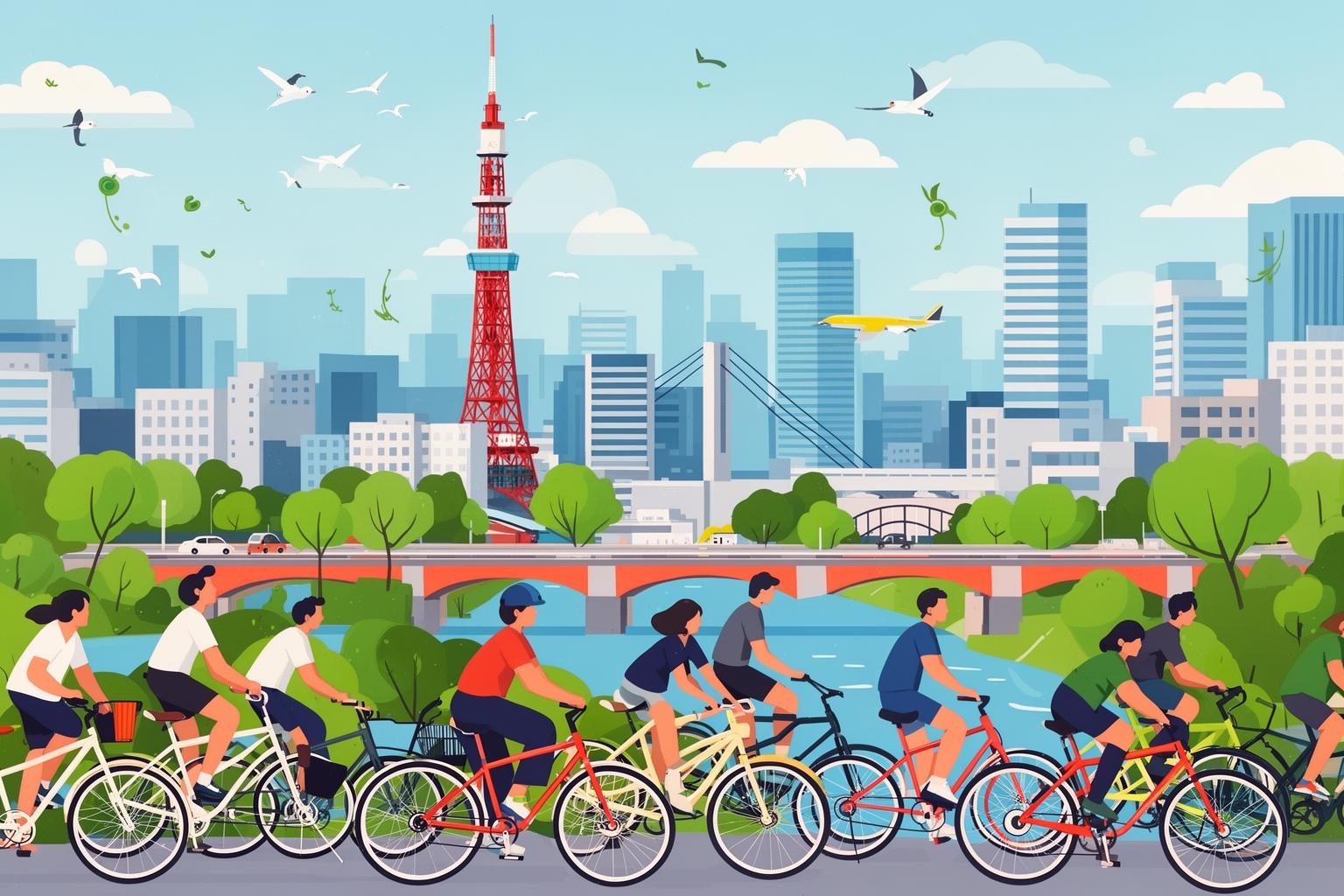
Beyond the daily ride, there is an entire world that both supports and occasionally threatens your two-wheeled lifestyle. Grasping this ecosystem of theft, weather, and maintenance is essential for long-term survival as a cyclist in Osaka.
The Disappearing Act: Bicycle Theft and “Borrowing”
Let’s be honest: bicycle theft is an everyday reality in Osaka. However, it’s crucial to differentiate between two types. One involves professional thieves who cut locks and steal expensive bikes to resell them. The other, far more common, is “opportunistic borrowing.” This happens when someone, perhaps after missing the last train, finds an unlocked bicycle and simply rides it home or to their next destination, leaving it wherever is convenient. It’s a peculiar, frustrating cultural phenomenon rooted in the sheer ubiquity of bicycles. To them, it’s less about grand theft auto and more about temporarily using a public utility. This is why the built-in rear-wheel lock is insufficient. Any experienced Osaka resident will advise you to double-lock your bike: use the built-in ring lock on the rear wheel and add a heavy-duty chain or U-lock to secure the frame to an immovable object. It’s a simple deterrent that makes your bike a less appealing target for a late-night “borrower.”
Rain, Shine, and Typhoon: The All-Weather Rider
Osakans don’t let weather dictate their transportation choices. A rainy day doesn’t make bikes disappear; it makes them adapt. Riders wear a kappa, a full-body rain poncho that drapes over the handlebars, creating a personal tent that keeps both rider and basket contents dry. It’s a common and amusing sight: a fleet of colorful, mobile mushrooms gliding through the wet streets. Then there’s the sasube, a device that clamps onto your handlebars and holds a full-sized umbrella over your head while you ride. Although technically illegal under many traffic laws due to safety concerns, the sasube is a legendary symbol of Osaka’s pragmatism. It embodies the city’s spirit: if a problem exists (getting wet), and a slightly risky yet highly effective solution is available (the sasube), then that solution will be embraced by the public regardless of official rules. Police usually turn a blind eye unless the rider is genuinely reckless. It’s a perfect example of the unwritten social contract that governs much of daily life here.
Maintenance and the Neighborhood Bike Shop
Your connection with your local jitensha-ya (bicycle shop) is a vital one. These small, often family-run businesses form the backbone of the entire system. You go there for everything. A flat tire (panku) is the most common issue, and for a reasonable fee, they’ll patch it up while you wait. They fix squeaky brakes, adjust gears, and replace worn parts. Most importantly, nearly all have a compressed air pump outside that anyone can use for free. Regularly stopping by to top up your tire pressure is a small ritual that keeps your bike running smoothly and fosters a sense of community. The old mechanic who silently patches your tire is as much a part of the neighborhood fabric as the tofu seller or the postman.
Why the Bicycle is the Soul of Osaka
It’s easy to attribute the city’s reliance on bicycles simply to its flat landscape, but it goes far beyond that. The bicycle culture directly mirrors the city’s character and history.
A City Designed on a Human Scale
Unlike Tokyo, which consists of massive vertical urban centers linked by an extensive subway system, Osaka developed as a merchant city with a horizontal network of distinct neighborhoods. Each neighborhood typically includes everything you need for daily life: a supermarket, post office, clinic, schools, and small shops. The distances between these key points are often too long for comfortable walking yet too short and inefficient to justify using a train. The bicycle is the ideal mode of transport for this scale of living. It enables you to move efficiently within a two-to-three-kilometer radius around your home. Riding a bike lets you experience the city in a way that trains never can—you catch the scent of yakitori from street vendors, hear the shouts from the local schoolyard, and notice seasonal decorations in the shopping arcade. You become part of the street life, not merely a passerby moving through a station.
The Mindset: Pragmatism on Two Wheels
Osaka’s bicycle culture embodies the city’s personality. It’s wonderfully pragmatic, unpretentious, slightly chaotic, and guided by its own internal, community-enforced logic. No one rides a mamachari to look cool or make a statement—they ride to get kids to daycare, bring home a case of beer, or reach the station in seven minutes instead of fifteen. It’s a culture of pure, straightforward function—an outward expression of a mindset focused on efficient, no-nonsense task completion. When you see a group of mothers on their electric mamacharis, chatting as they ferry their children home, you’re witnessing the true, living heart of modern Osaka. The city functions smoothly, powered by two wheels. Learning to navigate this world—mastering the sidewalk weave, respecting the power of the orange sticker, investing in a second lock, and appreciating the remarkable utility of the mamachari—is an essential step to moving beyond the role of foreign visitor and beginning to feel, just a little, like a local.