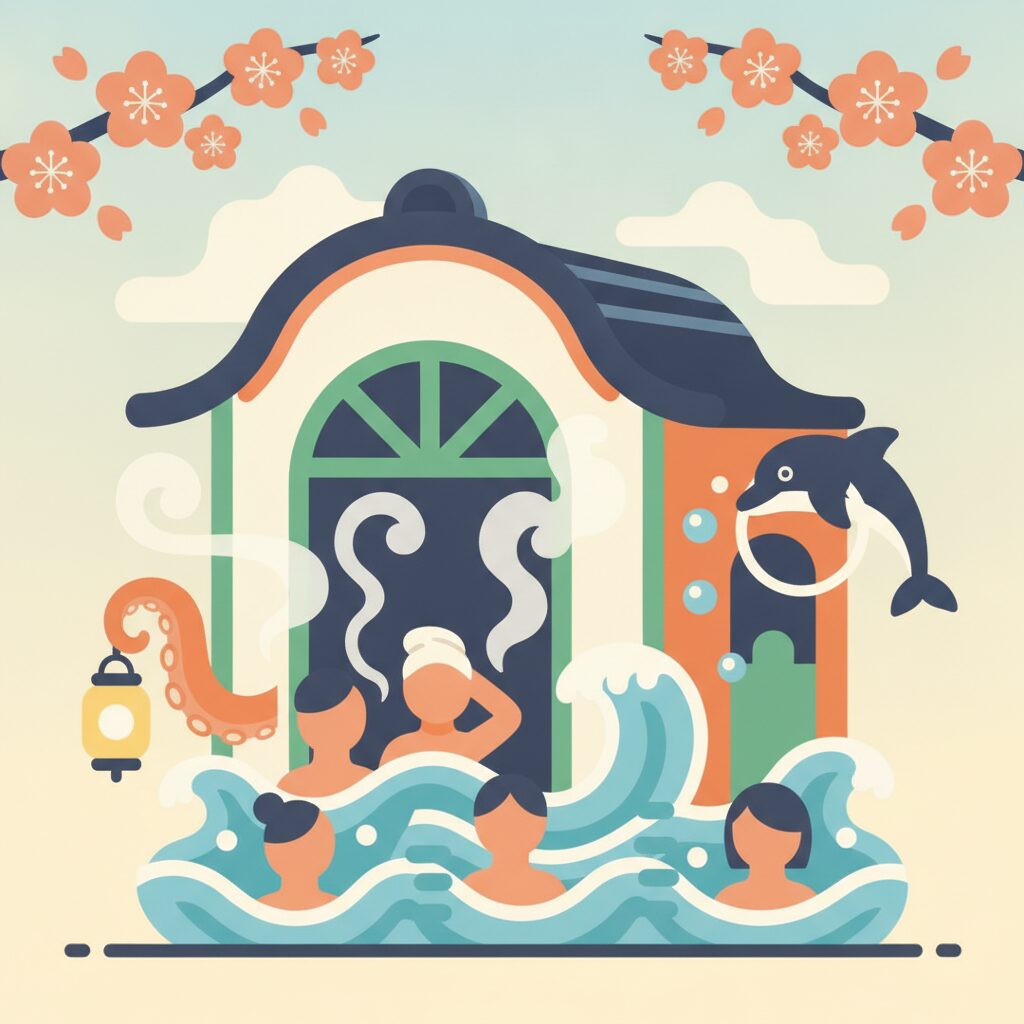
I’ll never forget my first winter in Osaka. My apartment, a charming but drafty place in a quiet corner of Tennoji, had a heater that fought a losing battle against the damp chill. My gas bill was starting to look like a phone number. Every evening, I’d see my elderly neighbor, Tanaka-san, shuffle past my door with a small plastic basket holding soap, a washcloth, and a shampoo bottle. He’d nod, give a slight smile, and head down the street, only to return an hour later, face flushed and steaming in the cold air. I had a shower. A tiny, functional, but perfectly good shower. Why was he paying to go somewhere else to wash? It felt like a riddle wrapped in steam. The answer, I soon discovered, wasn’t just about hygiene. It was about economics, community, and a philosophy of living well that feels uniquely, brilliantly Osaka. This is the world of the sentō, the public bathhouse, and it’s one of the city’s most misunderstood and essential institutions.
For many foreigners, the sentō is either an intimidating cultural hurdle or a quaint tourist novelty. You see pictures of Mt. Fuji painted on the walls and hear stories of strict, complex rules. But in Osaka, the sentō is neither of those things. It’s a utility. It’s a social club. It’s a wellness center. It’s a third space that’s not home and not work, where the city’s obsession with practicality, value, and human connection all converge in a single, steamy room. Forget what you think you know about public bathing. To understand Osaka, you need to understand why Tanaka-san and thousands like him choose to take their daily bath not in the privacy of their own homes, but together, as a community. It’s a weekly, sometimes daily, ritual that keeps the body warm, the wallet full, and the spirit connected. It’s the ultimate life hack for surviving and thriving in this vibrant, chaotic, and deeply human city.
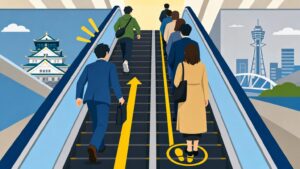
In Osaka, where communal rituals extend beyond the bath into everyday life, locals also demonstrate their knack for practicality by boarding trains in Osaka with as much precision as they manage their sentō routines.
Beyond the Bathtub: The Economics of the Neighborhood Sentō
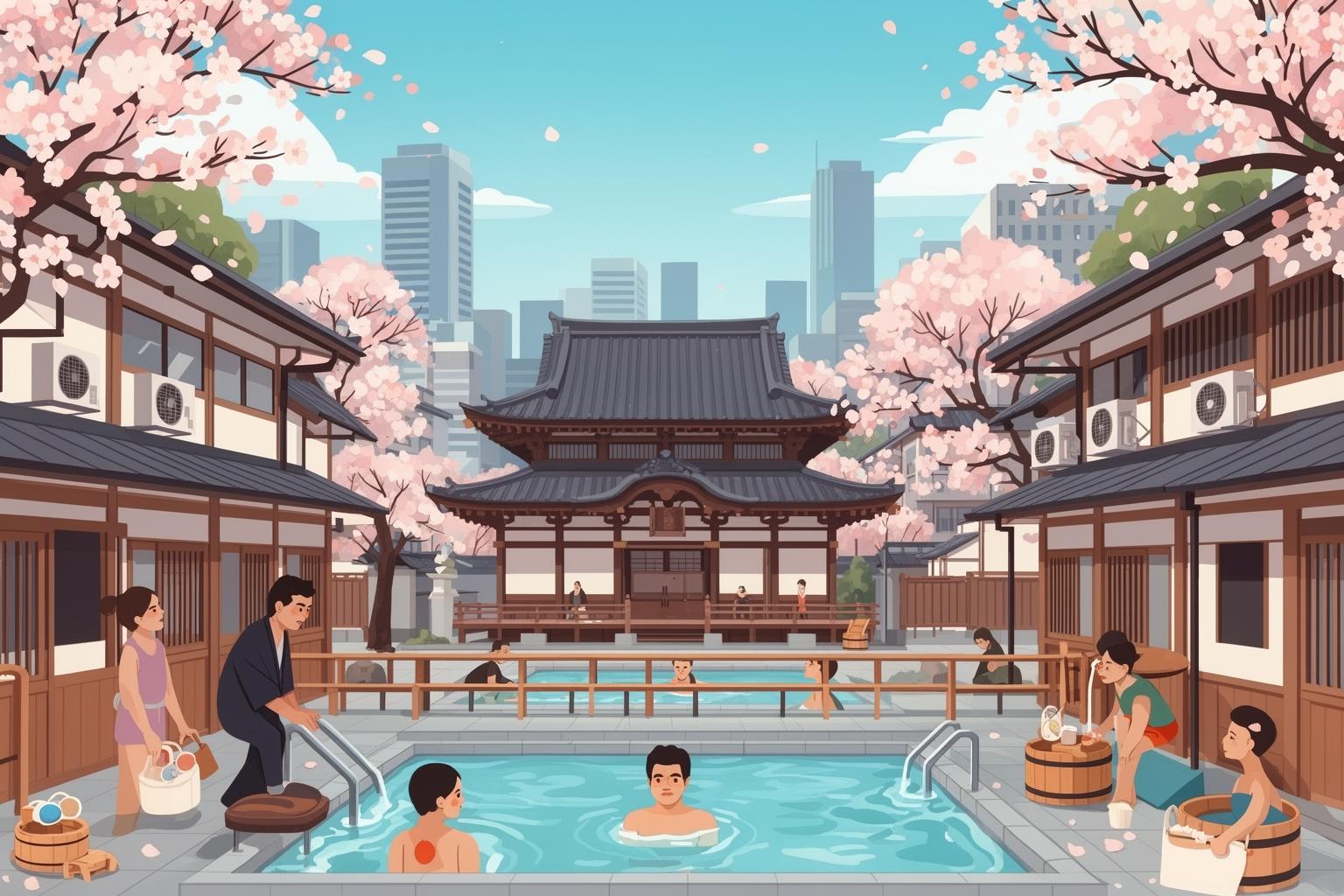
Let’s begin with the money, because Osaka always starts with the money. People here have a strong appreciation for value, a concept they call kashikoi, meaning clever or savvy. It’s not about being cheap; it’s about being smart. Paying 490 yen—the current regulated price for a basic sentō visit in Osaka—is an incredibly kashikoi choice, especially during the long, surprisingly cold winters. Running a deep, hot bath at home every night is a luxury that shows up on your gas bill. The cost of heating all that water adds up quickly, particularly in older buildings with less-than-perfect insulation and on-demand water heaters that sound like jet engines.
The sentō offers a brilliant alternative. For less than the price of a fancy coffee, you get access to a cavernous tub of perfectly heated water, often much larger and hotter than anything you could manage at home. You can soak as long as you want without calculating the cost per minute. It’s an unlimited hot water subscription for a fixed price. For residents in smaller, older apartments—the kind many students, young professionals, and foreigners live in—the math is clear. Your own bathtub might be a cramped plastic box where your knees touch your chin. The sentō offers a place to stretch out, fully submerge, and let the heat seep into your bones after a day spent shivering in a drafty office or classroom.
This practical mindset is quintessentially Osaka. In Tokyo, appearances and private space often take priority. The idea of leaving your apartment to bathe might seem inconvenient or suggest inadequate facilities. But in Osaka, the logic is reversed. Why pay more for a lesser private experience when you can pay less for a better public one? The sentō isn’t a sign of poverty; it’s a sign of financial intelligence. It’s a shared resource that benefits everyone, a piece of civic infrastructure as important as a library or a park. It’s the community collectively deciding that everyone deserves a good, hot bath without overspending.
The Unspoken Social Contract of the Bathhouse
Step into an Osaka sentō, and you enter a distinctive social environment. Once your clothes are off and locked away, so too are the markers of social status. For the next hour, the company president and the construction worker are essentially equal. This is the concept of hadaka no tsukiai, or “naked communion,” serving as a powerful social equalizer.
Hadaka no Tsukiai: The Great Equalizer
In a society as hierarchical as Japan’s, the sentō offers a rare space of genuine equality. Here, conversations flow with a casualness that’s difficult to find elsewhere. An elderly man might notice you rubbing a sore shoulder and silently gesture toward the denki-buro, a bath with a gentle electric current that tingles and relaxes tired muscles. A group of women could be engaged in a lively discussion about the Hanshin Tigers’ recent game. The room hums with chatter, the clatter of plastic washing stools on tiled floors, and the steady splash of water. It feels less like a sterile spa and more like a communal living room.
This is where the stereotype of “friendly Osaka” finds its roots. The friendliness isn’t random; it’s situational. The shared vulnerability of the space erodes barriers. It’s harder to remain formal and distant when you’re both sitting on a tiny stool, scrubbing your back. This sharply contrasts with many sentō in Tokyo, where quiet, solitary reverence tends to dominate. In Tokyo, you might receive a polite nod. In Osaka, you may get a spontaneous but genuinely helpful suggestion on where to find the best takoyaki nearby. For a foreign visitor, this is a remarkable way to feel connected, transitioning from an anonymous observer to an active participant in local life. You come to recognize your neighbors not through awkward hallway greetings, but through sharing a soak.
Reading the Room: Sentō Etiquette for Outsiders
Naturally, this relaxed atmosphere relies on a foundation of unspoken rules. Learning them is your key to entry. Many foreigners worry about accidentally offending someone, but the main guidelines are straightforward and rooted in communal respect.
First and foremost, wash before you soak. The large baths are for relaxing, not for cleaning. Find an empty shower station, take a stool and bucket, and thoroughly wash yourself. When finished, rinse the stool and bucket briefly for the next person—a small courtesy that keeps the system running smoothly.
Your small washcloth, or modesty towel, has its own etiquette. It’s acceptable to use it for scrubbing, but never, ever let it touch the water in the main bathtub. This is a crucial hygiene rule. Most people either place it on their head to keep cool or set it on the tub’s edge. Treat the bathwater as pure, shared water that must be kept clean for everyone.
Then there is the tattoo issue, which causes much confusion and anxiety among foreigners. The stereotype is that all onsen and sentō ban tattoos due to their association with the yakuza. While this may hold true for large, corporate-owned super sentō or luxury resorts, the reality in Osaka’s local machi-no-sentō is often much more relaxed. Many small, family-run establishments don’t mind at all. They know their customers, and they understand that a foreigner with a floral tattoo isn’t a gangster. The best approach is simply to visit. If there’s a problem, someone will politely inform you. More often than not, no one will even notice. The attitude is practical: you’re here to bathe, just like everyone else.
A Modern Wellness Ritual, Osaka Style
The sentō’s appeal extends well beyond simply getting clean or saving money. It has transformed into an essential and accessible wellness ritual, a way to cope with the physical and mental stresses of city living. It’s a mindful act of self-care woven into the rhythm of daily life.
From Cold Apartment to Steamy Sanctuary
Picture yourself after a long day at work. You’re exhausted, your back aches from sitting at a desk, and your apartment feels cold and empty. The sentō provides a complete sensory reset. You step through the noren curtains, pay your fee, and enter a world filled with warmth and steam. The sensation is deeply physical. The heat from the baths envelops you instantly, loosening muscles you didn’t realize were tense.
Most sentō feature a range of tubs, each designed for a unique purpose. There’s the main bath, deep and hot enough to take your breath away at first. Then there’s the jet bath (jetto-buro), with strong water streams that deliver a high-pressure massage to your back and legs. You might encounter a milky-white herbal bath (kusuri-yu), infused with traditional medicines that have an earthy scent and are believed to boost circulation. And for the courageous, there’s the mizu-buro, the cold plunge pool. The cycle of immersing in hot water followed by a shock of cold is invigorating and reputed to offer many health benefits. It’s a circuit you can customize to suit your needs—a personalized hydrotherapy session for less than the cost of a bus ticket.
The ritual doesn’t end with the bath. After soaking, you move to the changing room (datsuijo), a bright, clean area that often doubles as a lounge. This is where you complete the experience. Many locals pick up a bottle of ice-cold milk—coffee or fruit milk are classic favorites—from a vintage vending machine and drink it down in one go. It’s the ideal way to cool off from the inside out. You might notice others reclining in decades-old massage chairs, which rumble and vibrate away their worries for just a hundred yen. This entire process, from the hot soak to the cold milk, is designed to leave you feeling completely refreshed.
The Super Sentō vs. the Machi no Sentō-san
It’s important to distinguish between the two main types of bathhouses found in Osaka. The traditional neighborhood bath is known as the machi no sentō-san (Mr. Town Bathhouse), a term of affection that says a lot. These are small, often family-run places that have served their communities for generations. The decor may be old-fashioned, the facilities simple, but their spirit is immense. This is where you go for your daily soak, a quick chat with neighbors, and a dose of genuine local culture.
At the other end of the spectrum is the super sentō. These large, modern complexes resemble water-themed amusement parks. For a higher fee (usually 800 to 2,000 yen), you gain access to numerous indoor and outdoor baths, multiple saunas, steam rooms, restaurants, manga libraries, massage services, and relaxation lounges with reclining chairs and personal TVs. You can easily spend a full day here. Osaka locals appreciate both. The machi no sentō serves for routine upkeep and community connection, while the super sentō offers a weekend treat, a mini-vacation without leaving the city. It’s another example of Osaka’s adaptable and practical lifestyle—there’s something suited for every need and budget.
Why the Sentō Explains Osaka
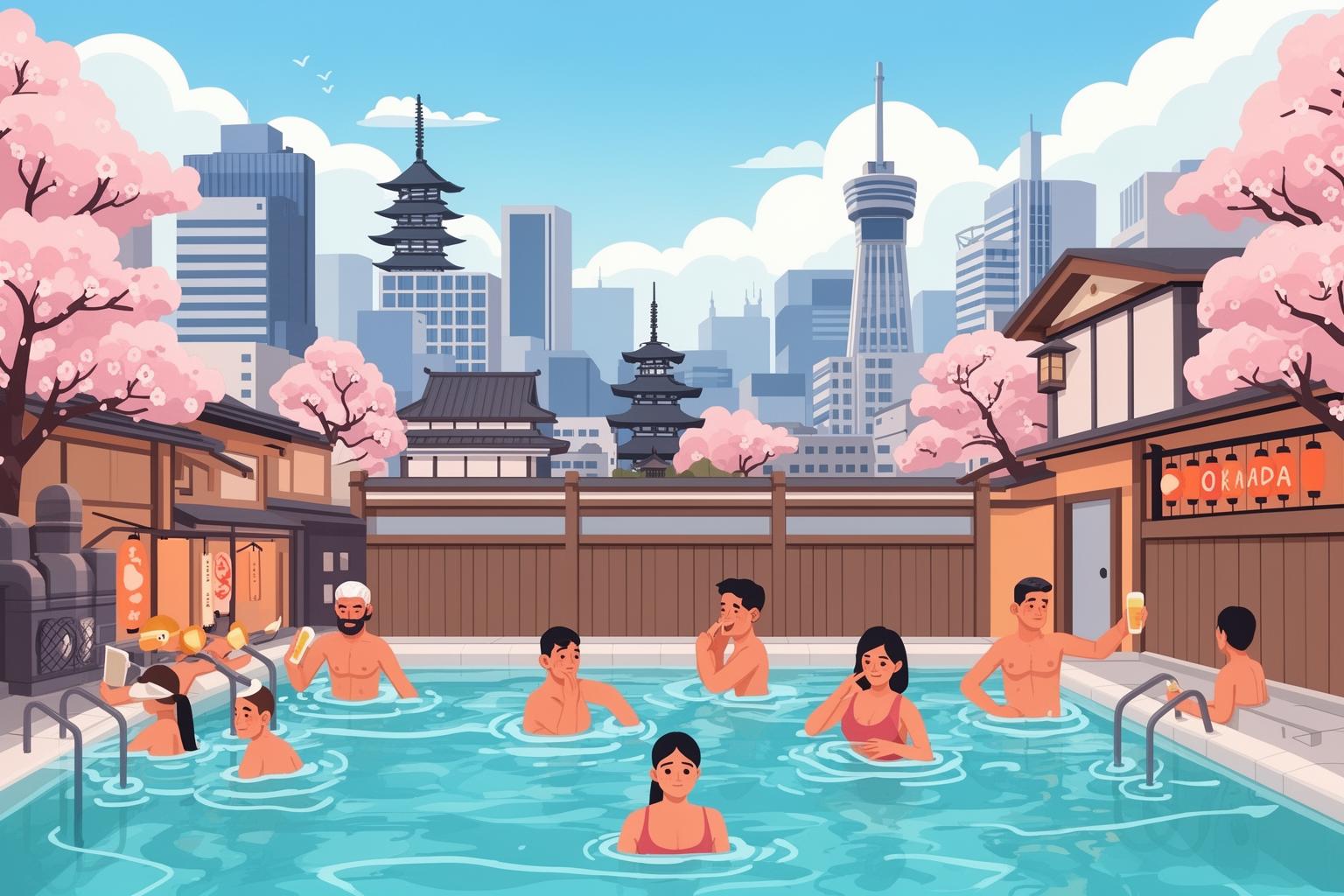
Ultimately, the modest neighborhood sentō serves as a perfect microcosm of Osaka itself. It reflects the city’s core values: pragmatism, community, and a total absence of pretension. It’s a place founded on the belief that living well doesn’t depend on wealth or extravagance. Rather, it calls for intelligence, a willingness to share, and an appreciation for life’s simple, tangible pleasures.
The ongoing presence of the sentō represents a quiet resistance to the relentless privatization of modern urban life. In a city like Tokyo, where individualism and privacy are highly valued, communal bathing might seem outdated. But in Osaka, a city built by merchants and characterized by strong neighborhood ties, sharing resources is simply practical. Why should everyone own a large bathtub that remains unused 23 hours a day when a perfectly good one can be shared by the entire block? This way of thinking permeates many aspects of Osaka life, from the lively covered shopping arcades (shōtengai) to the communal plates of food at an izakaya.
So, if you truly want to grasp what makes Osaka thrive, my advice is straightforward. Grab a small towel and some soap, find your nearest sentō, and step inside. Soak in the hot water and simply listen. Listen to the conversations, the laughter, the sounds of a city washing away its cares. You’re not just getting clean—you’re taking part in a ritual that unites the city. You’re discovering that in Osaka, true luxury isn’t about having your own private everything. It’s about having everything you need, together.