Coming from the quiet, highly structured art scenes and reserved bathhouses of Tokyo, my first experience walking into a neighborhood sento in Osaka felt like stepping onto a vibrant, steam-filled theatrical stage. Tokyo teaches you to move through public spaces like a ghost, leaving no trace, making no noise, and certainly avoiding unnecessary eye contact. Osaka, however, operates on an entirely different frequency. To truly understand the people of Osaka, you have to look past the glowing neon signs of Dotonbori and the towering concrete of Umeda. You have to step into the neighborhoods, peel back the layers of daily life, and ultimately, strip away your pretense in the local public bathhouse. The sento in Osaka is not just a place to scrub away the grime of the day; it is an extension of the living room, a community hub, and a sanctuary of unfiltered local culture.
For foreign residents settling into life in the Kansai region, or for international visitors hoping to grasp the true rhythm of this merchant city, the local sento presents a fascinating, albeit intimidating, cultural threshold. Many expats live in Osaka for years without ever sliding open those frosted glass doors, held back by an anxiety of making a cultural faux pas, or simply by the vulnerability of being entirely naked in a room full of strangers. Yet, avoiding the sento means missing out on one of the most authentic, grounding experiences this city has to offer. In the bathhouse, titles, tax brackets, and language barriers dissolve into the hot water. You are judged only by your respect for the shared space and your willingness to participate in the communal harmony.
This guide is designed to dismantle that barrier of anxiety. By breaking down the unspoken rules, the precise choreography of the bathing ritual, and the unique quirks that distinguish an Osaka sento from its counterparts in Tokyo or Kyoto, this comprehensive walkthrough will equip you with the knowledge and confidence to bathe like a true local. We will explore the differences between ordinary tap water baths and mineral hot springs, the strict etiquette required before you ever let a toe touch the water, the complex landscape of tattoo policies in modern Japan, and the architectural nuances that make the Kansai bathing experience entirely unique.
Navigating Osaka Sento Culture: A Beginner Guide
Entering a sento for the first time can be an overwhelming sensory experience. The immediate surge of humid air, the blend of citrus soap scent with damp wood, and the constant sounds of splashing water and echoing conversations can feel unfamiliar and intense. For those raised in Western cultures where bathing is a deeply private, solitary activity done behind locked doors, the idea of public nudity often presents a significant psychological challenge. It’s completely normal to feel a wave of nervousness as you untie your shoes at the entrance.
However, understanding the perspective of Osaka locals can quickly shift this experience. In Osaka, there is a meaningful cultural concept called hadaka no tsukiai, roughly translated as naked communion. The philosophy behind it is that when people remove their clothes, they also shed their social masks, hidden motives, and superficial status symbols. Nothing can be concealed when you are naked. In a city rooted in historic merchant trade, where frank, honest communication is valued more than the strict formalities seen in Tokyo, this naked communion represents the purest form of social connection. Locals do not gaze at each other with judgment; nudity is simply incidental to the act of relaxation.
Once you understand that no one is focused on your body, your anxiety fades, replaced by a strong sense of communal belonging. The sento is where the elderly grandmother from down the street shares neighborhood gossip, where the weary salaryman washes away the tension of his commute, and where local children learn public behavior boundaries from their elders. By choosing to enter this space, you signal to the local community that you respect their traditions and wish to partake in their daily rhythms. It is the ultimate expression of cultural integration for any foreign resident aiming to make Osaka their true home.
Sento vs. Onsen: What is the Difference?
Before exploring the specific rituals of the bathhouse, it is essential to clarify the fundamental difference between a sento and an onsen, as international visitors often confuse the two. Although both involve undressing and soaking in large pools of very hot water, they hold entirely different roles within Japanese society and operate under distinct legal and economic systems.
An onsen is a natural hot spring. According to Japanese law, the water must naturally flow from the earth at a minimum temperature of twenty-five degrees Celsius and contain a specific minimum concentration of certain naturally occurring minerals, such as sulfur, iron, or radium. Onsens are usually found in mountainous or volcanic areas, functioning as destination resorts or luxury ryokans. Visiting an onsen is considered a vacation, a special occasion intended for healing and exceptional relaxation. Because they are private businesses centered around a natural resource, onsen operators can charge high admission fees and impose strict, exclusive rules regarding visitors.
In contrast, a sento is a neighborhood public bathhouse. The water is typically standard municipal tap water or pumped well water that has been artificially heated by a large boiler in the back room. Historically, sentos were created because private indoor plumbing was a rare luxury in cramped Japanese urban housing. They served as public utilities, crucial for civic hygiene. Due to this important public health function, sento admission prices are strictly capped and regulated by the prefectural government. In Osaka, you pay the same modest fee no matter which neighborhood sento you choose to visit. While modern apartments now have private bathrooms, the sento endures as a cherished community institution, offering spatial luxury rather than merely physical cleanliness. You visit an onsen for a weekend retreat; you head to a sento on an ordinary Tuesday night to soothe stiff shoulders from sitting at a desk.
Step-by-Step Sento Etiquette: From Entry to Exit
The Entrance and Shoe Lockers
Your sento experience starts as soon as you approach the building, often marked by a traditional split curtain gently swaying in the evening breeze. Sliding open the front doors, you enter the genkan, the traditional Japanese entryway. Here, the fundamental rule of Japanese interiors comes into play: you must remove your street shoes. Stepping onto raised wooden or tatami floors with your shoes on is considered highly disrespectful and unhygienic, immediately identifying you as an outsider unfamiliar with the customs.
You will then place your shoes into small, individual lockers lining the wall. These lockers are iconic examples of Japanese design, typically featuring a sliding wooden key that you pull out to lock the door. The satisfying clack of removing this wooden tile is the first tactile pleasure of the sento experience. It’s important to remember that despite Japan’s widespread use of digital payments, traditional sentos still operate on a cash basis. You’ll need physical Japanese yen coins to use umbrella lockers, shoe lockers, and sometimes hair dryers. Keep your wooden shoe key secure in your pocket or bag; losing it will cause considerable trouble for the staff.
Paying at the Bandai (Front Desk)
After securing your shoes, proceed to the payment area. Historically, traditional bathhouses featured a bandai, an elevated wooden platform situated between the men’s and women’s changing rooms. An attendant, usually the older bathhouse owner, would sit on this perch, collecting entrance fees while overseeing both sides to prevent theft and ensure safety. Coming from a Western background, the idea of an attendant watching over the changing rooms may seem surprising, but it is an accepted historical norm designed for security.
Today, many sentos in Osaka have modernized their entrances with front desks where you pay your fee in a neutral lobby before passing through the gendered curtains. This is your moment to purchase any supplies you might need. Unlike luxury hotel onsens, neighborhood sentos typically don’t provide free amenities. You’ll need to bring your own soap, shampoo, and towels, or buy inexpensive single-use packets from the attendant. These attendants often embody the spirit of the sento, warmly greeting visitors with a friendly Osaka welcome. A polite bow and cheerful evening greeting will help you be recognized as a respectful guest.
Rules in the Datsuijo (Changing Room)
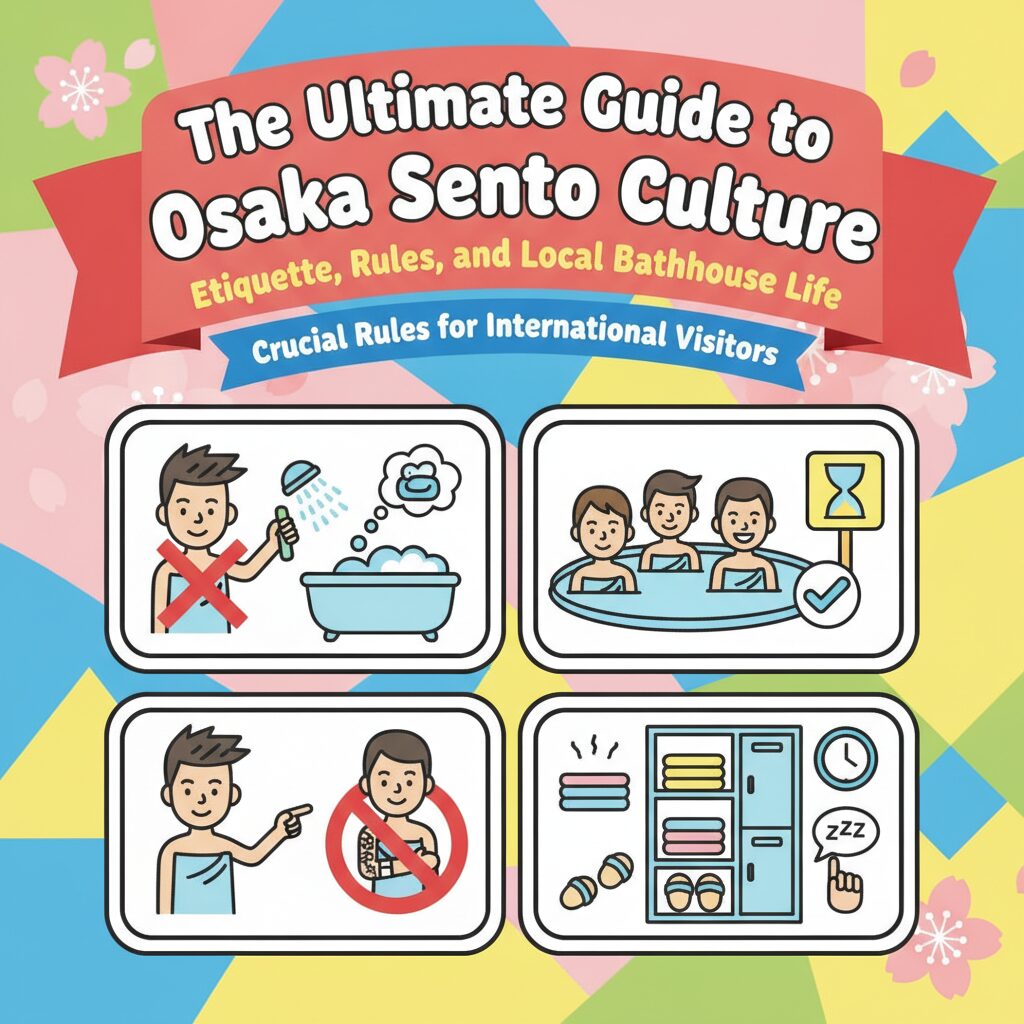
Once you pass through the curtains into the datsuijo, or changing room, you enter a vulnerable space. Here, you’ll find lockers or traditional woven baskets for your clothes. Complete nudity is required. There’s no place for modesty garments, underwear, or swimsuits in a Japanese bathhouse. You must fully undress, neatly fold your clothes into your locker, and secure your valuables inside.
The most important rule in the datsuijo is the strict ban on photography. In an age where smartphones are practically glued to our hands, you must resist the temptation to capture the retro ambiance of the changing room. Taking out a camera phone in a room full of naked people is a serious invasion of privacy and will likely lead to immediate expulsion. Leave your phone at the bottom of your bag. Keep your gaze respectful, looking ahead or downward. While staring is considered rude, in Osaka, friendly older locals might strike up a conversation while you’re both unclothed. Just smile, nod, and enjoy the local warmth.
The Golden Rule: Washing Before Soaking
With only your small modesty towel and toiletries in hand, slide open the door to the main bathing area. Before approaching the large, inviting hot tubs, observe the golden rule of Japanese bathing culture: wash your body thoroughly first. The communal baths are meant solely for soaking and relaxing, never for cleaning. Introducing dirt, sweat, or soap into the shared water is the ultimate sento faux pas.
Find an empty washing station along the wall. Each station includes a low mirror, faucet, showerhead, and small plastic bucket or basin, along with a plastic stool. You must sit down to wash. Standing while showering causes soapy water to splash on neighbors, which is highly inconsiderate. Use the basin to practice kakeyu, splashing hot water over your extremities and chest to acclimate and rinse sweat. Then lather up and wash every inch of your body, especially your feet and underarms. Rinse off all soap completely before standing. Afterward, rinse your plastic stool and basin to leave the station spotless for the next guest.
Inside the Bath: Essential Do’s and Don’ts
Now fully clean and acclimated, you may approach the communal baths. Move slowly. Sento water is famously hot, often around forty-two degrees Celsius. Entering too quickly can cause a sudden blood pressure spike. Ease yourself in gently, letting out a soft sigh as the warmth soothes your muscles.
While soaking, observe strict rules about the water. Your small modesty towel must never touch the bathwater, as it’s considered unclean from scrubbing your body or face. Dropping it into the communal water is a serious mistake. Most locals fold the damp towel and balance it neatly on their heads, which keeps it dry and helps regulate head temperature to avoid dizziness.
Additionally, long hair must be tied securely to prevent strands from floating in the water. Swimming, splashing, or submerging your head underwater is strictly prohibited. The sento is not a swimming pool, but a calm sanctuary. While Osaka locals are known for lively conversation, physical movement in the bath remains restrained and respectful. You can chat excitedly about the Hanshin Tigers baseball game, but do so while sitting quietly and still in the steaming water.
Post-Bath Etiquette and The Classic Milk Routine
After you’ve soaked to your heart’s content and feel completely relaxed, it’s time to exit. Do not simply walk dripping wet back into the datsuijo. The changing room floor must be kept dry and safe for everyone. Near the exit door, use your tightly wrung small towel to remove excess moisture from your body. Only when reasonably dry should you reenter the changing area.
Once dried off and dressed, there is one final, delightful ritual. For decades, it has been tradition to purchase a chilled glass bottle of milk, coffee milk, or fruit milk from a vending machine or the front desk. The intense heat of the bath dehydrates you, making the icy sweet milk taste heavenly. The classic posture for this ritual is to stand with one hand on your hip, tipping the glass back and drinking deeply with satisfaction. It is a cinematic moment of everyday Japanese life that connects generations, making you feel like a true local of the neighborhood.
Crucial Rules for International Visitors
What to Bring: Towels, Soap, and Cash
To ensure a smooth experience, preparation is essential. Unlike upscale hotels that cater to every need, neighborhood sento require you to be self-reliant. You should bring a small sento kit, which must include a small rectangular washcloth, often called a tenugui or a standard hand towel. This small towel is the workhorse of your visit; you’ll use it for washing, maintaining modesty while moving between rooms, and for the initial drying. Additionally, bring a larger bath towel, which you leave inside your locker in the changing room for your final drying.
Pack travel-sized bottles of your preferred shampoo, conditioner, and body wash. While miniature versions are available for purchase at the front desk, bringing your own is more economical and ensures the products suit your skin. Lastly, carry a small coin purse with one-hundred-yen coins and thousand-yen bills. In 2026, despite the widespread adoption of tap-to-pay systems in urban Japan, traditional sento remain bastions of cash. The ticket machines, older front desk registers, and hair dryers almost exclusively require physical coins.
Navigating the Tattoo Policy in Osaka Bathhouses
For many international visitors and foreign residents, the most intimidating aspect of Japanese bathing culture is the strict, historic ban on tattoos. Traditionally, tattoos in Japan have been strongly linked to organized crime syndicates, leading public bathing facilities to enforce blanket bans to exclude dangerous elements and make ordinary citizens feel safe. Today, this policy often causes tension as millions of tourists arrive with decorative, non-criminal tattoos.
However, tattoo policies in Osaka are much more nuanced and lenient compared to the rigid rules found in luxury onsen resorts. Since local neighborhood sento operate under public sanitation laws, they historically serve as essential public utilities. This means they cannot legally refuse anyone seeking basic hygiene, regardless of tattoos or affiliations. As a result, in working-class Osaka neighborhoods like Nishinari, Tennoji, or Hirano, tattoos are a fairly common sight in local bathhouses.
While super-sentos (large, modern bathing complexes) and hotel spas will firmly deny entry to those with visible tattoos, humble neighborhood sento often act as great equalizers. The key is to read the atmosphere, behave with deep humility, and remain unobtrusive. If you have small tattoos, covering them with a waterproof bandage is a polite gesture. For heavy tattooing, it’s best to seek out explicitly verified tattoo-friendly sento, which are plentiful in Osaka. The golden rule is to show absolute respect, keep your voice down, and follow bathing etiquette perfectly—Osaka’s local obachans and ojichans are much more likely to accept you than their counterparts in the stricter, more conservative wards of Tokyo.
Unique Features of Kansai and Osaka Sentos
To an untrained eye, all Japanese bathhouses may appear identical, but to a cultural curator, the sentos in the Kansai region display unique architectural and social features that distinguish them completely from those in Tokyo. The most significant difference lies in the bathtub’s placement.
In a traditional Tokyo sento, the tubs are almost always positioned against the back wall. Above them often hangs a large, beautifully painted mural, usually featuring Mount Fuji. This arrangement requires bathers to sit in a row, facing forward, quietly gazing at the artwork. It creates a theatrical, forward-facing setup that encourages solitude and contemplation, perfectly reflecting the reserved social nature of the capital.
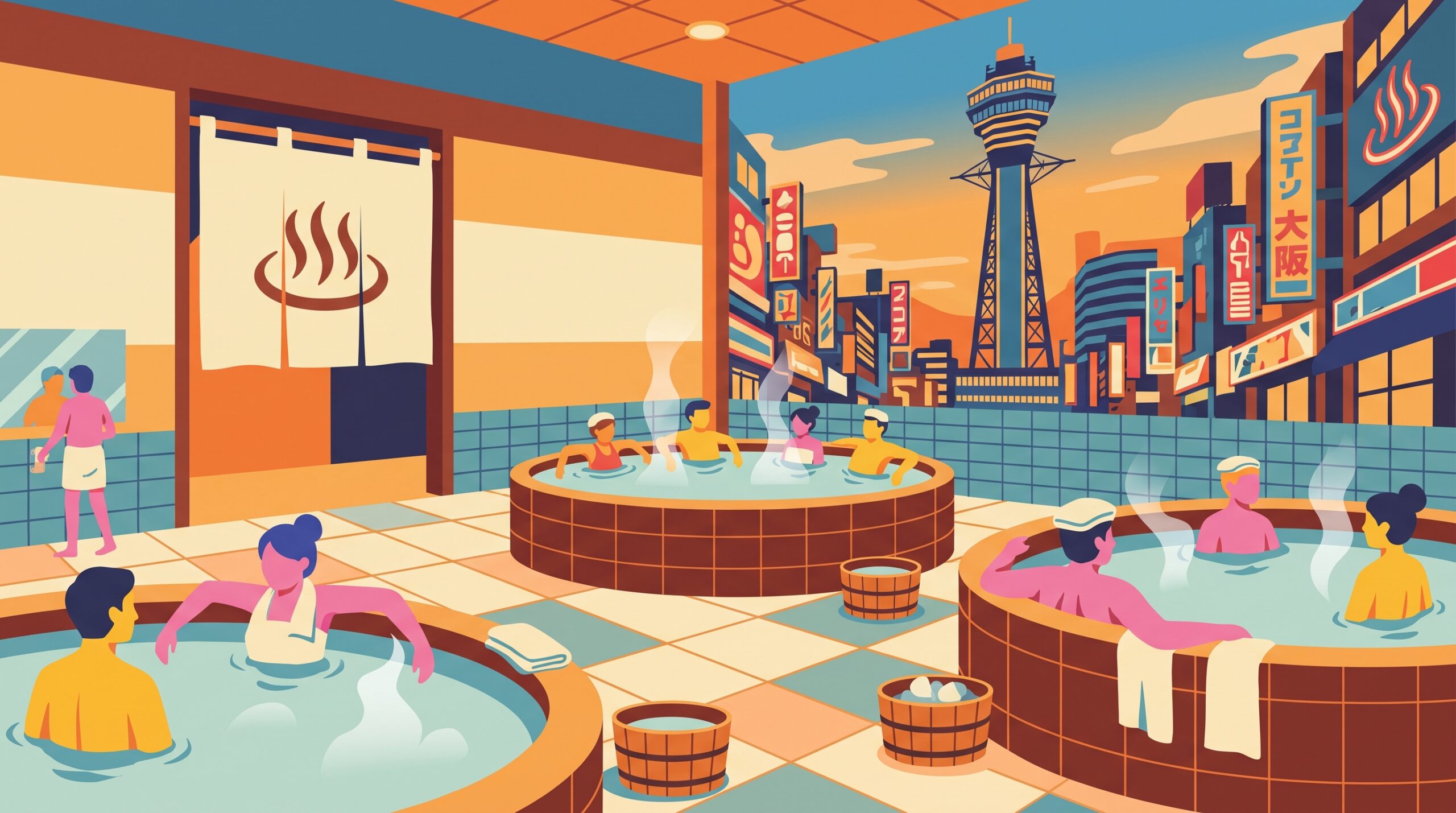
By contrast, the classic Osaka sento centers the main bathtub in the middle of the room. A small stone or tile ledge frequently surrounds this central tub. This design compels bathers to step into the water and face inward, forming a communal circle. This central placement fosters conversation, embodying the spirit of Osaka—a city known for its merchant culture, lively bargaining, and direct, face-to-face communication. The centrally located bath naturally promotes eye contact and spontaneous dialogue.
Moreover, the social atmosphere is noticeably warmer. While silence is valued in Tokyo, the Osaka sento is lively and cheerful. You might encounter an older woman, an Osaka obachan, offering you a piece of hard candy in the changing area. If you splash water improperly, a local might gently correct you with a warm, motherly rebuke rather than a cold stare. The lively, rhythmic Kansai dialect reverberates off the tiled walls, creating a space that feels vibrantly alive and genuinely human.
Beginner-Friendly and Tattoo-Friendly Sentos in Osaka
If you’re ready to take the plunge but still feel slightly hesitant, selecting the right facility for your first time can make all the difference. Osaka is home to several legendary sentos that warmly welcome newcomers and international residents, blending historic charm with a relaxed atmosphere.
One of the most famous and highly recommended spots is the Radium Onsen located in the heart of the retro Shinsekai district. Although it has onsen in its name, it operates much like a local sento. Positioned near the iconic Tsutenkaku Tower, this bathhouse is deeply rooted in a neighborhood known for its gritty, working-class history and lively street food scene. Because Shinsekai draws a diverse mix of locals, travelers, and eccentrics, the atmosphere inside Radium Onsen is incredibly laid-back. It is widely recognized for its tolerance of tattoos, with patrons more focused on relaxing than scrutinizing the bodies of foreigners. The facility boasts a fantastic outdoor bath that looks directly up at the neon-lit tower, offering a truly cinematic Osaka experience.
Another great option is Irie Yu, a classic, unpretentious neighborhood bathhouse. Establishments like this may lack luxury amenities but provide an immaculate, beautifully preserved glimpse into Showa-era Japan. The owners are used to welcoming a variety of guests and are known for their warm, non-judgmental hospitality. When visiting these deeply local spots, keep in mind that you are stepping into the daily routine of a community. Your presence acts as a bridge between cultures.
Living in Osaka is about more than just savoring phenomenal food or navigating subway lines. It’s about tuning into the emotional rhythm of the city. Osaka’s people are loud, warm, intensely practical, and fiercely communal. There is no quicker, more authentic way to connect with that rhythm than by shedding your hesitation, grabbing a small towel, and immersing yourself in the steaming, communal waters of a neighborhood sento. By respecting their rules and embracing this naked communion, you will transform from a temporary visitor into a true participant in the beautiful, everyday theater of Osaka life.