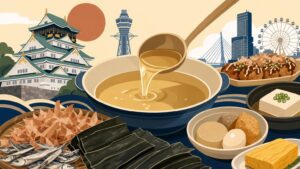
You step off the Shinkansen at Shin-Osaka Station, adjusting your tie and reviewing your presentation notes. You have spent months preparing for this trip. You have read the standard business guides on Japan. You know exactly how many degrees you are supposed to bow. You know that you must receive a business card with two hands, study it like a sacred artifact, and place it carefully on the boardroom table. You know that Japanese business communication is characterized by extreme indirectness, harmony, and a rigid adherence to protocol. You know that silence is golden, that decisions take weeks of consensus-building, and that talking about money too early is considered deeply vulgar. You feel prepared. You feel ready to conquer the Japanese market. And then you arrive in Osaka, and everything you thought you knew is immediately thrown out the window.
Welcome to the merchant city. Welcome to a place that operates on an entirely different cultural operating system than Tokyo. The reality of living and working in Osaka as a foreign professional is often a massive shock to the system. You expect stoic samurai discipline, but you are met with boisterous merchants who want to know your bottom line before the green tea has even cooled. You expect formal distance, but you are met with jokes, gentle teasing, and an immediate demand for authenticity. If you are going to survive and thrive in the Kansai region, you need to throw away the generic guides. Those books were written for Tokyo. They were written for a city built by bureaucrats and warriors. Osaka was built by shopkeepers, traders, and hustlers.
My research into the deep historical narratives that connect Japan’s past with its modern identity constantly brings me back to this fundamental divide. You cannot understand the modern Osaka boardroom without understanding the medieval Osaka marketplace. You cannot grasp why an Osaka CEO makes a self-deprecating joke without understanding the centuries of merchant philosophy that govern this delta. Foreigners who move here often feel a profound sense of confusion during their first few months. They think they are failing at Japanese etiquette, when in reality, they are simply failing at Osaka etiquette. They mistake directness for rudeness. They mistake haggling for disrespect. They mistake laughter for a lack of seriousness.
This article is not a travel guide. We are not going to talk about where to find the best takoyaki or how to take a photograph in front of the Glico running man. We are going to deconstruct the mindset, the behavior, and the unspoken rules of the Osaka business world. We are going to explore why communication here is fundamentally about negotiation rather than formality. We will look at how the legacy of the Shobai no Machi, the city of commerce, dictates everything from the way emails are written to the way million-dollar contracts are signed. By the end of this exploration, you will stop trying to be a Tokyo diplomat and learn how to become an Osaka merchant. You will understand that building trust here requires you to drop your shield, speak your truth, and maybe, just maybe, learn how to take a joke.
Why Osaka’s Business Culture is Unique in Japan
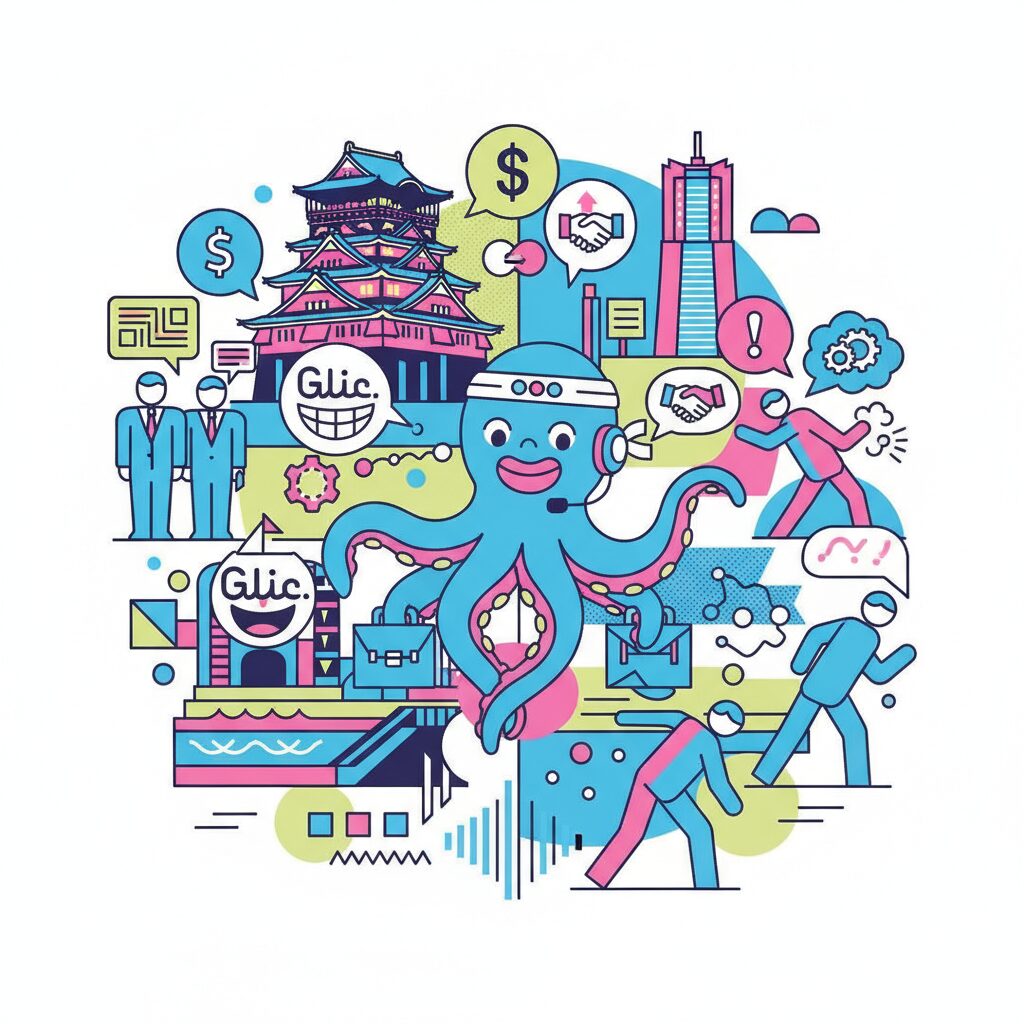
To truly grasp the beating heart of Osaka’s corporate culture, you must look beyond the modern glass skyscrapers and examine the foundation on which this city was built. Japan is often perceived by outsiders as a monolith. Western observers tend to view the archipelago as a single, unified culture defined by politeness, strict organizational hierarchy, and quiet reserve. However, this monolithic perception is misleading. The cultural divide between the Kanto region, centered around Tokyo, and the Kansai region, centered around Osaka, is as significant as the divide between New York and Texas, or London and Glasgow. These differences go far beyond dialect or culinary preferences; they are deeply rooted psychological distinctions shaped by centuries of divergent socioeconomic development.
The Merchant City Legacy: Practicality Over Formality
The term Shobai no Machi means the city of business, or the merchant city. To fully appreciate the significance of this title, we need to travel back to the Edo period. While Tokyo, then known as Edo, was the seat of the Tokugawa Shogunate, it was primarily a city of samurai. Edo was the center of military power, political administration, and rigid bureaucratic control. In Edo, your worth was dictated by your rank, lineage, and strict adherence to an elaborate social hierarchy. Formality was not just about politeness; it was a matter of survival. One misstep in addressing a higher-ranking samurai could lead to immediate, fatal consequences.
Conversely, Osaka was far removed from the Shogun’s direct oversight, both geographically and culturally. It served as the nation’s commercial hub, famously known as Tenka no Daidokoro, the kitchen of the nation. It housed the immense rice storehouses of feudal lords and was home to the Dojima Rice Exchange, the world’s first futures market, established in the early eighteenth century. Osaka was not a city of samurai but of chonin—townspeople and merchants.
In this merchant city, lineage mattered far less than creditworthiness. Swordsmanship was irrelevant compared to skills in calculating margins, negotiating bulk prices, and forecasting market fluctuations. Osaka merchants cultivated a culture where practicality always trumped formality. They couldn’t afford prolonged ceremonial rituals; they had ships to load, ledgers to balance, and deals to close. Time equated directly to money.
This historical legacy continues to shape the mindset of today’s Osaka businesspeople. Entering a boardroom in Honmachi or Yodoyabashi means entering a space still governed by the chonin ethos. The goal isn’t to maintain a flawless veneer of ceremonial perfection but to reach a mutual understanding of value. Osaka executives willingly forgo formal pleasantries to get straight to the heart of business. They view excessive formality with skepticism, believing those who hide behind rigid etiquette lack substance. If your product is good and your price fair, there’s no need for layers of ceremonial politeness—you just need to lay it out clearly.
This practical approach permeates all aspects of corporate life. Business attire in Osaka, while professional, often lacks the uniform rigidity found in Tokyo’s financial districts. You’ll see more individual expression, relaxed postures, and a generally more human, less mechanical atmosphere. This does not signal a lack of respect for professionalism but rather a different definition. In Tokyo, professionalism often means flawless protocol adherence; in Osaka, it means competence, reliability, and the ability to generate shared profits. The merchant spirit demands outcomes, not rituals.
Tokyo vs. Osaka: Key Differences in Corporate Etiquette
The contrast between Tokyo and Osaka corporate etiquette frequently causes friction, humor, and misunderstanding within Japan. For foreign professionals navigating both cities, failing to adjust to these norms can be disastrous. Here are some key behavioral differences you’ll encounter when traveling by bullet train from the capital to Kansai.
First, consider the approach to initial meetings. In Tokyo, the first meeting is largely ceremonial—a carefully choreographed dance to establish company ranks, exchange brochures, and show mutual respect. Discussing money or pushing for commitments in this meeting is taboo. Instead, you nod, smile, drink tea, and leave, with actual business unfolding weeks later through complex email chains filled with subtle hints and gradual consensus-building.
In contrast, Osaka treats the first meeting as a working session. Executives won’t want a thirty-minute monologue on your company’s history. They want to hear what you’re selling, its cost, and how it benefits their bottom line. Attempting a Tokyo-style ceremony in Osaka will lose your audience within ten minutes; they’ll start checking their watches and interrupt with detailed questions about your supply chain and pricing. You must be ready to shift from prepared remarks to fast-paced negotiation instantly.
Second, examine the language in business correspondence. Tokyo business Japanese relies heavily on keigo, the complex system of honorific speech. Emails from Tokyo partners typically begin with long, poetic seasonal observations before gradually arriving at the message’s point. Osaka communications, while still polite, are much more direct—shorter emails with explicit subject lines that get straight to the point. Tokyoites may perceive this directness as aggressive or unrefined, but for Osaka merchants, it shows respect for the recipient’s time. Why waste paragraphs on cherry blossoms when the shipping logistics must be finalized by Friday?
Third, observe the dynamics during meetings. Tokyo meetings are marked by stillness—the highest-ranking person speaks while others listen attentively, rarely interrupting, and offering constant aizuchi (verbal nods like “yes” or “I see”). Osaka meetings, on the other hand, are lively and interactive. People interrupt, debate openly, and if an Osaka executive disagrees, they won’t quietly nod then send a passive-aggressive email days later. Instead, they lean forward, furrow their brow, and say, “I don’t think that will work for us, and here’s why.” This open debate unsettles those accustomed to Tokyo’s quiet harmony but is a major advantage—it signals engagement and seriousness. Silence in Osaka, conversely, usually means a decision not to buy.
Essential Strategies for Business Negotiations in Osaka
Having established the historical context and the broad differences between Japan’s two dominant business cultures, we must now delve into the tactical realities of negotiating in the Kansai region. Navigating an Osaka boardroom demands a specific skill set. You need to set aside the rigid scripts that work in the capital and adopt a more flexible, dynamic, and profoundly human approach to business.
Icebreakers, Humor, and Building Instant Rapport
Perhaps the most striking aspect of Osaka’s business culture for newcomers is the absolute importance of humor. In nearly every other major global financial center—from Frankfurt to New York to Tokyo—humor in a first corporate meeting is generally seen as risky at best and highly unprofessional at worst. The expectation is to be serious, stoic, and laser-focused on the agenda. In Osaka, however, a lack of humor is a significant drawback.
Osaka is widely recognized as Japan’s comedy capital. It is the birthplace of manzai, the traditional Japanese double-act comedy that hinges on the interplay between the boke, the goofy or forgetful character, and the tsukkomi, the pragmatic one who corrects the boke with a slap. This comedic rhythm is not just entertainment—it’s the foundational cadence of everyday conversation across the Kansai region. It infiltrates schools, local markets, and even the highest levels of corporate negotiation.
Walking into an Osaka meeting, the icebreaker is not a mere courtesy; it is a crucial psychological test. The executives across from you are evaluating whether you are a rigid, inflexible robot or a genuine person with whom they can form a real connection. If the CEO jokes about a poor golf game over the weekend, the worst response is a stiff nod followed by immediately opening your laptop to slide one. You must engage, laugh, and ideally respond with a light, self-deprecating joke.
This use of humor serves a practical purpose in this merchant city. Laughter breaks down the barriers created by tatemae, the polite facade. It eases the natural tension inherent in negotiations where each side seeks value. Sharing a laugh establishes a baseline of mutual humanity, signaling that you are not aiming to crush them in a ruthless capitalist transaction but rather seeking a cooperative partnership.
I have witnessed brilliant, well-educated foreign executives fail spectacularly in Osaka because they couldn’t handle the banter. They became defensive when teased playfully or mistook jokes for insults. To succeed here, you must develop a thick skin and quick wit. You don’t need to be a professional comedian, but you must show you don’t take yourself too seriously. Once you demonstrate your ability to relax, laugh at your own slip-ups, and join in the city’s conversational rhythm, the room’s atmosphere will warm instantly. Trust in Osaka isn’t built through flawless presentations; it’s built through shared moments of genuine human connection.
Communication Styles: Navigating Honne (True Feelings)
A well-known concept in Japanese sociology is the distinction between tatemae and honne. Tatemae is the public facade, the socially acceptable conduct and opinions maintained to preserve harmony. Honne represents a person’s true feelings, desires, and honest opinions, often concealed to avoid conflict. In the typical Tokyo-centric business environment, tatemae reigns supreme. You can spend years working with a Tokyo company and never truly know the president’s honne. Everything remains wrapped in layers of polite ambiguity.
Osaka, however, actively pushes back against this norm. The merchant ethos regards excessive tatemae as a waste of time and energy. When building a profitable business relationship, hiding true intentions behind a wall of polite fiction is inefficient. Thus, communication in Osaka speeds rapidly toward honne.
This means people in Osaka will frankly tell you what they think, often with bluntness that can be startling to those used to Japanese indirectness. If a proposal is too costly, they won’t say, “We will consider this carefully.” Instead, they will examine the proposal, sigh, and say, “This is way too expensive. We can’t do this.”
For foreign professionals, this directness can be a great advantage. One of the most frustrating elements of doing business in Japan is the notorious “long no”—a meeting where everyone smiles, praises your product, promises follow-up, and then the deal slowly dissolves without an outright rejection. In Osaka, the long no is rare. You generally get either a quick yes or a quick no.
Yet, handling this bluntness requires emotional intelligence. When an Osaka businessperson criticizes you sharply, it’s not a personal attack but an invitation to negotiate. They’re putting their cards on the table and expect you to do the same. If they say your price is too high, the right response isn’t to take offense and walk away. Instead, lean in, justify the pricing, and ask what price would make the deal feasible. Meet their honne with your own. Retreating to polite tatemae after they’ve opened the door to honesty will cause them to lose respect and suspect you’re hiding something. Authenticity—even if somewhat abrasive—is valued far more than polished superficiality.
Discussing Money and the Art of Negiri (Bargaining)
Now we reach the defining trait of Osaka business culture: the attitude toward money and the revered practice of negiri, or bargaining. In many parts of Japan, talking directly about money is somewhat taboo—seen as a necessary evil best handled delicately and usually only at the end, once other details are settled.
In Osaka, money is front and center—at the beginning, middle, and end. The merchant city embraces profit openly. Profit is the city’s lifeblood and the core metric for competence. The primary tool for establishing value is negiri.
For someone used to fixed-price cultures, negotiating in a corporate setting can feel uncomfortable. You set your price based on detailed market analysis and margin calculations. You present your proposal, and the Osaka buyer immediately asks for a discount. This might feel like a sign they undervalue your offer or want to take advantage, but this is a fundamental misinterpretation of negiri.
In Osaka, bidding for a discount is not an insult; it’s a mandatory social ritual that tests your flexibility and willingness to collaborate. Simply accepting a discount straightaway and dropping your price dramatically will only prove that your initial price was inflated. Conversely, rigidly refusing to budge, citing company policy, will label you as inflexible, arrogant, and unable to form a true partnership.
Successful negiri is a delicate dance requiring give and take. When they ask for a price reduction, you should counter with a condition. “I can give a 5% discount if you increase your order volume by 20%.” “I can meet that price, but we need to extend payment terms from 30 to 60 days.”
This is the merchant city’s secret: negotiation isn’t zero-sum but a collaborative effort to find a win-win solution. The bargaining process builds trust. By engaging in back-and-forth concessions, you demonstrate your business acumen, understand your product’s value, and respect their constraints. When the deal closes after vigorous negiri, the relationship between the companies is far stronger than if your initial proposal was accepted without debate. You’ve fought in the trenches together and found mutual profit.
Speed of Decision-Making in Kansai Companies
Another key difference in the Kansai region is the pace of business. Japan’s corporate world is infamous for painfully slow decision-making processes. The ringi system, where proposals circulate for approval through every department, ensures consensus but kills agility.
While large Osaka multinationals still follow bureaucratic protocols, the broader Kansai business ecosystem moves far faster than Tokyo’s. This is largely due to the dominance of medium-sized companies and deeply rooted family businesses. Osaka is a city of decisive owner-presidents.
In Tokyo, you often negotiate with middle managers who lack authority to make final decisions, acting mainly as information gatherers for faceless committees. In Osaka, you are much more likely sitting opposite the actual owner or a senior executive empowered to finalize the deal.
Because the merchant mindset values practicality and profit over red tape, Osaka leaders are ready to make gut decisions based on relationships and numbers in front of them. If an Osaka president trusts you, likes your product, and sees clear profit potential, they can bypass endless meetings and sign on the spot.
This requires foreign professionals to be prepared to act swiftly. You can’t say, “Let me check with my head office and get back to you next week,” when an Osaka president is ready to sign immediately. You must enter with the authority to negotiate, adjust terms, and close the deal. The merchant city rewards decisiveness and punishes hesitation. If you hesitate, the Osaka buyer will simply move on to a competitor who values momentum.
Business Entertainment (Settai) in Osaka
No analysis of Japanese corporate culture is complete without addressing settai, the practice of business entertainment. The after-hours dinners and drinking sessions are where the real work truly happens. It is at these gatherings that the tatemae is fully removed, and genuine bonds of trust are formed. While settai holds significance throughout Japan, in Osaka, it is elevated to an art form. The business culture of this city is inseparable from its food culture; they are deeply and intricately connected.
The Importance of Kuidaore (Food Culture) in Building Trust
Osaka is famously known for the term kuidaore, which literally means to eat oneself into ruin, or to eat until exhausted. This reflects the city’s long-standing passion for gastronomy. During the Edo period, Osaka became the central hub for ingredients gathered from all over Japan, leading to a culinary scene that is richer, more diverse, and more refined than anywhere else in the country.
In business, kuidaore signifies that the quality of settai is of utmost importance. You cannot take an Osaka executive to a mediocre, generic chain izakaya and expect to build a meaningful relationship. They will assess your taste, attention to detail, and level of respect for them based solely on your choice of restaurant.
However, settai in Osaka is not merely about consuming expensive food. Fundamentally, it is about the psychology of sharing a meal. In a city that prioritizes honne over tatemae, the dinner table serves as the ultimate venue for genuine expression. As beer and sake flow, formal titles are shed. Conversations shift from profit margins to family, hobbies, personal challenges, and candid opinions about the industry.
This is where you, as a foreign professional, must truly engage. You need to be willing to drink, eat enthusiastically, and share your vulnerabilities. Osaka executives want to see who you are when the PowerPoint presentation is turned off. They want to know if you are someone they would genuinely enjoy working with over the next five years. If you remain guarded, refuse to engage in banter, or treat the dinner as merely a formal obligation, you will fail the ultimate due diligence test. You must embody the kuidaore spirit. You must demonstrate your appreciation for the joy of life because, to an Osaka merchant, a person who does not know how to enjoy a good meal is someone who cannot be trusted with a good business deal.
Best Districts for Corporate Dinners: Kitashinchi, Umeda, and Honmachi
Understanding the geography of Osaka’s business entertainment is essential for successfully executing settai. The city is divided into several distinct districts, each with its own historical character and specific suitability for different types of corporate gatherings.
Honmachi and Yodoyabashi form the historical core of Osaka’s merchant power. This area has been the financial heart of the city for centuries. Its architecture is a blend of modern corporate headquarters and impressive retro-modernist buildings from the early twentieth century. Conducting business in Honmachi means dealing with Osaka’s old money—the textile giants, traditional pharmaceutical companies, and legacy trading houses. Settai here often takes place in highly exclusive, deeply traditional Japanese restaurants tucked away on quiet side streets. These are venues where deals have been quietly finalized over premium sake for generations. The atmosphere is somewhat restrained, reflecting the weighty heritage of the merchants.
Heading north, you reach Umeda, the vast, hyper-modern maze surrounding Osaka and Umeda stations. Umeda symbolizes Osaka’s future. It is characterized by towering glass buildings, extensive underground shopping complexes, and a constant bustling energy. This district houses tech companies, international consultancies, and modern financial institutions. Business dinners in Umeda tend to be more dynamic and cosmopolitan, featuring high-end steakhouses, contemporary fusion restaurants, and panoramic bars that offer city skyline views. Taking a client out in Umeda signals a progressive, ambitious business approach—fast-paced, bright, and fiercely forward-looking.
The undisputed leader in high-level Osaka business entertainment, however, is Kitashinchi. Situated just south of Umeda, Kitashinchi is Osaka’s counterpart to Tokyo’s Ginza, with a distinct Kansai flavor. It consists of a dense, glittering network of narrow streets filled with thousands of the most exclusive bars, top-tier sushi counters, and luxurious hostess clubs in western Japan. Kitashinchi is not for the faint-hearted, nor for those on a tight budget. This is where massive multi-million-dollar contracts are sealed.
Kitashinchi operates by complex rules. It is a relationship-driven world where many top venues are accessible only by introduction. When an Osaka president takes you to their favorite spot in Kitashinchi, it is a profound gesture of respect and inclusion—they are inviting you into their inner circle. The night will likely involve multiple venues: starting with an exquisite meal, then moving to a high-end lounge where the mama-san knows the president’s preferred whiskey, and perhaps finishing with late-night noodles. Successfully navigating a Kitashinchi settai demands great stamina, a strong liver, and the capacity to keep up with the lively energy of your hosts. It is the ultimate expression of the merchant city’s work-hard, play-hard ethos.
Key Takeaways for Closing the Deal in Kansai

Living and working in Osaka as an international professional demands a fundamental reshaping of your cultural expectations. The usual guides to Japanese business etiquette will only take you so far in the Kansai region, and adhering to them too rigidly can actually obstruct your success. You need to look beyond the surface stereotypes and grasp the deep, historical forces that have molded the mindset of the people sitting across the boardroom table from you.
The legacy of the Shobai no Machi is more than just an intriguing historical note; it is the living, breathing reality of daily commerce in this city. The descendants of Edo period merchants still control the economy here. They are not concerned with your rank, your formal demeanor, or your flawless use of polite language. What matters to them is your substance. They focus on your numbers. And most importantly, they value your humanity.
To close the deal in Osaka, you must leave behind the safety of tatemae and step boldly into the world of honne. You need to communicate directly, honestly, and without unnecessary embellishment. You should view the negotiation process not as a confrontation to be won, but as a collaborative dance of negiri, where both parties push, pull, and eventually reach a common ground of mutual profit. Be ready to make quick decisions, keeping pace with the agile, entrepreneurial spirit of the local business leaders.
Above all, remember that business in Osaka is fundamentally a human endeavor. It is shaped by relationships, laughter, and the shared breaking of bread. If you can take a joke, appreciate the blunt honesty of the Kansai dialect, and survive a massive kuidaore dinner under the neon lights of Kitashinchi, you will do more than succeed in Osaka. You will earn the fierce, unwavering loyalty of this merchant city. And once an Osaka businessperson truly trusts you, they will do business with you for a lifetime.