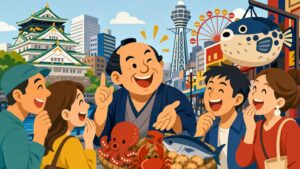
People from Tokyo often raise an eyebrow when the topic of Osaka comes up in polite conversation. They might casually drop the word kechinbo with a wry smile. In the local dialect, the term roughly translates to a cheapskate. They picture a chaotic, neon-drenched city of loud merchants endlessly haggling over pennies, a place devoid of the refined grace found in the capital. But step off the bullet train, walk into a local residential neighborhood away from the gleaming tourist traps, and you quickly realize the stereotype completely misses the point. Osaka is not about being stingy. Osaka is about maximizing value. The local mindset is driven by a profound, almost philosophical respect for the hard-earned yen. If you pay full price for something you could have easily found for less, you are not seen as wealthy or sophisticated by the locals. You are seen as foolish. Understanding this city means understanding its unique relationship with money. It is a relationship built not on greed, but on ingenuity, urban survival, and a deep-seated pride in getting a genuinely good deal.
For a foreigner arriving in the Kansai region, this cultural shift can be quite jarring. You might be accustomed to the polite, reserved distance of other Japanese cities where discussing personal finances is considered incredibly rude and deeply inappropriate. Here, asking someone how much they paid for their winter jacket is a standard, friendly greeting. It is a compliment. It is an open invitation to brag about your shopping prowess. To truly live comfortably in this sprawling metropolis, you have to shed the embarrassment of thrift. You have to embrace the hustle. This guide is your reality check. It is a comprehensive breakdown of how the locals actually live, eat, commute, and thrive without emptying their bank accounts. Welcome to the practical reality of Japan’s most vibrant and economically savvy city.
Understanding Osaka Frugality: The Spirit of Shimatsu
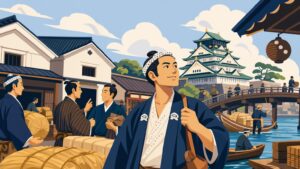
To understand the modern Osakan, one must delve into history, particularly the Edo period. While Edo, which later became Tokyo, served as the political capital dominated by stoic samurai, Osaka was the nation’s economic powerhouse. It was famously called the kitchen of the country. Rice from all over the archipelago flowed down the Yodogawa River and through the Dojima Rice Exchange. Fortunes were made by morning and lost by dusk. In a bustling city run entirely by merchants, capital was like oxygen—wasting it was considered a serious offense. This historical legacy continues to influence the modern streets to this day.
Beyond Kechinbo: Why Value Beats Pure Cheapness
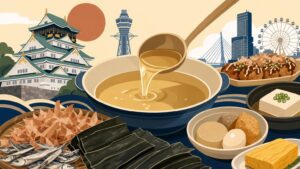
Locals have a specific term for this mindset: shimatsu. It is often loosely translated as frugality or thrift, but such simple translations omit the concept’s inherent elegance. Shimatsu is fundamentally about seeing things through to their proper, natural conclusion. It is a zero-waste philosophy rooted in deep respect for the material itself. You don’t throw away the bitter leaves of a radish; you finely chop and pickle them. You don’t discard tough beef tendons; you simmer them for hours until they transform into a rich, glorious stew. It is pure ingenuity disguised as penny-pinching. Being a kechinbo implies hoarding money out of fear or spite. Practicing shimatsu means spending money wisely. It means extracting every ounce of utility and joy from each purchase. When a local refuses to buy an overpriced umbrella during a sudden shower, choosing instead to wait under an awning, they are not being cheap—they are refusing to be defeated by bad planning and poor value.
The Tokyo Contrast: Pride in the Bargain
The contrast with Tokyo is striking. In Tokyo, discussing money is considered vulgar. A samurai might hide an empty stomach with a toothpick, feigning having dined well to avoid losing face. In Osaka, there is no face to lose. A merchant proudly pats his belly and tells you exactly how little he paid for his massive meal. Money is a tool, not a taboo. When you compliment a Tokyoite on their new shoes, they often thank you and quickly change the subject. When you compliment an Osakan on their new shoes, their eyes light up, they lean in, and eagerly ask you to guess the price. If your guess is too high, they win. They proudly boast about the huge discount they secured. This conversational exchange is the very heartbeat of the city—a shared delight in outsmarting the system.
Frugal Food: How to Kuidaore on a Budget
The classic regional proverb perfectly illustrates the culinary divide in the Kansai region. In nearby Kyoto, people say you will ruin yourself buying fine clothes. In Osaka, the saying goes that you will ruin yourself eating fine food. This idea is known as kuidaore, which literally means to eat until you drop. However, a common misconception among expats and tourists is that bankruptcy is a necessary part of this. It is not. The aim is to dine like royalty on a pauper’s budget. It is entirely possible to enjoy world-class cuisine without ever stepping into an expensive, white-tablecloth restaurant.
Super Tamade and Local Supermarket Discounts
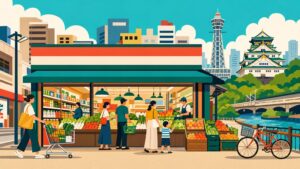
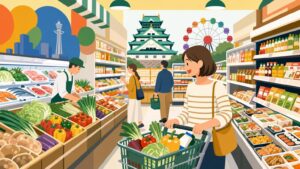
If you want to see the local economy at its most authentic, you must visit the local supermarket—particularly Super Tamade. It is a true institution and impossible to miss. The storefronts are covered in blinding yellow and red neon lights, giving them a vibe more like a Las Vegas casino than a neighborhood grocery store. But once inside, beneath the glowing signs, you find the genuine pulse of local thriftiness. The aisles are packed tightly with everyday essentials sold at razor-thin margins. They are famous for their one-yen sales—if you purchase a certain amount of groceries, you can get a designated item for just a single yen. The shopping experience is chaotic, colorful, and entirely unpretentious. Additionally, the evening discount ritual is quite a spectacle. As closing time nears, store clerks walk the aisles carrying rolls of red and yellow stickers. They systematically mark down fresh bento boxes, sashimi, and fried foods by half price. Savvy locals discreetly follow, waiting for the exact moment the sticker is placed before swooping in to grab their discounted dinner. It is a quiet, unspoken game, and mastering it is essential for residents on a budget.
Tachinomi: The Standing Bar Culture
When the sun finally sets over the urban sprawl, the true working-class culture emerges—revealed in the tachinomi, or standing bars. These are definitely not upscale spots. They are narrow, often smoky spaces tucked beneath roaring elevated trains or hidden away in dimly lit alleys. There are absolutely no chairs—you stand, lean against the counter, and drink. Without seating, customer turnover is rapid, which keeps prices astonishingly low. A perfectly mixed highball often costs less than a cup of vending machine coffee. A small plate of freshly fried chicken costs mere pocket change. But the real value of tachinomi isn’t just cheap drinks—it’s the social equalizer it creates. At the cramped wooden counter, a tired corporate executive in a tailored suit stands side by side with a day laborer in paint-splattered overalls. Conversation flows freely among strangers, and the rigid barriers of polite Japanese society completely dissolve in these spaces. This is where you truly learn how the city speaks.
Affordable Street Food Beyond Dotonbori
Tourists head straight to Dotonbori, standing in long lines for overpriced takoyaki while snapping selfies in front of the Glico running man sign. The savvy locals avoid this area entirely when hungry. To find authentic, affordable street food, you need to explore the local neighborhoods. You go to places like Juso or the sprawling arcades of Tenma. Here, you find kushikatsu spots where battered, deep-fried meat and vegetable skewers cost just pennies. You sit at a steel counter, dipping your skewers into a communal vat of rich, dark sauce. The golden rule is no double dipping—a practice originally meant to prevent waste, a perfect example of shimatsu in action. You find tiny, family-run okonomiyaki shops where savory cabbage pancakes are cooked right before your eyes on a hot iron griddle. The ingredients are simple: flour, cabbage, a few scraps of pork, and a mound of sweet sauce. But the execution is flawless. It is filling, incredibly cheap, and quintessential soul food of the region.
Getting Around Osaka for Less
Navigating this expansive urban sprawl is a daily test of efficiency. The subway system is extensive, remarkably punctual, and exceptionally clean. However, paying single transit fares each day is a rookie error that will quickly eat into your monthly budget. The city rewards those who plan ahead and make use of the local systems designed for regular commuters.
Smart Transit Passes for Budget Travelers
For those staying medium-term or settling into city life, understanding the transit card ecosystem is essential. The standard ICOCA card offers convenience, but the PiTaPa card is the true local gem. It is a post-pay smart card that operates much like a credit card for transit. The advantage of PiTaPa is that it automatically applies discounts based on your travel frequency. If you take the same subway route multiple times a month, the system caps your spending and grants you the commuter discount rate without the need to buy a rigid, pre-set commuter pass. For those exploring extensively on weekends, the Eco Card is an excellent choice. For a flat, low fee, it provides unlimited rides on the city’s subway and bus network for an entire day. Purchasing this card on a weekend or public holiday is even cheaper than on weekdays, encouraging residents to get out and support the local economy without worrying about transport costs.
Exploring on Foot and by Bicycle
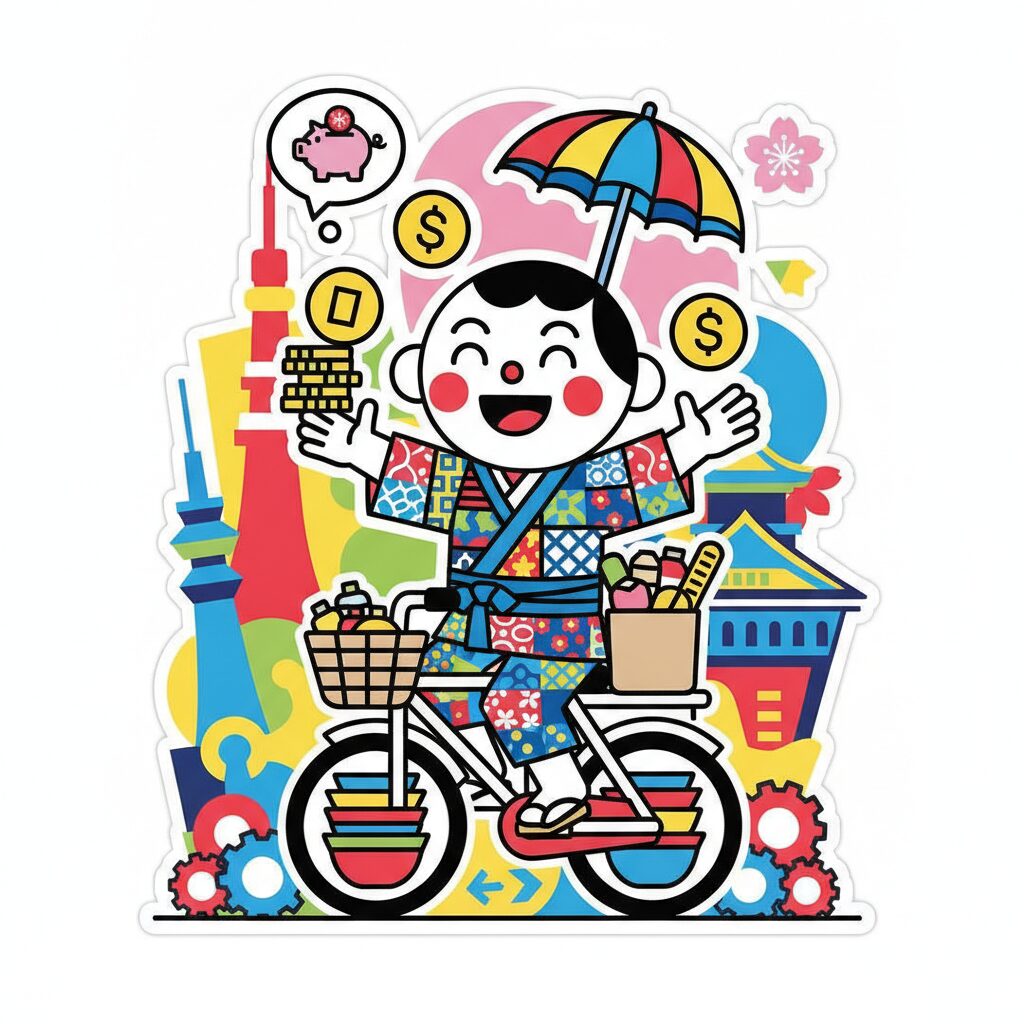
But the true king of urban transit here isn’t powered by underground rails. It runs on pedals. It’s the mamachari—the humble, sturdy granny bike. Look around any major train station, and you’ll see vast, sweeping seas of them parked in designated, multi-level areas. These bikes have heavy steel frames and front baskets large enough to carry a week’s worth of discount groceries. They are essentially indestructible machines designed for utility, not speed. Because the city’s terrain is incredibly flat, cycling isn’t seen as a sport or fitness activity here; it’s basic, practical transportation. You ride your bike to the supermarket. You ride it to the local ward office. You ride it to the tachinomi. You skillfully dodge slow-moving pedestrians in the covered shopping arcades and ring your bell to part the crowds. By relying on an inexpensive, second-hand bicycle for daily neighborhood errands, you avoid train fares entirely, saving thousands of yen each month.
Finding Affordable Accommodation
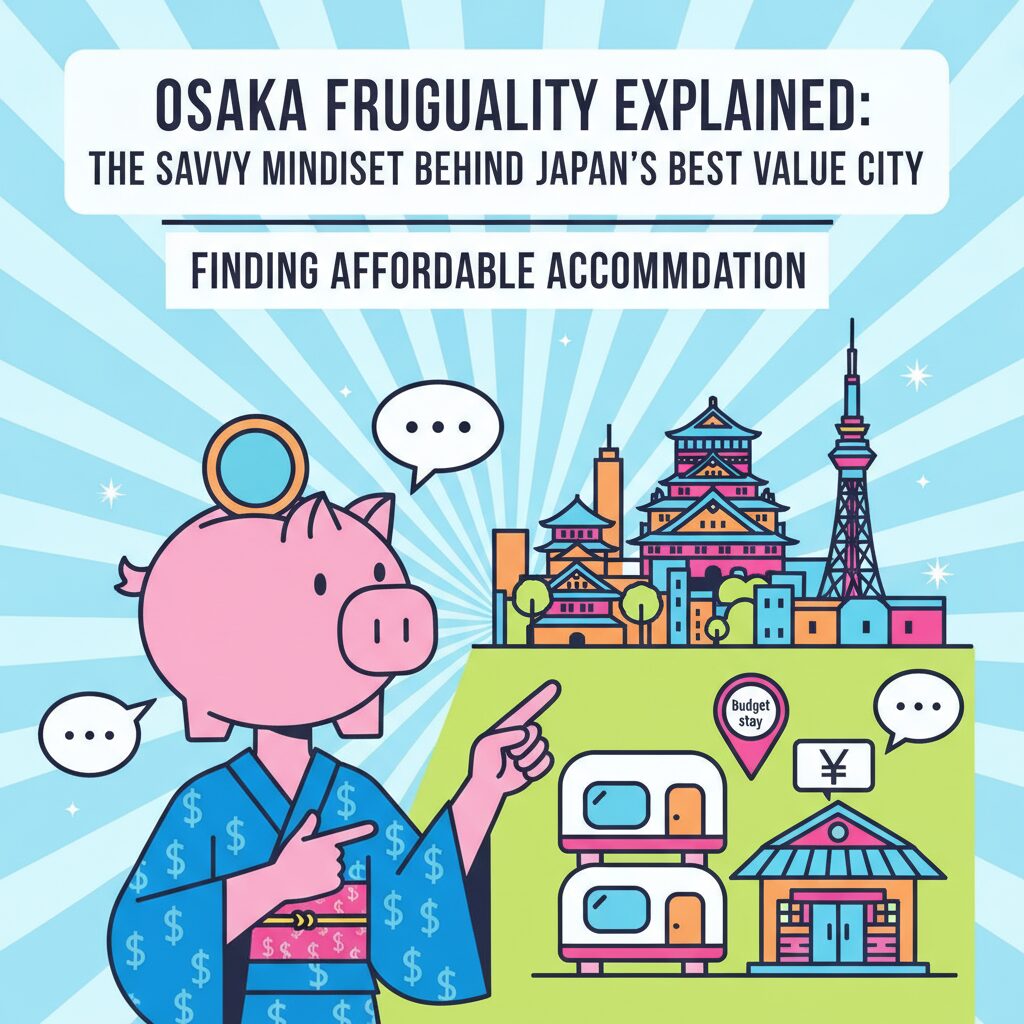
When searching for a place to live or stay long-term, the city’s geographical divide is clear and unyielding. The northern commercial center is Umeda, while the southern entertainment district is Namba. Residing directly in these prime areas demands paying a hefty premium that defies the usual local value logic. A smarter, more economical choice is to look just beyond their boundaries. Focus on neighborhoods that offer identical subway access without the steep price tags.
High-Value Neighborhoods for Budget Stays
Take Daikokucho, for example. It is just one subway stop south of the lively bustle of Namba. The area is relatively quiet, with a slightly gritty vibe, but extremely convenient. Rental prices drop dramatically the moment you cross this invisible line away from the main tourist zone. You can get a larger apartment for a fraction of the cost while still being able to walk home after missing the last train from the bars. To the west is Taisho, affectionately nicknamed Little Okinawa due to a historic influx of laborers from the southern islands. This district is defined by industrial canals, heavy steel bridges, and amazing, affordable local food. Rent here is low, and the community is closely knit. Further south lies Nishinari, historically known as a rough day-laborer district to avoid but now rapidly changing. It has become a refuge for backpackers and digital nomads seeking rock-bottom prices for guesthouses. Though it retains a raw, unpolished edge, it stands as the ultimate budget living frontier in the city.
Hostels, Guesthouses, and Modern Capsule Living
For those not committing to a long-term lease, temporary accommodation options are diverse. The city originated the capsule hotel concept, initially for overworked salarymen who missed their last train home. Today, these capsules have evolved—they are clean, surprisingly quiet, offer high-speed internet, and feature communal saunas at very low nightly rates. They are ideal for solo travelers looking to save money. For those seeking community, the share house culture is thriving. Moving into a share house removes the heavy upfront costs usually tied to renting in Japan, such as exorbitant key money, guarantor company fees, and non-refundable deposits. You pay a flat monthly fee, share a kitchen with locals and other expats, and immediately become part of a network that knows exactly where to find the best local deals.
Free and Low-Cost Things to Do in Osaka
You definitely don’t need an expensive entry ticket to experience the true soul of this city. Some of the finest cultural experiences come at no cost at all. All you need are comfortable walking shoes, a sense of curiosity, and a willingness to stray from the beautifully paved main streets.
Parks, Shrines, and Historic Walking Routes
Although the city is well-known for its vast stretches of concrete, there are pockets of serene tranquility if you know where to find them. Nagai Park, located in the southern district, features vast lawns and stunning botanical gardens. Local families gather here on weekends with bento boxes, enjoying a free escape from the urban hustle. Tennoji Park offers a blend of rich history and modernity, with open green spaces nestled beside towering skyscrapers. For a more immersive historical experience, you can explore the extensive grounds of Sumiyoshi Taisha, one of the oldest and most significant Shinto shrines in the country. Crossing its iconic arched red bridge and wandering through the quiet, ancient wooden structures is completely free, providing a direct connection to the spiritual heritage of the area long before neon lights brightened the cityscape.
Markets and Shotengai Shopping Arcades
The best free entertainment in this city is simply people-watching, and there’s no better stage than the shotengai — the covered shopping arcade. Tenjimbashisuji is the longest continuous shopping arcade in the nation. Stretching for miles, it pulses with commerce, packed with hundreds of small, independent stalls selling everything from roasted green tea to heavily discounted sneakers. Walking its full length is an urban anthropology masterclass. You hear the rhythmic, melodic calls of shopkeepers advertising their goods. You smell the sweet, alluring aroma of roasted sweet potatoes drifting from the grocery stands. You witness the intricate, unscripted dance of everyday life as bikes weave through the crowds. It’s far more captivating than any paid museum exhibit. Places like Sembayashi Shotengai provide an even more authentic, gritty experience where tourists rarely go, and the prices reflect the area’s deeply working-class roots.
Embracing the Frugal Expat or Nomad Life in Osaka
For a foreign resident trying to build a life here, fully embracing this distinct local lifestyle is incredibly freeing. You quickly come to realize that endlessly striving to maintain appearances is a huge, exhausting waste of energy. Once you stop stressing about appearing wealthy, you can truly begin to build genuine wealth. You learn to time your trips to the local markets just before closing to catch those magical half-price discount stickers. You grow to deeply appreciate the gruff yet sincere warmth of a local butcher who adds an extra fried croquette to your bag simply because you made the effort to speak a little of the local Kansai dialect.
You stop relying on expensive taxis everywhere. Instead, you start riding a squeaky, second-hand mamachari bicycle through the quiet, neon-lit streets at midnight. You begin to see money not as a status symbol to flaunt, but as a resource to optimize and respect. You stop viewing thriftiness as a sign of failure and start treating it as a fun, engaging daily challenge. When you genuinely adopt this mindset, you cease to be just another temporary visitor passing through. You become an active participant in the local economy. You become part of the city’s remarkable, pulsing rhythm. You finally realize that the loud, chaotic, and relentlessly frugal spirit of Osaka is not a flaw to endure, but the very genius that makes it the greatest city in Japan.